Let’s Talk About Black Lives Matter UK

black-lives-matter-uk-protest-london-city-airport

Black Lives Matter UK should be ashamed of their childish behaviour and wanton ‘cultural appropriation’ of an American struggle

I had a friend at Cambridge who – like many students – loved nothing more than a good protest. The reason behind any given demonstration and the people involved in it were largely immaterial to him; what mattered was the marching along and shouting and getting to feel brave and revolutionary while enjoying the added bonus of missing lectures.

On one occasion (quite possibly because I was high at the time of asking) he convinced me to accompany him on one of these jaunts, and so one morning we set off on a coach down the M11 and piled off in central London, collected placards and went to join the fray. Honestly, I forget what the protest was actually about – it may have been something to do with poverty, but it was certainly domestically focused. So I was rather surprised when my friend decided that we should merge with a particularly unwashed group of protesters and start shouting “victory to the intifada!”

At the time, the Second Intifada was warming up quite aggressively. As a young student, while having every sympathy with the plight of ordinary Palestinians, I tended to take the side of Israel, supporting a fellow democracy while reserving the right to criticise their excesses and missteps – pretty much the same position as I hold now, in fact. And since I had no desire to stomp around London cheering for the suicide bombing of innocent Israelis, I took leave of my friend and went to sojourn on the south bank instead – but not before making the observation that nearly everyone around me at the march was white, upper middle class (though some affected other carefully crafted personas) and about as far removed from being personally vested in the Israel-Palestine conflict as it was possible to be.

Why bring this up? Because the same tiresome event is now playing out all over again with the childish, irresponsible and petulant antics of Black Lives Matter UK, whose members give dreary new meaning to the term “a rebel without a cause”.

From the Telegraph:

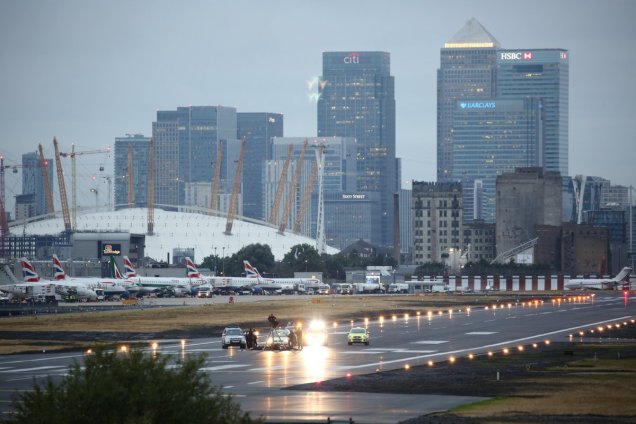
London City Airport was brought to a standstill today after a group of Black Lives Matter activists stormed the runway protesting against the UK’s ‘racist climate crisis’.

Police said nine protestors [sic] chained themselves to a tripod in the middle of a runway to ‘highlight the UK’s environmental impact on the lives of black people’.

The demonstration, which began at 5.40am and lasted around five hours, meant dozens of flights were cancelled while incoming planes were diverted to Gatwick and Southend airports.

The incident triggered safety concerns amid reports the demonstrators bypassed security by sailing a blow-up dingy [sic] across the Royal Docks.

Police arrived at the airport minutes after the demonstration began but it was several hours before any arrests were made. Scotland Yard said they had to wait for ‘specialist resources’ needed to unlock the protestors [sic].

“This is a crisis” reads the banner unfurled by Black Lives Matter UK at their edgy airport disruption attempts. And so it is. But in Britain it is certainly not a crisis of black killings by the police. It is a crisis of intellect, of character and of proportionality, all of which have been thrown out of the window by a bunch of primarily millennial young adults who look at the impassioned protests currently taking place in the United States and developed a severe, gnawing case of FOMO (fear of missing out).

This most coddled and privileged generation in history (particularly the middle class types who showed up to London City airport) cannot plausibly claim that black people in Britain are being frequently and systematically killed by the police, which is the genesis of the original Black Lives Matter movement in America. Most British police are unarmed for a start, and while there has been an historic problem with institutional racism and there remain isolated concerns, the problem is simply not as severe on this side of the Atlantic.

So what is an enthusiastic young protester to do? They can’t go to the trouble of invading an airport runway for a cause which barely registers as a problem in this country (though in terms of avoiding looking ridiculous, BLM UK may well have done marginally better to frame their protest as a “sympathy strike” to highlight the “plight” of black Americans). They need to find some reason for their theatrics.

And thus we get the rather bizarre statement that airports are fair game for Black Lives Matter UK because environmental pollution apparently disproportionally affects black people to such an extent that it constitutes an act of racism. That is seriously what this protest is about.

From BLM UK’s own Twitter account:

This is competitive victimhood at its most extreme. To call the claim that environmental pollution is a deliberate act of oppression aimed at black people “a bit exaggerated” does a disservice to a whole pantheon of overstatements, contortions and implausible stretches. The argument is simply ludicrous, a complete non sequitur.

And for those of us implacably opposed to the Cult of Social Justice and Identity Politics, the emergence of Black Lives Matter UK as a risible and unjustified presence on the British political scene has also provoked the delicious accusation by other SJWs that BLM UK’s white, middle-class eco-warriors are “culturally appropriating” a movement which is primarily about the treatment of African Americans by the police in the United States.

From the Huffington Post (naturally):

Black Lives Matter demonstrators have been accused of “appropriating someone else’s struggle” for their “embarrassing” protest at London’s City Airport today that affected thousands of passengers.

However, the response to the action has been largely negative, with people criticising its relevance, disputing claims the action would only impact the wealthy, and questioning why the group did not appear to have any black members at the protest.

One person described the protesters as “hipster-looking flower-crowners”.

[..] Joanne Marie was annoyed by claims that the action would only affect the well off.

She wrote: “I earn under £30k and I live in Newham. I use City Airport several times a year to fly home to Ireland to visit my sick and elderly parents. I pay around £100 return – slightly more than it costs to fly from Stansted on Ryanair. Should I not visit my parents to placate a bunch of self-righteous white people with placards who think they represent the BME community?

And that’s one of the inherent flaws in the whole social justice / politically correct movement. Because the “social currency” within this tribe of people is intimately connected with how much one is able to play the victim card and speak from a position of being “oppressed”, competitive victimhood is rife. In order to feel good about themselves, cult members must continually assert their own vulnerability at the hands of those with more “privilege”, while showing very public solidarity and deference to those higher in the hierarchy of oppression.

Thus we have seen young social justice warriors in Britain try to take down even progressive champions like Germaine Greer and Peter Tatchell for daring to stand up for the free speech of those who question the new orthodoxy on transgender theory.

Peter Tatchell – a tireless warrior against discrimination in all its forms – found himself in the crosshairs of some jumped-up young student union activist who saw the opportunity to aggrandise herself by publicly accusing him of heresy. Why? Because Fran Cowling, LGBT+ Officer of the National Union of Students, saw the opportunity to burnish her own Tolerance Credentials by shrieking that Peter Tatchell holds such intolerable and dangerous views that she could not possibly share a stage with him. Her goal: to make her peers think “Wow! Fran Cowling is so pure and virtuous that even Peter Tatchell, with all his many accomplishments, looks like dirt next to her”.

This kind of thing happens all the time. Just as perverse incentives lead politicians to over-promise and bankers to take undue risks, in the social justice community – already a demographic teeming with many of the most insufferable people in the country – the fact that victimhood equals social status is encouraging people to exalt in their vulnerability, exaggerate it wherever possible and see everything through the distorted lens of race, gender and sexuality.

And that is how, in a sick culture full of people who are encouraged to make exaggerated claims of victimhood – together their sanctimonious “allies” – it came to pass that London City Airport was shut down this week because of the past actions of allegedly trigger-happy cops in America.

Globalisation no longer simply means that the components in your iPhone come from all over the world – going forward we can expect to be picketed, lobbied, harassed, delayed and otherwise inconvenienced thanks to disputes which originated thousands of miles away in other countries – especially if those disputes have their roots in the toxic sludge of identity politics.

Welcome to the future.

 

black-lives-matter-heathrow-airport

Top Image: Guardian, Daniel Leal-Olivas/AFP/Getty Images

Support Semi-Partisan Politics with a one-time or recurring donation:

Agree with this article? Violently disagree? Scroll down to leave a comment.

Follow Semi-Partisan Politics on TwitterFacebook and Medium.

Blast From The Past: Jonah Goldberg Lashes Out At Political Centrists

A refreshing tirade against political centrism

Most regular readers will know that this blog has time for just about anyone on the political spectrum, save the out-and-proud centrists, those virtue-signalling, sanctimonious oiks who think that by eschewing strong opinions and continually fudging every issue they are somehow morally superior to us hot-headed partisan folk.

That’s why this blog has been a consistent supporter of Jeremy Corbyn’s leadership of the Labour Party. While I would never vote for him myself – and what’s with this trend of demanding that even the leaders of parties we would never vote for still agree with us on key issues? – far better that the Labour Party has at its head someone who stands for vaguely socialist principles than another rootless centrist in the mould of Tony Blair or David Cameron.

That’s one of many reasons why this blog campaigned tirelessly for Brexit and a vote to leave the European Union. Bland, woolly, resigned pro-Europeanism – the centrist belief that Britain is hopeless, the nation state is outdated and that security and prosperity can only come by surrendering sovereignty to an unaccountable supranational body – was the watchword among every single one of Britain’s main political parties, save UKIP. Brexit slapped that smug consensus off the face of Britain’s politicians, and their pampered cheeks will be smarting for years to come as a result.

All of this is an unnecessarily long way of labouring the point – again – that I really, really, don’t like centrists. I may have written about this already, once or twice before:

Bring up the subject of taxation, to pick a random example, and you’ll get a group of people who strongly feel that taxes should be cut in order to stimulate the economy and allow taxpayers to keep more of what they earn, and you’ll get another group of people who think that it’s morally obscene that some people are enjoying themselves, so we should make the tax code more punitively progressive to help bring about social ‘equality’. But you’ll also get a third group of rather bovine people who look up from Britain’s Strictly Come Bake-Off On Ice, wipe the pizza grease from their mouths and just say “what?”

At present, we tend to think of this last group of people as “centrists” or “swing voters”, simply because they do not quote direct from either the Labour or Conservative Party manifesto when asked to offer a political opinion. But are they really centrists? There’s a world of difference between someone who carefully studies the competing policies of different parties to arrive at a considered position half way between two extremes, and someone who mutters something about politicians being “all the same” before their eyes glaze back over.

[..] And can we also please disenthrall ourselves of the unsupported and misleading notion that these “centrist” voters will immediately startle like shy fauns if they encounter a strong political opinion once in awhile, when most of them probably could not run for the bus in the morning, let alone into the arms of another political party?

Which seems as good a time as any to revisit this Jonah Goldberg video taken from an interview with Glenn Reynolds, in which Goldberg is promoting his (then) new book, “The Tyranny of Cliches”.

Here is Goldberg on how centrists are overrated:

We all see the centre as this incredibly privileged and wonderful place, right? The mainstream media constantly talks about the centre as if it’s just the greatest place in the world, and centrists are somehow wiser and more noble than the rest of us — “Shh! David Gergen’s about to talk!” And it’s all nonsense.

First of all, the whole idea of the centre as being this privileged place is actually one of these enlightenment myths. There’s this whole slew of argumentation about how Galileo and Copernicus “dethroned mankind” by getting rid of geocentrism, that the theory of heliocentrism, that we revolve around the sun rather than the Earth being the centre of the world [sic] was an elevation or promotion for mankind, and in our arrogance we couldn’t handle it and the Catholic church beat up on it. And it’s not a real left-right thing, except in the regard that it explains how we understand the whole geographic political landscape.

The reason why the Catholic church and pretty much everybody else opposed geocentrism was one, they weren’t sure the science was right because it was a novel theory at the time, but two, because they considered it a promotion. In medieval understanding, in ancient Greek understanding, Jewish medieval understanding and Catholic, Thomas Aquinas understanding, the centre of the world, the centre of the universe is literally the asshole of the universe. The centre of the universe is considered the lowest and most disgusting and turgid place in the whole cosmos. In Dante’s Inferno, the lowest pit of hell is the centre of the universe. Maimonides talks about this, Aquinas talks about this and it is this myth of the modern mind that somehow geocentrism, getting rid of geocentrism somehow elevated mankind. It completely misunderstands where the medieval mind was, and we carry it forward to today.

There are a lot of huge arguments we have with the Left, or are between the Left and the Right. The Left says we have to build this bridge over a canyon, it’s a stimulus thing, it’s infrastructure, we need this bridge. The Right says are you frigging crazy? We can’t afford it, we don’t need the bridge, it’s a bridge to nowhere, it makes no sense, blah blah blah. That’s an honest argument – one side says let’s build the bridge, the other side says let’s not build the bridge. The friggin’ pinky-extending centrists parachute in and says no no, let there be peace among you. We’ll compromise – we’ll build half a bridge that goes halfway across the canyon.

It is these difference splitters who drive me absolutely batty, and we treat them as if they hold this privileged place when we don’t even understand that the centre is a geographic metaphor, it’s not an actual place in politics. All the serious ideas in politics have always come from where they were considered to be the extreme at one point or another.

Brexit and the reclaiming of our nation state democracy from the failing euro-federalist experiment in Brussels was considered a niche and even extremist idea for most of the past 40 years. And look at us now – with the only remaining resistance consisting of Owen Smith’s pitiful, petulant bleating and a few pathetic europhiles with the EU flag painted on their faces, Brexit is happening.

All the serious ideas in politics have once been described as extreme and unmentionable, says Jonah Goldberg. Darn straight.

And nobody has ever built a monument to a centrist.


Political centrism

Support Semi-Partisan Politics with a one-time or recurring donation:

Agree with this article? Violently disagree? Scroll down to leave a comment.

Follow Semi-Partisan Politics on TwitterFacebook and Medium.

Nicola Sturgeon’s Failure Of Courage

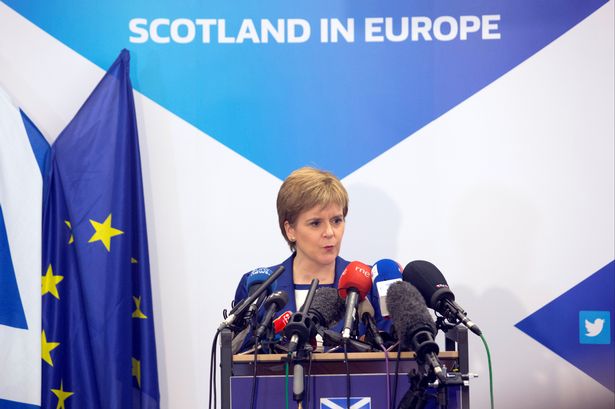
nicola-sturgeon-scotland-in-europe-snp-second-independence-referendum

75 days after her massive tantrum about the EU referendum result, a meek and humiliating climbdown from Nicola Sturgeon

From the Guardian:

Nicola Sturgeon has shelved plans for a quick second referendum on Scottish independence after dire spending figures and a fall in public support for leaving the UK.

The first minister told Holyrood on Tuesday that her government only planned to issue a consultation on a draft referendum bill – a measure which falls short of tabling new legislation in this year’s programme for government.

Two months after telling reporters a referendum was “highly likely” within the next two years, she told MSPs that that bill would now only be introduced if she believed it was the best option for Scotland.

Her officials later said that consultation process could start at some time in the next year, with no target date in mind for its launch or its conclusion. Sturgeon’s official legislative timetable, the programme for government, described the referendum as an option and not as a goal.

Well, well, well.

Looks like a tacit admission that running a creaking, statist, big government petro-state north of the border – all based on a fiercely irrational cult of personality – doesn’t produce the kind of dynamic, resilient country which could frolic its way to independence without an economic care in the world after all.

Who could have possibly known?


Postscript: But let us not be too smug. The same report also tells us that the SNP plans to use the Scottish government’s discretionary fiscal powers cut the outrageously high Air Passenger Duty tax by 50% – a good first step in reducing it even further, back to the kind of levels which no longer put passengers off flying to or connecting through the UK:

She confirmed that the SNP would cut air passenger duty at Scottish airports by 50% from April 2018 to stimulate spending, a plan lambasted by Labour and the Scottish Greens as it would damage efforts to tackle climate change.

The day that the Conservative Party can lecture Nicola Sturgeon and the Scottish National Party on pro-consumer, supply-side economic reform with a straight face will be the day when Philip Hammond stands at the despatch box and promises an even greater cut in APD for the rest of the UK in his first Budget.

Until then, the Conservatives continue to disappoint expectations, preferring to virtue-signal their environmentalist credentials and rob leisure and business travellers of their money than usher in the aviation revolution that this country sorely needs.


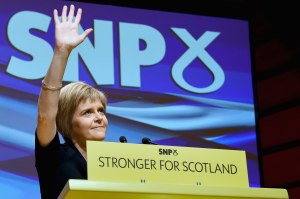
nicola-sturgeon-snp-scottish-national-party-stronger-for-scotland

Top Image: Daily Record

Support Semi-Partisan Politics with a one-time or recurring donation:

Agree with this article? Violently disagree? Scroll down to leave a comment.

Follow Semi-Partisan Politics on TwitterFacebook and Medium.

Picking Through The Wreckage Of Defeat: The Electoral Reform Society’s Report On The EU Referendum

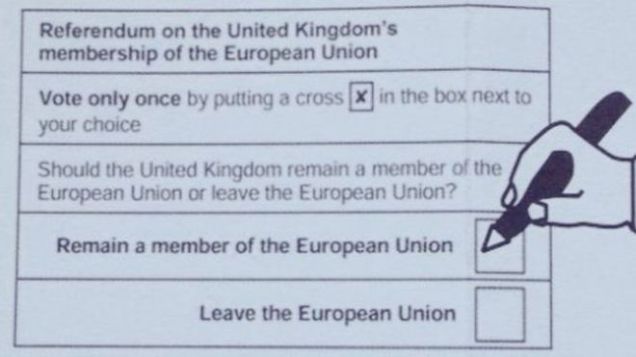
The Electoral Commission - EU Referendum Ballot Paper - Brexit - Biased Voting Guide

You don’t commission an urgent post-mortem report to look into something wonderful that has just happened. So the mere existence of the Electoral Reform Society’s tremulous report warning about the danger of future referendums tells us all we need to know about their attitude to Brexit and the people who voted for it

“The people have spoken. Or have they?”

So begins the Electoral Reform Society‘s autopsy report of the EU referendum and Britain’s shock decision to leave the European Union. The simpering “or have they?” tells you everything that you probably already suspect about this report – that despite whatever other good work the ERS might do, this is a metro leftist, superficially and uncritically EU-loving effort to come to grips with what they evidently view as a political disaster.

If something bad like a plane crash happens, the Air Accidents Investigation Branch will pick over the wreckage and file a report outlining the chain of events leading up to the tragedy. It is the kind of report which damns by its very existence – nobody commissions a sober post mortem report about something delightful that has just happened. The ERS’s perspective on Brexit is established in the first seven words, and even before then by its very existence.

That’s not to say that the report is worthless – despite its clear bias (I’ll eat my hat if author Will Brett or any of the other major contributors actually voted to leave the EU) there are some thoughtful deliberations on how to get citizens involved in any future referendum planning process so that the procedure feels less like something which was suddenly foisted on the people, the rules being made entirely by shadowy people in Parliament.

Nor can I argue with the report’s recommendation to extend citizenship lessons in primary and secondary school. This blog has long stood for mandatory civics classes thoughout the duration of secondary education, not only as a way of developing good future citizens in place of self-entitled little snowflakes, but also as a means of celebrating, transmitting and reinforcing core British values on classes which may be very ethnically and culturally mixed, thus helping to end self-enforced apartheid.

Read the whole thing here – it touches on more areas than this single blog post can feasibly analyse.

But soon the wheels start to come off the report. This first happens when the ERS make egregiously misleading use of the “factoid” that there was a large spike in Google searches of the phrase “What is the EU?” in the immediate aftermath of the result. This was immediately taken by the stunned Remainiac establishment to be proof that we bovine Brits had voted for something which we did not even understand.

But this scandalous interpretation is wrong, as the Telegraph patiently explained:

Google Trends data isn’t actually representative of the number of total searches for a term, but a proportion of all searches at a given time. The company highlights spikes in searches based on what else is being Googled at a given moment in a geographical area.

So in the early hours of Friday morning searches for “What is the EU” briefly spiked compared to what else was being asked. To put it in context, the search only outstripped that for “weather forecast” between 01:30 and 04:30 in the morning, but by 05:00 that had changed.

Data from AdWords, which offers more specific numbers for search terms, shows that the 250 per cent increase in searches actually correlated to about 1,000 people asking the question.

In other words, bitter Remainers called into question the intelligence of half the country based on the Google search activity of no more than a thousand late night stoners who didn’t know what the European Union is but who were also far too moronic to find their polling station, let alone put an X in a box. Yet the ERS still considered this deceptive factoid worthy of inclusion at the beginning of their report.

But here’s where it really goes wrong:

At the start of the regulated period the Electoral Commission, or a specially commissioned independent body, should publish a website with a ‘minimum data set’ containing the basic data relevant to the vote in one convenient place . A major source of complaint about the conduct of the referendum was the supposed lack of independent information available about the vote. While there are real difficulties in separating out fact from political argument in these cases, a minimum data set ought to be possible.

In other words, rather than assuming that the British people are mature and capable enough to frame the debate in the terms which matter most to them, the Electoral Reform Society would have some shadowy committee decide in advance the terms on which the referendum should be fought, and then produce a “minimum data set” of presumably quantitative data to guide decision-making.

This is a truly terrible idea. The EU referendum probably meant something slightly different to every single one of the millions of Britons who voted. Even assuming that an approximate minimum data set could be hammered out, what was included and what was left out would inevitably reflect the biases or interests of those involved. We have enough trouble trying to come up with a referendum question which both sides feel eliminates bias or inappropriate suggestion. What makes the ERS think that producing a commonly agreed “minimum data set” would be anything but fraught, contentious and ultimately impossible?

Besides which, the key issue of the EU referendum was intangible: do we think that British democracy is best preserved inside the EU or without? One can come up with endless (often contradictory) statistics debating the economic benefits, but what could one possibly collate to form the “minimum data set” to vote based on democracy?

As political blogger I have read scores of history and politics books including some of the definitive critiques and praises for the EU, and the more I learned the less I realised I knew. In fact, as referendum day inched closer and closer and I saw other, established journalists and politicians make continual fools of themselves with their superficial and misleading analyses, I found it harder, not easier, to write. There is so much that I don’t know about how the EU works in practice and how international trade functions that I’m loathe to write much at all, and I actually spend spare moments reading some of this stuff and trying to learn. So what would be the Electoral Reform Society’s ideal minimum reading list for the country?

But of course they are not suggesting a reading list at all. When the ERS propose a minimum standards set, what they really mean is a short list of bullet points emphasising all the ways that Brexit could harm the economy in the short term, assuming a worst case scenario. They want a beefed up version of the government’s already utterly immoral £9 million propaganda leaflet sent to voters before the EU referendum. Just to altruistically ensure that people are “better informed”, of course. Right-o.

Is the current system perfect? No. Many Britons did complain that they felt they lacked sufficient information, or that they could not trust the information they were given. One could scarcely escape these modern-day Hamlets bleating their confusion on BBC Question Time. But in fact, while the status quo may be far from perfect, the giant flaws in more activist approaches like that proposed by the ERS are far worse.

Will people sometimes make their referendum decision judgements based on poorly chosen criteria? Yes, of course they will. Would seeking to prevent this by artificially restricting the terms of the debate be any better? No, it would be a thousand times worse. Rather that power sits with sometimes-confused citizens than with politicians or civil servants with very fixed ambitions of their own.

Besides, the awkward fact remains that while many voters may have liked to complain about not having all of the required information handed to them on a silver platter, a proportion of them were simply covering for their own laziness. As an ardent Brexit supporter I know I’m supposed to be waxing lyrical about the deep wisdom of the British people right now, but the fact is that there are a lot of stupid people out there, on both sides of the debate – people whose bovine cries of “but nobody is giving information” belies the fact that they haven’t watched the news in years because the TV remote got buried under a pile of pizza delivery boxes.

But the worst recommendation from the ERS report is yet to come:

An official body – either the Electoral Commission or an appropriate alternative – should be empowered to intervene when overtly misleading information is disseminated by the official campaigns. Misleading claims by the official campaigns in the EU referendum were widely seen as disrupting people’s ability to make informed and deliberate choices. Other countries including New Zealand have successfully regulated campaign claims – the UK should follow suit.

Again, this reeks of mistrusting the electorate – of course, we already know that the ERS does so, it is the very reason for this report in the first place. But to see it spelled out quite so blatantly is remarkable indeed. For in the opinion of the ERS, citizens are not mentally equipped – even in the Age of Google, when everybody has a smartphone in their pocket capable of accessing the accumulated knowledge of mankind – to analyse political messages and determine truth or untruth, validity or invalidity. Rather, we are apparently in need of some external authority to pre-screen our reality for us.

How on earth this is supposed to work is beyond comprehension. Set 100 top-tier university students the essay question “The EU brought peace to Europe. Discuss” and you will get 100 different subjective arguments, each with a unique perspective and most drawing from at least some unique sources. Say the Leave campaign takes a dislike to such a claim by the pro-EU side: what threshold would they have to meet to bring a complaint, and who has the final say as to whether the statement is misleading or not? And if a statement is found to be misleading, what should be the remedy? Front-page advertisements by the Electoral Commission in every national newspaper? Another propaganda leaflet through everyone’s door? Interrupting Coronation Street with some breaking news?

As a policy prescription it is entirely unworkable, but as a middle class, metro-leftist sulk at the supposed lies and deceit of the Bad Man Nigel Farage and the Evil Tor-eees it makes perfect sense. And sadly, that is precisely why the idea of a Referendum Censor entered the Electoral Reform Society’s report.

And shockingly, this leads the Electoral Reform Society to conclude that given the nature and outcome of the EU referendum campaign, maybe we would all be better off eschewing future freewheeling referendums for the safety and security of “parliamentary democracy”, preferring this to even their recommendations for more pre-determined, moderated, government-mediated future referendum campaigns:

Given the frequency of party-political imperatives behind the calling of referendums, it is worth asking: what are the conditions where a referendum is really the best way of settling a political question? Perhaps parties and politicians should make a habit of reflecting on some of the difficulties around calling and then responding to referendums, and – where possible – seek to find a way through the thicket of representative democracy instead.

Douglas Carswell sees many of the same flaws in the ERS report that this blog also identifies:

How do you give people more control over government? I’ve always believed the answer is direct democracy: more decisions made by voters, fewer by politicians and officials. But the Electoral Reform Society seems to think the opposite. They want to give officialdom more control over direct democracy. Why?

The ERS’s latest recommendations come from its scathing report on the referendum campaign. I also thought some of the conduct in the campaign was disgraceful. But much of their critique is misplaced.

There is, for example, barely any criticism of the Remain propaganda issued by Downing Street at taxpayers’ expense. And no mention of the use of the civil service as an extension of the Remain campaign. Apparently, co-opting the organs of the State to gain an unfair edge is no big deal.

The report also says people felt ill-informed, and the campaigns provided disinformation. Yet there is no admission that many of the outlandish claims came from supposedly independent “experts” – many of whose warnings, especially on the economy, have already been proven wrong.

And concludes:

But the big problem with the idea of official arbiters for campaign information is not the practical execution, but the premise behind it. In a democracy, we already have an arbiter: it’s called the people. The whole point of democracy is that voters analyse what they are told by the opposing sides, and make their own decision.

Underlying the ERS’s report is the sense that people can’t really be trusted to know what they are voting on, so instead we should let unelected technocrats decide for them. That’s not the kind of electoral reform Britain needs.

And yet the report makes some worthwhile observations despite its inherent biases. The information made available to the general public through the media was indeed shockingly bad, as the ERS complain, with MPs and household name journalists alike vying with one another for the title of Most Ignorant on a daily basis. More galling for sites such as this, those of us who strove to deepen our knowledge were routinely shut out of the discussion.

I doubt there is a better-researched and thoroughly produced political blog in the whole country than eureferendum.com, and Dr. Richard North’s “Flexcit” Brexit plan, yet few have ever heard of it thanks partly to the establishment closing ranks against somebody they view as an outsider but also to the fact that the Westminster political/media establishment are lazy, and don’t like putting in the hours of work it takes to speak confidently and knowledgeably on the real intricacies of Brexit and international trade.

But whatever the individual merits of each point in the report, it still ultimately comes back to the question of why the report was produced in the first place. Had the EU referendum result been inverted and the Remain side triumphed in a 52-48 victory, would the Electoral Reform Society still have produced a report, albeit one streaked with fewer Remainer tear stains? I’ll be generous and say yes, they probably would.

But would the content of the report and the ensuing recommendations be identical to the current version, with its overt worries about misinformation and an ill-informed population? I very much doubt it.

And that tells you everything you need to know about the political bias of the Electoral Reform Society.


Electoral Reform Society - ERS - EU Referendum Report - Brexit

Support Semi-Partisan Politics with a one-time or recurring donation:

Agree with this article? Violently disagree? Scroll down to leave a comment.

Follow Semi-Partisan Politics on TwitterFacebook and Medium.

Social Justice Is About Power And Control, But Not For The Benefit Of The Powerless

SJW white people dreadlocks social media

What happens when a white Social Justice Warrior encounters a mixed race person who fails to hold the “correct” opinions about cultural appropriation?

If you still need convincing that the “social justice” movement is in fact nothing to do with justice or equality and everything to do with wielding power over other people to control what they think, say and do, then let this picture be your guide.

Here we have a comment posted by a young Social Justice Warrior – an online activist who spends their time trying to police the public discourse and censor others – on the tumblr social network, in which the user Party Island (pronouns: they/them) confesses a dilemma.

You see, Party Island is very much against the phenomenon known as “cultural appropriation”, that timeless phenomenon where cultures, customs and fashions spread across different national or ethnic groups. While some Bad People might think that cultural appropriation is a good thing, responsible for everything from the pop music we hear to the fusion cuisines we eat, in fact cultural appropriation is a terrible tool of oppression in which arrogant white people claim credit for the cultural innovations of other marginalised groups, either for personal or commercial gain. Or so say the SJWs.

And Party Island was posting on the evils of white people wearing their hair in dreadlocks (a particularly contentious issue in the SJW community) when one of his mixed-race friends dared to utter the now-blasphemous assertion that people of any race or background should be able to wear their hair any way they damn well please, and that Party Island was massively overreacting.

As the complaint reads:

I’m at a loss. I posted about white people & black hair on Facebook and my old roommate, who is mixed race but white passing, is telling ME I’m overreacting and that “people should wear their hair how they want.” I don’t know how to approach this. I don’t want to talk over her because even if she’s white passing, she holds more authority over me in race related issues. I don’t know what to do.

The friend’s statement that “people should wear their hair how they want” is shocking to the ears of Party Island, who is used to playing the role of white saviour to the “oppressed” black masses by being a jumped-up, self-righteous little internet censor, persecuting anyone who fails to use the latest up-to-the-minute politically correct terminology and customs.

Now Party Island has been told to lay off, not by a fellow white person – their peer at the bottom of the inverted hierarchy of privilege – but by someone who is mixed race, and therefore occupying a more senior position in the pyramid. In Social Justice World, you see, power and legitimacy to speak on any issue derives from one’s place in the pyramid. On feminist issues, for example, being a woman (or any guy with a penis who decides to identify as a woman) gives one a certain right to speak about feminist issues, but being a black, disabled woman means you occupy an even higher position in the inverted pyramid and that your words, therefore, count for much more.

If a white person had told Party Island that they were overreacting by getting upset at other white people who “appropriate black culture” by wearing their hair in dreadlocks, Party Island could demand that they “check their privilege”, insist that they were being oppressive and send them off to educate themselves on issues of racial justice and cultural appropriation. But the friend is not white, they are mixed race. And this presents Party Island with a dilemma.

On the one hand, there is the strong instinct to “punish” the friend’s blasphemous statement that white people should be allowed to wear dreadlocks, because this is how these parasitical people gain power and influence over our discourse, culture and society in the first place – by meting out public shamings and other punishments to heretics in order to advance their own ideology. But on the other hand, Party Island knows that as a white person in the presence of a mixed race person (though “white passing”, they tell us, as mitigating evidence) their duty is to bow obsequiously and defer to whatever the mixed race person happens to say on the subject of race.

This creates an unresolvable logical error in the SJW brain of Party Island. They want to be a good foot soldier in the Social Justice Army and “re-educate” this blasphemer, but the blasphemer is of superior rank in the social justice hierarchy. It’s a bit like a zealous, well-trained infantry private discovering his captain breaking the army code of conduct. The desire to call out the crime and administer “punishment” is overwhelming, but the captain’s rank causes hesitancy and a failure of courage.

So what does Party Island do? Unable to confront their mixed race friend directly about their Evil Thoughtcrime and insufficient anger at the cultural appropriation of dreadlocks, this SJW flags his problem to the wider community in the hope that it will be seen by other properly-educated SJWs who occupy equal or greater rank in the hierarchy of victimhood, and who therefore have the power and legitimacy to correct this erroneous mixed race person. Ideally, in this warped world, a “black passing” black person who is also a transexual, disabled rape survivor will come passing by, notice the exchange and unload on Party Island’s poor mixed race friend with the full weight of their exalted position in the pyramid.

If all of this seems ludicrous and a million miles away from doing anything which might conceivably affect or help actual black people in America, you would be right. Because at its dark, festering core the Social Justice movement is not about delivering justice, equality or doing any other kind of social good. Social wrongs are merely the fuel which power the machine to perform its true purpose – controlling the language and the thinking of society in order to establish beady-eyed little zealots like Party Island as the indispensable clerisy who tell everyone else what to say and do.

Social Justice is, above everything else, about the acquisition and exercising of power. Victimhood is actively sought and eagerly weaponised by members of this Social Justice clerisy in their scramble for status amongst their peers and contemporaries. The legitimate problems and grievances of minority communities become irritating background noise, a distraction from what really matters – this finickity, juvenile, university campus parlour game in which casting oneself as the most vulnerable, oppressed but simultaneously tolerant person imaginable confers tremendous power, while the slightest slip (such as accidentally using the wrong word) can lead to immediate excommunication from the group.

That’s what is going on here.

That’s what “social justice” is really all about.


Bonita Tindle - Assault White Student for Cultural Appropriation - Identity Politics

Support Semi-Partisan Politics with a one-time or recurring donation:

Agree with this article? Violently disagree? Scroll down to leave a comment.

Follow Semi-Partisan Politics on TwitterFacebook and Medium.