Two Month Report Card – First Thoughts On Theresa May’s Premiership

After an assured and confident start, Theresa May’s government shows welcome signs of moving boldly, if not always in the right direction

To date, this blog has not wasted undue time speculating about Theresa May’s premiership and assessing her early performance – not least because we are only just starting to emerge from summer silly season, and there has not been much yet to judge.

But as somebody who would never have wanted a flinty-eyed authoritarian like Theresa May to become leader of the Conservative Party and Prime Minister of the UK, I must admit that so far I am cautiously impressed.

The relative silence from Number 10 Downing Street over the summer break was refreshing, and the fact that we were not bombarded with press releases, superficial policy announcements and a load of government spin showed the best side of Theresa May – the no nonsense, hardworking operator.

Such rows and dramas as did break out – like the childish playground spat between Liam Fox and Boris Johnson over responsibility for promoting Britain’s commercial interests – were slapped down quickly, while similar turf wars and petty rivalries between SpAds were frequently allowed to fester and spiral into damaging newsworthy wars under David Cameron.

Of course, the worst Big Government, security state instincts of Theresa May are never far from the surface, and soon this blog will likely be riding to battle against the government’s Investigatory Powers Act, due to return before Parliament soon.

And on the most important issue of Brexit, there is still no sense that ministers have even truly begun to wrap their heads around the complexity of what is to come, let alone have an appreciation of the key challenges and opportunities. Theresa May has made a rod for her own back by stating her commitment to significant up-front immigration reductions as a key part of the package, which only makes the vital interim EFTA/EEA transitory option (with controls on immigration in the line of the Liechtenstein model) that much harder to achieve.

And yet there is also good news on Brexit, not least the willingness of our allies in Canada, New Zealand and Australia to lend us the services of their skilled trade negotiators as Britain struggles to regain core competencies in areas of national sovereignty which we allowed to wither and atrophy during our EU imprisonment. Also somewhat heartening is the seeming enthusiasm and energy which the government is throwing into pursuing various assorted “trade deals”.

While the devil will be in the scope and the details, this newfound diplomatic vigour is encouraging to witness, and only emphasises why David Cameron and George Osborne had to go after fighting against Brexit and losing the referendum. This is no time for surly, sulking brooders more keen to prove their Brexit doomsday scenarios true than to faithfully serve the nation to be anywhere near the levers of government. Senior civil servants should take note.

The confident appearance at the G20 summit in Hangzhou, China, also marked a welcome break from the past. Gordon Brown’s desperate, fawning approval-seeking, so unbecoming to the leader of an indispensable nation, and David Cameron’s oleaginous Davos Man act, the coping mechanism of somebody who never really understood what it is to be a statesman, were both beneath Britain. By contrast, Theresa May looked every bit the equal of Barack Obama at their joint press conference, neither Blairite poodle nor Brownite starry-eyed fan. For a country which has too often punched beneath its weight diplomatically (thanks in no small part to our absorption within the EU) it is encouraging to see that Theresa May seems to be taking her marching orders from the British people seriously.

But these are only first impressions. The complexities of Brexit have yet to bite (those daily articles either celebrating the Brexit success or gleefully validating the apocalypse are mindless puff pieces from a Westminster media class which has no interest in getting enmeshed in the details, or learning from those in the know). The migrant crisis remains unresolved. ISIS and the threat of radical Islamist terror remain pointedly undefeated. Domestic policy needs to be given new direction and urgency – preferably, given the Labour Party’s ongoing implosion, in the opposite direction to the Cameron/Osborne march to the political centre.

Looking ahead, this blog hopes and expects to see Jeremy Hunt let off the leash and given authority to tear some much-deserved chunks out of the arrogant BMA and the junior doctors’ dispute which has been a grubby pay dispute and not a high-minded defence of Our Blessed NHS (genuflect) all along.

Sensible measures on tax reform would be welcome too – though the words “daring” and “bold” hardly come to mind when picturing Philip Hammond, it would be good to see the scope of Theresa May’s ambition extending not just to make Britain’s tax regime attractive to foreign investors, but also to rewarding and encouraging individuals and small businesses. The 45% top rate of tax, a partial remnant of the stench of Gordon Brown’s premiership, must certainly go, but we also hope to see something more ambitious than mere tinkering around the edges of the tax code.

A renewed commitment to national defence and the Armed Forces would also turn the page on David Cameron’s willingness to see the UK lose core capabilities. The NATO target of 2% of GDP to be spent on defence should be treated like a minimum requirement, not an aspiration or a triumph to be crowed about. For a seafaring island nation, the Royal Navy is worryingly undermanned, and may struggle to operate even one of its new aircraft carriers, let alone both. Unlike other European powers, our maritime patrol and coastguard capabilities are virtually nonexistent. These and other issues should be remedied.

One would like to add robust support for freedom of speech and civil liberties to this list, and an end to persecution of people at the hands of the criminal justice system merely for the beliefs they hold or the ideas that they express – but let us not kid ourselves. There is no sign yet that a popular rebellion against the state’s efforts to criminalise thought and speech is anywhere near gaining traction. In fact, even many of those who spend half their time praising free speech (when it suits their own purposes) are happy to turn around, play the wounded victim and demand that others are held to account for expressing speech which they dislike.

A nasty authoritarian streak runs through Britain, and by no means only at the level of the political elite. Go to any pub or hipster coffee shop and you’ll hear people of all backgrounds and demographics expressing outrage at something and suggesting that it should therefore be banned by the government. And while Theresa May’s Conservative government is almost certainly likely to be a disappointment on the issues of free speech and civil liberties, they will be no more of a disappointment than many of the British people themselves.

So here we are, nearly two months into Theresa May’s premiership and there are unexpected causes for optimism and good cheer in a number of areas. There are also, inevitably, areas where May’s instincts and political convictions mean that she must be watched like a hawk and opposed where necessary. But over two months since the historic EU referendum and nearly two months into a most unexpected new premiership, Britain does seem to be walking a little taller and more confidently in the world.

Long may it continue.

 

Theresa May - Philip Hammond - G20 - China

Top Image: International Business Times

Support Semi-Partisan Politics with a one-time or recurring donation:

Agree with this article? Violently disagree? Scroll down to leave a comment.

Follow Semi-Partisan Politics on TwitterFacebook and Medium.

Neutrality Is Not An Option For Conservative Pundits Against Trump

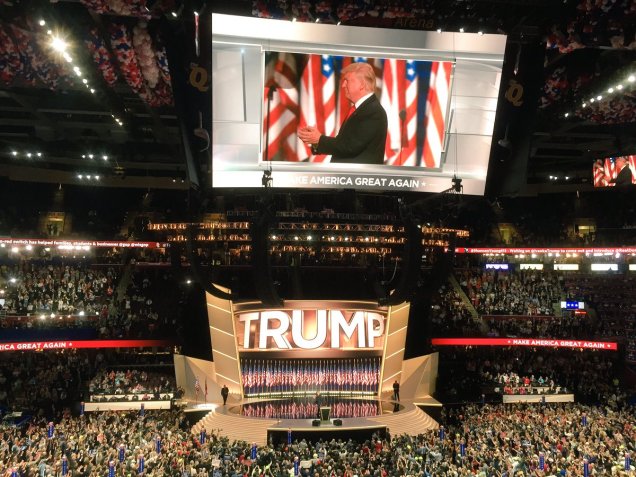
Donald Trump - RNC - Republican National Convention - Cleveland - Nomination - 2

Failing to support Donald Trump as the Republican presidential nominee effectively means advocating a Hillary Clinton presidency as the least-worst option in 2016. And #NeverTrump conservative pundits should find the courage to do so.

The veteran US conservative blog Ace of Spades has nothing but derision for those conservative pundits, commentators and other associated “thought leaders” who denigrate Donald Trump at every opportunity while lacking the courage to state the obvious inference from their criticism – that they would rather see Hillary Clinton as president.

Ace thunders:

Hardest hit: The #NeverTrumper Pundit Class, who are depending on a blowout to maintain that their constant anti-Trump agitations cannot possibly affect the election.

Oddly enough, none of these people claim to have zero influence on the conservative population except when they agitate against Trump. I’ve asked several people to provide past resumes and book proposals to demonstrate they have previously claimed to have absolutely no readership or influence over other conservatives; none of them have come forward with such book proposals stating, “I vow to you that I have barely any readers at all and that my book, should you publish it, will make nary the faintest ripple in the national debate.”

It’s only now, during 2016 (specifically from May of 2016 to November 2016), that this obviously highly-self-regarding group of Thought Leaders is making this claim of having no importance and no following.

I imagine these claims will evaporate ’round the second week of November.

Then they’ll all be back in Highly Influential Thought Leaders of the Conservative Movement mode again.

Sorry, I consider these claims to be cowardly, dishonest, and utterly chickenshit. People who have been cashing checks for decades based on their very value as magnets for conservative eyes can’t suddenly claim that, at least for a six month period from May to November 2016, they haveno influence whatsoever and are doing nothing at all to advance Hillary Clinton’s election prospects.

It’s cowardice, pure and simple. If you consider Trump so terrible that you feel obligated to support Hillary, then at least have the guts to say that, instead of putting on this childishly dishonest and evasive act of claiming that words people care enough about to pay you cash money for suddenly have no impact on anyone, anywhere, ever.

This bullshit that obviously-influential people who get paid advances to write books on conservative politics don’t have influence is unworthy. If you want a defense, then say, “I’m doing what I always do: I’m arguing for what I believe to be for the best for America.” (And that just happens to be arguing for the One True Conservative in the race, Hillary Clinton.)

He’s not wrong. There is no characteristic more despicable in people who claim to be part of the political and media elite than political cowardice and the craven unwillingness to boldly state inconvenient truths. Nor is there a spectacle more corrosive to the public trust in journalism and politics in general than those plump, oily fence-sitters who hedge their bets at every opportunity while still demanding that the rest of us sit and hang on their every word.

This blog took the plunge back at the time of the Democratic National Convention in Philadelphia. Though the words “I’m with her” had to be choked out together with no small quantity of bile, I uttered them nonetheless and this blog nailed its colours to the mast. Now Trump fanatics and those who fantasise about a Trump administration “dream team” involving the likes of Rudy Giuliani, Mike Huckabee and Sarah Palin can damn me if they wish, and never set digital foot here again.

A Hillary Clinton presidency gives the Republican Party four more years to come up with a more palatable option than John McCain, Mitt Romney and Donald Trump. In those four years, precious little will happen to fill conservative hearts with glee. But it is also highly unlikely that anything cataclysmicly, unfixably awful will happen either. That, to this blog, seems like a much better deal than letting Donald Trump loose on the Oval Office and potentially having him tarnishing the conservative and Republican brands even more than he has been able to as a presidential candidate.

Many of Trump’s desperate apologists try to trip up the #NeverTrump brigade by pouring scorn on the idea that Hillary Clinton is more conservative than Trump (see Ace of Spades’ sarcastic description of Clinton as “the One True Conservative in the race”). This misses the point. Many of us see Hillary Clinton exactly for what she is – namely a very calculating centrist with no core political convictions whatsoever. She was never the swivel-eyed leftist that Newt Gingrich tried to suggest – witness her glacial movement on gay marriage, only cautiously signalling her support once she was sure that Joe Biden and Barack Obama had not done themselves any political damage.

So the question is not one of whether Hillary Clinton is “more” of a conservative than Trump (though Donald Trump certainly is no conservative). The question is one of temperament and basic competence to execute the job. And while Hillary Clinton may be dogged by many legitimate ethical questions, few doubt that she could handle the levers of government, if only to maintain America on its present course.

Donald Trump, by contrast, is a complete unknown quantity, and a hugely volatile one at that. When he goes off-script he is liable to say or do anything (insulting the most sympathetic of characters or getting into Twitter wars with D-list celebrities) which comes to mind, and when he is on-script (as at his recent summit with Mexican president Enrique Peña Nieto) he sounds like he has been lobotomised. I have about as much confidence that Donald Trump has read, understood and respects the US Constitution as I believe his claim that “nobody reads the bible more than me“.

The choice, then, is not between a leftist ideologue and an honest, hard-workin’ conservative whose only crime is to be a bit politically incorrect sometimes, as Trump’s loyal cheerleader Sean Hannity loves to put it. The choice is between an ideologically rootless centrist who will likely maintain the status quo because she and her family have too much vested in it to see it fail, or a madman.

There are some occasions when the plucky, anti-establishment, populist insurgency is wrong. Shocking, I know, coming from an ardent Brexiteer, but true nonetheless. The cherished goal of Brexit – reasserting nation state democracy and reclaiming power from distant, unaccountable, technocratic elites – is pure and noble, at its best. Trumpism is not. Even if many of the complaints of Donald Trump supporters are valid – and they certainly are, and have been ignored by mainstream politicians for too long – Trump’s solutions are not equal to the difficulties he identifies.

“The dogmas of the quiet past are inadequate to the stormy present”, Abraham Lincoln once remarked in an address to Congress. True – and nothing represents the dogmas of the past better than Hillary Clinton. But still it is better to sit in the harbour and make scant progress for four years than to unfurl the Trump sail and set a course right for the centre of the storm.


Donald Trump Hosts Nevada Caucus Night Watch Party In Las Vegas

Support Semi-Partisan Politics with a one-time or recurring donation:

Agree with this article? Violently disagree? Scroll down to leave a comment.

Follow Semi-Partisan Politics on TwitterFacebook and Medium.

The Cult Of Social Justice: Many Students Do Not Want To Be Coddled, But Universities Give Them No Choice

Would you rather your child went to a university which promotes rigorous debate and the search for truth, or a coddling daycare centre which seeks to shelter young adults from contradictory opinions and unpleasant facts while enthusiastically validating their every life choice?

In this short, entertaining lecture delivered to American high school seniors preparing for college, social psychologist Jonathan Haidt (and co-author of “The Coddling Of The American Mind“) switches between characters to portray two different university recruitment speakers, one representing Strengthen University and the other attempting to attract students to Coddle University.

Strengthen U. is described in these terms:

We are kind of a cult. We worship truth – this is our sacred value. We will throw anything overboard if it conflicts with this sacred value. In fact, the one act of sacrilege in our school is dishonesty.

Our motto actually comes more recently, from Thomas Jefferson: “For here we are not afraid to follow truth wherever it may lead, nor to tolerate any error so long as reason is left free to combat it.”

[..] So at Strengthen University, we offer hard classes. Everybody doesn’t get an A. You might even get some Ds, you might even fail a course. At Strengthen, we will not do anything to bolster your self esteem. We will teach you skills, we will give you opportunities to succeed, and if you do, you will feel very proud of yourself, you will deserve your self esteem. But we will not build it for you.

We will give you no safe spaces. We do not buy Play Doh and put it in safe spaces for students who feel “threatened”. We will never give you a trigger warning. When you are in a course, if the professor assigns a book we expect that you will not be destroyed by reading the book. If it has ideas you don’t like, we hope you’ll object.

At Strengthen, our sacred value is truth. And what that means is that we are very vigilant – that we never allow a climate in which our students feel they are walking on eggshells. If everybody is afraid of saying something, afraid that if they open their mouth and say what they think they’ll get pulled over by PC Principal [..] that is just death for free inquiry. So we will not allow that to happen.

So here’s the most dangerous thing you need to know about Strengthen University. Adults will not get involved in your relationships. Now think about this: what are you gonna do if somebody insults you? What are you gonna do if somebody uses a racial slur? What are you going to do if someone uses the N-word?

Now, for thousands of years – up until the 1990s – students dealt with this on their own. They might fight back, they might shame the person, they might talk to the person. Since the 1990s there have been speech codes that give adults authority to punish people who commit hate crimes or who use hate speech. What I’m telling you is that we are currently fighting the Department of Education on this, and we expect to win [..] and we expect that we will be legally allowed to stay out of your relationships. We expect you to handle it yourself.

While Coddle U. is pitched to the students in this way:

It’s a wonderful school, a very safe school, supportive school, I urge you to come. We were founded in 1965 based on the ideas of Herbert Marcuse, who was a German sociologist and political philosopher. He came to America – fleed the Nazis, did much of his work at Brandeis and many other schools.

At Coddle, our sacred value is Inclusion. We create a safe, welcoming space for all students. Any colour, any gender, any gender identity, whatever it is, we want to include you. Our sacrilege – the worst thing you can do at Coddle – is blame victims. We will not allow this, that is a violation of our sacred value. We don’t want anyone to feel excluded.

We have very good justification for this policy because the works of our founder, Dr. Marcuse. He wrote this wonderful essay in 1965, it was published in a book “A Critique of Pure Tolerance”, in which Marcuse explained why it is that things should not be tolerated if they impede “the chances of creating an existence without fear and misery”. Of course that’s our goal – don’t we all want the world to be free of fear and misery? So if certain kinds of actions and speech impede the creation of that world, why should we tolerate them?

[..] He goes on to describe what he calls “liberating tolerance”, which would mean intolerance against movements from the Right – because they are intolerant – and toleration of movements from the Left. We will make space for any movement from the Left, but we will not allow movements from the Right at Coddle University.

[..] We are based on a very simple psychology which is that people are fragile. People are so easily hurt. Anything that upsets you could trigger trauma, repressed trauma, unrepressed trauma, trauma that you somehow put up there in the closet and forgot to take – there’s trauma all over your mind and your memory. And we don’t want to trigger your trauma. That could damage you.

And this is especially true for members of the six protected classes [women, African Americans, Latinos, LGBTQ, differently abled, and Native Americans]. If you are a member of one of the six marginalised and oppressed groups you are especially vulnerable. You’ve been traumatised and oppressed your whole lives. Microaggression theory teaches us that when people repeatedly cut these little nicks, these little insults, these little exclusions, they don’t develop calluses, they bleed to death. And so we will not let you be cut while you are at Coddle. We will protect you. Now don’t try to do it yourself, that’s very dangerous. WE will protect YOU from aggression.

At Coddle University we offer access to therapists 24/7. Just dial 811 from any phone, or we have this new feature – just raise three fingers, go like this [he gestures] and we have sensors all around campus, go like this and a therapist will be airlifted right into you. We are a campus-wide safe space, there is no risk of exposure to non-progressive ideas. You will not find it in our curriculum, that would be triggering.

Watch the whole thing when you have a chance.

As amusing as this short video is, it is remarkable how little Jonathan Haidt had to exaggerate his pastiche of a modern liberal university campus. Save for the drones buzzing around, ready to winch fully-trained therapists down to soothe your emotional crisis at a moment’s notice, everything which Haidt talks about is already the norm on many campuses.

Non-progressive groups are banned or their speakers disinvited from campus.

The curriculum is mutilated in an attempt to replace the western canon with “marginalised voices” of dubious lasting value.

Those who do not go along with the progressive orthodoxy are subject to violence and intimidation.

However, there are just a few encouraging signs that we might finally be approaching Peak SJW, that the sheer intolerance of academic freedom and debate shown by the Cult of Social Justice and Identity Politics is becoming untenable within an academic environment. At the University of Missouri, scene of campus protests, sit-ins and hunger strikes in sympathy with the Black Lives Matter movement, new student enrolment is significantly down and financial crisis beckons. Turns out, many parents have qualms about sending their kids off to shrill social justice indoctrination factories when they could be getting a rigorous education elsewhere.

Jonathan Haidt’s presentation distils the issue neatly, and asks a group of young school-leavers what kind of institution they think will best serve their future interests – the overbearing, 24/7 watchfulness of Coddle U or the resilience and antifragility-building environment of Strengthen U.

It is a question which needs to be put to more school leavers as they make their decisions over which universities to apply to. Though the Cult of Social Justice and Identity Politics is hard at work subverting secondary/high schools, for now it remains the case that most school leavers will not yet have been indoctrinated into the cult. There is a narrow, precious window to reach these young people to emphasise the importance of academic freedom, and Jonathan Haidt’s lecture should be required watching for all school-leavers.

In fact, combining thought-provoking talks like this with better information as to the state of academic freedom at different institutions (as with Spiked‘s Free Speech University Rankings) could help many students make better, more informed choices about which institution they choose to spend the next three or four years of their lives.

And while a pervasive hostility to conservative ideas and contempt for free speech may matter less to most students than a lively social scene and the prospect of cheap beer, those students who value academic freedom and robust debate should be given the information to vote with their feet.


Safe Space Notice - 2

Support Semi-Partisan Politics with a one-time or recurring donation:

Agree with this article? Violently disagree? Scroll down to leave a comment.

Follow Semi-Partisan Politics on TwitterFacebook and Medium.

Music For The Day

Ethereal, desolate, beautiful choral music by Vaughan Williams

From the hushed and mystical opening to the blazing fanfares and choruses which follow, the rarely heard oratorio Sancta Civitas (The Holy City) by Ralph Vaughan Williams is one of that composer’s finest compositions and a marvellous addition to the English choral music tradition.

I had the privilege to be at a performance of this work last summer as part of the BBC Proms 2015 season (a much better season, incidentally, than this year’s truly awful, themeless programming – barely one concert worth attending) conducted by the superb Mark Elder and the Hallé Orchestra and Choir.

Though it lacks the splashy, memorable tunefulness of, say, Walton’s Belshazzar’s Feast (which also focuses on the fall of Babylon), Sancta Civitas is no less dramatic, with blazing brass and quickly moving strings as the chorus intones “His eyes were as a flame of fire, and on his head were many crowns” – and “many crowns” crisply emphasised by percussion, adding suitably apocalyptic weight to these extracts from the Book of Revelation.

The offstage boys chorus, trumpet and tenor solo are also used to great effect – acoustically, this worked particularly well in the Proms setting of the Royal Albert Hall – and the piece closes in the same foreboding murmur in which it begins.

As Michael Steinberg puts it in “Choral Masterworks: A Listener’s Guide”, describing the culmination of the piece:

And now comes the miracle in this great work, a new voice, a solo tenor, saved for this moment, and singing just sixteen words: “Behold, I come quickly, I am the bright and the morning star. Surely I come quickly.” Barely above the threshold of audibility the choir, ppp and parlando, responds: “Amen. Even so, come, Lord.” And with last recollections of the opening music, the vision of Sancta Civitas fades beyond our hearing.

Sancta Civitas is performed all too rarely, which is a great shame. The score possesses a rare, brooding, desolate beauty – particularly understandable, perhaps, given that it was composed in 1923-5 and had its premiere during the 1926 General Strike, so soon after the guns of the First World War fell silent.

Religiously speaking, this is an inescapably austere vision of the Holy City. No clouds and rainbows and reunions with long-deceased pets here; this is a vision of the Holy presence of God which strikes awe and no small amount of fear in the heart. Part of me responds positively to this – often the Christian faith today seems to be sanitised or presented in U-rated form, be it deliberately childish-sounding worship songs or watered down teaching of core doctrine. Sancta Civitas evokes something much more traditional and even severe, which in some ways is no bad thing.

Regardless: here is quintessentially Modern English choral music at its very best – but you probably have to be in the right mood.


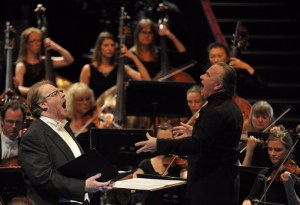
Sancta Civitas - Vaughan Williams - BBC Proms

Follow Semi-Partisan Politics on TwitterFacebook and Medium.

Ian McEwan On Identity Politics

Ian McEwan

Only this immensely privileged generation of students can afford the luxury of being Social Justice Warriors

In the course of an interesting interview with the Guardian’s Decca Aitkenhead promoting his new novel “Nutshell”, author Ian McEwan digresses on the subject of identity politics.

From the feature article:

“Where I get a little critical of it is where selfhood becomes all of your politics, in a world in which we are more troubled than at any point I can remember in my adult life.”

Do identity politics look like decadent narcissism to him? “It feels like that, coming to the university aspect of it. These children have grown up in an era of peace and plenty, and nothing much to worry about, so into that space comes this sort of resurgence that the campus politics is all about you, not about income inequality, nuclear weapons, climate change, all the other things you think students might address, the fate of your fellow humans, migrants drowning at sea. All of those things that might concern the young are lost to a wish for authority to bless them,” he says, “rather than to challenge authority.”

My emphasis in bold.

Doesn’t that just perfectly sum up the Cult of Social Justice and Identity Politics? A generation of students raised at a time of great material abundance, peace and prosperity arrive at university to find most of the great injustices of the past already slain by previous generations of campaigners. Bereft of purpose but still feeling the strong student urge to embrace a cause, they crank up their sensitivity settings to perceive any slight or inequity, however small or unintentional, to be evidence of the systematic oppression of one or more classes of prescribed victim groups.

McEwan’s last sentence is particularly profound – the idea that today’s young people no longer rail against authority in the way that student activists of old did, but rather make tear-stained appeals to authority figures to intercede on their behalf. This is the victimhood culture, clearly distinct from an honour culture (which would encourage the individual to stand up to minor sleights or “microaggressions” and confront the issue themselves) or a dignity culture (which would only sanction involving authorities in case of grave injury).

In contrast with honour cultures and dignity cultures, victimhood culture encourages the individual to exaggerate their own vulnerability and the “harm” which other have inflicted in them through careless words or gestures, and to seek redress from external authority figures not as a last resort but as the first and default option.

Sadly, our generation is primed for this culture. We millennials have often been raised from birth to believe that we are unique, precious and perfect snowflakes worthy of praise and validation from dawn til dusk, that sticks and stones may break our bones but mere words can kill us stone dead, and that there is no greater goal in life than self-actualisation – living life according to our every passing whim, based on an “identity” we create for ourselves which is declared by Social Justice Warriors to be above any questioning, reproach or criticism.

In fact, I’m certain I made the very same point as Ian McEwan on this blog not long ago:

This is an attempted coup by an utterly coddled and spoiled generation of students who know almost nothing of hardship, deprivation or prejudice compared to their predecessors even just a few decades ago.

These tinpot student dictators arrive on campus at the age of eighteen to find most of the really hard battles already won for them – ironically, by genuinely brave radicals like Germaine Greer and Peter Tatchell. But these students must find some outlet for their youthful “idealism”, and so they latch on to the growing Politics of Identity, assimilating its intricacies and genuinely persuading themselves of its core message – that what matters is not the content of one’s character, but rather one’s arbitrary lived experience as a member of a defined and segregated subgroup.

And so rather than simply accepting that they have it rather good, even compared to their parents and grandparents, these student snowflakes go on the march. They find ever-smaller slights or “microaggressions” and protest them ever-more loudly and hysterically in an attempt to assert power over university administrations – many of which meekly submit without so much as putting up a fight.

Throw in the fact that their social hierarchy is based on a purist adherence to the Politics of Identity – with members gaining social currency for flaunting their own tolerant nature or identifying and persecuting anyone whose behaviour happens to violate one of the many invisible lines restricting our speech and behaviour – and you have a potent and deadly combination.

I have always been a fan of Ian McEwan‘s novels. Saturday was edgy, evocative and incredibly well researched, Solar was inventive and at times hilarious, On Chesil Beach made a four-hour flight from Cyprus to London so exquisitely awkward that I wanted to blow the emergency exit and jump out of the aircraft while The Children Act remains shamefully unread on my bookshelf, part of an ever-growing backlog.

But I also admire McEwan’s forthrightness and willingness to speak his mind rather than toe the establishment line on all social matters. McEwan recently caused a ripple of scandalised headlines when he questioned whether people should be free to choose their gender identity:

In a speech to the Royal Institution, the Booker prize-winning writer asked whether factors such as biology and social norms limited our ability to adopt a different gender.

“The self, like a consumer desirable, may be plucked from the shelves of a personal identity supermarket, a ready-to-wear little black number,” McEwan said. “For example, some men in full possession of a penis are now identifying as women and demanding entry to women-only colleges, and the right to change in women’s dressing rooms.”

In a Q&A after his speech, one woman asked McEwan, 67, to clarify what she called his offensive remarks, the Times reported. “Call me old-fashioned, but I tend to think of people with penises as men,” he said. “But I know they enter a difficult world when they become transsexuals and they tell us they are women, they become women, but it’s interesting when you hear the conflict between feminists now and people in this group.

“It’s quite a bitter conflict. Spaces are put aside, women are wanting to put spaces aside like colleges or changing rooms, and find from another side a radical discussion coming their way saying men who want to feel like it can come in there too. I think it’s really difficult. And I think there is sweeping through American [university] campuses a kind of strange sense of victimhood and a sense of purposeful identities that we can’t actually all of us agree with. Of course sex and race are different, but they also have a biological basis. It makes a difference whether you have an X or Y chromosome.”

Cue the kind of response one has come to expect when anybody dares to give voice to such thoughtcrime.

His new novel, Nutshell, is narrated from the perspective of a foetus still in the womb, and is likely to raise all kinds of hackles from staunch free right campaigners and militant free choice protesters alike.

But on the Cult of Social Justice and Identity Politics, McEwan hits the nail on the head. How different the university campus must seem to him now than it was when he was a student. One wonders whether McEwan would even be allowed to set foot on the campus of the University of East Anglia in Norwich, where he received his Masters in creative writing – the university has received a “red” rating in Spiked’s annual university free speech rankings.

Certainly McEwan, one of UEA’s most distinguished alumni, would never be welcome at the Students’ Union with its blanked restriction on “imagery or language which reinforces a gender binary”. Having expressed his own personal views on the subject of transgender issues, McEwan’s presence would clearly create an oppressive and highly unsafe space for the delicate flowers now following in his footsteps.

What’s really concerning is this: Ian McEwan is now something of a grandee in Britain’s cultural scene, yet even he was ultimately forced to apologise for airing his own personal views on transgenderism, effectively reversing his earlier statement under duress and confessing “biology is not always destiny” and that a person’s decision to change their gender must be “celebrated”.

If one of Britain’s most successful and respected authors cannot hold a contrary or agnostic position on hot-button social justice issues where conformity without exception is demanded and expected, what hope is there for new, up-and-coming artists or academics to question the new orthodoxy or admit to holding an unpopular opinion? Who will be rash enough to dynamite their own career before it has gotten off the ground  by admitting their heresy or reflecting it in their work?

And what future for the rich and vibrant British artistic and cultural scene when the Social Justice Warriors finally get their way and browbeat everybody in the land into thinking, saying and “celebrating” the same things?


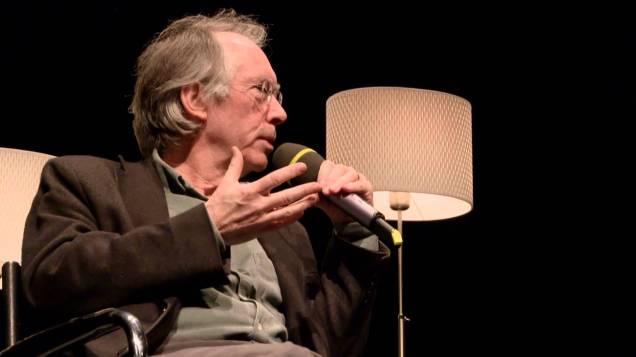
Ian McEwan - Transgender comments

Bottom Image: Guardian

Support Semi-Partisan Politics with a one-time or recurring donation:

Agree with this article? Violently disagree? Scroll down to leave a comment.

Follow Semi-Partisan Politics on TwitterFacebook and Medium.