Is Hillary Clinton Suffering From Something More Than Pneumonia? Her Campaign’s Evasiveness Makes It Impossible To Discount

Even if Hillary Clinton’s collapse at the New York 9/11 memorial event was a one-off consequence of reported pneumonia, everything that the Clinton campaign has done and said in the aftermath invites scepticism and disbelief that this is the extent of the issue, raising more questions than answers

For the first time, I am nervous that Donald J Trump might just do it – that he, rather than Hillary Clinton, might be the one taking the oath of office on January 20 next year. Not because Donald Trump has in any way become more palatable or presidential – far from it – but because of the growing, gnawing feeling in the pit of the stomach that the Clinton campaign is perched atop a huge unexploded bomb of negative health revelations.

Until yesterday, such discussions about Hillary Clinton’s health were largely confined to the sensationalist or alt-right press, with online journalists such as Mike Cernovich and Paul Joseph Watson collating video “evidence” of what they claimed to be some underlying neurological condition. While Clinton’s behaviour in some of these videos certainly appears strange, none of them met a convincing standard of proof that something is definitely awry.

But then yesterday came shocking footage of Clinton swaying alarmingly as she waited for her motorcade to appear and whisk her to safety after she “overheated” at the 9/11 memorial ceremony in New York City, before her legs finally buckled and she appeared to faint and topple forward into the vehicle, being dragged the remainder of the way into the van by aides and Secret Service personnel.

Nothing that the Clinton campaign has done since the emergence of that video has assuaged the entirely reasonable concerns of journalists and American voters. Among the litany of questionable actions:

  1. Clinton’s handlers left her press pool stranded at the 9/11 memorial event, leaving without them and giving them no knowledge of what had transpired
  2. Rather than taking Hillary Clinton to a tier-1 trauma centre hospital for evaluation, which is apparently correct Secret Service procedure in the event of a protectee falling ill and potentially losing consciousness, Clinton was instead driven to her daughter Chelsea’s Manhattan apartment to recuperate
  3. Approximately 9o minutes later, Clinton emerged from the apartment building all smiles, remarking upon what a beautiful day it was in New York before getting into her waiting vehicle unaided
  4. The Clinton campaign’s story kept changing throughout the day – first she had simply decided to leave the event due to “overheating” (on a rather mild day), then it was reported that she was dehydrated, and only once she had returned to her home in Chappaqua, New York was it revealed that she was suffering from pneumonia
  5. The diagnosis of pneumonia was apparently made on Friday 9 September after weeks of speculation about Clinton’s persistent and severe cough (previously attribute to allergies), and yet the campaign never made this public and it would presumably remain a secret even now had Clinton not been filmed collapsing on Sunday
  6. No further details as to the type of pneumonia suffered by Clinton have yet emerged, even now. If it is the bacterial type Clinton may well be contagious and yet participated in numerous fundraising events, as well as hugging a young child who ran up to greet her in the street
  7. In a failed attempt at damage control, Bill Clinton told the media that Hillary has suffered from this type of dizziness on several occasions in the past, though the campaign’s official story is that the collapse was pneumonia-related
  8. In a failed attempt at damage control to the damage control, Hillary Clinton called into the Anderson Cooper AC360 show on CNN, and upon questioning was unable to recall the number of times that she has had these spells in the past five years

This is not good. The millions of Americans who saw one of their two main presidential candidates collapse between the kerb and the open door of her waiting SUV and have to be dragged inside, feet trailing behind and losing a shoe in the process, might reasonably wonder why her entourage and the Secret Service thought it fit and proper to drive her to Chelsea Clinton’s apartment rather than a properly equipped medical facility.

They might also reasonably wonder why that same candidate then breezed out of the apartment building with a beaming smile and seemingly not a care in the world a mere 90 minutes later, exclaiming that she was “fine” and making absolutely no reference to the troubling scene we had witnessed earlier, leaving it to her campaign to make the pneumonia revelation only once she was safely ensconced in her home.

Many more Americans might wonder why so much of the mainstream media, from CNN and MSNBC to more predictable web-based outlets like The Guardian, Slate and the Huffington post, are determined to run interference in defence of Clinton, downplaying the incident as a mere “stumble”angrily exclaiming that climate change “denialism” is worse than misleading voters about one’s state of health or that past dishonesty by presidential candidates like Franklin Delano Roosevelt and John F Kennedy effectively excuses any similar dishonesty in 2016.

Worse still from Clinton’s perspective, speculation about her health is now rife within the respectable conservative media – no longer something to be hinted at or linked to on Twitter late at night, but occupying the minds of American conservative thought leaders.

Here’s Rod Dreher, no Clinton or Trump supporter and not normally given to hyperbole or conspiracy theorising, admitting:

Until this weekend, I thought Clinton health rumors were just right-wing conspiracy mongering. That confidence collapsed when Mrs. Clinton did, on the streets of New York. The story now has two narrative lines: 1) How sick is Hillary, really?, and 2) Why did she lie about it?

The Clintons lie to protect their power. Clinton partisans will tell themselves, and the rest of America, that whatever happened on Sunday, and whatever series of tales the Clinton campaign has been telling to manage the story, we have to push it all aside to keep Donald Trump from winning. Feminists did the same thing back in the 1990s with Bill Clinton’s abusive, exploitive relationships with women. But not everybody who dislikes Trump hates him so much that they are willing to overlook Clinton’s lies, especially if they are not about things that happened in the past, as with her husband’s lies in the 1990s, but about things that weigh on her ability to perform as president.

Plus, Bill Clinton had a lot of charisma with which he shielded himself. Hillary has none. People may admire her, but they do not love her. That matters.

Hillary’s lies about her health and her “deplorables” remarks do not make Trump a better person, or a better candidate. But they do make him a slightly more plausible one with some voters than he was going into the weekend. When an election is as close as this one, that kind of thing matters.

And the National Review’s David French:

Taken together, these facts say nothing good about Hillary, her campaign, or the prospects for transparency in a potential Hillary Clinton White House. One of the oldest Americans ever to run for president has had repeated, significant health events, has concealed the true extent of her health problems from the American people, and continues to engage in a pattern of deception to this day. Does anyone really believe that Hillary would have admitted either to a significant health episode or a pneumonia diagnosis had cameras not caught her appearing to pass out on a perfectly temperate September day in New York?

Compounding the problem, not only will she conceal the true extent of any health problem until the facts emerge on their own, she’ll empower her allies to mock those who raise health concerns, to cast them as nothing more than crazed conspiracy theorists.

Anyone can, of course, find crazy things on the Internet easily enough. But the notion that a 68-year-old woman with a history of blood clots, a recent serious concussion, and obvious public discomfort (including apparently passing out at a public event) might not be fit enough to withstand the rigors of the presidency is hardly a fringe thought. Age and health weren’t fringe worries when Bob Dole or John McCain ran for president. When Ronald Reagan was campaigning for reelection in 1984 (especially after he performed poorly in his first debate), age and health dominated the public conversation.

To be clear, this is a preview of how Hillary would conduct herself in office. You can be sure that if she lies and minimizes her health challenges as a candidate, she’ll do so as president. (If past practice is any guide, she’ll lie about anything that makes her look bad.) If she falls ill, the American people risk experiencing the same thing Soviet citizens experienced — being fed the official line that their leaders simply had “colds” (or, in Hillary’s case, “allergies”) until the truth could no longer be concealed.

If it were some other candidate, someone with a more open relationship with the press and minus the history of lawyerly evasiveness, one might accept the belated pneumonia explanation at face value and chalk the confused messages emanating from the Clinton campaign as understandable confusion within the team. But we are not dealing with 2000-era John McCain. Hillary Clinton’s life is not an open book – it is a lengthy tome where several sections are torn out while others are heavily redacted, the censor’s black ink sometimes still wet as one turns the page. And those asking to be made leader of the world’s most powerful and consequential country don’t get the benefit of the doubt.

It brings me no joy to write any of this. While this blog is on the record as being unimpressed bordering on despairing of both candidates, when it comes to choosing between Hillary Clinton and Donald Trump there is simply no contest – Clinton represents four more years of dreary continuity with a background hum of ethics concerns whereas Trump, hardly the picture of honesty himself, threatens a truly authoritarian dystopian future with a new crisis every week. Given the binary choice, this blog would choose Hillary Clinton without apology.

But there appears now to be every possibility that the Clinton campaign is perched atop a powder keg of dynamite, and that every public appearance for the next two months will be a heart-in-mouth ordeal of wondering whether she will make it through to the end or else cause what would surely be terminal damage to her campaign by tripping, choking or passing out again on live television.

There are questions which appear to be legitimate and not from the lunatic fringe, asking whether there is something much more significant wrong with Hillary Clinton’s health. And yet the Clinton campaign continues to stonewall and use Trump’s refusal to release full medical records as cover for being equally secretive. Making campaign decisions (like not allowing a full protective press pool) simply because Donald Trump has done the same is unbecoming of a candidate like Hillary Clinton, who should aspire to a standard of transparency significantly higher than that set by the reality TV star.

This is no time for further evasions. If there is a more serious, as-yet undisclosed health issue affecting Hillary Clinton, it needs to be made public. Now. And if public reaction is particularly negative then an urgent discussion needs to take place about replacing Hillary Clinton at the top of the ticket while their is still time for the replacement Democratic Party nominee to have a fighting chance against Trump.

Pneumonia can happen to anyone. But this palace intrigue and the swirling conspiracy theories surrounding Hillary’s state of health are entirely self-inflicted, a product of the Clinton campaign’s pathological evasiveness and secrecy not only relating to health matters but other issues too. And it simply can not be allowed to continue.

Hillary Clinton is one more “medical episode” away from effectively gifting the presidency to Donald J Trump. Her campaign needs to decide whether they are happy to have that on their collective conscience.

 

hillary-clinton-stumble-fainted-911-memorial-new-york-city-pneumonia-health

Support Semi-Partisan Politics with a one-time or recurring donation:

Agree with this article? Violently disagree? Scroll down to leave a comment.

Follow Semi-Partisan Politics on TwitterFacebook and Medium.

With David Cameron’s Resignation From Parliament, British Conservatism Can Begin A New, Bolder Chapter

david-cameron-resigns-as-mp-for-witney-parliament-westminster

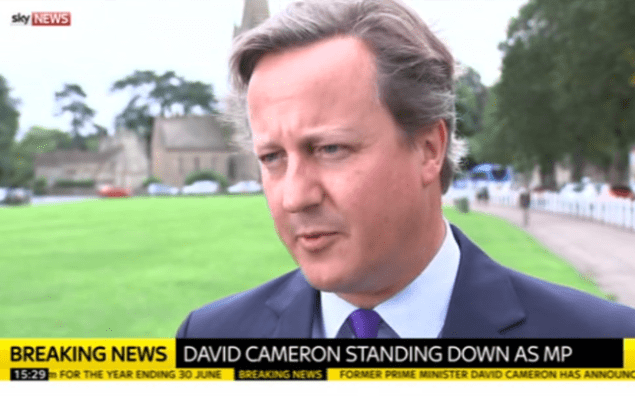
Finding himself prematurely out of power and seeing no value in life as a mere backbench MP, David Cameron brings the curtain down on a bland, centrist, disappointing and entirely forgettable political career

Having successfully completed Tony Blair’s fourth term of office and having a premature end called to his fifth, David Cameron today announced his decision to flounce out of parliament – despite having earlier promised to stay on as an MP after his fall from power.

He took his leave of us with these words:

With modern politics, with the circumstances of my resignation, it isn’t really possible to be a proper backbench MP as a former prime minister. I think everything you do will become a big distraction and a big diversion from what the Government needs to do for our country.

And I support Theresa May, I think she’s got off to a great start, I think she can be a strong prime minister for our country and I don’t want to be that distraction – I want Witney to have a new MP who can play a full part in parliamentary and political life without being a distraction.

[..] I hope I’ll continue to contribute in terms of public service and of course contribute to this country that I love so much.”

[..] I spoke to Theresa May and she was very understanding about this decision. I support her, I support what she’s doing, she’s got off to a cracking start. Obviously I’m going to have my own views about different issues – people would know that. And that’s really the point: as a former prime minister it is very difficult, I think, to sit as a backbencher and not be an enormous distraction and diversion from what the Government is doing. I don’t want to be that distraction; I want Witney to have an MP that can play a full role in parliamentary and political life in a way I think I would find very difficult if not impossible.”

Naturally this has led to speculation that David Cameron somehow disagrees with Theresa May’s loudly-trumpeted plans for new grammar schools and the return of potentially widespread academic selection to the education system.

I find this explanation…unconvincing. If the capsuled history of David Cameron’s premiership and leadership of the Conservative Party has taught us anything about Cameron the man, it is that he has absolutely no core political convictions which he is not more than willing to toss overboard for the sake of political expediency and his relentless desire to engage in centrist triangulation.

Fiscal conservatism? As long as he and George Osborne were able to find some statistical or rhetorical device to falsely claim that they were “paying down Britain’s debts”, Cameron was more than happy to continue spending hand over fist, driving Britain’s national debt ever-upward while exhibiting enormous timidity in reversing many of Gordon Brown’s most draconian tax increases.

Strong national defence? It took his successor, Theresa May, to drive through the parliamentary vote on the renewal of Trident, while under David Cameron’s watch Britain temporarily waived goodbye to our aircraft carrier capability (a true diminution in the eyes of the world) as well as the ability to effectively patrol our own coastline and airspace without the help of allies.

A smaller state? The much-vaunted “Big Society” was dead on arrival in 10 Downing Street back in the spring of 2010, and whatever rearranging of deckchairs the coalition government engaged in, nothing was done to tackle the biggest budget black holes – pensions and the NHS. Under David Cameron, the government preferred to virtue-signal their progressive credentials by spending borrowed money on international aid than get to grips with departmental spending.

So given this singularly unimpressive track record, the idea of David Cameron suddenly discovering an ideological backbone and beliefs strong enough to resign over is frankly ludicrous.

In fact, what really happened is quite obvious. Cast from power unexpectedly and with unexpected speed, Cameron lied when he said that he intended to stay on and complete his term as MP for Witney. To have said otherwise and admitted his intention to resign would have appeared churlish, and more than anything Cameron wanted to cultivate the image of himself as an easy-going happy warrior, ready to relinquish the trappings of office without regret and re-assume a more humble role as a backbencher.

This announcement came as quickly as it possibly could without making Cameron look completely dishonest and reprehensible. At least when Gordon Brown resigned as an MP he had managed four years as a backbencher – albeit four years in which he collected a hefty MP salary while being virtually invisible in Westminster. David Cameron’s brittle ego wouldn’t even permit him to last a year on the backbenches. His top flight political career having been brought to an unexpected end, Cameron saw no reason to stick around as a mere constituency MP.

To politicians like David Cameron, the role of constituency MP is merely a springboard to ministerial power. When the possibility of prize cabinet jobs or the keys to Number 10 Downing Street are no longer an option, wasting time on select committees or dealing with constituents’ issues appears a supreme waste of time – time which could be better spent cashing in on fame and carefully tended relationships while they are still relatively fresh and can bear the most fruit.

James Kirkup is similarly unimpressed with the manner of Cameron’s departure:

On June 27, David Cameron issued this statement: “I will continue with my duties as the MP for Witney. It is an enormous privilege to serve the people of West Oxfordshire.”

So enormous that he could only bear it for a few more weeks, apparently. He’s off, leaving the Commons and triggering a by-election in Witney: some lucky Tory will soon inherit one of the safest and prettiest seats in the country.

What does this tell us about Mr Cameron? Nothing terribly positive, to be honest. Let’s remember, he fought the EU referendum campaign promising not to quit if he lost, then quit when he lost — but only having clung to office as long as possible and having banned the Civil Service from doing any preparatory work for Brexit, thus making it harder for his successor to actually get on with the job.

In between breaking his promise not to resign as PM and breaking his promise not to resign as an MP, the only significant official work he undertook was drawing up an honours list handing an OBE to his wife’s stylist and a knighthood to his press officer.

Not exactly the most dignified departure from office, is it? And certainly not one that’s easy to reconcile with many, many statements from Mr Cameron about the sense of duty he owed to his nation, the selfless service he felt obliged to render.

And Kirkup’s unsparing conclusion:

And this is why flouncing out of Parliament in this way is so telling: it speaks to something fundamental about Mr Cameron’s character and his approach to politics: a lack of seriousness, the absence of real commitment.  Yes, he wanted the job and yes he put the hours in, to the cost of his family.

But he would never die in a ditch for his political beliefs, never shed blood and move mountains to hammer home his arguments. It was always enough to get by, to do just enough to get the top grade and do better than the rest.

Sadly, that describes Cameron perfectly – far more obsessed with optics than reality, and forever in search of the path of least resistance, even when that path ran direct through traditionally left-wing territory.

Ultimately, David Cameron was a weak and instantly forgettable prime minister because he was a centrist triangulator and a technocrat at heart. As prime minister he had no real interest in reforming Britain in his own image, imposing his own worldview or being a statesman. Rather, he was content to campaign and govern as a mere Comptroller of Public Services, the living, breathing symbol of the diminution of our national politics.

With his happy departure from Parliament (en route to a minor footnote in history) one hopes that the ground has shifted under British politics, and that the age of the technocrat might be coming to an end. His successor, Theresa May, while far from being this blog’s preferred choice, at least seems to have some strongly held political views of her own, while Jeremy Corbyn’s imminent re-election as Labour Party leader promises a 2020 general election offering genuine choice to the electorate.

All we need now is for George Osborne to follow his chum David Cameron into political retirement and we may finally be able to turn the page on this most boring and depressing chapter in Conservative history.


David Cameron - Coke Zero Conservative - I Cant Believe Its Not Miliband

Support Semi-Partisan Politics with a one-time or recurring donation:

Agree with this article? Violently disagree? Scroll down to leave a comment.

Follow Semi-Partisan Politics on TwitterFacebook and Medium.

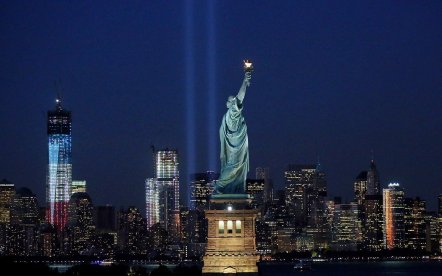
Fifteen Years

“Quiet City”, Aaron Copland (1941).

statue-of-liberty-world-trade-centre-twin-towers-new-york-city-2

Follow Semi-Partisan Politics on TwitterFacebook and Medium.

Submission

jeremy-corbyn-hilary-benn

After pompously telling anyone who will listen that they cannot possibly work with Jeremy Corbyn, Labour’s centrist MPs are preparing to bend the knee and meekly return to Corbyn’s shadow cabinet once he is re-elected leader of the party


UPDATE: Read Part 2 here.


Labour’s tantrum-throwing centrist MPs, recognising their man Owen Smith’s imminent defeat by Jeremy Corbyn in the Labour leadership contest, are apparently now making frantic overtures to the Corbyn camp so that their treachery might be forgiven, allowing them to serve in the shadow cabinet once again.

The Telegraph reports:

Senior Labour politicians who quit the shadow cabinet in protest at Jeremy Corbyn’s leadership are drawing up plans for a truce that would see them return to his team if he is re-elected this month.

Mr Corbyn was rocked by dozens of resignations from his shadow government in the aftermath of the EU referendum, in a rebellion that triggered a leadership contest.

However, with polls suggesting that Mr Corbyn is on course to win next week’s leadership election easily, a number of former shadow ministers are preparing the ground to return to work with him.

They will demand a list of assurances from Mr Corbyn as a sign of his goodwill before pledging their support.

These include allowing them greater say in the running of the shadow cabinet, giving his support to a return to shadow cabinet elections, and dropping the threat that MPs who opposed his leadership will face de-selection.

And the FT:

Some senior Labour MPs who resigned from the shadow cabinet en masse in the early summer are braced to go back and serve under Mr Corbyn. One said: “I do not see what the other options are. At the end of the day, we have to fulfil our role, which is providing opposition to the Tory government.”

[..] One former frontbencher said that if Labour MPs did not fall back into line, it would continue to “feed the narrative” that Mr Corbyn was being undermined by “Blairite” enemies in the Parliamentary Labour party. “Quite a few of my colleagues feel the same way, although not everyone.”

[..] “There is a real determination among a number of us to make sure that we try to do the job that needs to be done: holding the Tories to account,” said one former frontbencher. “You can do that to some extent from the backbenches but you can do it much more effectively from the front benches . . . but the onus is now on Jeremy to unite the party.”

Translation: “Being out of the political spotlight and festering away on the backbenches is killing us and our career aspirations, so please can we come in from the cold?”

Well, well, well.

I suppose one has to admire the nerve of the centrists, daring to issue conditions for their return to the shadow cabinet having taken the reckless and self-serving decision to flounce out and destabilise their party at a time (in the aftermath of the Brexit vote) when stability was most required. Corbyn has thus far shown no qualms about filling the gaps in his shadow cabinet with D-listers and nobodies – what makes the likes of Chris Bryant, Lucy Powell or Angela Eagle think that Corbyn is desperately pining for their return?

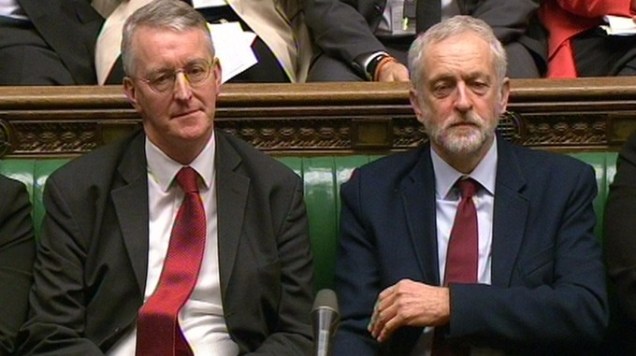
But in another sense, this pitiful capitulation is not surprising. The Parliamentary Labour Party called Jeremy Corbyn’s bluff and lost, badly. There is ample blame to go around – some for the remaining “big beasts” of the party who were too cowardly and self-serving to put their names forward as leadership contenders, leaving it to unloved support acts like Angela Eagle and the contemptible Owen Smith; some for misbehaving shadow ministers like Hilary Benn who took the job and then rebelled and briefed against their leader at every opportunity; and last but not least, a portion of the blame rests with every single one of the 172 Labour MPs who opportunistically calculated that the confused aftermath of the EU referendum provided a great “fog of war” in which they could go full Brutus on Jeremy Corbyn’s Caesar and get away with it.

Well, it didn’t work. Nobody viable stepped forward, the party membership was enraged at the parliamentary party challenging their pick for leader less than a year into the job, and Owen Smith’s damp squib of a campaign lurched from one unforced error to the next. Apparently the odious man can now be found swanning around Britain portentously comparing himself to Saint Aneurin Bevan of Tredegar, founder of Our Blessed NHS (genuflect), hoping that Labour members will not take the time to google his past career as a pharmaceutical lobbyist and statements broadly supportive of privatisation.

So what should the centrists do? Well, if they had an ounce of genuine conviction and commitment to principle (ha) then they would part ways with a Labour Party which has “left them” (to paraphrase their unconvincing bid for sympathy) and set up shop as a new party of the centre-left. But they will not do so, partly for selfish reasons – they want to keep ownership of the party apparatus and assets – but also for the very practical reason that starting a new political party from scratch and making a success of it is almost impossible. Sure, 150+ defectors would be much better than the “gang of four” who helped to found the SDP back in 1981. But while their parliamentary contingent might initially be fairly large they would need to build up a party structure and grassroots campaigning organisation from scratch in a very short space of time, or face certain annihilation at the 2020 general election.

And so the unhappy bedfellows will likely limp on together, Corbynites and centrists openly despising one another but remaining stuck with each other thanks to the British political system. The centrists will continue to moan to any journalist who will listen, Dan Hodges will have more material for his Mail on Sunday column than he knows what to do with, the PLP will do everything they can to make Jeremy Corbyn’s life a living hell, and Corbyn’s team will do all they can to set the stage for a purge of the centrists, either at the upcoming constituency boundary review or when it comes time to choose candidates for the 2020 general election.

Besides, the centrists have some thinking to do before they can make a plausible bid to take back leadership of the Labour Party. First and foremost, they must decide on a shared position on Brexit, which will be close to impossible – the centrist MPs are salivating at the prospect of thwarting Britain’s exit from the European Union by any means possible, no matter how far-fetched. Their every instinct is to take up and amplify the great howl of anguish emanating from the metro-left at the prospect of being forcibly ripped away from a European Union which most of them barely understand but which is absolutely central to their identities as progressive, enlightened model citizens. Unfortunately, this involves waving a big fat middle finger to Labour’s working class supporters, particularly those in the north of England, who were some of the most enthusiastic voters for Brexit.

The result will likely be another fudge and evasion as regularly practised by the Labour Party. They will reaffirm their commitment to the European Union and their desire to overturn the result of the EU referendum or at least to hold a second or third referendum until they achieve the desired result, while uttering glib, platitudinous assurances that they understand people’s frustration with the EU and with immigration, and that they will work for some mystical reform at some point in the future. They will grab hold of the Magical EU Reform Unicorn as tight as they can, while repeating to themselves that in fact they simply need to work harder to educate people of the wonders of European political union and mass immigration.

The political ground has shifted underneath all of Britain’s political parties, and while none have yet truly come to terms with the new post-Brexit reality and the schism on the Left, it is the Labour centrist MPs who are in the strongest denial right now. This is mostly because original thinking is required, and few of their number are capable of the feat. Jeremy Corbyn offers (with one or two exceptions) a very traditional and anachronistic form of socialism, ossified since the late 1970s. To regain power, the centrists cannot simply repudiate Corbynism or match Tory centrism while blathering on about equality and fairness. They need to jack in the Blairite triangulation and reimagine the role of the big, activist state that they love in a way which makes sense in the new century. Most are unwilling to put in this work – they think they can cheat their way back to power using a playbook which is twenty years old.

It won’t work. And however limited Jeremy Corbyn’s appeal to the wider country may be, he will not be dislodged as party leader until somebody else comes along with a compelling, clearly identifiable programme for government of their own – something sufficiently distinct from Theresa May’s authoritarian Toryism that Labour Party members (a) agree with it, and (b) think the country might vote for it.

Owen “I’m Nye Bevan!” Smith is a pitiful joke, as was Angela “I am my own woman!” Eagle when she was also running for leader. When the centrists have done their homework, one of them – preferably one with name recognition and a sprinkling of gravitas – can step forward and present their shiny new plan for Labour, and maybe the party membership will listen.

But until that happens, this is Jeremy Corbyn’s party. And that is how it will remain.


UPDATE: Read Part 2 here.


Jeremy Corbyn - PMQs

Support Semi-Partisan Politics with a one-time or recurring donation:

Agree with this article? Violently disagree? Scroll down to leave a comment.

Follow Semi-Partisan Politics on TwitterFacebook and Medium.

American Conservatives, Fearing National Decline, Want A President With Swagger Again. What Could Go Wrong?

American conservatives only react so furiously when President Obama shows a little diplomatic humility and self-deprecation while abroad because it touches a raw nerve – they are consumed by worry about American decline, and project their anger onto minor, intangible issues like bowing protocol, Air Force One tarmac snubs and presidential behaviour which falls short of obnoxious boorishness on the world stage

Many American conservatives have reacted with outrage to this video of President Obama addressing an audience during a recent trip to Laos, holding it up as yet more evidence that the president they so love to hate actually hates America himself.

Addressing a townhall-style meeting while in Laos, Obama is heard to say:

I believe that the United States is and can be a great force for good in the world. But because we are such a big country, we haven’t always had to know about other parts of the world. If you are in Laos, you need to know about Thailand and China and Cambodia because you’re a small country and they’re right next door, and you need to know who they are.

If you’re the United States sometimes you can feel lazy and think, you know, we’re so big we don’t have to really know anything about other people, and that’s part of what I’m trying to change, because this is actually the region that’s going to grow faster than any place else in the world. It has the youngest population and the economy is growing faster any place, and if we aren’t here interacting and learning from you and understanding the culture of the region, then we’ll be left behind, we’ll miss an opportunity, and I don’t want that to happen.

Cue lots of conservatives running around in a tizzy as though Obama had been propping up the bar at some Laotian tavern, regaling the regulars with an endless reel of hilarious anecdotes about how backward and stupid Americans are, while TV cameras recorded every shameful moment.

Here’s Ace of Spades, getting unnecessarily worked up:

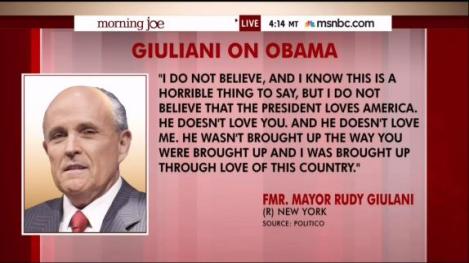
It’s almost as if this pampered, do-nothing, unqualified malcontent actively hates America or something.

Someone out there there’s a Yourself in desperate need of a f*cking.

You gotta listen to this. It’s the International Version of his famous Bitter Clingers Song.

Look, this is silly. I know it is inexplicably popular in American conservative circles to rant and rage about how the Evil Muslim Marxist in the White House secretly – or not so secretly – hates America. And to be fair, President Obama hasn’t always done himself many favours in this regard, particularly with that unbearably condescending “bitter clingers” speech which genuinely made it seem that he holds a significant proportion of the country in something between pity and contempt.

But do these pro salt-of-the-earth conservatives think that the likes of Donald Trump or the Republican Party establishment “love America” so much that they are ever going to sit down and break bread with ordinary folk on a regular basis (apart from when seeking their vote)? Do they really think the man who eats his pizza with a knife and fork has any great love for the Common Man? Or that Newt Gingrich or Paul Ryan or Ben Carson spend their time away from Washington D.C. slumming it, eating at Waffle House and watching Nascar?

Besides, what point is Ace trying to make here – that when on foreign soil, the American president must always be belligerently boastful about the United States, even (or especially) to the point where it enrages his hosts? This is like that American exceptionalism argument all over again. It’s perfectly fine to consider America a truly exceptional nation – heck, I certainly do, and I’m not even a citizen yet – but in what possible way does it make good diplomatic sense to stomp around the world lecturing other nations about how inferior they are?

What do conservatives think that Obama should have said in Laos? That the United States of America, to the very last trailer park dweller, is full of the wisest and most sagacious citizens on the face of the earth? That every American, from the richest penthouse-dweller in New York to the poorest cabin owner in Appalachia, is a natural foreign policy expert? That the people of a nation where 54 per cent of citizens do not own a valid passport are nonetheless deeply knowledgeable about the world beyond their own borders?

Is there not some truth to the perfectly benign and logical statement that as a large and powerful country, there is much less incentive for average American citizens to concern themselves with world affairs until they threaten an imminent impact on the homeland? Might it not possibly be the case that the country whose top-rated cable news channel (Fox News) has a segment entitled “Around The World in 80 Seconds” – that’s seconds, not minutes, and typically seconds filled with lightweight fluff about bull-running festivals or cheese-rolling competitions – is more domestically focused than other, smaller and more interconnected countries?

Worrying that the president of the United States is not swaggering around boorishly enough on the world stage is actually evidence of a deeper malaise, a suggestion that those who criticise Obama so hysterically actually realise that America is in some ways a troubled country, and desperately want their leader to kick ass at every diplomatic summit as a way of papering over the cracks.

And that’s what this hissy fit from the American Right is really all about: the gnawing fear of American decline. In some ways this is a legitimate fear – no, America is not going anywhere just yet, despite the best efforts of enemies without and “reformers” within to undo all that is good about the United States. But we are certainly entering an indisputable period of relative American decline, as other countries develop and become wealthier, and new regional powers assert themselves. This is understandably concerning to many people, particularly those of the baby boomer who came of age at a time of unparalleled American power and prosperity, as well as those younger Americans who came of age (as I did) between the shadow of the Cold War receding and the incredible national shock that was 9/11.

It will be harder now for America to pursue her global interests unchallenged. American influence will be questioned and undermined by assertive regional powers and two-bit mischief-makers alike. America will have to become accustomed to harmless but superficially humiliating slights from jumped-up, distasteful regimes looking to impress their domestic audience by standing up to the United States, much as Britain had to endure a reduced standing on the world stage after the Second World War and loss of empire.

But America is not Britain, and her decline will be neither as swift nor as steep. America’s fundamentals remain broadly sound. The economy remains large and dynamic, while America’s military power and reach eclipses that of all other nations several times over. Financial and social problems, though pressing, are surmountable – or at least the damage can be contained for now. America will remain the sole superpower for the foreseeable future, and all those countries who American conservatives see posing a threat in their fevered dreams face internal and external challenges of their own.

And yet the gnawing fear persists, and leads otherwise sensible conservatives to say and demand very silly things in a desperate and unnecessary attempt to prove continued American national virility. But now is the time for smarter American diplomacy, not for the unsubtle sledgehammer approach. Of course America should take pride in the exceptionalism of her founding and history, but this should not translate into a boorish tendency to lecture other countries when leading by example can be far more effective.

That doesn’t mean the United States should stop calling out human rights abuses or democratic infringements in other countries – far from it. But conservatives should stop demanding that the US president, while standing at a lectern at a joint press conference next to a foreign head of state, opens his remarks by detailing all the many ways in which the United States is a far superior country. Is that really too much to ask?

After all, it is less than eight years since we last enjoyed the service of an American president brimming with natural swagger, and the foreign policy consequences were…mixed.

Do we really want to go down that road again?


why-does-obama-hate-america-rudy-giuliani

Support Semi-Partisan Politics with a one-time or recurring donation:

Agree with this article? Violently disagree? Scroll down to leave a comment.

Follow Semi-Partisan Politics on TwitterFacebook and Medium.