Modern Safe Space Culture Will Never Produce Anyone Like David Bowie

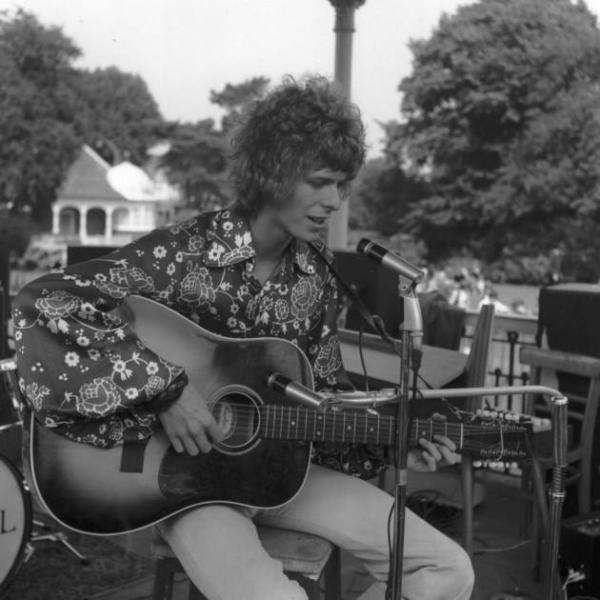
David Bowie - Beckenham Free Festival

Something more than David Bowie died this week

Why has David Bowie’s death affected so many people so deeply?

It goes much deeper than the pro-forma grief athleticism which the internet does so much to encourage. Yes, we can easily find examples of people going too far in their vicarious grief – often with extremely awkward effect:
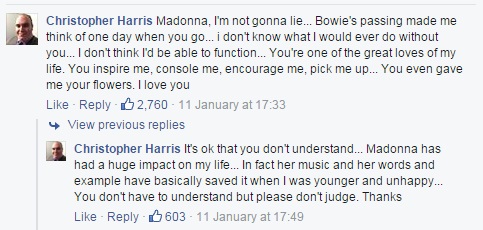
David Bowie Death - Madonna Reaction - Facebook


But there is also something more than just anonymous people assuming a hysterical degree of mourning more appropriate for the passing of family members and close friends.

Neil Davenport attempts to draw out this undefined sense of loss in a piece in Spiked magazine entitled “Bowie and the shrinking sense of possibility”.

The piece begins by pointing out that while Bowie’s success was far from assured in the early years, it was made more likely by the greater sense of freedom and possibility which reigned in the early post-war decades, from the 1960s to the 1980s.

Davenport points out:

It’s worth remembering that Bowie slogged on the margins for ages, in two-bit bands, recording very minor songs, before finally finding his voice. Back then, British society created a kind of free space in which young people who were willing to take the unpredictable route of cultural experimentation could do so.

This should give some small measure of hope and a reminder to many of us toiling away in relative obscurity – be it in the arts or elsewhere – that success is rarely instant, and the lasting success we savour the most almost always requires a supreme degree of effort to be ploughed in to our endeavours before any results are seen.

But unfortunately, many aspects of our contemporary society conspire against encouraging this personal risk-taking and reinvention, as Davenport goes on to explain:

Today, in obsessively trying to ‘support’ and mollycoddle young people, society unwittingly robs them of the independence, resilience and drive that Bowie showed in his graft and in his shift from being a nobody to a zeitgeist-changing genius.

Where Bowie encapsulated a genuine sense of freedom and possibility, of total and frequent reinvention, today’s young people find themselves living in an era that discourages risk-taking, puts off adulthood, and erects official scaffolding around their lives. Young people have internalised a culture of anti-freedom.

We can see this in its most extreme form in the desire of some Western-born youths to join the death cult of ISIS, who seem to think that a repressive Caliphate which does all their thinking for them is a really great idea. We see it on university campuses, where student leaders make hectoring demands for Safe Spaces and ban controversial speakers, songs, newspapers or comedians. We see it with the daily emergence of yet another moronic petition calling for someone or something to be banned or punished for daring to ‘offend’ others. For all the celebrations of Bowie’s achievements, what he represented is actually in very short supply today. His death should serve as a reminder, or rather a wake-up call, of some of the backward social changes of the past 20 years.

Who would have thought that calls to outlaw clapping and booingtearful temper tantrums about dress codes, stifling ideas by labelling them ‘problematic’the insistence on safe spaces and mandatory sexual consent workshops for students would have such a repressive, suffocating effect on our society?

That’s not to say that there is no great new talent emerging seven decades after the birth of David Bowie – clearly there is. But time and again, we see the biggest acts and pop stars of today are more eager to ostentatiously embrace prevailing social values as an act of public virtue-signalling rather than court controversy by cutting across today’s strictly policed social norms.

Lady Gaga took no risk when she sang “I’m on the right track baby, I was born this way” – indeed it opened the door to stadiums full of even more lucrative fans. That’s not to say that she was wrong to do so; Lady Gaga’s advocacy of gay rights is laudable. But how often do you see an emerging pop star court real controversy or confound society’s expectations these days? You can blame some of this on commercialisation, sure, but not all of it. Something deeper is at work.

When emerging artists see ordinary people shamed and ostracised for saying the “wrong” thing or even just adopting the wrong tone on social media, how many will have the courage to incorporate anything truly daring or potentially “offensive” in their acts, or create spontaneously from the heart without first processing everything through the paranoid filter of societal acceptability?

No, trigger warnings and safe spaces are not directly to blame for the X Factor or One Direction. But all of these unsavoury phenomena – and the societal trends which create them – are indelibly linked.

Why, then, has this particular death hit many of us so hard? Perhaps because deep down, we realise that we have lost something more rare and precious even than David Bowie – the possibility of ever producing another like him.
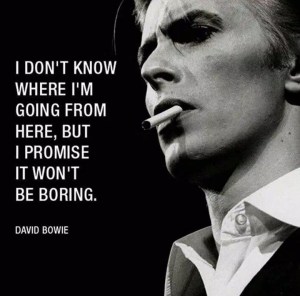
David Bowie Quote 1

Agree with this article? Violently disagree? Scroll down to leave a comment.

Follow Semi-Partisan Politics on TwitterFacebook and Medium.

Postcard From America: Adult Education Is Key To Future Prosperity

I’m currently back in the United States to celebrate Christmas in Texas. These short “Postcards from America” will document a few of my thoughts as I escape the political whirlwind of Westminster and look back at Britain from the vantage point of our closest ally

In America, not everyone waits passively for government to improve their life circumstances. Aided by a thriving community college sector, people take their futures into their own hands

While sitting in the cinema waiting for Star Wars: The Force Awakens to begin, I was struck by the number of local advertisements for regional schools, community colleges and universities which were shown.

By my reckoning, at least 40% of the commercials screened over a fifteen minute period were promoting some kind of educational service. Contrast this with the United Kingdom, where local commercials of any kind are a rarity, and most national commercials these days tend to be for banks, fast-moving consumer goods, the EE mobile phone network (featuring Kevin Bacon) or one of the limited number of other companies able to afford a national cinema campaign.

An example of the type of commercial screened at the south Texas cinema I attended is shown above. Typically, they feature personal testimonials from ordinary people who explain simply and positively how going back into education has helped them in their careers, how the various modes of study fitted in around their existing home and work commitments, and how easy/affordable it turned out to be.

These degrees and diplomas provide a springboard into skilled, middle class jobs, many of which are well paid and non-outsourceable. Dental nurses, IT engineers, electricians, car mechanics and many other such career opportunities. Recognising that not everybody can be – or wants to be – an elite lawyer or doctor, these institutions equip people with tangible skills which actively help them in the labour market, ensuring that their career options are far greater than the prospect of 40 years working at the 7-eleven, or some other minimum wage drudgery.

This emphasis on adult education is one sign of a more active and engaged citizenry, of a people who understand that their self advancement and personal destiny is in their own hands, not those of the government.

To be fair, some British politicians are also coming to realise the importance of adult education to keep our own workforce skilled, adaptable and capable of commanding high wages rather than minimum wages. During the Labour leadership campaign, Jeremy Corbyn floated his plan for a National Education Service to do for lifelong learning what the NHS did for healthcare.

From the Conservatives, however, there has been nothing. Not a squeak from Education Secretary Nicky Morgan, who supposedly has future leadership ambitions of her own and therefore might be expected to have a substantive policy or two up her sleeve. What are the Conservative government’s bright ideas for a more market-oriented, privately delivered solution to the adult education gap?

Banging on about apprenticeships is all very well, but what of adults over 25 who cannot take an apprenticeship under the current schemes, or who want to work in a field where none exist? What of the 55-year-old steelworker made redundant with few other transferable skills?

A conservative government worth its salt would look at Jeremy Corbyn’s proposal for a National Education Service, balk at the more nakedly socialist aspects, but then consider how a smaller and leaner government might be able to promote the education of the adult workforce in pursuance of the national interest. But of course our current Coke Zero Conservative government is not worth its salt.

If Britain is to prosper in this globalised age – and if our poorest, most disadvantaged fellow citizens are to be spared from a harsh life of minimum wage drudgery – we need a learning revolution in the United Kingdom, a British Apollo Program for education.

What party, what future leader will rise to the occasion and propose a solution equal to the task at hand?

Community College

Agree with this article? Violently disagree? Scroll down to leave a comment.

Follow Semi-Partisan Politics on TwitterFacebook and Medium.

Postcard From America: When Words Fail, A Musical Analogy

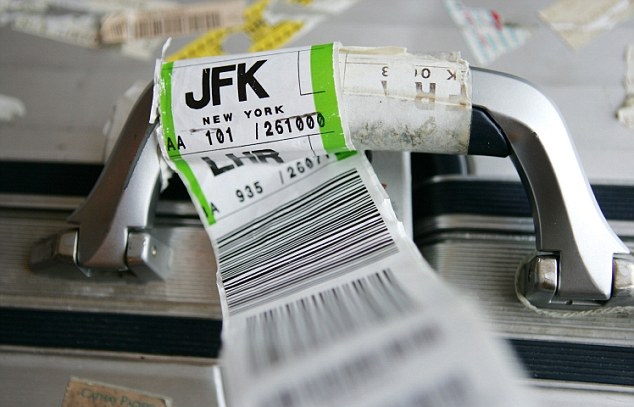
JFK LHR - Britain and America

I’m currently back in the United States to celebrate Christmas with family in Texas. These short “Postcards from America” will document a few of my thoughts as I escape the political whirlwind of Westminster and look back at Britain from the vantage point of our closest ally

A musical contrast between Britain and America

I have been trying to find a way to describe the feeling I always get when I arrive back in the United States of America, a land I consider to be my spiritual home even though I am not yet a citizen (though married to one).

It is very difficult to put into words the emotion that wells up even before exiting the airport, whether it be New York JFK, Chicago, Cleveland, Dallas, Houston, Miami, Seattle or any of the other gateways I have used on my well over fifty arrivals here. The feeling of having arrived in a land of promise and possibility, an electricity in the air and a repose for the spirit which I feel even while waiting to collect the suitcases from the carousel.

But when words fail, music sometimes speaks. And the best way I can find to describe the difference experienced when travelling from the United Kingdom to the United States is with this musical analogy.

Two performances of the same piece of music, recorded by two legendary artists. Prelude no. 3 in C Sharp Major, BWV 872 from The Well-Tempered Clavier by Johann Sebastian Bach, performed first by Sviatoslav Richter and then by Glenn Gould, my favourite pianist.

Imagine that this first recording represents life in Britain:

This is the Richter version of the Bach prelude. Languid and undeniably beautiful, yes, with the edges softened by extensive use of the pedal. You can almost sense the nearly three centuries spanning the prelude’s composition and the present day in this warm but muffled recording.

Now imagine moving from this setting to the utterly different world of the Glenn Gould version, representing America:

The two recordings could hardly be more different.

The musical notes are the same, just as Britain and America share a common language and very similar cultures by virtue of our shared history. But the two interpretations are worlds apart, just as everything from local culture to local government is different on either side of the Atlantic.

Nobody had ever played the music this way until Glenn Gould came along. Prior to Gould, playing Bach on the piano was a dry and dusty affair, characterised by performances and recordings which shrouded the intellectual beauty and emotional resonance with thick layers of stultifying sameness. And then Glenn Gould turned things upside down and showed that Bach’s keyboard music did not have to be a revered but inherently boring exercise; that by engaging with the music with a creative mind, it was possible to bring dead music to life.

The Gould version is bright and clear. The first half of the prelude is strutting and unselfconscious, while the second part takes off like a rocket – joyful, vibrant and carefree. The individual lines of both the prelude and fugue are more clearly articulated and easier to distinguish, while still contributing to a powerful and musically convincing whole. E pluribus unum. That’s America, right there in this recording.

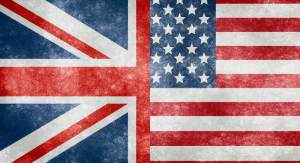
Britain America 1

To my mind, this is the experience of moving from Britain to the United States. From an ancient land of history and heritage – the mother country – to the bright promise of the newer, bold and assertive superpower. The place where even in these difficult times, all things still seem possible.

A land where the sun shines infinitesimally brighter (my first action on arriving in Louisiana was to purchase new sunglasses. In December.) A land where the sky literally seems bigger, and the horizon wider. A land where the flavours are bolder, the entertainment glitzier, the music more vibrant and the people unfailingly friendly.

A country whose best features and deepest flaws are both so much more exaggerated than is the case in Britain – whether it be the remarkable philanthropic and community spirit on one hand, or the endemic tragedy of gun violence on the other.

But more than that, a country which still feels consequential in terms of shaping human events. A country whose politics and politicians – however glib and anti-intellectual they can sometimes be – still possess the aspiration and self-confidence to deal with weighty matters, to forge ahead in search of the best pathway to freedom and prosperity. And whose people still believe in their country as a force for good in the world, when they stay true to their values.

You can see the difference by comparing the raucous presidential primary debates currently underway here in America with the spirit-crushing televised encounters in Britain ahead of the May general election. In America, issues like healthcare, immigration, government surveillance and foreign intervention are debated fiercely in public – with both sides making reference to that most wonderful of things, a written constitution which makes the people sovereign and grants government strictly limited powers, rather than the other way around.

In Britain, by contrast, our leading politicians and political parties competed to be judged the safest custodian of our creaking public services. We went to the ballot box to decide who we trusted most to reduce the budget deficit, make the trains run on time and the bin collections more reliable. In granting David Cameron a second term as prime minister, we didn’t so much elect a world leader as appoint a lowly Comptroller of Public Services, someone to kick when we feel short-changed as passive consumers of state-provided rations.

On existential matters like Britain’s place in the world, the best way to promote economic growth or to ensure future national security, the British political debate during the election campaign could not have cared less – and there was virtually no difference in the statist paternalism of the two main parties, other than in rhetoric. No political party had the courage to suggest that our outdated, 1940s model of state healthcare delivery might need serious reimagining in the twenty-first century, and only a handful of us cared enough to call them out for their craven refusal to acknowledge this difficult truth, and many others besides.

Fewer than four million of us believed strongly enough in the principle of national democracy and sovereignty that we cast a vote for the one party which explicitly objected to the gradual absorption of Britain into the supranational state known as the European Union.

And through it all, this blog has felt like something of a voice in the wilderness, with no politician or party to champion the causes of personal liberty, free markets and national sovereignty upon which everything else rests – but which too many other people seem happy to forsake in exchange for a chimerical, temporary measure of security and prosperity.

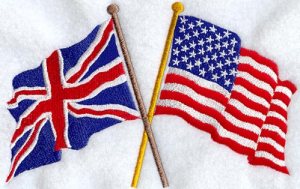
Britain America 2

Here in the United States, for the precious couple of weeks until we go home, I don’t have to think about any of that. Of course America has issues of its own – big, intractable problems and burning injustices which befit a country of her size and consequence to address and overcome. But at least Americans still (just about) know who they are. At least they have not yet fractured into a messy coalition of competing special interest groups, to the extent which Britain has now splintered.

Patriotism and love of country still mean something in America. Yes, sometimes the sentiment expresses itself badly, through an ignorance of the rest of the world and the lazy assumption that America is always the best at any given thing. But perhaps unnoticed by many in Britain, there is also here an abundance of that quiet patriotism – the celebration of Independence Day and Thanksgiving, the flags flown in school classrooms without the ludicrous fear that it might “offend” someone of minority ethnic heritage, or the way that veterans are honoured and soldiers in uniform routinely invited to fill empty first class seats on airplanes – symbols and gestures which are the bedrock of a strong and cohesive society.

Of course debates rage fiercely in America – over Donald Trump, Hillary Clinton, the Koch brothers, the Tea Party, the Iraq war, the ISIS threat, birtherism, abortion, LGBT rights, church and state, the mainstream media and much more. The many are not always one. But when it really counts, they are one people. They bleed red, white and blue together.

America the beautiful: this is where I come to recharge my spiritual batteries. And as I prepare to throw myself into the battle for Brexit – defending the country of my birth and the concept of the nation state itself from an insidious form of supranational governance whose advocates have repeatedly failed to explain how democracy will be preserved in their brave new world – I will need all the power I can muster.

God bless Texas.

God bless America.

God save the Queen.

Britain America 3

Agree with this article? Violently disagree? Scroll down to leave a comment.

Follow Semi-Partisan Politics on TwitterFacebook and Medium.

The Daily Toast: Alex Massie Calls Out Britain’s Growing Illiberal Streak

Ban Donald Trump Petition

The pathetic petition to ban Donald Trump from entering Britain – for the high crime of being an idiot – reveals a festering illiberal sickness at the heart of our nation

Are we really that country? Are we really that petty, authoritarian, second rate destination that bans foreigners whom we accuse of endangering the “health and morals of the nation”?

Yes. Increasingly, regrettably, yes we are. Donald Trump will escape the travel ban which many on the virtue-signalling Left are desperate to impose by virtue of who he is, the fact that he has no plans to come here anyway, and the diplomatic impossibility of thus spurning a US presidential candidate, even an unlikely one. But others before him have not escaped Britain’s growing intolerance of intolerance.

Comedians such as Dieudonné M’bala M’bala have been banned from visiting Britain to perform their racist comedy routines. Bloggers like Pamela Geller have been banned from entering the UK because their pungent and unpleasant political views have been deemed to be “not conducive to the public good”.

So we are already that country, no matter whether or not Theresa May decides to put Donald Trump’s name on her little list. We are already that country which has lost so much faith in our British, Western and democratic values that we now see unpleasant or inflammatory speech as something which will harm our already-fragile society.

The wretched story even made it to Prime Minister’s Questions. The fevered ramblings of that reality TV star turned presidential candidate were actually raised by an MP in the House of Commons, and George Osborne (standing in for David Cameron) was asked to intervene to protect us from the Big Bad Man. Serious journalists debated whether or not a ban was appropriate, when they could have been writing about something, anything else.

There’s certainly nothing like a swaggering, ignorant Republican presidential candidate to bring out the angry, authoritarian cheerleader in Dan Hodges:

What we have just witnessed is not just another attention-seeking rant from a Republican hopeful who is trying to secure definition in a crowded primary field. What Trump has done is effectively call for a race war.

[..] One of the most popular TV shows in the US at the moment is an alternative history drama called The Man In The High Castle. It is set in a world in which the Allies lost the second world war, and America lives under a fascist dictatorship.

Donald Trump wants to be the man in the high castle. Ban him. Ban him now.

But this is far from an uncommon reaction. The Independent earnestly argued exactly the same point – that Donald Trump’s views were not simply factually incorrect and misguided views to be challenged and debated, but potentially “harmful” words of such power that their speaker must be forcibly kept at bay and prevented from corrupting the impressionable minds of the British public.

Fortunately, there are dissenters. This blog weighed in when the Donald Trump story first broke, making the case that the illiberal instincts of the outraged Left are just as harmful as the nonsense spouted by Trump.

And now Alex Massie has an excellent piece in CapX, taking square aim at the “fatheaded nincompoops” more interested in signalling their virtue and parading their ignorance of the free society than defeating the actual ideas espoused by Trump.

Massie writes, sarcastically:

If we ban something, you see, that something will disappear. Even better, by banning ugly speech we will be able to demonstrate our moral superiority. And, when push comes to shove, that’s what matters most. Smugness warms the soul like nothing else this winter and every place must be a “safe space”.

And so it is. Imprisoned by the dogmatic belief that all cultures and values are inherently equal, none superior to any other, all that some parts of the Left can now do is squeal with protest when anyone does anything to hurt someone else’s feelings.

Massie continues, making reference to the parallel “controversy” surrounding champion boxer Tyson Fury whose nomination for Sports Personality of the Year is causing hysteria because of his unreconstructed views on gender roles and sexuality:

Repeat after me: there is no right not to be offended. But if we must be outraged let us be more outraged by those who seek to stymy and prohibit speech than by those whose speech the censors would have us suppress.

I deplore Donald Trump and have little admiration for the cut of Tyson Fury’s jib but, damn it, I’ll defend their right to be objectionable – and even repellent – if the alternative is siding with those who instinctively react to disagreeable opinions by seeking to suppress them. These people pose a vastly greater threat to liberalism and public decency than the people they deplore themselves.

These arguments over Trump and Fury might seem trivial but they are minor manifestations of a much larger issue. Remember January? Remember “Charlie Hebdo”? Remember all the pious declarations of sympathy and support and solidarity? Remember how politicians discovered that free speech might actually be something worth defending? Remember “Je suis Charlie”?

[..] Trump and Fury do not, in themselves, matter very much. But the reaction to their speech does matter. It is always depressing to discover that there are vastly fewer liberals in this country than you might wish there to be. But that discovery should no longer surprise us.

One can hope that the growing number of signatories to the Ban Donald Trump petition are drawn entirely from the ranks of virtue-signalling left-wing keyboard warriors, and are thus entirely unrepresentative of the British people as a whole.

One can tenuously hope that some of those who say that they want to ban Donald Trump are simply registering their strong disagreement with his latest inflammatory comments, and that they don’t really mean it when they call for a person to be banned from entering this country on account of their political views

One can even hope that the angry petitioners are outnumbered by a greater silent majority of Britons who don’t see Britain’s current, shameful track record of banning controversial people from entering our country as a marvellous precedent which should be extended to Donald Trump, simply because he’s an exceedingly offensive ass.

One can hope.

But I’m not sure any more. Perhaps it’s entirely a function of following the daily news cycle too closely and attaching too much weight to the petty storms and crusades of social media. Perhaps Britain isn’t really becoming a more sanctimoniously self-satisfied and intolerant place, populated by beady-eyed, brittle-egoed adult babies whose first reaction to encountering dissenting or unpleasant opinions is to screech indignantly for the authorities to have them banned.

Perhaps.

But it’s hard to feel much hope after reading much of the Donald Trump coverage in Britain over the past couple of days.

Donald Trump Hat - Make America Great Again

From next week, I’ll be in Texas and Ireland to celebrate Christmas and the New Year respectively. Blog updates will continue, but at a reduced frequency until normal service resumes in January.

Many thanks to everyone for reading, sharing, commenting, debating and contributing.

Agree with this article? Violently disagree? Scroll down to leave a comment.

Follow Semi-Partisan Politics on TwitterFacebook and Medium.

The Left’s Donald Trump Syndrome Is Worse Than The Man Himself

Donald Trump - Muslims - Islamophobia

Donald Trump’s derisive comments about London and his proposal to ban all Muslims from entering the United States are idiotic and hugely illiberal. But the self-righteous backlash from parts of the Left is just as bad

American politicians – especially wannabe presidential candidates – insult London at their peril.

Mitt Romney found that out the hard way back in 2012, after his off-the-cuff comments about the London Olympic Games preparations earned the ire of the British public and a personal rebuke from David Cameron.

But current Republican presidential candidate (and, depressingly, frontrunner) Donald Trump managed to make Mitt Romney’s gaffe-prone diplomacy look like a veritable charm offensive with a two-pronged effort to capture the news cycle which saw Trump first suggest that the US implement a complete ban on Muslims entering the country, and then insult America’s closest ally by suggesting that whole swathes of London are so full of Islamist extremists that the police do not enter them for fear of their lives.

From the New York Times:

Donald J. Trump called on Monday for the United States to bar all Muslims from entering the country until the nation’s leaders can “figure out what is going on” after the terrorist attacks in San Bernardino, Calif., an extraordinary escalation of rhetoric aimed at voters’ fears about members of the Islamic faith.

A prohibition of Muslims – an unprecedented proposal by a leading American presidential candidate, and an idea more typically associated with hate groups – reflects a progression of mistrust that is rooted in ideology as much as politics.

Mr. Trump, who in September declared “I love the Muslims,” turned sharply against them after the Paris terrorist attacks, calling for a database to track Muslims in America and repeating discredited rumors that thousands of Muslims celebrated in New Jersey on 9/11. His poll numbers rose largely as a result, until a setback in Iowa on Monday morning. Hours later Mr. Trump called for the ban, fitting his pattern of making stunning comments when his lead in the Republican presidential field appears in jeopardy.

And the Guardian:

In a bid to justify his controversial comments that Muslims should be barred from entering the US, Trump had said parts of London and Paris were so “radicalised” – seemingly a reference to Islamist extremism being rife – that police officers were scared.

“Paris is no longer the safe city it was. They have sections in Paris that are radicalised, where the police refuse to go there. They’re petrified. The police refuse to go in there,” he told MSNBC, refusing to name specific neighbourhoods in the city.

He added: “We have places in London and other places that are so radicalised that the police are afraid for their own lives. We have to be very smart and very vigilant.”

It really isn’t necessary to counter either Donald Trump’s back-of-a-napkin immigration policy, his supremely un-American idea for a religious test in order to enter the United States or his uninformed comments about the city which some years ago overtook New York and Paris as the world capital for finance and tourism respectively. We’ll take it as a given that every thinking person can recognise these comments as the unfiltered bilge that they are.

Of far more concern are the growing hordes of MPs, commentators and members of the public calling for Donald Trump to be banned from ever entering the UK on the grounds of “hate speech”.

The inevitable online petition is already circulating and picking up names, reports the Huffington Post:

An online petition calls on U.K. Home Secretary Theresa May to bar the Republican presidential frontrunner from entering the country for allegedly violating the nation’s hate-speech laws. 

If it receives 100,000 signatures, the petition could be taken up for debate in the House of Commons, according to The Independent. 

The petition launched by Scottish resident and longtime Trump critic Suzanne Kelly blasts Trump for “unrepentant hate speech and unacceptable behavior” that “foments racial, religious and nationalistic intolerance which should not be welcome in the U.K.”

While Sunder Katwala sets out the illiberal case over at British Future:

It is important that the UK Government makes very clear that this extreme view is rejected and repudiated in the strongest possible terms.

The UK Home Office has set out clear guidelines which have led to the exclusion of preachers of hate from the UK if their presence here would not be conducive to the public good. Theresa May has excluded extreme Islamists on these grounds, and also kept out those who have fanned extreme anti-Muslim prejudice, such as the bloggers Pamela Geller and Robert Spencer. Trump’s statements are more extreme than theirs.

Unless and until Trump were to retract these highly prejudiced comments, there is a good case for making clear that he would be refused entry to the UK by the Home Secretary.

No. It is only “important” that the UK government does anything at all about this wretched circus act if you take the view that it is the proper role of government to be a watchful, overprotective parent who oversees everything that we do, say or hear, supposedly for our own good.

It’s only “important” if you take such a dim view of the intelligence of the British people that you believe – like a Victorian prude – that the health and morals of the nation are somehow at stake, and that general public might be inspired to commit racist or Islamophobic deeds either at the mere sound of Trump’s words or at the sight of his ridiculous hairdo.

Such a view is as nonsensical as it is insulting. Why on earth should the UK government care what a reality TV star turned presidential candidate says, and why can’t the British people be trusted to hear what he has to say and judge the merits (or the idiocy) for themselves? Besides, either Trump’s candidacy remains a complete joke, in which case illiberal UK government censorship would be a massive overreaction, or he is a viable contender – in which case the UK needs to remain neutral while our closest ally chooses their next leader.

Donald Trump didn’t cover himself in any glory with his latest comments on Islam and London. But who expected anything more of him? For all his natural gift as a TV personality, Trump is a blowhard, anti-intellectual populist of the worst sort – a man who is fundamentally incurious but convinced that he has the right answer for everything (usually involving “winning” a trade war with China).

And to be sure, Trump’s latest remarks disqualify him as a serious candidate for the presidency, if the ten previous outrage-baiting comments had not already done so. In many ways, this is Trump’s “choosing Sarah Palin” moment – the action which finally doomed his candidacy, much like John McCain’s desperate and opportunistic pick for a vice presidential candidate back in 2008.

But the Left supposedly hold themselves to a higher standard. And yet in response to Trump’s inflammatory words we have seen such a parade of ostentatious outrage and cheap virtue-signalling that one could almost be forgiven for forgetting that the Left are in no small part responsible for the rise of Trump in the first place, as Douglas Murray devastatingly explains in The Spectator:

When the political left refuses to identify where Islamic terrorism comes from, what drives it or what it can even be called, it leaves the ground wholly open for anyone else to do or say anything they want.  Far from being blunt tools or broad brushstrokes, referring to ‘Islamic extremism’ or ‘Islamism’ makes an obvious and conscious effort to put down a delineating line between non-extreme Muslims and the extremists from their faith.  Yet many Muslim organisations, among others, reject this.

[..] But what people seem slow to realise is that suppressing legitimate concerns and decent discussion inevitably leads to people addressing the same things indecently.  We can thank the American left for the creation of Donald Trump and we can thank them for his comments last night.  For years the left made the cost of entering this discussion too high, so too few people were left willing to discuss the finer points of immigration, asylum or counter-terrorism policy and eventually the only release valve for peoples’ legitimate concerns is someone saying – wrongly in my view – ‘keep them all out.’

Yes, of course Donald Trump’s comments are reprehensible. But the answer is not to parade our outrage on social media, as though engaging in a competition to be more publicly offended by Trump’s words is a meaningful substitute for real activism. And nor is the answer to ban Donald Trump from coming to these shores, thus denying Boris Johnson and thousands of eager Londoners the opportunity to prove him wrong about our city – and Trump himself from receiving this much needed education.

Outrage on Twitter is nothing more than empty virtue-signalling, whilst indignant calls for Trump to be banned from entering the UK are every bit as illiberal as Trump’s own proposal to set a religious test for entry into the United States.

Donald Trump’s opponents believe that they are better than the business mogul, reality TV star and presidential candidate. If so – if they are all simply better, more enlightened people, a belief they make little effort to hide – they have a funny way of showing it.

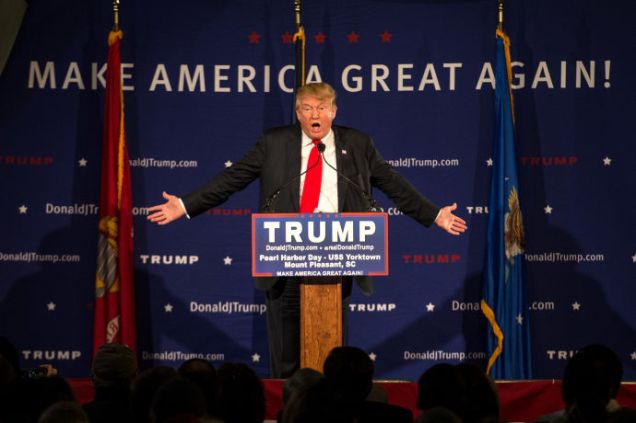
Donald Trump - Make America Great Again

Agree with this article? Violently disagree? Scroll down to leave a comment.

Follow Semi-Partisan Politics on TwitterFacebook and Medium.