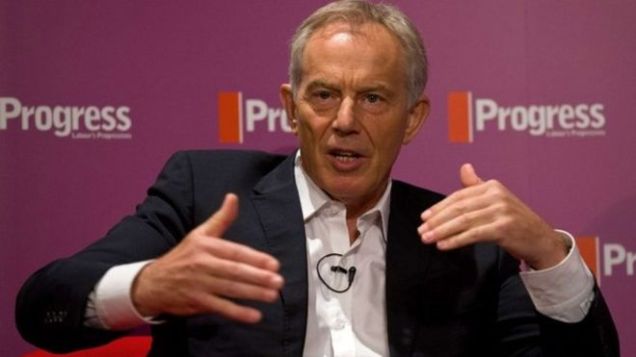
The Daily Toast: Tony Blair On Labour’s Future In The Age of Corbyn

Tony Blair - Labour Leadership - Jeremy Corbyn - Annihilation

The Labour Left may dismiss him as a Red Tory war criminal, but Tony Blair raises some awkward questions about what Labour stands for in the Age of Corbyn

In the Christmas special edition of The Spectator, Tony Blair offers a typically self-aggrandising but (to the Corbynite Left) infuriatingly perceptive take on the challenges facing Labour, and why the emboldened hard Left are not equal to the task before them.

Defending New Labour’s record in government between 1997-2010, Tony Blair writes:

In a society in which fewer and fewer people thought of themselves as traditional working class, we needed to build a new coalition between the aspirant up and coming and the poorest and most disadvantaged. For the task of winning power, the emphasis on the values of community, society, family, compassion and social justice was highly effective.

But for the task of governing, we had to do more than proclaim our values, we had to have the courage and creativity to apply them anew to a changing world and make what counted what worked rather than defending interests or tradition.

That’s the rub: what does Labour stand for in a society where fewer and fewer people  think of themselves as being working class, or attach any real meaning or identity to that label? And specifically, what does the Corbynite Left of the party stand for in this new reality?

Blair points to an uncomfortable truth for Labour. Because few people, other than the Owen Jones romantic Left, still obsess about class. And though economic inequality is very much a real thing, many of us share common tastes in popular culture to an extent which was simply not the case in the 1920s or even the 1950s.

What does social class even mean when thousands of one-percenters listen to the same pop music and partake of traditionally working class interests such as football, and the technological revolution has given the masses the same access to entertainment, culture and travel destinations as the very wealthy? Does class mean anything at all in 2015, besides being a shorthand way to describe a person’s accent? Arguably not.

So what has replaced the issue of class in our public discourse? The answer, of course, is the new obsession with equality. Nebulous and never clearly defined, the Left harp on about equality without ever explaining whether they are referring to equality of opportunity or equality of outcome. But as a crude generalisation, one could say that centrist Labour strives (however badly) for equality of opportunity, while the Corbynite Left dream of a word of total, enforced equality of outcome.

What unites these two warring factions within Labour is the fact that neither side have the first clue about how to use public policy to translate their vision into reality. Centrist Labour is intellectually dead and hasn’t had an original idea since Tony Blair left office, but the rot became particularly bad during the Ed Miliband era. Miliband’s speeches were full of meaningless platitudes and waffle about creating a “fair” Britain, but shockingly free of specific policies or strategies to reshape the country accordingly.

And the emboldened Left are full of spittle-flecked condemnation of the Evil Tories, not to mention the endless, preening virtue-signalling which has become their hallmark. But they offer no solutions either, just a 24/7 Twitter stream of criticism of Tory policy. Want to know what the Corbynites want to do with taxes or welfare? Good luck finding out. Most of them don’t have a clue, and the few that do know won’t say because they know that their real vision for Britain would be hugely unpalatable to the general electorate.

The danger for Labour in failing to stand for an election-winning coalition of voters – as they did when they represented a cohesive working class in the twentieth century – is that others will define Labour to the electorate, and not in a flattering way.

Already, the Conservatives are pushing the message that Labour are the party of welfare, entitlement and anybody who is a net “taker” from society. And what can Labour possibly say to counter this claim, when they can always be found popping up on television to denounce spending cuts without announcing anything amounting to a cohesive plan of their own?

Blair closes his Spectator piece by warning:

Right now we’re in danger of not asking the right questions never mind failing to get the right answers. All of it is about applying values with an open mind; not boasting of our values as a way of avoiding the hard thinking the changing world insists upon.

Unfortunately, even the anti-Corbyn elements of the Labour Party seem utterly unable to grasp this fundamental truth. And too often, it seems that all Labour know how to do is hate the Tories and boast about their own values, rather than identifying solid policies to put them into practice.

Consider how the recent vote on military action in Syria descended into a mudslinging sideshow, with the Corbynite left accusing anyone who disagreed with their pacifist stance of being an Evil Tory warmonger. Or the way that the Labour Party rode to battle against the tax credit changes, the welfare cap and the NHS junior doctors pay dispute, enthusiastically taking up arms against the Conservatives without uttering a word about how they would address very real problems of concern to many British voters.

On these issues and more, Labour currently propose no solutions. While military intervention in Syria may well fail or lead to a worse outcome, no alternative has been clearly outlined – assuming that airy talk about negotiating with ISIS is not to be taken seriously. Ask ten Labour MPs (including the shadow cabinet) what the party proposes to do about welfare or the NHS and you are likely to get fifteen different answers.

In his article, Tony Blair repeatedly argues against focusing on ideology:

Infrastructure, housing, social exclusion – all these challenges require more modernising and less ideological thinking.

But this is misleading. Strong viable governments only come about when there is a coherency and consistency of ideology which informs the policies offered to the electorate. It’s no good just coming up with a basket of pragmatic policies – people rightly see this for what it is: electoral opportunism.

Labour need to pick an ideology, whether it is that of their leader, that of Tony Blair or that of the incoherent band of uncharismatic centrists who currently pass for party heavyweights. And then they need to show the public that real, tangible policies for government can flow through the party, shaped and informed by those ideals. Labour’s credibility is currently so low that opportunistic opposition to individual Conservative policies will deliver them nothing at the ballot box. An alternative platform for government is what’s needed.

And that takes us back to the opening question: who does Labour actually represent in the Age of Corbyn and his sulky centrist antagonists, when nearly everybody with an aspirational bone in their body is abandoning the party?
Jeremy Corbyn - Labour Party - Andrew Marr Show - BBC

Agree with this article? Violently disagree? Scroll down to leave a comment.

Follow Semi-Partisan Politics on TwitterFacebook and Medium.

Mao-Quoting IRA Apologist Calls UKIP An ‘Evil Force In Society’

John McDonnell - UKIP - An evil force in our society.jpg

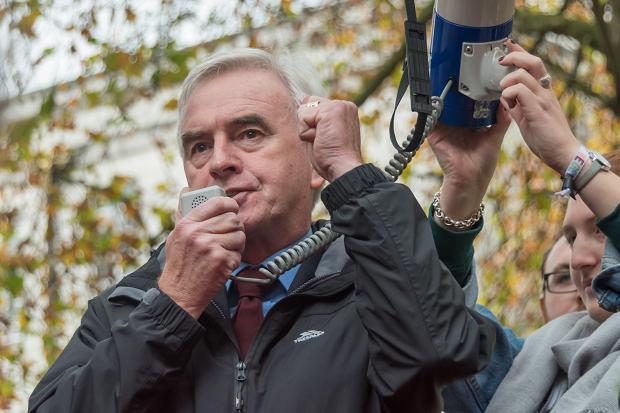
Labour’s shadow chancellor has all the time in the world for IRA terrorists, and only praise for their murderous actions. But John McDonnell thinks that UKIP voters and people who believe in national sovereignty are “evil”

While speaking at a Momentum campaign dinner this weekend, John McDonnell took a break from quoting Mao Tse-Tung and spoke instead about his view of UKIP:

But actually, winning for Labour is important but beating Ukip is just as important as well.

We can not allow what I think is an evil force within our society – that divides society often on the basis of race, often on the basis on some of the crudest policies that you can imagine any political party advocating. We cannot allow them to get any form  of toehold within our political system and that’s why it’s about defeating them but more importantly, defeating them — a clear contrast in terms of a sincere, local committed socialist candidate.

This, of course, is in the context of Labour’s loosening hold on the constituency of Oldham, where UKIP may overturn the 14,000+ majority won by the late Michael Meacher back in May.

And it’s good to know exactly what the Labour leadership thinks of those British people who believe in democracy, national sovereignty and self-determination – people who dare to be quietly patriotic instead of angrily insisting that there is any moral equivalence between Britain and the forces of terrorism, religious fundamentalism and communist dictatorship.

But of course we already knew what the Labour leadership thinks of those people. Since the beginning of Ed Miliband’s vacillating, sanctimonious leadership of the Labour Party back in 2010, the Labour Party has strutted around as though they are the sole custodians of the nation’s conscience and morals, the only ones with a soul – while the rest of us are evil Tory Scum who delight in persecuting the poor and the sick.

Even an unprecedented rejection at the ballot box in May and a leadership election did nothing to shake the confidence of the party base that they were enlightened and virtuous souls voting for society, while the rest of us were greedy, avaricious racists, voting for our wallets and a return to the 1920s. This may be the marching song of the Corbynites, but it is a self-flattering myth believed by other more moderate factions of the Labour Party, too.

As it goes with domestic policy, so it is with international affairs and Britain’s place in the world. The slavishly pro-EU stance of the Labour and the British Left are portrayed as the only “enlightened” or “moral” opinion to hold, while anyone who questions whether Britain should continue to participate in a tightening supra-national political union that nobody wanted or voted for is somehow reactionary or old-fashioned.

And that’s before we even mention immigration. The Labour Party are at their thuggish worst when they seek to smear anyone who questions the wisdom of unlimited intra-EU immigration as a bigot or racist. And John McDonnell proves that he is more than willing to do this, when he speaks about the danger of a political party which “divides society often on the basis of race”.

The irony, of course, is that whatever the other rights or wrongs of UKIP’s immigration policy, theirs is inarguably the least racist policy of all the main political parties, including Labour. The Labour Party, together with all others, are fully wedded to Britain’s continued membership of the European Union and the continued free movement of people within that union. Which is lovely for hard-working southern and eastern Europeans with no qualifications, who out-compete unqualified Brits in the labour market, but less so for highly skilled Indian, Pakistani, Chinese or Brazilian workers who may have a huge amount to contribute to our economy but face significant obstacles to working and settling here.

The Labour Party has no response to this fundamental truth. They know that their fixation on continued British membership of the European Union promotes racial discrimination against non-Europeans when it comes to immigration policy, as well as dooming underqualified Brits to a life of minimum wage drudgery. But the socialist, internationalist pipe dream of European government trumps real concern for working people every single day. So they assuage their guilty consciences by ostentatiously pretending to be great anti-racism campaigners, and accusing everybody who sees through their cheap, tawdry tricks of being tantamount to a white supremacist.

It’s cheap and it’s pathetic, and it’s being pimped out by a despicable Labour shadow chancellor who praised the use of terrorism – the bomb and the bullet – against innocent British citizens.

Six months after a general election at a time of Conservative government missteps and scandals, and Labour are struggling to defend a 14,000 seat majority in the safest of safe seats. Those votes are bleeding away in no small part to UKIP, who are convincing many wavering Labour voters that Nigel Farage’s party is now better placed to defend their interests than a Labour Party which has been captured first by substance-free Milibandism and then by Islingtonian, Jeremy Corbyn-style moral hectors.

And Labour’s response? The same response they always give when they are backed into a tight spot – shroud themselves in the white robes of virtue and scream “racism!” at anyone who points out just how morally and intellectually bankrupt they really are.

A humiliating UKIP victory in Oldham – and the banishment of John McDonnell back to the swamps of vile far-left obscurity where he belongs – cannot come soon enough.

John McDonnell - Little Red Book - Mao Tse Tung

Agree with this article? Violently disagree? Scroll down to leave a comment.

Follow Semi-Partisan Politics on TwitterFacebook and Medium.

The Daily Toast: Hugo Rifkind On The Dilemma Of Labour Party Centrists

Labour Centrists

Why don’t those members and activists who hate the new direction of the Labour Party simply leave?

It’s hard to bring yourself to leave an organisation when you have convinced yourself that everyone outside of it is hateful, immoral and evil. That’s the point Hugo Rifkind makes in his latest piece for the Spectator, a reflection on why there has been no hint of a centrist exodus from the Labour Party in the Age of Corbyn, despite much grumbling and plotting.

Rifkind wonders out loud:

What is wrong with these people? It’s like they’re children. Part of the madness comes, I suppose, from social media, whereby every utterance is ‘campaigning’, even if you’re just doing it in the office, on the loo. The bulk of it, though, is the idea that Labour people have to be Labour forever, even if they completely disagree with Labour, or else they’re not Labour. It’s weird and it’s needy and it’s anti–intellectual, and it makes no sense at all. They went big on this during the leadership election, when a host of people with politics virtually indistinguishable from Jeremy Corbyn’s were kicked out on the basis of prior support for the Greens or the Scots Nats. Because, of course, if they were true Labour they’d support Labour even while disagreeing with Labour, because that’s what Labour does.

Why does it? Nobody else behaves like this. Nobody else turns party into a tribe, not just putting loyalty over policy, but feigning a virtue with it, too. In any other party, anyone who disagreed with the party line as often as Corbyn has might have been expected to resign at least once, if only out of embarrassed deference to the voters who had blithely ticked the ‘Labour’ box. Perhaps due to its history, though, Labour is not merely a jumble of policies in the manner of other parties. Labour is a ‘movement’ and if you aren’t with it, you’re against it. No matter which direction it currently happens to be moving in.

An interesting argument, but it’s hardly as if the other main political parties are chock full of people who resign in fits of pique and then come crawling meekly back in rhythm with party policy. The only really noteworthy defections of the past few years are those of Mark Reckless and Douglas Carswell – both from the Tories to UKIP.

So while the gulf between the Corbyn left and the Blairite centre of the Labour Party may be particularly large, right-wing Tory MPs such as John Redwood and Bill Cash – with no frontbench career aspirations of their own to worry about – are just as unlikely to leave the Conservative party in disgust at David Cameron as Chuka Umunna or Andy Burnham are about to forsake Labour out of despair with Corbyn.

Rifkind closes by admonishing the centrists:

This is what happens when you brainwash yourself into believing that your lot are the only good guys; when you forget that it’s not the club that matters, but what the club does. This is what happens when you grow so used to feeling superior to everybody outside Labour that you can no longer properly believe such people are proper, moral humans at all. It’s not a church. It’s not a sin to go somewhere else for a bit if you need to. Not when the nuts do it, and not when you do either. Pull yourselves together. People are laughing.

This part is very true, and speaks to a sickness at the heart of the Labour Party – and the British Left in general – which this blog was one of the first to report on, and the most consistent in highlighting.

There are many reasons why Jeremy Corbyn’s leadership of the Labour Party is not yet provoking an exodus. First, there is the hope that Corbynism may yet prove to be a passing phase, and that a couple of years of underperformance or a 2020 general election defeat will shock the Left back to its senses. Second, there is the self-protective instinct most Labour MPs have over their political careers – breaking away to start a new political party rarely leads to career advancement and power. But thirdly, there is what Hugo Rifkind calls the “tribal” instinct – that same stubborn unwillingness to leave which kept Jeremy Corbyn in the Labour Party for all his long wilderness years, and which now keeps the centrists grimly hanging on.

Would it be so hard for the centrists to step away from the Labour Party had they not grown up telling themselves that the Evil Tories represent everything bad about Britain, that Britain’s greatness can be summed up by the output of our public services alone, and that Labour have a monopoly on both wisdom and compassion? Probably not. But they did, and they still do.

Back when the Labour leadership contest was still raging, this blog argued:

If Jeremy Corbyn is not the answer to Labour’s irrelevance, whoever ends up taking the party forward will need to explicitly make peace with capitalism, and undo the bad blood created by Gordon Brown’s brooding statism and the hand-wringing “predators vs producers” equivocation of Ed Miliband. And this will require explicitly praising the virtues of capitalism, and potentially letting the Jeremy Corbyn-led wing of the party split off and float away back to the 1970s.

This does not mean that the remaining rump of the Labour Party should then cast itself as just another centrist alternative to the Tories – British politics desperately needs real ideological variety and choice. But the future ideological lines will be drawn over how to make capitalism work for all the people, with laissez-faire small government types on one side, and bigger government interventionists on the other.

[..] Sniping at capitalism while conspicuously enjoying the fruits of all that it provides has proven to be a deeply unconvincing platform. And it won’t become any more convincing, or win Labour any new voters, by the time of the next election.

So can a Labour Party at peace with the free market still stand for anything, and be a party of clear principle and ideological coherence? Absolutely. But it won’t happen by chance, it will require careful and determined consideration.

But Jeremy Corbyn did win the contest, and it is clear that the Labour Party will not “make peace” with capitalism so long as he remains leader. And in some ways that’s fine – I supported Jeremy Corbyn’s candidacy precisely because I wanted to end the stale centrist consensus which currently grips British politics.

However, it does leave those centrists in a bind: disagreeing with nearly everything their leader says, used to attacking capitalism themselves in their lazy campaign rhetoric, but increasingly coming to appreciate capitalism the more they look at Corbyn’s alternative.

If Corbyn looks as though he will stay in power up to the 2020 general election, at some point the centrists will have to jump. And when they do, they will be ruthlessly attacked and vilified by precisely those voices who currently believe that virtue and salvation can only be found within the Labour Party.

But if the centrists wish to stay in politics and be taken seriously, what other choice will they have?

Jeremy Corbyn - Labour Leadership Election - Victory Nears

Agree with this article? Violently disagree? Scroll down to leave a comment.

Follow Semi-Partisan Politics on TwitterFacebook and Medium.

Are People Waking Up To Left Wing Virtue-Signalling?

When it comes to the British political debate, what you say now matters more than what you do. The BBC has apparently just noticed this trend

The standard Daily Politics slapstick comedy treatment makes it almost unwatchably patronising, but this segment of the BBC’s dumbed-down flagship political programme is actually on to something.

Last week, the Daily Politics invited journalist James Bartholomew – coiner of the phrase “virtue signalling” – on the show to talk about why more and more of us stop after stating our good intentions rather than following through by acting on them.

First, we get this candid and refreshingly frank take on the virtue-signallers:

“Virtue signalling without actually doing anything is not true virtue. It is self-righteous, vain and silly. It’s not what you say or think that matters, it’s what you do.”

Bartholomew then offers this interesting angle:

“I think the welfare state is a lot to do with it. People feel that they have outsourced their decency. I’ve paid my taxes, therefore I don’t have to do anything. I think that’s part of the cause, why virtue signalling without actually doing anything has increased.

[..] But what really irritates me is those people who I’ve met, in contrast to people who do real good, the people who think ‘oh, I can say I hate the Daily Mail and I hate UKIP, and I vote Labour once every five years. I’m a morally superior person.’ And that really irritates me because there are people who go out and make sacrifices and effort.”

I think there’s a lot of truth in this idea that the welfare state leads us to outsource our decency. Obviously there are many people who both contribute to the welfare state through their taxes and also find the time and resources to do additional good in their communities. But there are also many of us who do not.

There are too many of us who think that an angry Facebook meme or a lazy re-tweet counts as doing something meaningful and helpful. You could argue that we see the same phenomena every time something like the Ice Bucket Challenge sweeps the internet – a well intentioned fundraising initiative that soon led to large numbers of (particularly young) people uploading their own videos out of a desire to participate and show off, without then going on to make the all-important cash donation to MND charities.

This phenomena is an annoyance when it is confined to the social or charitable arena, but it becomes most problematic – and distorting – when it starts taking over the field of politics. Bartholomew himself has written about how the virtue signalling Left make any serious discussion about the future of British healthcare almost impossible:

It’s noticeable how often virtue signalling consists of saying you hate things. It is camouflage. The emphasis on hate distracts from the fact you are really saying how good you are. If you were frank and said, ‘I care about the environment more than most people do’ or ‘I care about the poor more than others’, your vanity and self-aggrandisement would be obvious, as it is with Whole Foods. Anger and outrage disguise your boastfulness.

One of the occasions when expressions of hate are not used is when people say they are passionate believers in the NHS. Note the use of the word ‘belief’. This is to shift the issue away from evidence about which healthcare system results in the greatest benefit for the greatest number of people. The speaker does not want to get into facts or evidence. He or she wishes to demonstrate kindness — the desire that all people, notably the poor, should have access to ‘the best’ healthcare. The virtue lies in the wish. But hatred waits in reserve even with the NHS. ‘The Tories want to privatise the NHS!’ you assert angrily. Gosh, you must be virtuous to be so cross!

This blog made the same point on the NHS only yesterday.

But whether it’s worshipping the NHS, opposing the bedroom tax or hating George Osborne’s plans for tax credits, it is clear that millions of people are willing to share a supportive tweet or Facebook post, but less willing to do anything else – even so much as vote in accordance with their own social media timelines, as Ed Miliband discovered to his cost on May 7.

Why is this? Are people that self-centred that they’ll give the poor a swipe of their thumb if they come across a lefty meme on their phones while commuting to work, but won’t march down to their local polling booth? Or are these lefty memes being shared not because people have given serious thought to the issues at stake, but rather because Politics via Social Media encourages everyone to treat their political opinions like this season’s fashion, casually adopting or discarding opinions in order to fit in with the group and gain acceptance by one’s peers?

Both factors are probably at play. But one thing is clear: when we are all so busy “raising awareness” of our pet causes on social media, we neglect the people actually making real-world policy at our own peril.

NOTE: It should be pointed out that virtue-signalling exists on the political Right, too, though not to the same extent. In the United States, some of the more craven military-fetishising and quasi-religious #humblebrags (“Feeling so blessed that the Lord has graced me with this promotion / pay rise / new washing machine”) would certainly count as virtue-signalling. And elements of the online meme-sharing Tea Party clearly got caught up in a bubble of their own and deluded themselves into expecting a Mitt Romney victory in the 2012 presidential election. So the phenomenon does cut both ways.

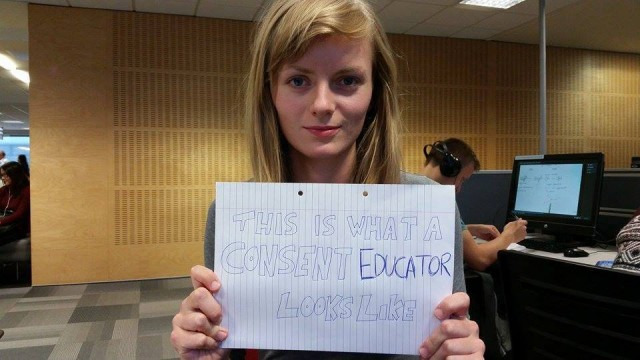
Sexual Consent Class - Consent Educator

Social Justice Warrior

h/t Guido Fawkes

Agree with this article? Violently disagree? Scroll down to leave a comment.

Follow Semi-Partisan Politics on TwitterFacebook and Medium.

Labour’s Economic Policy: The Slow-Motion Car Crash You Can’t Not Watch

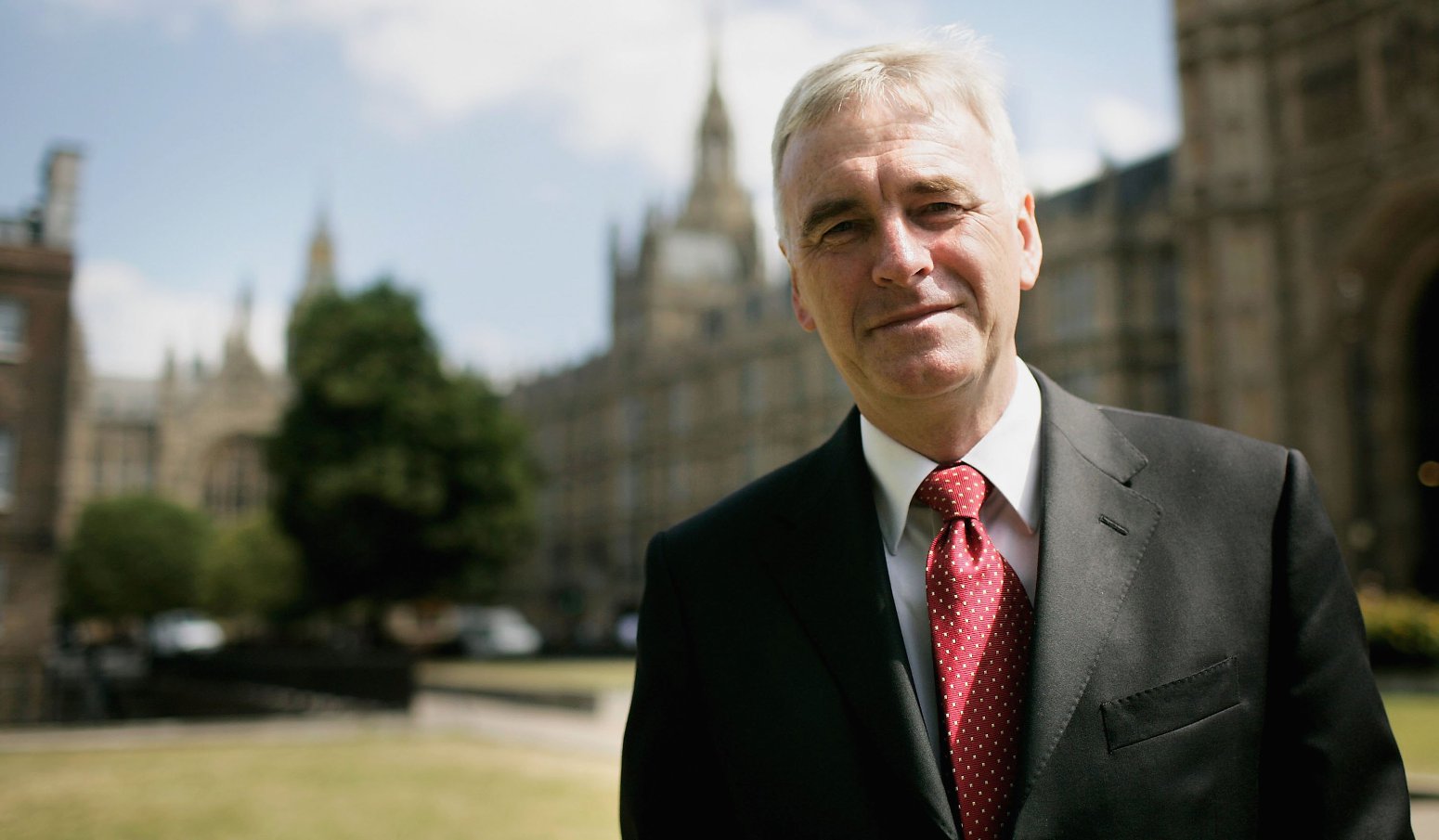
John McDonnell - Labour Party - Jeremy Corbyn

Labour’s loose cannon Shadow Chancellor is behaving like an economically illiterate, childish simpleton with no clue how to oppose effectively, let alone one day govern the country

The past month has not been pretty for those of us who hoped that Jeremy Corbyn’s election as leader of the Labour Party might help usher in the return of serious ideological debate to British politics.

Jeremy Corbyn has scored just one significant victory so far: his first outing at Prime Minister’s Questions, where the opposition leader’s measured tone and clever decision to raise questions submitted by the general public succeeded in changing the tone of the session – and for the better.

But that one bright spot aside, it has been utterly miserable – unforced error following self-inflicted wound, compounded by acts of astonishing political naivety. On the rare days when the newspaper front pages have not carried stories about Labour Party splits and internal warfare, the newly energised Hard Left supporters have stolen the show with their venomous spitting, their rape threats and their incessant chants of “Tory Scum!”

And now Labour’s Shadow Chancellor, John McDonnell, has succeeded in undoing the parliamentary party’s only truly coherent and sensible position, for reasons which seem to change by the hour. In his infinite wisdom, John McDonnell decided to reverse Labour’s policy of following the Fiscal Charter – the commitment set by George Osborne to run a budget surplus during normal economic times – having announced it only two weeks ago at Labour Party conference.

Continue reading