Are Technocrats To Blame For The Rise Of The Know-Nothing Celebrity Politician?

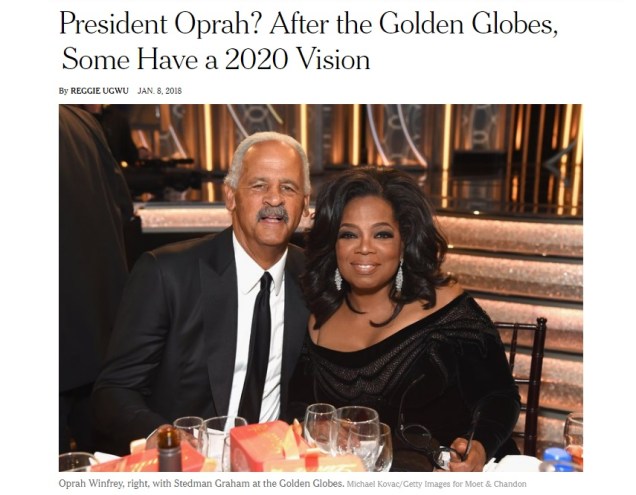
Oprah Winfrey - Golden Globes acceptance speech - MeToo - President Oprah

When unelected technocrats increasingly set policy and carry out the day-to-day business of governance we should not be surprised that electoral politics, castrated and less consequential than ever before, is becoming a circus freak show

Michael Brendan Dougherty has a new piece in the National Review which so succinctly captures the state of Western democratic politics that busy as I am this week, I feel the immediate need to blog a response/reaction to it.

Dougherty’s jumping off point is the sudden, feverish interest among assorted leftists and Democrats for television personality Oprah Winfrey (yes…) to run for president against Donald Trump in 2020, driven almost entirely by a speech Winfrey gave about the #MeToo movement while picking up an award at last night’s Golden Globes.

You might think it a little hypocritical for people who have spent the past two years bashing Donald Trump as an inexperienced dilettante in way over his head, a reality TV blowhard with no credentials and no right to occupy the office he holds, to immediately embrace a similar figure from their own side of the political divide – and you would be correct in thinking so. But the mere fact that voters are being drawn to these celebrity candidates is itself noteworthy, and crucially, Dougherty places the blame not with the voters but with the bland, interchangeable technocrats of the political class who offer those voters no compelling alternative.

Dougherty writes:

The average voter is going to be blamed for this. The great disdain of the educated class will fall on the Uhmurkans who have been hypnotized by their televisions. Maybe some of that’s right. But I blame the wonks. It was the wonks who, unawares, made the celebrity president not just desirable but logically necessary.

The wonk’s role is well-fitted to the centrist political ideal in the post–Cold War West. For them, government is most highly admirable when it is totally denuded of questions of value or morality (these having obvious and uncontroversial answers), and reduced to a purely technical exercise. The politician working with the wonk finds that his job is reconciling the public with what’s good for them. And this fits the machinery of the executive branch, which is filled with hundreds of thousands of civil servants, overseen by a much smaller retinue of political appointees almost all chosen from within the governing class of the country. Where this model of government is most advanced — in Europe — policy questions are routinely taken away from the passions of democratic peoples, and quarantined for expert management.

Taken together, these trends are more or less the abolition of traditional democratic politics. And so there is little use for the traditional politician, a person of judgment and charisma who represents the community from which he or she emerges, using his own wisdom in reconciling the diverse interests and needs of his nation and constituency.

You couldn’t write a better paragraph describing the impact of Westminster centrism and EU integration on our democracy, even though Dougherty is talking in his essay about American politics as much as European. On both sides of the Atlantic, political leaders have behaved as though we are living in the End of History even when Francis Fukuyama’s prediction has long since been disproven through bitter experience. Elections, while often bitter and hard fought, have generally offered little meaningful choice when it comes to big questions about how the nation can best order society and relate to the world. Even when political rhetoric has been heated and the candidates have seemed very different, the economic system and world order they ultimately support has tended to be the same, an embrace of the status quo.

Michael Lind also wrote at length in 2017 about the severing of the compact between the ruling class and the governed, with those in the political, professional and creative classes increasingly feeling no bond of kinship with or obligation to others in society, those they look down upon for holding “incorrect” or “oppressive views” (which can often be taken to mean “that which was mainstream twenty years ago”. And many politicians, nearly all drawn from this class (or inducted into it soon after election) do indeed spend their time explaining and defending the status quo to the citizens they nominally represent, rather than striving to change the status quo on their behalf.

I noted the same phenomenon only last month, in the context of Brexit:

Look at the big issues facing the West and the world in general in 2017 – global migration flows, Islamist terror, globalisation, outsourcing, automation and more – and there is not one of these complex problems which we as a country have failed to comprehensively sweep under the rug or otherwise avoid meeting the challenge.

Even on those occasions when the people have recognised burning problems and the need for bold new solutions, public opinion (such as on Brexit and immigration) has been repeatedly slapped down over the years by a cohort of politicians who think it is their job to explain and defend the current status quo to the citizenry rather than change the status quo according to the demands of the citizenry.

As I have also written, this managerialist technocratic approach to government, with the wonks in the driving seat and politicians as mere interlocutors to the public can potentially be justifiable when things are in steady-state, when times are good, society and the economy stable and when no large threats loom on the horizon. However, rather than a benevolent steady-state we instead live in interesting times, with numerous opportunities and threats ranged around us. This is the discontinuity about which I have been writing so much of late.

In such periods of discontinuity politicians must not remain in the back seat, because it then falls to unelected civil servants and powerful economic agents to dictate the nature and scope of change on their own terms and to their own advantage. For two decades now, globalisation, automation, outsourcing and immigration have changed the structure of our economies and the very meaning of work, and yet there has been no meaningful political debate about these topics until public dissatisfaction reached such a level that the debate could no longer be suppressed.

Nowhere has the debate been suppressed more effectively than on the subject of immigration, and nobody has done more to suppress that debate (thus pushing it toward the unpleasant fringes) than the Labour Party. On immigration, Labour and left-wing politicians very much see themselves as interlocutors rather than elected representatives. When people (including many of their own constituents) raise concerns about the dramatic levels of net migration since 2004, left-wing politicians and commentators see it as their job to explain why unprecedentedly high immigration is actually a good thing rather than seriously engage with voter concerns and amend policy based on that feedback.

When politicians refuse to take voters at their word and assume that their qualms about immigration are really about something else, this is not only patronising but ultimately counterproductive. One of Labour’s favourite fallbacks when it comes to immigration concerns is to pivot to worker exploitation. They think that by instituting new laws to crack down on hiring workers for less than minimum wage (as though it were not already illegal) the public will be placated because foreign workers will no longer be able to undercut local labour. Another favoured technique is to talk about infrastructure, a glib pseudo-concession to the reality that roads do not automatically widen nor hospitals acquire additional beds with every new migrant who lands at Heathrow. Of course, if they really cared about matching infrastructure to population increases caused by immigration they would have done so when they had the opportunity, so this is yet another evasion.

And even now that this tactic of ignoring voter sentiment and patronisingly explaining to voters why they are wrong to be concerned about mass immigration has spectacularly blown up in their faces, still the key voices of the Left can imagine no other way of functioning. Accepting that voters may have a point and amending their policies to reflect the democratic mood doesn’t occur to them. Instead we just see more earnest think pieces about how voters need to be better taught the benefits of immigration.

But immigration is only the most prominent policy area where we see this behaviour from politicians. The same haughty dismissal of public opinion occurs in nearly every sphere. As another example, both Labour and the Conservatives have long since coalesced around what is basically a social democratic economic worldview where profits were tolerated (though rarely celebrated) because the resulting taxes on those profits fund the massive, omnipresent public sector. This locked old-school socialists and more free-market conservatives out of the conversation until Ed Miliband’s failure to win the 2015 election saw Jeremy Corbyn bust open the consensus on the Left and take Labour in a more ideological direction. Theresa May still stubbornly refuses to come to an accommodation of her own with the libertarian right of her party, and this obstinacy and unwillingness to allow alternative views to influence policy is one of many reasons why the Conservative government is idling in neutral, doing nothing of value for the country and waiting for somebody to put it out of its misery.

So given the fact that our politicians (at least the ones who get ahead) tend to be dismal functionaries rather than inspired leaders with disruptive new ideas to meet the period of discontinuity in which we find ourselves, it is perhaps less surprising that many voters gravitate toward someone, anyone with charisma and a willingness to do something more than patiently explain to voters why all of the things they dislike are actually really good for them.

Dougherty writes:

Having eliminated the need for real probity in politicians, why shouldn’t the parties turn to celebrities as their political leaders? The celebrity will do the job of winning elections and riling up the public, but the machinery of government will go on, almost undisturbed.

This may be cathartic for some voters, but it has not taken long for the establishment blob to get the measure of most populist uprisings and swiftly tame them in all but rhetoric. In France for example, Emmanuel Macron discovered that by jumping around on stage and shouting a lot he could amass huge numbers of disillusioned voters and easily see off the threat from Marie Le Pen’s Front National, even though Macron is himself little more than a young face and a neat hairdo atop the same policies which so irritate the public and have increasingly proven inadequate to our present challenges.

And so it is too in America. Dougherty writes:

We can see how the permanent class of Republicans in government almost immediately tamed the Trump presidency. Instead of the populist presidency Trump promised, Trump is ushering in much of the pre-existing “moderate” Republican agenda of corporate tax cuts and economic deregulation. The political class and the media allied to it were able to expunge most of the populist figures from the administration. Soon, they might even succeed in expunging Trump, too.

We are thus heading toward a place where the theatre of democracy is almost entirely divorced from the process of governing. The connection between national elections and meaningful policy reform is becoming about as tenuous as the link between scripted reality TV and actual reality – in other words, almost nonexistent.

In this increasingly dystopian world, all our favourite celebrities can duke it out to become nominal presidents or prime ministers while the technocratic wonks pay no heed to the sideshow and quietly continue to go about implementing their preferred policies relatively unmolested.

But the blob may no more have the national interest at heart than the populist celebrity politician. Both are prone to self-interest, and while the celebrity politician’s interest likely lies in self-aggrandisement, the blob has often proven itself to be more interested in perpetuating policies which benefit its constituent classes in the short to medium term than strategically positioning the nation(s) they effectively govern to face the challenges and reap the rewards of the future.

And the blob is especially dangerous right now, having been moved to anger by unprecedented popular rejection in 2016. The disruptors may have thought that they could summon a good rage or indulge in a lavish pity party when they wanted, but their antics have proven to be nothing compared to the centrist persecution complex the displaced establishment has conjured up in response.

Neither side does their country any favours. The populists – whose figureheads are Donald Trump in America and the Hard Brexit Ultras in Britain – have by now proven their unseriousness and detachment from reality, but the blob still seems to be of the opinion that things can go back to the way they were once what they see as these temporary aberrations are over and the populist rebellions put down.

Patrick Deneen put it best in the Spectator this week, remarking that we now have “a liberal elite without a populace, and a populace without a moderating elite.” And so we are left to pick our poison – on the one hand an arrogant technocratic class which even now shows no humility or willingness to change its ways, and on the other a succession of telegenic performers who are great at channelling public anger but totally lacking the knowledge or leadership ability to turn anger into smart policy.

Not an enviable choice.

donald-trump-anxiety-therapy

Support Semi-Partisan Politics with a one-time or recurring donation:

Agree with this article? Violently disagree? Scroll down to leave a comment.

Follow Semi-Partisan Politics on TwitterFacebook and Medium.

The Age Of Perpetual Crisis

The Age of Anxiety - Ballet

When every single issue is falsely portrayed as a burning crisis, none of our national challenges will receive the considered attention they deserve

“We would rather be ruined than changed
We would rather die in our dread
Than climb the cross of the moment
And let our illusions die.” 
― W. H. Auden. The Age of Anxiety: A Baroque Eclogue

The housing crisis. The migrant crisis. The productivity crisis. The deficit crisis. The tedious, annual NHS winter crisis. Brexit. Nearly every important issue or event in our politics is portrayed as a pressing, existential crisis, despite few of them even remotely living up to the definition. If you are sceptical, just ask somebody who was alive and situationally aware in 1940 whether any of the issues which excite politicians and newspaper editors today amount to a real crisis, and see what they have to tell you.

And as it is in Britain, so it is across the Atlantic in America. Surveying the present scene, David French writes in the National Review:

In politics, when everything’s a crisis, it turns out that EVERYTHING’S A CRISIS!

We keep reading that Donald Trump is a unique danger to American democracy, a threat we should put aside partisan tribalism to defeat. Then, seconds later, we read that giving Americans the choice to buy health insurance will kill people by the thousands. Seconds after that, we learn that an entirely conventional Republican tax plan will not only kill people but also extinguish American democracy as we know it. Finally, we read that the end of net neutrality — a regulatory doctrine that only the smallest percentage of Americans even remotely understand — will extinguish American liberty.

[..] For the average American, who pays less attention to politics than to his professional and personal lives, all of this is exhausting. It’s numbing to the point where he can’t possibly determine what’s important and what’s not. So he checks out. He throws his hands in the air and gives up. But for the Americans who care the most about politics and drive our public debate, perpetual crisis is invigorating. It provides meaning and purpose.

A nation’s political culture is always defined by the people who care the most, and the people who care the most in our nation have lost all sense of proportion.

Charles Cooke makes a similar point, but at the more personal level, in the same publication:

Ours is a moment in which millions rush breathlessly to exclaim. In defense! In resistance! In bloody-minded persistence! “I will not back down!” we are told, by people who have not been asked to, and could not be compelled to. They won’t be “intimidated” either, nor “silenced,” nor “bullied” nor, it seems, pushed to any form of self-reflection. Indignation, not analysis, is the perennial order of the day, and the tone of our debates is ineluctably Twitteresque. Retweets are points on the board, and hyperbole gets you oodles of them. The worst. Ding! Insane. Ding! Crisis. Ding, ding, ding! Congratulations, you have been promoted to the next level.

I don’t think I have ever read a more perceptive or honest summary of how political Twitter works, and as a denizen of this world I see more than a few of these negative traits in my own work, some due to personal failures but more often because the difficult pathway to being heard and gaining an audience on social media incentivises some pretty negative behaviours.

It is in the nature of those involved in politics – either doing or writing about it – to imbue their work and their passions with an air of existential importance. In many ways, this is understandable – it is hard to get a hearing in the media, or from the People Who Matter, with a piece of sober, rational analysis addressing a long-running issue; harder still when the competition presents every new report or white paper as some kind of magical elixir to the nation’s woes.

Given the choice, most people want to be Neil Armstrong and not the dedicated but overlooked engineers and project managers who made the Apollo Program a reality. Or if politics is showbusiness for ugly people then most players want to walk the red carpet and be photographed, not lurk in obscurity editing screenplays or building sets. This is human nature, but it has the unfortunate side effect of warping our political process, bending it towards flashy but superficial quick fixes and wonder cures rather than holistic analysis and serious reform.

The word “crisis” in particular is used far too readily at present, by people who should know better. The nature of politics and public policy means that nearly every important decision will ultimately have some direct or indirect impact which can be measured in terms of human lives, thus making it existentially important to at least a few people. In fact, the Left in particular rely on this very phenomenon, since their conspicuous compassion policies front-load the emotional benefits of throwing resources at a problem while deferring or even denying the costs – after all, it is easy to win applause and positive headlines by opposing welfare or healthcare reform, but much harder to counsel delayed gratification or highlight the cumulative toll of welfare dependency on the quality and duration of human life.

But in actual fact there are very few actual full-blown crises facing us at the present time, despite the best efforts of opportunistic politicians and the media to suggest otherwise. Rather, there are a series of slow-burning, serious and often intractable problems which need to be tackled, few of which are likely to lead to sudden national ruin but many of which – if left unattended much longer – have the potential to chip away incessantly at our economic prosperity, national security, democratic health or the stability and cohesion of our society.

The appalling failure of successive governments to adopt a sensible housing policy and increase the housing stock will not lead to an explosion in homelessness or destitution overnight, but it will lead to a continuing sense of rage, disillusionment and alienation among younger voters, as it is already doing. Continuing to stand by an immigration system which proudly fails to make skills or likelihood of assimilation and popular consent the key drivers will not lead to riots in the street tomorrow, but it will continue to drive a wedge between the political class and much of the country. Continuing to enshrine the NHS as our national religion and abide by the strict political doctrine of NHS non tangere will not create an immediate spike in death rates, but it will ensure that UK health outcomes continue to further lag behind those countries with the best healthcare systems.

Labelling something a “crisis” suggests imminent peril requiring immediate remedy, even if the resulting damage control ultimately creates other problems or only succeeds in kicking the can down the road. It advocates for quick fixes, which is exactly what we don’t want at this time. In this period of discontinuity, where the old political settlement has broken down and traditional, familiar policy prescriptions neither work effectively nor command sufficient public confidence, what we need are carefully thought-out and mutually supporting policies rooted in an uncompromising, forensic analysis of the precise problems we face. What we absolutely do not need are a bunch of panicked gimmicks and pseudo-policies cooked up in silos by desperate politicians and leaders whose sole objective is to survive the day and avoid negative headlines.

The difficult truth is this: there is no one pressing crisis the resolution of which will solve all our problems and keep us safe and prosperous in a changing world, and there is no universal and comprehensive solution to any of the problems we deem to be crises. Housing cannot be addressed without revising planning rules, but it is also impossible to adequately plan future housing and infrastructure when there is no meaningful control over mass immigration. Low productivity cannot be addressed without looking at corporate governance, secondary and tertiary education, workers’ rights, union power and addressing the weak commitment to R&D. Indeed across the board there is no silver bullet, no quick fix, no political party with all the right answers, no system of government ideally equipped for the challenge. We must forge a new path.

Far from focusing attention and driving positive change, labelling everything a crisis merely creates apathy, causes many voters to check out and encourages many politicians to either view problems in a highly compartmentalised way or else simply consider them insurmountable, facts of life to be dealt with rather than challenges to be overcome – just as many in the British establishment seemed resigned to irreversible national decline in the 1970s, before Thatcherism finally equipped Britain with the tools to dig ourselves out from the last major period of discontinuity this country faced.

Britain emerged stronger from the late 1970s and 80s because after years of paralysing indecision and timid half-measures from Tory and Labour governments alike we finally made a calm, methodical and dispassionate analysis of the problems holding us back – excessive union power, flawed monetary policy, excessive state involvement in the economy – and set about tackling each of these issues in a coordinated way, as part of a comprehensive national turnaround strategy.

We need to adopt just such a process again today in order to overcome this new period of discontinuity and the specific challenges that it brings. And the first step is to stop viewing every last issue as a standalone, burning crisis.


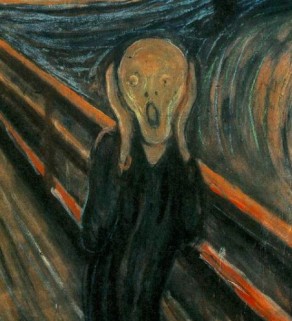
Munch - The Scream

Support Semi-Partisan Politics with a one-time or recurring donation:

Agree with this article? Violently disagree? Scroll down to leave a comment.

Follow Semi-Partisan Politics on TwitterFacebook and Medium.


Heathrow Airport Expansion And Decision Paralysis, A Symbol Of British Political Failure

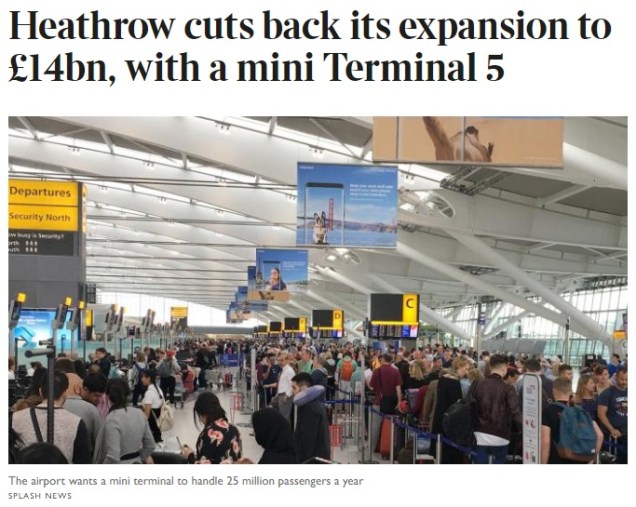
Heathrow airport expansion cut back - third runway - mini terminal 5 - infrastructure planning in Britain

Government indecision and cowardice over the expansion of Heathrow Airport is just one tangible, high profile manifestation of the British political disease

There is no better analogy for the broken, dysfunctional nature of British politics and strategic government planning than the ongoing saga over whether and how to expand London’s Heathrow Airport, an undertaking which most serious people concede needs to happen yet generations of Cabinet ministers seem quite unable to make a reality.

A year after it finally appeared that the decades-long decision process had at long last produced a result, we now learn that plans for a new terminal are being scaled back and the timeline further extended.

From the Times:

Heathrow is planning to build a mini version of Terminal 5 as part of slimmed-down proposals to expand Europe’s biggest airport.

The airport is considering building a new terminal a few hundred metres west of T5 to handle 25 million passengers a year as part of updated plans for a third runway, The Times has learnt.

Heathrow is also planning to phase all building work over as many as 15 years to reduce the cost of expansion by about £2.5 billion. The plan will be one of a series of options put to public consultation in mid-January.

Heathrow says that the proposals would bring the total cost down to about £14 billion, allowing the airport to keep passenger landing charges close to current levels.

Airlines have been concerned that Heathrow’s private owners would increase charges to pay for the project, potentially pricing out many passengers. At present fees add £21.75 to the price of each ticket. Chris Grayling, the transport secretary, has indicated that keeping landing charges flat would be a condition of building a third runway. The proposals have to pass a parliamentary vote early next year and be approved by planners in the 2020s.

In other words, the original plans for a new full-size terminal located next to the planned new runway have been downgraded to plans for what amounts to little more than a satellite terminal adjacent to Terminal 5.

And even this reduced ambition has to be justified to the grey mass of naysayers who would sooner go their whole lives without ever making a consequential decision, with Heathrow Airport’s owner now deliberately emphasising what a small, puny and inadequate solution this new micro-terminal would actually be, as though mediocrity and lack of ambition were a selling point (which in today’s Britain they are):

Any comparison with T5, which cost £4.2 billion and was delayed by a four-year planning inquiry, could cause major concerns. However, Heathrow insists that the new terminal would be smaller, catering for 25 million passengers compared with 35.5 million at T5. It would be built in two blocks, creating an initial facility for 15 million.

Wait! We can make this development worse and ensure that it fails even more to keep up with capacity demand by the time it gets built! Give Heathrow Airport another year and they will be proposing little more than a wedding marquee tent and a few folding tables.

The government understandably does not want air passengers to pay an unbearably steep cost to finance the expansion, yet it does not occur to them that adequate relief could easily be provided to passengers by cutting the ludicrously high Air Passenger Duty, an exercise in environmental virtue-signalling which makes Britain one of the most expensive and unattractive countries to fly from, and which is close to being a national embarrassment.

A real Conservative government might see the ideal opportunity and justification for a tax cut in this case, but sadly we do not have a real Conservative government at present – we have Theresa May’s strong and stable government, limping from day to day by offering as many concessions to the Left as is humanly possible without changing the Tory party logo from a tree to a hammer and sickle.

Of course there are some very specific reasons why countries like China and the United Arab Emirates can complete vast civil engineering projects in the same time it takes Britain to convene a planning committee – an authoritarian government, the absence of inconvenient democracy, few planning regulations, lax health and safety standards, cheap labour and/or a tolerance for slave labour being among the chief distinguishing factors.

And indeed one of the key factors which sets Britain apart from certain other countries is the importance we place on our preserving our heritage, our built environment and taking local concerns into account when giving the green light to major new projects. Any government can quickly see to the construction of a giant, soulless mega-mall in the desert, or a dubious national ego-boosting skyscraper in a locale where there is no real need to build upward. It takes far more inspiration and resourcefulness to create and expand critical national infrastructure or important new commercial developments in sympathy with natural surroundings which have often existed for many centuries.

But still, Britain is too hesitant when it comes to authorising critical new infrastructure projects of national importance, and our failure holds us back as a country. Whether it is central government failing to bite the bullet and commit to a decision for fear of political fallout, NIMBY campaigns effectively trumping the national interest with the local or ill-considered privatisations or public-private partnerships allowing responsibility for key decisions to slip through the cracks, decisions which should be made at a local level in a healthy democracy are instead commandeered by central government, and strategic decisions which should take two years instead take twenty.

One of the very first pieces written on this blog nearly six years ago lambasted the Tory-LibDem coalition government for kicking the can down the road on Heathrow airport expansion. It is a subject I have returned to again and again in subsequent years – and yet we are no closer to striking ground on a project which is essential to maintaining the pre-eminence of Heathrow as a key European hub. At this point, even if one of the alternative schemes (such as Gatwick expansion or a new airport in the Thames estuary) is chosen instead of a third runway and new terminals at Heathrow, we are rapidly reaching the point where any decision is better than no decision.

And as it is with Heathrow Airport expansion, so it is with nearly everything else in British politics. There are an array of slow-burning, pressing issues facing this country which successive governments have either tackled half-heartedly or ignored altogether. It is wrong to call them “crises” as there will be no sudden national implosion if they are not all fixed within six months, but our continued failure to tackle the housing shortage, low worker productivity, education reform, healthcare reform and immigration leads to a slow and steady erosion of trust in politics and our democratic institutions, as well as making Britain a less attractive place to live, work or invest.

The retrenchment of British ambition and capability is not emblemised by Brexit, as many tremulous Remainers like to claim. The symptoms have been all around us for years, decades even, and we have been too lazy or calculating to subordinate the short-term political interest to the long-term strategic need. Look at the big issues facing the West and the world in general in 2017 – global migration flows, Islamist terror, globalisation, outsourcing, automation and more – and there is not one of these complex problems which we as a country have failed to comprehensively sweep under the rug or otherwise avoid meeting the challenge.

Even on those occasions when the people have recognised burning problems and the need for bold new solutions, public opinion (such as on Brexit and immigration) has been repeatedly slapped down over the years by a cohort of politicians who think it is their job to explain and defend the current status quo to the citizenry rather than change the status quo according to the demands of the citizenry.

The managerialist, consensus politics which has characterised Britain since the end of the Thatcher and Major governments is partially justifiable when the economy, society and the world are operating in something like steady-state, and governments have but to tweak a few dials here or there to keep the system running smoothly. But this brand of aloof technocracy is lethal to national prosperity and security in times of discontinuity such as the period in which we find ourselves today, when the prevailing political consensus is conspicuously broken and the worn-out old policy prescriptions no longer command sufficient confidence or support.

As this blog has been warning repeatedly, and will continue to warn – even if nobody listens – the time for denial and evasions is over. But so too is the time for cosmetic, superficial pseudo-reforms or scattergun crisis management. Rather, we need to develop a set of mutually supporting new policies based on a clear analysis and understanding of the challenges facing modern Britain and the various ways in which they are interlinked. This is what the CPS did in 1977 with their “Stepping Stones” report, paving the way for Margaret Thatcher’s transformative government, and that is what we must do again today.

And until such time as we demand political solutions and visionary government equal to the challenges of the stormy present, every aspect of future Britain will soon come to resemble the cautionary tale of Heathrow Airport – dilapidated, twenty years behind the curve, fatally stymied by strategic indecision and increasingly avoided by anyone with the means to do so.


UPDATE – 19 December

Based on positive reader feedback to this and other articles, I am actually now trying to do something to turn this idea (the need to respond to discontinuity with radical but coordinated new policies) from a mere blog post to an actual project or initiative in the real world. We clearly can’t leave it to the usual inhabitants of Westminster to do this on their own – new ideas and fresh faces will be needed, just as they were in 1977.

If anyone who reads this article feels called to action, please do get in touch with me, either using the “contact” menu link at the top of the page, or directly at semipartisansam@gmail.com

Thanks.

Conservative Party Logo - Torch Liberty - Tree

Globalisation

Support Semi-Partisan Politics with a one-time or recurring donation:

Agree with this article? Violently disagree? Scroll down to leave a comment.

Follow Semi-Partisan Politics on TwitterFacebook and Medium.

Budget 2017 Reaction

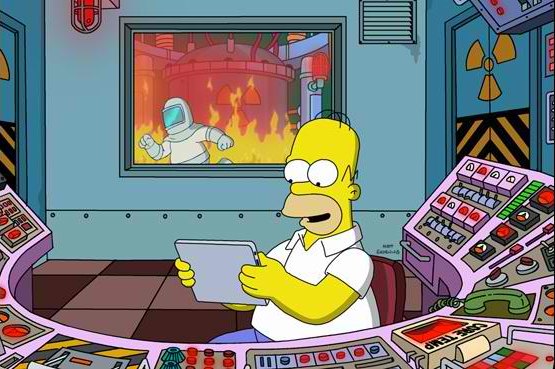
Homer Simpson - George Osborne - Budget - Annual Statement

This was a holding budget designed to buy the government some political breathing room, and so Philip Hammond kicked the can down the road on nearly all of the major fiscal and structural issues facing Britain

I intended this piece to be just a few disjointed thoughts reflecting on Philip Hammond’s Budget Statement and the boldness or cowardice of the Tories, but it gradually expanded to touch on issues of federalism and local government, and the counterproductive nature of the annual “Budget Theatre” itself.

A one-way ratchet to Bigger Government?

As Budgets go, this one was fairly bland and non-offensive. Contrary to the justified fears that Theresa May’s administration would be a one-way ratchet to Bigger Government, such ominous moves were largely missing from today’s statement – though of course we still have the highly un-conservative “Industrial Strategy” to come.

Equal to the challenges facing Britain?

It is hard to argue that this Budget in any way acknowledges the scale of the challenges facing post-Brexit Britain. A serious Budget which attempted to do so would have included a lot more on education and proposed a means to help re-train the many workers who will find their jobs outsourced or automated in the coming decades. £40 million to train new maths teachers is good, and any steps to improve Britain’s STEM output are welcome, but this does nothing to disarm the time bomb which will affect many of those already in the workforce.

A serious Budget would have done more than take tentative steps around the housing crisis, firmly addressing the supply issue now rather than tinkering with demand by abolishing stamp duty on properties under £500,000. It would have touched the third rail of British politics and defied the doctrine of NHS non tangere to meaningfully reform British healthcare and the way it is funded. It would have grappled with social care and the need to ensure that those who can afford to bear more of the cost of any care they require in old age.

But of course we got none of those things. And the great danger is that we will now never see these problems meaningfully addressed in the lifespan of this government. One can appreciate that Brexit is currently sucking much of the oxygen which might otherwise fuel other policymaking, but we should not have to choose between managing Brexit (which this government is also failing to do) and dealing with other long-term problems. It should not be too much to ask for the UK government to walk and chew gum at the same time.

Short-term thinking over long-term need?

A government’s first budget is normally a place where bad news gets dumped and difficult decisions made, the idea being that it is better to absorb public anger now and then win back favour with giveaways in the final budget(s) before a general election than have to anger people with harsh corrective measures later in the term. David Cameron’s government followed this approach, with Chancellor George Osborne doling out the harsher medicine (or plain confusion, in the case of the Omnishambles budget) in early years and then sweetening the deal prior to the 2015 election by pretending that he had solved all of Britain’s fiscal challenges and therefore had spare cash to throw around.

The fact that Theresa May’s government is not following this well-worn path is not a sign of some innovative new strategy – it is a sign of clear political weakness. The current Conservative government is already teetering on the brink, without a majority in the House of Commons and kept afloat in the polls only because of fear of Jeremy Corbyn. Philip Hammond therefore had no political capital to spend by irritating the electorate any further, or asking anything more of them; instead he was forced to try to accrue some political capital with a giveaway.

As I previously wrote:

Twice a year – once in the annual Budget and once in the Autumn Statement – the Chancellor of the Exchequer gets to his feet and delivers a refreshed set of economic policies in a big, set piece speech where he is essentially forced to favour tomorrow’s headlines over optimal long or even medium term decision making.

Nationally significant policies from every government ministry live or die by the concessions that their ministers are able to wrangle from a Chancellor who is forced by political reality to be more concerned with tomorrow’s Daily Mail headline than the state of our public finances in a year’s time.

Thus the annual Budget Theatre encourages short-term thinking. Whether one takes the Osborne approach or the Hammond approach, Budgets are as much about chasing favourable headlines and dominating the news cycle with positive coverage for a few days than they are about serious long-term strategic thinking.

Budget Theatre is a bad way of governing

This blog has long complained that this annual Budget Theatre, with all the speculation and press coverage surrounding it, is a really bad way to run a modern democracy. Why? Well, there are a number of reasons.

First of all,  as already discussed, the Budget spectacle encourages short-term thinking. Budget 2017 is something of a “giveaway” budget, with the government making concessions and seeking to tamp down public anger rather than taking difficult decisions in the long term. In short, it prioritises the political and tactical over the strategic.

Secondly, the Budget spectacle directly feeds into the Politics of Me Me Me, far more so than any other event, even general elections. During the build-up to Budget Day, the day itself and the immediate aftermath, we are encouraged by the media to think only about how the budget affects us and our wallets. This is understandable, since the Chancellor has the power to inflict severe pain or lavish great rewards on favoured groups. But it is also therefore an incentive for us to “ask not what we can do for our country, ask what our country can do for us”, to reverse John F. Kennedy’s exhortation.

As I wrote at the time of George Osborne’s 2015 Budget:

Having two occasions each year when an already-powerful chancellor in an already-centralised country like the United Kingdom gets to play with nearly all of the controls and levers which influence our economy – as though he were Homer Simpson at the controls of Springfield Nuclear Plant – only encourages meddling and tweaking of things that should properly be left to local government and individuals.

When you have direct, ultimate control over which families deserve help buying a house, which people should keep or lose their benefits or how much a person pays in sin taxes for their guilty pleasure, the temptation to use those powers is irresistible. And because of the ratchet effect, it is the easiest thing in the world to give away new perks to favoured interest groups, but nearly impossible to ever claw them back without being exposed to political attack. Even under this nominally conservative government, budgets and autumn statements have often been a one-way ticket to bigger government – or at least more activist state.

Unfortunately, Budget Theatre is inevitable when so many decisions affecting so many people are made centrally rather than locally, and applied at a national level rather than taking into account the specific and varying needs of different regions (or between the cities and the countryside).

And this leads on to my next point…

Britain’s overcentralisation disease

I continue to find it vaguely ludicrous that decisions about how much tax should be applied to a pint of beer or a litre of gasoline are set nationally in Westminster, and that we all have to tune in to the Budget Statement every year to find out what tweaks and incentives the Chancellor has seen fit to impose on our lives at the behest of the public health or environmental lobby.

Britain is a ridiculously over-centralised country in terms of governance. Devolution is a good thing in principle (though I would argue that we should move toward a federal UK with the same powers devolved to each home nation) but the net result of current devolution is that Wales, Scotland and Northern Ireland have rightly floated off to do their own thing in terms of domestic policy while England remains overcentralised.

We need to move to a place where local authorities, ideally county councils, take over some of the tax-raising powers from Westminster and gain more control over spending in areas such health, transport and education. We need to stop fearing the “postcode lottery” and start welcoming it as a petri dish for testing new policies and encouraging healthy rivalry between regions. More decentralised taxation and spending would force local politicians to put their money – or their electorate’s money – where their mouths are. If leftist politicians want to hike sales taxes or fritter money away on white elephants they should be free to do so, and then answer to voters.

Finally, enhancing the powers of local government in England would increase the current woeful levels of participation in local democracy as the decisions made locally suddenly started to matter a lot more. And this in turn would see an improvement in the calibre of people running for local office, and serve as an incubator for political talent outside Westminster.

Of course, some of the blame for the current situation rests with the Thatcher government, which felt it necessary to de-fang many local authorities since they represented such an impediment to the government’s turnaround strategy. One can argue whether or not this was justified, but certainly the end result is a country where far too many decisions and policies rest with the Westminster government when they should really sit much closer to the people.

Conclusion

This year’s Budget could have been a hell of a lot worse, given Theresa May’s interventionist instincts and tolerance for Big Government. Fortunately, Philip Hammond seems to have resisted such pressures and delivered a Budget which – if Britain were operating in steady-state with no major challenges on the horizon – would have been largely inoffensive.

Unfortunately, Britain is not in a period of steady-state operation, where domestic and international issues are stable and a technocracy is more than capable of fiddling with the switches and dials to keep things running smoothly. On the contrary, we have entered a period of discontinuity, an abrupt departure from our previous national trajectory, when the old political consensus is revealed to have frayed to the point of uselessness and bold new policymaking is required.

As I recently wrote, a bold new programme of coherent, mutually-supporting policies is required to equip Britain to face these oncoming challenges. The Tories now have the slogan, but it remains painfully clear that they do not yet have the solutions, though various initiatives are now underway to come up with some original new policies.

But it will take their time for these policy groups – notably George Freeman’s Big Tent and Nick Boles’ Square Deal schemes – to come to full fruition and develop workable policies. And even then there is no guarantee that Theresa May or the next Conservative leader will approve of these policies and work them into their programme for government.

Unfortunately, as a nation we are treading water at the moment, neither swimming toward the oncoming wave or swimming away from it as it threatens to break over us. This was a holding budget designed to buy the Tories some political breathing room and perhaps signal that they are starting to comprehend  public dissatisfaction with the status quo, particularly on housing.

But without some kind of joined-up, comprehensive plan – and a coherent message with which to sell it to the public – it is hard to see the Tories winning the kind of electoral mandate or public support they need to be anything more than a caretaker government.


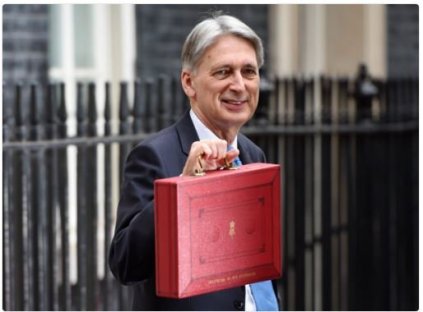
Philip Hammond - Budget 2017 - Conservative Party - Tories

Support Semi-Partisan Politics with a one-time or recurring donation:

Agree with this article? Violently disagree? Scroll down to leave a comment.

Follow Semi-Partisan Politics on TwitterFacebook and Medium.


The Battle For British Conservatism: Should The Tories Be Ideological?

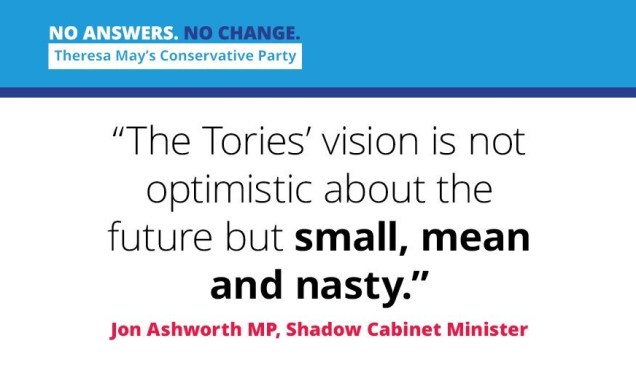
Tories vision is not optimistic about the future but small mean and nasty - Jon Ashworth MP - Conservatives

Some say that it is not the job of conservatives to think big or be ideological – but in a period of discontinuity such as this, being ideological and ambitious is exactly what conservatives must do

My interest was piqued recently by a Philip Collins column in the Times, in which Collins argues for pragmatic conservatism over idealistic conservatism, and chastises Brexit-supporting conservatives in particular for supposedly putting adventurism and ideology over the cautious stability which ought to flow from the conservative worldview.

Collins makes some interesting points, beginning with his conception of the differing roles of Britain’s two main political parties:

The electorate selects a Labour government to push the nation down the road of progress. That effort inevitably leads to an excess of public spending and too great a faith in the capacity of the state to improve the lot of the people. Much good gets done along the way but the temperature gauge of the British people is so attuned that, once spending starts to spiral, they call on the Conservative Party to tidy up. The whole point of the Conservatives, the absolute raison d’être of Tory government, is to provide sound money and solid competence, unburdened by too much radical belief.

I don’t necessarily disagree with this. Over the course of both short and medium-term timeframes one can witness this phenomenon in action, from the pivot away from New Labour in 2010 as a short-term correction by an electorate in search of economic competence, and on a longer-term macro level the big swings from pre-war government to Attlee’s post-war socialism followed by a Thatcherite rollback of the post-war consensus.

(Of course, one can also argue the opposite – that the 1979 and 1983 Conservative governments were a deeply ideological monetarist reaction against the managed decline wrought by Keynesian economics and the socialist mixed economy. But while I fully agree that these were very ideological movements on the inside, I must also concede that they came to power not because the British people suddenly bought into a particularly individualistic mindset but rather because the people knew that the Tories were delivering strong, necessary dose of needed medicine).

But it is when Collins applies this same thinking to the European Union and the question of Brexit, though, where I really take issue with his argument:

But the issue of Europe, alas, pricks Conservatives into believing things. Suddenly, all the errors of the left, which the right exists to correct, are being committed by the Conservative Party. The usual conservative view is risk-averse and frightened of grands projets by their sheer complexity and by the low capacity of the state to administer them. The true conservative, who is not a reactionary in thrall to the past, is also not a radical excited by a better tomorrow. He or she instead makes a fetish of the present. Better not to risk change for fear it will be worse than what we have. The caution and the complacency can be infuriating but it is a fool who sees no wisdom in the position.

Where are these conservatives today? Can you name a single one? Who is the person who holds the quintessentially conservative view, which is that the EU is a bit of a mess for which no affection can really be mustered but who thinks that leaving is really not worth the candle? The process of leaving, thinks the historical conservative, is just too difficult, too far beyond the capacity of the civil service to deliver, just far too much bother. To attempt the most complex administrative task that the British state has undertaken since the conduct of the Second World War is just a profoundly unconservative thing to do.

This, to me, seems a rather glib analysis. The United Kingdom has been a member of the European Union for slightly more than four decades. This is but a blip in the very long history of our country, and certainly an aberration in comparison to the independent course we charted before joining the EEC in 1973. To say that remaining in the European Union is the conservative option is to apply an exceedingly narrow temporal window in determining whether the “natural” state of being to which conservatives should naturally gravitate should be the status quo, or what existed for centuries up until forty years ago.

Collins would be aided in his argument that the EU represents the “new normal” if there were any other examples elsewhere in the world of nations voluntarily creating supranational governments to sit above their own courts and legislatures, cheered on at every stage by their citizens. But of course there are no such examples. The people of Canada, Mexico and the United States do not clamour to form an ever-closer union of their own, let alone one which includes central America (the equivalent of the European Union’s continual eastward expansion). Nor would the citizens of, say, Canada, tolerate the idea of a supranational court and legislature in Mexico City setting an ever-wider range of social, trade and foreign policy.

In other words, it seems clear that the European Union is the historical aberration, not Brexit. The EU is an anachronistic relic borne of a time when the world was divided into a few major international blocs. It is a solution to a problem which no longer exists, and while international cooperation is more important than ever, EU-based cooperation has conspicuously failed to live up to the challenges of our time, from the self-inflicted euro crisis to the great migration crisis. And given that EU membership represents such a narrow slice of our history, it seems clear to me that the conservative position is one which advocates a calm, orderly and pragmatic Brexit (probably of the kind which I and other members of the Leave Alliance campaigned, namely a phased exit from the EU via EFTA/EEA in order to avoid undue disruption to trade and economic links).

Also concerning is Collins’ assertion that Brexit is “just too difficult, too far beyond the capacity of the civil service to deliver, just far too much bother”. He seems to wilfully ignore the fact that the Conservatives are also traditionally the party of patriotism and the robust, self-confident defence of national integrity (the clue is in the name Conservative and Unionist Party). While conservatism may often mean cautious pragmatism in terms of domestic policy (which admittedly has sometimes needed to be disrupted by Labour’s progressivism to advance the social good) it has never meant timidity or a lack of faith in Britain’s ability to act and defend our interests on the world stage. Collins seems to equate natural conservative caution with a necessary lack of ambition, but I do not consider these one and the same thing at all.

And then Collins really loses me with this:

Britain feels very different from the glorious summer of 2012 when Danny Boyle’s opening ceremony to the Olympics was a paean to British culture that had spanned the world and to British institutions that had stood the toughest test of all, the test of time. In the distant past five years ago, it was an easy nation to be proud of. Boyle’s was a conservative vision of Britain, which the Tory party has thrown by the wayside.

I’m sorry, but this is balderdash. Prior to his career in journalism Philip Collins was speechwriter to Tony Blair, so his proclivities are very much of the centre-left. And while parts of Danny Boyle’s opening ceremony for the London Olympics might be said to be rooted loosely in conservatism, the part which most people remember is the bizarre open-air Mass in praise of the NHS and socialised healthcare.

(It is telling, too, how many of those on the left and centre-left almost seemed to discover patriotism for the first time back in 2012 while watching hundreds of actors in nurse costumes prance around a huge stadium pushing hospital beds and wheelchairs).

An all-singing, all-dancing Rite of Spring in worship of the National Health Service is not conservative in nature. In fact, its emphasis on uniformity, collective endeavour, equality of outcome and dependency on government is about the most un-conservative spectacle one can think of. The fact that it took a rather gaudy homage to that most socialist of socialist institutions to evoke feelings of patriotism in some on the Left shows that this was very much a leftist moment, not a conservative one – and in my opinion also shows that the same argument that EU membership is too new to fall under the protective umbrella of conservatism also applies to the NHS.

So should conservatives believe in anything, or should they be the timid, pragmatic and unambitious party of technocrats and fixers who are called in once in awhile to clear up the mess caused by an over-zealous Labour Party? I think this is where we need to be very clear about our meanings. It may absolutely be the case that most of the British public never see the conservative worldview and resulting policies in terms of an inspiring, coherent story. We may always be seen as the fixers. But that does not mean that we can get away without having a story to motivate and guide us, even if this remains largely internal.

Remember: British politics has now entered a period of discontinuity (as evidenced by the Brexit vote and the rise of Jeremy Corbyn) in which people have increasingly become dissatisfied with the previous Cameron-Blairite centrist, pro-EU political settlement and are demanding something new, something which addresses the unique challenges we face as a nation in 2017. This cannot be done without first diagnosing these challenges, understanding where they are interlinked, and then devising a set of mutually-reinforcing policies to tackle them.

We saw the same thing in 1977, when the influential Stepping Stones report (no, I’m not going to stop talking about it anytime soon) provided a blueprint which Margaret Thatcher then took to Downing Street and started implementing in 1979. The Thatcher government did not save Britain from inexorable national decline by conceding that reversing years of state ownership of industry and tackling the over-powerful trades union was “just too difficult, too far beyond the capacity of the civil service to deliver, just far too much bother”. On the contrary, the Conservative Party of 1979 was forced to accept that discontinuity had to be met by new and previously unthinkable policies, just as the idea of leaving the EU remains unthinkable to so many within the political class today.

Believing in nothing and playing the role of the calm technocrat is all very well when times are good, when society and the economy are in steady-state and there are no urgent or existential challenges to be addressed. In such times, the Conservative Party is very welcome to play the tedious but necessary role of fixer. Unfortunately, we live in rather more interesting times which require inspired and often disruptively innovative policymaking rather than the usual government painting by numbers.

I can understand why this scares people like Philip Collins. The last time it was incumbent upon the Tories to be truly ideological, in 1979, they ended up remaking the country (and together with America, the world) and stamped a new political settlement on Britain which even now has not been fully rolled back. It is therefore natural, if a little cynical, that he now counsels the Tories to think small, to “keep their senses” and throw their arms around the status quo. The alternative must be terrifying to contemplate.

The last thing that the guardians of the current, fraying political consensus want is for conservatives to come up with an ambitious, ideologically coherent new internal narrative and then remake the country anew all over again.

And that is precisely why we must do it.

Conservative Party Logo - Torch Liberty - Tree

Support Semi-Partisan Politics with a one-time or recurring donation:

Agree with this article? Violently disagree? Scroll down to leave a comment.

Follow Semi-Partisan Politics on TwitterFacebook and Medium.