The False Promise Of Conservative Political YouTubers

Ben Shapiro Show - Daily Wire - Birch Gold Group commercial - political YouTube - podcast

For many young conservatives, political YouTube offers a respite from left-wing dominance of popular culture, universities, the mainstream media and other social networks. But while YouTube’s brash new right-wing stars can be beguiling to watch, they do little to advance conservatism as an intellectual movement – and sometimes actively set it back

Young, brash, right-wing political YouTubers may unwittingly deliver the final coup de grâce to conservatism as an intellectual movement, even as they rack up millions of followers and achieve all the outward metrics of success.

But then I would say that, wouldn’t I? For some foolish reason I work primarily on the already anachronistic medium of the humble blog, tapping out my verbose screeds into WordPress which then get read and shared by that tiny slice of humanity who can wade through eight paragraphs on the meaning of citizenship in the Age of Brexit without wanting to run into oncoming traffic. Given recent advances in technology and journalism, bloggers like me are effectively still marvelling at the Edison light bulb while everybody else is busy projecting holograms or firing lasers at each other.

Ironically, despite being somewhat frustrated by my own lack of online reach, I find myself increasingly impatient when forced through necessity to read other people’s carefully and well-written words, be it those of a fellow blogger, journalist or author. Reading requires concentration and an engaged brain, and who has time for that?

Every evening after the day job is done and I have commuted home to begin work on my perennially unrewarding side hustle (this blog), I am faced with a choice: do I expend what little mental energy I have left reading and thinking deeply about a complex idea, researching and refining my thoughts until I have something compelling and unique to share with my readers, or do I take the path of least resistance – flicking over to YouTube and watching a parade of talking heads ranting about this or that development in the culture wars, finding something suitably outrageous to get worked up about and then hitting “publish” on an identikit, stream-of-consciousness rant in response?

And here’s my guilty secret: I choose the path of least resistance easily over half the time. Thinking is hard. So is challenging long-held assumptions and personal beliefs. But nodding along while a talking head on YouTube affirms one’s existing opinions is easy, and addictively cathartic. Yet anybody can do this; it is the millennial or Generation Z equivalent of watching Fox and Friends. At this point I can crank out one of my old-style “I agree with Brendan O’Neill” or “look what crazy campus SJWs did” response pieces with my eyes closed. Just crank my handle, insert the topic and required word count and 45 minutes later you’ll have a fully formed blog post. Sure it won’t be original or really add anything to the national political debate, but still, it’ll be there, taking up room in cyberspace.

Look at some of the biggest political YouTube or cable TV stars (they tend to be American or at least to focus primarily on American politics). Ben Shapiro is probably the best of the conservative personalities, certainly far more serious than conspiracy theorists like Alex Jones or culture warriors like Paul Joseph Watson or the execrable Milo Yiannopoulos. The less said about Tomi LahrenLauren Southern or Mike Cernovich the better. Various people have suggested Stefan Molyneux as a supposedly more serious alternative and the philosopher/podcaster does have his moments. But even this seems to be stretching the definition of “serious” somewhat.

Then you have political comedians like Steven Crowder who at least is funny, one of conservatism’s only solid answers to the leftist monopolisation of comedy – and Lord knows that we need a respite from the unbearable sanctimony of John Oliver, Samantha Bee, poor Jon Stewart replacement Trevor Noah and the pitiful Mash Report in Britain (Bill Maher is one of the few consistently funny and insightful left-wing political comedians). Sargon of Akkad can be quite funny when he gets riled up about leftist excess. And while they generally lag behind conservatives on YouTube, on the Left you have shows like The Young Turks (a growing horde of screechy social justice warriors and Bernie Sanders devotees) and a smattering of others.

(Dave Rubin also deserves an honourable mention as somebody who tackles controversial topics and interviews partisan commentators from both sides of the ideological debate in The Rubin Report).

Conservatives seem to dominate political YouTube, probably for the same reason that an older generation of right-wingers once took refuge in American talk radio – because their views were increasingly misrepresented, slandered, marginalised or ignored by the mainstream media. And today, far away from the reach – and the interest – of those Washington and Westminster journalists marinated in the same groupthink as the politicians they supposedly hold to account, conservative YouTube flourishes:

YouTube has thus provided a useful pressure release valve for the expression of a range of conservative thought, though even on this platform conservatives are now under threat, with demonetisation attacks threatening the livelihoods of content creators whose views fall outside the prevailing pseudo-liberal orthodoxy. But generally speaking, while Twitter, Facebook and Tumblr can be seethingly hostile to right-wing ideas, YouTube has allowed a large number of frustrated conservative and libertarian-leaning people to view and engage with a small number of brash, unapologetic conservative personalities.

But as conservatives disengage from regular media outlets, ceding more ground to the forces of the Left, we do ourselves a disservice. A bit of escapism into the ideological bubble isn’t always a bad thing, but it does become problematic when one spends too much time plugged into a partisan medium which can be both shrill and superficial.

As American conservatives flocked to talk radio and stopped consuming mainstream or supposedly objective news, their worldview became progressively more alarmist and conspiratorial. That’s why so many American conservatives still believe that Barack Obama is a secret Muslim, while opportunistic companies make a fortune selling gold coins, water filters and survival gear for people who have been slowly convinced that the apocalypse is just round the corner. With no centrists or left-wingers to call BS on their more outrageous claims, conservative media increasingly resembles an arms race to provide the most provocative and alarmist commentary in the hunt for viewers and listeners.

We on the Right correctly rail against universities for becoming little more than temples of social justice and identity politics orthodoxy, where dissenting opinion is relentlessly eradicated through re-education programs, trigger warnings and safe spaces. But we are no better when we retreat to YouTube instead of engaging with the world in all of its fallen, identity politics-soaked left-wingery. Our own outlook is in danger of becoming equally insular when we uncritically clap along as part of Ben Shapiro’s Amen Corner, preferring the catharsis of having our opinions confirmed to the rigour and challenge of debate.

It’s not that political YouTube videos are bad per se, it’s that they tend to be more partisan, superficial and sensationalist than print media and even television (though the gap with TV is lesser). A book can offer footnotes. An essay or feature article, knowing that it has its reader’s attention, can devote some space for context and nuance. A YouTube video, by contrast, has about five seconds to grab your focus before you click away, and must work hard to maintain your attention right through to the end. This inevitably leads to a certain reliance on zingers and soundbites which is actually not dissimilar to the grasping, disjointed way in which many media-trained politicians now speak.

The problem is that for political YouTubers (and other commentators whose careers depend on clips of their media performances being shared widely on that platform) success is measured in clicks, views and the number of times people share their videos accompanied by captions like “Bob McConservative just DESTROYED this stupid liberal on abortion” or “Dumb SJW accuses Righty McRightwing of being a fascist, instantly regrets it”.

For the viewer there may be a short-term emotional payoff in watching “Social Justice Warriors Get Owned In Epic Rant By Steven Crowder” or “Douglas Murray Schools A Muslim Commentator On Free Speech“, but the intellectual rewards of grappling with those same issues and ideas at a deeper level, usually in essay or book form, are more elusive and consequently less sought-after. It is human instinct to prefer the instant gratification of a cable TV or YouTube screaming match to the deferred pleasure of quiet, patient study, and YouTube was designed to deal up this addictive instant gratification, one video clip after another.

But this dynamic can be bad for the right-wing YouTubers as well as their fans. Those right-wing personalities who work increasingly or exclusively on YouTube as opposed to other more traditional (particularly written) media sometimes tend to lose their intellectual edge and become unable to sustain a debate at a more detailed, complex level of knowledge. In a recent column, Andrew Sullivan notes how Ben Shapiro came a bit unstuck during the Q&A section of his recent much-hyped speech at Berkeley University:

He was effectively pwned on at least two questions, climate change and abortion. One student asked whether a revenue-neutral carbon tax wouldn’t be both conservative in that it doesn’t require much of a bureaucracy, and prudent, given the possibility that climate change could be disastrous — and why not prepare for the worst? Shapiro said he’d never considered such an idea and needed to look at it further. Weak; lame. The idea has been banging around forever. And Shapiro can’t say whether he’s for it or not?

Then he was trounced by a liberal student on the question of why women who have abortions shouldn’t be prosecuted. If Shapiro believes, as he does, they have killed a human being, how could they not be? He dodged at first simply saying he’d prosecute abortionists. When pressed, he argued that many women have abortions without knowing that they are terminating a human life (they’ve been indoctrinated into believing a fetus is the equivalent of a polyp), and so you couldn’t prosecute them for murder or manslaughter because they don’t have the specific intent — the mens rea — to kill. But what, the student responded, about those women who absolutely do know what they are doing and still go through with it? Why not second-degree murder, or accessory to manslaughter, or some other charge. In any other circumstance, someone who plays an essential part in a killing would absolutely have to be charged, right? Shapiro retreated to an incoherent position that even though such women have committed a serious crime, in his view, no one wants to prosecute women for such a thing. But that wasn’t the question. The question was whether he should logically support prosecution. And of course he should.

Now, I’m not saying for a moment that I could or would have handled these questions any better. But you wouldn’t even know that the great Ben Shapiro had been (at best) fought to a draw on these issues judging by the triumphalist YouTube excerpts and subsequent online write-ups declaring that Shapiro had effortlessly dispatched with every stupid leftist opponent in the debate hall:

Shapiro undoubtedly has a bright and incredibly quick mind, but one cannot help but think that his abilities would be put to better use – and be at less risk of eventual atrophy – were he making some smart policy for the Republicans (Lord knows they need it) or writing for a publication which allows more depth, rather than preaching to the choir at his creation The Daily Wire. Even if you allow that Shapiro’s eloquence helps conservatism by bringing more people into the movement, which it probably does, these people are bound to be disappointed when the Republican Party and its diminished intellectual blood bank fail to generate policies which solve real problems in favour of striking cosmetic poses against former president Barack Obama.

There are others in jeopardy, too. Christopher Hitchens once said in an interview that Tucker Carlson (of all people) was a writer that he greatly admired, and that Carlson should not quit the field of writing in order to pursue his then-nascent television career. Now the Fox News host can be found taking easy pot-shots at social justice warriors in his prime-time nightly TV slot, and turning a calculated blind eye to the scandals and calamities emanating from the Trump White House.

Then there are the big beasts of yesteryear trying to reinvent themselves as viral video sensations. Ten years ago, Dinesh D’Souza could be found holding his own against Christopher Hitchens in a series of debates about religion, atheism and the existence of God. Today he makes hysterical conspiracy movies and rants on Twitter about how the Democratic Party is the true heir to Nazi Germany. D’Souza now chases the “Dinesh D’Souza DESTROYS ignorant liberal on gun rights” affirmation and resultant web clicks as his key performance metric, and his output has suffered as a result.

Carlson and D’Souza get away with their shtick because their primary audience of Fox News viewers and secondary audience of conservative YouTube subscribers give them a free pass for making intellectual shortcuts and uncritically lap up everything they say. Were they blogging or writing a regular newspaper column, however, they would find it somewhat harder to stand by some of their least defensible positions, and be forced to refine or discard the most controversial ones. But as video personas they are protected from serious rebuttals – by the time an opponent has researched, written and published a response to one of their videos, the YouTube star has already moved on to three other topics. No retractions (let alone apologies) are necessary or forthcoming when they are proven to have made errors or told falsehoods.

But this is precisely why D’Souza, Carlson & Co no longer operate primarily in print or written media – it has become thankless work, toiling away in a more rigorous medium and subject to higher standards and much closer scrutiny, when the fame, acknowledgement and most of the cash increasingly goes to those people producing (often far more superficial and reactive) video commentary.

Yet were it not for the beat reporters and public intellectuals who work primarily in print, many of the YouTube stars would be starved of half their inspiration and content. Like the megastar football strikers who are dependent on their midfielders to consistently feed them with goal-scoring opportunities, many of the fiesty conservative YouTubers would soon fall silent or become even more repetitious were it not for the journalists and thinkers providing them with a fresh source of rhetorical zingers.

None of this is to say that highbrow print media is necessarily better. In fact, often quite the contrary – the veneer of respectability abused by a charlatan working in the prestige print media can be infinitely more harmful than the ranting of the most popular YouTuber. Just witness how a concerted effort by the print media has normalised the term “undocumented immigrant” over “illegal immigrant”, deliberately downplaying the lawbreaking aspect.

But at least the mere act of writing for the New York Times or some other outlet, as degraded as many of them have become, forces one to go through the motions of laying out a coherent argument, which can then be publicly critiqued and picked apart by others. A five-minute YouTube video implying that Hillary Clinton has Parkinson’s disease, on the other hand, is harder to call out and refute even when it is unsupported by fact – and the people who watch the incendiary video are increasingly unlikely to also see the print rebuttal, and vice versa. The disaggregation of the media market, beneficial in many other ways, unfortunately means that we increasingly talk past one another and operate from entirely different sets of “facts”.

Social media is fast. This makes it great for hot takes and lively debates, but much less suited to the more ruminative consideration of ideology and policy. But is the allure of becoming a YouTube sensation (often as a launchpad to a career in cable news punditry) distracting people with the talent to make a more lasting intellectual contribution to the conservative movement? I would argue that yes, it is.

Many YouTubers are probably good for nothing more than ranting into their webcams every night, but some – again, I think of Ben Shapiro – could and probably should be doing something better with their time. Shapiro has the #1 rated conservative podcast in America (and hence the world). And that’s great. But somebody with his IQ and intellectual pedigree should be more than an Inquisitor for Socialist Wrongthink – they should be helping to formulate the conservative policies which might one day make the Republican Party worth voting for again.

I get the appeal of being a YouTube sensation though, just as I understand from personal experience the allure of watching these people perform rather than, say, cracking open a difficult book at the end of the day and engaging one’s brain. After all, it is tremendously cathartic to watch people you disagree with – whose fundamental worldview is deeply at odds with your own, and whom you find personally irritating – being rhetorically smacked down night after night, generally with the same unchanging set of workhorse conservative arguments.

But we should be wary. If leftists are allowed to complete their occupation of universities, popular culture and the prestige media while we skulk around on YouTube, their worldview will prevail. YouTube can remain our “safe space”, if we must have such a thing, but we must constantly be operating outside our comfort zone if we want to translate our ideas into policies and our policies into outcomes. Representing the YouTube constituency is not enough – we need an active presence in the places where decisions are actually made.

Right now this is sorely lacking. That a Republican congressional majority in America and a (theoretical) Conservative parliamentary majority in Britain have resulted in almost zero good conservative policies being implemented in either country only proves that ranting about the dangers of leftism (Sanders or Clinton in America, Jeremy Corbyn in Britain) is not the same as coming up with a compelling conservative vision with logical policy offshoots.

So how to effect this conservative renewal? The best thing I’ve done all year is to temporarily unplug from the internet, restrict my use of social media and return to tried and tested ways of learning and thinking – by reading books.

On vacation in Greece last week I actually had time to relax, unwind and read a number of books deeply and critically, rather than scanning them urgently, superficially and with the overriding need to produce a hot take, extract an argument or otherwise take a public position on their content. Instead, I lingered over each book and marked them up with comments and questions to be explored at a later date, and while there will be no immediate payoff for having done so, the gradual increase in the baseline of my knowledge should (hopefully) manifest in the overall quality and empathy of my writing. Recognising my tendency to choose saying what I think over thinking about what I think, it was important for me to flip that around for awhile and spend some time recharging the intellectual batteries.

But that’s just me, as a humble blogger. Those with actual power and influence will need to do more, and yesterday I blogged about one such attempt at conservative renewal in Britain. But while I am willing to be proven wrong, I do not believe that this renewal will come from the depths of YouTube.

Donald Trump is walking proof of what happens when someone is swept to the White House not on the back of a coherent conservative policy platform or a particularly inspiring vision, but by angry rants on YouTube and lurid six-way screaming matches on cable news. Yes, this fractious power base can deliver a majority (in the electoral college, at least) but once in power and tasked with being for something rather than against a list of real and imagined foes, nothing gets done.

For how long will Donald Trump boast about having put Neil Gorsuch on the Supreme Court, as though he himself trawled through endless lists of potential jurists, scouring their opinions and dissents in a personal quest to find the quintessential constitutional originalist needed by America? At this rate, Trump will be dining out on that solitary achievement until the end of his term of office – because no further accomplishments are on the horizon right now, that’s for sure. “Build the wall” worked great on YouTube and Fox News, where a policy consisting of three words (seven if you include “and make Mexico pay”) could not be easily picked apart and proved both pointless and unfeasible. But in Washington D.C., where things have to be paid for, policies justified and egos stroked, having the enthusiastic support of Milo Yiannopoulos doesn’t really count for much.

So by all means indulge in a little YouTube time when the mood strikes. It would be hypocritical of me to say otherwise since it can be darn good fun, and I have no intention of quitting altogether. But many of us, myself included, could probably do with dialling it back a notch – or at least seeking out the better quality lectures and debates freely available on that platform. The second-hand opinions of political vloggers are generally (though by no means always) worth less than the first-hand opinions of serious authors, and even a good book cannot compete with doing one’s own primary research.

But since this is the real world and none of us can become experts in everything, those of us with a public audience and the desire to help rather than hinder the conservative movement should at least ensure that we draw our knowledge from a healthier, more balanced information ecosystem.

So there you go: Sam Hooper TOTALLY DESTROYS political YouTubers, and it only took me 3,669 words.

Paul Joseph Watson - YouTube - InfoWars

Support Semi-Partisan Politics with a one-time or recurring donation:

Agree with this article? Violently disagree? Scroll down to leave a comment.

Follow Semi-Partisan Politics on TwitterFacebook and Medium.


Don’t Mistake Labour’s Party Conference Triumphalism For Complacency

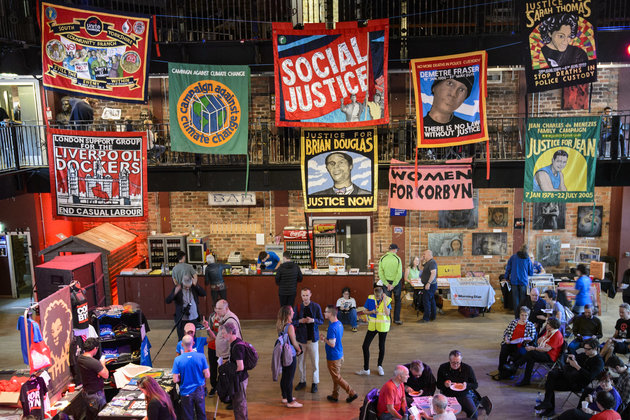
The World Transformed - Labour Party Conference - Momentum - Brighton - 3

Don’t waste time laughing at over-enthusiastic Labour activists who claim that their party “won” the 2017 general election despite falling 56 seats short of the Conservatives. Labour will soon be celebrating for real unless the Tories can close the enthusiasm deficit with Corbyn’s motivated activists

Abi Wilkinson makes an important point in Total Politics today, refuting the growing accusations that the ebullient and positive Labour Party conference in Brighton is somehow a sign of derangement or complacency on the part of left-wing activists:

To dismiss the jubilance on display at the party’s recent conference as hubris is to misunderstand what’s going on. The MPs who claimed, at fringe events and on the main conference stage, that they believe Labour will win the next election were not, on the whole, complacent about what such a victory might require. Nor were any of the smiling, energetic young activists I met at Momentum’s The World Transformed parties and panel discussions naive about the challenge the party faces.

These are individuals who’ve spent the past couple of years campaigning and persuading, as the majority of the mainstream media and parts of their own party screamed that they were idiots, wreckers and dangerous hardliners. They’re people who were determined enough to drag themselves out door-knocking even when the polling gap appeared uncloseable. They built apps, organised car pools and slept on sofas to ensure that key marginals were flooded with volunteers. Many of them donated their time and skills to outmatch Tory efforts on a fraction of the budget.

This is absolutely true. Politics is an expectations game just as much as it is a net results game. Surpassing expectations can inject unstoppable momentum into a political party or movement, while failing to meet expectations can drain energy and enthusiasm faster than air escapes a burst balloon. That’s why Theresa May’s Conservative Party has the unmistakable pallor of death about it; grey-skinned, dead-eyed and utterly bereft of purpose, it shuffles forward to its party conference in Manchester like a zombie.

But even more than expectations, politics is about narratives and ideas. This was seemingly forgotten in the centrist, technocratic age ushered in under Tony Blair and growing to full fruition under David Cameron. For a long time, political elites have professed bland managerialism, aiming to do just enough to keep the population quiet with “good enough” public services and not much more. There was certainly no soaring national ambition or optimism for a different future preached the whole time that I grew up under Tony Blair and came of age under Brown, Cameron and Clegg. And the people miss it. You can explain Brexit and the rise of Jeremy Corbyn a million different ways, but one absolutely irrefutable component is the fact that people responded to politicians who offered something more than to hire a few more nurses and make the trains run on time.

Jeremy Corbyn has a compelling narrative because he actually believes in something, and people know he believes in something because he has been banging on about the same things for thirty-odd years, and doesn’t have to consult a focus group before he opens his mouth to respond to a question. So Labour’s confidence comes from a combination of new-found charisma at the top (say what you will about any of Corbyn’s centrist leadership competitors, but none of them could be described as charismatic) and huge energy and enthusiasm within the base. This is a potent combination, not to be sniffed at by cynical journalists and arrogant Tories who utterly failed to predict the 2017 general election result.

Wilkinson continues:

Enthusiasm is one of the most important resources Labour has. A party pursuing an agenda of increased tax and redistribution, regulation and nationalisation is never going to have a cosy relationship with media barons and big business in general (though it’s worth noting that the corporate lobbyists who stayed away from last year’s conference came flooding back this time) but it can reach people in other ways. Keeping activists’ spirits up ensures they’ll keep doing the work that’s necessary to maximise the likelihood of a Labour win.

Maybe it’s possible the current mood could tip over into slack triumphalism, but I’ve seen little sign of it yet. Many of the conference fringe events I attended involved smart discussions about what the party’s strategy going forward should consist of. Is it realistic to think that youth turnout could be increased further? Are the Tories capable of coming up with a decent answer to the housing crisis, and if they do so how will that impact our vote? What can we do to win over pensioners? What about self-employed tradespeople, a demographic we performed comparatively poorly with?

Does this sound like complacency? Hell no – it is determination. Labour might not be measuring the curtains in 10 Downing Street, but they have certainly tapped the address into their GPS and turned towards Whitehall.

This should be enormously worrying for conservatives, not least because the Conservative Party conference in Manchester promises to be a constant parade of recriminations and mediocrity, with Theresa May’s vacuous Labour Lite conference speech the rotting cherry on a very stale cake. The only enthusiasm on display will be among the cheerleaders and acolytes for the various potential Tory leadership challengers, waiting in the wings lest the prime minister make one more fatal error of judgment or messaging.

And if the government falls or the country otherwise gets dragged to the polls again before the Tories have had a chance to get their act together, what then? Corbyn is already on the brink of becoming prime minister, and increasing numbers of Britons are swallowing his story. The Conservatives, meanwhile are organisationally, intellectually and ideologically exhausted after seven years of being in office, but never really in power.

This blog has already warned how Labour’s hard left wing spent their summer busily plotting and organising for the next election to get them over the finish line, not licking their wounds, sunning themselves in Italy or plotting future leadership challenges. Momentum has been actively learning from the surprisingly viable presidential primary campaign of Vermont senator Bernie Sanders, who fought Hillary Clinton nearly all the way to the Democratic convention. And now groups of Momentum activists from sixteen to sixty years old are gathering in meeting rooms to learn how to make better use of online campaigning coordination and voter turnout software, while others are learning how to run a viral video campaign on social media even more successful than the 2017 effort.

Unfortunately, aside from last week’s Big Tent Ideas Festival and a series of articles in Conservative Home, the Tories have been engaged in no introspection and no reorganising of any kind.

As I recently fumed:

Meanwhile, what are we conservatives doing to retool ourselves to better fight the next general election? We are creating juvenile Jacob Rees-Mogg fanclubs on Facebook, engaging in pointless speculation about a cast of future leadership contenders all alike in blandness, and spending more time trying to ingratiate ourselves with the Tory party machine in constituency and at conference than figuring out what we should actually stand for, and how we can persuade others to stand with us.

Abi Wilkinson and I obviously come at this from opposite angles – she does not want Labour complacency and is reassured because she sees the frenetic organisation efforts taking place on the ground, while I would love to see a bit more Labour complacency and am disheartened by the fact that left-wing activism and organisation so utterly outstrips any efforts on the Right.

I campaigned for the Tories in 2010. God only knows why, in retrospect, but I pounded the pavements in my hometown of Harlow, Essex to help unseat Labour incumbent MP and minister Bill Rammell and elect Tory Rob Halfon in his place. But today you couldn’t pay me enough money to slap on a blue rosette and stump for Theresa May’s Conservative Party, which has somehow managed to blend barking authoritarianism, a statist, centre-left approach to the economy and the general incompetence of Frank Spencer. And if the Tories can no longer get enthusiastic conservatives like me to actively support them at the constituency level, then there’s a real problem.

Abi Wilkinson is right – there is no general complacency within the Labour Party, only a frightening seriousness of purpose. The only complacency for the past seven years has been on the Right, and specifically within the Conservative Party.

And now that complacency is metastasising into something even more deadly and hard to eradicate – resignation and defeatism.


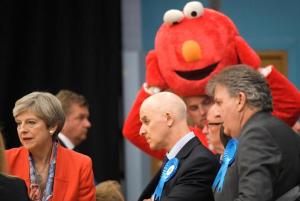
Theresa May - General Election 2017 - vote count - Elmo

Support Semi-Partisan Politics with a one-time or recurring donation:

Agree with this article? Violently disagree? Scroll down to leave a comment.

Follow Semi-Partisan Politics on TwitterFacebook and Medium.

‘Vile Misogynist Abuse’ Or Harmless Political Skulduggery?

hatchet

Theresa May is Prime Minister of the United Kingdom – she does not need defending against George Osborne’s non-existent misogyny by an army of sanctimonious professional offence-takers

Until today’s heinous (but thankfully largely unsuccessful) terror attack on the London Underground, much of this week’s political chatter has been dominated by a lengthy profile of George Osborne in Esquire magazine.

The rather gushing article detailed the various ways in which the former Chancellor of the Exchequer was seeking to leverage (or abuse) his position as editor of the Evening Standard to exact political revenge on former colleagues who had previously crossed his path:

At a little after 6.30, nearly every weekday morning, George Osborne — 46 years old, tall, rich, boyish, tieless — takes the bus from Notting Hill in west London, where he lives, to Kensington High Street, where he works, orders his breakfast to take away from Leon, arrives at the marbled and airy headquarters of the London Evening Standard, takes the lift to the second floor, enters his corner office, and sets about destroying his political enemies.

Following this riveting introduction there follows a lengthy and somewhat depressing account of exactly how Osborne came to land the position of Editor despite having no journalistic background, and the new direction in which he is taking the newspaper.

But this is the passage which stirred particular controversy:

Osborne seems to reserve his choicest weapons for Theresa May, the beleaguered prime minister. On his first day as editor, the front page of the Standard announced “Brussels twists knife on Brexit [as] EU chief mocks PM May with her own ‘Strong and Stable’ leadership slogan”. The attacks on May have become only more intense since then. (One clinical sentence in a Standard editorial from 21 June simply read: “Enough of this nonsense.”) Osborne’s animus against May is complicated in origin — personal, political, ideological, tactical — but purely felt. When I met him at the Standard this past spring, he was polite enough about the prime minister. But according to one staffer at the newspaper, Osborne has told more than one person that he will not rest until she “is chopped up in bags in my freezer”.

To any sane person, this is clearly a political threat, not a serious threat of impending physical violence against the prime minister. But one would not get this impression judging by the outrage from many politicians and journalists, who sought to fold Osborne’s case of sour grapes into a broader narrative about online abuse and violence against women.

Labour’s Chris Bryant was quick off the mark, declaring that Osborne was clearly a misogynist, the Huffington Post reported:

During a debate on barriers for women entering Parliament on Wednesday, Labour’s Chris Bryant said he should apologise.

“It’s that kind of language, which I think is misogynistic in its basis, which should be done away with,” he added.

This, of course, conforming to the Left’s new working definition of misogyny, which can basically be described as “any negative statement about a woman, regardless of whether or not it actually concerns her gender, made by somebody we dislike or wish to discredit”.

Even Tory MP Nadine Dorries got in on the act, ranting to a WhatsApp chat for fellow Conservative MPs:

I’m sorry but Osborne’s vile, and I think sexist language towards the PM has now crossed the line. He’s either going the way of James Chapman, or he’s become a security risk.

Yes, Nadine Dorries is literally positing that George Osborne has either become mentally unbalanced or is flirting with the idea of committing an act of political terrorism. Let that sink in for a few moments.

And is anybody else getting sick of the word “vile” being appended to every object of criticism as the default go-to word of condemnation? Can we not have a little more variety in our self-righteous denunciations, at least? George Orwell would surely have a thing or two to say about our rote, unthinking repetition of the same tedious adjective.

Dorries continues:

He would never say these things of a man. Won’t be happy until she’s chopped into bits in a bag in my freezer. Dead woman walking. Living dead. Wants her immediate execution.

This is the kind of hysterical, overwrought language more commonly adopted by the most unhinged of Social Justice Warriors, who see physical harm in the most innocuous of words, not the language of a sober-minded parliamentarian.

No serious person could possibly believe that George Osborne literally wants to kill and dismember Theresa May, or fantasises about her death. This blog has about as low an opinion of George Osborne as it is possible to hold, and even I do not believe that the ex-Chancellor is a full-on psychopath who daydreams about the violent demise of his enemies.

And in fact Nadine Dorries and most of the other people who came scuttling out of the woodwork to declare their outrage also probably do not believe this of George Osborne. They just know that accusations of sexism or violence against women have enormous power to ruin reputations (as they should when such acts are actually committed), and think nothing of levelling such accusations in retaliation against language or behaviour that they dislike. Playing the sexism or racism card is fair game, in other words, when one’s cause is just – even if the evidence to back it up is not there.

And indeed it then becomes immediately clear why Nadine Dorries is actually upset:

He spent ten years undermining her and trying to squash her. He mounted whips operations against her in the chamber when she was Home Sec. I’ve written to Gavin [Williamson, Tory Chief Whip] and said I think his pass for conference should be removed because we would never allow a punter in who had said any of that, for security reasons. I hope some of you feel strongly enough to do the same.

So this has nothing to do with “security reasons” at all – it is just a convenient opportunity, gifted by Osborne’s crass language, to exact political revenge on an opponent (Dorries has had a fractious relationship with the Tory leadership since having the whip temporarily withdrawn after she skipped the country to participate in a reality TV show).

But of course, being honest about the real reasons for her animus toward the former Chancellor would make Dorries look small-minded and petty, so instead she slaps on the faux-outrage like a suit of armour and wades into battle, declaring that Osborne’s schoolyard threats somehow represent a security threat to the prime minister.

There is a very ugly and unseemly trend among an increasing number of MPs to wallow in their own supposed victimhood. Despite occupying one of the most high-status occupations it is possible to hold, one which opens up endless future career opportunities – to say nothing of conferring the ability to shape the course of the nation – a growing number of MPs seem to see themselves as uniquely oppressed and vulnerable.

This trend has greatly picked up since the ghastly murder of Jo Cox last year, an act which was universally condemned but which seems to have provided some more cynical politicians with an excuse to “turn the leaf” on past expenses scandals and abuses of public trust in order to cast themselves as the fearless public heroes and members of the public as little more than a source of menace and danger.

To be clear: Members of Parliament are public servants and have the absolute right to discharge their duties in the full expectation of safety and security. Any legitimate or even ambiguous threats of violence or vulgar verbal or written abuse is reprehensible. But it does not help the effort to crack down on real trolling and abuse of politicians (such as that received by Diane Abbott) when cynical and calculating people falsely conflate the kind of standard political skulduggery which has always been a part of politics with real racial or sexist abuse.

If anything, the fact that George Osborne has apparently been telling anybody who will listen at Evening Standard HQ that he wants to politically dismember the prime minister is itself proof that he sees Theresa May as much as a worthy opponent to smite as he would any man. Osborne’s colourful and rather gruesome imagery does not reveal a deep-seated loathing of women, but rather is evidence of real parity of esteem – he doesn’t see any reason why Theresa May should be spared from his ranting and plotting any more than a male politician.

A true feminist would surely approve of this acknowledgement of equality and see George Osborne’s posturing as evidence of social progress. In fact, the only people who might not take this stance are cynical political opportunists who like to use accusations of sexism as weapon, and babyish fourth-wave intersectional feminists who see all words as potentially harmful and any political dissent as a threat to their very personhood.

Why? Because their dispiriting, identity politics-soaked worldview is predicated on the notion that women are in fact not equal, that by virtue of their historic and present oppression they are uniquely vulnerable and in need of perpetual protection against the “harms” which may be inflicted by stray words.

There is real violence, misogyny and hatred in this world. Let us be vociferous in condemning any such incidences wherever they appear. But pretending that the former Chancellor of the Exchequer is one meat cleaver purchase away from dismembering the prime minister of the United Kingdom is risible at face value, as is the notion that his petty political vendetta might encourage anybody else to commit physical violence.

On the other hand, with Halloween around the corner this tedious episode has at least provided some inspiration for a few new costumes which will see all of Britain’s snowflakes running for their safe spaces.


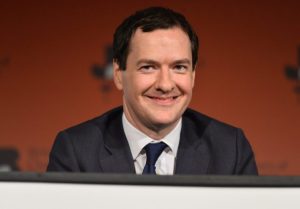
George Osborne

Support Semi-Partisan Politics with a one-time or recurring donation:

Agree with this article? Violently disagree? Scroll down to leave a comment.

Follow Semi-Partisan Politics on TwitterFacebook and Medium.

Can Dual Citizens Be Good Citizens?

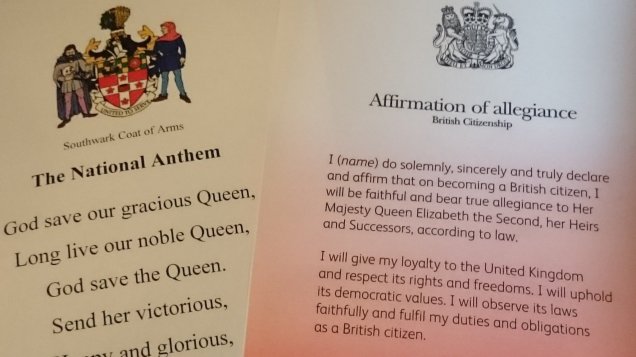
British citizenship ceremony 2

What does it mean to be a dual citizen in the Age of Brexit?

Following my recent blog post lamenting our society’s devalued and transactional concept of citizenship in the Age of Brexit, I was asked by a reader to write a companion piece on the topic of dual citizenship, a form of recourse which may ultimately be taken up by many EU residents currently living in Britain.

The request was as follows:

Brexit has caused (we are told) applications for passports from people who already hold passports – that is, people who are citizens of one European country seeking to become a citizen of a second country too.

This apparently includes UK citizens applying for Irish passports (without abandoning their UK passports) and people from continental countries who live in Britain applying for a British passport too (presumably this means going through the naturalisation process?). One wonders how many people who announce that they are planning to do it actually do – but it is evidently happening.

It is questionable why people should be able to be dual citizens if they live in democracies and are free to travel and work abroad. The ability to claim benefits in a second country seems to be one impetus. But it can cause people costs, like two tax liabilities. Some countries do not allow their citizens to take another citizenship without renouncing their existing one, but there seem to be many countries which are happy to agree to dual citizenship.

Your article of 12 September explains well how citizenship is becoming a sort of transaction – benefits for taxes, and no longer an allegiance to a nation. The large increase in people obtaining (why not triple?) citizenship could further undermine the significance and value of being a citizen of a country.

My reader seems to build on my assertion that citizenship is increasingly seen (particularly by educated, globally mobile elites) as very much a transactional affair with perks received in exchange for taxes paid, and extrapolates that dual citizenship is necessarily a further dilution of the bond between citizen and nation state.

This is a tricky subject for me to discuss, primarily because I will ultimately be emigrating to the United States with my Texan wife (who is herself currently in the process of applying for British citizenship). Therefore, to rail against the concept of dual citizenship would be hypocritical, while approving too strongly might be seen as merely attempting to justify my own personal circumstances. All I can do when setting out my views, therefore, is to make people aware of this potential bias and lay out my thinking on the matter as it currently stands.

In short, I do not believe that dual citizenship is either inherently good or inherently bad. Though there is undoubtedly a correlation between those who hold dual citizenship and the kind of fleet-footed “Citizens of the World” who feel that they have transcended national identity altogether, it is perfectly possible in my mind for somebody who holds dual citizenship to be a model citizen of both countries, while somebody without an international lifestyle can just as easily be a terrible citizen of the only country they call home.

Therefore, I don’t think it is a question of whether dual citizenship as a concept is right or wrong. The more interesting question to me is what makes somebody a good citizen of their home or adopted country, and what makes somebody a bad or negligent citizen.

One could probably define this a thousand different ways, but for immigrants seeking to naturalise as dual citizens surely it includes a mixture of more tangible qualities (being economically active, law-abiding, involved in the community) and intangible qualities (genuine interest in and acceptance of the country’s culture and values). Immigration authorities typically only look at the tangible aspects – what else could they do? – but while this scrutiny can reveal whether somebody is likely to be an economic burden or a danger to society, it is the intangible (and largely immeasurable) qualities which really determine whether or not somebody will make a good citizen.

From my own experience, I have loved the idea of America since I was an early teenager, and the reality of America just as much, ever since first experiencing the country in my late teens. The architecture, the art, the (classical) music, the landscape and the sheer optimism of America captivated me well before I was politically aware, and the Constitution, federal system and that strange but compelling contradiction between individualism and great community-mindedness equally appealed to me as I came to understand them.

America is a country that I feel I know well. Not just in the sense that frequent holidaymakers might be able to direct somebody to their favourite restaurant in New York City, or the way that US-based foreign correspondents come to know the political and cultural elites with whom they rub shoulders, but at a much deeper level.

I have visited and worked in towns and cities across that great land, from New York to Chicago to Kansas City to Austin to San Antonio to Seattle, and many smaller places in between. I have seen and savoured some of the best of urban and rural living in America, from hearing the New York Philharmonic play John Adams, riding a stranger’s horse in Colorado and experiencing the Catholic Mass with Mariachi music in my wife’s south Texas hometown to eating fried food on sticks at the Illinois State Fair. I have spoken with people from the most left-leaning liberals to the strictest social conservatives and found nearly everyone to be unfailingly polite and welcoming – though a couple of men I once conversed with at a hotel bar in Arkansas were none to happy that America had a black president (they used a different word).

I have seen (some of) the best of America, and glimpsed the darker side, too. And so when the day finally comes that I raise my hand and take the oath of allegiance to the Constitution and laws of the United States of America I will be aligning myself with a country that I know and love, for all its greatness and its imperfections.

I will not become an American to join a closed community of fellow British expats, clustered together in one locale and unwilling to integrate with American society. I will not become an American to try to make the United States more like Britain. I will not become an American because the taxes are lower (though they are), or because I think I can get more from the welfare system (I certainly won’t). I will not become an American merely because the United States is a temporary work posting, a brief stopover as part of a transnational career. No, I will become an American because I will one day make that place my home and want to share that bond of citizenship and fraternity with my fellow citizens; because I want to participate in American democracy and every facet of civic life open to citizens.

But even as I do so, I will not lose affection for the United Kingdom, my homeland. I will remain connected to Britain not only through ties of family and friends, but because I am proud to be British and have been an engaged citizen of this country for so long, politically and culturally. When my wife and I have children we may well want them to spend some years growing up in London so that they know the rich culture that is also their inheritance. Far be it from me to brag about myself, but as an abstract ideal for the model dual citizen this would seem like a decent enough template.

But the diluting effect of loyalties mentioned by my reader is undoubtedly a real phenomenon. I would think it highly unlikely that anybody could maintain such strong connections as the number of countries and citizenships involved ticks upward. I have to tread carefully here, because I have a number of dear and longstanding friends who hold multiple citizenships, and uncontestably have strong attachments to and affection for each country in question. One cannot make judgments about individuals from population trends, or infer population trends from observing individuals, but at a macro level I think it is generally the case that deep attachment to a nation state decreases as the number of citizenships in play increases.

The degree to which the cultures in question differ from one another probably also determines whether it is possible to form a deep bond to multiple countries. I would imagine that growing up in a Middle Eastern theocracy would make it at least somewhat harder to form deep bonds of attachment to a country with Western values and culture while maintaining undiminished affection and loyalty to one’s homeland, though there are undoubtedly many such dual citizens who do not experience (or at least overcame) any cognitive dissonance in this regard.

Many residents holding a particularly high number of citizenships are likely to have acquired at least one from birth or through their parents, and may have very little connection to the culture of that country if they grew up without living there. I know several people who hold Spanish citizenship through birth, though the closest connection they have with Spain is having occasionally vacationed there as a child. Does this make them bad citizens? I wouldn’t necessarily say so, since their citizenship is passive – they do not live in Spain or participate in Spain’s democratic process, and so their effect on Spain is neither positive or negative.

And of course there are particularly mobile members of the economic elite who often tend to have more in common with elites from other developed countries than with their less affluent neighbours. Benjamin Schwarz is the latest to pick up on this particular trend, over at The American Conservative:

Reflecting and exacerbating the cultural divide, these cities have increasingly become culturally homogenous echo-chambers. The consumption patterns and cultural and political attitudes of, say, London, central Paris, the westside of Los Angeles, the northside of Chicago, Manhattan, Seattle, Northwest D.C., Toronto, and San Francisco resemble each other more than they do their outlying districts and suburbs.

As befits these engines of global capitalism, these cities and their inhabitants are pulling away with growing momentum from their native countries and cultures. Untethered from their localities, they are being transformed into an archipelago of analogous islands.

Again, does this mean that a well-travelled, prosperous knowledge worker with an international career cannot be a good and conscientious member of his or her community and country? Of course not. But it seems highly likely that people who are rooted Somewhere will have a greater sense of belonging and loyalty to their country than people who are rooted Anywhere. This is not intended as a moral judgment, but simply a statement of probability.

This hypothesis was proved in the EU referendum, where the vast majority of the foreign-born Anywheres living in Britain were strongly for remaining in the European Union and dumbfounded to the point of trauma at the vote for Brexit. For example, many Americans living in London simply couldn’t understand why Britain would want to secede from a supranational political union in the name of nation state democracy, even though their own country would never in a million years submit to the same kind of incursions on sovereignty inflicted by the European Union. In this regard at least they clearly have more in common with the transnational elite than the majority of citizens of their own country (or Britain, as it turns out).

In all of this, I feel like something of an outsider. I have enjoyed an international career myself, will one day be a dual citizen and in most ways am very much part of the “elite” that I spend an increasing amount of time thinking and writing about. My wife and I live in West Hampstead, an area of London which voted overwhelmingly for Remain in the referendum, and in which French is probably the second-most common language heard on the high street. We have become snobs about good coffee, visit food trucks on the weekend and (God help us) occasionally shop at Whole Foods.

Yet I am not at one with the hive mind of my demographic, which leans strongly toward the pro-European, trendy Left. I don’t think that this makes me any better or worse than people who hold the prevailing views of my social circle, but whether by the circumstances of my childhood or some quirk of the brain I do seem to be able to empathise with those who fall outside my demographic or otherwise think differently. I see the condescending, insular selfishness of the centre-leftist metropolitan worldview even as I personally benefit from many of the resulting policies.

This is probably why my stance on dual citizenship is nuanced to the point of sounding tortured. But since the ability to empathise with people of all circumstances is to my mind an essential part of being a good citizen, to this extent I do consider myself a better citizen (though by no means a better person) than those who hold the typical pro-EU, metro-leftist worldview.

Personally, I feel rooted emotionally and circumstantially to only two countries – Britain and America. There are other countries which I know well, love and respect. I have enormous affection for France, from the scruffy Pas-de-Calais to the trendy Marais district of Paris. I know and like the French culture and character. But I do not feel French, nor would I, even if I were to take a job in France for a number of years. If I were ever to take French citizenship it would only be the result of a need to formally codify my status there for administrative reasons, or because I wanted to participate in the democracy of my host nation. It would very much be the more transactional approach to citizenship that my reader decries. By contrast, I already feel part-American – the only thing which lags behind is the paperwork.

Others may enjoy the rare ability to feel real, abiding love for multiple countries, to hold six or seven passports and be willing to fight and die for each represented flag, if necessary. I am not one of those people, and as a tenuous member of the so-called elite I can report that very few of them cross my path. Therefore I think it almost self-evident that there is a negative correlation between citizenships held and deep attachment to each – but it is a trend with many many outliers, and one cannot prejudge anybody based on this factor alone.

So is it possible for dual citizens to be good citizens of both countries? Yes, of course – or at least I hope so, for my sake. But the qualities that make a good citizen cannot be measured or screened for during the immigration and naturalisation process (even attempting to do so would veer into draconian thought-policing of the worst kind), and so we are left struggling to promote the concept of citizenship to a group of people many of whom have lost faith in the very concept. But just as one hopes that people take the institution of marriage seriously while simultaneously recognising that many people will not do so, so one must accept that some people will become citizens of a new country thinking only of the benefits and not the obligations.

At present, many of those who oppose Brexit – both British citizens and EU residents – declare themselves “Citizens of the World”, meaningless phrase though it is, as a way of signifying their disdain for what they see as an insular and parochial worldview.

But as I wrote last year:

In my experience, self-described citizens of the world have tended to describe their outlook in terms of what they get from the bargain rather than what they contribute in return. They call themselves citizens if the world because being so affords them opportunities and privileges – the chance to travel, network and do business. Very few people speak of being citizens of the world because of what they give back in terms of charity, cultural richness or human knowledge, yet all of the people that I would consider to have been true citizens of the world – people like Leonard Bernstein or Ernest Hemingway – fall into this latter, rarer category.

If the former, more parasitic attitude is what comes to represent dual citizenship then I have no desire to be associated with it. But it need not be like this. Dual citizens can be among the very best citizens of a country, holding a deep appreciation for their new home that many natural born citizens lack or take for granted, while also bringing with them the best values and traditions of their homelands.

And these people we should welcome with wide-open arms.


Dual citizenship - US and British passports

Support Semi-Partisan Politics with a one-time or recurring donation:

Agree with this article? Violently disagree? Scroll down to leave a comment.

Follow Semi-Partisan Politics on TwitterFacebook and Medium.

Brexit Opposition And The Quiet Death Of Citizenship

It is difficult to have a serious conversation about citizenship in the Age of Brexit when so many people hold a such transactional, materialistic and reductionist definition of the concept as meaning little more than benefits received in exchange for taxes paid

One interesting and overlooked aspect of the Brexit debate is the extent to which the basic concept of citizenship has decayed and virtually evaporated from our public discourse, right under our noses, with barely any note of alarm being sounded in the process.

This decay reveals itself in manifold ways, from the furious pushback one inevitably receives when pointing out the obvious fact that citizens should (and do) have more rights than non-citizens to the outraged, moralising vitriol hurled at anybody who dares to suggest that illegal immigrants are technically lawbreakers and therefore maybe not universally worthy of respect, sympathy or amnesty.

These are now controversial positions to hold. To be steadfast in the belief that British citizenship confers more rights than those held by permanent residents or temporary visitors is to mark oneself out as something of an extremist, at least as far as the media and chattering classes are concerned. Yet many politicians in Britain and America who now wrap themselves in the mantle of conspicuous compassion for all illegal immigrants and effectively agitate for open borders could themselves not so long ago be found calling for tougher immigration enforcement.

This applies to the likes of Hillary Clinton in America, who once supported and voted for the same strengthening of the United States’ southern border which she now denounces as being tantamount to racism. Of course, Clinton has since positioned herself as a tireless champion of the “undocumented”, together with virtually all of the American Left. Similarly in Britain, many commentators who once dared to express reservations about uncontrolled immigration from within the EU have now taken up rhetorical arms against anybody who proposes a more rigorous immigration policy.

In both countries, but particularly in Britain, citizenship is increasingly regarded (to the extent that people think of it at all) as a transactional affair, services rendered for taxes paid – or even rendered with no reciprocity at all in the case of the modern welfare state. The argument goes that by the sole virtue of paying taxes or drawing benefits here one deserves a full voice in the country’s affairs, even if one is a non-citizen or is present in the country illegally.

This very transactional approach has frayed the contract or bond between citizen/resident and the state. Of course, people still expect the state to protect them from foreign foes, guard against domestic security threats, provide healthcare, offer a welfare safety net and distribute various domestic and EU services. But even as they make these demands they offer rapidly diminishing loyalty to the state in which they live. People are increasingly insatiable for the benefits while being less and less willing to accept the responsibility.

This responsibility goes much deeper than just paying one’s taxes. It means making a serious commitment to community and, ideally, the enthusiastic acceptance of and assimilation into one’s home (or adopted) culture. Traditionally, the sign that an immigrant was willing to accept these broader responsibilities was their decision to apply for naturalisation as a citizen. Historically, if an immigrant were to build a life in another country, working and raising a family there, they would ultimately become a citizen of that country in most cases.

But today, many people demand the perks without accepting the responsibilities – hence the outrage of and on behalf of EU citizens who have built permanent or semi-permanent lives here yet refuse to see why they should formalise that commitment through the naturalisation process (or at least the acquisition of permanent residency following Brexit). They forget that the European Union is an aberration, that nowhere else in the developed world would countries offer so much while asking for virtually nothing in return.

Yet to point this out is to invite accusations of callousness and amorality. Of course there are exceptional cases where joint citizenship cannot be taken or some other bureaucratic or financial obstacle stands in the way of an EU migrant formalising their commitment to the United Kingdom. Such cases should be treated generously, with the aim of reducing any uncertainty for the migrants involved.

But this blog has very little sympathy when people demand something for nothing. Freedom of movement and other EU benefits are political entitlements. They are not – repeat, NOT – fundamental, inalienable rights.

A fundamental right is intrinsic to one’s humanity, as applicable to somebody in China, Russia, North Korea or Venezuela as to someone living in Britain. These are best summed up in the US Declaration of Independence as “life, liberty and the pursuit of happiness”, though one can also drill down a level further and acknowledge the universal human right to property, due process under law and so on. Fundamental rights are inherent; political entitlements are nice-to-haves, often given (in the EU’s case) partly as a means of securing support for a dubious political project which would otherwise be utterly unloved.

Of course we should have a degree of natural sympathy for anybody at risk of losing their current political entitlement to live and work in the United Kingdom without going through the arduous and expensive process of applying for permanent residency or citizenship – though a deal between Britain and the EU to secure reciprocal ongoing rights for UK and EU citizens is all but inevitable. Personally, I would offer expedited indefinite leave to remain to all current EU migrants at a greatly reduced fee. But others’ rights as EU migrants do not trump the sacrosanct (though not quite exclusive) right of British citizens to participate in our democracy and determine the course of the country.

The decision of the British people to secede from the European Union can not and must not be vetoed by or on behalf of people who refuse to assume the responsibilities and privileges of full citizenship. That such an obvious statement now sounds harsh or controversial is itself an indicator of how deeply corroded and devalued the concept of citizenship has become in our society. Yet this would have been the mainstream view in Britain a decade or more ago, and still very much is the accepted wisdom nearly everywhere else in the world.

Many Brexiteers – myself among them – did not spend 2016 tirelessly campaigning for Brexit because they hate immigrants, want to kick out existing migrants or even significantly lower net migration. But neither will we allow the protestations of those who refuse to share the commitment and mutual connection of citizenship with us to overshadow or overrule our vote.

This is not extreme, nor is it unreasonable. It is merely the consequence of adhering to the same traditional definition of citizenship which allows us to flourish as a society precisely because we are all bound to one another by something deeper than momentary convenience.

It remains to be hoped that Brexit will spark a renewed discussion about citizenship and the proper relationship between citizen, resident and government – indeed there are some early encouraging signs that such conversations are starting to take place.

But the furious reaction of the establishment Left to political developments both in Britain and America suggests that defenders of the concept of citizenship will be starting at a considerable disadvantage.


A British citizenship certificate is seen in London

Support Semi-Partisan Politics with a one-time or recurring donation:

Agree with this article? Violently disagree? Scroll down to leave a comment.

Follow Semi-Partisan Politics on TwitterFacebook and Medium.