Upset An MP On Social Media? Prepare To Lose Your Voting Rights

Intimidation in Public Life report - Committee on Standards in Public life - Parliament - Britain - UK - online social media abuse

Hurt an MP’s feelings and lose your civil rights. This could be a reality in the prissy, authoritarian, neo-puritanical Britain we inhabit

Having learned nothing from the past three years of populist insurgency, rather than facing up to their shortcomings and accepting the validity of justified criticism (and the inevitability of unjustified criticism) the political class is instead preparing to further insulate itself from public accountability.

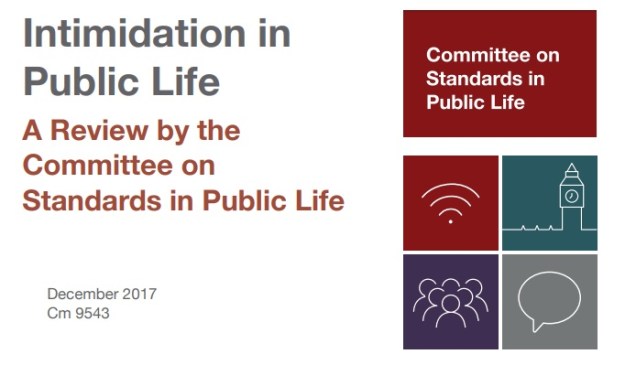
A new report published by the Committee on Standards in Public Life proposes punishments such as barring people from voting or removing them from the electoral register as suitable punishments for the “new electoral offence of intimidating
Parliamentary candidates and party campaigners during an election” – which if enforced with the same arbitrary capriciousness as all other UK speech laws would inevitably see many people unjustly stripped of their basic civil rights while other, worse “offenders” who happen to hold officially sanctioned opinions go unmolested.

We in Britain now have a government which would give convicted prisoners the right to vote while stripping the franchise from certain free citizens who commit vague and loosely-defined acts of speechcrime – including hurting the feelings of an MP or Parliamentary candidate.

The report (prefaced with a quote from the late Jo Cox MP, so as to imbue the document with an air of incontestable wisdom and grace) graciously concedes that the existing restrictive framework of draconian anti-free speech laws does not need augmenting to protect the feelings of MPs at this time, but then immediately ventures the possibility of unprecedented new punishments for those accused of speechcrime:

Electoral law can overlap with and complement the criminal law, such that offences with criminal sanctions can also involve sanctions under electoral law. These sanctions are specific to the election process, such as being barred from voting for a certain period, or removal from the electoral register. Such sanctions recognise that these offences, such as undue influence or electoral fraud, are offences against the integrity of the electoral process, and that it is therefore appropriate that individuals face sanctions relating to their own privileges within that process.

[…] However, the Committee considers that the issue of intimidation is of particular significance because of the threat that it poses to the integrity of public service and the democratic process.

During an election period, it would therefore be appropriate to have specific electoral sanctions that reflect the threat that intimidation of Parliamentary candidates and their supporters poses to the integrity of elections. Any such offence in electoral law should be tightly defined, to capture intimidatory behaviour that is directed towards an individual specifically in their capacity as a Parliamentary candidate or party campaigner, which intends unduly to influence the result of the election (for example, by affecting their candidature or inhibiting their campaigning).

[..] the introduction of a distinct electoral offence will serve to highlight the seriousness of the threat of intimidation of Parliamentary candidates to the integrity of public life and of the electoral process, and will result in more appropriate sanctions. We believe that specific electoral offences will also serve as an effective deterrent to those who are specifically targeting Parliamentary candidates and their supporters.

The Committee on Standards in Public Life, a body whose intended purpose was to ensure that elected and non-elected officials uphold standards of behaviour appropriate to those who serve the public in high office, now seems far more interested in passing haughty judgment on whether members of the public are abiding by the new speech codes dictated by our puritanical, thin-skinned rulers.

I would be interested to know which of the Seven Principles of Public Life the committee believes it is defending by proposing new speechcrime punishments which attack so fundamental a civic right as voting – particularly as each of these principles sets a standard specifically for “holders of public office” and not private citizens. The only tenuous link offered in the entire report is this throwaway sentence:

[..] the Committee considers that the issue of intimidation is of particular significance because of the threat that it poses to the integrity of public service and the democratic process.

Ah, that’s okay then. So because the rowdy public is supposedly threatening “the integrity of public service” (presumably by scaring people away from getting involved in politics, because those who are already inclined to get involved in politics of course tend to be shy fauns who take fright at verbal hostility) the Committee on Standards in Public Life can use this as an excuse to regulate the behaviour not of people in positions of power, but of those who seek to express their feelings about people in power.

Of course, MPs are not the only people to find themselves at the receiving end of vitriol on social media, as anybody with even a semi-public profile or the desire to talk about politics on Facebook or Twitter can attest. Twice in recent months I have been at the receiving end of such a barrage, first when a “comedian” chose to misrepresent one of my tweets to his baying audience of pro-EU Remain supporters and again when an SNP MP sicced his Twitter supporters on me for daring to write about the office of Scottish First Minister in less than worshipful terms. None of the hate I received (on those occasions) amounted to the level of death threats, but other private citizens have suffered far worse.

Yet the political class seem to want to carve out a special protection in terms of exempting themselves from harsh criticism while doing nothing for anybody else. As Members of Parliament they already occupy a high-status, well-remunerated position in society, are generally endowed with a level of intelligence which enables them to articulate their priorities and concerns and be taken seriously, and make laws and decisions which impact our present reality and future happiness. Yet many of these same people now seem determined to portray themselves as shrinking violets, vulnerable victims-in-waiting, a discriminated against minority group who require the special and proactive additional protection of the law. This is absurd and insulting to the citizenry they notionally represent.

But in addition to protecting the powerful from the masses, these puritanical proposals also fundamentally misunderstand the problem. As even many victims of social media harassment would likely agree, the really damaging part of online abuse is not the individual insults but their combined, collective effect. One person insulting or mocking you can be laughed off or brushed aside, but this is not so easily done when one’s notifications fill up with a constant wall of such derogatory, negative messages. Indeed, when under attack on social media, at times it can be difficult to step back and remember that the strident opinions of social media moralisers is not reflective of the feelings of the country or society as a whole. At times, I myself have momentarily allowed hate and derision on social media to interfere with my self-esteem, despite my fairly thick skin.

The answer to online trolling and abuse (whether directed at politicians or private citizens) is not to criminalise individual acts of strident, unpleasant or insulting speech, let alone to curtail the fundamental civil rights of individual citizens as punishment for (or deterrence of) something which is in large part a swarm effect, an unpleasant but distastefully necessarily defensible part of our society’s commitment to free speech.

To do so would be akin to criminalising the act of gathering together in crowds because of the risk that somebody might be crushed or trampled, punishing individuals for what in itself is often a very small contribution to a larger group effect. No single individual is usually responsible for a stampede, just as very few individuals commit specific acts on social media which alone trigger substantial distress, and barring such people from voting (one wonders what offence merits losing the franchise while retaining one’s liberty) will not deal with the vast bulk of abuse on social media and consequently the vast bulk of suffering resulting from it.

The issues addressed by the report are real, worthy of discussion, and are already being debated at length. There is no lack of editorialising or scholarship on the impact of social media on public political discourse, and the way in which the semi-anonymity of interacting online brings out a far more vicious side of human nature than is usually visible during face-to-face interactions. These are problems which we need to face up to as a society at a time when we are learning on the go. But the solution is not to announce further new restrictions on freedom of expression, as though filling in gaps in the statute books will in any way compensate for filling in the mental and spiritual void which turns some people (including the highly educated and outwardly successful) into social media trolls.

Furthermore, at a time when the yawning disconnect between the ruling class and many of the people they represent is growing wider and fuelling all kind of populist outbursts (some welcome and others far less so) it is the height of irresponsibility for those in power to publicly toy with the notion of punishing the plebs for insulting their masters by stripping them of their voting rights.

The Committee on Standards in Public Life should cast their haughty, disapproving gaze back where it belongs – on those who debase their political offices or abuse the public trust. Now more than ever is a time for humility and introspection from the ruling class, not a whinnying list of grievances about those who fail to sing their praises.


By election - ballot box - Democracy

Support Semi-Partisan Politics with a one-time or recurring donation:

Agree with this article? Violently disagree? Scroll down to leave a comment.

Follow Semi-Partisan Politics on TwitterFacebook and Medium.

There Will Now Follow A Brief Intermission

Intermission time folks

“I can assure you there is widespread resentment in the Party at your activities and a period of silence on your part would be welcome”               – Clement Attlee

A quick heads-up to all my readers that due to a Very Important Project this week and a trip to New York City to see my in-laws the following week, the blog will be going quiet for awhile.

I hope to have some new content up on Sunday (3 December) and then sporadically the week we are in New York, but full service will likely not resume until I return on 12 December. That being said, since I seem to be congenitally incapable of keeping away from Twitter for any length of time, if you do find yourself pining for my political ranting then head over to Twitter where I may still be lurking.

If you have not yet read my recent piece on discontinuity and what small-C conservatives need to do in order to position the Tory Party (and the country) for the future, please check it out here and let me know if you want to be involved in any future initiative which may spring from it.

In the meantime I leave you in the ever-capable and impressive hands of the independent political blogosphere, notably EUreferendum.com, LeaveHQ, Pete North, Oliver Norgrove and Lost Leonardo.

Sam Hooper

Time for the intermission - lets grab ourselves a snack

Support Semi-Partisan Politics with a one-time or recurring donation:

Agree with this article? Violently disagree? Scroll down to leave a comment.

Follow Semi-Partisan Politics on TwitterFacebook and Medium.


Happy Thanksgiving – Here’s Why We Urgently Need A Similar Holiday Of Our Own In Britain

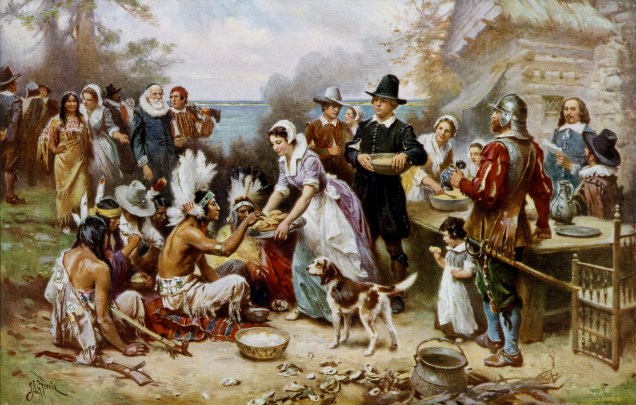
The first Thanksgiving

Most Brits probably do not know or care that Thursday 23rd November is the Thanksgiving holiday in the United States of America. Yet many of us are getting ready to hunt for bargains and pre-Christmas deals on Black Friday.

Take a trip to your local big box superstore – or virtually anywhere online – in the next day or so and you will be treated to wall-to-wall promotions about the upcoming Black Friday sales. “Get ready for Black Friday!” scream the advertisements, as one company after another tempts you with sweet promises of unbelievable savings. Yes, Black Friday is coming to Britain – again.

And so it has been for the past few years now. We in Britain have successfully imported the commercially lucrative, post-coital rump of a cherished American national holiday – Thanksgiving – while neatly skipping over all the pesky fundamentals that give it real meaning: you know, those pesky things like love, family, gratitude and patriotism, tiresome distractions that don’t give us an excuse to shop and which will never generate a good Return On Investment.

This is as strong a contender for Tasteless Corporate Act of the Year (Large Retailer category) as we are likely to witness this side of Christmas. And we Brits have certainly thrown ourselves into the spirit, crushing one another in the stampede for discounted TVs and getting into fights which have to be broken up by the police.

But apparently – and rather gratifyingly – a number of Brits have started to recognise Thanksgiving too, in our own semi-comprehending way (I’ve seen Yorkshire pudding and roast beef being served at some British Thanksgiving dinners, which is definitely cultural appropriation gone wrong), with retailers now stocking up with pumpkin pie and other traditional Thanksgiving fare in time for the holiday.

Full disclosure: I’m married to a Texan girl, so our household observes both British and American holidays – which means that Jenny gains Boxing Day while I gain Thanksgiving. And for the past five years we have held a Thanksgiving dinner the weekend closest to the day itself, and invited as many friends as we’ve been able to squeeze into our succession of tiny shoebox apartments. I’m responsible for the turkey, Jenny takes charge of the stuffing and the sweet potato casserole (you mock the idea of marshmallows on top of sugared, spiced sweet potato until you’ve tried it) and we split everything else between us with our flatmate.

And if I may say so myself, this annual event has become roaringly popular, to the extent that who gets invited and who doesn’t quite make the cut has become a rather delicate political dance. This year there will be fourteen of us squeezed into an improbably small space, and all fourteen places were snapped up as soon as my wife sent the Facebook invite back in April.

But not everybody is happy that Thanksgiving is gaining a foothold in Britain, including Daily Mail columnist Richard Littlejohn who argues that just like American GIs after the Second World War, Thanksgiving has outstayed its welcome on our shores:

Yet until about five minutes ago, none of this madness existed. Like Halloween, another tacky American import which has hijacked Guy Fawkes Night, and about which I wrote recently, both Thanksgiving and Black Friday are now fixtures in our calendars.

Supermarkets tempt us with ‘traditional’ Thanksgiving treats. Colour supplements carry recipes for Thanksgiving dinners. The Sunday Times Magazine this weekend devoted several pages to telling readers how to prepare mouth-watering delights such as pumpkin pie, candied sweet potatoes and green chilli cornbread.

Why? Do the editors imagine that out there in Middle England, people are thinking to themselves: ‘I could murder a slice of green chilli cornbread’?

He goes on to rant:

We don’t celebrate France’s Bastille Day, or Canada Day, or Mexico’s Dia de los Muertos (the Day of the Dead). So why the hell should we adopt U.S. holidays?

Apparently it does not occur to Littlejohn that the British may be increasingly curious about Thanksgiving because the very idea of a unifying, non-commercialised national holiday which binds us together as a United Kingdom and calls on us to be thankful rather than petulantly self-entitled is so curiously alien to this country – especially the contemporary Britain of 2017.

A couple of years ago I took part in a TV debate on London Live, arguing that we should absolutely not make the festivals of Eid and Diwali UK public holidays, for fear of muddying the cloudy waters between religion and state yet further:


I was outnumbered, but I made the case as strongly as I could that what Britain desperately needs is a unifying, secular public holiday that can bring us all together as one people – not another cynical, politically correct and divisive nod to multiculturalism.

The intervening years have only proved my point, with ISIS flags flying from London housing estates, disaffected young Muslim teens stealing away from the country which gave them life and liberty to join the Islamic State and deadly terror attacks in London and Manchester. On the domestic front things are little better, with a painfully wide chasm emerging between those of us who voted to leave the European Union and those who wanted us to Remain, those who think that Jeremy Corbyn is a living saint while the Tories are evil on the one hand and people who think the exact opposite on the other.

Meanwhile, increasingly everything is being politicised and dragged into the gravity of our culture war. Only this week greeting card firm Paperchase was in the news after they were bullied by left-wing activists into a grovelling public apology for having dared to advertise in the Daily Mail, thereby prompting an equal (and deserved) reaction against the company from people who are not leftist ideologues.

In short, we in Britain are in desperate need of a reminder that we still have an awful lot in common with our neighbours, even if we vote or worship differently. But the ties that bind us together – frayed for so long by successive referenda, general elections, the culture wars and the toxic swamp that is political social media – need to be continually renewed, even if some of us do find patriotism “problematic“. And what better way to do so than with a national holiday which celebrates something in our rich, shared history of which we can all be proud?

There is no shortage of possibilities. While some seem to enjoy talking down Britain and our substantial contributions to world commerce, art, science and culture, I’m sure that if we put our heads together we might find something in the last few centuries of our national story worth elevating as an occasion of which all Britons can be proud (but please, just not the Fifth of July).

Magna Carta Day (15th June), Trafalgar Day (21st October), VE Day (8th May) or Commonwealth Day (second Monday in March) are just a few possible candidates which are existing days that could be “upgraded” to a UK-wide celebration of quiet patriotism, community service and thanksgiving, and which already have some historic resonance.

Such resonance is important. In the United States, President’s DayIndependence Day and Thanksgiving have meaning for all Americans because they are rooted in shared history and not political views, ancestry or sadly-waning Christian faith. The newly arrived immigrant can take up these celebrations immediately upon arrival at no cost to their existing traditions and without any potential religious conflict. And that is exactly what Britain needs right now.

So before you scoff at the idea of our American cousins eating themselves into a stupor for seemingly no good reason, I would ask you to do two things — firstly, spare a thought for me as I try to avoid burning a massive turkey that barely fits inside our oven while also cooking it sufficiently well that I don’t send fourteen angry people to the hospital with food poisoning. But secondly and more importantly, take some time to reflect on the reasons that you – and that we all – have for being thankful this year, and on the many traits and aspirations which we still have in common, even amidst Brexit, the culture war and the politicisation of everything.

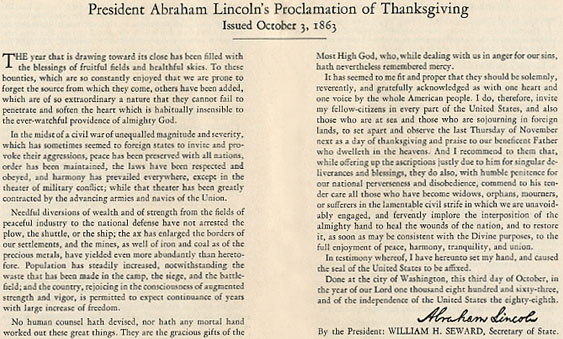
As Abraham Lincoln – the president who in 1863 fixed the observance of Thanksgiving to be the fourth Thursday in November – implored in his first inaugural address:

We are not enemies, but friends. We must not be enemies. Though passion may have strained, it must not break our bonds of affection.

After another year in which the idea of what it means to be British has become increasingly muddled and uncertain, let’s humble ourselves and dare to take a lesson from our former American colonies. Let us find inspiration in our storied history, our rich culture and also from within our own hearts. Let us find that elusive common thread of Britishness that should unite us all, transcending race and religion and politics.

I would argue that maybe some of the reason that more British people are starting to notice and observe Thanksgiving as well as the Black Friday sales we have imported from America is that deep down we subconsciously yearn for the sense of gratitude, social solidarity and civic-mindedness which Thanksgiving brings, and acutely feel the lack anything similar in our own national life.

So let’s change that.

Thanksgiving Proclamation - President Abraham Lincoln - 1863

Happy Thanksgiving

Support Semi-Partisan Politics with a one-time or recurring donation:

Agree with this article? Violently disagree? Scroll down to leave a comment.

Follow Semi-Partisan Politics on TwitterFacebook and Medium.

Budget 2017 Reaction

Homer Simpson - George Osborne - Budget - Annual Statement

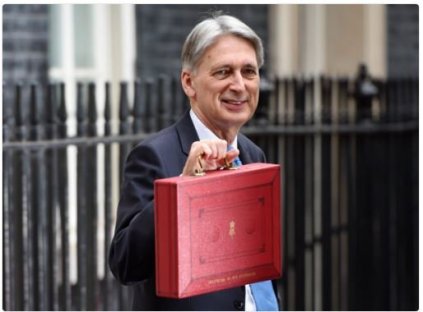
This was a holding budget designed to buy the government some political breathing room, and so Philip Hammond kicked the can down the road on nearly all of the major fiscal and structural issues facing Britain

I intended this piece to be just a few disjointed thoughts reflecting on Philip Hammond’s Budget Statement and the boldness or cowardice of the Tories, but it gradually expanded to touch on issues of federalism and local government, and the counterproductive nature of the annual “Budget Theatre” itself.

A one-way ratchet to Bigger Government?

As Budgets go, this one was fairly bland and non-offensive. Contrary to the justified fears that Theresa May’s administration would be a one-way ratchet to Bigger Government, such ominous moves were largely missing from today’s statement – though of course we still have the highly un-conservative “Industrial Strategy” to come.

Equal to the challenges facing Britain?

It is hard to argue that this Budget in any way acknowledges the scale of the challenges facing post-Brexit Britain. A serious Budget which attempted to do so would have included a lot more on education and proposed a means to help re-train the many workers who will find their jobs outsourced or automated in the coming decades. £40 million to train new maths teachers is good, and any steps to improve Britain’s STEM output are welcome, but this does nothing to disarm the time bomb which will affect many of those already in the workforce.

A serious Budget would have done more than take tentative steps around the housing crisis, firmly addressing the supply issue now rather than tinkering with demand by abolishing stamp duty on properties under £500,000. It would have touched the third rail of British politics and defied the doctrine of NHS non tangere to meaningfully reform British healthcare and the way it is funded. It would have grappled with social care and the need to ensure that those who can afford to bear more of the cost of any care they require in old age.

But of course we got none of those things. And the great danger is that we will now never see these problems meaningfully addressed in the lifespan of this government. One can appreciate that Brexit is currently sucking much of the oxygen which might otherwise fuel other policymaking, but we should not have to choose between managing Brexit (which this government is also failing to do) and dealing with other long-term problems. It should not be too much to ask for the UK government to walk and chew gum at the same time.

Short-term thinking over long-term need?

A government’s first budget is normally a place where bad news gets dumped and difficult decisions made, the idea being that it is better to absorb public anger now and then win back favour with giveaways in the final budget(s) before a general election than have to anger people with harsh corrective measures later in the term. David Cameron’s government followed this approach, with Chancellor George Osborne doling out the harsher medicine (or plain confusion, in the case of the Omnishambles budget) in early years and then sweetening the deal prior to the 2015 election by pretending that he had solved all of Britain’s fiscal challenges and therefore had spare cash to throw around.

The fact that Theresa May’s government is not following this well-worn path is not a sign of some innovative new strategy – it is a sign of clear political weakness. The current Conservative government is already teetering on the brink, without a majority in the House of Commons and kept afloat in the polls only because of fear of Jeremy Corbyn. Philip Hammond therefore had no political capital to spend by irritating the electorate any further, or asking anything more of them; instead he was forced to try to accrue some political capital with a giveaway.

As I previously wrote:

Twice a year – once in the annual Budget and once in the Autumn Statement – the Chancellor of the Exchequer gets to his feet and delivers a refreshed set of economic policies in a big, set piece speech where he is essentially forced to favour tomorrow’s headlines over optimal long or even medium term decision making.

Nationally significant policies from every government ministry live or die by the concessions that their ministers are able to wrangle from a Chancellor who is forced by political reality to be more concerned with tomorrow’s Daily Mail headline than the state of our public finances in a year’s time.

Thus the annual Budget Theatre encourages short-term thinking. Whether one takes the Osborne approach or the Hammond approach, Budgets are as much about chasing favourable headlines and dominating the news cycle with positive coverage for a few days than they are about serious long-term strategic thinking.

Budget Theatre is a bad way of governing

This blog has long complained that this annual Budget Theatre, with all the speculation and press coverage surrounding it, is a really bad way to run a modern democracy. Why? Well, there are a number of reasons.

First of all,  as already discussed, the Budget spectacle encourages short-term thinking. Budget 2017 is something of a “giveaway” budget, with the government making concessions and seeking to tamp down public anger rather than taking difficult decisions in the long term. In short, it prioritises the political and tactical over the strategic.

Secondly, the Budget spectacle directly feeds into the Politics of Me Me Me, far more so than any other event, even general elections. During the build-up to Budget Day, the day itself and the immediate aftermath, we are encouraged by the media to think only about how the budget affects us and our wallets. This is understandable, since the Chancellor has the power to inflict severe pain or lavish great rewards on favoured groups. But it is also therefore an incentive for us to “ask not what we can do for our country, ask what our country can do for us”, to reverse John F. Kennedy’s exhortation.

As I wrote at the time of George Osborne’s 2015 Budget:

Having two occasions each year when an already-powerful chancellor in an already-centralised country like the United Kingdom gets to play with nearly all of the controls and levers which influence our economy – as though he were Homer Simpson at the controls of Springfield Nuclear Plant – only encourages meddling and tweaking of things that should properly be left to local government and individuals.

When you have direct, ultimate control over which families deserve help buying a house, which people should keep or lose their benefits or how much a person pays in sin taxes for their guilty pleasure, the temptation to use those powers is irresistible. And because of the ratchet effect, it is the easiest thing in the world to give away new perks to favoured interest groups, but nearly impossible to ever claw them back without being exposed to political attack. Even under this nominally conservative government, budgets and autumn statements have often been a one-way ticket to bigger government – or at least more activist state.

Unfortunately, Budget Theatre is inevitable when so many decisions affecting so many people are made centrally rather than locally, and applied at a national level rather than taking into account the specific and varying needs of different regions (or between the cities and the countryside).

And this leads on to my next point…

Britain’s overcentralisation disease

I continue to find it vaguely ludicrous that decisions about how much tax should be applied to a pint of beer or a litre of gasoline are set nationally in Westminster, and that we all have to tune in to the Budget Statement every year to find out what tweaks and incentives the Chancellor has seen fit to impose on our lives at the behest of the public health or environmental lobby.

Britain is a ridiculously over-centralised country in terms of governance. Devolution is a good thing in principle (though I would argue that we should move toward a federal UK with the same powers devolved to each home nation) but the net result of current devolution is that Wales, Scotland and Northern Ireland have rightly floated off to do their own thing in terms of domestic policy while England remains overcentralised.

We need to move to a place where local authorities, ideally county councils, take over some of the tax-raising powers from Westminster and gain more control over spending in areas such health, transport and education. We need to stop fearing the “postcode lottery” and start welcoming it as a petri dish for testing new policies and encouraging healthy rivalry between regions. More decentralised taxation and spending would force local politicians to put their money – or their electorate’s money – where their mouths are. If leftist politicians want to hike sales taxes or fritter money away on white elephants they should be free to do so, and then answer to voters.

Finally, enhancing the powers of local government in England would increase the current woeful levels of participation in local democracy as the decisions made locally suddenly started to matter a lot more. And this in turn would see an improvement in the calibre of people running for local office, and serve as an incubator for political talent outside Westminster.

Of course, some of the blame for the current situation rests with the Thatcher government, which felt it necessary to de-fang many local authorities since they represented such an impediment to the government’s turnaround strategy. One can argue whether or not this was justified, but certainly the end result is a country where far too many decisions and policies rest with the Westminster government when they should really sit much closer to the people.

Conclusion

This year’s Budget could have been a hell of a lot worse, given Theresa May’s interventionist instincts and tolerance for Big Government. Fortunately, Philip Hammond seems to have resisted such pressures and delivered a Budget which – if Britain were operating in steady-state with no major challenges on the horizon – would have been largely inoffensive.

Unfortunately, Britain is not in a period of steady-state operation, where domestic and international issues are stable and a technocracy is more than capable of fiddling with the switches and dials to keep things running smoothly. On the contrary, we have entered a period of discontinuity, an abrupt departure from our previous national trajectory, when the old political consensus is revealed to have frayed to the point of uselessness and bold new policymaking is required.

As I recently wrote, a bold new programme of coherent, mutually-supporting policies is required to equip Britain to face these oncoming challenges. The Tories now have the slogan, but it remains painfully clear that they do not yet have the solutions, though various initiatives are now underway to come up with some original new policies.

But it will take their time for these policy groups – notably George Freeman’s Big Tent and Nick Boles’ Square Deal schemes – to come to full fruition and develop workable policies. And even then there is no guarantee that Theresa May or the next Conservative leader will approve of these policies and work them into their programme for government.

Unfortunately, as a nation we are treading water at the moment, neither swimming toward the oncoming wave or swimming away from it as it threatens to break over us. This was a holding budget designed to buy the Tories some political breathing room and perhaps signal that they are starting to comprehend  public dissatisfaction with the status quo, particularly on housing.

But without some kind of joined-up, comprehensive plan – and a coherent message with which to sell it to the public – it is hard to see the Tories winning the kind of electoral mandate or public support they need to be anything more than a caretaker government.


Philip Hammond - Budget 2017 - Conservative Party - Tories

Support Semi-Partisan Politics with a one-time or recurring donation:

Agree with this article? Violently disagree? Scroll down to leave a comment.

Follow Semi-Partisan Politics on TwitterFacebook and Medium.


Tales From The Safe Space, Part 57 – Transphobia Inquisitions And A Kafkaesque Nightmare At Wilfrid Laurier University

Lindsay Shepherd - Wilfrid Laurier University Ontario Canada - Academic Freedom - Social Justice - Transgender Pronouns - Jordan Peterson

University professors and diversity officers now haul students to appear before campus Social Justice Star Chambers, imposing disciplinary measures without ever explaining the nature or context of the charges against them

One of the interesting developments in the continued takeover of academia by the Cult of Social Justice and Identity Politics is the way that enforcement of the strict new leftist orthodoxies has swung from college students pressuring their professors and university administrators to university professors and newly hired diversity officers now pressuring and bullying the students.

It is as though university faculties and leadership teams were so scared by the wave of occupations, campus protests and media spectacles (not to mention high-profile forced resignations) over the past several years that they became determined to get out ahead of the curve and be part of the identity politics vanguard, becoming the hunters rather than the hunted.

We saw this a few months ago at the University of Nebraska-Lincoln, where more than one professor saw fit to encircle a conservative student recruiting for her campus political organisation and hurl insults and taunts in her direction. So desperate were these middle-aged professors to be seen as sufficiently “woke” “allies” of various designated victim groups that they ended up behaving in a far more raucous, juvenile way than the poor girl they were tormenting.

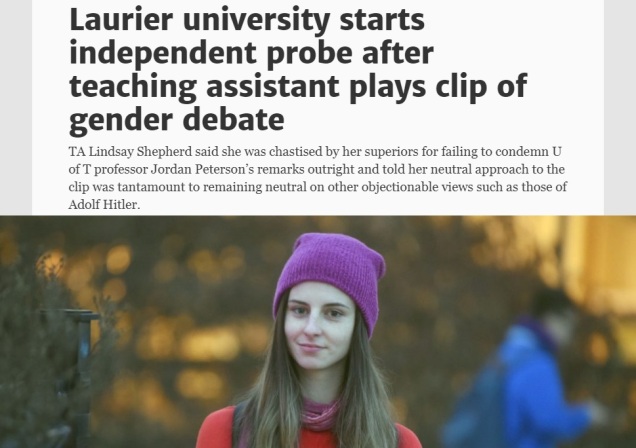
But now an even more disturbing case has emerged, this time at Wilfrid Laurier University in Ontario, Canada. Graduate student and teaching assistant Lindsay Shepherd recently found herself hauled in front of a Star Chamber consisting of two professors and a campus diversity officer after an anonymous complaint was made against her for showing a video – fully within the context of the class she was teaching – of somebody expressing a point of view which did not accept or validate current transgenderism doctrine, specifically the use of alternative pronouns.

From The Star:

Lindsay Shepherd, a graduate student at Wilfrid Laurier University, said she ran afoul of school authorities after she aired a clip in two tutorials of a debate on gender-neutral pronouns featuring polarizing University of Toronto professor Jordan Peterson.

The excerpt from TVO’s current affairs program The Agendashows Peterson, who has famously refused to use gender pronouns other than “he” or “she,” defending his position against a professor who argued it was necessary to use the pronouns that a person prefers to be called.

Shepherd said she was chastised by her superiors for failing to condemn Peterson’s remarks outright and told her neutral approach to the clip was tantamount to remaining neutral on other objectionable views such as those of Adolf Hitler.

While Global News reports:

She was called into a meeting in which Laurier faculty and administration told her that playing the clip without condemnation legitimizes the viewpoint, which they don’t support.

[..] The meeting, which Shepherd secretly recorded, left her in tears after staff said playing the clip created a toxic environment for transgender students and called her transphobic.

Note: Lindsay Shepherd considers herself a leftist and did not actually agree with the perspective which Professor Jordan Peterson expressed in the now-controversial video. She was hauled before a disciplinary body merely for presenting a different argument in an academic context.

Summaries really do not do the exchange justice, so I strongly encourage you to spend 9 minutes listening to the secret recording of the meeting made by Lindsay Shepherd, or at least to read my transcript below. The purpose of this is not to generate more superficial outrage about “crazy campus SJWs” but to emphasise the degree to which universities are running at full speed away from any commitment to academic freedom and towards uncritically promoting one very particular (and flawed) worldview to the exclusion of all others.

Full transcript below:

PROFESSOR 1: …why that might have been seen as problematic by some of the students, maybe even threatening?

SHEPHERD: Um, I don’t see how someone would rationally think it was threatening. I can see how it might challenge their existing ideas but for me that’s the spirit of the university is challenging ideas that you already have. And I don’t know who this came from, I would be interested to see the original complaint or complaints, because like I don’t really have any context as to what exactly their problem was.

PROFESSOR 1: Sorry, can I, um…

SHEPHERD: The thing is, can you shield people from those ideas? Am I supposed to comfort them and make sure that they are insulated away from this, is that what the point of this is? Cause to me that is so against what a university is about. So against it. I was not taking sides, I was presenting both arguments.

PROFESSOR 1: So the thing is about this is, if you’re presenting something like this, you have to think about the kind of teaching climate that you’re creating, and, um, this is actually, these arguments are counter to Canadian human rights code, ever since – and I know that you talked about, um, C-16, ever since this passed it is discriminatory to be targeting someone due to their gender identity or gender expression. So bringing something like that up in class, not critically, I understand that you’re trying to, like –

SHEPHERD: It was critical. I introduced it critically.

PROFESSOR 1: How so? Like, as in?

SHEPHERD: Like I said, it was in the spirit of debate.

PROFESSOR 1: Okay. In the spirit of the debate is slightly different to being, like, “this is a problematic idea that we maybe wanna unpack”

SHEPHERD: But that’s taking sides.

PROFESSOR 1: Yes.

SHEPHERD: That’s me being like “oh look at this guy, everything that comes out of his mouth is BS but we’re gonna watch anyway”.

PROFESSOR 1: Okay. So I understand the position that you’re coming from and your positionality, but the reality is that it has created a toxic climate for some of the students. Y’know, it’s great that —

SHEPHERD: Who? How many? One?

PROFESSOR 1: Okay. May I speak? It’s —

SHEPHERD: I have no concept of, like, how many people complained, what their complaint was, you haven’t shown me the complaint.

PROFESSOR 1: Yes, I understand that this is upsetting, but there’s also confidentiality matters.

SHEPHERD: The number of people is confidential?

PROFESSOR 1: Yes. It’s one or multiple students who have come forward saying that this is something they were concerned about, and that it made them uncomfortable. You’re perfectly welcome to your own opinions, but when you’re bringing it into the context of the classroom that can become problematic. And that can become something that is – that creates an unsafe learning environment for students.

SHEPHERD: But when they leave the university they’re gonna be exposed to these ideas, so I don’t see how I’m doing a disservice to the class by exposing them to ideas that are really out there. And I’m sorry I’m crying, I’m stressed out because this, to me, is so wrong. So wrong.

DIVERSITY OFFICER: Can I mention the gender violence – the gender and sexual violence policy?

PROFESSOR 1: Yeah, please.

DIVERSITY OFFICER: So under that, um, gender violence does include sexual violence but it also includes, um targeting folks based on gender, um, so that includes transphobia, biphobia, homophobia, all those sorts of things are protected under the policy, and so those are things that Laurier has upheld as values as well as the Ontario human rights code. Um, and so those are things that we’re responsible for, uh, not impacting our students in that way, and not, um, not spreading transphobia in that way.

SHEPHERD: Okay, so what I have a problem with is I didn’t target anybody. Who did I target?

DIVERSITY OFFICER: Trans folks.

SHEPHERD: How? By telling them ideas that are really out there? By telling them that? By telling them? Really?

PROFESSOR 1: It’s not just telling them. In legitimising this as a valid perspective, as this is another valid perspective —

SHEPHERD: In a university all perspectives are valid!

PROFESSOR 1: That’s not necessarily true, and —

SHEPHERD: Well, this is something that’s being intimated in current society and I don’t feel the need to shield people from what’s going on in society. Like, to imagine that this is happening in a university, it’s just…bad.

PROFESSOR 1: Okay, so just to give you a context. Also within all of this that is happening, um, Laurier’s being blanketed with white supremacist posters currently. There’s another debate in society which is whether or not North America should be a set of white nationalist states and that it should be ethnically cleansed of other people. That is also a current debate in society. Would you show something in your tutorial that had, y’know, white supremacist and non white supremacists debating whether or not other people should live in North America? Is that something that you would show?

SHEPHERD: If that was related to the content of the week and we were talking about right wing speakers then maybe. It depends on the content, like, I mean if there’s really ideas that are existing out there like that then, I mean… Look, the thing is I don’t see what’s transphobic about showing a video of Jordan Peterson. He’s a real person. He is out there.

PROFESSOR 1: He is a real person, but he is a real person who has engaged in targeted behaviour or targeting of trans students, um, in the particular, like — basically doxxing them, if you know the term, like giving out their personal information so that they will be attacked, harassed, so that death threats will find them. This is something that he has done to his own students, he has done to other students, um, and this is also something that the students are aware of. So this is, this is basically like playing – not to kind of do the thing where everything is kind of compared to Hitler – but this is like neutrally playing a speech by Hitler or Milo Yiannopoulos from GamerGate. This is the kind of thing that, departmentally, in terms of critical communication studies and in terms of the course, of what we’re trying to do, is diametrically opposed to everything that we have been talking about in the lectures. Was this one of the reasons that you wanted to do this, because it was like, a reaction to the lecture content and, uh…?

SHEPHERD: No, we were talking about gendered language, and I was asking them to structure sentences using “they” or using “his” and “her”. And then we talked about the societal context of it. So I don’t get why I’m being seen as transphobic by virtue, by proxy of me just saying, just stating, just exposing people to an idea. I don’t get how that label is attached to me, I really don’t.

PROFESSOR 1: It’s more about the effect rather than the intention, like obviously that wasn’t your intention, but nevertheless it disturbed and upset students enough —

SHEPHERD: So everything’s about those students who are disturbed? Everything is catered to them?

PROFESSOR 1: [Sighs]

PROFESSOR 2: Can I just offer a different perspective? Um, were you, was this, um, tutorial based on looking at grammar?

SHEPHERD: Uh-huh.

PROFESSOR 2: And it was focused on the use of pronouns and the use of grammar?

SHEPHERD: Uh-huh.

PROFESSOR 2: Um, is grammar not something that’s not really subject to debate?

SHEPHERD: The “they” and the “his” or “her”? It’s a huge debate right now. Can we use “they” in the singular?

PROFESSOR 2: Yeah, but you do know that “they” has actually been used in the singular and —

SHEPHERD: Yeah, and that was in the video I showed to the class, and that was a point I made. The thing is, that’s kind of funny, is I disagree with Jordan Peterson. I disagree. But, um, you guys seem to think that I’m like pro-Jordan Peterson or something. It’s very funny.

PROFESSOR 2: Well, um, do you understand how what happened was contrary to – sorry, what was the policy, the —

DIVERSITY OFFICER: Gender and sexual violence.

PROFESSOR 2: — Gender and sexual violence policy? Like, do you understand how…

SHEPHERD: Sorry, what did I violate in that policy?

DIVERSITY OFFICER: Um, so gender-based violence, transphobia in that policy, causing harm to trans students by, uh, bringing their identity as invalid or their, uh, pronouns as invalid.

PROFESSOR 2: Or something like that.

DIVERSITY OFFICER: Potentially invalid.

SHEPHERD: So I caused harm and violence?

DIVERSITY OFFICER: Which is under the Ontario human rights code and a protected thing, and also something that Laurier holds as a value.

SHEPHERD: Okay. So by proxy, me showing a YouTube video, I’m transphobic and I caused harm and violence? So be it. I can’t do anything to control that.

PROFESSOR 2: Okay, so that’s not something that you have an issue with, the fact that that happened? Like, are you sorry that it happened?

SHEPHERD: Like, I mean, I know in my heart and I know I expressed to the class that I’m not transphobic, and if any of them — I don’t know, again, I don’t know what they said — but I made my — I don’t think I gave away any kind of political position of mine. I remained very neutral. And, um —

PROFESSOR 2: And that’s kindof the problem…

[AUDIO ENDS].

Note how the professors are totally unable to distinguish between the idea of raising an idea for critical discussion and targeting a student and inciting hatred or violence against them based on that idea. Time and again, the professors imply (and sometimes outright state) that any idea or argument which deviates from the prevailing transgender orthodoxy can only be discussed if it is first denounced as wrong or even “evil”. Students are not to be exposed to ideas and left to evaluate them in a neutral environment; rather, they will be informed of the “correct” response to such ideas upfront, presumably to avoid “harmful” misunderstandings.

One also wonders how far the professor/inquisitor had to dial down his definition of white supremacy when he made his remarks that the campus is being “blanketed in white supremacist posters”. One imagines that any literature advocating any kind of immigration enforcement at all would now fall into this category, together with any poster bearing the image or advertising the appearance of a prominent mainstream conservative. And when some future Wilfrid Laurier student is hauled before the same Social Justice Star Chamber for illicitly watching a Ben Shapiro or Tomi Lahren video under the covers at night in the privacy of their dorm room, the definition of racism and white supremacy will be just as expansive and unquestionable as transgender doctrine was at Lindsay Shepherd’s trial.

After all, the professor seriously posits the idea that there is a mainstream debate going on in society over whether North America should be ethnically cleansed of non-white people. These academics are so unhinged, so utterly untethered from reality, that they interpret a far-right argument on the very fringes of society – one which is actually diminishing, not gaining traction over time – and elevate its importance to that of some widespread national movement. This is a childlike catastrophisation of the current situation at best, and brazen intellectual deception at worst.

Listening to the recording, what is really surprising (besides the content) is the fact that at all times it is Lindsay Shepherd, the grad student, who sounds not only more reasonable and measured but more intellectually astute than her inquisitors. Shepherd was apparently being grilled by two professors and a Wilfrid Laurier University diversity officer, and despite being placed in a hugely stressful situation and occasionally fighting back tears as a consequence she sounds poised and articulate while her academic tormentors reach for every worn-out phrase or comparison in the book, frequently having to “tag” one another in and out of the discussion as they are repeatedly stumped and confounded by Shepherd’s logical responses.

Is this what the Cult of Social Justice and Identity Politics does to academic minds? Did the capacity for reasoning and critical thinking faculties of these professors gradually rot away after they drank too deep from the well of identity politics? Did they jettison independent thought and learn to mindlessly repeat approved orthodoxy so long ago that they now find themselves bested in debate by a scared grad student despite enjoying a 3 to 1 numerical advantage?

These really are third rate academic minds. Who says “positionality” in a sentence? Be under no illusion – this is a thoughtcrime investigation panel, and the judges are so inarticulate that they can only keep restating their blunt, unwavering dictum in occasionally varying language rather than engaging with and rebutting Shepherd’s arguments – hence their heavy overuse of the word “problematic” without any kind of granular explanation as to what was problematic or why it was so. These professors cannot even make a rudimentary case for their own intersectional ideology; all they can do is state and restate its core commandments.

These inquisitors do not deserve the title of “professor” when their snivelling, cowardly attempt to enforce their credo was so comprehensively deconstructed and debunked by a nervous but principled and steadfast grad student. Neither do they deserve to be employed by any academic institution which calls itself a university.

And unless Wilfrid Laurier University rapidly takes steps to publicly sanction those professors and apologise to Lindsay Shepherd, they should no longer be taken seriously as a place of higher education.


UPDATE – 20 November

Rod Dreher makes a good point in his own reaction to the Lindsay Shepherd story:

It’s worth listening to the clip to hear how nicey-nice and bland the inquisitors are. These people are destroying academic freedom and the purpose of a university, and they’re doing so in anaesthetic tones that conceal the act of real violence to the core values of a university.

The tone adopted by the two professors and the diversity officer is indeed striking. The language they use is incredibly passive and their voices never become harsh or accusatory. Instead they appear to be trying to undermine Shepherd with bland niceness, to keep hammering home the same illogical message with soft insistence in the hope that she will ultimately break down and state that 2+2=5.

It is worth remembering that the gravest threats to free speech and academic freedom in the West come not from angry student protesters but from the impeccably credentialed, dulcet-toned bureaucrats and functionaries who share their worldview.


UPDATE – 23 November

Professor Nathan Rambukkana, Lindsay Shepherd’s inquisitor-in-chief, has apologised to the student in a fairly gracious open letter. Money quote:

Second, this entire occasion, and hearing from so many with passionate views on this issue from across the political spectrum, has made me seriously rethink some of the positions I took in the meeting. I made the argument that first-year students, not studying this topic specifically, might not have the tool kit to unpack or process a controversial view such as Dr. Peterson’s, saying that such material might be better reserved for upper-year or grad courses. While I still think that such material needs to be handled carefully, especially so as to not infringe on the rights of any of our students or make them feel unwelcome in the learning environment, I believe you are right that making a space for controversial or oppositional views is important, and even essential to a university. The trick is how to properly contextualize such material. One way might be through having readings, or a lecture on the subject before discussion, but you are correct that first-years should be eligible to engage with societal debates in this way.

Is the letter perfect? By no means. It still adopts the whole “I’m sorry if you were offended” self-exculpatory language in places, and Rambukkana certainly does not forsake his main positions or his belief in identity politics. But still, better this than nothing at all. And at least there was an apology for the awful Hitler comparison.

Wilfrid Laurier Vice-Chancellor Deborah MacLatchy also took the opportunity to “apologise” via open letter, writing:

After listening to this recording, an apology is in order. The conversation I heard does not reflect the values and practices to which Laurier aspires. I am sorry it occurred in the way that it did and I regret the impact it had on Lindsay Shepherd. I will convey my apology to her directly. Professor Rambukkana has also chosen to apologize to Lindsay Shepherd about the way the meeting was conducted.

I remain troubled by the way faculty, staff and students involved in this situation have been targeted with extreme vitriol. Supports are in place at the university to support them through this situation.

Waah waah waah. Way to make it all about yourself. More:

Let me be clear by stating that Laurier is committed to the abiding principles of freedom of speech and freedom of expression. Giving life to these principles while respecting fundamentally important human rights and our institutional values of diversity and inclusion, is not a simple matter. The intense media interest points to a highly polarizing and very complicated set of issues that is affecting universities across the democratic world. The polarizing nature of the current debate does not do justice to the complexity of issues.

Laurier is prepared to engage with these important discussions in a thoughtful and determined way. I have announced a task force to delve into these issues. Further details will be announced in the days ahead. I look forward to the process and I am confident that the outcome will contribute to a better understating of these issues for Laurier and the broader community.

This is a total deflection. Giving life to the principles of free speech and academic freedom is indeed “a simple matter” – it just requires a backbone and a baseline commitment to the basic principles of a university. If MacLatchy feels constrained by the incredibly stultifying Canadian human rights laws then as a university vice-chancellor she should have been vociferously opposing damaging, censorious developments like C-16, not cheering them on from the rafters. MacLatchy needs to go.

 

Lindsay Shepherd - Wilfrid Laurier University Ontario Canada - Academic Freedom - Social Justice - Transgender Pronouns - Jordan Peterson

Safe Space Notice - 2

Support Semi-Partisan Politics with a one-time or recurring donation:

Agree with this article? Violently disagree? Scroll down to leave a comment.

Follow Semi-Partisan Politics on TwitterFacebook and Medium.