Donald Trump Is Rick Santorum 2.0 – Less Social Conservatism, But Economic Populism On Steroids

Former Republican presidential primary candidate Rick Santorum, siren of the white working classes back in 2012, ran a campaign which laid the groundwork for Donald Trump’s insurgency in 2016, and ultimately prophesied his victory

For several months now I have been waiting for somebody to make the connection between Rick Santorum‘s strong running in the 2012 Republican primaries and the playbook which took Donald Trump all the way to the White House.

Way back during the 2012 campaign, I noted that Santorum was singing a siren song to the “white working classes” of rust belt America, responding to their very real and valid concerns with reassuring but unrealistic promises that the tide of globalisation could (and should) be turned back, thus sparing them the need to adapt to the new America.

Back then I labelled Rick Santorum the “Pied Piper of Pennsylvania“, a reference to the way in which the former Pennsylvania senator accumulated a large, trusting and often sympathetic audience of followers, but whom he would ultimately lead off the edge of an economic cliff:

Barring certain specific exceptions, the manufacturing jobs that America has lost will simply never return.

And perhaps among all of the things that Rick Santorum says that rile me up, this one makes me the most angry. He is peddling a Pleasantville-style, black and white, 1950s vision of a country where once again it is possible to live a comfortable middle class lifestyle with a decent sized family home and a couple of cars, paid for by the wages earned from assembling televisions, or refrigerators, or cars. And Republican primary voters, many of whom are in the squeezed middle class and have been let down by successive administrations, are listening to Santorum’s claims and gaining hope, and voting for him, even though he cannot in actual fact turn the clock back fifty years, even if he does actually want to.

Whether he wins or loses the Republican primary and the general election, the persistence of this argument – and the belief that a few tweaks to the tax code and the drilling of a few more oil wells will spur a resurgence in unskilled and semiskilled manufacturing – simply dooms another generation of people to a life of stagnating or falling living standards.

People trust Santorum because, unlike the other main Republican candidates, he is so genuine. Why would he advocate policies that would hurt them, when he was one of them? And yet the policies that he proposes would either do little to bring back more unskilled or semiskilled manufacturing jobs, or would make the US population even less qualified to perform those jobs which already exist. And all the time that people hold out hope that a Rick Santorum or another politician like him can work this magic, it is time that they are not spending going back into training, or into college or university, and reskilling themselves for the jobs of tomorrow’s economy.

Rick Santorum says all of the things that the Republican Party’s blue collar base want to hear, but in many ways he is just a modern day Pied Piper, promising them a brighter future while marching them off a cliff.

Globalisation cannot be rolled back, nor should it be. The challenge – which falls hardest upon Republicans and small government, small-c conservatives like myself, who generally do not foresee an active role for central government in the lives of citizens – is to find a way of reaping the fruits of globalisation while bringing these disrupted communities with us instead of callously leaving them behind.

And we should be honest: conservatives are at a disadvantage here. Leftists have the luxury of simply waving their hands and promising new government programmes for the mass retraining of millions of people in new, higher value-added jobs and careers. But no matter how costly or inefficient those schemes may prove, those on the right have an even harder job persuading voters, and no one party or politician on either side of the Atlantic has yet arrived at a fully convincing solution.

The inability to satisfactorily answer these questions and convince enough people of his ability to deliver the fruits of globalisation with none of the adverse consequences -together with the establishment reluctantly falling firmly behind Mitt Romney – ultimately saw Rick Santorum fall by the wayside back in 2012. But four years later, Donald Trump came charging along with almost the exact same message, and stormed all the way to the White House. And during this extraordinary journey, none of his supporters seemed to realise or care that Trump has been every bit as unable as Rick Santorum was to answer the question of “how?”, beyond his usual barnstorming bluster and well-worn pledge to Make America Great Again.

Now Bill Powell from Newsweek magazine has also picked up on the similarity between the two men, with a new piece entitled “How Rick Santorum helped Donald Trump win the White House” in which he argues that to a large extent, Donald Trump merely honed and executed a playbook originally written by Santorum.

Powell writes:

In the spring of 2015, [Trump] was talking to a few family members and confidantes about running for president. And he wanted to get in touch with a former Republican senator from Pennsylvania, Rick Santorum, who had served two terms before losing big in 2006. In 2012, he was the runner-up to Mitt Romney in the Republican presidential primaries. Ensconced since then in a Washington, D.C., law firm, Santorum had written a book that attracted little attention: Blue Collar Conservatives, Recommitting to an America That Works. But Trump had read the book, very carefully, in fact, and was intrigued. He called Santorum and asked if he would come to Trump Tower for a visit. Santorum was a bit surprised by the invitation but said yes.

Santorum didn’t know what to expect. He had never met Trump and, like millions of Americans, knew of him only from his long-running NBC reality show, The Apprentice. Trump got right to the point. He had loved Santorum’s book and believed it could unlock the White House for a GOP candidate who ran a campaign based on reaching the working-class voters throughout the industrial Midwest that, Trump said, Democrats take for granted.

Santorum agreed, of course—he was thinking of making another run at the White House, using that playbook. (He did, but got bum-rushed early in the primaries.) Trump then surprised Santorum even more by questioning him on details of his book and economic policy in general. What could be done with trade policy to help the working class? Was there any way to turn around the massive bilateral trade imbalance with Beijing? Could the White House be used as a bully pulpit to pressure American companies to stop sending manufacturing offshore? On and on they went, and Santorum left the meeting wondering what might happen if you mixed the power of celebrity with a blue-collar tent revival.

We now know the answer. Trump’s improbable run to the presidency—which was nearly derailed on several occasions by his lack of discipline—was guided by a conviction that he could, as political consultant and longtime Trump adviser Roger Stone said last year, “rewrite the [electoral] map” by smashing the “great blue wall” of Midwestern Democratic states. And smash it he did.

Something happened (or continued to happen) between 2012 and 2016 which made more people receptive to the Santorum message of economic populism and protectionism, and the failure of the Obama administration to change the economic trajectory of those people already  suffering the fallout from globalisation (or nervously waiting for it to impact their industry and their jobs) clearly played a large part.

But even then, Trump’s victory could probably have been prevented had prominent Democrats like Hillary Clinton and President Obama not been so blasé about the economic challenge facing millions of Americans while they were campaigning. Hillary Clinton in particular took every opportunity to criticise Trump’s “Make America Great Again” slogan, neglecting to consider that from many people’s perspective, America is only as great as their own present circumstances. But while sanctimoniously lecturing Donald Trump and his supporters that “America is already great” may have been factually true, it also felt a lot like the establishment dismissing the legitimate concerns of suffering people.

Sure, America is pretty darn awesome if you are one of the Wall Street bankers to whom Hillary Clinton loved to give speeches, one of the celebrities attending her fundraisers or just a prosperous coastal professional whose job and career is not about to be eradicated through automation or outsourcing. But if you do not fall into one of these categories, America can feel a lot more precarious than great. And having the Democratic Party’s presidential nominee continually insisting that everything is wonderful and that anyone with concerns or complaints is somehow “deplorable” was about the most stupid and politically tone-deaf way for a candidate to behave.

And of course we all know the outcome:

The Trump high-command members knew then they had an opening. The crowds Trump was drawing were enormous, and even before [FBI director James] Comey’s announcement [about the reopening of the investigation into Hillary Clinton’s email server], their internal polls said the race was tightening, but not enough to make many of them believe he would win. Now, though, they thought they had a shot. Trump remained focused, and the campaign laid on rally after rally—up to five per day in the last days of the race. Trump went back to Pennsylvania and Michigan and Wisconsin again and again. He even made a trip to Minnesota, the bluest of blue states, because—stunningly—polling had him drawing close even there. The Santorum strategy was playing out just as Trump had bet it would so many months before.

[..] “Those states—Pennsylvania, Michigan, Wisconsin—were the targets,” [Trump campaign manager Kellyanne] Conway would later say. “[Trump] had a `theory of the race,’ and when it became clear that he had tapped into something very big, he rode it. And that is what good candidates do.”

Bill Powell is right – to a large extent, Donald Trump picked up the mantle from Rick Santorum, amending it by ditching some of the niche social conservatism (an integral part of Santorum’s Catholic traditionalism) and ramping up the economic populism even further.

While Santorum spoke of the pain of those whose manufacturing jobs were disappearing and promised help through the corporate tax code, Donald Trump identified a specific bogeyman in the form of China and other countries who supposedly always get the better of America, and then promised to confront these foreign economic enemies. While Rick Santorum railed against the coastal intellectual elites and dismissed aspiring to go to college as “snobbery”, Donald Trump insulted and belittled those Ivy League experts and elites day after day.

In many ways, watching Donald Trump on the campaign trail was like watching an incredibly vulgar, amoral and less eloquent version of Rick Santorum, with the brightness and volume dial turned up to max. And it worked. The economic message that Santorum road-tested in his 2012 campaign and in “Blue Collar Conservatives” was a beguiling one, as I acknowledged four years ago. But when it was hitched to a television celebrity phenomenon and fuelled by a combustible blend of identity politics backlash and the Democratic Party’s seeming disdain for middle America, it became immensely powerful.

Of course, this leaves President-elect Trump in a far worse place than Rick Santorum. Santorum was able to rack up Republican primary votes and victories against Mitt Romney, but his ultimate defeat saved him from having to make good on his campaign rhetoric and unrealistic promises to insulate middle America from the negative consequences of globalisation. Donald Trump has made it all the way to the White House, and the people who put him there will now expect him to deliver.

Which means that it falls to Donald Trump – of all the unlikely people – to do something that no right-wing politician anywhere in the world has successfully achieved: find a way to reap the benefits of globalisation while mitigating the negative side effects.

My gut feeling: assuming that Trump even tries to address this challenge, it will only be by enacting economically ruinous levels of protectionism or by abandoning any pretence of conservatism and embracing some kind of mass worker retraining program, either in a massive expansion of the federal government or else delivered by the states through federal block grants. And given the dynamics in Congress, it is by no means certain that any such measure would pass.

Make America Great Again – so easy to say, so hard to deliver for millions of struggling Americans.
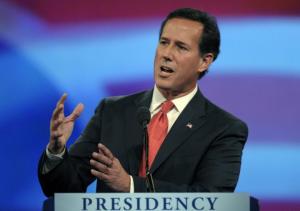
 

Rick Santorum

Support Semi-Partisan Politics with a one-time or recurring donation:

Agree with this article? Violently disagree? Scroll down to leave a comment.

Follow Semi-Partisan Politics on TwitterFacebook and Medium.

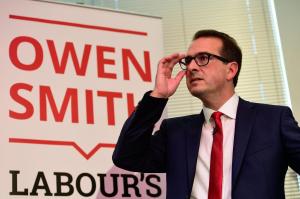
Owen Smith Yearns To Defy The British People And Thwart Brexit. Let Him Try.

Owen Smith’s desperate, EU-loving Labour leadership candidacy is a giant F-U to the very people the Labour Party needs to be courting if it ever wants to regain power

Fresh from announcing his plans to host a jolly afternoon tea party for Islamic State in the gardens of Buckingham Palace, contemptible Labour Party nobody Owen Smith has continued to set about alienating Labour’s already furious working class base by pitching himself as a champion of the metro-left’s childish demand that democracy be overturned and the EU referendum result disregarded.

From the Guardian:

Owen Smith has accused Jeremy Corbyn of having never believed in the European project and is seeking to turn the issue of the EU referendum into the key dividing line in the battle for the Labour leadership.

The Labour leader hit back by telling his challenger that he had to respect the result of June’s referendum and accept that Brexit was on the table.

In his strongest attack yet, Smith – whose team are planning to place debate over the EU at the heart of their campaign – said:

“I think Jeremy can’t bring himself to say he would argue for a second referendum or put into a Labour manifesto that we would stay within the European Union because he fundamentally never believed in the European union.

“That is why he steadfastly refuses [to promise a second referendum], even though he acknowledges a likely Tory Brexit will diminish workers’ rights; damage social protections; damage our ability to deal with tax avoidance. Even though he thinks that is likely to happen, he thinks it more important that we stay outside the EU – I think that is a deep deep mistake.”

Smith, who is trailing well behind in the polls, hopes that a pledge for Labour to take Britain back into the EU will appeal to pro-European Labour members and boost his chances.

“We should be fighting harder, why can’t you say you would fight to stay in?” he shouted.

Why won’t he FIGHT, mummy? Why won’t the Bad Man fight for us to stay in our pwecious European Union? Why won’t he stand up to the Evil Tor-eees and make the wefewendum wesult go away? It’s not fair mummy, it’s not fair!

Pathetic. Utterly pathetic. If by some complete miracle (probably involving the abduction of Jeremy Corbyn by aliens) Owen Smith does become leader of the Labour Party, what little is left of Labour’s depleted working class base will march off into the sunset forever. Labour will be able to add northern England to Scotland on the growing list of UK regions where anyone wearing a red campaign rosette is no longer welcome.

You know what? Good luck to him. I hope Owen Smith actually wins the Labour leadership contest and joins up with other antidemocratic snakes like Hampstead & Kilburn’s Tulip Siddiq in trying to derail Brexit in Parliament. If Smith thinks that things are bad now, I look forward to observing the expression on his face when the entire fabric of the Labour Party comes apart in his well-manicured, pampered, ex-lobbyist’s hands as he loses his faltering grip on constituency after Brexit-supporting constituency.

I look forward to future generations of politics students learning about the daring exploits of Owen Smith, the man who stuck two metropolitan fingers up at Labour’s own working class voter base and led his party to true, permanent electoral Armageddon.

So bring it on, Owen. Hug the European Union even tighter, tell all the Brexit-supporting people whose votes your party needs to go to hell again, and bring. it. on.


Owen Smith - Labour Party Leadership Coup

European Union - United Kingdom - Britain - Flags

Support Semi-Partisan Politics with a one-time or recurring donation:

Agree with this article? Violently disagree? Scroll down to leave a comment.

Follow Semi-Partisan Politics on TwitterFacebook and Medium.

Quote Of The Day


“Not all Remain voters think the white working classes are ignorant, parochial trash, but all people who think the white working classes are ignorant, parochial trash voted Remain.”

– Brendan O’Neill


A welcome, witty and accurate antidote to the sanctimonious “not all Brexiteers are racists…” guilt by association theme doing the rounds on social media (and echoed by much of the commentariat) at present.


Brexit - EU - European Union Flag - Missing Star - Britain - UK

Agree with this article? Violently disagree? Scroll down to leave a comment.

Follow Semi-Partisan Politics on TwitterFacebook and Medium.

The Arrogant Labour Party Pathologises Pro-Brexit Working Class Sentiment

South Park - Smug Cloud - EU Referendum - Labour Party - Working Class - Brexit - Brexity - Owen Jones

The modern Labour Party, totally unable to relate to its alienated working class base, now seeks to pathologise overwhelming working class support for Brexit rather than question their own blind devotion to the European Union

To truly understand the gulf between the modern, metropolitan Labour Party and its increasingly alienated core working class vote, one need only read the latest column by Owen Jones, in which the “Chavs” author frets that “working class Britons feel Brexity and betrayed”.

Brexity.

Jones’ column in the Guardian doesn’t say that working class people have conducted a rational assessment of their social, material and economic interests and decided that Britain would be better off outside the European Union, in the way that a middle class professional might deliberate and weigh their options. No, when it comes to working class people, they just “feel Brexity”, like babies might feel gassy after feeding, or tetchy while teething – a simplistic emotion or reflex, not a considered thought.

In other words, when a “good” middle-class left-winger (the only kind of person that the Labour Party now much cares about) decides that the EU is simply wonderful, that Brussels is only about “trade and cooperation” and that we should stick around to reform the EU because “Another Europe is Possible!“, they are acting rationally and sensibly. But when working class Britons decide overwhelmingly that the European Union is a bad thing for their interests and kryptonite to our democracy, they must have been wildly misled by nefarious forces (read: Nigel Farage) into voting against their obvious true interests.

Let’s dive in to Owen’s piece:

If Britain crashes out of the European Union in two weeks, it will be off the back of votes cast by discontented working-class people. When Andy Burnham warns that the remain campaign has “been far too much Hampstead and not enough Hull”, he has a point. Even Labour MPs who nervously predict remain will scrape it nationally report their own constituencies will vote for exit. Polling consistently illustrates that the lower down the social ladder you are, the more likely you are to opt for leave. Of those voters YouGov deems middle-class, 52% are voting for remain, and just 32% for leave. Among those classified as working-class, the figures are almost the reverse: 36% for remain, 50% for leave. The people Labour were founded to represent are the most likely to want Britain to abandon the European Union.

A political movement with the smallest shred of humility might look at these numbers and wonder whether maybe the working class voters know, or are attuned, to something which the middle classes are not, rather than automatically assuming that the middle classes are right and the working classes wrong. And a political party capable of introspection might be alarmed to find itself diametrically opposed to “the people Labour were founded to represent” on so fundamental an issue as Britain’s independence and place in the world.

Needless to say, the Labour Party of Jeremy Corbyn and Owen Jones (and Gordon Brown and Peter Mandelson too) has no such humility and no such capacity for introspection. When confronted with evidence that the metropolitan intelligentsia have gone marching off in a completely different direction to the base, the only instinct is to furiously question how the plebs could possibly  have gotten it wrong, and who led them astray.

Owen Jones continues, becoming even more offensive with every paragraph:

A Conservative prime minister lines up with pillars of Britain’s establishment with a message of doom – and it makes millions of people even more determined to stick their fingers up at it.

The leave campaign knows all this. It is Trumpism in full pomp: powerful vested interests whose policies would only concentrate wealth and power even further in the hands of the few, masquerading as the praetorian guard of an anti-establishment insurgency dripping in anti-immigration sentiment. It is political trickery long honed by Ukip, a party led by a privately educated ex-City broker that claims to be the voice of the little guy against a self-interested powerful clique. If Donald Trump succeeds across the Atlantic, the terrible cost of leaving millions of working-class people feeling both abandoned and slighted will be nightmarishly clear. The same goes for this referendum.

So believing that Britain should leave the dysfunctional and deliberately antidemocratic EU is now apparently a symptom of “Trumpism” – a zesty blend of brashness, proud ignorance and overt prejudice. This is Owen Jones trying to be understanding and win people over, remember. And he does so by comparing them and their sincerely held political beliefs to the egotistical ranting of Donald Trump. Not a great start to the outreach effort there, Owen.

In Owen Jones, here we have a walking, talking mascot for the Labour Party’s refusal to understand why they are not more popular and why the working classes continue to vote for conservative parties and conservative policies. A generation ago, faced with Margaret Thatcher’s three general election victories, the British Left was unable to admit to itself that the Tories won fair and square because people preferred their sales pitch of individualism and opportunity. And this denial continued until late-stage Neil Kinnock and a still youthful Tony Blair finally delivered the harsh dose of reality required to make Labour electorally viable again.

Fast forward to 2016, and a Labour Party beaten back to its fortresses in the city and university campus simply cannot fathom why working class Britons might not like the idea of an increasingly powerful supranational government of Europe seeking to take over more and more competencies from its member states, and ultimately supplant them on the world stage, or why the working classes are stubbornly unwilling to participate in their carefully laid-out left-wing delusion that it is really just about trade and cooperation, honest.

Jones concludes:

It is certainly true that Labour’s coalition is fracturing. The Labour left – which has now assumed the party’s leadership – is in large part a product of London and its political battles from the 1970s onwards. London, of course, has increasingly decoupled from the rest of the country, economically and culturally. As the commentator Stephen Bush puts it, Labour does well “in areas that look like [the] UK of 30 years hence”: in particular, communities that are more diverse and more educated. In many major urban centres Labour thrives: witness the victory of Labour’s Marvin Rees in Bristol’s recent mayoral election. It is in working-class small-town Britain that Labour faces its greatest challenge. And it is these communities that may decide the referendum – as well as Labour’s future.

That’s why Labour’s remain effort needs to bring voices that resonate in northern working-class communities to the fore, such as Jon Trickett, who represents Hemsworth in West Yorkshire. These voices need to spell out the danger of workers’ rights being tossed on to a bonfire; to emphasise the real agenda of the leave leadership; and to argue that we can build a different sort of Europe. It would be foolish for either side to call this referendum. But unless a working-class Britain that feels betrayed by the political elite can be persuaded, then Britain will vote to leave the European Union in less than two weeks.

Well, at least Jones is able to concede that the London-centric leadership of the Labour Party might not be conducive to winning support from outside the middle-class clerisy. This is a start, but the problem will not be truly addressed until the likes of Owen Jones dare to concede that the working classes might have something to teach people like him about values and policy.

At present, even Owen Jones – the media’s standard bearer for defending the working classes – is still at pains to set himself apart from them on the issues. Sure, he will happily empathise with their frustrations, but he will never concede that they might be right on points of policy. He has an elite education, after all, while they work at places like Sports Direct (ew).

Take immigration. In a million years, you will never get Owen Jones to admit that the scale of immigration into Britain over the past decade has been problematic. He will do a better job than almost anyone of saying in that ever so ‘umble tone of his that he sympathises with those who do have concerns about immigration. But then watch him pivot to explain that the real problem is the Evil Tories and their failure to enforce a £10 minimum wage, or build sufficient new schools and hospitals and doctors surgeries to cope with 300,000 net arrivals a year, or to create magically appearing jobs.

In other words, while middle class leftists are allowed to speak for themselves, working class Britons must be “interpreted” by trained interlocutors like Owen Jones. And even when they directly say “I think that there is too much immigration, and it is causing problems”, we should not take it at face value, because really they mean all of these other things, but are not articulate enough to properly express themselves.

And so it is with the EU referendum. Working class people are saying in record numbers that they dislike the EU and want to leave. But the Labour Party, whose true masters and beneficiaries love the EU and are determined for entirely selfish reasons that Britain should remain, is unable to accept that the working classes might be right. And so they wheel out people like Owen Jones, who then tell them exactly what they want to hear – that the party’s working class voters don’t really mean it when they say they want Brexit, that what they really mean is that Britain should stay in the EU to reform it with the help of the Magical Brussels Reform Unicorn.

Don’t mind Kayleigh from Stoke-on-Trent, she’s just feeling a bit Brexity today.

Oh, how a noble political party has fallen. A party that once boasted deep roots in the industrial towns of Britain, and in the trades union movement, has now become a shallow and debased party designed to make London-based creative professionals feel good about themselves while their privileged lifestyles diverge ever more widely from those at the bottom. A party led by the affable-looking Jeremy Corbyn is still very much the party of professional politicos like Chuka Umunna and Luciana Berger.

And so it will remain, until Labour – and the British Left in general – learn to stop pathologising those with different political views, particularly those who are supposedly on their own side. Because quite frankly, it is becoming rather grating to hear the self-proclaimed party of equality and opportunity bleat on about how progressive and democratic they are, while percolating in a closed information loop of self-reinforcing metro-left platitudes and furiously ignoring the fact that they increasingly have absolutely nothing in common with those whom their party was founded to represent.

Owen Jones was supposed to be better than this. But none of them are. Labour deputy leader Tom Watson has started making noises about pushing back on the free movement of people issue a bit more, but you can bet that he wouldn’t be doing so if he (and the people he is really fighting for) didn’t have a referendum to win. The fears and concerns, hopes and dreams of working class people are only ever something to be mollified, contained or exploited for electoral gain, certainly not to be used as direct input to the policymaking process.

Right now, with the Parliamentary Labour Party slavishly cheerleading for a European Union loathed by many of its own supporters, the only thing standing in the way of Labour’s complete destruction south of the Scottish border is UKIP’s capacity for self-immolation. If the Remain campaign prevail and win the EU referendum, working class fury at the result (and the way in which the campaign was waged, in which Labour are fully complicit) could see many more defections to UKIP. The only thing likely to prevent this is the chaos which may engulf UKIP when Nigel Farage steps down or is deposed.

With the Labour Party living on borrowed time, one might expect a little humility from its leaders and chief supporters in the media. But these people don’t do humility. They have expensive educations and patiently-acquired groundings in all the right-on progressive values. They earned their right to sit at the top table of the Labour Party and call the shots. And the working classes? They exist to be referred to in speeches and soundbites, or sometimes to be used as a backdrop for media events so long as the event is tightly controlled and they don’t try to speak.

Funny. While the Conservative Party is consumed by a profound crisis of confidence and character within its own leadership, right now it is the Labour Party and British Left – even including poster boy Owen Jones – who most exude the stench of born-to-rule arrogance.

Never let it be said that this EU referendum campaign has not been instructional.


Postscript: It’s fair to say that Owen Jones isn’t best pleased with being called out for his condescending attitude towards working class Brexit supporters. He engaged with me on Twitter, taking great umbrage that I had briefly quoted from the headline – though he did not disavow the term “Brexity”

Jones is throwing his toys out of his pram, and has baselessly slandered me in the process – though frankly, being insulted by Owen Jones is a badge of honour which I shall wear with pride. There was no attempt to misrepresent or sensationalise what he wrote. The sub who produced the headline (if indeed it wasn’t Jones) did an excellent job of channelling the overall tone and content of his message – that working class people only support Brexit because they are the dumb victims of “political trickery” – and all of the quotes in this blog post reveal the same rotten attitude towards working class Brexiteers.

It is quite telling that Owen Jones popped up to smear me on Twitter before disappearing without actually defending his tawdry, condescending little piece in the Guardian. He knows that comparing Brexiteers to Donald Trump (as he did) is an unconscionable insult to working class voters, and more evidence of the Labour Party’s growing disconnect from its roots. But more than that, he knows deep down that he is wrong to support the Remain side in the EU referendum. Last year he showed promising signs that he might lead a left-wing awakening and uprising against the undemocratic European Union, but since then Jones – like Labour leader Jeremy Corbyn – has fallen dutifully into line praising the EU and furiously pretending to himself that “another Europe is possible”.

This is why Owen Jones is so sensitive and reacted so furiously to being called out on Semi-Partisan Politics. Whether Jones coined the term “Brexity” or not is immaterial – his attitude toward left-wing Brexit supporters, as evidenced by every single word in his Guardian column, is conclusive evidence that he views working class euroscepticism as a pathology, something to be treated, rather than a legitimate political viewpoint to be engaged with (and perhaps adopted as policy).


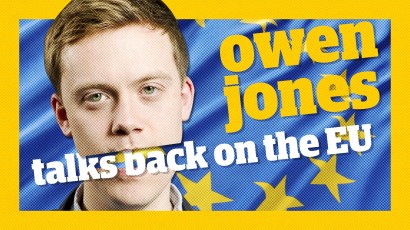
Owen Jones talks back on the EU referendum - European Union - Brexit

European Union - United Kingdom - Britain - Flags 

Support Semi-Partisan Politics with a one-time or recurring donation:

Agree with this article? Violently disagree? Scroll down to leave a comment.

Follow Semi-Partisan Politics on TwitterFacebook and Medium.

The Labour Party’s Rocky Road To Redemption, Part 2 – Pat Glass Edition

https://www.youtube.com/watch?v=Y3zL75UvskI

The Labour Party still shows no signs of having learned to stop hating half the country

Earlier this week, this blog looked at Tristram Hunt’s effort to combine feedback from various personalities within the Labour Party into a coherent narrative explaining why they lost the 2015 general election. As we saw, it hasn’t got off to the best of starts.

But quoting extensively from a failed parliamentary candidate who unabashedly declared that there is nothing good about British culture and power (as Tristram Hunt did when he quoted the losing Harlow candidate Suzy Stride) is nothing compared to the latest self-inflicted wound administered to the party by one of its own sitting MPs.

Next to enjoy her moment in the sun is Europhile Labour MP Pat Glass, who while campaigning in Derbyshire for Britain to remain in the European Union had some rather choice words to describe her encounter with a man who raised concerns about immigration.

From the BBC:

A Labour MP campaigning for the UK to remain in the EU has apologised after being recorded calling a voter a “horrible racist”.

Shadow Europe minister Pat Glass made the comments after an interview with BBC Radio Derby in Sawley, Derbyshire.

She said: “The very first person I come to is a horrible racist. I’m never coming back to wherever this is.”

[..] The man Ms Glass is believed to have been referring to said he had spoken to her about to a Polish family in the area who he believed were living on benefits, describing them as “spongers”, but denied being racist.

The North West Durham MP said: “The comments I made were inappropriate and I regret them.

“Concerns about immigration are entirely valid and it’s important that politicians engage with them.

“I apologise to the people living in Sawley for any offence I have caused.”

Let’s be honest – Pat Glass isn’t sorry that she made the remarks. She is sorry that she was caught making the remarks, which is very different. For just as surely as rich Californian donors bankrolling then-candidate Barack Obama understood exactly what he meant when he made his dog-whistle comments about backward Southerners clinging to their guns and religion, so Pat Glass’s intended audience knows exactly what she means when she recoils in mock horror after an everyday encounter with someone sceptical about immigration.

Because like the current Labour Party as a whole, Pat Glass’s audience is not the entire country. Her audience is not even everyone on the Left. And it certainly isn’t the “white working class”, with whom Labour now have such a fractious relationship. Pat Glass’s preferred audience is the same middle-class clerisy which cheered on Ed Miliband, whose sheltered home counties wishy-washy Fabianism renders them utterly capable of identifying with the hopes, fears and dreams of whole swathes of the country.

As is often the case, the initial reflex tells us everything that we need to know. And Pat Glass’s reflex on being confronted with the voter in question was not to attempt to understand their viewpoint and see the world through their eyes, but rather to high-handedly dismiss them as being beneath her dignity. Glass knows that both the EU and high net migration are both unabashed goods, and anybody who deigns to disagree with her is uneducated at best, or “racist” at worst. Why bother to hide it?

(Incidentally, Andrew Neil does a great job skewering Labour apologist Zoe Williams in the Daily Politics clip shown above, taking her to school on the difference between racism, xenophobia and bigotry).

We have seen this story play out before, and we will see it again. Mostly because it is how many Labour Party MPs and activists actually feel, and speaking the truth in an unguarded moment is a perennial occupational hazard in politics. Of course, under Jeremy Corbyn, Pat Glass can comfortably expect to receive no censure. Ed Miliband, obsessed with outward appearances, went too far the other way in the case of the Emily Thornberry St. George’s flag Twitter picture, purging Thornberry from his shadow cabinet.

But whether the Labour Party is breezily ignoring the issue or wildly overreacting out of concern for bad PR, the one thing that the party still shows no inclination for doing is actually reaching out to their scorned working class base and asking – pass the smelling salts – whether they might actually have a point? Until now, the best that Labour have managed to do in this regard is to put up a few spokespeople to say something along the lines of “of course it’s not racist to be concerned about immigration”. But this is then immediately followed by the pivot to “but here’s why they are wrong, and the EU / unlimited immigration is actually great”. In other words, the Labour Party are trying to tackle this gulf between the party leadership and the disaffected working class base as a problem of optics rather than a fundamental disagreement over policy.

Maybe the Labour Party will struggle along all the way through until the next general election without resolving the inherent tension between the multiculturalist direction set by the leadership and the more nativist attitudes held by those of their supporters who drifted away to UKIP or stayed home during the 2015 election. But unless Jeremy Corbyn or someone else steps forward with a concerted act of leadership, effectively “choosing a side” once and for all, the party will continue to be embarrassed in the polls when sneering Labour MPs accidentally reveal their true feelings about the working classes.

As this blog recently put it:

First, Labour must learn simply to tolerate the country again – to look upon the white working class and others of their former supporters not as godless infidels who spurned the One True Faith and threw their lot in with the genocidal Tories and racist Ukippers, but as decent and rational human beings who simply don’t like what the Labour Party is currently selling.

Meanwhile, Labour shadow ministers and the army of activists who knock on doors and deliver leaflets need to dial down the moral sanctimony from 100 to about 50, and accept that maybe they, rather than the electorate, made the mistake on May 7 (and the days leading up to it) last year.

At present, whether it is Pat Glass or the Labour In For Britain crowd in general, the scorn and contempt heaped by major party figures on otherwise natural supporters who fail to toe the correct line on immigration and the EU speaks volumes. The people are not stupid. They know when they are being mocked, and they will not buy the subsequent walkback and fake expressions of contrition.

So perhaps this is a split which needs to happen. Just as the Tories desperately need a cleansing fire to purge their ranks of all the wets and panting europhiles post-referendum, maybe the Labour Party needs to split into two new parties – one comprised of middle class luvvies who think they know best about what the working classes need, and another new party comprised of actual working class people who do not need sanctimonious young Corbynistas, Hampstead dwelling champagne socialists or the likes of Pat Glass to defend their interests.

Right now, this is an open question. But the antics of people like Pat Glass are making it a slightly less difficult one to answer.


Pat Glass - Labour In For Britain - EU Referendum - Immigration - Racist - Sawley Derbyshire

Bottom Image: BBC

Support Semi-Partisan Politics with a one-time or recurring donation:

Agree with this article? Violently disagree? Scroll down to leave a comment.

Follow Semi-Partisan Politics on TwitterFacebook and Medium.