–
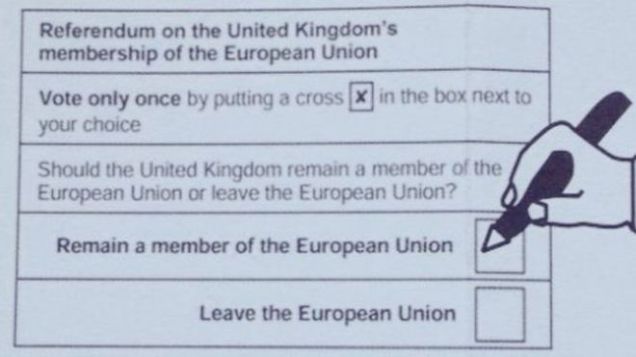
You don’t commission an urgent post-mortem report to look into something wonderful that has just happened. So the mere existence of the Electoral Reform Society’s tremulous report warning about the danger of future referendums tells us all we need to know about their attitude to Brexit and the people who voted for it
“The people have spoken. Or have they?”
So begins the Electoral Reform Society‘s autopsy report of the EU referendum and Britain’s shock decision to leave the European Union. The simpering “or have they?” tells you everything that you probably already suspect about this report – that despite whatever other good work the ERS might do, this is a metro leftist, superficially and uncritically EU-loving effort to come to grips with what they evidently view as a political disaster.
If something bad like a plane crash happens, the Air Accidents Investigation Branch will pick over the wreckage and file a report outlining the chain of events leading up to the tragedy. It is the kind of report which damns by its very existence – nobody commissions a sober post mortem report about something delightful that has just happened. The ERS’s perspective on Brexit is established in the first seven words, and even before then by its very existence.
That’s not to say that the report is worthless – despite its clear bias (I’ll eat my hat if author Will Brett or any of the other major contributors actually voted to leave the EU) there are some thoughtful deliberations on how to get citizens involved in any future referendum planning process so that the procedure feels less like something which was suddenly foisted on the people, the rules being made entirely by shadowy people in Parliament.
Nor can I argue with the report’s recommendation to extend citizenship lessons in primary and secondary school. This blog has long stood for mandatory civics classes thoughout the duration of secondary education, not only as a way of developing good future citizens in place of self-entitled little snowflakes, but also as a means of celebrating, transmitting and reinforcing core British values on classes which may be very ethnically and culturally mixed, thus helping to end self-enforced apartheid.
Read the whole thing here – it touches on more areas than this single blog post can feasibly analyse.
But soon the wheels start to come off the report. This first happens when the ERS make egregiously misleading use of the “factoid” that there was a large spike in Google searches of the phrase “What is the EU?” in the immediate aftermath of the result. This was immediately taken by the stunned Remainiac establishment to be proof that we bovine Brits had voted for something which we did not even understand.
But this scandalous interpretation is wrong, as the Telegraph patiently explained:
Google Trends data isn’t actually representative of the number of total searches for a term, but a proportion of all searches at a given time. The company highlights spikes in searches based on what else is being Googled at a given moment in a geographical area.
So in the early hours of Friday morning searches for “What is the EU” briefly spiked compared to what else was being asked. To put it in context, the search only outstripped that for “weather forecast” between 01:30 and 04:30 in the morning, but by 05:00 that had changed.
Data from AdWords, which offers more specific numbers for search terms, shows that the 250 per cent increase in searches actually correlated to about 1,000 people asking the question.
In other words, bitter Remainers called into question the intelligence of half the country based on the Google search activity of no more than a thousand late night stoners who didn’t know what the European Union is but who were also far too moronic to find their polling station, let alone put an X in a box. Yet the ERS still considered this deceptive factoid worthy of inclusion at the beginning of their report.
But here’s where it really goes wrong:
At the start of the regulated period the Electoral Commission, or a specially commissioned independent body, should publish a website with a ‘minimum data set’ containing the basic data relevant to the vote in one convenient place . A major source of complaint about the conduct of the referendum was the supposed lack of independent information available about the vote. While there are real difficulties in separating out fact from political argument in these cases, a minimum data set ought to be possible.
In other words, rather than assuming that the British people are mature and capable enough to frame the debate in the terms which matter most to them, the Electoral Reform Society would have some shadowy committee decide in advance the terms on which the referendum should be fought, and then produce a “minimum data set” of presumably quantitative data to guide decision-making.
This is a truly terrible idea. The EU referendum probably meant something slightly different to every single one of the millions of Britons who voted. Even assuming that an approximate minimum data set could be hammered out, what was included and what was left out would inevitably reflect the biases or interests of those involved. We have enough trouble trying to come up with a referendum question which both sides feel eliminates bias or inappropriate suggestion. What makes the ERS think that producing a commonly agreed “minimum data set” would be anything but fraught, contentious and ultimately impossible?
Besides which, the key issue of the EU referendum was intangible: do we think that British democracy is best preserved inside the EU or without? One can come up with endless (often contradictory) statistics debating the economic benefits, but what could one possibly collate to form the “minimum data set” to vote based on democracy?
As political blogger I have read scores of history and politics books including some of the definitive critiques and praises for the EU, and the more I learned the less I realised I knew. In fact, as referendum day inched closer and closer and I saw other, established journalists and politicians make continual fools of themselves with their superficial and misleading analyses, I found it harder, not easier, to write. There is so much that I don’t know about how the EU works in practice and how international trade functions that I’m loathe to write much at all, and I actually spend spare moments reading some of this stuff and trying to learn. So what would be the Electoral Reform Society’s ideal minimum reading list for the country?
But of course they are not suggesting a reading list at all. When the ERS propose a minimum standards set, what they really mean is a short list of bullet points emphasising all the ways that Brexit could harm the economy in the short term, assuming a worst case scenario. They want a beefed up version of the government’s already utterly immoral £9 million propaganda leaflet sent to voters before the EU referendum. Just to altruistically ensure that people are “better informed”, of course. Right-o.
Is the current system perfect? No. Many Britons did complain that they felt they lacked sufficient information, or that they could not trust the information they were given. One could scarcely escape these modern-day Hamlets bleating their confusion on BBC Question Time. But in fact, while the status quo may be far from perfect, the giant flaws in more activist approaches like that proposed by the ERS are far worse.
Will people sometimes make their referendum decision judgements based on poorly chosen criteria? Yes, of course they will. Would seeking to prevent this by artificially restricting the terms of the debate be any better? No, it would be a thousand times worse. Rather that power sits with sometimes-confused citizens than with politicians or civil servants with very fixed ambitions of their own.
Besides, the awkward fact remains that while many voters may have liked to complain about not having all of the required information handed to them on a silver platter, a proportion of them were simply covering for their own laziness. As an ardent Brexit supporter I know I’m supposed to be waxing lyrical about the deep wisdom of the British people right now, but the fact is that there are a lot of stupid people out there, on both sides of the debate – people whose bovine cries of “but nobody is giving information” belies the fact that they haven’t watched the news in years because the TV remote got buried under a pile of pizza delivery boxes.
But the worst recommendation from the ERS report is yet to come:
An official body – either the Electoral Commission or an appropriate alternative – should be empowered to intervene when overtly misleading information is disseminated by the official campaigns. Misleading claims by the official campaigns in the EU referendum were widely seen as disrupting people’s ability to make informed and deliberate choices. Other countries including New Zealand have successfully regulated campaign claims – the UK should follow suit.
Again, this reeks of mistrusting the electorate – of course, we already know that the ERS does so, it is the very reason for this report in the first place. But to see it spelled out quite so blatantly is remarkable indeed. For in the opinion of the ERS, citizens are not mentally equipped – even in the Age of Google, when everybody has a smartphone in their pocket capable of accessing the accumulated knowledge of mankind – to analyse political messages and determine truth or untruth, validity or invalidity. Rather, we are apparently in need of some external authority to pre-screen our reality for us.
How on earth this is supposed to work is beyond comprehension. Set 100 top-tier university students the essay question “The EU brought peace to Europe. Discuss” and you will get 100 different subjective arguments, each with a unique perspective and most drawing from at least some unique sources. Say the Leave campaign takes a dislike to such a claim by the pro-EU side: what threshold would they have to meet to bring a complaint, and who has the final say as to whether the statement is misleading or not? And if a statement is found to be misleading, what should be the remedy? Front-page advertisements by the Electoral Commission in every national newspaper? Another propaganda leaflet through everyone’s door? Interrupting Coronation Street with some breaking news?
As a policy prescription it is entirely unworkable, but as a middle class, metro-leftist sulk at the supposed lies and deceit of the Bad Man Nigel Farage and the Evil Tor-eees it makes perfect sense. And sadly, that is precisely why the idea of a Referendum Censor entered the Electoral Reform Society’s report.
And shockingly, this leads the Electoral Reform Society to conclude that given the nature and outcome of the EU referendum campaign, maybe we would all be better off eschewing future freewheeling referendums for the safety and security of “parliamentary democracy”, preferring this to even their recommendations for more pre-determined, moderated, government-mediated future referendum campaigns:
Given the frequency of party-political imperatives behind the calling of referendums, it is worth asking: what are the conditions where a referendum is really the best way of settling a political question? Perhaps parties and politicians should make a habit of reflecting on some of the difficulties around calling and then responding to referendums, and – where possible – seek to find a way through the thicket of representative democracy instead.
Douglas Carswell sees many of the same flaws in the ERS report that this blog also identifies:
How do you give people more control over government? I’ve always believed the answer is direct democracy: more decisions made by voters, fewer by politicians and officials. But the Electoral Reform Society seems to think the opposite. They want to give officialdom more control over direct democracy. Why?
The ERS’s latest recommendations come from its scathing report on the referendum campaign. I also thought some of the conduct in the campaign was disgraceful. But much of their critique is misplaced.
There is, for example, barely any criticism of the Remain propaganda issued by Downing Street at taxpayers’ expense. And no mention of the use of the civil service as an extension of the Remain campaign. Apparently, co-opting the organs of the State to gain an unfair edge is no big deal.
The report also says people felt ill-informed, and the campaigns provided disinformation. Yet there is no admission that many of the outlandish claims came from supposedly independent “experts” – many of whose warnings, especially on the economy, have already been proven wrong.
And concludes:
But the big problem with the idea of official arbiters for campaign information is not the practical execution, but the premise behind it. In a democracy, we already have an arbiter: it’s called the people. The whole point of democracy is that voters analyse what they are told by the opposing sides, and make their own decision.
Underlying the ERS’s report is the sense that people can’t really be trusted to know what they are voting on, so instead we should let unelected technocrats decide for them. That’s not the kind of electoral reform Britain needs.
And yet the report makes some worthwhile observations despite its inherent biases. The information made available to the general public through the media was indeed shockingly bad, as the ERS complain, with MPs and household name journalists alike vying with one another for the title of Most Ignorant on a daily basis. More galling for sites such as this, those of us who strove to deepen our knowledge were routinely shut out of the discussion.
I doubt there is a better-researched and thoroughly produced political blog in the whole country than eureferendum.com, and Dr. Richard North’s “Flexcit” Brexit plan, yet few have ever heard of it thanks partly to the establishment closing ranks against somebody they view as an outsider but also to the fact that the Westminster political/media establishment are lazy, and don’t like putting in the hours of work it takes to speak confidently and knowledgeably on the real intricacies of Brexit and international trade.
But whatever the individual merits of each point in the report, it still ultimately comes back to the question of why the report was produced in the first place. Had the EU referendum result been inverted and the Remain side triumphed in a 52-48 victory, would the Electoral Reform Society still have produced a report, albeit one streaked with fewer Remainer tear stains? I’ll be generous and say yes, they probably would.
But would the content of the report and the ensuing recommendations be identical to the current version, with its overt worries about misinformation and an ill-informed population? I very much doubt it.
And that tells you everything you need to know about the political bias of the Electoral Reform Society.
–
Support Semi-Partisan Politics with a one-time or recurring donation:

–
Agree with this article? Violently disagree? Scroll down to leave a comment.
Follow Semi-Partisan Politics on Twitter, Facebook and Medium.









 Semi-Partisan Politics