Is There Hope For Conservatism In Generation Z?

Generation Z conservatism

Generation Z does not automatically share the same predilection for leftist identity politics as the Millennial generation which precedes them. But can conservatives do enough to appeal to this newest group of emerging voters?

Many conservatives, myself included, have been worrying a lot about how we can better resist the relentless encroachment of leftist identity politics and the regressive, illiberal social justice warriors at the movement’s vanguard. But what if we have now reached Peak SJW? What if the spell is wearing off and a new generation is emerging with less time for the pervasive victimhood culture spawned by the 1960s radicals and their fragile children? And if so, how can the Right appeal to this generation (or at least cease driving them toward the parties of the Left)?

These are the questions explored by Sam White over at Country Squire magazine, in a thought-provoking piece which explores how conservatives might find favour with (at least some) young people again.

Sam writes:

Corbynism has been painted as rebellious and anti-establishment, but underneath the endorsement from Stormzy and the party leader’s appearance at Glastonbury (not that Glastonbury is pushing any boundaries) it’s nothing of the sort. If the current Labour leadership’s schemes were ushered in, they’d lead to constraint and conformity. And the new establishment would be authoritarian to a degree that its youthful supporters had not felt before.

There wouldn’t be much of a celebratory mood in the air then, as it slowly became clear that all that rebelliousness was nothing more than a carefully-managed means to an end.

Conservatives should be highlighting all this, and at the same time pushing the message that a free market model provides the best possible mechanism by which for changes to occur organically. Crucially, that model is how we safeguard the capacity to change, but it isn’t a change in itself.

If the Conservative Party were to realign around its libertarian element, then it might achieve resonance among younger voters, particularly those who come after the Millennial Red Army. Generation Z are shaping up to be open to a conservative message, and will surely react against the postmodern nonsense bought into by Millennials. Conservatives must be ready to meet them.

And the message should be simple: that the right-wing will safeguard classical liberal values and ditch victimhood-fetishizing identity politics. And it ought also to be made clear that socialism represents the polar opposite of all this: it’s a half-fossilized ideology that would usher in micro-management, politically correct hectoring, and state imposition.

The idea of the Conservative Party realigning around its libertarian element seems ludicrous at first glance, considering how few genuinely small-government, pro-liberty MPs exist within the party (and the even smaller subset of those whose views are vaguely coherent and pragmatic rather than ideological fantasy).

But then one remembers how Jeremy Corbyn first captured his party and then vast swathes of the country with a hard left message that his opponents and nearly all the commentariat dismissed as being terminally unpopular, and suddenly it doesn’t seem quite so unrealistic. One also thinks of how devotees of Friedrich Hayek and Milton Friedman were able to establish a beachhead within a Conservative Party which still fully bought into the statist post-war consensus. And suddenly the idea of a radical shift in the Conservative Party seems feasible, if still unlikely.

Of course, such a shift would require somebody with vision and political courage – a conservative version of Jeremy Corbyn. And necessarily somebody without very much to lose, given the high probability of failure. Like him or not, Jeremy Corbyn possesses this conviction in spades, and even many people who are none too keen on 1970s socialism respond warmly to his candidness and the fact that he is unwilling to apologise for his beliefs. It is hard to see anybody within the current Conservative Cabinet playing a similar role on the Right. Indeed, all of the candidates most hotly tipped to succeed Theresa May are either grasping opportunists (Boris Johnson) or bland nonentities with no clearly articulable political philosophy of their own (Philip Hammond, Amber Rudd).

But even if the Tories were to search deep within their party and find a leader with moral and ideological backbone, could they make political traction with any group of voters by standing up to the identity politics Left? Sam White argues yes:

Conservatives needn’t pay regard to the social justice diktats which have taken over left-liberal discourse and muffled people’s rational capabilities. Simply by speaking directly and honestly, the politically correct narrative can be disrupted. And if that ruffles some left-wing feathers then all the better, let’s refuse to apologise and then offend them some more.

[..] The Conservative Party ought to be rejecting SJW new-leftism unequivocally. Why not just state it clearly? If you value the sovereignty of the individual, if you want the freedom to say what you like, create what you want, and make of yourself what you will, then steer well clear of collectivist movements.

A serious party would throw out badly defined hate crime regulations, reject the CPS’s garbage about policing what people say online, and get a grip on the police force so they stop tweeting photos of their trans-friendly, rainbow coloured cars.

There’s a gap in the market right now as common sense, libertarian ideals go under-represented, and there’s a Conservative Party that needs revitalising.

I don’t disagree with Sam in principle, but I do believe that the approach he advocates would require a degree of political courage and holding one’s nerve that I have not yet seen in any potential future leader, with the partial exception of Jacob Rees-Mogg (who disqualifies himself from serious consideration in several other ways and is therefore irrelevant).

We have seen time and again the ability of the social justice, identity politics Left to summon national outrage, to raise a mob, to hound people from their jobs and careers and even to incite violence when they sense a threat to their illiberal worldview. Even when it transpires that the target of their fury is innocent of the charges levelled against them, the damage is often done and no retraction or apology is forthcoming – see the inquisition against decent people like scientists Dr. Matt Taylor and Sir Tim Hunt.

We have seen, too, the unwillingness of senior politicians to take even the mildest stand against a leftist orthodoxy which demands 100 percent compliance on pain of excommunication from polite society. Even on his way out as Liberal Democrat leader, Tim Farron equivocated and resigned rather than stick to his guns and defend what were presumably his true, religiously-motivated feelings about gay marriage. And regardless of one’s feelings about gay marriage (this blog is supportive), how many conservatives will have watched these various witch hunts play out in the news and concluded that to speak out on other issues like climate change, the gender pay gap, affirmative action or radical gender theory means career suicide and likely social ostracisation as a bonus?

In short, it would take almost superhuman bravery to stand in the face of this potential hurricane. Even Jeremy Corbyn didn’t have to fear such public opprobrium for stating his political beliefs. When running for the Labour leadership, despite being on record as supportive of dictatorial leftist regimes and terrorist groups from the IRA to Hamas, Corbyn was still very welcome in polite society, and regarded at worst by most his critics as a harmless curiosity from the past. By contrast, if a conservative politician were to publicly question or doubt the “institutional racism” of swathes of British society, denounce affirmative action or even state that there are just two sexes and genders, the dinner party invitations and television interview requests would dry up instantaneously. To even state political opinions held by a plurality of people effectively makes one persona non grata in Westminster and other elite circles.

Therefore, given the hostile environment and lack of courage seen in our politics, we will likely have to look for salvation from outside, in the form of Generation Z. As Sam White correctly points out, this emerging generation – unscarred by the great recession, less coddled (so far) by helicopter parenting, more individualistic and sceptical of identity politics narratives preaching collective racial guilt – may yet react against the politics of their older siblings and illiberal, leftist parents.

And this is why it is more vital than ever that the Conservative Party stop bickering over which of three or four identikit centrists replace Theresa May, and instead articulate a positive conservative vision with concrete policies that actually inspire young people rather than continue to screw them over. In short, they need to do precisely the opposite of what they accomplished during their car crash of a party conference in Manchester.

The newly-minted young adults of today are still politically up for grabs. There is nothing written in stone which decrees that they must become the perpetual property of a moralising left-wing movement which combines 1970s statism with 21st century, self-obsessed identity politics. Many of these new voters can still be called to a higher, better and more conservative purpose if only somebody was there to show them that there is more to conservatism than droning on about the deficit, apologising for their principles, chasing after Labour and messing up Brexit.

Tick tock, fellow conservatives.


Conservative Party Logo - Torch Liberty - Tree

Support Semi-Partisan Politics with a one-time or recurring donation:

Agree with this article? Violently disagree? Scroll down to leave a comment.

Follow Semi-Partisan Politics on TwitterFacebook and Medium.

Chasing Liberty

David Green, author of the upcoming “Inclusive Capitalism: He we can make independence work for everyone“, has a good piece in the Spectator about the extent to which the modern Conservative Party has abandoned the goal of maximising liberty. Bonus points to Green for quoting Michael Oakeshott, with whose work I gained a very passing familiarity and appreciation thanks to reading Andrew Sullivan’s blog back in the day.

Green writes:

There is also much to be learnt from the great philosopher of freedom, Michael Oakeshott, who tried to put his finger on the fundamental truths that are worthy of defence. Our freedom, he said, rests on mutually supporting liberties none of which stands alone:

‘It springs neither from the separation of church and state, nor from the rule of law, nor from private property, nor from parliamentary government, nor from the writ of habeas corpus, nor from the independence of the judiciary … but from what each signifies and represents, namely the absence from our society of overwhelming concentrations of power.’

In short, he says, we consider ourselves to be free because: ‘no one in our society is allowed unlimited power – no leader, faction, party or “class”, no majority, no government, church, corporation, trade or professional association or trade union.’

Precisely. Yet tell anyone today that there are no “overwhelming concentrations of power” in our society and they will laugh in your face, quite rightly. At least in the 1970s the enormous power of the trades union (bad though it was) balanced out the power of the state and ensured that there were at least two competing interest groups. Now there is no such balance. The unions were de-fanged, which was right and necessary. But the decline of religion, waning influence of the church and the gradual capture of arts, culture and academia by metro-leftist ideas mean there has been no real opposition to prevailing policies inside or outside Parliament.

Today, recent anti-establishment backlashes including Brexit and the election of Donald Trump – while dissimilar in every other way – are united by the popular belief that recent government policy had served the interests of only one interest group, the university-educated metropolitan elite, with no countervailing force able to successfully represent other interests. Certainly the Labour Party gave up any pretence of supporting or representing their working class constituents well over a decade ago.

Green goes on to argue that one reason the pro-liberty wing of the Tory party have lost so much ground to the inept clan of statists and authoritarians like Theresa May is that their definition of liberty has become too narrow, and their view of how to achieve it too simplistic.

It is not enough to argue that capitalism is great and to shout hysterical warnings about Venezuela and North Korea in the expectation that this will convince an increasingly sceptical population to embrace a status quo which is evidently failing so many of them. And the more one lays into Jeremy Corbyn and his merry band of socialists without revising and promoting one’s own definition of freedom, the more one appears to be an apologist for the crony corporatism that the Left now falsely claim represents the entirety of capitalism.

Money quote:

But apologists for capitalism in its current form are undermining what is mutually beneficial about a market economy. If we want to continue adding to our prosperity we must accept that it depends on constant adaptation to fluctuating demand for goods and services through the system of voluntary exchange at freely adjusting prices. We must enjoy the personal freedom to react to incessant alteration of the conditions affecting the occupations available to us and the products we are able to buy. The mistake of free-market fundamentalists is to assume that this freedom to adapt implies minimal government. But freedom does not depend on the absence of government. We must learn to choose between government actions that are compatible with a free economy and those that are not. Compatible actions included contract law, measures to prevent the abuse of private power through cartels and monopolies, and laws regulating corporations, including limited liability.

And this is just one of many things that this year’s Conservative Party Conference and Theresa May’s meltdown of a speech failed to accomplish. The prime minister made a half-hearted attempt to acknowledge the crisis of faith in capitalism in her speech, but when she later called out the dysfunctional energy market, her solution of national price caps was straight from the leftist, Ed Miliband playbook. The remedy proposed did not seek to enhance the liberty of either the producer or consumer – perhaps by finding ways to promote competition, break cartels, lower barriers to entry or increase transparency and information for consumers – but merely sought to impose the imposition of a state-mandated settlement on both parties.

Like the entirety of the Left, today’s Conservative Party seeks to regulate outcomes rather than provide a level playing field and equal opportunities. We see exactly this explicitly stated in Theresa May’s audit of racial disparities, which blindly looks for inequities of outcome and attributes them to racism rather than looking at underlying demographic, social or systemic issues.

So fearful has the Right become of the Left, so desperate are they to shed their image of being the “nasty party”, so totally have they absorbed the Left’s narrative about 21st century Britain being some terribly racist dystopia that policy is now made according to the headlines the Tories hope to generate rather than the results they want to see. No wonder they also lack the courage to stand up to leftist smearing of capitalism and make the positive case for free markets.

David Green is quite right to remind us that promoting maximum freedom does not mean a complete government withdrawal from regulation and oversight. But Theresa May’s government (as with David Cameron’s before) goes too far, abusing this principle by trying to regulate both inputs and outcomes, and prioritising the latter over any commitment to defending liberty.


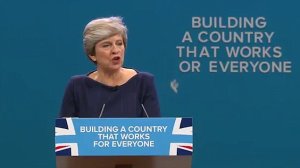
Theresa May - Building a country that works for everyone

Support Semi-Partisan Politics with a one-time or recurring donation:

Agree with this article? Violently disagree? Scroll down to leave a comment.

Follow Semi-Partisan Politics on TwitterFacebook and Medium.


Claudius Goes To Manchester

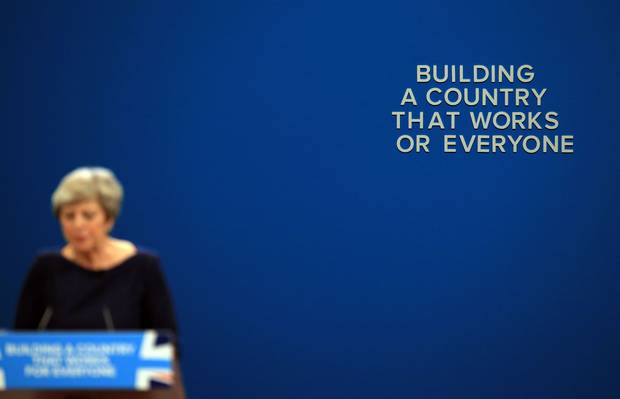
Theresa May conservative party conference speech - building a country that works for everyone - set malfunction - 2

God help us

Expectations and appearances matter in politics. That’s why the campaign teams of mediocre politicians try to lower expectations before any major upcoming event while exaggerating the strength and prospects of the opposition. This creates the illusion of forward momentum when their candidate triumphantly clears the very low bar set for them.

Perhaps the most extreme example of expectation-fiddling in recent history occurred in 2004 when George W. Bush’s strategist Michael Dowd tried to tamp down expectations for W’s performance in an upcoming presidential debate by declaring that his Democratic opponent, John Kerry, was “the best debater since Cicero“. Of course, anybody who had ever met John Kerry or heard him speak knew full well that the former Massachusetts senator is more Claudius than Cicero. The overblown comparison insulted people’s intelligence.

Well intentionally or not, Theresa May and the Conservative Party could hardly have set expectations for their own side any lower before they assembled in Manchester this week. The prime minister’s speech was deliberately trailed as a platform for her to tell her own restive cabinet members to stop undermining her and bickering with one another, hardly the sign of a confident, outward-looking party. Yet somehow the Tories still managed to underperform spectacularly. Claudius, not Cicero, turned up in Manchester.

In the end, George Osborne never got the chance to have Theresa May chopped up in bags in his freezer. The prime minister fell to bits – ideologically, physically and in terms of her dwindling authority – right on stage in front of everybody at the Manchester Central convention centre this afternoon.

One cannot be too uncharitable about a politician suffering a coughing fit, a set malfunction and a stage intruder (heads need to roll in the PM’s security detail), all in the same speech. But neither will a number of Conservatives be in any mood to make excuses for Theresa May after she declared war on the small government libertarian wing at last year’s conference, led the party to glorious failure in this year’s general election and then showed up in Manchester with a ragtag bag of Ed Miliband’s rejected policies as her master plan for fending off Jeremy Corbyn.

Some hopeful souls believe that the prime minister’s on-stage meltdown will somehow redound to the benefit of the Tories – either because Theresa May’s coughing fit conveniently masks the gaping lack of conservative vision and principle at the heart of the speech (her speechwriters actually plagiarised a line from The West Wing in a desperate attempt to add profundity), or because the British love of the plucky underdog will evoke feelings of pity. Because embarrassment and pity are just the emotions you want to send the party faithful away with and broadcast to the nation after conference.

James Kirkup takes this view:

What are the politics of the torment of Theresa May?  There are two outcomes, very different, and this is why, for once, a conference speech really could be decisive.

One is that people will look at their Prime Minister struggling and spluttering and see a woman soldiering on in the face of adversity, in spite of her own limitations and in the face of numerous obstacles in her path.  As I suggested a long time ago, back in June, there is a British fondness for the story of the frail and faulty hero who keeps fighting even when things are bleak.

The problem is that only the British have this strange affection for the plucky underdog, and Theresa May has to play the part of British prime minister to the whole world, not just to a pitying domestic audience. We may feel a pang of sympathy every time she literally falls to pieces in front of our eyes. Donald Trump, Vladimir Putin and Angela Merkel will not. They will eat her alive. And by extension our international rivals and enemies will eat all of us alive too, because a weak and nervous prime minister puts more than their own political career in jeopardy.

This is not – repeat, not – about a coughing fit, as some dutiful conservative commentators are now suggesting as they rush to the prime minister’s defence:

And to be fair to her, Theresa May dealt with what must have been a mortifying situation with quick wits, grace and humour. I would not wish that rolling series of calamities on anyone.

No, this is about every nervous television interview where Theresa May looks like a deer caught in the headlights. It’s about her cowardly failure to participate in a televised debate with Jeremy Corbyn and other party leaders in this year’s general election. It’s about her abysmal judgment in calling a general election in which she frittered away the Tory majority. It’s about her lack of leadership following the Grenfell Tower fire and recent terror attacks.

But more than all of this, it is about the yawning void where a positive, ambitious and genuinely conservative vision for Britain should sit. Margaret Thatcher also once suffered a coughing fit during a speech, but it didn’t threaten to end her premiership because unlike the present incumbent, Thatcher was a good prime minister with abundant vision, courage and clearly defined principles. By contrast, the emptiness of Theresa May’s conference speech matched the aimlessness of her premiership, and the farce of its delivery painfully reflected her administration’s “limitless capacity” for self-inflicted political wounds.

So what was actually in the speech from hell? Well, first came the contrition:

But we did not get the victory we wanted because our national campaign fell short. It was too scripted. Too presidential. And it allowed the Labour Party to paint us as the voice of continuity, when the public wanted to hear a message of change. I hold my hands up for that. I take responsibility. I led the campaign. And I am sorry.

Job done. And then, like several failed politicians have also tried to do before her, Theresa May attempted to make the phrase “the British Dream” a thing:

A little over forty years ago in a small village in Oxfordshire, I signed up to be a member of the Conservative Party. I did it because it was the party that had the ideas to build a better Britain.  It understood the hard work and discipline necessary to see them through.

And it had at its heart a simple promise that spoke to me, my values and my aspirations: that each new generation in our country should be able to build a better future. That each generation should live the British Dream. And that dream is what I believe in.

But what the General Election earlier this year showed is that, forty years later, for too many people in our country that dream feels distant, our party’s ability to deliver it is in question, and the British Dream that has inspired generations of Britons feels increasingly out of reach.

This doesn’t work. The American Dream is deeply routed in American culture and history, and it has a resonance which people living thousands of miles away understand. The British Dream sounds derivative, because it is. At best, it invites a second-class comparison with the United States and at worst it just sounds vague and woolly. The idea that each new generation should be more prosperous than the last is perfectly fine, but there is no need to coin an awkward phrase in order to capture something so self-evident.

Then the open boasts about stealing Labour policy begin:

And a National Living Wage – giving a pay rise to the lowest earners – introduced not by the Labour Party, but by us, the Conservative Party. So let us never allow the Left to pretend they have a monopoly on compassion. This is the good a Conservative Government can do – and we should never let anyone forget it.

The way to demonstrate that the Left does not have a monopoly on compassion is not to start stealing their policies. If anything, this only accentuates the link between leftism and compassion.

Soon it begins to veer toward the ridiculous:

Because at its core, it’s about sweeping away injustice – the barriers that mean for some the British Dream is increasingly out of reach. About saying what matters is not where you are from or who your parents are. The colour of your skin. Whether you’re a man or a woman, rich or poor. From the inner city or an affluent suburb. How far you go in life should depend on you and your hard work.

That is why I have always taken on vested interests when they are working against the interests of the people. Called out those who abuse their positions of power and given a voice to those who have been ignored or silenced for too long.     

And when people ask me why I put myself through it – the long hours, the pressure, the criticism and insults that inevitably go with the job – I tell them this: I do it to root out injustice and to give everyone in our country a voice. That’s why when I reflect on my time in politics, the things that make me proud are not the positions I have held, the world leaders I have met, the great global gatherings to which I have been, but knowing that I made a difference. That I helped those who couldn’t be heard.

Does this position come with tights and a cape? Rooting out injustice is all well and good (though again, this is one of those areas where Theresa May talks a big talk but walks a very small walk in terms of policy, which only invites more criticism from the Left) but a Conservative prime minister should be talking about aspiration and opportunity for all, not flirting with identity politics.

Then there were the downright statist aspirations, as we saw when Theresa May’s disjointed speech veered into a section about organ donation:

But our ability to help people who need transplants is limited by the number of organ donors that come forward. That is why last year 500 people died because a suitable organ was not available. And there are 6,500 on the transplant list today. So to address this challenge that affects all communities in our country, we will change that system. Shifting the balance of presumption in favour of organ donation. Working on behalf of the most vulnerable.

I desperately want to see more people join the organ donor register, and would be in favour of a significant and costly campaign to raise awareness and make taking action as easy as humanly possible. But switching from opt-in to opt-out is a dangerous symbolic concession to leftist statism, effectively declaring (as it does) that our bodies are ultimately the property of the state, to be disposed of following our deaths as it sees fit. Being able to “opt out” of this is not a safeguard – by even acknowledging the legitimacy of such a scheme we concede the state’s power over us, a huge concession which no Conservative prime minister should be making.

Then there were those sections which totally missed the point, as when Theresa May spoke about Grenfell Tower:

It’s why after seeing the unimaginable tragedy unfold at Grenfell Tower, I was determined that we should get to the truth. Because Grenfell should never have happened – and should never be allowed to happen again. So we must learn the lessons: understanding not just what went wrong but why the voice of the people of Grenfell had been ignored over so many years. That’s what the public inquiry will do. And where any individual or organisation is found to have acted negligently, justice must be done. That’s what I’m in this for.

And because in this – as in other disasters before it – bereaved and grieving families do not get the support they need, we will introduce an independent public advocate for major disasters. An advocate to act on behalf of bereaved families to support them at public inquests and inquiries. The strong independent voice that victims need. That’s what I’m in this for.

A public advocate to aid with emotional catharsis is all well and good, but the real failures exposed by Grenfell were those of building safety and particularly those of disaster response, where a medium-sized disaster in Britain’s capital city saw chaos for several days as central government, local government, emergency services, charities and volunteers struggled to work together under any kind of unified command.

The disaster response to Grenfell Tower should worry anybody with responsibility for civil contingencies, particularly knowing the kind of attacks which Islamist extremists would love to inflict upon us given half an opportunity. This is what the prime minister should have focused on, and how she should have demonstrated strong leadership.

Then there was the contradictory. A long-overdue defence of free markets which nobody believed given Theresa May’s past pronouncements and actions:

That idea of free and open markets, operating under the right rules and regulations, is precious to us. It’s the means by which we generate our prosperity as a nation, and improve the living standards of all our people. It has helped to cement Britain’s influence as a force for good in the world.

It has underpinned the rules-based international system that helped rebuild post-war Europe and the world beyond. It has ushered in the fall of the Berlin Wall; the end of communism, and the dark days of the Iron Curtain; securing the advance of freedom across Europe and across the world. It has inspired 70 years of prosperity, raising living standards for hundreds of millions of people right across the globe.

So don’t try and tell me that free markets are no longer fit for purpose. That somehow they’re holding people back. Don’t try and tell me that the innovations they have encouraged – the advances they have brought – the mobile phone, the internet, pioneering medical treatments, the ability to travel freely across the world – are worth nothing.

The free market – and the values of freedom, equality, rights, responsibilities, and the rule of law that lie at its heart – remains the greatest agent of collective human progress ever created. So let us win this argument for a new generation and defend free and open markets with all our might.  Because there has rarely been a time when the choice of futures for Britain is so stark. The difference between the parties so clear.

And indeed, a few paragraphs later Theresa May could be found eagerly plotting her next intervention in the energy market:

We will always take on monopolies and vested interests when they are holding people back. And one of the greatest examples in Britain today is the broken energy market.

Because the energy market punishes loyalty with higher prices. And the most loyal customers are often those with lower incomes: the elderly, people with lower qualifications and people who rent their homes. Those who for whatever reason, are unable to find the time to shop around. That’s why next week, this Government will publish a Draft Bill to put a price cap on energy bills. Meeting our manifesto promise.  And bringing an end to rip-off energy prices once and for all. 

The irony was not lost on everyone:

Fixing broken markets is absolutely the responsibility of a conservative government. For people to have faith in free markets they must operate fairly and transparently. But implementing Ed Miliband’s energy bill price cap is not fixing the market or coming up with an inventive solution to issues around monopolies and cartels, it is merely applying a leftist sticking plaster to a festering problem.

But what of education? A shallow and doomed attempt to pander to young voters by halting a planned rise in university tuition fees, and some vague waffle about vocational skills. After a bold declaration about re-tooling the British workforce for a more globalised, automated economy there were precisely two short, throwaway references to education in the entire speech (free schools and vocational training), neither of which deserve to be called policy ideas and neither of which were equal to the challenges we face. This is like promising to end world hunger and then failing to mention agriculture.

But the biggest letdown was on housing. Tory cowardice and lack of ambition on housing is killing conservatives with young voters who increasingly see little merit in capitalism when a deliberate policy of housing scarcity denies them the opportunity to build a stake in the system through the accumulation of their own capital.

If ever there was an area crying out for a bold new policy idea, it was housing. And as always, Theresa May did a fantastic job of describing the problem only to completely bottle it when it came to proposing a solution:

We’ve listened and we’ve learned. So this week, the Chancellor announced that we will help over 130,000 more families with the deposit they need to buy their own home by investing a further £10 billion in Help to Buy.

Oh goody, increasing demand even more while doing nothing concrete about supply. What could possibly go wrong?

More:

And today, I can announce that we will invest an additional £2 billion in affordable housing – taking the Government’s total affordable housing budget to almost £9 billion.

 We will encourage councils as well as housing associations to bid for this money and provide certainty over future rent levels. And in those parts of the country where the need is greatest, allow homes to be built for social rent, well below market level. Getting government back into the business of building houses. A new generation of council houses to help fix our broken housing market. So whether you’re trying to buy your own home, renting privately and looking for more security, or have been waiting for years on a council list, help is on the way.

So Theresa May wants to build thousands, millions more council houses. But what about the squeezed middle who don’t want or qualify for the state to be their landlord? What the hell good are new council houses for young people in nominally good professional jobs who find themselves priced out by relentless price increases and unreasonable deposit sums?

What about private housebuilding? What about actually relaxing planning regulations rather than just talking about it, and demanding that developers build upward not outward in our cities? In other words, what about doing something to address the supply of private housing stock rather than tinkering around the edges to further boost demand?

Theresa May’s motivation is very transparent here. The Tories clearly think that by focusing on building council and housing association properties there will be less negative impact on the older, homeowning Tory core vote. They calculated that so long as the availability of cheap homes for ownership does not dramatically increase – and they will ensure that it does not – they could avoid angering their base. But unfortunately, the net effect is to signal that this government only really cares about you if you are young and poor or old and rich. If you have the temerity to fall down the gap in the middle, Theresa May is effectively telling you to take a hike.

And more young people in this position are doing exactly that. My own social circle of young professional Londoners on decent salaries are now almost exclusively left-wing – not necessarily Corbynite, but certainly no friend of conservatism. Older acquaintances too. And who can be surprised? If you consistently screw people over throughout their formative years and early adulthood, you can’t expect them to suddenly start voting Tory when they get their first grey hair. This is the single biggest electoral issue facing the Tories, and they went into conference without a policy to match the scale of the challenge.

When Theresa May said in last year’s dubious conference speech that she wants to “set our party and our country on the path towards the new centre ground of British politics” we should have taken her at her word. Because thanks to being the only major party leader with any discernible principles, Jeremy Corbyn has successfully dragged the centre ground of British politics significantly to the left, and May is now eager to go scampering after him.

But if one takes the view that little else matters right now besides Brexit (a quite persuasive argument) then Pete North sums it up best:

So, Maybot’s speech. Would love to dive in like all the other political geeks but, seriously, none of it matters. Not a syllable. The only thing that matters is not screwing Brexit up. If she can’t get that right then everything folds – and however hard she may have tried to move closer to the centre, so long as Johnson, Rees-Mogg, Baker, Fox and chums are steering Brexit then the Tory party is defined by them; ignorant, crass, arrogant, jingoistic morons without a clue to share between them.

Ultimately, the speech was not the problem. The real problem is the leadership vacuum at the heart of 10 Downing Street, and a prime minister who either sees no reason to stand up to the Brexit Ultras in her own cabinet or is simply too weak to do so.

Theresa May’s off-brand, Lidl version of New Labour’s philosophy – her lame Ed Miliband tribute act – is ultimately survivable, and remains politically preferable to a Jeremy Corbyn government. But mess up Brexit and it wouldn’t much matter if Theresa May was an Ayn Rand-toting libertarian for all the good it would do when half the country is stockpiling food as global supply chains break down.

First, the Tories need to start getting Brexit right. Then they can formulate the kind of unapologetic conservative governing agenda which might actually make people want to vote Tory without holding their noses or keeping it a secret. And if there is time left after this, maybe then they can work on the old communication and leadership skills which are so lacking in this administration.

The rise of Jeremy Corbyn. The general election result. The haemorrhaging of the youth vote to Labour, with the middle-aged vote following close behind. The capture of the government by hard Brexit purists who would risk the entire endeavour in pursuit of their chimerical free trade fantasy. All of these things were preventable if only the Tories had shown some degree of backbone in government rather than apologising for their conservatism and making concession after concession to the Left.

In the words of Cicero, non enim parum cognosse, sed in parum cognito stulte et diu perseverasse turpe est – disgrace lies not in imperfect knowledge but in foolish and obstinate continuance in a state of imperfect knowledge.

Theresa May and the Tories had another brush with political death today. They have been shown repeatedly what happens when you stand before the electorate apologising for your principles, watering down your policies and letting the opposition dictate the political agenda. The Conservative peril has nothing to do with coughing fits or stage invaders, but rather with the rotten product they are trying to sell.

And if this latest calamity fails to shock the Tories out of their obstinate state of deliberately imperfect knowledge then I fear they will only learn their lesson via another long stint on the Opposition benches.
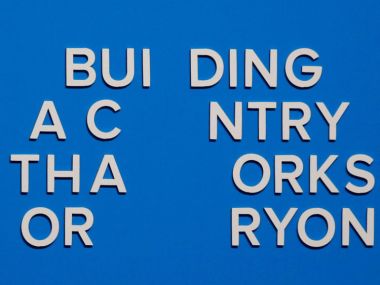
 

The wording on a slogan is changed after letters fell away from the backdrop immediately after Britain's Prime Minister Theresa May concluded her address to the Conservative Party conference in Manchester

Support Semi-Partisan Politics with a one-time or recurring donation:

Agree with this article? Violently disagree? Scroll down to leave a comment.

Follow Semi-Partisan Politics on TwitterFacebook and Medium.


Granting G4S And Serco The Power To Arrest Is Tory Madness

G4S HMP Oakwood

Granting private security firms the power to arrest people shows that this grasping, constitutionally illiterate Tory government does not understand what the state should and should not be outsourcing

The next step in the Tory Party’s slow suicide and abnegation of any remaining conservative principle: a leaked proposal to grant private security companies the power to arrest people, granting their employees the full suite of powers currently held by Civilian Enforcement Officers.

The Daily Mail reports on the latest thoughtless privatisation scheme to be cooked up by the government:

The proposals would allow, for the first time, staff from companies such as G4S to arrest members of the public for failing to pay fines imposed by the courts.

The plans would see HM Courts and Tribunals Service (HMCTS) privatising part of its compliance and enforcement operations in a deal worth £290million.

The measures were slipped out as a tender by the Ministry of Justice during the summer.

Under the proposals, the Government could transfer all services carried out by Civilian Enforcement Officers, who are civil servants employed by HMCTS, to the private sector.

This would include the arrest and detention of individuals who fail to pay off their debts and haul[ing] them to court.

The courts can already allow authorised agencies, including private firms, to send bailiffs to a person’s home to seize possessions to encourage them to pay debts.

But this would potentially be a sweeping expansion of the powers – covering so-called warrants of arrest, which are issued by JPs to compel an individual to attend court.

A separate justice-related proposal bubbled from the Left this week, published in the Daily Mirror, demanding the unification and centralisation all of the police forces in England, because that same creepy exercise in big government authoritarianism worked such wonders in Scotland under the SNP. But now the Tories have gone one better.

First re-opening the divisive fox hunting debate for no good reason on the eve of a general election, and now this. It’s like the Tories are actually trying to self-destruct by living up to every hysterical stereotype about conservatives ever levelled by the Left.

This is a Tory party that claims to be so concerned about fiscal responsibility that it is willing to outsource the arrest and detention of British citizens to poorly managed private companies with appalling records and an ability to screw up and commit fraud even under close oversight, all to save a paltry few million pounds, while shamefully failing to tackle the real drivers of the deficit such as welfare, healthcare and pensions.

Depriving somebody of their liberty – even only briefly, as a means to compel their attendance at court – is one of the most sacred and serious powers that we the people invest in the state. Arresting or imprisoning a citizen, depriving them of their liberty or (in extremis) compelling their draft into the armed forces are powers that could and should never be vested in private hands, outside direct control of local or national government which is directly accountable to the people. No exceptions, no excuses. This is the red line.

And it is a red line which David Lidington and the Ministry of Justice have just nonchalantly stepped on, whistling, hands in pockets, as though the Tories did not already have grave reputational issues and stand on the brink of giving power to hard Left Corbynite socialism.

The arrogance and incompetence that would motivate the Tories to even whisper this proposal are quite simply off the charts. It’s as though Theresa May’s government is effectively shouting to its critics “Fascist? Call us fascist, will ye? I’ll give ye some real fascism to worry about!”

If this proposal goes ahead, the Tory party and I are through. Not an extension of the current temporary breakup, but a permanent schism. I will work to get it cast from power and thrown into the electoral wilderness forever, and agitate for a new right-wing party take its place, one which is not stuffed full of grasping proto-fascists with pound signs in their eyes, one actually worthy of bearing the name “conservative”.


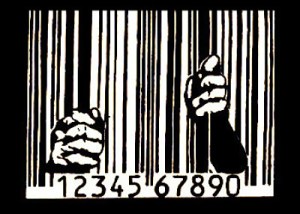
Private prison barcode

Support Semi-Partisan Politics with a one-time or recurring donation:

Agree with this article? Violently disagree? Scroll down to leave a comment.

Follow Semi-Partisan Politics on TwitterFacebook and Medium.

The False Promise Of Conservative Political YouTubers

Ben Shapiro Show - Daily Wire - Birch Gold Group commercial - political YouTube - podcast

For many young conservatives, political YouTube offers a respite from left-wing dominance of popular culture, universities, the mainstream media and other social networks. But while YouTube’s brash new right-wing stars can be beguiling to watch, they do little to advance conservatism as an intellectual movement – and sometimes actively set it back

Young, brash, right-wing political YouTubers may unwittingly deliver the final coup de grâce to conservatism as an intellectual movement, even as they rack up millions of followers and achieve all the outward metrics of success.

But then I would say that, wouldn’t I? For some foolish reason I work primarily on the already anachronistic medium of the humble blog, tapping out my verbose screeds into WordPress which then get read and shared by that tiny slice of humanity who can wade through eight paragraphs on the meaning of citizenship in the Age of Brexit without wanting to run into oncoming traffic. Given recent advances in technology and journalism, bloggers like me are effectively still marvelling at the Edison light bulb while everybody else is busy projecting holograms or firing lasers at each other.

Ironically, despite being somewhat frustrated by my own lack of online reach, I find myself increasingly impatient when forced through necessity to read other people’s carefully and well-written words, be it those of a fellow blogger, journalist or author. Reading requires concentration and an engaged brain, and who has time for that?

Every evening after the day job is done and I have commuted home to begin work on my perennially unrewarding side hustle (this blog), I am faced with a choice: do I expend what little mental energy I have left reading and thinking deeply about a complex idea, researching and refining my thoughts until I have something compelling and unique to share with my readers, or do I take the path of least resistance – flicking over to YouTube and watching a parade of talking heads ranting about this or that development in the culture wars, finding something suitably outrageous to get worked up about and then hitting “publish” on an identikit, stream-of-consciousness rant in response?

And here’s my guilty secret: I choose the path of least resistance easily over half the time. Thinking is hard. So is challenging long-held assumptions and personal beliefs. But nodding along while a talking head on YouTube affirms one’s existing opinions is easy, and addictively cathartic. Yet anybody can do this; it is the millennial or Generation Z equivalent of watching Fox and Friends. At this point I can crank out one of my old-style “I agree with Brendan O’Neill” or “look what crazy campus SJWs did” response pieces with my eyes closed. Just crank my handle, insert the topic and required word count and 45 minutes later you’ll have a fully formed blog post. Sure it won’t be original or really add anything to the national political debate, but still, it’ll be there, taking up room in cyberspace.

Look at some of the biggest political YouTube or cable TV stars (they tend to be American or at least to focus primarily on American politics). Ben Shapiro is probably the best of the conservative personalities, certainly far more serious than conspiracy theorists like Alex Jones or culture warriors like Paul Joseph Watson or the execrable Milo Yiannopoulos. The less said about Tomi LahrenLauren Southern or Mike Cernovich the better. Various people have suggested Stefan Molyneux as a supposedly more serious alternative and the philosopher/podcaster does have his moments. But even this seems to be stretching the definition of “serious” somewhat.

Then you have political comedians like Steven Crowder who at least is funny, one of conservatism’s only solid answers to the leftist monopolisation of comedy – and Lord knows that we need a respite from the unbearable sanctimony of John Oliver, Samantha Bee, poor Jon Stewart replacement Trevor Noah and the pitiful Mash Report in Britain (Bill Maher is one of the few consistently funny and insightful left-wing political comedians). Sargon of Akkad can be quite funny when he gets riled up about leftist excess. And while they generally lag behind conservatives on YouTube, on the Left you have shows like The Young Turks (a growing horde of screechy social justice warriors and Bernie Sanders devotees) and a smattering of others.

(Dave Rubin also deserves an honourable mention as somebody who tackles controversial topics and interviews partisan commentators from both sides of the ideological debate in The Rubin Report).

Conservatives seem to dominate political YouTube, probably for the same reason that an older generation of right-wingers once took refuge in American talk radio – because their views were increasingly misrepresented, slandered, marginalised or ignored by the mainstream media. And today, far away from the reach – and the interest – of those Washington and Westminster journalists marinated in the same groupthink as the politicians they supposedly hold to account, conservative YouTube flourishes:

YouTube has thus provided a useful pressure release valve for the expression of a range of conservative thought, though even on this platform conservatives are now under threat, with demonetisation attacks threatening the livelihoods of content creators whose views fall outside the prevailing pseudo-liberal orthodoxy. But generally speaking, while Twitter, Facebook and Tumblr can be seethingly hostile to right-wing ideas, YouTube has allowed a large number of frustrated conservative and libertarian-leaning people to view and engage with a small number of brash, unapologetic conservative personalities.

But as conservatives disengage from regular media outlets, ceding more ground to the forces of the Left, we do ourselves a disservice. A bit of escapism into the ideological bubble isn’t always a bad thing, but it does become problematic when one spends too much time plugged into a partisan medium which can be both shrill and superficial.

As American conservatives flocked to talk radio and stopped consuming mainstream or supposedly objective news, their worldview became progressively more alarmist and conspiratorial. That’s why so many American conservatives still believe that Barack Obama is a secret Muslim, while opportunistic companies make a fortune selling gold coins, water filters and survival gear for people who have been slowly convinced that the apocalypse is just round the corner. With no centrists or left-wingers to call BS on their more outrageous claims, conservative media increasingly resembles an arms race to provide the most provocative and alarmist commentary in the hunt for viewers and listeners.

We on the Right correctly rail against universities for becoming little more than temples of social justice and identity politics orthodoxy, where dissenting opinion is relentlessly eradicated through re-education programs, trigger warnings and safe spaces. But we are no better when we retreat to YouTube instead of engaging with the world in all of its fallen, identity politics-soaked left-wingery. Our own outlook is in danger of becoming equally insular when we uncritically clap along as part of Ben Shapiro’s Amen Corner, preferring the catharsis of having our opinions confirmed to the rigour and challenge of debate.

It’s not that political YouTube videos are bad per se, it’s that they tend to be more partisan, superficial and sensationalist than print media and even television (though the gap with TV is lesser). A book can offer footnotes. An essay or feature article, knowing that it has its reader’s attention, can devote some space for context and nuance. A YouTube video, by contrast, has about five seconds to grab your focus before you click away, and must work hard to maintain your attention right through to the end. This inevitably leads to a certain reliance on zingers and soundbites which is actually not dissimilar to the grasping, disjointed way in which many media-trained politicians now speak.

The problem is that for political YouTubers (and other commentators whose careers depend on clips of their media performances being shared widely on that platform) success is measured in clicks, views and the number of times people share their videos accompanied by captions like “Bob McConservative just DESTROYED this stupid liberal on abortion” or “Dumb SJW accuses Righty McRightwing of being a fascist, instantly regrets it”.

For the viewer there may be a short-term emotional payoff in watching “Social Justice Warriors Get Owned In Epic Rant By Steven Crowder” or “Douglas Murray Schools A Muslim Commentator On Free Speech“, but the intellectual rewards of grappling with those same issues and ideas at a deeper level, usually in essay or book form, are more elusive and consequently less sought-after. It is human instinct to prefer the instant gratification of a cable TV or YouTube screaming match to the deferred pleasure of quiet, patient study, and YouTube was designed to deal up this addictive instant gratification, one video clip after another.

But this dynamic can be bad for the right-wing YouTubers as well as their fans. Those right-wing personalities who work increasingly or exclusively on YouTube as opposed to other more traditional (particularly written) media sometimes tend to lose their intellectual edge and become unable to sustain a debate at a more detailed, complex level of knowledge. In a recent column, Andrew Sullivan notes how Ben Shapiro came a bit unstuck during the Q&A section of his recent much-hyped speech at Berkeley University:

He was effectively pwned on at least two questions, climate change and abortion. One student asked whether a revenue-neutral carbon tax wouldn’t be both conservative in that it doesn’t require much of a bureaucracy, and prudent, given the possibility that climate change could be disastrous — and why not prepare for the worst? Shapiro said he’d never considered such an idea and needed to look at it further. Weak; lame. The idea has been banging around forever. And Shapiro can’t say whether he’s for it or not?

Then he was trounced by a liberal student on the question of why women who have abortions shouldn’t be prosecuted. If Shapiro believes, as he does, they have killed a human being, how could they not be? He dodged at first simply saying he’d prosecute abortionists. When pressed, he argued that many women have abortions without knowing that they are terminating a human life (they’ve been indoctrinated into believing a fetus is the equivalent of a polyp), and so you couldn’t prosecute them for murder or manslaughter because they don’t have the specific intent — the mens rea — to kill. But what, the student responded, about those women who absolutely do know what they are doing and still go through with it? Why not second-degree murder, or accessory to manslaughter, or some other charge. In any other circumstance, someone who plays an essential part in a killing would absolutely have to be charged, right? Shapiro retreated to an incoherent position that even though such women have committed a serious crime, in his view, no one wants to prosecute women for such a thing. But that wasn’t the question. The question was whether he should logically support prosecution. And of course he should.

Now, I’m not saying for a moment that I could or would have handled these questions any better. But you wouldn’t even know that the great Ben Shapiro had been (at best) fought to a draw on these issues judging by the triumphalist YouTube excerpts and subsequent online write-ups declaring that Shapiro had effortlessly dispatched with every stupid leftist opponent in the debate hall:

Shapiro undoubtedly has a bright and incredibly quick mind, but one cannot help but think that his abilities would be put to better use – and be at less risk of eventual atrophy – were he making some smart policy for the Republicans (Lord knows they need it) or writing for a publication which allows more depth, rather than preaching to the choir at his creation The Daily Wire. Even if you allow that Shapiro’s eloquence helps conservatism by bringing more people into the movement, which it probably does, these people are bound to be disappointed when the Republican Party and its diminished intellectual blood bank fail to generate policies which solve real problems in favour of striking cosmetic poses against former president Barack Obama.

There are others in jeopardy, too. Christopher Hitchens once said in an interview that Tucker Carlson (of all people) was a writer that he greatly admired, and that Carlson should not quit the field of writing in order to pursue his then-nascent television career. Now the Fox News host can be found taking easy pot-shots at social justice warriors in his prime-time nightly TV slot, and turning a calculated blind eye to the scandals and calamities emanating from the Trump White House.

Then there are the big beasts of yesteryear trying to reinvent themselves as viral video sensations. Ten years ago, Dinesh D’Souza could be found holding his own against Christopher Hitchens in a series of debates about religion, atheism and the existence of God. Today he makes hysterical conspiracy movies and rants on Twitter about how the Democratic Party is the true heir to Nazi Germany. D’Souza now chases the “Dinesh D’Souza DESTROYS ignorant liberal on gun rights” affirmation and resultant web clicks as his key performance metric, and his output has suffered as a result.

Carlson and D’Souza get away with their shtick because their primary audience of Fox News viewers and secondary audience of conservative YouTube subscribers give them a free pass for making intellectual shortcuts and uncritically lap up everything they say. Were they blogging or writing a regular newspaper column, however, they would find it somewhat harder to stand by some of their least defensible positions, and be forced to refine or discard the most controversial ones. But as video personas they are protected from serious rebuttals – by the time an opponent has researched, written and published a response to one of their videos, the YouTube star has already moved on to three other topics. No retractions (let alone apologies) are necessary or forthcoming when they are proven to have made errors or told falsehoods.

But this is precisely why D’Souza, Carlson & Co no longer operate primarily in print or written media – it has become thankless work, toiling away in a more rigorous medium and subject to higher standards and much closer scrutiny, when the fame, acknowledgement and most of the cash increasingly goes to those people producing (often far more superficial and reactive) video commentary.

Yet were it not for the beat reporters and public intellectuals who work primarily in print, many of the YouTube stars would be starved of half their inspiration and content. Like the megastar football strikers who are dependent on their midfielders to consistently feed them with goal-scoring opportunities, many of the fiesty conservative YouTubers would soon fall silent or become even more repetitious were it not for the journalists and thinkers providing them with a fresh source of rhetorical zingers.

None of this is to say that highbrow print media is necessarily better. In fact, often quite the contrary – the veneer of respectability abused by a charlatan working in the prestige print media can be infinitely more harmful than the ranting of the most popular YouTuber. Just witness how a concerted effort by the print media has normalised the term “undocumented immigrant” over “illegal immigrant”, deliberately downplaying the lawbreaking aspect.

But at least the mere act of writing for the New York Times or some other outlet, as degraded as many of them have become, forces one to go through the motions of laying out a coherent argument, which can then be publicly critiqued and picked apart by others. A five-minute YouTube video implying that Hillary Clinton has Parkinson’s disease, on the other hand, is harder to call out and refute even when it is unsupported by fact – and the people who watch the incendiary video are increasingly unlikely to also see the print rebuttal, and vice versa. The disaggregation of the media market, beneficial in many other ways, unfortunately means that we increasingly talk past one another and operate from entirely different sets of “facts”.

Social media is fast. This makes it great for hot takes and lively debates, but much less suited to the more ruminative consideration of ideology and policy. But is the allure of becoming a YouTube sensation (often as a launchpad to a career in cable news punditry) distracting people with the talent to make a more lasting intellectual contribution to the conservative movement? I would argue that yes, it is.

Many YouTubers are probably good for nothing more than ranting into their webcams every night, but some – again, I think of Ben Shapiro – could and probably should be doing something better with their time. Shapiro has the #1 rated conservative podcast in America (and hence the world). And that’s great. But somebody with his IQ and intellectual pedigree should be more than an Inquisitor for Socialist Wrongthink – they should be helping to formulate the conservative policies which might one day make the Republican Party worth voting for again.

I get the appeal of being a YouTube sensation though, just as I understand from personal experience the allure of watching these people perform rather than, say, cracking open a difficult book at the end of the day and engaging one’s brain. After all, it is tremendously cathartic to watch people you disagree with – whose fundamental worldview is deeply at odds with your own, and whom you find personally irritating – being rhetorically smacked down night after night, generally with the same unchanging set of workhorse conservative arguments.

But we should be wary. If leftists are allowed to complete their occupation of universities, popular culture and the prestige media while we skulk around on YouTube, their worldview will prevail. YouTube can remain our “safe space”, if we must have such a thing, but we must constantly be operating outside our comfort zone if we want to translate our ideas into policies and our policies into outcomes. Representing the YouTube constituency is not enough – we need an active presence in the places where decisions are actually made.

Right now this is sorely lacking. That a Republican congressional majority in America and a (theoretical) Conservative parliamentary majority in Britain have resulted in almost zero good conservative policies being implemented in either country only proves that ranting about the dangers of leftism (Sanders or Clinton in America, Jeremy Corbyn in Britain) is not the same as coming up with a compelling conservative vision with logical policy offshoots.

So how to effect this conservative renewal? The best thing I’ve done all year is to temporarily unplug from the internet, restrict my use of social media and return to tried and tested ways of learning and thinking – by reading books.

On vacation in Greece last week I actually had time to relax, unwind and read a number of books deeply and critically, rather than scanning them urgently, superficially and with the overriding need to produce a hot take, extract an argument or otherwise take a public position on their content. Instead, I lingered over each book and marked them up with comments and questions to be explored at a later date, and while there will be no immediate payoff for having done so, the gradual increase in the baseline of my knowledge should (hopefully) manifest in the overall quality and empathy of my writing. Recognising my tendency to choose saying what I think over thinking about what I think, it was important for me to flip that around for awhile and spend some time recharging the intellectual batteries.

But that’s just me, as a humble blogger. Those with actual power and influence will need to do more, and yesterday I blogged about one such attempt at conservative renewal in Britain. But while I am willing to be proven wrong, I do not believe that this renewal will come from the depths of YouTube.

Donald Trump is walking proof of what happens when someone is swept to the White House not on the back of a coherent conservative policy platform or a particularly inspiring vision, but by angry rants on YouTube and lurid six-way screaming matches on cable news. Yes, this fractious power base can deliver a majority (in the electoral college, at least) but once in power and tasked with being for something rather than against a list of real and imagined foes, nothing gets done.

For how long will Donald Trump boast about having put Neil Gorsuch on the Supreme Court, as though he himself trawled through endless lists of potential jurists, scouring their opinions and dissents in a personal quest to find the quintessential constitutional originalist needed by America? At this rate, Trump will be dining out on that solitary achievement until the end of his term of office – because no further accomplishments are on the horizon right now, that’s for sure. “Build the wall” worked great on YouTube and Fox News, where a policy consisting of three words (seven if you include “and make Mexico pay”) could not be easily picked apart and proved both pointless and unfeasible. But in Washington D.C., where things have to be paid for, policies justified and egos stroked, having the enthusiastic support of Milo Yiannopoulos doesn’t really count for much.

So by all means indulge in a little YouTube time when the mood strikes. It would be hypocritical of me to say otherwise since it can be darn good fun, and I have no intention of quitting altogether. But many of us, myself included, could probably do with dialling it back a notch – or at least seeking out the better quality lectures and debates freely available on that platform. The second-hand opinions of political vloggers are generally (though by no means always) worth less than the first-hand opinions of serious authors, and even a good book cannot compete with doing one’s own primary research.

But since this is the real world and none of us can become experts in everything, those of us with a public audience and the desire to help rather than hinder the conservative movement should at least ensure that we draw our knowledge from a healthier, more balanced information ecosystem.

So there you go: Sam Hooper TOTALLY DESTROYS political YouTubers, and it only took me 3,669 words.

Paul Joseph Watson - YouTube - InfoWars

Support Semi-Partisan Politics with a one-time or recurring donation:

Agree with this article? Violently disagree? Scroll down to leave a comment.

Follow Semi-Partisan Politics on TwitterFacebook and Medium.