The American Right’s Guilty Conscience

Jeb Bush - Twitter - Gun - America

The more self-aware parts of the American conservative movement are coming to realise their part in creating the monster that is Donald Trump. Good. But with Trump’s takeover of the Republican Party complete, the genie cannot be put back in the bottle.

Slowly but surely, realisation is dawning among parts of the American Right that they might, just might, be partly responsible for feeding the national anger and distrust of elites which has given us Donald Trump, Presidential Nominee Edition.

Politico Magazine has a great extended feature on well-known Wisconsin conservative talk radio host Charlie Sykes, in which the respected political figure essentially admits that Donald Trump’s takeover of the GOP was only possible thanks to the work of the relentless Republican Party media outrage generation machine.

From the article:

Charlie Sykes’ conscience is nagging him.

Since last year, the most influential political talk show host in Wisconsin has found out just how hard it is to be a #NeverTrump conservative on right-wing radio. Ever since Sykes began denouncing Donald Trump on the air—which he does just about every time he talks about the presidential election—he’s strained his relationships with the listeners of his daily radio show.

Sykes’ many arguments with listeners over Donald Trump’s serial outrages have exposed in much of his audience a vein of thinking—racist, anti-constitutional, maybe even fascistic—that has shaken Sykes. It has left him questioning whether he and his colleagues in the conservative media played a role in paving the way for Trump’s surprising and unprecedented rise.

Hats off to Sykes for actually challenging his listeners and exhorting them not to swallow uncritically any morsel of Clinton-related scandal from the fringe web while rejecting any attempt at objectivity or fact-checking. Many a lesser talk radio host or other media personality (cough, Sean Hannity) have seen which way the Donald Trump hurricane is blowing and meekly fallen in line with his campaign, never subjecting Trump to criticism even when it is richly deserved.

The feature continues, describing a caller to Sykes’ radio show who wanted to deport Muslim American citizens, in flagrant violation of the Constitution which conservatives claim to hold so dear:

“Were these people that we actually thought were our allies?” he asks.

Sykes remains confident that Trump will lose badly in November, and he is equally fearful that Trump will drag longtime Republicans, like Senator Ron Johnson of Wisconsin, down with him. This has Sykes thinking about the long-term future of the party and what might have precipitated its looming collapse. He wonders: Did “the faux outrage machine” of Breitbart.com and other right-wing outlets foment the noxious opinions that Trump has stoked so effectively on the trail?

“When I would deny that there was a significant racist component in some of the politics on our side, it was because the people I hung out with were certainly not,” Sykes says. “When suddenly, this rock is turned over, there is this—‘Oh shit, did I not see that?’

And then:

He wants to figure out why, in his opinion, things went so wrong for the conservative movement. One problem, he thinks, is his fellow talk-radio hosts.

“Talk radio made itself relevant by beating up on other Republicans, vilifying other Republicans,” he says. “It fed this faux outrage machine that raised expectations unrealistically”—for instance, asking why Congress didn’t repeal Obamacare, though Obama’s veto pen made it mathematically impossible. Later, he would tell Business Insider’s Oliver Darcy that talk radio’s attack on mainstream-media bias has backfired, because its listeners now dismiss legitimate media fact-checking as untrustworthy.

Sykes warns his listeners to step outside the “alternative reality bubble” of Breitbart.com and other right-wing websites. Part of his audience thinks he’s sold out, he complains, because he won’t parrot dubious claims they’ve read on such sites. “A lot of the conservative talk shows around the country embrace almost whatever comes over the transom,” he says.

Slow hand clap.

This blog has been waiting for some time now for the penny to drop, for thinking American conservatives to realise that the hysterical and unseemly way in which the Republican Party carried out its opposition to the Obama agenda might possibly have some unintended negative consequences.

Because it turns out that treating every single centre-leftish or centrist policy to emanate from the Obama White House as though it were an existential threat to the republic and relentlessly exploiting wedge social issues and persisting with the same failed policies which deliver great benefits to the wealthy, educated elites while leaving the struggling middle class high and dry works really well, right up until the moment where it suddenly stops working at all.

Here’s what that approach actually is good for:

  1. Making ordinary decent citizens with limited political engagement very afraid, often unnecessarily, and
  2. Getting them to donate vast amounts of money to assorted conservative / Tea Party political organisations which exist primarily to enrich those who are part of the Ponzi scheme, with very little of the money actually going on to reach conservative candidates or campaigns

The American right-wing outrage machine has been absolutely magnificent at making people angry and then monetising the hell out of that anger. But it has been lousy at speaking to the issues and problems which weigh on the minds of America’s squeezed middle.

Too often, conservative leaders have been happy to nod along while right wing noisemakers prophesied the abolition of the Second Amendment or the sudden imposition of “socialism”, because it worked. Because it reliably delivered scores of votes to Republican candidates on election day. Right up until the moment it stopped working because a new populist candidate emerged who promised action, not just talk, to defeat these inflated or imagined threats.

Donald Trump isn’t some bizarre and unprecedented phenomenon to afflict the Republican Party. These are the people who earnestly and with a straight face asked Americans to make Sarah Palin the Vice President back in 2008. Their flirtation with ignorance and craziness has a long and dismal history, and only now is bearing full fruit in the form of Trump.

It’s great that some of the more self-aware leaders of the American conservative movement are now quietly realising, with shame, the part which they either intentionally or unwittingly played in unleashing Donald Trump on America. For while Trump’s supporters certainly include more than their fair share of racists, xenophobes and other assorted imbeciles, the vast majority are good and decent people – primarily conservatives who have been consistently let down by a Republican Party which pretended to talk their language but which never governed in their interests.

Unfortunately Trumpism cannot be easily put back in the bottle now it has been released. First, it must be defeated in November, however unappealing the thought of giving the Washington establishment four more years in charge may be. And then the rebuilding of American conservatism must start – a difficult feat since so many of its most intelligent and respected figures have sullied themselves by bending the knee to Donald Trump (a fact which the Politico article discusses at length).

Great electoral rewards await the first party to grapple with the core question of how to reconcile the imperatives of globalisation with the need to equip citizens with the skills and services needed to prosper in a modern economy which can no longer promise a high standard of living for mass unskilled labour. Republicans have the harder job here – the conservative emphasis on self-sufficiency and a small state requires inventive solutions, whereas the Democrats can wave their hands and simply promise a new government program. It’s a difficult issue for conservatives, one which this blog is still struggling to work through.

This is the challenge now facing American conservatives. The culture wars are not insignificant, and there are battles to be fought – some of which this blog sympathises with (political correctness, free speech, religious freedom) and others less so. But no longer will it be enough for Republican politicians to stoke anger about these issues while failing to meaningfully tackle them, or to ignore the economic interests of the American working and lower middle class – doing so will only open the door to another Trump-style populist insurgency.

From this Politico Magazine article, it seems as though at least one prominent conservative talk radio host is starting to get it. Hopefully others will follow.

But the renewal of American conservatism cannot begin yet – first we must hit rock bottom.

 

Trump Pence 2016 - Make America Great Again

Support Semi-Partisan Politics with a one-time or recurring donation:

Agree with this article? Violently disagree? Scroll down to leave a comment.

Follow Semi-Partisan Politics on TwitterFacebook and Medium.

Music For The Day

Богородице Дѣво, Bogoroditse Devo, “Rejoice, O Virgin” from Rachmaninoff’s Vespers (All-Night Vigil).

Sung by the Choir of King’s College, Cambridge, under the direction of Stephen Cleobury.

Bogoroditse Devo

Rachmaninov Vespers - Stephen Cleobury - Choir of Kings College Cambridge

Follow Semi-Partisan Politics on TwitterFacebook and Medium.

The Inhabitants Of UKIP Country Are Our Friends And Compatriots, Not Members Of A Racist Freak Show

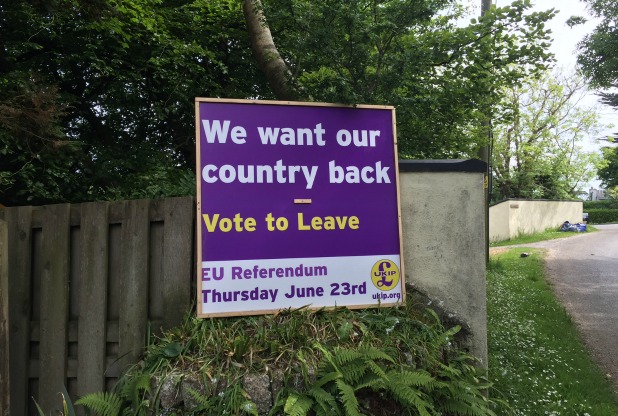
UKIP poster - yard sign - EU referendum

How is the fact that most Ukippers and Brexiteers are ordinary, decent people and not rabid skinhead racists such surprising news that it merits an article in The Spectator?

The metro-left have their fixed views of Brexiteers and Ukippers – basically ghastly, uncultured people with a blinkered, nationalistic worldview bordering on overt racism. Generally they hold these views not because of any personal experience meeting and talking with Brexit supporters, but rather because this caricature draws a neat contrast with the virtuous traits of openness, tolerance and progressivism that the Left love to claim as their own. This much is all well known.

But most of these views are formed at a great distance removed from the actual Brexiteers or Ukippers being judged. When Channel 4 filmmakers produce a dystopian documentary about what Britain would be like under a UKIP government led by Nigel Farage it is achingly obvious that nobody involved in the feature knows or has ever taken the time to get to know the type of people they so readily pastiche for the lazy consumption of their fellow metro-leftists.

But once in awhile someone from the metro-left bubble accidentally stumbles out of their hermetically sealed ideological environment, finding themselves deep in the heart of Brexit supporting suburbia, or – heaven forfend – UKIP country.

And when it turns out that the primitive, simple UKIP natives turn out to be perfectly decent people who just happen to hold different views on a few political issues, it is now apparently such shocking and revelatory news that it merits a whole article in The Spectator.

From standup comedian Ariane Sherine’s wide-eyed report on her accidental foray into UKIP land:

Most people would say UKIP lends itself to comedy better than Denis Healey’s eyebrows lent themselves to tweezers – but not the people of Walton-on-the-Naze, as they live in the party’s only constituency. I’m a stand-up comic, and I was booked to play the town’s first comedy night this month. I don’t know if the lovely promoter realised I was Asian when he booked me; for my part, I didn’t realise Douglas Carswell was Walton’s MP, and only discovered while Googling the town on the way to the gig, when it was too late to turn back.

When I arrived in Walton-on-the-Naze’s large ballroom with its cornicing and chandeliers (‘It looks like the inside of a prostitute’s wedding cake’ remarked one of the other comics), I was perturbed to see more skinheads than at your average EDL rally. Audiences in London are diverse both in terms of race and class; Walton’s audience was not. The first act quipped, ‘I know you’re all a bunch of racists’; whether he was joking or not wasn’t clear.

I was terrified before I went on. I generally sing a love song to Jeremy Corbyn; I thought ‘Oh no, they’re UKIP supporters – they’re going to hate it.’ I also sing about the time a beauty therapist waxed my bikini line into a Hitler moustache. Ridiculously, I thought ‘Maybe some of them are neo-Nazis and will object to this, too!’ Before our sets, the other new comic and I shared frightened glances. ‘Good luck,’ he said. ‘Thanks – I’ll need it,’ I replied. ‘Hopefully they’ll think I’ve just got a suntan and am not Asian at all?’. I was glad that my six foot six inch male friend had accompanied me to the gig.

Because we all know the seething hatred of Asian people in the heart of UKIP supporters and people who voted for Brexit? The condescension here is absolutely off the charts – first assuming that the people of Walton on the Naze are so stupid that Sherine’s clever little love ditty to Jeremy Corbyn might sail over their sloped foreheads, and second that the audience might start jumping around and flinging faeces when they realise that the person on stage is of Asian heritage.

Is there some little-reported history of Asian comics going missing after venturing too deep into small-town Essex that I am unaware of? Has Douglas Carswell quietly imported the defunct Jim Crow laws from the American South, entrenching racial segregation and discrimination in a small corner of eastern England?

This kind of foreboding and hysteria is only possible when one feels that the community in question are somehow fundamentally different to us, that they are “other”. But Ariane Sherine and her audience were both British, both English too, in fact. The idea of being afraid of one’s own countrymen because they happened to elect a mild-mannered MP like Douglas Carswell is absolutely absurd.

Sherine’s odyssey continues:

To my surprise and relief, they laughed, and went on to laugh throughout my set: at Corbyn, at the Hitler moustache, at my rude song about never having another boyfriend. They were friendly and good-natured. I tested the waters a bit, in case they hadn’t noticed my skin colour: ‘My little girl’s white and I’m brown, so I call her my secret Asian.’ They didn’t bat an eyelid. When I came off stage, the promoter’s wife said ‘They loved you! They came to life when you came on.’

In some ways, the crowd lived up to stereotypes: when the other comedian mentioned the referendum, he got heckled with ‘Brexit – out out out!’ And some of the crowd started to heckle the headline act when he maligned their hometown, with one man asking menacingly, ‘Are you taking the piss out of Walton-on-the-Naze?’ But whatever else the audience were, they weren’t racist. In fact, it occurred to me as we drove home, I was the prejudiced one, the one full of preconceived ideas about what other people were going to be like before getting to know them.

Slow hand clap.

Finally, the realisation dawns that perhaps it is the trendy lefty Londoner who holds prejudiced views – about her own countrymen, no less – rather than the much maligned white working class community which she was so alarmed to visit.

One is torn how to respond to this article. Obviously it is a very good thing that Ariane Sherine came to see the error of her ways in having prejudged Ukippers and people from Walton-on-the-Naze. One only wishes that Sherine’s epiphany could be shared with every other young, creative-industry-working, Guardian-reading, Corbyn-supporting hipster living in London and the other big cities – and that the good people living in pro-UKIP or pro-Brexit communities might eventually start to feel more understood and respected as a consequence.

But the fact that a comedian’s epiphany that people from a UKIP-voting town are not knuckle-dragging racists is such revelatory news that it merits a prominent article in The Spectator is depressing beyond belief. How is it possibly news that people in Walton-on-the-Naze didn’t racially abuse an Asian comedian and heckle her off the stage?

When so many of our fellow citizens hold other groups – the white working class, Ukippers, whoever – in such open disdain, even fearing them, then we are in trouble as a country. And when established media outlets like The Spectator feel the need to publish One Woman’s Voyage of Discovery Into UKIP Land with a straight face, just to make a point, then it is clear that our media has a long way to go in terms of understanding the country they cover.

This disconnect is why Britain voted for Brexit against the command and expectation of the country’s elite in the first place. Hasn’t the time come to give Britain’s silent, Brexit-supporting majority a little bit more respect?


UKIP Caravan

Top Image: Plymouth Herald

Support Semi-Partisan Politics with a one-time or recurring donation:

Agree with this article? Violently disagree? Scroll down to leave a comment.

Follow Semi-Partisan Politics on TwitterFacebook and Medium.

Owen Jones Has An Epiphany, Figures Out The Root Of Jeremy Corbyn’s Appeal

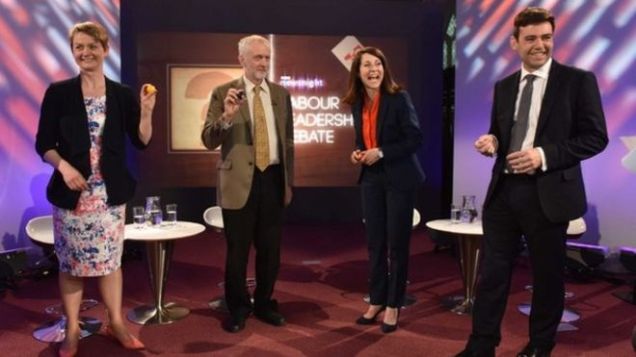
Labour Party - Labour Leadership - 2015

Owen Jones has an epiphany: centrist Labour MPs are responsible for the rise of Jeremy Corbyn

One of the annoying things about being part of Britain’s marginalised political blogging community (see what I did there?) is the regular insult of seeing ideas first expounded on this blog being subsequently “appropriated” by high profile, celebrity journalists who come late to the party and then claim all the credit (and pageviews) for ideas that they did not originate.

I stay up late into the night ranting sometimes (I hope) semi-original analysis into WordPress, and then three months later some SW1-dweller pops up on the Sky News paper review making the same point as though it is astonishingly fresh insight, getting paid for being late to the party and taking all of the credit.

[Pauses]

Meanwhile, on a completely unrelated note, Owen Jones has worked out that Jeremy Corbyn did not sweep to the leadership of the Labour Party in a vacuum, and that the rise of Corbyn was only made possible because of the accumulated failings of Labour’s centrist MPs.

From Owen’s totally original Guardian column (my emphasis in bold):

There are many decent Labour MPs, but it is difficult to think of any with the stature of the party’s past giants: Barbara Castle, Nye Bevan, Ernie Bevin, Herbert Morrison, Margaret Bondfield, Harold Wilson, Stafford Cripps, Ellen Wilkinson. Machine politics hollowed out the party, and at great long-term cost. If, last year, there had been a Labour leadership candidate with a clear shot at winning a general election, Labour members might have compromised on their beliefs: there wasn’t, and so they didn’t.

[..]  Corbyn’s harshest critics claimed superior political nous, judgment and strategy, then launched a disastrously incompetent coup in the midst of a post-Brexit national crisis, deflecting attention from the Tories, sending Labour’s polling position hurtling from poor to calamitous, and provoking almost all-out war between Labour’s membership and the parliamentary party: all for the sake of possibly gifting their enemy an even greater personal mandate. They denounce Corbyn’s foreign associations, but have little to say about former leader Blair literally having been in the pay of Kazakhstan’s dictator Nursultan Nazarbayev, whose regime stands accused of torture and the killing of opponents. Corbyn’s bitterest enemies preach the need to win over middle-class voters, then sneer at Corbynistas for being too middle class (even though, as a point of fact, polling last year found that Corbyn’s voters were the least middle class). They dismiss Corbynistas as entryists lacking loyalty to the Labour party, then leak plans to the Telegraph – the Tories’ in-house paper – to split the party.

It is the absence of any compelling vision that, above all else, created the vacuum Corbyn filled. Despite New Labour’s many limitations and failings, in its heyday it offered something: a minimum wage, a windfall tax on privatised utilities, LGBT rights, tax credits, devolution, public investment. What do Corbyn’s staunchest opponents within Labour actually stand for? Vision was abandoned in favour of finger-wagging about electability with no evidence to back it up.

Jones concludes:

Corbyn’s opponents have long lacked a compelling vision, a significant support base and a strategy to win. When Labour fails at the ballot box, its cheerleaders are often accused of blaming their opponents rather than examining their own failures.

The same accusation can be levelled now at Corbyn’s opponents. They are, by turns, bewildered, infuriated, aghast, miserable about the rise of Corbynism. But they should take ownership of it, because it is their creation. Unless they reflect on their own failures – rather than spit fury at the success of others – they have no future. Deep down, they know it themselves.

Slow hand clap. Finally, acknowledgement from a “mainstream” political commentator of what this blog has been saying consistently, even back when a Jeremy Corbyn victory in the leadership election was seen as an absurdity.

Jeremy Corbyn did not become leader of the Labour Party in a vacuum. A cloud did not suddenly descend on Labour Party members, making them crazy and amenable to markedly more left-wing politics. There was no extraneous event on which blame can be pinned, save Ed Miliband’s disastrous tenure as Labour leader, culminating in the 2015 general election victory. The problems are far more deeply rooted, and go way back beyond Ed Miliband and Gordon Brown.

Good job, Owen.

Of course, readers of this blog will know that I have been consistently making the same point, repeatedly, stretching back well before the 2015 general election:

Why Isn’t Labour Working?

Why Jeremy Corbyn’s Labour Leadership Candidacy Matters

No, Jeremy Corbyn’s Leadership Candidacy Is Not A Disaster

In Memoriam – Labour Party: 1900-2015

Stop The Anti Jeremy Corbyn Hysteria – ‘Entryism’ Is Not A Dirty Word

Why Is The Right Suddenly Scared Of Jeremy Corbyn

Is Jeremy Corbyn The Cure For British Conservatism’s Centrist Virus?

Are You A Populist Simpleton?

Labour Has Lost The Ability To Persuade Its Own Members, Let Alone The Voters

Time For Jeremy Corbyn Detractors To Put Up Or Shut Up

What Are The Aims And Values Of The Labour Party?

The Latest Victim Of The Labour Purge: The Party’s Soul

Stop Worshipping ‘Centrist’ Voters

The Labour Party’s Soul Searching Exercise Is Off To An Unpromising Start

In Defence Of Jeremy Corbyn

The Hypocrisy Of Centrist Labour’s War Against Jeremy Corbyn


So well done Owen. You got there in the end, nearly a year late.

But now that this blog’s ideas have been given voice by the boy wonder, maybe they will actually receive some due consideration and debate.

Who needs acknowledgement or recognition or money or credit, anyway?


Owen Jones talks back on the EU referendum - European Union - Brexit

Support Semi-Partisan Politics with a one-time or recurring donation:

Agree with this article? Violently disagree? Scroll down to leave a comment.

Follow Semi-Partisan Politics on TwitterFacebook and Medium.

Banning The Burqa And Burkini Is Not The Correct Liberal Response To Conservative Islam

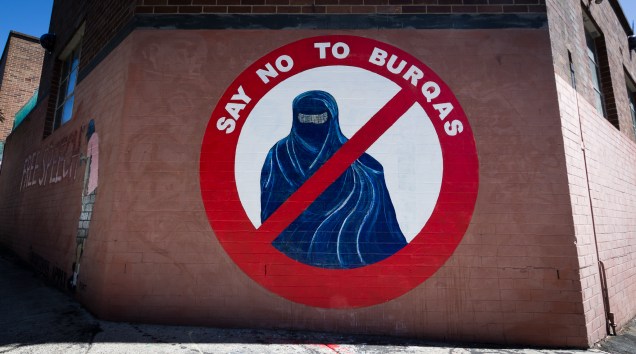
Free Speech - Say No To Burqas - Burkini - Mural

In a liberal democracy, government has no business dictating what clothing is or is not acceptable to wear – and banning the burqa or burkini only further delays the long-overdue day of reckoning between conservative Islam and modern Muslim women

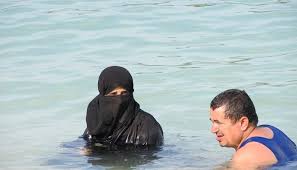
France is now taking its official ban of the burqa one step further, as the mayor of Cannes announces a ban on burkini beachwear on the grounds that the concealing garment poses a security risk.

The New York Times reports:

The mayor of the French resort city of Cannes has barred women from bathing on public beaches in swimsuits that reveal too little skin.

At issue are the full-body, head-covering garments worn in the water by some Muslim women, which have been nicknamed burkinis, an amalgam of burqa and bikini. The mayor’s ban has drawn protests from French Muslims who say it is discriminatory.

That the debate is occurring on the Riviera, the Mediterranean vacation area that has been on edge since the terrorist attack on a Bastille Day celebration in nearby Nice, has only added to the controversy.

Critics of the ban say it risks deepening rifts with France’s Muslims. It is the latest example of the long-running tensions between France’s forceful — some say inconsistent — commitment to secularism and the desire of many Muslims to express traditional values like modesty through their attire.

The mayor’s ordinance, which runs until Aug. 31, bars people from entering or swimming at the city’s public beaches in attire that is not “respectful of good morals and secularism” and that does not respect “rules of hygiene and security.” Offenders risk a fine of 38 euros, or about $42.

Why are burkinis against the rules? “Beach attire that ostentatiously displays a religious affiliation, while France and places of worship are the target of terrorist acts, is likely to create risks to public order,” the ordinance says.

If this were being done in a public place on the grounds of security, the mayor of Cannes would be in a much stronger position, and would gain this blog’s sympathy, particularly after the appalling terrorist truck attack in Nice on Bastille Day. There is a very logical and powerful argument to be made against the prohibition on wearing any overtly concealing clothing when entering public buildings such as town halls, courts, public schools, parks or beaches, just as motorcycle owners are asked to remove their helmets before entering a bank branch.

But the mayor of Cannes has taken this action with specific reference not to security, but in the name of  laïcité (the separation of church and state). We know this because French government officials have explicitly said so:

This costume [the burkini], Mr Lisnard [the mayor] declared, “ostentatiously displays religious affiliation”, could “disrupt public order”, and might even, in the words of one official, demonstrate “an allegiance to terrorist movements”.

Now secular government is broadly a very good thing, and societies become more free as they cast off the remaining vestiges of theocracy – one of the reasons that this blog is so keen to get rid of the Lords Spiritual and remove Britain from Iran’s company as the only countries where unelected theocrats sit in the legislature by right.

However, while citizens – even those of faith – should absolutely demand secularism from their government, it does not follow that the government can unjustly impose secularism on the people as they go about their lives. That would be a grave wrong, and the growing movement to ban the burqa represents an abuse of power by governments against their own citizens.

The Telegraph’s Juliet Samuel agrees:

Now it’s hard to muster much enthusiasm for the burkini. It harks back to an age, still dominant in much of the world, when a woman’s worth was measured by her modesty. It belongs to a belief system in which women cannot experience one of the joys of the natural world – feeling the wind and sea on her body. It suggests that the female form is shameful and provocative. But those who want to ban the burkini for these reasons are forgetting one of the most important values of a free society: we don’t all have to believe the same thing in order to live together.

Every day, thousands of Britons wake up and do things I think are crazy and wrong. They drink instant coffee, listen to Magic FM and wear Spandex. Some wear high heels or bowties. Others have plastic surgery, get tattoos, cheat on their spouses, drink too much, shout too much and vote Labour. They get their news from Facebook and watch hours of trashy TV. Many of them pray to a god, convert to Buddhism, believe in crystal healing or sing in Church on Sundays with their eyes closed and their arms in the air. I don’t do or understand any of these things. But I let them get on with it.

[..] Like a theocratic regime, the Cannes burkini ban forces some Muslim women to choose between their religious and their national identity and perniciously suggests that their choice of dress is a political statement, whether they mean it to be or not. It is unsurprising that the French should lead the way in this kind of thinking, because in France nothing is allowed until the law permits it, whereas in Britain, everything is allowed until the law forbids it. So, in the name of enforced secularism, France forbids covering the face in any public setting, whether it’s for religion or Hallowe’en, and bans religious symbols like hijabs (hair coverings) in state institutions such as schools. The burkini ban takes this illiberal trend even further by making it illegal to wear “ostentatious” religious symbols even when going about one’s own private business.

[..] A normal Muslim, who has grown up seeing a hijab as an unremarkable but important symbol of womanhood, finds herself forced to choose between respect for the law and her family’s everyday customs. Is this senseless, banal and brutal ban more likely to awaken a hidden feminist creed and a love of La République in her heart or to make her feel attacked and excluded from mainstream society?

Strong societies cannot permit parallel legal or political systems, such as Sharia courts or caliphates. But they can cope with differences in dress and customs. They should not allow obstructive religious clothing like face‑coverings to disrupt teaching or court hearings. But if a Muslim woman wants to wear a baggy wetsuit and go for a swim on a public beach, that does not make her a threat to Western society. The real enemies of freedom are not the burkini-wearers, but the politicians who want to ban them.

Amen to this. Samuel is quite right to fear the politicians over the burkini-wearers, even if we may disagree with their sartorial and religious motivations. Indeed, we should fear any further legitimisation of the idea that our rights derive from the state, who can suspend our freedoms at will in the name of “security”.

One of the most alarming things about this century has been the rejuvenation of authoritarianism, spurred on by the growing threat of Islamist terror. Whether it is manifested in airport security theatre, the banning of religious jewellery or other symbols from the workplace or the dystopian suppression of free speech in universities, public squares and social media, we have become markedly less free in sixteen years with precious little to show for it.

But more than all of that, if we are serious about tackling the skewed ideology and belief system which preaches that women must be modest to the point of having to bathe fully clothed, then a government ban is the absolute worst way to go.

Such a diktat of law effectively exonerates conservative Islam (or fundamentalists of other religions) from any responsibility to reform and recognise the equality of women, gay people and other minority groups. Ban the burqa (or burkini) and conservative Muslims may obey. But not only will they immediately be able to portray themselves as victims in the process, claiming persecution for their religious beliefs, they will be under no further internal pressure to reconsider and reform centuries-old religious diktats in the changed context of modern society.

If we want a world where the burqa is relegated to fringe extremists and museums, then the pressure must come primarily from Muslim women. Only when they demand their right to dress as they please and force the reluctant accommodation of religious authorities will they be able to win the parity of treatment which has been missing for so long.

The job of Western governments in all of this is not to interfere or seek to be a white knight, banning the burqa or burkini on the behalf of oppressed women. Government’s role is to make sure that Muslim women have full access to the legal system to sue for their equal treatment in court where it is being infringed, and to clamp down insidious efforts to set up parallel justice systems based on Sharia law or any other religious code instead of shamefully welcoming them in the name of “multiculturalism”.

We should be encouraging a more liberal form of Islam to prevail over the more oppressive and fundamentalist conservative wings. We need more Ahmadis and others like them, openly tolerant of other faiths and proudly patriotic. And when these groups of progressive Muslims are attacked we should stand shoulder to shoulder with them rather than shamefully currying favour with their persecutors in the name of “multiculturalism”.

But ultimately, this is an internal enlightenment which must take place within Islam. It is not the job of provincial mayors in France or government departments in Britain to “rescue” their female Muslim citizens from oppression; nor would any such rescue hold any legitimacy. Western society can take certain actions to encourage this revolution among its Muslim communities, but ultimately the heavy lifting must be done by Muslim women standing up to claim their own full rights as citizens.

Widespread bans on the burqa or burkini may make us feel good or even allow some of us to burnish our feminist credentials, but that is the only good that they will accomplish. And meanwhile, the long-overdue day of reckoning between modern Muslim women and the conservative wing of the Islamic faith will be deferred indefinitely, to everyone’s cost.


Burkini ban

Top Image: Impulse Today

Support Semi-Partisan Politics with a one-time or recurring donation:

Agree with this article? Violently disagree? Scroll down to leave a comment.

Follow Semi-Partisan Politics on TwitterFacebook and Medium.