The Age Of Perpetual Crisis

The Age of Anxiety - Ballet

When every single issue is falsely portrayed as a burning crisis, none of our national challenges will receive the considered attention they deserve

“We would rather be ruined than changed
We would rather die in our dread
Than climb the cross of the moment
And let our illusions die.” 
― W. H. Auden. The Age of Anxiety: A Baroque Eclogue

The housing crisis. The migrant crisis. The productivity crisis. The deficit crisis. The tedious, annual NHS winter crisis. Brexit. Nearly every important issue or event in our politics is portrayed as a pressing, existential crisis, despite few of them even remotely living up to the definition. If you are sceptical, just ask somebody who was alive and situationally aware in 1940 whether any of the issues which excite politicians and newspaper editors today amount to a real crisis, and see what they have to tell you.

And as it is in Britain, so it is across the Atlantic in America. Surveying the present scene, David French writes in the National Review:

In politics, when everything’s a crisis, it turns out that EVERYTHING’S A CRISIS!

We keep reading that Donald Trump is a unique danger to American democracy, a threat we should put aside partisan tribalism to defeat. Then, seconds later, we read that giving Americans the choice to buy health insurance will kill people by the thousands. Seconds after that, we learn that an entirely conventional Republican tax plan will not only kill people but also extinguish American democracy as we know it. Finally, we read that the end of net neutrality — a regulatory doctrine that only the smallest percentage of Americans even remotely understand — will extinguish American liberty.

[..] For the average American, who pays less attention to politics than to his professional and personal lives, all of this is exhausting. It’s numbing to the point where he can’t possibly determine what’s important and what’s not. So he checks out. He throws his hands in the air and gives up. But for the Americans who care the most about politics and drive our public debate, perpetual crisis is invigorating. It provides meaning and purpose.

A nation’s political culture is always defined by the people who care the most, and the people who care the most in our nation have lost all sense of proportion.

Charles Cooke makes a similar point, but at the more personal level, in the same publication:

Ours is a moment in which millions rush breathlessly to exclaim. In defense! In resistance! In bloody-minded persistence! “I will not back down!” we are told, by people who have not been asked to, and could not be compelled to. They won’t be “intimidated” either, nor “silenced,” nor “bullied” nor, it seems, pushed to any form of self-reflection. Indignation, not analysis, is the perennial order of the day, and the tone of our debates is ineluctably Twitteresque. Retweets are points on the board, and hyperbole gets you oodles of them. The worst. Ding! Insane. Ding! Crisis. Ding, ding, ding! Congratulations, you have been promoted to the next level.

I don’t think I have ever read a more perceptive or honest summary of how political Twitter works, and as a denizen of this world I see more than a few of these negative traits in my own work, some due to personal failures but more often because the difficult pathway to being heard and gaining an audience on social media incentivises some pretty negative behaviours.

It is in the nature of those involved in politics – either doing or writing about it – to imbue their work and their passions with an air of existential importance. In many ways, this is understandable – it is hard to get a hearing in the media, or from the People Who Matter, with a piece of sober, rational analysis addressing a long-running issue; harder still when the competition presents every new report or white paper as some kind of magical elixir to the nation’s woes.

Given the choice, most people want to be Neil Armstrong and not the dedicated but overlooked engineers and project managers who made the Apollo Program a reality. Or if politics is showbusiness for ugly people then most players want to walk the red carpet and be photographed, not lurk in obscurity editing screenplays or building sets. This is human nature, but it has the unfortunate side effect of warping our political process, bending it towards flashy but superficial quick fixes and wonder cures rather than holistic analysis and serious reform.

The word “crisis” in particular is used far too readily at present, by people who should know better. The nature of politics and public policy means that nearly every important decision will ultimately have some direct or indirect impact which can be measured in terms of human lives, thus making it existentially important to at least a few people. In fact, the Left in particular rely on this very phenomenon, since their conspicuous compassion policies front-load the emotional benefits of throwing resources at a problem while deferring or even denying the costs – after all, it is easy to win applause and positive headlines by opposing welfare or healthcare reform, but much harder to counsel delayed gratification or highlight the cumulative toll of welfare dependency on the quality and duration of human life.

But in actual fact there are very few actual full-blown crises facing us at the present time, despite the best efforts of opportunistic politicians and the media to suggest otherwise. Rather, there are a series of slow-burning, serious and often intractable problems which need to be tackled, few of which are likely to lead to sudden national ruin but many of which – if left unattended much longer – have the potential to chip away incessantly at our economic prosperity, national security, democratic health or the stability and cohesion of our society.

The appalling failure of successive governments to adopt a sensible housing policy and increase the housing stock will not lead to an explosion in homelessness or destitution overnight, but it will lead to a continuing sense of rage, disillusionment and alienation among younger voters, as it is already doing. Continuing to stand by an immigration system which proudly fails to make skills or likelihood of assimilation and popular consent the key drivers will not lead to riots in the street tomorrow, but it will continue to drive a wedge between the political class and much of the country. Continuing to enshrine the NHS as our national religion and abide by the strict political doctrine of NHS non tangere will not create an immediate spike in death rates, but it will ensure that UK health outcomes continue to further lag behind those countries with the best healthcare systems.

Labelling something a “crisis” suggests imminent peril requiring immediate remedy, even if the resulting damage control ultimately creates other problems or only succeeds in kicking the can down the road. It advocates for quick fixes, which is exactly what we don’t want at this time. In this period of discontinuity, where the old political settlement has broken down and traditional, familiar policy prescriptions neither work effectively nor command sufficient public confidence, what we need are carefully thought-out and mutually supporting policies rooted in an uncompromising, forensic analysis of the precise problems we face. What we absolutely do not need are a bunch of panicked gimmicks and pseudo-policies cooked up in silos by desperate politicians and leaders whose sole objective is to survive the day and avoid negative headlines.

The difficult truth is this: there is no one pressing crisis the resolution of which will solve all our problems and keep us safe and prosperous in a changing world, and there is no universal and comprehensive solution to any of the problems we deem to be crises. Housing cannot be addressed without revising planning rules, but it is also impossible to adequately plan future housing and infrastructure when there is no meaningful control over mass immigration. Low productivity cannot be addressed without looking at corporate governance, secondary and tertiary education, workers’ rights, union power and addressing the weak commitment to R&D. Indeed across the board there is no silver bullet, no quick fix, no political party with all the right answers, no system of government ideally equipped for the challenge. We must forge a new path.

Far from focusing attention and driving positive change, labelling everything a crisis merely creates apathy, causes many voters to check out and encourages many politicians to either view problems in a highly compartmentalised way or else simply consider them insurmountable, facts of life to be dealt with rather than challenges to be overcome – just as many in the British establishment seemed resigned to irreversible national decline in the 1970s, before Thatcherism finally equipped Britain with the tools to dig ourselves out from the last major period of discontinuity this country faced.

Britain emerged stronger from the late 1970s and 80s because after years of paralysing indecision and timid half-measures from Tory and Labour governments alike we finally made a calm, methodical and dispassionate analysis of the problems holding us back – excessive union power, flawed monetary policy, excessive state involvement in the economy – and set about tackling each of these issues in a coordinated way, as part of a comprehensive national turnaround strategy.

We need to adopt just such a process again today in order to overcome this new period of discontinuity and the specific challenges that it brings. And the first step is to stop viewing every last issue as a standalone, burning crisis.


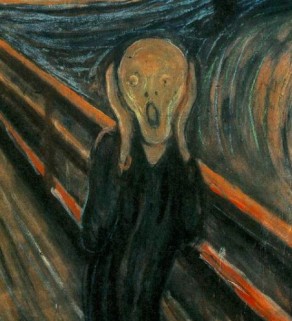
Munch - The Scream

Support Semi-Partisan Politics with a one-time or recurring donation:

Agree with this article? Violently disagree? Scroll down to leave a comment.

Follow Semi-Partisan Politics on TwitterFacebook and Medium.


Upset An MP On Social Media? Prepare To Lose Your Voting Rights

Intimidation in Public Life report - Committee on Standards in Public life - Parliament - Britain - UK - online social media abuse

Hurt an MP’s feelings and lose your civil rights. This could be a reality in the prissy, authoritarian, neo-puritanical Britain we inhabit

Having learned nothing from the past three years of populist insurgency, rather than facing up to their shortcomings and accepting the validity of justified criticism (and the inevitability of unjustified criticism) the political class is instead preparing to further insulate itself from public accountability.

A new report published by the Committee on Standards in Public Life proposes punishments such as barring people from voting or removing them from the electoral register as suitable punishments for the “new electoral offence of intimidating
Parliamentary candidates and party campaigners during an election” – which if enforced with the same arbitrary capriciousness as all other UK speech laws would inevitably see many people unjustly stripped of their basic civil rights while other, worse “offenders” who happen to hold officially sanctioned opinions go unmolested.

We in Britain now have a government which would give convicted prisoners the right to vote while stripping the franchise from certain free citizens who commit vague and loosely-defined acts of speechcrime – including hurting the feelings of an MP or Parliamentary candidate.

The report (prefaced with a quote from the late Jo Cox MP, so as to imbue the document with an air of incontestable wisdom and grace) graciously concedes that the existing restrictive framework of draconian anti-free speech laws does not need augmenting to protect the feelings of MPs at this time, but then immediately ventures the possibility of unprecedented new punishments for those accused of speechcrime:

Electoral law can overlap with and complement the criminal law, such that offences with criminal sanctions can also involve sanctions under electoral law. These sanctions are specific to the election process, such as being barred from voting for a certain period, or removal from the electoral register. Such sanctions recognise that these offences, such as undue influence or electoral fraud, are offences against the integrity of the electoral process, and that it is therefore appropriate that individuals face sanctions relating to their own privileges within that process.

[…] However, the Committee considers that the issue of intimidation is of particular significance because of the threat that it poses to the integrity of public service and the democratic process.

During an election period, it would therefore be appropriate to have specific electoral sanctions that reflect the threat that intimidation of Parliamentary candidates and their supporters poses to the integrity of elections. Any such offence in electoral law should be tightly defined, to capture intimidatory behaviour that is directed towards an individual specifically in their capacity as a Parliamentary candidate or party campaigner, which intends unduly to influence the result of the election (for example, by affecting their candidature or inhibiting their campaigning).

[..] the introduction of a distinct electoral offence will serve to highlight the seriousness of the threat of intimidation of Parliamentary candidates to the integrity of public life and of the electoral process, and will result in more appropriate sanctions. We believe that specific electoral offences will also serve as an effective deterrent to those who are specifically targeting Parliamentary candidates and their supporters.

The Committee on Standards in Public Life, a body whose intended purpose was to ensure that elected and non-elected officials uphold standards of behaviour appropriate to those who serve the public in high office, now seems far more interested in passing haughty judgment on whether members of the public are abiding by the new speech codes dictated by our puritanical, thin-skinned rulers.

I would be interested to know which of the Seven Principles of Public Life the committee believes it is defending by proposing new speechcrime punishments which attack so fundamental a civic right as voting – particularly as each of these principles sets a standard specifically for “holders of public office” and not private citizens. The only tenuous link offered in the entire report is this throwaway sentence:

[..] the Committee considers that the issue of intimidation is of particular significance because of the threat that it poses to the integrity of public service and the democratic process.

Ah, that’s okay then. So because the rowdy public is supposedly threatening “the integrity of public service” (presumably by scaring people away from getting involved in politics, because those who are already inclined to get involved in politics of course tend to be shy fauns who take fright at verbal hostility) the Committee on Standards in Public Life can use this as an excuse to regulate the behaviour not of people in positions of power, but of those who seek to express their feelings about people in power.

Of course, MPs are not the only people to find themselves at the receiving end of vitriol on social media, as anybody with even a semi-public profile or the desire to talk about politics on Facebook or Twitter can attest. Twice in recent months I have been at the receiving end of such a barrage, first when a “comedian” chose to misrepresent one of my tweets to his baying audience of pro-EU Remain supporters and again when an SNP MP sicced his Twitter supporters on me for daring to write about the office of Scottish First Minister in less than worshipful terms. None of the hate I received (on those occasions) amounted to the level of death threats, but other private citizens have suffered far worse.

Yet the political class seem to want to carve out a special protection in terms of exempting themselves from harsh criticism while doing nothing for anybody else. As Members of Parliament they already occupy a high-status, well-remunerated position in society, are generally endowed with a level of intelligence which enables them to articulate their priorities and concerns and be taken seriously, and make laws and decisions which impact our present reality and future happiness. Yet many of these same people now seem determined to portray themselves as shrinking violets, vulnerable victims-in-waiting, a discriminated against minority group who require the special and proactive additional protection of the law. This is absurd and insulting to the citizenry they notionally represent.

But in addition to protecting the powerful from the masses, these puritanical proposals also fundamentally misunderstand the problem. As even many victims of social media harassment would likely agree, the really damaging part of online abuse is not the individual insults but their combined, collective effect. One person insulting or mocking you can be laughed off or brushed aside, but this is not so easily done when one’s notifications fill up with a constant wall of such derogatory, negative messages. Indeed, when under attack on social media, at times it can be difficult to step back and remember that the strident opinions of social media moralisers is not reflective of the feelings of the country or society as a whole. At times, I myself have momentarily allowed hate and derision on social media to interfere with my self-esteem, despite my fairly thick skin.

The answer to online trolling and abuse (whether directed at politicians or private citizens) is not to criminalise individual acts of strident, unpleasant or insulting speech, let alone to curtail the fundamental civil rights of individual citizens as punishment for (or deterrence of) something which is in large part a swarm effect, an unpleasant but distastefully necessarily defensible part of our society’s commitment to free speech.

To do so would be akin to criminalising the act of gathering together in crowds because of the risk that somebody might be crushed or trampled, punishing individuals for what in itself is often a very small contribution to a larger group effect. No single individual is usually responsible for a stampede, just as very few individuals commit specific acts on social media which alone trigger substantial distress, and barring such people from voting (one wonders what offence merits losing the franchise while retaining one’s liberty) will not deal with the vast bulk of abuse on social media and consequently the vast bulk of suffering resulting from it.

The issues addressed by the report are real, worthy of discussion, and are already being debated at length. There is no lack of editorialising or scholarship on the impact of social media on public political discourse, and the way in which the semi-anonymity of interacting online brings out a far more vicious side of human nature than is usually visible during face-to-face interactions. These are problems which we need to face up to as a society at a time when we are learning on the go. But the solution is not to announce further new restrictions on freedom of expression, as though filling in gaps in the statute books will in any way compensate for filling in the mental and spiritual void which turns some people (including the highly educated and outwardly successful) into social media trolls.

Furthermore, at a time when the yawning disconnect between the ruling class and many of the people they represent is growing wider and fuelling all kind of populist outbursts (some welcome and others far less so) it is the height of irresponsibility for those in power to publicly toy with the notion of punishing the plebs for insulting their masters by stripping them of their voting rights.

The Committee on Standards in Public Life should cast their haughty, disapproving gaze back where it belongs – on those who debase their political offices or abuse the public trust. Now more than ever is a time for humility and introspection from the ruling class, not a whinnying list of grievances about those who fail to sing their praises.


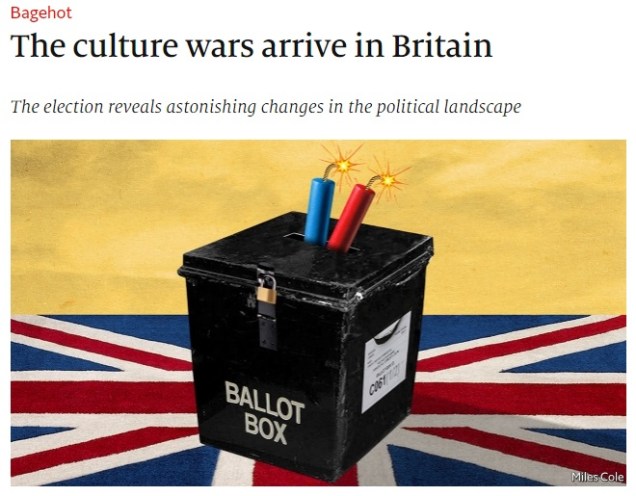
By election - ballot box - Democracy

Support Semi-Partisan Politics with a one-time or recurring donation:

Agree with this article? Violently disagree? Scroll down to leave a comment.

Follow Semi-Partisan Politics on TwitterFacebook and Medium.

Happy Thanksgiving – Here’s Why We Urgently Need A Similar Holiday Of Our Own In Britain

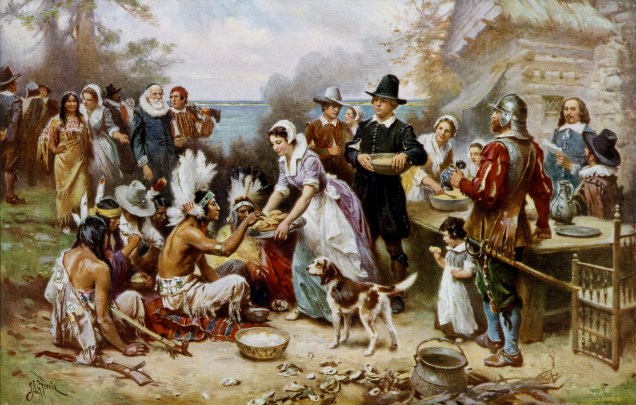
The first Thanksgiving

Most Brits probably do not know or care that Thursday 23rd November is the Thanksgiving holiday in the United States of America. Yet many of us are getting ready to hunt for bargains and pre-Christmas deals on Black Friday.

Take a trip to your local big box superstore – or virtually anywhere online – in the next day or so and you will be treated to wall-to-wall promotions about the upcoming Black Friday sales. “Get ready for Black Friday!” scream the advertisements, as one company after another tempts you with sweet promises of unbelievable savings. Yes, Black Friday is coming to Britain – again.

And so it has been for the past few years now. We in Britain have successfully imported the commercially lucrative, post-coital rump of a cherished American national holiday – Thanksgiving – while neatly skipping over all the pesky fundamentals that give it real meaning: you know, those pesky things like love, family, gratitude and patriotism, tiresome distractions that don’t give us an excuse to shop and which will never generate a good Return On Investment.

This is as strong a contender for Tasteless Corporate Act of the Year (Large Retailer category) as we are likely to witness this side of Christmas. And we Brits have certainly thrown ourselves into the spirit, crushing one another in the stampede for discounted TVs and getting into fights which have to be broken up by the police.

But apparently – and rather gratifyingly – a number of Brits have started to recognise Thanksgiving too, in our own semi-comprehending way (I’ve seen Yorkshire pudding and roast beef being served at some British Thanksgiving dinners, which is definitely cultural appropriation gone wrong), with retailers now stocking up with pumpkin pie and other traditional Thanksgiving fare in time for the holiday.

Full disclosure: I’m married to a Texan girl, so our household observes both British and American holidays – which means that Jenny gains Boxing Day while I gain Thanksgiving. And for the past five years we have held a Thanksgiving dinner the weekend closest to the day itself, and invited as many friends as we’ve been able to squeeze into our succession of tiny shoebox apartments. I’m responsible for the turkey, Jenny takes charge of the stuffing and the sweet potato casserole (you mock the idea of marshmallows on top of sugared, spiced sweet potato until you’ve tried it) and we split everything else between us with our flatmate.

And if I may say so myself, this annual event has become roaringly popular, to the extent that who gets invited and who doesn’t quite make the cut has become a rather delicate political dance. This year there will be fourteen of us squeezed into an improbably small space, and all fourteen places were snapped up as soon as my wife sent the Facebook invite back in April.

But not everybody is happy that Thanksgiving is gaining a foothold in Britain, including Daily Mail columnist Richard Littlejohn who argues that just like American GIs after the Second World War, Thanksgiving has outstayed its welcome on our shores:

Yet until about five minutes ago, none of this madness existed. Like Halloween, another tacky American import which has hijacked Guy Fawkes Night, and about which I wrote recently, both Thanksgiving and Black Friday are now fixtures in our calendars.

Supermarkets tempt us with ‘traditional’ Thanksgiving treats. Colour supplements carry recipes for Thanksgiving dinners. The Sunday Times Magazine this weekend devoted several pages to telling readers how to prepare mouth-watering delights such as pumpkin pie, candied sweet potatoes and green chilli cornbread.

Why? Do the editors imagine that out there in Middle England, people are thinking to themselves: ‘I could murder a slice of green chilli cornbread’?

He goes on to rant:

We don’t celebrate France’s Bastille Day, or Canada Day, or Mexico’s Dia de los Muertos (the Day of the Dead). So why the hell should we adopt U.S. holidays?

Apparently it does not occur to Littlejohn that the British may be increasingly curious about Thanksgiving because the very idea of a unifying, non-commercialised national holiday which binds us together as a United Kingdom and calls on us to be thankful rather than petulantly self-entitled is so curiously alien to this country – especially the contemporary Britain of 2017.

A couple of years ago I took part in a TV debate on London Live, arguing that we should absolutely not make the festivals of Eid and Diwali UK public holidays, for fear of muddying the cloudy waters between religion and state yet further:


I was outnumbered, but I made the case as strongly as I could that what Britain desperately needs is a unifying, secular public holiday that can bring us all together as one people – not another cynical, politically correct and divisive nod to multiculturalism.

The intervening years have only proved my point, with ISIS flags flying from London housing estates, disaffected young Muslim teens stealing away from the country which gave them life and liberty to join the Islamic State and deadly terror attacks in London and Manchester. On the domestic front things are little better, with a painfully wide chasm emerging between those of us who voted to leave the European Union and those who wanted us to Remain, those who think that Jeremy Corbyn is a living saint while the Tories are evil on the one hand and people who think the exact opposite on the other.

Meanwhile, increasingly everything is being politicised and dragged into the gravity of our culture war. Only this week greeting card firm Paperchase was in the news after they were bullied by left-wing activists into a grovelling public apology for having dared to advertise in the Daily Mail, thereby prompting an equal (and deserved) reaction against the company from people who are not leftist ideologues.

In short, we in Britain are in desperate need of a reminder that we still have an awful lot in common with our neighbours, even if we vote or worship differently. But the ties that bind us together – frayed for so long by successive referenda, general elections, the culture wars and the toxic swamp that is political social media – need to be continually renewed, even if some of us do find patriotism “problematic“. And what better way to do so than with a national holiday which celebrates something in our rich, shared history of which we can all be proud?

There is no shortage of possibilities. While some seem to enjoy talking down Britain and our substantial contributions to world commerce, art, science and culture, I’m sure that if we put our heads together we might find something in the last few centuries of our national story worth elevating as an occasion of which all Britons can be proud (but please, just not the Fifth of July).

Magna Carta Day (15th June), Trafalgar Day (21st October), VE Day (8th May) or Commonwealth Day (second Monday in March) are just a few possible candidates which are existing days that could be “upgraded” to a UK-wide celebration of quiet patriotism, community service and thanksgiving, and which already have some historic resonance.

Such resonance is important. In the United States, President’s DayIndependence Day and Thanksgiving have meaning for all Americans because they are rooted in shared history and not political views, ancestry or sadly-waning Christian faith. The newly arrived immigrant can take up these celebrations immediately upon arrival at no cost to their existing traditions and without any potential religious conflict. And that is exactly what Britain needs right now.

So before you scoff at the idea of our American cousins eating themselves into a stupor for seemingly no good reason, I would ask you to do two things — firstly, spare a thought for me as I try to avoid burning a massive turkey that barely fits inside our oven while also cooking it sufficiently well that I don’t send fourteen angry people to the hospital with food poisoning. But secondly and more importantly, take some time to reflect on the reasons that you – and that we all – have for being thankful this year, and on the many traits and aspirations which we still have in common, even amidst Brexit, the culture war and the politicisation of everything.

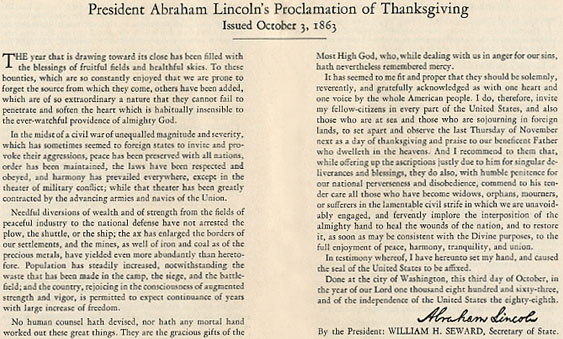
As Abraham Lincoln – the president who in 1863 fixed the observance of Thanksgiving to be the fourth Thursday in November – implored in his first inaugural address:

We are not enemies, but friends. We must not be enemies. Though passion may have strained, it must not break our bonds of affection.

After another year in which the idea of what it means to be British has become increasingly muddled and uncertain, let’s humble ourselves and dare to take a lesson from our former American colonies. Let us find inspiration in our storied history, our rich culture and also from within our own hearts. Let us find that elusive common thread of Britishness that should unite us all, transcending race and religion and politics.

I would argue that maybe some of the reason that more British people are starting to notice and observe Thanksgiving as well as the Black Friday sales we have imported from America is that deep down we subconsciously yearn for the sense of gratitude, social solidarity and civic-mindedness which Thanksgiving brings, and acutely feel the lack anything similar in our own national life.

So let’s change that.

Thanksgiving Proclamation - President Abraham Lincoln - 1863

Happy Thanksgiving

Support Semi-Partisan Politics with a one-time or recurring donation:

Agree with this article? Violently disagree? Scroll down to leave a comment.

Follow Semi-Partisan Politics on TwitterFacebook and Medium.

Tales From The Safe Space, Part 57 – Transphobia Inquisitions And A Kafkaesque Nightmare At Wilfrid Laurier University

Lindsay Shepherd - Wilfrid Laurier University Ontario Canada - Academic Freedom - Social Justice - Transgender Pronouns - Jordan Peterson

University professors and diversity officers now haul students to appear before campus Social Justice Star Chambers, imposing disciplinary measures without ever explaining the nature or context of the charges against them

One of the interesting developments in the continued takeover of academia by the Cult of Social Justice and Identity Politics is the way that enforcement of the strict new leftist orthodoxies has swung from college students pressuring their professors and university administrators to university professors and newly hired diversity officers now pressuring and bullying the students.

It is as though university faculties and leadership teams were so scared by the wave of occupations, campus protests and media spectacles (not to mention high-profile forced resignations) over the past several years that they became determined to get out ahead of the curve and be part of the identity politics vanguard, becoming the hunters rather than the hunted.

We saw this a few months ago at the University of Nebraska-Lincoln, where more than one professor saw fit to encircle a conservative student recruiting for her campus political organisation and hurl insults and taunts in her direction. So desperate were these middle-aged professors to be seen as sufficiently “woke” “allies” of various designated victim groups that they ended up behaving in a far more raucous, juvenile way than the poor girl they were tormenting.

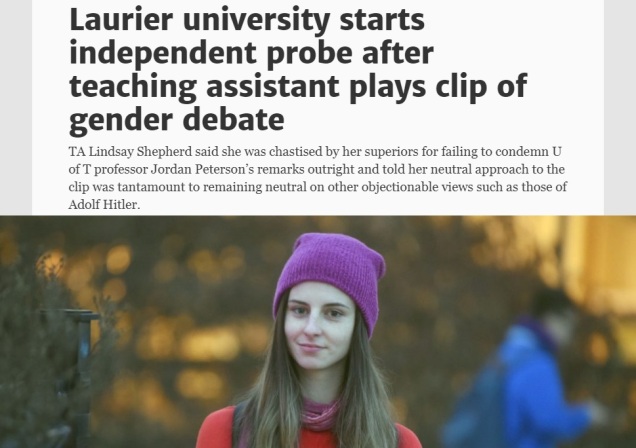
But now an even more disturbing case has emerged, this time at Wilfrid Laurier University in Ontario, Canada. Graduate student and teaching assistant Lindsay Shepherd recently found herself hauled in front of a Star Chamber consisting of two professors and a campus diversity officer after an anonymous complaint was made against her for showing a video – fully within the context of the class she was teaching – of somebody expressing a point of view which did not accept or validate current transgenderism doctrine, specifically the use of alternative pronouns.

From The Star:

Lindsay Shepherd, a graduate student at Wilfrid Laurier University, said she ran afoul of school authorities after she aired a clip in two tutorials of a debate on gender-neutral pronouns featuring polarizing University of Toronto professor Jordan Peterson.

The excerpt from TVO’s current affairs program The Agendashows Peterson, who has famously refused to use gender pronouns other than “he” or “she,” defending his position against a professor who argued it was necessary to use the pronouns that a person prefers to be called.

Shepherd said she was chastised by her superiors for failing to condemn Peterson’s remarks outright and told her neutral approach to the clip was tantamount to remaining neutral on other objectionable views such as those of Adolf Hitler.

While Global News reports:

She was called into a meeting in which Laurier faculty and administration told her that playing the clip without condemnation legitimizes the viewpoint, which they don’t support.

[..] The meeting, which Shepherd secretly recorded, left her in tears after staff said playing the clip created a toxic environment for transgender students and called her transphobic.

Note: Lindsay Shepherd considers herself a leftist and did not actually agree with the perspective which Professor Jordan Peterson expressed in the now-controversial video. She was hauled before a disciplinary body merely for presenting a different argument in an academic context.

Summaries really do not do the exchange justice, so I strongly encourage you to spend 9 minutes listening to the secret recording of the meeting made by Lindsay Shepherd, or at least to read my transcript below. The purpose of this is not to generate more superficial outrage about “crazy campus SJWs” but to emphasise the degree to which universities are running at full speed away from any commitment to academic freedom and towards uncritically promoting one very particular (and flawed) worldview to the exclusion of all others.

Full transcript below:

PROFESSOR 1: …why that might have been seen as problematic by some of the students, maybe even threatening?

SHEPHERD: Um, I don’t see how someone would rationally think it was threatening. I can see how it might challenge their existing ideas but for me that’s the spirit of the university is challenging ideas that you already have. And I don’t know who this came from, I would be interested to see the original complaint or complaints, because like I don’t really have any context as to what exactly their problem was.

PROFESSOR 1: Sorry, can I, um…

SHEPHERD: The thing is, can you shield people from those ideas? Am I supposed to comfort them and make sure that they are insulated away from this, is that what the point of this is? Cause to me that is so against what a university is about. So against it. I was not taking sides, I was presenting both arguments.

PROFESSOR 1: So the thing is about this is, if you’re presenting something like this, you have to think about the kind of teaching climate that you’re creating, and, um, this is actually, these arguments are counter to Canadian human rights code, ever since – and I know that you talked about, um, C-16, ever since this passed it is discriminatory to be targeting someone due to their gender identity or gender expression. So bringing something like that up in class, not critically, I understand that you’re trying to, like –

SHEPHERD: It was critical. I introduced it critically.

PROFESSOR 1: How so? Like, as in?

SHEPHERD: Like I said, it was in the spirit of debate.

PROFESSOR 1: Okay. In the spirit of the debate is slightly different to being, like, “this is a problematic idea that we maybe wanna unpack”

SHEPHERD: But that’s taking sides.

PROFESSOR 1: Yes.

SHEPHERD: That’s me being like “oh look at this guy, everything that comes out of his mouth is BS but we’re gonna watch anyway”.

PROFESSOR 1: Okay. So I understand the position that you’re coming from and your positionality, but the reality is that it has created a toxic climate for some of the students. Y’know, it’s great that —

SHEPHERD: Who? How many? One?

PROFESSOR 1: Okay. May I speak? It’s —

SHEPHERD: I have no concept of, like, how many people complained, what their complaint was, you haven’t shown me the complaint.

PROFESSOR 1: Yes, I understand that this is upsetting, but there’s also confidentiality matters.

SHEPHERD: The number of people is confidential?

PROFESSOR 1: Yes. It’s one or multiple students who have come forward saying that this is something they were concerned about, and that it made them uncomfortable. You’re perfectly welcome to your own opinions, but when you’re bringing it into the context of the classroom that can become problematic. And that can become something that is – that creates an unsafe learning environment for students.

SHEPHERD: But when they leave the university they’re gonna be exposed to these ideas, so I don’t see how I’m doing a disservice to the class by exposing them to ideas that are really out there. And I’m sorry I’m crying, I’m stressed out because this, to me, is so wrong. So wrong.

DIVERSITY OFFICER: Can I mention the gender violence – the gender and sexual violence policy?

PROFESSOR 1: Yeah, please.

DIVERSITY OFFICER: So under that, um, gender violence does include sexual violence but it also includes, um targeting folks based on gender, um, so that includes transphobia, biphobia, homophobia, all those sorts of things are protected under the policy, and so those are things that Laurier has upheld as values as well as the Ontario human rights code. Um, and so those are things that we’re responsible for, uh, not impacting our students in that way, and not, um, not spreading transphobia in that way.

SHEPHERD: Okay, so what I have a problem with is I didn’t target anybody. Who did I target?

DIVERSITY OFFICER: Trans folks.

SHEPHERD: How? By telling them ideas that are really out there? By telling them that? By telling them? Really?

PROFESSOR 1: It’s not just telling them. In legitimising this as a valid perspective, as this is another valid perspective —

SHEPHERD: In a university all perspectives are valid!

PROFESSOR 1: That’s not necessarily true, and —

SHEPHERD: Well, this is something that’s being intimated in current society and I don’t feel the need to shield people from what’s going on in society. Like, to imagine that this is happening in a university, it’s just…bad.

PROFESSOR 1: Okay, so just to give you a context. Also within all of this that is happening, um, Laurier’s being blanketed with white supremacist posters currently. There’s another debate in society which is whether or not North America should be a set of white nationalist states and that it should be ethnically cleansed of other people. That is also a current debate in society. Would you show something in your tutorial that had, y’know, white supremacist and non white supremacists debating whether or not other people should live in North America? Is that something that you would show?

SHEPHERD: If that was related to the content of the week and we were talking about right wing speakers then maybe. It depends on the content, like, I mean if there’s really ideas that are existing out there like that then, I mean… Look, the thing is I don’t see what’s transphobic about showing a video of Jordan Peterson. He’s a real person. He is out there.

PROFESSOR 1: He is a real person, but he is a real person who has engaged in targeted behaviour or targeting of trans students, um, in the particular, like — basically doxxing them, if you know the term, like giving out their personal information so that they will be attacked, harassed, so that death threats will find them. This is something that he has done to his own students, he has done to other students, um, and this is also something that the students are aware of. So this is, this is basically like playing – not to kind of do the thing where everything is kind of compared to Hitler – but this is like neutrally playing a speech by Hitler or Milo Yiannopoulos from GamerGate. This is the kind of thing that, departmentally, in terms of critical communication studies and in terms of the course, of what we’re trying to do, is diametrically opposed to everything that we have been talking about in the lectures. Was this one of the reasons that you wanted to do this, because it was like, a reaction to the lecture content and, uh…?

SHEPHERD: No, we were talking about gendered language, and I was asking them to structure sentences using “they” or using “his” and “her”. And then we talked about the societal context of it. So I don’t get why I’m being seen as transphobic by virtue, by proxy of me just saying, just stating, just exposing people to an idea. I don’t get how that label is attached to me, I really don’t.

PROFESSOR 1: It’s more about the effect rather than the intention, like obviously that wasn’t your intention, but nevertheless it disturbed and upset students enough —

SHEPHERD: So everything’s about those students who are disturbed? Everything is catered to them?

PROFESSOR 1: [Sighs]

PROFESSOR 2: Can I just offer a different perspective? Um, were you, was this, um, tutorial based on looking at grammar?

SHEPHERD: Uh-huh.

PROFESSOR 2: And it was focused on the use of pronouns and the use of grammar?

SHEPHERD: Uh-huh.

PROFESSOR 2: Um, is grammar not something that’s not really subject to debate?

SHEPHERD: The “they” and the “his” or “her”? It’s a huge debate right now. Can we use “they” in the singular?

PROFESSOR 2: Yeah, but you do know that “they” has actually been used in the singular and —

SHEPHERD: Yeah, and that was in the video I showed to the class, and that was a point I made. The thing is, that’s kind of funny, is I disagree with Jordan Peterson. I disagree. But, um, you guys seem to think that I’m like pro-Jordan Peterson or something. It’s very funny.

PROFESSOR 2: Well, um, do you understand how what happened was contrary to – sorry, what was the policy, the —

DIVERSITY OFFICER: Gender and sexual violence.

PROFESSOR 2: — Gender and sexual violence policy? Like, do you understand how…

SHEPHERD: Sorry, what did I violate in that policy?

DIVERSITY OFFICER: Um, so gender-based violence, transphobia in that policy, causing harm to trans students by, uh, bringing their identity as invalid or their, uh, pronouns as invalid.

PROFESSOR 2: Or something like that.

DIVERSITY OFFICER: Potentially invalid.

SHEPHERD: So I caused harm and violence?

DIVERSITY OFFICER: Which is under the Ontario human rights code and a protected thing, and also something that Laurier holds as a value.

SHEPHERD: Okay. So by proxy, me showing a YouTube video, I’m transphobic and I caused harm and violence? So be it. I can’t do anything to control that.

PROFESSOR 2: Okay, so that’s not something that you have an issue with, the fact that that happened? Like, are you sorry that it happened?

SHEPHERD: Like, I mean, I know in my heart and I know I expressed to the class that I’m not transphobic, and if any of them — I don’t know, again, I don’t know what they said — but I made my — I don’t think I gave away any kind of political position of mine. I remained very neutral. And, um —

PROFESSOR 2: And that’s kindof the problem…

[AUDIO ENDS].

Note how the professors are totally unable to distinguish between the idea of raising an idea for critical discussion and targeting a student and inciting hatred or violence against them based on that idea. Time and again, the professors imply (and sometimes outright state) that any idea or argument which deviates from the prevailing transgender orthodoxy can only be discussed if it is first denounced as wrong or even “evil”. Students are not to be exposed to ideas and left to evaluate them in a neutral environment; rather, they will be informed of the “correct” response to such ideas upfront, presumably to avoid “harmful” misunderstandings.

One also wonders how far the professor/inquisitor had to dial down his definition of white supremacy when he made his remarks that the campus is being “blanketed in white supremacist posters”. One imagines that any literature advocating any kind of immigration enforcement at all would now fall into this category, together with any poster bearing the image or advertising the appearance of a prominent mainstream conservative. And when some future Wilfrid Laurier student is hauled before the same Social Justice Star Chamber for illicitly watching a Ben Shapiro or Tomi Lahren video under the covers at night in the privacy of their dorm room, the definition of racism and white supremacy will be just as expansive and unquestionable as transgender doctrine was at Lindsay Shepherd’s trial.

After all, the professor seriously posits the idea that there is a mainstream debate going on in society over whether North America should be ethnically cleansed of non-white people. These academics are so unhinged, so utterly untethered from reality, that they interpret a far-right argument on the very fringes of society – one which is actually diminishing, not gaining traction over time – and elevate its importance to that of some widespread national movement. This is a childlike catastrophisation of the current situation at best, and brazen intellectual deception at worst.

Listening to the recording, what is really surprising (besides the content) is the fact that at all times it is Lindsay Shepherd, the grad student, who sounds not only more reasonable and measured but more intellectually astute than her inquisitors. Shepherd was apparently being grilled by two professors and a Wilfrid Laurier University diversity officer, and despite being placed in a hugely stressful situation and occasionally fighting back tears as a consequence she sounds poised and articulate while her academic tormentors reach for every worn-out phrase or comparison in the book, frequently having to “tag” one another in and out of the discussion as they are repeatedly stumped and confounded by Shepherd’s logical responses.

Is this what the Cult of Social Justice and Identity Politics does to academic minds? Did the capacity for reasoning and critical thinking faculties of these professors gradually rot away after they drank too deep from the well of identity politics? Did they jettison independent thought and learn to mindlessly repeat approved orthodoxy so long ago that they now find themselves bested in debate by a scared grad student despite enjoying a 3 to 1 numerical advantage?

These really are third rate academic minds. Who says “positionality” in a sentence? Be under no illusion – this is a thoughtcrime investigation panel, and the judges are so inarticulate that they can only keep restating their blunt, unwavering dictum in occasionally varying language rather than engaging with and rebutting Shepherd’s arguments – hence their heavy overuse of the word “problematic” without any kind of granular explanation as to what was problematic or why it was so. These professors cannot even make a rudimentary case for their own intersectional ideology; all they can do is state and restate its core commandments.

These inquisitors do not deserve the title of “professor” when their snivelling, cowardly attempt to enforce their credo was so comprehensively deconstructed and debunked by a nervous but principled and steadfast grad student. Neither do they deserve to be employed by any academic institution which calls itself a university.

And unless Wilfrid Laurier University rapidly takes steps to publicly sanction those professors and apologise to Lindsay Shepherd, they should no longer be taken seriously as a place of higher education.


UPDATE – 20 November

Rod Dreher makes a good point in his own reaction to the Lindsay Shepherd story:

It’s worth listening to the clip to hear how nicey-nice and bland the inquisitors are. These people are destroying academic freedom and the purpose of a university, and they’re doing so in anaesthetic tones that conceal the act of real violence to the core values of a university.

The tone adopted by the two professors and the diversity officer is indeed striking. The language they use is incredibly passive and their voices never become harsh or accusatory. Instead they appear to be trying to undermine Shepherd with bland niceness, to keep hammering home the same illogical message with soft insistence in the hope that she will ultimately break down and state that 2+2=5.

It is worth remembering that the gravest threats to free speech and academic freedom in the West come not from angry student protesters but from the impeccably credentialed, dulcet-toned bureaucrats and functionaries who share their worldview.


UPDATE – 23 November

Professor Nathan Rambukkana, Lindsay Shepherd’s inquisitor-in-chief, has apologised to the student in a fairly gracious open letter. Money quote:

Second, this entire occasion, and hearing from so many with passionate views on this issue from across the political spectrum, has made me seriously rethink some of the positions I took in the meeting. I made the argument that first-year students, not studying this topic specifically, might not have the tool kit to unpack or process a controversial view such as Dr. Peterson’s, saying that such material might be better reserved for upper-year or grad courses. While I still think that such material needs to be handled carefully, especially so as to not infringe on the rights of any of our students or make them feel unwelcome in the learning environment, I believe you are right that making a space for controversial or oppositional views is important, and even essential to a university. The trick is how to properly contextualize such material. One way might be through having readings, or a lecture on the subject before discussion, but you are correct that first-years should be eligible to engage with societal debates in this way.

Is the letter perfect? By no means. It still adopts the whole “I’m sorry if you were offended” self-exculpatory language in places, and Rambukkana certainly does not forsake his main positions or his belief in identity politics. But still, better this than nothing at all. And at least there was an apology for the awful Hitler comparison.

Wilfrid Laurier Vice-Chancellor Deborah MacLatchy also took the opportunity to “apologise” via open letter, writing:

After listening to this recording, an apology is in order. The conversation I heard does not reflect the values and practices to which Laurier aspires. I am sorry it occurred in the way that it did and I regret the impact it had on Lindsay Shepherd. I will convey my apology to her directly. Professor Rambukkana has also chosen to apologize to Lindsay Shepherd about the way the meeting was conducted.

I remain troubled by the way faculty, staff and students involved in this situation have been targeted with extreme vitriol. Supports are in place at the university to support them through this situation.

Waah waah waah. Way to make it all about yourself. More:

Let me be clear by stating that Laurier is committed to the abiding principles of freedom of speech and freedom of expression. Giving life to these principles while respecting fundamentally important human rights and our institutional values of diversity and inclusion, is not a simple matter. The intense media interest points to a highly polarizing and very complicated set of issues that is affecting universities across the democratic world. The polarizing nature of the current debate does not do justice to the complexity of issues.

Laurier is prepared to engage with these important discussions in a thoughtful and determined way. I have announced a task force to delve into these issues. Further details will be announced in the days ahead. I look forward to the process and I am confident that the outcome will contribute to a better understating of these issues for Laurier and the broader community.

This is a total deflection. Giving life to the principles of free speech and academic freedom is indeed “a simple matter” – it just requires a backbone and a baseline commitment to the basic principles of a university. If MacLatchy feels constrained by the incredibly stultifying Canadian human rights laws then as a university vice-chancellor she should have been vociferously opposing damaging, censorious developments like C-16, not cheering them on from the rafters. MacLatchy needs to go.

 

Lindsay Shepherd - Wilfrid Laurier University Ontario Canada - Academic Freedom - Social Justice - Transgender Pronouns - Jordan Peterson

Safe Space Notice - 2

Support Semi-Partisan Politics with a one-time or recurring donation:

Agree with this article? Violently disagree? Scroll down to leave a comment.

Follow Semi-Partisan Politics on TwitterFacebook and Medium.


The Two Brexits

Cultural Brexit - Culture Wars - Establishment

Not everything of value can be measured or counted, and Remainers opposing Brexit purely on economic or materialistic terms are doomed to forever misunderstand half the country when they refuse to view Brexit through any other prism

If we are to have any hope of knitting Britain back together after Brexit, Remainers must first acknowledge and seek to understand an entire aspect to Brexit which until now they have tended to ignore or crudely dismiss as xenophobia or nostalgia for Empire.

Brexit is two separate phenomena in one. First there is Economic Brexit, the world of quantifiable (if still largely speculative) prognostications and arguments over just how impoverished Britain will be after Hard Brexit versus the untold riches which will be ours once we have concluded that mega trade deal with New Zealand.

But there is another Brexit, too. I struggle to define it – some days I feel like it is “Constitutional Brexit”, the Brexit which concerns itself with high-minded questions of governance, statecraft and geopolitics. But on other days it feels more visceral, more inchoate, though no less important for that. This is “Cultural Brexit” – sneered at by the Economist but best understood as secession from the EU partly as a reaction against supranational European government, yes, but also an enormous cultural backlash against years of self-serving, centrist, technocratic government within the narrow boundaries of an incredibly restrictive Overton Window.

While many smug or outraged Remainers try to hang Vote Leave’s idiotic “£350 million for the NHS” bus slogan around my neck, I never believed any of that nonsense and did my best to dispel it while other Brexiteers who should have known better were still propagating the idiocy and sowing the seeds for our current impasse. Personally, I always pursued “Constitutional Brexit”. What mattered to me was not immigration numbers or trade deals per se, it was the fact that decisions like these – crucial to the development, prosperity and nature of any nation state – should be made at that national level, not set as an unsatisfactory 28-way supranational compromise in Brussels (at least until a tipping point is reached where majority of us feel more strongly European than British).

But the more I observe the furious establishment backlash against Brexit (and last year’s opportunistic centrist coup against Jeremy Corbyn’s leadership of the Labour Party) the more I find that Cultural Brexit also resonates quite strongly within me. Ultimately, I cannot separate the constitutional issues from the fact that for too long Britain has been run by cautious, unambitious identikit drones who nominally belong to Team Red or Team Blue but ultimately hold the same basic worldview and seek to inch us incrementally toward their shared vision of the future, without even thinking to meaningfully consult with the people or explain their actions.

Are the numbers important? Absolutely. To the extent that we can actually make meaningful forecasts (and note: nearly every self-professed or well-credentialed economic expert has been wide of the mark, from when they told us that staying outside of the euro would be economic suicide right up to the OECD’s continually shifting forecasts of Brexit doom) of course numbers and the impact of Brexit on the economy matters. An economically weakened Britain is a diminished Britain, even if only in the short term, and we cannot forget that government policy and spending decisions can be measured by their impact on real human lives.

But simultaneously, numbers are often very good at capturing nearly everything besides that which actually makes life worth living. That’s why I never warmed to the Tony Blair / Gordon Brown / Ed Miliband / Jeremy Corbyn view of the world. They all had their own emphases, but to listen to these leaders speak was to imagine a clinical and soulless Britain, impeccably multicultural, endlessly tolerant even as Western values were eroded, with punctual trains, benefits for everyone, a gleaming new NHS hospital on every other street corner filled with identically-uniformed staff – but very little else.

Public Services (and the taxpayer money which needed to be extorted to pay for them) are everything to this type of leftist. Civil society and the idea of individuals coming together to do anything besides consume public services or petition the government for More Stuff barely registers in their mind, because their conception of a Utopian society has little room for anything outside the public sector. Schools, hospitals and trains – absolutely. Churches, the Women’s Institute, innovative start-ups, world-beating corporations, the ambition to strive for anything besides total equality of outcome – not so much. There is (or at least there should be) more to our shared national life than the public services which we consume together.

People of this mindset simply cannot fathom why we might want to leave the European Union, because it represents risk, and to them risk doesn’t mean possibility or potential. It means the fear of less money for public services and a potential reduction in the kind of perks which middle class people like myself are supposed to be beguiled by – free movement, low roaming charges, the European Union Youth Orchestra. The idea of risking material comfort or stability for mere democracy or the chance of further constitutional change seems absurd to them – if it can’t be counted on an Excel spreadsheet and slapped onto a smug infographic to be shared on Twitter, it can’t possibly count as a valid argument about Brexit, goes their thinking.

Such people can only think in terms of Economic Brexit, and will not debate with you in good faith on any other topic – many refuse to even acknowledge the existence of constitutional or cultural concerns other than dismissing them as “xenophobia”, or angrily saying “of COURSE the EU needs further reform!” without ever specifying what this reform should look like. There is, in other words, a huge empathy gap between the two Britains, and since Remainers are often not shy in declaring themselves “better” than us unwashed Brexiteers I would submit that the duty is primarily theirs to close it.

Pete North has for a long time done a great job of dissecting both aspects of Brexit – the Economic Brexit with its need to get to grips with the minutiae of trade agreements and regulatory systems, and also the Constitutional/Cultural Brexit which gets too little attention from most commentators. But he really knocks it out of the park in his latest piece, writing:

I am often told that we Brexiters are pining for long lost glory – fighting for a better yesterday. But what if we are and what if we are not wrong? What if the relentless march of “prosperity” is eradicating the best part of us? No misty-eyed tales will be told of sitting in a Frankie and Benny’s while tapping one’s foot to the generic tones of Shania Twain.

[..] One thing one notes about modern British cultural history is that every recession is marked by a musical revolution. We had 70’s punk, 80’s metal, 90’s rave and ever since, especially since the smoking ban, culture has gone into hibernation. The place you would have booked for your face melting techno all nighter is now a Debenhams complex. If there is one defining quality of modern progressive Britain then it is the relentless commercialised tedium of it.

As we have gradually sanitised our living spaces we have also sanitised our culture and one cannot help thinking we are now sanitising thought. This is clear from the onslaught of safe space culture so that our delicate metrosexual hipster children are protected from ideas that that may lead them to stray from the path of bovine leftist conformity.

I can’t really speak to rave culture, so I’ll have to take Pete’s word for that. But there is much truth in what he says. Nobody can deny that we live in an age of technological miracles. People of my age, who experienced the early internet in our teenage years and just about remember a life before it, have to concede that much. And as a country – as the West – we are undoubtedly more prosperous. I am continually astonished walking through London, thinking back to how much scruffier and run down everything looked in the 1990s when I came on daytrips from Harlow as a boy, how dramatically the skyline has changed, how few restaurants there were compared to now, how much less variety and choice there was in all things only a decade ago.

By nearly every measurable metric we are better off and our prospects are brighter, and yet something intangible has been lost. The economic heart has been ripped out of my hometown of Harlow, Essex, with many of the prestigious large employers now gone and replaced with vast distribution centres offering only minimum wage work. The town centre is decayed and scruffy; a town of nearly 100,000 people that can no longer sustain a Marks & Spencer’s department store; charity shops and temporary seasonal stores occupying the places where more permanent, upmarket businesses once were.

Meanwhile, when my wife and I go shopping at the upmarket Westfield mall in White City everything is polished and perfect, but you could be anywhere – Houston, Paris, Dubai, Melbourne, Hong Kong. Globalisation and economic growth have brought gleaming homogeneity to the places frequented by globe-hoppers like me, but slow decay to towns like the one where I was raised.

By no means can all of this be laid at the foot of the European Union. But stories like these need to be repeated over and over again because there are still many people who fail to understand that the months and years prior to the EU referendum were in fact not Golden Years for many people.

And “Golden Years” brings me on to David Bowie, and back to the point Pete North was making. When Bowie died early in 2016, writer Neil Davenport lamented that our current youth culture could never create anything like him again:

It’s worth remembering that Bowie slogged on the margins for ages, in two-bit bands, recording very minor songs, before finally finding his voice. Back then, British society created a kind of free space in which young people who were willing to take the unpredictable route of cultural experimentation could do so.

This, too has been lost, which I think is what Pete means when he says that our culture has “gone into hibernation”. As I remarked at the time:

Who would have thought that calls to outlaw clapping and booing, tearful temper tantrums about dress codes, stifling ideas by labelling them ‘problematic’, the insistence on safe spaces and mandatory sexual consent workshops for students would have such a repressive, suffocating effect on our society?

That’s not to say that there is no great new talent emerging seven decades after the birth of David Bowie – clearly there is. But time and again, we see the biggest acts and pop stars of today are more eager to ostentatiously embrace prevailing social values as an act of public virtue-signalling rather than court controversy by cutting across today’s strictly policed social norms.

Lady Gaga took no risk when she sang “I’m on the right track baby, I was born this way” – indeed it opened the door to stadiums full of even more lucrative fans. That’s not to say that she was wrong to do so; but how often do you see an emerging pop star court real controversy or confound society’s expectations these days? You can blame some of this on commercialisation, sure, but not all of it. Something deeper is at work.

When emerging artists see ordinary people shamed and ostracised for saying the “wrong” thing or even just adopting the wrong tone on social media, how many will have the courage to incorporate anything truly daring or potentially “offensive” in their acts, or create spontaneously from the heart without first processing everything through the paranoid filter of societal acceptability?

The societal changes we have undergone in the last three decades are not insignificant, and they have not been to the benefit of all people. I think I feel this keenly and am able to empathise with Cultural Brexiteers because I have a foot in both worlds.

I have a pretty nice middle class life in North London surrounded by fellow “citizens of the world”, but I was born and raised in a Brexit town. To me, the inhabitants of Brexitland are not abstracts or nasty composite caricatures painted by the Guardian – they are fundamentally decent human beings, real people of flesh and blood who want the best for their families and children. They are friends and former work colleagues for whom voting Tory or Labour made very little difference over the past twenty years because both main parties represented the same basic consensus (of which support for the EU was emblematic).

Pete concludes with what passes for a message of hope:

In effect I see the natural consequence of Brexit being what Cameron imagined as the Big Society, where ideas like free schools and “CareBnB” can take root. In the absence of state provision people can and do fill the void. All these ideas have been tested but not allowed to take root because they are a threat to various blobs who are well served by ossified state structures.

I hope so. Aside from Brexit, David Cameron’s aborted Big Society was the last thing which passed for a significant political idea in this country, and it had merit.

The revitalisation of our civil society has a value, as does the revivification of our democracy (if only we can build on Brexit and demand that powers reclaimed from Brussels filter down further than Westminster). It may not be possible to count them up in a spreadsheet but their value is real, as is the positive impact of living in communities which are more than homogenised temporary landing pads for globe-hopping citizens of the world or run-down ghettos to house the people who serve them.

This is cultural Brexit. It’s not that the European Union is the source of every last one of these woes. It’s that many people who defend the EU and supported Remain are as deaf to the concerns of Constitutional Brexiteers as people who think globalisation is all benefit and no downside are deaf to the criticisms of those who oppose the centrist consensus. The deafness to both concerns is the same, because in both cases they are overwhelmingly the same people.

It is this failure of empathy and imagination which first gave the Labour Party Jeremy Corbyn, and then gave us Brexit. The anti-establishment backlash which powered Donald Trump to the White House was also similar, though Brexit is much more coherent than Trump’s grievance-fuelled manifesto.

Remainers can keep shouting about Brexiteers being wrong, stupid or evil. They can delude themselves that we were all hoodwinked by a red campaign bus or Russian propaganda. But if they want to tackle that pervasive feeling of divorce and estrangement from their own country which many of them painfully feel, they will simply have to consider that theirs is not the only valid or reason-based prism through which to view Brexit.

Remainers must be bold and confront rather than dismiss Cultural Brexit. And they must dare to imagine that regardless of how this government’s rather ham-fisted attempt at Brexit plays out, those who voted for Britain to leave the European Union may just be on the right side of history after all.

David Bowie - Beckenham Free Festival

Support Semi-Partisan Politics with a one-time or recurring donation:

Agree with this article? Violently disagree? Scroll down to leave a comment.

Follow Semi-Partisan Politics on TwitterFacebook and Medium.