With David Cameron’s Resignation From Parliament, British Conservatism Can Begin A New, Bolder Chapter

david-cameron-resigns-as-mp-for-witney-parliament-westminster

Finding himself prematurely out of power and seeing no value in life as a mere backbench MP, David Cameron brings the curtain down on a bland, centrist, disappointing and entirely forgettable political career

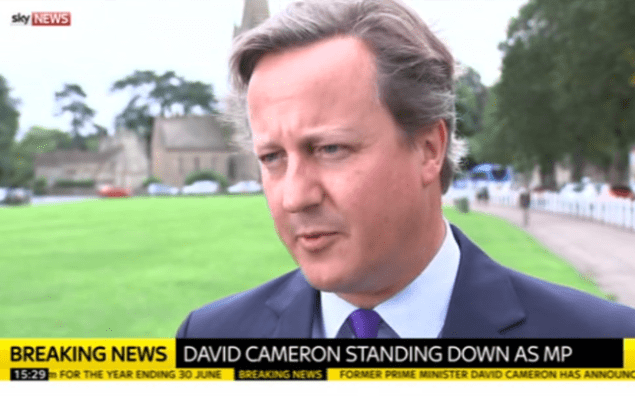
Having successfully completed Tony Blair’s fourth term of office and having a premature end called to his fifth, David Cameron today announced his decision to flounce out of parliament – despite having earlier promised to stay on as an MP after his fall from power.

He took his leave of us with these words:

With modern politics, with the circumstances of my resignation, it isn’t really possible to be a proper backbench MP as a former prime minister. I think everything you do will become a big distraction and a big diversion from what the Government needs to do for our country.

And I support Theresa May, I think she’s got off to a great start, I think she can be a strong prime minister for our country and I don’t want to be that distraction – I want Witney to have a new MP who can play a full part in parliamentary and political life without being a distraction.

[..] I hope I’ll continue to contribute in terms of public service and of course contribute to this country that I love so much.”

[..] I spoke to Theresa May and she was very understanding about this decision. I support her, I support what she’s doing, she’s got off to a cracking start. Obviously I’m going to have my own views about different issues – people would know that. And that’s really the point: as a former prime minister it is very difficult, I think, to sit as a backbencher and not be an enormous distraction and diversion from what the Government is doing. I don’t want to be that distraction; I want Witney to have an MP that can play a full role in parliamentary and political life in a way I think I would find very difficult if not impossible.”

Naturally this has led to speculation that David Cameron somehow disagrees with Theresa May’s loudly-trumpeted plans for new grammar schools and the return of potentially widespread academic selection to the education system.

I find this explanation…unconvincing. If the capsuled history of David Cameron’s premiership and leadership of the Conservative Party has taught us anything about Cameron the man, it is that he has absolutely no core political convictions which he is not more than willing to toss overboard for the sake of political expediency and his relentless desire to engage in centrist triangulation.

Fiscal conservatism? As long as he and George Osborne were able to find some statistical or rhetorical device to falsely claim that they were “paying down Britain’s debts”, Cameron was more than happy to continue spending hand over fist, driving Britain’s national debt ever-upward while exhibiting enormous timidity in reversing many of Gordon Brown’s most draconian tax increases.

Strong national defence? It took his successor, Theresa May, to drive through the parliamentary vote on the renewal of Trident, while under David Cameron’s watch Britain temporarily waived goodbye to our aircraft carrier capability (a true diminution in the eyes of the world) as well as the ability to effectively patrol our own coastline and airspace without the help of allies.

A smaller state? The much-vaunted “Big Society” was dead on arrival in 10 Downing Street back in the spring of 2010, and whatever rearranging of deckchairs the coalition government engaged in, nothing was done to tackle the biggest budget black holes – pensions and the NHS. Under David Cameron, the government preferred to virtue-signal their progressive credentials by spending borrowed money on international aid than get to grips with departmental spending.

So given this singularly unimpressive track record, the idea of David Cameron suddenly discovering an ideological backbone and beliefs strong enough to resign over is frankly ludicrous.

In fact, what really happened is quite obvious. Cast from power unexpectedly and with unexpected speed, Cameron lied when he said that he intended to stay on and complete his term as MP for Witney. To have said otherwise and admitted his intention to resign would have appeared churlish, and more than anything Cameron wanted to cultivate the image of himself as an easy-going happy warrior, ready to relinquish the trappings of office without regret and re-assume a more humble role as a backbencher.

This announcement came as quickly as it possibly could without making Cameron look completely dishonest and reprehensible. At least when Gordon Brown resigned as an MP he had managed four years as a backbencher – albeit four years in which he collected a hefty MP salary while being virtually invisible in Westminster. David Cameron’s brittle ego wouldn’t even permit him to last a year on the backbenches. His top flight political career having been brought to an unexpected end, Cameron saw no reason to stick around as a mere constituency MP.

To politicians like David Cameron, the role of constituency MP is merely a springboard to ministerial power. When the possibility of prize cabinet jobs or the keys to Number 10 Downing Street are no longer an option, wasting time on select committees or dealing with constituents’ issues appears a supreme waste of time – time which could be better spent cashing in on fame and carefully tended relationships while they are still relatively fresh and can bear the most fruit.

James Kirkup is similarly unimpressed with the manner of Cameron’s departure:

On June 27, David Cameron issued this statement: “I will continue with my duties as the MP for Witney. It is an enormous privilege to serve the people of West Oxfordshire.”

So enormous that he could only bear it for a few more weeks, apparently. He’s off, leaving the Commons and triggering a by-election in Witney: some lucky Tory will soon inherit one of the safest and prettiest seats in the country.

What does this tell us about Mr Cameron? Nothing terribly positive, to be honest. Let’s remember, he fought the EU referendum campaign promising not to quit if he lost, then quit when he lost — but only having clung to office as long as possible and having banned the Civil Service from doing any preparatory work for Brexit, thus making it harder for his successor to actually get on with the job.

In between breaking his promise not to resign as PM and breaking his promise not to resign as an MP, the only significant official work he undertook was drawing up an honours list handing an OBE to his wife’s stylist and a knighthood to his press officer.

Not exactly the most dignified departure from office, is it? And certainly not one that’s easy to reconcile with many, many statements from Mr Cameron about the sense of duty he owed to his nation, the selfless service he felt obliged to render.

And Kirkup’s unsparing conclusion:

And this is why flouncing out of Parliament in this way is so telling: it speaks to something fundamental about Mr Cameron’s character and his approach to politics: a lack of seriousness, the absence of real commitment.  Yes, he wanted the job and yes he put the hours in, to the cost of his family.

But he would never die in a ditch for his political beliefs, never shed blood and move mountains to hammer home his arguments. It was always enough to get by, to do just enough to get the top grade and do better than the rest.

Sadly, that describes Cameron perfectly – far more obsessed with optics than reality, and forever in search of the path of least resistance, even when that path ran direct through traditionally left-wing territory.

Ultimately, David Cameron was a weak and instantly forgettable prime minister because he was a centrist triangulator and a technocrat at heart. As prime minister he had no real interest in reforming Britain in his own image, imposing his own worldview or being a statesman. Rather, he was content to campaign and govern as a mere Comptroller of Public Services, the living, breathing symbol of the diminution of our national politics.

With his happy departure from Parliament (en route to a minor footnote in history) one hopes that the ground has shifted under British politics, and that the age of the technocrat might be coming to an end. His successor, Theresa May, while far from being this blog’s preferred choice, at least seems to have some strongly held political views of her own, while Jeremy Corbyn’s imminent re-election as Labour Party leader promises a 2020 general election offering genuine choice to the electorate.

All we need now is for George Osborne to follow his chum David Cameron into political retirement and we may finally be able to turn the page on this most boring and depressing chapter in Conservative history.


David Cameron - Coke Zero Conservative - I Cant Believe Its Not Miliband

Support Semi-Partisan Politics with a one-time or recurring donation:

Agree with this article? Violently disagree? Scroll down to leave a comment.

Follow Semi-Partisan Politics on TwitterFacebook and Medium.

Submission

jeremy-corbyn-hilary-benn

After pompously telling anyone who will listen that they cannot possibly work with Jeremy Corbyn, Labour’s centrist MPs are preparing to bend the knee and meekly return to Corbyn’s shadow cabinet once he is re-elected leader of the party


UPDATE: Read Part 2 here.


Labour’s tantrum-throwing centrist MPs, recognising their man Owen Smith’s imminent defeat by Jeremy Corbyn in the Labour leadership contest, are apparently now making frantic overtures to the Corbyn camp so that their treachery might be forgiven, allowing them to serve in the shadow cabinet once again.

The Telegraph reports:

Senior Labour politicians who quit the shadow cabinet in protest at Jeremy Corbyn’s leadership are drawing up plans for a truce that would see them return to his team if he is re-elected this month.

Mr Corbyn was rocked by dozens of resignations from his shadow government in the aftermath of the EU referendum, in a rebellion that triggered a leadership contest.

However, with polls suggesting that Mr Corbyn is on course to win next week’s leadership election easily, a number of former shadow ministers are preparing the ground to return to work with him.

They will demand a list of assurances from Mr Corbyn as a sign of his goodwill before pledging their support.

These include allowing them greater say in the running of the shadow cabinet, giving his support to a return to shadow cabinet elections, and dropping the threat that MPs who opposed his leadership will face de-selection.

And the FT:

Some senior Labour MPs who resigned from the shadow cabinet en masse in the early summer are braced to go back and serve under Mr Corbyn. One said: “I do not see what the other options are. At the end of the day, we have to fulfil our role, which is providing opposition to the Tory government.”

[..] One former frontbencher said that if Labour MPs did not fall back into line, it would continue to “feed the narrative” that Mr Corbyn was being undermined by “Blairite” enemies in the Parliamentary Labour party. “Quite a few of my colleagues feel the same way, although not everyone.”

[..] “There is a real determination among a number of us to make sure that we try to do the job that needs to be done: holding the Tories to account,” said one former frontbencher. “You can do that to some extent from the backbenches but you can do it much more effectively from the front benches . . . but the onus is now on Jeremy to unite the party.”

Translation: “Being out of the political spotlight and festering away on the backbenches is killing us and our career aspirations, so please can we come in from the cold?”

Well, well, well.

I suppose one has to admire the nerve of the centrists, daring to issue conditions for their return to the shadow cabinet having taken the reckless and self-serving decision to flounce out and destabilise their party at a time (in the aftermath of the Brexit vote) when stability was most required. Corbyn has thus far shown no qualms about filling the gaps in his shadow cabinet with D-listers and nobodies – what makes the likes of Chris Bryant, Lucy Powell or Angela Eagle think that Corbyn is desperately pining for their return?

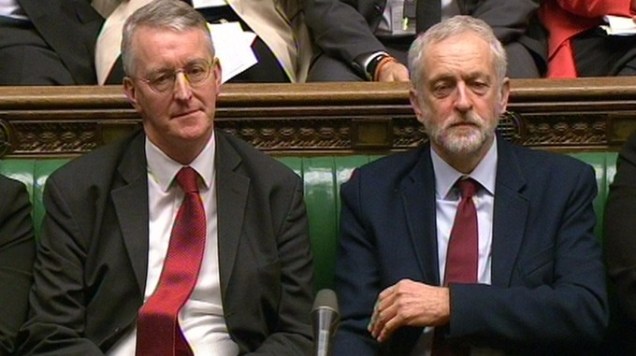
But in another sense, this pitiful capitulation is not surprising. The Parliamentary Labour Party called Jeremy Corbyn’s bluff and lost, badly. There is ample blame to go around – some for the remaining “big beasts” of the party who were too cowardly and self-serving to put their names forward as leadership contenders, leaving it to unloved support acts like Angela Eagle and the contemptible Owen Smith; some for misbehaving shadow ministers like Hilary Benn who took the job and then rebelled and briefed against their leader at every opportunity; and last but not least, a portion of the blame rests with every single one of the 172 Labour MPs who opportunistically calculated that the confused aftermath of the EU referendum provided a great “fog of war” in which they could go full Brutus on Jeremy Corbyn’s Caesar and get away with it.

Well, it didn’t work. Nobody viable stepped forward, the party membership was enraged at the parliamentary party challenging their pick for leader less than a year into the job, and Owen Smith’s damp squib of a campaign lurched from one unforced error to the next. Apparently the odious man can now be found swanning around Britain portentously comparing himself to Saint Aneurin Bevan of Tredegar, founder of Our Blessed NHS (genuflect), hoping that Labour members will not take the time to google his past career as a pharmaceutical lobbyist and statements broadly supportive of privatisation.

So what should the centrists do? Well, if they had an ounce of genuine conviction and commitment to principle (ha) then they would part ways with a Labour Party which has “left them” (to paraphrase their unconvincing bid for sympathy) and set up shop as a new party of the centre-left. But they will not do so, partly for selfish reasons – they want to keep ownership of the party apparatus and assets – but also for the very practical reason that starting a new political party from scratch and making a success of it is almost impossible. Sure, 150+ defectors would be much better than the “gang of four” who helped to found the SDP back in 1981. But while their parliamentary contingent might initially be fairly large they would need to build up a party structure and grassroots campaigning organisation from scratch in a very short space of time, or face certain annihilation at the 2020 general election.

And so the unhappy bedfellows will likely limp on together, Corbynites and centrists openly despising one another but remaining stuck with each other thanks to the British political system. The centrists will continue to moan to any journalist who will listen, Dan Hodges will have more material for his Mail on Sunday column than he knows what to do with, the PLP will do everything they can to make Jeremy Corbyn’s life a living hell, and Corbyn’s team will do all they can to set the stage for a purge of the centrists, either at the upcoming constituency boundary review or when it comes time to choose candidates for the 2020 general election.

Besides, the centrists have some thinking to do before they can make a plausible bid to take back leadership of the Labour Party. First and foremost, they must decide on a shared position on Brexit, which will be close to impossible – the centrist MPs are salivating at the prospect of thwarting Britain’s exit from the European Union by any means possible, no matter how far-fetched. Their every instinct is to take up and amplify the great howl of anguish emanating from the metro-left at the prospect of being forcibly ripped away from a European Union which most of them barely understand but which is absolutely central to their identities as progressive, enlightened model citizens. Unfortunately, this involves waving a big fat middle finger to Labour’s working class supporters, particularly those in the north of England, who were some of the most enthusiastic voters for Brexit.

The result will likely be another fudge and evasion as regularly practised by the Labour Party. They will reaffirm their commitment to the European Union and their desire to overturn the result of the EU referendum or at least to hold a second or third referendum until they achieve the desired result, while uttering glib, platitudinous assurances that they understand people’s frustration with the EU and with immigration, and that they will work for some mystical reform at some point in the future. They will grab hold of the Magical EU Reform Unicorn as tight as they can, while repeating to themselves that in fact they simply need to work harder to educate people of the wonders of European political union and mass immigration.

The political ground has shifted underneath all of Britain’s political parties, and while none have yet truly come to terms with the new post-Brexit reality and the schism on the Left, it is the Labour centrist MPs who are in the strongest denial right now. This is mostly because original thinking is required, and few of their number are capable of the feat. Jeremy Corbyn offers (with one or two exceptions) a very traditional and anachronistic form of socialism, ossified since the late 1970s. To regain power, the centrists cannot simply repudiate Corbynism or match Tory centrism while blathering on about equality and fairness. They need to jack in the Blairite triangulation and reimagine the role of the big, activist state that they love in a way which makes sense in the new century. Most are unwilling to put in this work – they think they can cheat their way back to power using a playbook which is twenty years old.

It won’t work. And however limited Jeremy Corbyn’s appeal to the wider country may be, he will not be dislodged as party leader until somebody else comes along with a compelling, clearly identifiable programme for government of their own – something sufficiently distinct from Theresa May’s authoritarian Toryism that Labour Party members (a) agree with it, and (b) think the country might vote for it.

Owen “I’m Nye Bevan!” Smith is a pitiful joke, as was Angela “I am my own woman!” Eagle when she was also running for leader. When the centrists have done their homework, one of them – preferably one with name recognition and a sprinkling of gravitas – can step forward and present their shiny new plan for Labour, and maybe the party membership will listen.

But until that happens, this is Jeremy Corbyn’s party. And that is how it will remain.


UPDATE: Read Part 2 here.


Jeremy Corbyn - PMQs

Support Semi-Partisan Politics with a one-time or recurring donation:

Agree with this article? Violently disagree? Scroll down to leave a comment.

Follow Semi-Partisan Politics on TwitterFacebook and Medium.

Blast From The Past: Jonah Goldberg Lashes Out At Political Centrists

A refreshing tirade against political centrism

Most regular readers will know that this blog has time for just about anyone on the political spectrum, save the out-and-proud centrists, those virtue-signalling, sanctimonious oiks who think that by eschewing strong opinions and continually fudging every issue they are somehow morally superior to us hot-headed partisan folk.

That’s why this blog has been a consistent supporter of Jeremy Corbyn’s leadership of the Labour Party. While I would never vote for him myself – and what’s with this trend of demanding that even the leaders of parties we would never vote for still agree with us on key issues? – far better that the Labour Party has at its head someone who stands for vaguely socialist principles than another rootless centrist in the mould of Tony Blair or David Cameron.

That’s one of many reasons why this blog campaigned tirelessly for Brexit and a vote to leave the European Union. Bland, woolly, resigned pro-Europeanism – the centrist belief that Britain is hopeless, the nation state is outdated and that security and prosperity can only come by surrendering sovereignty to an unaccountable supranational body – was the watchword among every single one of Britain’s main political parties, save UKIP. Brexit slapped that smug consensus off the face of Britain’s politicians, and their pampered cheeks will be smarting for years to come as a result.

All of this is an unnecessarily long way of labouring the point – again – that I really, really, don’t like centrists. I may have written about this already, once or twice before:

Bring up the subject of taxation, to pick a random example, and you’ll get a group of people who strongly feel that taxes should be cut in order to stimulate the economy and allow taxpayers to keep more of what they earn, and you’ll get another group of people who think that it’s morally obscene that some people are enjoying themselves, so we should make the tax code more punitively progressive to help bring about social ‘equality’. But you’ll also get a third group of rather bovine people who look up from Britain’s Strictly Come Bake-Off On Ice, wipe the pizza grease from their mouths and just say “what?”

At present, we tend to think of this last group of people as “centrists” or “swing voters”, simply because they do not quote direct from either the Labour or Conservative Party manifesto when asked to offer a political opinion. But are they really centrists? There’s a world of difference between someone who carefully studies the competing policies of different parties to arrive at a considered position half way between two extremes, and someone who mutters something about politicians being “all the same” before their eyes glaze back over.

[..] And can we also please disenthrall ourselves of the unsupported and misleading notion that these “centrist” voters will immediately startle like shy fauns if they encounter a strong political opinion once in awhile, when most of them probably could not run for the bus in the morning, let alone into the arms of another political party?

Which seems as good a time as any to revisit this Jonah Goldberg video taken from an interview with Glenn Reynolds, in which Goldberg is promoting his (then) new book, “The Tyranny of Cliches”.

Here is Goldberg on how centrists are overrated:

We all see the centre as this incredibly privileged and wonderful place, right? The mainstream media constantly talks about the centre as if it’s just the greatest place in the world, and centrists are somehow wiser and more noble than the rest of us — “Shh! David Gergen’s about to talk!” And it’s all nonsense.

First of all, the whole idea of the centre as being this privileged place is actually one of these enlightenment myths. There’s this whole slew of argumentation about how Galileo and Copernicus “dethroned mankind” by getting rid of geocentrism, that the theory of heliocentrism, that we revolve around the sun rather than the Earth being the centre of the world [sic] was an elevation or promotion for mankind, and in our arrogance we couldn’t handle it and the Catholic church beat up on it. And it’s not a real left-right thing, except in the regard that it explains how we understand the whole geographic political landscape.

The reason why the Catholic church and pretty much everybody else opposed geocentrism was one, they weren’t sure the science was right because it was a novel theory at the time, but two, because they considered it a promotion. In medieval understanding, in ancient Greek understanding, Jewish medieval understanding and Catholic, Thomas Aquinas understanding, the centre of the world, the centre of the universe is literally the asshole of the universe. The centre of the universe is considered the lowest and most disgusting and turgid place in the whole cosmos. In Dante’s Inferno, the lowest pit of hell is the centre of the universe. Maimonides talks about this, Aquinas talks about this and it is this myth of the modern mind that somehow geocentrism, getting rid of geocentrism somehow elevated mankind. It completely misunderstands where the medieval mind was, and we carry it forward to today.

There are a lot of huge arguments we have with the Left, or are between the Left and the Right. The Left says we have to build this bridge over a canyon, it’s a stimulus thing, it’s infrastructure, we need this bridge. The Right says are you frigging crazy? We can’t afford it, we don’t need the bridge, it’s a bridge to nowhere, it makes no sense, blah blah blah. That’s an honest argument – one side says let’s build the bridge, the other side says let’s not build the bridge. The friggin’ pinky-extending centrists parachute in and says no no, let there be peace among you. We’ll compromise – we’ll build half a bridge that goes halfway across the canyon.

It is these difference splitters who drive me absolutely batty, and we treat them as if they hold this privileged place when we don’t even understand that the centre is a geographic metaphor, it’s not an actual place in politics. All the serious ideas in politics have always come from where they were considered to be the extreme at one point or another.

Brexit and the reclaiming of our nation state democracy from the failing euro-federalist experiment in Brussels was considered a niche and even extremist idea for most of the past 40 years. And look at us now – with the only remaining resistance consisting of Owen Smith’s pitiful, petulant bleating and a few pathetic europhiles with the EU flag painted on their faces, Brexit is happening.

All the serious ideas in politics have once been described as extreme and unmentionable, says Jonah Goldberg. Darn straight.

And nobody has ever built a monument to a centrist.


Political centrism

Support Semi-Partisan Politics with a one-time or recurring donation:

Agree with this article? Violently disagree? Scroll down to leave a comment.

Follow Semi-Partisan Politics on TwitterFacebook and Medium.

Nicola Sturgeon’s Failure Of Courage

nicola-sturgeon-scotland-in-europe-snp-second-independence-referendum

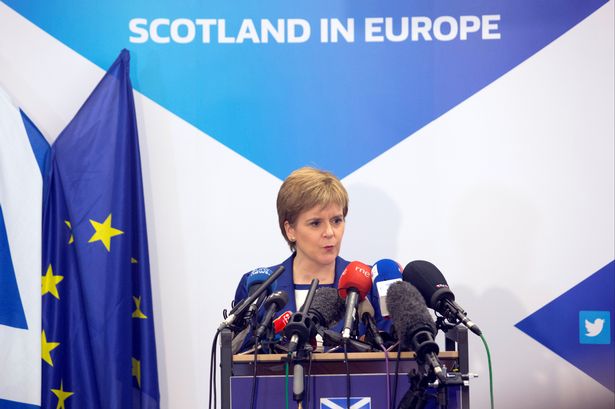
75 days after her massive tantrum about the EU referendum result, a meek and humiliating climbdown from Nicola Sturgeon

From the Guardian:

Nicola Sturgeon has shelved plans for a quick second referendum on Scottish independence after dire spending figures and a fall in public support for leaving the UK.

The first minister told Holyrood on Tuesday that her government only planned to issue a consultation on a draft referendum bill – a measure which falls short of tabling new legislation in this year’s programme for government.

Two months after telling reporters a referendum was “highly likely” within the next two years, she told MSPs that that bill would now only be introduced if she believed it was the best option for Scotland.

Her officials later said that consultation process could start at some time in the next year, with no target date in mind for its launch or its conclusion. Sturgeon’s official legislative timetable, the programme for government, described the referendum as an option and not as a goal.

Well, well, well.

Looks like a tacit admission that running a creaking, statist, big government petro-state north of the border – all based on a fiercely irrational cult of personality – doesn’t produce the kind of dynamic, resilient country which could frolic its way to independence without an economic care in the world after all.

Who could have possibly known?


Postscript: But let us not be too smug. The same report also tells us that the SNP plans to use the Scottish government’s discretionary fiscal powers cut the outrageously high Air Passenger Duty tax by 50% – a good first step in reducing it even further, back to the kind of levels which no longer put passengers off flying to or connecting through the UK:

She confirmed that the SNP would cut air passenger duty at Scottish airports by 50% from April 2018 to stimulate spending, a plan lambasted by Labour and the Scottish Greens as it would damage efforts to tackle climate change.

The day that the Conservative Party can lecture Nicola Sturgeon and the Scottish National Party on pro-consumer, supply-side economic reform with a straight face will be the day when Philip Hammond stands at the despatch box and promises an even greater cut in APD for the rest of the UK in his first Budget.

Until then, the Conservatives continue to disappoint expectations, preferring to virtue-signal their environmentalist credentials and rob leisure and business travellers of their money than usher in the aviation revolution that this country sorely needs.


nicola-sturgeon-snp-scottish-national-party-stronger-for-scotland

Top Image: Daily Record

Support Semi-Partisan Politics with a one-time or recurring donation:

Agree with this article? Violently disagree? Scroll down to leave a comment.

Follow Semi-Partisan Politics on TwitterFacebook and Medium.

Picking Through The Wreckage Of Defeat: The Electoral Reform Society’s Report On The EU Referendum

The Electoral Commission - EU Referendum Ballot Paper - Brexit - Biased Voting Guide

You don’t commission an urgent post-mortem report to look into something wonderful that has just happened. So the mere existence of the Electoral Reform Society’s tremulous report warning about the danger of future referendums tells us all we need to know about their attitude to Brexit and the people who voted for it

“The people have spoken. Or have they?”

So begins the Electoral Reform Society‘s autopsy report of the EU referendum and Britain’s shock decision to leave the European Union. The simpering “or have they?” tells you everything that you probably already suspect about this report – that despite whatever other good work the ERS might do, this is a metro leftist, superficially and uncritically EU-loving effort to come to grips with what they evidently view as a political disaster.

If something bad like a plane crash happens, the Air Accidents Investigation Branch will pick over the wreckage and file a report outlining the chain of events leading up to the tragedy. It is the kind of report which damns by its very existence – nobody commissions a sober post mortem report about something delightful that has just happened. The ERS’s perspective on Brexit is established in the first seven words, and even before then by its very existence.

That’s not to say that the report is worthless – despite its clear bias (I’ll eat my hat if author Will Brett or any of the other major contributors actually voted to leave the EU) there are some thoughtful deliberations on how to get citizens involved in any future referendum planning process so that the procedure feels less like something which was suddenly foisted on the people, the rules being made entirely by shadowy people in Parliament.

Nor can I argue with the report’s recommendation to extend citizenship lessons in primary and secondary school. This blog has long stood for mandatory civics classes thoughout the duration of secondary education, not only as a way of developing good future citizens in place of self-entitled little snowflakes, but also as a means of celebrating, transmitting and reinforcing core British values on classes which may be very ethnically and culturally mixed, thus helping to end self-enforced apartheid.

Read the whole thing here – it touches on more areas than this single blog post can feasibly analyse.

But soon the wheels start to come off the report. This first happens when the ERS make egregiously misleading use of the “factoid” that there was a large spike in Google searches of the phrase “What is the EU?” in the immediate aftermath of the result. This was immediately taken by the stunned Remainiac establishment to be proof that we bovine Brits had voted for something which we did not even understand.

But this scandalous interpretation is wrong, as the Telegraph patiently explained:

Google Trends data isn’t actually representative of the number of total searches for a term, but a proportion of all searches at a given time. The company highlights spikes in searches based on what else is being Googled at a given moment in a geographical area.

So in the early hours of Friday morning searches for “What is the EU” briefly spiked compared to what else was being asked. To put it in context, the search only outstripped that for “weather forecast” between 01:30 and 04:30 in the morning, but by 05:00 that had changed.

Data from AdWords, which offers more specific numbers for search terms, shows that the 250 per cent increase in searches actually correlated to about 1,000 people asking the question.

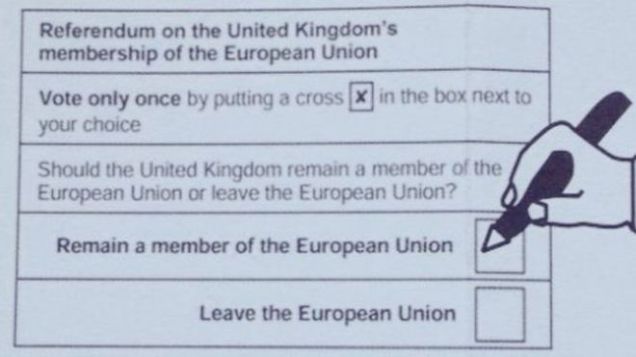
In other words, bitter Remainers called into question the intelligence of half the country based on the Google search activity of no more than a thousand late night stoners who didn’t know what the European Union is but who were also far too moronic to find their polling station, let alone put an X in a box. Yet the ERS still considered this deceptive factoid worthy of inclusion at the beginning of their report.

But here’s where it really goes wrong:

At the start of the regulated period the Electoral Commission, or a specially commissioned independent body, should publish a website with a ‘minimum data set’ containing the basic data relevant to the vote in one convenient place . A major source of complaint about the conduct of the referendum was the supposed lack of independent information available about the vote. While there are real difficulties in separating out fact from political argument in these cases, a minimum data set ought to be possible.

In other words, rather than assuming that the British people are mature and capable enough to frame the debate in the terms which matter most to them, the Electoral Reform Society would have some shadowy committee decide in advance the terms on which the referendum should be fought, and then produce a “minimum data set” of presumably quantitative data to guide decision-making.

This is a truly terrible idea. The EU referendum probably meant something slightly different to every single one of the millions of Britons who voted. Even assuming that an approximate minimum data set could be hammered out, what was included and what was left out would inevitably reflect the biases or interests of those involved. We have enough trouble trying to come up with a referendum question which both sides feel eliminates bias or inappropriate suggestion. What makes the ERS think that producing a commonly agreed “minimum data set” would be anything but fraught, contentious and ultimately impossible?

Besides which, the key issue of the EU referendum was intangible: do we think that British democracy is best preserved inside the EU or without? One can come up with endless (often contradictory) statistics debating the economic benefits, but what could one possibly collate to form the “minimum data set” to vote based on democracy?

As political blogger I have read scores of history and politics books including some of the definitive critiques and praises for the EU, and the more I learned the less I realised I knew. In fact, as referendum day inched closer and closer and I saw other, established journalists and politicians make continual fools of themselves with their superficial and misleading analyses, I found it harder, not easier, to write. There is so much that I don’t know about how the EU works in practice and how international trade functions that I’m loathe to write much at all, and I actually spend spare moments reading some of this stuff and trying to learn. So what would be the Electoral Reform Society’s ideal minimum reading list for the country?

But of course they are not suggesting a reading list at all. When the ERS propose a minimum standards set, what they really mean is a short list of bullet points emphasising all the ways that Brexit could harm the economy in the short term, assuming a worst case scenario. They want a beefed up version of the government’s already utterly immoral £9 million propaganda leaflet sent to voters before the EU referendum. Just to altruistically ensure that people are “better informed”, of course. Right-o.

Is the current system perfect? No. Many Britons did complain that they felt they lacked sufficient information, or that they could not trust the information they were given. One could scarcely escape these modern-day Hamlets bleating their confusion on BBC Question Time. But in fact, while the status quo may be far from perfect, the giant flaws in more activist approaches like that proposed by the ERS are far worse.

Will people sometimes make their referendum decision judgements based on poorly chosen criteria? Yes, of course they will. Would seeking to prevent this by artificially restricting the terms of the debate be any better? No, it would be a thousand times worse. Rather that power sits with sometimes-confused citizens than with politicians or civil servants with very fixed ambitions of their own.

Besides, the awkward fact remains that while many voters may have liked to complain about not having all of the required information handed to them on a silver platter, a proportion of them were simply covering for their own laziness. As an ardent Brexit supporter I know I’m supposed to be waxing lyrical about the deep wisdom of the British people right now, but the fact is that there are a lot of stupid people out there, on both sides of the debate – people whose bovine cries of “but nobody is giving information” belies the fact that they haven’t watched the news in years because the TV remote got buried under a pile of pizza delivery boxes.

But the worst recommendation from the ERS report is yet to come:

An official body – either the Electoral Commission or an appropriate alternative – should be empowered to intervene when overtly misleading information is disseminated by the official campaigns. Misleading claims by the official campaigns in the EU referendum were widely seen as disrupting people’s ability to make informed and deliberate choices. Other countries including New Zealand have successfully regulated campaign claims – the UK should follow suit.

Again, this reeks of mistrusting the electorate – of course, we already know that the ERS does so, it is the very reason for this report in the first place. But to see it spelled out quite so blatantly is remarkable indeed. For in the opinion of the ERS, citizens are not mentally equipped – even in the Age of Google, when everybody has a smartphone in their pocket capable of accessing the accumulated knowledge of mankind – to analyse political messages and determine truth or untruth, validity or invalidity. Rather, we are apparently in need of some external authority to pre-screen our reality for us.

How on earth this is supposed to work is beyond comprehension. Set 100 top-tier university students the essay question “The EU brought peace to Europe. Discuss” and you will get 100 different subjective arguments, each with a unique perspective and most drawing from at least some unique sources. Say the Leave campaign takes a dislike to such a claim by the pro-EU side: what threshold would they have to meet to bring a complaint, and who has the final say as to whether the statement is misleading or not? And if a statement is found to be misleading, what should be the remedy? Front-page advertisements by the Electoral Commission in every national newspaper? Another propaganda leaflet through everyone’s door? Interrupting Coronation Street with some breaking news?

As a policy prescription it is entirely unworkable, but as a middle class, metro-leftist sulk at the supposed lies and deceit of the Bad Man Nigel Farage and the Evil Tor-eees it makes perfect sense. And sadly, that is precisely why the idea of a Referendum Censor entered the Electoral Reform Society’s report.

And shockingly, this leads the Electoral Reform Society to conclude that given the nature and outcome of the EU referendum campaign, maybe we would all be better off eschewing future freewheeling referendums for the safety and security of “parliamentary democracy”, preferring this to even their recommendations for more pre-determined, moderated, government-mediated future referendum campaigns:

Given the frequency of party-political imperatives behind the calling of referendums, it is worth asking: what are the conditions where a referendum is really the best way of settling a political question? Perhaps parties and politicians should make a habit of reflecting on some of the difficulties around calling and then responding to referendums, and – where possible – seek to find a way through the thicket of representative democracy instead.

Douglas Carswell sees many of the same flaws in the ERS report that this blog also identifies:

How do you give people more control over government? I’ve always believed the answer is direct democracy: more decisions made by voters, fewer by politicians and officials. But the Electoral Reform Society seems to think the opposite. They want to give officialdom more control over direct democracy. Why?

The ERS’s latest recommendations come from its scathing report on the referendum campaign. I also thought some of the conduct in the campaign was disgraceful. But much of their critique is misplaced.

There is, for example, barely any criticism of the Remain propaganda issued by Downing Street at taxpayers’ expense. And no mention of the use of the civil service as an extension of the Remain campaign. Apparently, co-opting the organs of the State to gain an unfair edge is no big deal.

The report also says people felt ill-informed, and the campaigns provided disinformation. Yet there is no admission that many of the outlandish claims came from supposedly independent “experts” – many of whose warnings, especially on the economy, have already been proven wrong.

And concludes:

But the big problem with the idea of official arbiters for campaign information is not the practical execution, but the premise behind it. In a democracy, we already have an arbiter: it’s called the people. The whole point of democracy is that voters analyse what they are told by the opposing sides, and make their own decision.

Underlying the ERS’s report is the sense that people can’t really be trusted to know what they are voting on, so instead we should let unelected technocrats decide for them. That’s not the kind of electoral reform Britain needs.

And yet the report makes some worthwhile observations despite its inherent biases. The information made available to the general public through the media was indeed shockingly bad, as the ERS complain, with MPs and household name journalists alike vying with one another for the title of Most Ignorant on a daily basis. More galling for sites such as this, those of us who strove to deepen our knowledge were routinely shut out of the discussion.

I doubt there is a better-researched and thoroughly produced political blog in the whole country than eureferendum.com, and Dr. Richard North’s “Flexcit” Brexit plan, yet few have ever heard of it thanks partly to the establishment closing ranks against somebody they view as an outsider but also to the fact that the Westminster political/media establishment are lazy, and don’t like putting in the hours of work it takes to speak confidently and knowledgeably on the real intricacies of Brexit and international trade.

But whatever the individual merits of each point in the report, it still ultimately comes back to the question of why the report was produced in the first place. Had the EU referendum result been inverted and the Remain side triumphed in a 52-48 victory, would the Electoral Reform Society still have produced a report, albeit one streaked with fewer Remainer tear stains? I’ll be generous and say yes, they probably would.

But would the content of the report and the ensuing recommendations be identical to the current version, with its overt worries about misinformation and an ill-informed population? I very much doubt it.

And that tells you everything you need to know about the political bias of the Electoral Reform Society.


Electoral Reform Society - ERS - EU Referendum Report - Brexit

Support Semi-Partisan Politics with a one-time or recurring donation:

Agree with this article? Violently disagree? Scroll down to leave a comment.

Follow Semi-Partisan Politics on TwitterFacebook and Medium.