Two Month Report Card – First Thoughts On Theresa May’s Premiership

After an assured and confident start, Theresa May’s government shows welcome signs of moving boldly, if not always in the right direction

To date, this blog has not wasted undue time speculating about Theresa May’s premiership and assessing her early performance – not least because we are only just starting to emerge from summer silly season, and there has not been much yet to judge.

But as somebody who would never have wanted a flinty-eyed authoritarian like Theresa May to become leader of the Conservative Party and Prime Minister of the UK, I must admit that so far I am cautiously impressed.

The relative silence from Number 10 Downing Street over the summer break was refreshing, and the fact that we were not bombarded with press releases, superficial policy announcements and a load of government spin showed the best side of Theresa May – the no nonsense, hardworking operator.

Such rows and dramas as did break out – like the childish playground spat between Liam Fox and Boris Johnson over responsibility for promoting Britain’s commercial interests – were slapped down quickly, while similar turf wars and petty rivalries between SpAds were frequently allowed to fester and spiral into damaging newsworthy wars under David Cameron.

Of course, the worst Big Government, security state instincts of Theresa May are never far from the surface, and soon this blog will likely be riding to battle against the government’s Investigatory Powers Act, due to return before Parliament soon.

And on the most important issue of Brexit, there is still no sense that ministers have even truly begun to wrap their heads around the complexity of what is to come, let alone have an appreciation of the key challenges and opportunities. Theresa May has made a rod for her own back by stating her commitment to significant up-front immigration reductions as a key part of the package, which only makes the vital interim EFTA/EEA transitory option (with controls on immigration in the line of the Liechtenstein model) that much harder to achieve.

And yet there is also good news on Brexit, not least the willingness of our allies in Canada, New Zealand and Australia to lend us the services of their skilled trade negotiators as Britain struggles to regain core competencies in areas of national sovereignty which we allowed to wither and atrophy during our EU imprisonment. Also somewhat heartening is the seeming enthusiasm and energy which the government is throwing into pursuing various assorted “trade deals”.

While the devil will be in the scope and the details, this newfound diplomatic vigour is encouraging to witness, and only emphasises why David Cameron and George Osborne had to go after fighting against Brexit and losing the referendum. This is no time for surly, sulking brooders more keen to prove their Brexit doomsday scenarios true than to faithfully serve the nation to be anywhere near the levers of government. Senior civil servants should take note.

The confident appearance at the G20 summit in Hangzhou, China, also marked a welcome break from the past. Gordon Brown’s desperate, fawning approval-seeking, so unbecoming to the leader of an indispensable nation, and David Cameron’s oleaginous Davos Man act, the coping mechanism of somebody who never really understood what it is to be a statesman, were both beneath Britain. By contrast, Theresa May looked every bit the equal of Barack Obama at their joint press conference, neither Blairite poodle nor Brownite starry-eyed fan. For a country which has too often punched beneath its weight diplomatically (thanks in no small part to our absorption within the EU) it is encouraging to see that Theresa May seems to be taking her marching orders from the British people seriously.

But these are only first impressions. The complexities of Brexit have yet to bite (those daily articles either celebrating the Brexit success or gleefully validating the apocalypse are mindless puff pieces from a Westminster media class which has no interest in getting enmeshed in the details, or learning from those in the know). The migrant crisis remains unresolved. ISIS and the threat of radical Islamist terror remain pointedly undefeated. Domestic policy needs to be given new direction and urgency – preferably, given the Labour Party’s ongoing implosion, in the opposite direction to the Cameron/Osborne march to the political centre.

Looking ahead, this blog hopes and expects to see Jeremy Hunt let off the leash and given authority to tear some much-deserved chunks out of the arrogant BMA and the junior doctors’ dispute which has been a grubby pay dispute and not a high-minded defence of Our Blessed NHS (genuflect) all along.

Sensible measures on tax reform would be welcome too – though the words “daring” and “bold” hardly come to mind when picturing Philip Hammond, it would be good to see the scope of Theresa May’s ambition extending not just to make Britain’s tax regime attractive to foreign investors, but also to rewarding and encouraging individuals and small businesses. The 45% top rate of tax, a partial remnant of the stench of Gordon Brown’s premiership, must certainly go, but we also hope to see something more ambitious than mere tinkering around the edges of the tax code.

A renewed commitment to national defence and the Armed Forces would also turn the page on David Cameron’s willingness to see the UK lose core capabilities. The NATO target of 2% of GDP to be spent on defence should be treated like a minimum requirement, not an aspiration or a triumph to be crowed about. For a seafaring island nation, the Royal Navy is worryingly undermanned, and may struggle to operate even one of its new aircraft carriers, let alone both. Unlike other European powers, our maritime patrol and coastguard capabilities are virtually nonexistent. These and other issues should be remedied.

One would like to add robust support for freedom of speech and civil liberties to this list, and an end to persecution of people at the hands of the criminal justice system merely for the beliefs they hold or the ideas that they express – but let us not kid ourselves. There is no sign yet that a popular rebellion against the state’s efforts to criminalise thought and speech is anywhere near gaining traction. In fact, even many of those who spend half their time praising free speech (when it suits their own purposes) are happy to turn around, play the wounded victim and demand that others are held to account for expressing speech which they dislike.

A nasty authoritarian streak runs through Britain, and by no means only at the level of the political elite. Go to any pub or hipster coffee shop and you’ll hear people of all backgrounds and demographics expressing outrage at something and suggesting that it should therefore be banned by the government. And while Theresa May’s Conservative government is almost certainly likely to be a disappointment on the issues of free speech and civil liberties, they will be no more of a disappointment than many of the British people themselves.

So here we are, nearly two months into Theresa May’s premiership and there are unexpected causes for optimism and good cheer in a number of areas. There are also, inevitably, areas where May’s instincts and political convictions mean that she must be watched like a hawk and opposed where necessary. But over two months since the historic EU referendum and nearly two months into a most unexpected new premiership, Britain does seem to be walking a little taller and more confidently in the world.

Long may it continue.
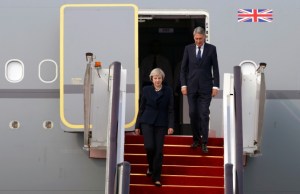
 

Theresa May - Philip Hammond - G20 - China

Top Image: International Business Times

Support Semi-Partisan Politics with a one-time or recurring donation:

Agree with this article? Violently disagree? Scroll down to leave a comment.

Follow Semi-Partisan Politics on TwitterFacebook and Medium.

On Owen Smith

Owen Smith is the worst person in British politics

I have been struggling to put my finger on exactly why it is that I loathe Owen Smith with such a visceral, burning, contemptuous rage. It’s neither healthy nor seemly – to the extent that I have nearly hit “send” on a few truly nasty social media comments which I would never normally make before finally regaining my composure and putting the iPhone safely out of reach.

It’s as though someone carefully and methodically packaged absolutely everything that I hate about modern politics into the greasy, grinning form of one man and paraded him on the television news every day to raise my blood pressure.

There’s the oleaginous, media trained (but not sufficiently that it looks convincingly natural and authentic) television persona.

There’s the craven cowardice of pretending he is every bit as old-school socialist as Jeremy Corbyn in a pitiful attempt to peel off Corbyn’s voters when we all know that he is the Parliamentary Labour Party’s centrist mole.

There’s the sanctimonious waffle about Saving Our Blessed NHS (genuflect) from privatisation, admittedly hardly unique to Owen Smith but particularly eyebrow-raising coming from the mouth of somebody with his past career and political track record.

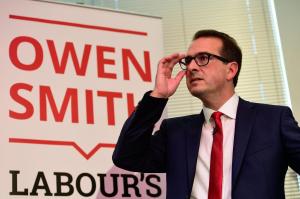
There’s the deliberately old-school typeface and stylistic theme employed by his campaign (see picture at the end, or his pitiful website), designed to evoke thoughts of 1970s and 1980s Labour when his campaign is the living embodiment of the PLP’s mission to suppress Corbyn’s throwback movement.

And then there’s Brexit. Oh yes, and then there is Owen Smith’s incessant, petulant whining about Britain’s decision to leave the EU, his channelling of the metro-left’s howl of anguish at the thought of being separated from their beloved European Union and his declared intention to nullify the public’s vote using any means at his disposal.

But on this occasion, Dan Hodges actually says it best, excoriating Owen Smith for his lacklustre campaign, broken political radar and sheer amateurish incompetence:

It took precisely 24 hours for Smith’s clean skin to be scarred by the stigmata of Blairism. He had worked as a consultant for ‘Big Pharma’. He had welcomed private sector involvement in the NHS. He had guardedly backed the Iraq War.

His skill as a media performer was demonstrated on Wednesday, when he tried to boast of his pivotal role in the Northern Ireland peace process. When this John Terry-style glory-hunting fell flat, he tried to further embellish his credentials in international conflict resolution by announcing he would happily sit down for talks with Islamic State.

Whereas most Labour politicians content themselves with waving the red flag, Smith opted to wave a black one. An hour later Corbyn’s camp issued a statement distancing themselves from his stance, leaving Smith the only person in British political history to be outflanked by Jeremy Corbyn on the issue of national security.

Questioned about the ongoing bullying and intimidation of Labour members who do not support Corbyn, Smith the dogged street-fighter pleaded: ‘I am not a Blairite, I am a socialist just the same as you. I have never been a Blairite.’

That last exchange perfectly encapsulates Smith’s strategy. His message has essentially been: ‘I am just like Jeremy Corbyn. I believe in the same things as Jeremy Corbyn. Ditch Jeremy Corbyn.’

Amazingly, this ‘Dump Corbyn, Get Corbyn’ line isn’t resonating with the Corbynite true believers. For the simple reason that while many of them are stark-staring mad, they aren’t stupid. This is how Smith thought he could secure the Labour leadership. ‘Jeremy Corbyn’s supporters are very Left-wing,’ he told himself, ‘and I need them to vote for me. So I’ll pretend to be very Left-wing too. That’ll fool them. Then I can start dragging Labour back to the centre-ground, which is where it has to be if I’m going to get to be Prime Minister.’

As a master-plan for wooing Corbyn’s supporters into his warm and pragmatic arms, it was utterly brilliant. Except it had one fatal flaw: It was so childishly transparent and craven, every Corbyn supporter in the land knew it was his master-plan.

A weak plan from a weak and utterly forgettable man. In a decade’s time, nobody will remember who Owen Smith is. He will have returned to some anonymous career as a lobbyist or PR man, and will have a footnote in history as somebody who once caused minor irritation to Jeremy Corbyn for a few months.

The Parliamentary Labour Party could of course have put forward someone with more gravitas and prime ministerial potential, but they didn’t. To a man and woman, they prized their own political careers over the opportunity to lead Labour to likely defeat in 2020. In many ways, Owen Smith is the collective cowardice of Labour’s remaining big beasts, given human form and a uniquely irritating grin.

And Hodges is absolutely right – the bait and switch move that Owen Smith is trying to pull would be obvious to a ten-year-old. The 1970s font and protestations that he agrees with Corbyn on policy isn’t fooling anyone. He is treating Labour Party members with open contempt by even asking them to swallow his ruse, and I have no doubt that he will catastrophically underperform even the rock-bottom expectations of the Westminster political class when the results of the Labour leadership contest are announced.

Ultimately, my problem with Owen Smith is this: now that Corbynism has been unleashed within the Labour Party, it can only be comprehensively tackled and beaten back through defeat at the ballot box in a general election. Anything else – whether it is forcing Corbyn to resign, shenanigans to set up a shadow “party within a party”, disenfranchising his supporters within the party or changing the rules to thwart him – will be insufficient. It may succeed in removing Corbyn, but Corbynism will live – his supporters will be enraged and his successor will have almost zero scope to change direction without seeing the bottom fall out of the Labour Party at the grassroots level, effectively destroying the party.

By contrast, if Jeremy Corbyn is permitted to unapologetically lead Labour to a landslide defeat in 2020, then the centrists have a much fairer shot at regaining control of the party. Corbynism will be discredited and rejected by the British people, and the opening for an alternative will again exist.

Owen Smith represents the Parliamentary Labour Party’s craven, ill-considered plan to try to circumvent that process. For reasons that this blog has previously explained – primarily impatience to return to power for the sake of their own political careers – a 2020 defeat and potential 2025 victory is simply too long to wait for a bunch of oily careerists who didn’t lead blandly forgettable lives and forego careers in the banking sector only to rot away, as they see it, on the backbenches. And so unwilling to even give Corbynism a chance to fail on its own, the restive PLP has decided to try to reassert their control now.

But it won’t work. No political party can long endure when its elected representatives are so markedly at odds with the grassroots membership, the ordinary people who knock on doors and hand out leaflets to get their MPs elected in the first place. And Owen Smith’s candidacy represents a giant two-finger salute, fifty feet high and covered in glitter, directed at Labour Party members who strongly support Jeremy Corbyn.

There’s a great episode of The West Wing where two of President Bartlet’s aides, Communications Director Toby Ziegler and Deputy Chief of Staff Josh Lyman, are left behind by the presidential motorcade during an election campaign stop and have to hitchhike their way back to Washington D.C. The two men begin to get on one another’s nerves as the ideological Toby Ziegler demands to know why the politically calculating Josh Lyman isn’t more enthusiastic about the president’s barnstorming stump speech, in which Bartlet aggressively criticises his Republican opponent.

After Toby’s rant,  Josh finally snaps and tells Toby:

“Which is one of the reasons that I work full-time for his opponent. I don’t know what gave you the impression that I had to be convinced, but I want to win. You want to beat him, and that’s a problem for me, because I want to win.”

I’ve always thought that this is an important distinction, one which I try to apply in my own political thinking. Far nobler it is to want to win, to convince others of the rightness of one’s cause, than to want to beat the other side and take enjoyment as they suffer the bitter pangs of defeat.

During the EU referendum, I genuinely wanted the Leave campaign to win more than I wanted to defeat the Remain campaign. Despite immense provocation from the political establishment and many on the Remain side, I was generally motivated more by a desire to secure a better and more democratic future for my country than to make Remainers sad or to wipe the smug smile off George Osborne’s face (though that has certainly been a wonderful bonus).

Not so with this Labour leadership election though. I want Owen Smith to lose. I want him to lose big, and lose hard. I want him to suffer such a humiliating, lopsided, landslide defeat that he bursts into tears on live television and has to run from the conference hall in shame and ignominy. And I want the Parliamentary Labour Party, who cynically used the shocked aftermath of the EU referendum as a pretext to launch an antidemocratic coup against their elected leader and their own members, to behold this gruesome scene and take their lesson from it.

I’m not proud of it, but that’s what this despicable, oleaginous, ideologically rootless C-list politician does to me. The sooner British political life is rid of him, the better.


Owen Smith - Labour Party Leadership Coup

Support Semi-Partisan Politics with a one-time or recurring donation:

Agree with this article? Violently disagree? Scroll down to leave a comment.

Follow Semi-Partisan Politics on TwitterFacebook and Medium.

Sincere Congratulations To The Spectator For Their All-Women Cover Issue

Fraser Nelson - The Spectator - Westminster Media - Journalism

A brief rant before normal service resumes…

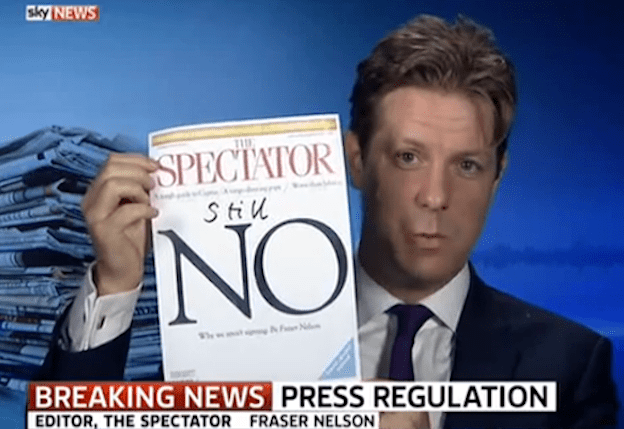
The Spectator editor Fraser Nelson today felt the need to publish a self-congratulatory humblebrag remarking on the fact that their latest print edition’s cover page apparently features only the work of female writers, despite no conscious decision having been made to indulge in affirmative action.

Nelson gushes:

Just before The Spectator went to press yesterday, my colleague Emily Hill pointed out that I’d just taken away the only male name away from the cover: all seven of our coverlines were stories written by women. Did I really want that? I hadn’t thought about it until then, and for a while I did consider engaging in tokenism and slapping a man on for the sake of it. But why bother? Spectator readers don’t really care about gender, just good writing.

In fact it hadn’t occurred to any of us, until that point, that we were about to run what Ariane Sherine, who writes our cover story, today hails as the first all-woman cover in The Spectator’s 188-year history. But this wasn’t a patronising attempt at a ‘wimmin’s issue’ or some other awful tokenistic wheeze. Our all-women cover wasn’t deliberate, it was just the way the cards fell. Each week we want to get the best writers on the most original topics: this week, they all happened to be women.

That’s not to say there’s no difference when it comes to getting hold of good writers. As Emily will tell you, women don’t put themselves forward as much as men. To get the full range of talent from all available writers can mean people like Emily going to great lengths to find and encourage new writers – like Ariane Sherine. As so often, Fleet Street follows up. As I write, two national newspapers are vying for the right to republish her cover story.

Full disclosure: I have a bit of a beef with lead article author Ariane Sherine (a one-sided affair; she, I’m sure, has no idea who I am) following her previous effort for The Spectator, an appallingly condescending report about how she performed a comedy gig in the heart of UKIP-supporting coastal Essex and somehow, miraculously, was not ripped to shreds by the rabidly racist, evil Brexiteers who dwell there.

It is interesting, too that Sherine (and apparently other women writers published in The Spectator) had to be sought out, coaxed and persuaded to write for the venerable magazine because “women don’t put themselves forward as much as men”. Funny, that. I, a despicably privileged man, have pitched to The Spectator before – it was actually a terrible piece from a few years back when my writing was very green, not at all worth publishing – but then I never had the pleasure of being sought out and implored to honour The Spectator’s readers with the fruits of my keyboard. That must be quite a nice feeling.

I don’t normally do this, but let’s just muse on the topic of gender equality for a moment, particularly as it relates to journalism. Regular readers will know that I spent pretty much every spare moment of the past year campaigning for Brexit in the EU referendum, initially rather haphazardly but (I hope) increasingly coherently as I read Richard North’s peerless eureferendum.com blog, learned about Flexcit and fell in with The Leave Alliance. I claim zero credit for any of the specific ideas this blog has supported around Brexit and the future of international trade – my tiny bit part in this effort consisted merely of standing on the shoulders of giants, particularly Richard North and Pete North, whose technical mastery and polemical writing I admire enormously.

The point, I suppose, is this. For some time now, a group of independent, citizen bloggers have churned out consistently better analysis and commentary on the EU referendum and Brexit on any given day than the mainstream media has given the British people in an entire year. Even now, dim-witted publications like the Guardian and FT are scrambling to catch up and think through some of the ramifications and issues which the people in my circle have been writing about for months. And what mention or recognition has this work prompted from the Westminster media? How many links to our widely-read and shared articles have appeared in mainstream outlets like The Spectator?

I think you know that the answer is zero.

Now, you don’t have to rate Semi-Partisan Politics at all – though I am personally quite frustrated, this issue is much bigger than little old me. But doesn’t it seem slightly odd that the entire Westminster media managed to somehow overlook the hard work of a small army of pro-Brexit bloggers on the biggest political issue to face Britain, just when fresh analysis was sorely needed, and yet The Spectator has time to scour Britain at great length for underappreciated female talent to promote to the front page?

Fraser Nelson claims that The Spectator’s all-women front page was entirely accidental, and I take him at his word. But isn’t it telling that this feat was achieved at the height of silly season, the summer recess, when the political news which is the Spectator’s bread and butter is almost entirely absent? When MPs come back from recess and things get serious again, let’s see how many months or years it takes for the next unintentional all-women issue to go to print. My guess is that it will be some while; that when PMQs is back and party conference season gets underway we will be seeing a lot more of James Forsyth, James Delingpole and Rod Liddle on the cover. Just a hunch.

So what was the amazing piece which made the cover of The Spectator anyway, you ask? Well, it was a thrilling exposé of a growing trend among millennials whereby single women stop looking for a suitable man and choose to marry themselves instead.

A snippet:

As far as the bride was concerned, the wedding was perfect. Her dress was beautiful, the vows were traditional and she changed her name after the ceremony. The clifftop scenery was breathtaking, the seven bridesmaids were encouraging and supportive: move over Princess Di. There was only one thing missing: the groom. Like a growing number of single women, Sara Starkström had decided to marry herself.

‘I thought about people marrying other people without loving themselves first,’ says Starkström, a writer, explaining what many would call a bizarre overreaction to finding herself single at the age of 29. ‘How could they pledge to do all this stuff for another person when they couldn’t promise themselves the same thing? I decided to marry myself to celebrate my independence and strength. I did it to promise to be my own best friend.’

[..] While many commentators make scathing judgments about sologamy (the feminist blog Jezebel ran a dismissive piece called ‘Single women, please stop marrying yourselves’, chiding, ‘You should be aware that you’re no trailblazer and you’re sure as hell not thumbing your nose at the system. You’re buying into it’), this hasn’t stopped increasing numbers of women from taking the plunge. For Starkström, self-marriage was a liberating act for which she is quite happy to take all the jokes ‘about me carry-ing myself over the threshold and making love to myself’.

And the thrilling conclusion:

Perhaps this is the crux of the sologamy issue: self-marriage is harmless, cheap compared to the £20,500 average cost of a classic wedding, and the union seems to make the bride very happy. If only the same could be said for the majority of traditional marriages which feature a groom. Princess Diana’s fairy tale fell apart when she found that there were three people in her marriage. Now, for an ever-increasing number of determined modern women, one is more than enough.

This isn’t even original. Even I know – don’t ask me how – that Sex and the City featured a similar storyline nearly fifteen years ago, in which protagonist Carrie Bradshaw decides to marry herself as a way of recouping the money spent on friends’ engagements and replacing an expensive pair of shoes which were stolen at a previous party. This kind of story is “and finally…” fodder on the TV news, not lead article material for The Spectator.

This may be silly season, but British politics is hardly dull at present – we have the ramifications of the EU referendum result to pick through, and the slow-motion car crash that is the Labour Party’s self-destruction, while America continues to wrestle with the Donald Trump phenomenon. In these circumstances, I’m sorry to say that Sherine’s story about sologamy has more than a whiff of affirmative action about it.

Before the inevitable feminist lynching begins, another disclaimer: I have long believed that The Spectator’s Isabel Hardman is the outstanding political journalist of her generation and, based on my couple of conversations with her, a genuinely nice person in the SW1 bubble. If The Spectator had ten Isabel Hardmans on staff, I wouldn’t expect a male-written cover story any more than once a year. It shouldn’t be necessary, but I want to put any idea that this rumination is some alt-right, anti-woman rant quickly to bed.

Note too that even when quoting the established feminist blog Jezebel, The Spectator fails to provide a link to the article Sherine cites by name. This is how unwilling the establishment British media are to share readers, clicks and opportunities. It is selfishness beyond measure, and is ultimately counterproductive – the American political blogosphere grew and thrives today not only because bloggers link to one another, but because there is a dialogue between what were traditionally the “legacy” print media outlets and alternative voices.

Readers aren’t forever lost to a publication which dares to link. In fact, readers often respect the original source all the more as a curator of other worthwhile information across the internet, thus increasing their loyalty. Maybe this doesn’t easily show up in the monthly SEO and web traffic reports which now seem to drive all media behaviour – and which have turned the Telegraph from a respectable broadsheet to a sensationalist purveyor of clickbait – but it is a real factor nonetheless. My own personal blogging hero, Andrew Sullivan, built the most influential political blog in history based entirely on this philosophy of curating the web for his readers and also providing fresh commentary which was picked up by the legacy media.

To this day, if there is a worthwhile piece of commentary or analysis on an American political blog, it is not unusual to see it linked to in a piece by an “establishment” journalist on the staff of, say, the New Republic or the National Review. Semi-Partisan Politics has been cited in the National Review a couple of times, a courtesy not once extended by any major British publication, and this despite the fact that 80 per cent of this blog’s output concerns UK rather than American politics.

So how should the British media interact with the blogosphere and promote new talent? Well, call me old fashioned but I believe that a simple commitment to meritocracy can’t go far wrong. Sure, The Spectator will always hire the likes of Pippa Middleton to write vacuous society guff about hunting for truffles in their Christmas issue, and that’s fine. But when it comes to political coverage, one wishes that established British publications would at least pretend to aspire to genuine meritocracy, seeking out the best analysis and commentary regardless of race or gender rather than indulging as they do in flagrant nepotism on the one hand and leftist affirmative action on the other.

I’ll speak plainly, because it’s better than dancing around the issue, from my perspective as someone no longer in the first flush of youth trying to build an audience and reputation as a writer. It is frustrating to pour every spare minute into this blog, providing (I dare to hope) sometimes original and refreshing commentary – particularly I think on the 2015 general election, the ongoing Labour leadership saga, free speech or academic freedom issues and the EU referendum – and see what is  objectively weaker commentary from nepotism beneficiaries or the obvious fruits of affirmative action benefit from a prestigious platform, greater recognition, and – oh yes, from monetary reward too. It’s just a little bit hard to take day after day.

I could play the minority card too, if I wanted to talk up my BAME working class background, but I would never compromise my principles by demanding that I be given a platform based on who I am rather than what I have to say. I won’t go there – it would be a violation of everything that this blog stands for. Others sadly seem happy to do so.

I write because I love to write, and because I think I have slowly created something quite small but precious here at Semi-Partisan Politics; because I have a small readership whom I love to serve, write for and debate with; because it is better than ranting into Facebook 24/7 as I used to before I opened a WordPress account. But sometimes it is a bit galling to see an inferior product exalted and given prominence when I and several of my good writer friends toil in obscurity.

Building a reputation and audience as a writer should be hard – it rightly takes time, effort, humility and perseverance. It has taken me over four years to even begin to get a sense of who my audience is / should be, and how best to serve them – and I claim no special skill at what I do, only a great deal of enthusiasm for it. But whether it is Twitter interactions, links to my site or other interactions, the amount of support I have received from American journalists and publications on the other side of the Atlantic vastly exceeds what little help or hand up I have ever received from the British media class – despite the fact that at least 80 per cent of my written output, networking and outreach efforts are focused on British politics and the Westminster media.

And I think British journalists and editors should be made to feel a little bit ashamed of that fact. Not for my sake – I’ll be just fine, and 95 per cent of the time I am happy to keep plugging away without a murmur of complaint. They should feel shame because my situation is far from unique, and because there are writers in my acquaintance whose insight, bravery and raw talent would enrich our country’s entire political discourse if only it had the bully pulpit it deserves.

The Westminster media establishment should be ashamed because the way they seek out and promote writing talent fails the British people, serving them an often substandard and derivative stream of written output and unoriginal thinking from the pens of the well-connected (either by parentage or ability to fill the checkboxes of a Diversity Officer’s form) while effectively pretending that the struggling political blogosphere – the primary outlet for so many talented, aspiring writers – doesn’t even exist, and certainly not as a source worthy of links or interaction.

Okay, rant over. I don’t have the energy to bring this piece to a neat end.

Normal business will now resume. Read it here first, or three months later from someone who gets paid to do this kind of thing.


Political Blogging 2

Top Image: The Spectator / Sky News

Support Semi-Partisan Politics with a one-time or recurring donation:

Agree with this article? Violently disagree? Scroll down to leave a comment.

Follow Semi-Partisan Politics on TwitterFacebook and Medium.

Social Justice Warrior Karma, Part 1 – Owen Smith Edition

Owen Smith - Social Justice Warrior

He who lives by the sword dies by the sword

Well, well, well.

Once again, leftists are reminded that the revolution always eats its own:

Jeremy Corbyn’s leadership campaign has demanded an apology from Owen Smith after the challenger apparently described his rival as a “lunatic”.

Corbyn’s team reacted with anger over claims that Smith, a shadow Cabinet minister until just weeks ago, used the term about his former boss at a rally in London last night.

The Labour leader, who has himself faced an onslaught of criticism overnight because of his controversial video on a “ram-packed” Virgin Train service, said Smith’s language had descended into “personal abuse”. This morning Smith issued a partial apology.

[..] “And what you won’t get from me, is some, you know, lunatic at the top of the Labour Party, you’ll have someone who tries to form a coherent narrative about what’s wrong with Britain,” it is claimed Smith said.

A spokesperson for the Jeremy for Labour campaign, today said: “Owen Smith has degraded this contest by descending into personal abuse. He should apologise to people suffering with mental illness, many of whom would have been dismayed and upset to to hear such offensive language used in public by a Labour politician.

“He should also withdraw his remark, and spend time with people suffering from mental health problems to develop some sensitivity in his use of language. This is simply not the language that someone standing to lead our party should use, and it injects an ugly tone into this contest that no Labour member wants to see.”

Smith’s intervention also prompted dismay from the Labour Campaign for Mental Health. In a statement posted on Facebook today the group said: “While we tend not to comment on the leadership contest, we were saddened to see that the term ‘lunatic’, a term with a long history of abuse toward those with mental illness, has been used in this contest as a term of derision against a colleague. We, as a party, should be fighting to end the stigma and support those in our community with mental health issues, and not use these cruel, oppressive names to insult opponents.”

One probably shouldn’t gloat at Owen Smith’s misfortune – but let’s indulge ourselves just this once. Because nothing restores the conservative soul more than watching preening, virtue-signalling Social Justice Warriors self detonate on the very same verbal land mines they themselves have laid across our political and cultural discourse.

Does anybody seriously think that people suffering with mental illness are in anguish today because of Smith’s remarks? Is anyone at this moment penning an angry letter declaring “On behalf of lunatics everywhere I am appalled by Owen Smith’s cavalier appropriation of the term ‘lunatic’ and his lazy attempts to describe the state of madness while making a political point”? Of course not.

But this is the rod which the preening social justice Left have made for their own backs. They have weaponised language to such an extent that even normal, everyday expressions are loaded with dynamite – not because their use actually “harms” the so-called victim group in question (lunatics, in this case) but because it offends other professional offence-seekers on the Left, parasitical people who gain power and social status within their social circle by pointing out and loudly criticising the supposed intolerance of others.

And you have to hand it to the Corbyn campaign – they responded magnificently to Calamity Owen’s latest gaffe, immediately portraying their man as the virtuous Protector of the Mentally Ill, standing up to Smith’s supposed deliberate denigration of their suffering. Like Ronaldo on the receiving end of a light tackle, Corbyn played the victim brilliantly, immediately falling to the ground and flopping around (metaphorically speaking) as if stunned by Owen Smith’s sheer inhumanity, before donning the white robes of virtue and sanctimoniously “defending” mentally ill people from a supposed microaggression which none of them would have noticed in the first place were it not for Corbyn’s skillfully weaponised victimhood.

But don’t feel sorry for Owen Smith – he will have learned nothing from this latest escapade. Despite himself now having come under attack twice for violating PC / Social Justice dogma (the “smashing Theresa May back in her heels” remark, and now this) you can be sure that Smith will soon have reverted to type, clutching his pearls in mock horror and seeking to make political capital out of the garbled speech of some or other unfortunate Conservative MP. He knows no other way. None of them do.

Snarling, weaponised victimhood is literally all that the modern Left have going for them at present.


Owen Smith - Labour Party Leadership Coup

Top Image: BBC

Support Semi-Partisan Politics with a one-time or recurring donation:

Agree with this article? Violently disagree? Scroll down to leave a comment.

Follow Semi-Partisan Politics on TwitterFacebook and Medium.

NHS Heresy, Part 1

NHS RIP

Instituting a new feature on this blog, highlighting those rare, brave souls who dare to stick their heads above the parapet and suggest that Our Blessed NHS (genuflect) is no longer a sustainable model for delivering top quality healthcare to the British people

The Telegraph’s Jeremy Warner says the unsayable:

In a tax-funded health care system, the normal, self-limiting rules of supply and demand don’t apply. Where the service is perceived to be essentially “free”, demand can never be sated; it will just keep on growing until it breaks the system.

Three new elements have entered the equation in recent years to make an already grave situation much worse. One is the advent of mass communications. As people become more aware of potential threats to their health, and what treatments might be available to counteract them, they expect better and demand more.

Second, society is ageing. Most health care costs are incurred in the latter stages of life. Current demographics are delivering a double blow; more people are both moving into the high cost cohorts, and once in, they are surviving much longer than they used to.

And finally, there is the ceaseless march of technology, including the advent of “personalised medicine”, procedures and or treatments tailored specifically to the patient’s individual genome. Over time, this approach to medicine ought to become cheaper. It also already promises to make some existing and extremely expensive, treatments obsolete. But right now, it only piles on the costs. A personalised service is also quite alien to the NHS’s culture of uniformity. Even applying it will require radical change, never mind the small matter of how to pay for it.

Warner concludes, hopefully:

If the NHS was ever the “envy of the world” described by popular myth, it has long since ceased to be so. None of this is to denigrate those who work selflessly against the odds in British health care for the betterment of the UK public. It is merely to point out that the post-war model of funding no longer works and needs a radical overhaul. It would be a brave Prime Minister who questioned this sacred cow, but with meaningful Labour Party opposition all but vanished and the challenges and opportunities of Brexit likely to force change across the policy landscape, there could scarcely be a better time for some radical thinking than now.

This blog has no such optimism. Theresa May has earned her reputation as a somewhat traditionalist authoritarian for a good reason. She is already making noises about opening more grammar schools, thus establishing the new prime minister as a reinforcer of traditions rather than a slayer of sacred cows.

And the NHS, having passed its 68th birthday, is not just a British tradition – it is the British tradition, more integral to who we think we are as a people than Wimbledon, red telephone boxes or the Queen. You will see the monarchy abolished in this land before you see a system of private healthcare replace Our Precious NHS, at least under this government.

More to the point, Theresa May’s government already has its semi-competent hands full coming to terms with the scale of the challenge presented by Brexit. Unlike some of the cowboys in Vote Leave or Leave.EU, this blog never pretended that Brexit would be easy, and Theresa May’s Foreign Secretary and ministers for trade and leaving the EU are just now beginning to realise this fact.

Successfully negotiating the scoping of Britain’s negotiating position and then managing the initial two-year secession negotiations following the triggering of Article 50 will, whether Theresa May likes it or not, expend just about all of the political energy and capital that her government possesses this side of a general election, even if the Labour Party manages to continue being a slow-motion car crash right through til 2020. There simply will not be enough energy left for the fundamental restructuring of British healthcare, especially in the face of howling opposition from the NHS Industrial Complex, that vast web of vested interests which grows around the world’s fifth-largest employer like ivy on a crumbling building.

Neither has Theresa May shown any great interest in touching the super-charged third rail of British politics in any case. She kept Jeremy Hunt on in his role as Health Secretary, hardly a bold marker of intent to pursue a radically different course of action. Neither does a parsing of May’s past speeches reveal a yearning desire to enact healthcare reform bubbling beneath the cold, authoritarian exterior.

After the 2020 general election and in a post-Brexit environment, things may be different. This blog sincerely hopes that this is so – that Britain, buoyed by the fact that Brexit has (hopefully) been achieved without ushering in the apocalypse, might be in the mood to tackle other big challenges. But here we are on extremely flimsy ground – when nobody can comfortably predict the next month in British politics, it is foolish to daydream about what might possibly happen in four years’ time.

Yet everything that Jeremy Warner writes is true. At best, any government – even an NHS-worshipping Labour government under Jeremy Corbyn- could only paper over the cracks in our healthcare system. Relative performance on key metrics (like cancer survival rates) will continue to drift downwards, further away from our continental rivals, while NHS cheerleaders continue to point to value for money studies which suggest, on paper, that their idol is still the “envy of the world”. And the British people will continue to heap unending, unthinking praise on the NHS, literally killing themselves with their devotion to that giant bureaucracy.

It would nice to be able to write something more optimistic, but at this time there are absolutely zero grounds to expect that the situation will change for the better, short of a major crisis or unexpected political shock.


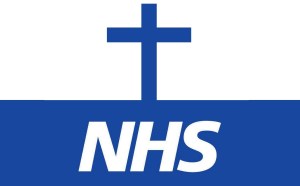
NHS Logo - Cross - National Religion - Worship - Idolatry

Top Image: Express

Support Semi-Partisan Politics with a one-time or recurring donation:

Agree with this article? Violently disagree? Scroll down to leave a comment.

Follow Semi-Partisan Politics on TwitterFacebook and Medium.