The Centre Must Not Hold

WTF is Centrism

Calls for the Tories to pursue and embrace the non-existent “radical centre” are a dangerous Siren song for conservatism at a time when the country needs conviction and clarity of purpose

We must know what a Tory government will have to achieve, before thinking about the way in which it must win office, because simply “winning a majority” on the wrong terms may not give it the authority it needs for success.

In normal times a majority is enough. The task of government is to steer a basically healthy socio-economic system past hazards which are primarily external, while ensuring that the system’s fabric is maintained and making improvements to it here and there.

But once the system itself starts to show signs of fatigue, instability, disintegration, then we start to talk of discontinuity. In discontinuity, solutions can only be found by breaking constraints which we had assumed were unbreakable. It is not enough to settle for policies which cannot save us, on the grounds that they are the only ones which are politically possible or administratively convenient.

– John Hoskyns and Norman Strauss, “Stepping Stones Report”, 1977

For over a week now I have not been able to bring myself to write anything new for this blog. Why? Because the patterns of failure in British politics are now tediously familiar beyond all endurance, as are the mistakes, missed opportunities and blunders routinely committed by politicians and thinkers who call themselves “conservative”.

Yes, the past week was a particularly torrid one for Theresa May’s shambolic government, but it did not teach us anything new. So more evidence emerged that Boris Johnson is totally unfit to be Foreign Secretary, the Tories no longer even seek to act like the party of Defence while the prime minister is utterly dependent on her questionable deputy Damian Green – these are not new revelations. They have been relentlessly, depressingly drummed into our consciousness over a matter of months and (in some cases) years.

Besides, even if Theresa May’s Cabinet were a precision-engineered Rolls Royce jet engine operating at maximum power and efficiency it would not matter – we would simply reach the same dismal destination somewhat faster than is currently the case. This is not an ambitious and visionary government let down by flawed execution and unfortunate scandal; it is a government which never had any real purpose to begin with.

Every two-bit conservative commentator is now saying what this blog has been screaming for years – that aimless, centrist government devoid of purpose is a dogma of the quiet past, inadequate to the stormy present; that we may as well not have bothered deposing New Labour in 2010 if we were only going to replace Gordon Brown with a bunch of slavish centre-left devotees wearing blue rosettes instead of red ones.

Well slow hand clap, guys. What do you want, a medal? Some of us have been making this point for years now, back when the well-paid and ubiquitous journalists and TV commentators were purring over David Cameron and Theresa May, predicting an uninterrupted decade of energetic, fruitful Tory rule even as their timidity and incompetence led us ever closer to the abyss.

Already there are a number of travelling quacks offering their own dubious potions and cures for the Tory malaise, most of which are vague at best or completely misguided at worst. A few thoughtful people have genuinely interesting ideas, but many seem to propose a further shift to the left, as though additional concessions to Corbynism will do anything other than validate Labour policies in the eyes of the electorate. Others suggest that “compassionate conservatism“, that hateful, self-sabotaging and worn-out phrase, is the magic solution. But most common are the tedious, meaningless calls for the Tories to recapture the “radical centre” of British politics.

The latest to take up this cry is Tory MP Johnny Mercer, who offers a fairly blistering (and by no means inaccurate) critique of past Conservative failures, taking Theresa May to task for her failures of leadership and the party as a whole to task for their ideological drift.

From the Telegraph:

“It smells of decline, and the people won’t have it” said Mr Mercer, MP for Plymouth Moor View, who bucked the national trend and increased his majority by five-fold at the last election.

“There becomes a cross-over point in seats like mine, it becomes about your personal integrity, about your credibility. You have to step back and question what your party is doing – of course.  Yes we are beginning to get there I fear”.

[..] He went on: “A Corbyn/McDonnell Government would fundamentally change Britain and what it means to be British. We would not be forgiven as a party for 20 years. We must remain, if nothing else at the moment, credible.”

[..] “We have a duty to the Nation to ensure the Cabinet is comprised of the best people in parliament, not the most famous names. Theresa May had to make a decision where she formed her cabinet: whether to select members to manage the fall-out from Brexit or select the best modernisers to bring about social change. She chose the former – I understand that, but now is the time for bold, outward facing leadership in my view.”

But then, just as you are expecting something radical or attention-worthy proposed as an alternative, Johnny Mercer merely proposes a further attempt to “grab the middle ground”.

This is so incredibly disheartening, coming from somebody whose profile and biography would potentially make him a very attractive future leadership candidate. Having diagnosed the problem, where is Mercer’s solution? More grasping for the centre?

People: THE CENTRE IS NOT A FIXED PLACE. It merely describes a point equidistant between two other, polarised positions on the political spectrum – usually the status quo, or today the groupthink of a pro-EU establishment who are becoming increasingly extreme in their contempt for democracy. The centre is not and cannot be a place from which to build effective policy because it is rooted in nothing but triangulation and brazen political calculation as opposed to any kind of firm conviction as to how society should be ordered, or the rights of the people and the role of government set out.

If the last few years in British politics have taught us anything, it is that the people respond surprisingly warmly to sincere politicians who hold clear convictions springing from a coherent and easily explainable worldview. People may not agree with Jeremy Corbyn, but even many of his detractors admire the fact that he has held and advocated for many of his ideas in good times and bad, back when they were on the discredited fringe and now, when they are being taken more seriously once again.

The Tories need a Jeremy Corbyn of their own, but instead they got Theresa May, who frittered away the Conservative majority because she stood for nothing. She is an authoritarian pseudo-traditionalist whose intellectual blood bank (in the form of Nick Timothy) has thankfully been exiled from government, but not replaced by anything better.

May’s risible pitch in the 2017 general election was strength and stability, but these are states of being, not a direction of travel. People jetting off in an aeroplane together would generally prefer less turbulence to a more bumpy flight, but more than anything they care about arriving at the correct destination. Jeremy Corbyn made his flight plan crystal clear to the British electorate. Theresa May didn’t even bother to produce one, preferring to pander to the Politics of Me Me Me.

You don’t win a convincing mandate to govern by chasing the centre. You win such a mandate by coming up with a clear plan of action flowing from a coherent and easily explainable view of the world, one which is so compelling that it makes sense to an election-winning majority of voters, thus causing the floating centre to shift in that direction.

Margaret Thatcher’s government did not rescue Britain from a failing post-war consensus and 1970s national decline by cautiously seeking consensus and the same elusive centre ground fought over by the previous Heath, Wilson and Callaghan administrations. She made her mark on Britain by charting a new course, braving resistance rather than capitulating to it, and dragging the centre to the right so that after the Tories finally lost power, New Labour had neither the ability nor the desire to undo many of the changes she wrought.

That’s how you run a government worthy of the history books. The Tories should stop slavishly chasing the centre, and come up with a new blueprint for Britain – the new Stepping Stones Report which we so desperately need, updated for 2017 – which will shift the centre of British politics back in the direction of liberty underpinned by the autonomous nation state (or some compelling improvement on it).

Whatever differs from this, to the extent of the difference, is just noise.

Conservative Party Logo - Torch Liberty - Tree

Things fall apart the centre cannot hold - Yeats quote

Support Semi-Partisan Politics with a one-time or recurring donation:

Agree with this article? Violently disagree? Scroll down to leave a comment.

Follow Semi-Partisan Politics on TwitterFacebook and Medium.

The Two Brexits

Cultural Brexit - Culture Wars - Establishment

Not everything of value can be measured or counted, and Remainers opposing Brexit purely on economic or materialistic terms are doomed to forever misunderstand half the country when they refuse to view Brexit through any other prism

If we are to have any hope of knitting Britain back together after Brexit, Remainers must first acknowledge and seek to understand an entire aspect to Brexit which until now they have tended to ignore or crudely dismiss as xenophobia or nostalgia for Empire.

Brexit is two separate phenomena in one. First there is Economic Brexit, the world of quantifiable (if still largely speculative) prognostications and arguments over just how impoverished Britain will be after Hard Brexit versus the untold riches which will be ours once we have concluded that mega trade deal with New Zealand.

But there is another Brexit, too. I struggle to define it – some days I feel like it is “Constitutional Brexit”, the Brexit which concerns itself with high-minded questions of governance, statecraft and geopolitics. But on other days it feels more visceral, more inchoate, though no less important for that. This is “Cultural Brexit” – sneered at by the Economist but best understood as secession from the EU partly as a reaction against supranational European government, yes, but also an enormous cultural backlash against years of self-serving, centrist, technocratic government within the narrow boundaries of an incredibly restrictive Overton Window.

While many smug or outraged Remainers try to hang Vote Leave’s idiotic “£350 million for the NHS” bus slogan around my neck, I never believed any of that nonsense and did my best to dispel it while other Brexiteers who should have known better were still propagating the idiocy and sowing the seeds for our current impasse. Personally, I always pursued “Constitutional Brexit”. What mattered to me was not immigration numbers or trade deals per se, it was the fact that decisions like these – crucial to the development, prosperity and nature of any nation state – should be made at that national level, not set as an unsatisfactory 28-way supranational compromise in Brussels (at least until a tipping point is reached where majority of us feel more strongly European than British).

But the more I observe the furious establishment backlash against Brexit (and last year’s opportunistic centrist coup against Jeremy Corbyn’s leadership of the Labour Party) the more I find that Cultural Brexit also resonates quite strongly within me. Ultimately, I cannot separate the constitutional issues from the fact that for too long Britain has been run by cautious, unambitious identikit drones who nominally belong to Team Red or Team Blue but ultimately hold the same basic worldview and seek to inch us incrementally toward their shared vision of the future, without even thinking to meaningfully consult with the people or explain their actions.

Are the numbers important? Absolutely. To the extent that we can actually make meaningful forecasts (and note: nearly every self-professed or well-credentialed economic expert has been wide of the mark, from when they told us that staying outside of the euro would be economic suicide right up to the OECD’s continually shifting forecasts of Brexit doom) of course numbers and the impact of Brexit on the economy matters. An economically weakened Britain is a diminished Britain, even if only in the short term, and we cannot forget that government policy and spending decisions can be measured by their impact on real human lives.

But simultaneously, numbers are often very good at capturing nearly everything besides that which actually makes life worth living. That’s why I never warmed to the Tony Blair / Gordon Brown / Ed Miliband / Jeremy Corbyn view of the world. They all had their own emphases, but to listen to these leaders speak was to imagine a clinical and soulless Britain, impeccably multicultural, endlessly tolerant even as Western values were eroded, with punctual trains, benefits for everyone, a gleaming new NHS hospital on every other street corner filled with identically-uniformed staff – but very little else.

Public Services (and the taxpayer money which needed to be extorted to pay for them) are everything to this type of leftist. Civil society and the idea of individuals coming together to do anything besides consume public services or petition the government for More Stuff barely registers in their mind, because their conception of a Utopian society has little room for anything outside the public sector. Schools, hospitals and trains – absolutely. Churches, the Women’s Institute, innovative start-ups, world-beating corporations, the ambition to strive for anything besides total equality of outcome – not so much. There is (or at least there should be) more to our shared national life than the public services which we consume together.

People of this mindset simply cannot fathom why we might want to leave the European Union, because it represents risk, and to them risk doesn’t mean possibility or potential. It means the fear of less money for public services and a potential reduction in the kind of perks which middle class people like myself are supposed to be beguiled by – free movement, low roaming charges, the European Union Youth Orchestra. The idea of risking material comfort or stability for mere democracy or the chance of further constitutional change seems absurd to them – if it can’t be counted on an Excel spreadsheet and slapped onto a smug infographic to be shared on Twitter, it can’t possibly count as a valid argument about Brexit, goes their thinking.

Such people can only think in terms of Economic Brexit, and will not debate with you in good faith on any other topic – many refuse to even acknowledge the existence of constitutional or cultural concerns other than dismissing them as “xenophobia”, or angrily saying “of COURSE the EU needs further reform!” without ever specifying what this reform should look like. There is, in other words, a huge empathy gap between the two Britains, and since Remainers are often not shy in declaring themselves “better” than us unwashed Brexiteers I would submit that the duty is primarily theirs to close it.

Pete North has for a long time done a great job of dissecting both aspects of Brexit – the Economic Brexit with its need to get to grips with the minutiae of trade agreements and regulatory systems, and also the Constitutional/Cultural Brexit which gets too little attention from most commentators. But he really knocks it out of the park in his latest piece, writing:

I am often told that we Brexiters are pining for long lost glory – fighting for a better yesterday. But what if we are and what if we are not wrong? What if the relentless march of “prosperity” is eradicating the best part of us? No misty-eyed tales will be told of sitting in a Frankie and Benny’s while tapping one’s foot to the generic tones of Shania Twain.

[..] One thing one notes about modern British cultural history is that every recession is marked by a musical revolution. We had 70’s punk, 80’s metal, 90’s rave and ever since, especially since the smoking ban, culture has gone into hibernation. The place you would have booked for your face melting techno all nighter is now a Debenhams complex. If there is one defining quality of modern progressive Britain then it is the relentless commercialised tedium of it.

As we have gradually sanitised our living spaces we have also sanitised our culture and one cannot help thinking we are now sanitising thought. This is clear from the onslaught of safe space culture so that our delicate metrosexual hipster children are protected from ideas that that may lead them to stray from the path of bovine leftist conformity.

I can’t really speak to rave culture, so I’ll have to take Pete’s word for that. But there is much truth in what he says. Nobody can deny that we live in an age of technological miracles. People of my age, who experienced the early internet in our teenage years and just about remember a life before it, have to concede that much. And as a country – as the West – we are undoubtedly more prosperous. I am continually astonished walking through London, thinking back to how much scruffier and run down everything looked in the 1990s when I came on daytrips from Harlow as a boy, how dramatically the skyline has changed, how few restaurants there were compared to now, how much less variety and choice there was in all things only a decade ago.

By nearly every measurable metric we are better off and our prospects are brighter, and yet something intangible has been lost. The economic heart has been ripped out of my hometown of Harlow, Essex, with many of the prestigious large employers now gone and replaced with vast distribution centres offering only minimum wage work. The town centre is decayed and scruffy; a town of nearly 100,000 people that can no longer sustain a Marks & Spencer’s department store; charity shops and temporary seasonal stores occupying the places where more permanent, upmarket businesses once were.

Meanwhile, when my wife and I go shopping at the upmarket Westfield mall in White City everything is polished and perfect, but you could be anywhere – Houston, Paris, Dubai, Melbourne, Hong Kong. Globalisation and economic growth have brought gleaming homogeneity to the places frequented by globe-hoppers like me, but slow decay to towns like the one where I was raised.

By no means can all of this be laid at the foot of the European Union. But stories like these need to be repeated over and over again because there are still many people who fail to understand that the months and years prior to the EU referendum were in fact not Golden Years for many people.

And “Golden Years” brings me on to David Bowie, and back to the point Pete North was making. When Bowie died early in 2016, writer Neil Davenport lamented that our current youth culture could never create anything like him again:

It’s worth remembering that Bowie slogged on the margins for ages, in two-bit bands, recording very minor songs, before finally finding his voice. Back then, British society created a kind of free space in which young people who were willing to take the unpredictable route of cultural experimentation could do so.

This, too has been lost, which I think is what Pete means when he says that our culture has “gone into hibernation”. As I remarked at the time:

Who would have thought that calls to outlaw clapping and booing, tearful temper tantrums about dress codes, stifling ideas by labelling them ‘problematic’, the insistence on safe spaces and mandatory sexual consent workshops for students would have such a repressive, suffocating effect on our society?

That’s not to say that there is no great new talent emerging seven decades after the birth of David Bowie – clearly there is. But time and again, we see the biggest acts and pop stars of today are more eager to ostentatiously embrace prevailing social values as an act of public virtue-signalling rather than court controversy by cutting across today’s strictly policed social norms.

Lady Gaga took no risk when she sang “I’m on the right track baby, I was born this way” – indeed it opened the door to stadiums full of even more lucrative fans. That’s not to say that she was wrong to do so; but how often do you see an emerging pop star court real controversy or confound society’s expectations these days? You can blame some of this on commercialisation, sure, but not all of it. Something deeper is at work.

When emerging artists see ordinary people shamed and ostracised for saying the “wrong” thing or even just adopting the wrong tone on social media, how many will have the courage to incorporate anything truly daring or potentially “offensive” in their acts, or create spontaneously from the heart without first processing everything through the paranoid filter of societal acceptability?

The societal changes we have undergone in the last three decades are not insignificant, and they have not been to the benefit of all people. I think I feel this keenly and am able to empathise with Cultural Brexiteers because I have a foot in both worlds.

I have a pretty nice middle class life in North London surrounded by fellow “citizens of the world”, but I was born and raised in a Brexit town. To me, the inhabitants of Brexitland are not abstracts or nasty composite caricatures painted by the Guardian – they are fundamentally decent human beings, real people of flesh and blood who want the best for their families and children. They are friends and former work colleagues for whom voting Tory or Labour made very little difference over the past twenty years because both main parties represented the same basic consensus (of which support for the EU was emblematic).

Pete concludes with what passes for a message of hope:

In effect I see the natural consequence of Brexit being what Cameron imagined as the Big Society, where ideas like free schools and “CareBnB” can take root. In the absence of state provision people can and do fill the void. All these ideas have been tested but not allowed to take root because they are a threat to various blobs who are well served by ossified state structures.

I hope so. Aside from Brexit, David Cameron’s aborted Big Society was the last thing which passed for a significant political idea in this country, and it had merit.

The revitalisation of our civil society has a value, as does the revivification of our democracy (if only we can build on Brexit and demand that powers reclaimed from Brussels filter down further than Westminster). It may not be possible to count them up in a spreadsheet but their value is real, as is the positive impact of living in communities which are more than homogenised temporary landing pads for globe-hopping citizens of the world or run-down ghettos to house the people who serve them.

This is cultural Brexit. It’s not that the European Union is the source of every last one of these woes. It’s that many people who defend the EU and supported Remain are as deaf to the concerns of Constitutional Brexiteers as people who think globalisation is all benefit and no downside are deaf to the criticisms of those who oppose the centrist consensus. The deafness to both concerns is the same, because in both cases they are overwhelmingly the same people.

It is this failure of empathy and imagination which first gave the Labour Party Jeremy Corbyn, and then gave us Brexit. The anti-establishment backlash which powered Donald Trump to the White House was also similar, though Brexit is much more coherent than Trump’s grievance-fuelled manifesto.

Remainers can keep shouting about Brexiteers being wrong, stupid or evil. They can delude themselves that we were all hoodwinked by a red campaign bus or Russian propaganda. But if they want to tackle that pervasive feeling of divorce and estrangement from their own country which many of them painfully feel, they will simply have to consider that theirs is not the only valid or reason-based prism through which to view Brexit.

Remainers must be bold and confront rather than dismiss Cultural Brexit. And they must dare to imagine that regardless of how this government’s rather ham-fisted attempt at Brexit plays out, those who voted for Britain to leave the European Union may just be on the right side of history after all.

David Bowie - Beckenham Free Festival

Support Semi-Partisan Politics with a one-time or recurring donation:

Agree with this article? Violently disagree? Scroll down to leave a comment.

Follow Semi-Partisan Politics on TwitterFacebook and Medium.

Will Due Process Be The Final Casualty Of Westminster’s Sexgate?

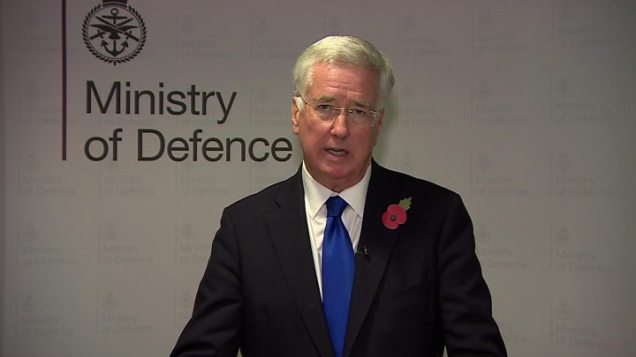
Sir Michael Fallon - Secretary of Defence - resignation sexual harassment allegations

Facing up to historical injustice while protecting due process rights for today’s accused – the irreconcilable conflict at the heart of #BelieveTheVictim and Westminster’s escalating sexual harassment and assault scandal

Scottish Tory leader Ruth Davidson was quite correct when she likened the torrent of sexual harassment and assault claim now roiling Westminster to a dam having suddenly burst. Just as the Harvey Weinstein scandal led to allegations against numerous other Hollywood A-listers and power players, so the cracks are now spreading across Westminster’s thin ice.

But unfortunately, the release of floodwaters caused by a burst dam has the power to sweep away everything in its path – both those shoddy buildings on weak foundations which deserved to be condemned, but also many structurally strong houses which were up to code, but which the tidal wave refused to spare.

The media (who really ought to be a bit more introspective about the tawdry behaviour and abuse within their own ranks, as is already being uncovered in America) love a simple narrative, and presently even the most serious allegations of rape and sexual abuse by prominent political officials are being reported in the same breath and often under the same headline as relatively minor infractions of the kind which astonishingly brought down former Defence Secretary Sir Michael Fallon, forcing his resignation yesterday.

Naturally, the social justice warriors of Westminster see mandatory re-education as the obvious solution, and now want elected MPs to go through the same condescending “consent workshops” that the NUS likes to inflict on freshmen students.

Charlotte England of Left Foot Forward writes:

Far from accusing all men of being rapists, consent training aims to clarify what consent means and tackle pervasive myths that contribute to rape culture, which is defined as an environment in which prevailing social attitudes normalise or trivialise sexual assault.

According to Green Party deputy leader Amelia Womack there is little understanding in Westminster of the power dynamics at play between male MPs, senior political party figures and other staff like assistants and researchers. Teaching men what is and isn’t appropriate behaviour is therefore imperative.

No, it is not imperative. At this point, even the most sociopathic MP understands the dangerous ambiguity around consent, for reasons of self-preservation if nothing else. Those politicians who continue to step over the line in 2017 do so deliberately, either because they don’t care or simply have no impulse control. And all the consent training in the world won’t fix that. Meanwhile, perfectly decent and law-abiding people will feel ever-more surveilled and curtailed in their behaviour while too many of the real guilty parties continue just as before.

But then this is always the effect of corrosive identity politics – serious social problems and even crimes are too often drowned out because of the disproportionate reaction to lesser behaviour which does not even fall on the same spectrum. If you go to Defcon 1 over some clumsy and ill-advised flirtation at a Westminster Christmas party then you have nowhere left to go when serious allegations involving rape or abuse of power come into play. Each incident becomes just another indistinguishable piece in the “rape culture” jigsaw puzzle and it becomes that much harder to focus on the real victims and perpetrators.

The difficulty with the more minor allegations which are now emerging in Westminster politics and elsewhere is that the outrage at (and de facto punishment of) the alleged offender (public shaming, terminating of careers, ending of livelihoods) is more a reaction to the general trend or cumulative scandal than the individual sin.

If a town finds itself in the grip of a serious crime wave then public anger and demands for something to be done are quite understandable, but is it right for the same ire and punishment to come raining down on the one-time teenage petty shoplifter as befits the man who makes a career of kicking down front doors and making off with the family jewels? Surely not. But our justified anger at decades of genuine sexual harassment and abuses of power is threatening to bleed over into other realms – types of behaviour which range from inappropriate to pitiable – which could have grave implications for how we live and work together (and even court one another) in future.

Grazing a colleague’s knee while making an ambiguous comment over dinner isn’t great (and in fact becomes absolutely wrong when a professional power imbalance exists), but the reason that such low-level behaviour can now prompt the resignation of people such as former Michael Fallon is because of a wider, understandable revulsion at far more serious offences such as those allegedly committed by Harvey Weinstein and other prominent people. The delusional middle-aged, middle-ranking male politico who wrongly mistakes the professional attention of a female journalist for a romantic interest is to be slapped down and probably also pitied, absolutely. But do we really need to turn every such incident into the Dreyfus affair in terms of notoriety?

The pendulum has swung from legitimately bad people getting away with patterns of tawdry behaviour and abuse of power for decades while their victims suffered grievous harm toward fundamentally decent people now being at risk of having their lives destroyed over ambiguous, misinterpreted behaviour or even unfounded malicious allegations. If there was a middle ground anywhere here, it has certainly been skipped over in our reaction to this post-Weinstein torrent of accusations.

While we are right to be disgusted at the world of overt sexism, sexual harassment and abuse which is slowly, painfully being consigned to history, we also have a duty to consider what kind of world we want to create in its place. If we truly want to go down a road where every alleged victim is believed and punishment meted out without due process or any threshold for evidence then we will midwife a brave new world where any public career and reputation can be ruined by a single malicious or disputed allegation. This may soon prompt concerned individuals to hedge against the risk of being brought down by false charges, meaning that every single personal interaction must be witnessed, every woman or vulnerable man permanently chaperoned and everybody permanently surveilled for their own safety, perhaps in the same manner that many American police forces are now outfitting their officers with body cameras.

But this immediately raises privacy concerns. People were sufficiently unhappy at the potential privacy issues presented by Google glasses that this promising prototype product had to be discontinued before making it to mass market. But the kind of constant surveillance required to provide sufficient personal insurance against a formalised “believe the accuser” culture – where the concept of “innocent until proven guilty” is abandoned – makes Google glasses seem tame by comparison.

If we are to avoid going down this extreme road then we at least need to set clearer rules about workplace interactions, so as to remove the ambiguities which lead to the “grey area” where many disputed events currently fall. We will need draconian rules prohibiting any romantic or sexual relations with coworkers that might seem more appropriate to the military than office-based professional work environments. There will need to be a blanket ban on any such relations, with the penalty for any transgression being instant termination regardless of whether or not the the encounter or relationship in question is consensual. Human Resources departments of firms large and small will need to staff up in order to carry out the inquisitorial new role assigned to them. If your parents met while working together, they must become the last generation which ever does so.

And if this seems excessive them we must step back from the brink and think again about whether casually discarding the time-honoured principle of “innocent until proven guilty” is a step that we are willing to take, particularly given the grave ramifications and precedent that doing so may set. Do these new rules apply only to accusations where there is a power imbalance (such as in the workplace) or will we apply them to purely social interactions between equals, too? How do we define “equals”? Will there be any statute of limitations on historic allegations? Will there be any evidentiary standard whatsoever? How will this new reality dovetail with existing laws governing libel and defamation, or to one’s ability to bring civil suit against an accuser for loss of future career earnings?

We must also ask ourselves how much collateral damage we are willing to accept in our effort to make right past wrongs. There are many valid and totally understandable reasons why a victim of abuse or harassment twenty years ago may have kept quiet to this day, but it is also plainly the case that any form of proof in terms of DNA, CCTV footage or retained correspondence is much less likely to exist, in which case it becomes one person’s word against another’s. We then have to decide to what extent we are willing to atone for historical societal sins by lowering the evidentiary standard and always believing the victim when every further move in that direction increases the likelihood of present-day injustices.

Do two wrongs make a right? Or is there a point where we will have to admit that justice for some historical alleged incidents will simply never be possible? We cannot escape this choice. We may wish that it did not exist, and we may pretend that some mythical alternative exists, a solution where proof for past allegations can always be found, victims always believed and offenders always correctly identified and punished. No such magic solution exists; it is a chimera.

At present we are in danger from swinging from one extreme to another, from victims being outrageously shamed and silenced to being unquestioningly believed without even cursory verification; from no consequences for serial perpetrators to draconian summary justice regardless of guilt. The danger is particularly acute as we suffer under a weak government with the weakest of leaders, a prime minister with non-existent decision-making abilities, who can’t afford any more missteps and is therefore prone to making up policy on the stop to appease whoever happens to be shouting the loudest.

#BelieveTheVictim? There is a valid debate to be had here, with serious arguments on both sides – the “always believe” side putting the emphasis on compensating for a history of past injustices and the “proof, please” side placing its emphasis on the importance of traditional due process. Ultimately, some kind of fudged compromise is all but guaranteed, pleasing nobody even as it acknowledges a messy reality.

Personally, while I lean more towards the “proof, please” side I acknowledge that simply telling accusers that nothing can be done to pursue their historic complaints without documentary evidence is often untenable, and that the rights and presumption of innocence which should always accompany a private citizen do not always fully carry over when the accused is in elected office or otherwise occupies a position of public trust.

But my goodness, we ought to stop and think a little more carefully before attempting a quick fix to a month’s worth of disturbing headlines by overturning centuries of precedent.


UPDATE – 3 November:

For what it’s worth, I think Ayesha Hazarika does a good job of explaining the kind of non-draconian, common sense solutions which we should be looking at here, for the Spectator:

But the silver bullet is behaviour. You can have all the Human Resources and complaints systems you like, but until MPs, and senior staffers, understand that their basic behaviour to junior women and men has got to change then I’m afraid the needle will not move. And it’s not actually that difficult. I would hope most people could work it out without the need for a cringey manual but here’s a few helpful tips. When you’re the boss, don’t fondle, grope, cup or lunge at anyone and as a general rule don’t harass people for sex via the oh so clever ruse of late night drinks to ‘help them with their career’. And give yourself a reality check: they’re not inviting it and they’re really not into you. At all. Especially if you’re a 58-year-old man who’s seen better days and they’re someone thirty years your junior who either works for you, needs a job or an interview. Ask yourself this critical question: are you abusing your position to get in someone’s pants? And if all that fails, ask yourself how you would feel if you get caught.

Politicians love lording it over the rest of society about how we behave and how we should conduct ourselves in the workplace. It’s time they cleaned up their act – and it’s really not that hard.

Absolutely. A cultural change which ends this “come out with me for late night drinks to discuss your career (wink, wink)” practice should be encouraged, because it is where professional power imbalances exist that the worst serial offenders always lurk.


Westminster Big Ben Telephone Box

Support Semi-Partisan Politics with a one-time or recurring donation:

Agree with this article? Violently disagree? Scroll down to leave a comment.

Follow Semi-Partisan Politics on TwitterFacebook and Medium.

The Battle For British Conservatism: Seeking The New Generation At CPS

Centre for Policy Studies - CPS - New Generation project launch event

When it comes to breathing new life into the intellectually moribund Conservative Party, virtually any contribution is to be welcomed. But in this case, choosing Amber Rudd as the figurehead for the Centre for Policy Studies ‘New Generation’ project does not inspire great hope

Ever since George Freeman MP pitched a few tents in a Berkshire field and invited a select band of people to gather and plan the salvation of the Tory Party, there has been a steady trickle of other initiatives and articles musing on the same problem. Most of these people are catastrophically late to the party, having conspicuously failed to raise any red flags during the Cameron years (unlike this blog) or even during the beginning of Theresa May’s administration, but better late than never.

And while it may now be too late to save this government and prevent at least a short-term spell in Opposition, at least a few more people are finally starting to ask themselves what it actually means to call oneself a conservative in the year 2017, and what the modern Conservative Party should consequently look like and stand for.

Latest to climb aboard the bandwagon is the Centre for Policy studies, who a few weeks ago hosted the launch of Sir Oliver Letwin MP’s book musing on the same topic. Now, the CPS (founded by Keith Joseph and Margaret Thatcher) is launching an initiative of their own, entitled “New Generation”.

From the press release:

If we are to save Britain from a Corbyn government, the case for the market needs to be made once again. Not with empty slogans, but by developing concrete, practical, aspirational policies that make voters’ lives better.

Our flagship “New Generation” project will give a platform to the 2015 and 2017 cohorts of MPs, and other fresh voices, to make that case: to set out the policies that can make Britain a nation of opportunity and enterprise.

One gets the strong sense that this new project will stand or fall depending on how many (if any) additional “fresh voices” are actually invited to participate, and who those people are.

Inviting the most recent two intakes of Tory MPs to help shape the argument is not an altogether bad idea – these groups have tended to be slightly more libertarian-ish than the statist interventionists of yore, though even these new MPs tended to favour remaining in the EU. But given the inescapable reality that political advancement for backbench MPs depends to a significant extent on being seen to support and defend current government policy it is asking too much to lay all the responsibility at the feet of relatively new, junior MPs.

As this blog has repeatedly argued, real change must come from outside the Parliamentary Conservative Party. We all know how CCHQ love to centralise absolutely everything so as to ensure the consistency of the uninspiring, unambitious brand of Toryism for which they are famous, but this time an exception must be made and outside counsel sought. And if the party will not engage with other small-C conservatives through choice then the party must be hijacked and dragged kicking and screaming in a new, better direction, just as Margaret Thatcher and her intellectual blood bank did for the Tories in the late 1970s.

In short, any project serious about conservative revival in Britain needs to have at least a reasonably healthy disdain for those people currently piloting the country through its centrist malaise. And who better to emphasise the need for fresh, radical and unapologetically conservative thinking than…Amber Rudd?

If you are scratching your head wondering why Amber Rudd of all people has been given the honour of inaugurating this new CPS project, you are not alone. As Home Secretary, Rudd seems to be quietly competent in the same manner as her predecessor, the prime minister – that is, she largely manages to avoid dropping the ball, causing scandal or attracting any real scrutiny of her authoritarian instincts. But she most certainly does not have any kind of reputation as an original thinker or bringer of disruptive innovation.

And why would she? Amber Rudd, after all, is on record as having gone into politics more out of boredom and desire to add another accomplishment to her CV than through any burning desire to change Britain. She is the ultimate May-ite Cabinet member – a technocratic administrator, not a visionary. And while Rudd should be rightly commended for representing the Conservative Party in this year’s general election television debate while Theresa May lacked the courage to do so, her vision of conservatism was very much a defensive one, suggesting that right-wing policies are more unfortunate necessities than a positive choice for voters.

Now it is entirely possible that Amber Rudd will admit to some of these failings and exhort the CPS’s New Generation project to learn from the mistakes and missed opportunities of the government in which she serves. But it seems highly unlikely – Rudd’s own leadership aspirations are well known (being prime minister is, after all, the ultimate boasting point for one’s LinkedIn profile) and she is raising money in donations hand over fist. It hardly then seems likely that the Home Secretary will inaugurate this new initiative to save the Tory Party from itself by admitting that she is squarely part of the problem.

But you never know – perhaps there will be a sliver of introspection. For my sins, I will be attending the launch event on Monday 13 November and will raise some of these points if and when the opportunity allows.


Conservative Party Logo - Torch Liberty - Tree

Support Semi-Partisan Politics with a one-time or recurring donation:

Agree with this article? Violently disagree? Scroll down to leave a comment.

Follow Semi-Partisan Politics on TwitterFacebook and Medium.


So You (Allegedly) Molested A Child

If ‘evil’ oil companies and banks can use Crisis PR firms to launder their sullied reputations, Hollywood celebrities need to start demanding the same 5-star service

I am sure that if it has not already happened, there will soon be a lucrative new niche field of crisis PR management opening up to handle (in exchange for extortionate sums of cash) the cases of terrified and often guilty Hollywood celebrities and power-players accused of inappropriate or illegal historic sexual activity with unwilling partners. Lord knows that whoever first enters the market stands to make an absolute fortune, because the response of those individuals currently being tried in the social media star chamber post Harvey Weinstein has been crying out for professional finesse.

One can imagine it now. The sweaty, shaking fingers slipping over the keypad as some panicked A-lister who only months ago was picking up gold statuettes and industry acclaim by the sackload now frantically dials his manager, begging him to kill a career-threatening story about past indiscretions. And who does the dutiful manager turn to? After looking in his desk and retrieving the handy “So You Raped A Child And Paid Them Hush Money / Forgot All About It” public information leaflet, they call the new service.

The polished executives who come to the A-lister’s house make a couple of things clear right off the bat. First, for the love of God, stop apologising for whatever it is you were accused of, and deny it instead. And certainly don’t concede that it might have happened, but you can’t be sure because you were dead drunk and who can remember all the fourteen-year-olds they clambered on top of at a party three decades ago. Not the way to go. That’s Step One.

A forceful denial comes first, and then you need to find something, anything else to dominate the news cycle – that’s Step Two. If you can arrange for senior campaign figures from last year’s presidential election to be indicted on charges of conspiracy against the United States, that should do the trick. Failing that, engineering some other event of geopolitical importance will take the heat off and buy you a moment’s pause to plan Step Three.

Step Three consists of the distraction. You have to understand the climate and culture in which you operate, and that is one totally dominated by the Cult of Social Justice and Identity Politics. In this world, accountability (and associated punishments for wrongdoing) are measured in inverse proportion to your position in the Hierarchy of Victimhood. At all costs, you must be able to refute the charge of being white, male and heterosexual – those three strikes will damn you immediately. Trying to pass yourself off as 8 percent Cherokee has yielded only mixed results in the past, so at the very minimum you should shoot for being gay or bisexual. If you’re looking at potential criminal charges rather than just the end of your career, it is worth considering the merits of transgenderism too. If you actually happen to legitimately fit into of these categories then so much the better, it will help with authenticity.

Once you have settled upon your distraction, integrate it tightly into your public response to the accusation, a response which – to repeat Step One – should not include an apology. The goal is to shut things down as quickly as possible by calling the accuser a liar and then winning sympathy by picking up as many identity politics bonus points as possible in your statement. Now you have successfully dealt with Day 1 of the fallout.

Day Two will require another domination of the news cycle. Assuming that there are no more well-connected politicos to indict on conspiracy charges, this is when you want to wheel out your Unimpeachable Character Witness. Use any downtime on Day 1 to identify this person, get them briefed, media trained and ready to spin a wonderful tale about how appropriate you have been at all times to all people, and how despite having been presented with at least ten gold-plated opportunities to rape a child over the past thirty years, not once did you cave to the temptation. That’s Step Four.

Now, the public may be sceptical of such stage-managed events, so the more people you can persuade to sing from the same hymn sheet the better. You want peers, pastors and anyone else to be singing four-part fugues about how awesome you are, and how you live a life of virtual celibacy outside specified age-appropriate relationships where consent forms are signed and notorised before each individual romantic encounter.

The final immediate action in terms of immediate crisis management, Step 5, is celebrity outreach. At this critical juncture, when you have been accused by a single source, you stand on the cusp of becoming toxic in celebrityworld. One more accusation and you are Hollywood kryptonite. At this point, people you once considered good friends will stop calling, and business acquaintances will suddenly be too busy to meet. Some will outright denounce you on social media.

As a savvy person, you know that at all costs you must avoid – what was that phrase? – ah yes, being cleaved from the herd and left to die in the wilderness. Hug your celebrity besties tightly. Do what you have to do to get invited on a sympathetic talk show where you can come across as shocked by the accusation, flaunt your good deeds and somehow paint yourself as the victim. This is a zero sum game, with space for exactly one brave hero and one villain.

This is the service that any go-getting, ambitious soul should be touting around Hollywood right now, as well as the London West End, Washington D.C., Westminster and a bunch of other places where large concentrations of powerful people with dodgy pasts are suddenly terrified for their futures.

And the best thing about this new market niche is that it will never dry up. Protecting terrified, middle-aged celebrities from accusations of inappropriate, abusive or downright illegal behaviour will not fall victim to outsourcing, automation or technical obsolescence. The entertainment industry will always exist, and so will those aspects of human nature which prompt some guilty people to abuse their positions of power to obtain sexual gratification from unwilling parties, and others to misremember or even falsely accuse innocent public figures of similar misdeeds.

In fact, the only way that this Celebrity Crisis PR business model would ever stop making money is if the denizens of Hollywood stopped being such moralising, hypocritical sleazebags. And there is no danger of that happening whatsoever.


Harvey Weinstein - sexual harassment

Support Semi-Partisan Politics with a one-time or recurring donation:

Agree with this article? Violently disagree? Scroll down to leave a comment.

Follow Semi-Partisan Politics on TwitterFacebook and Medium.