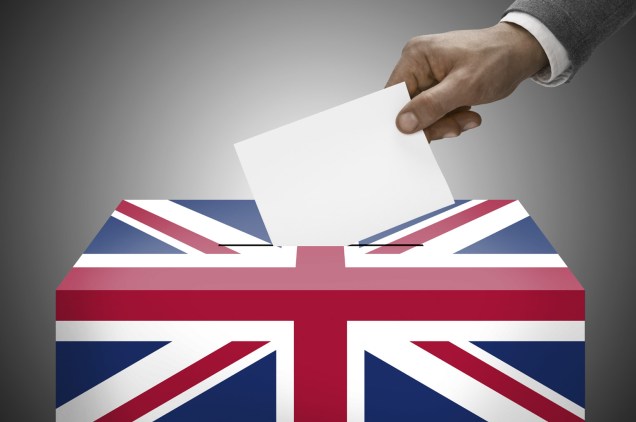
Is Widespread Voter Apathy Acceptable In a Country Like Britain?

Voter Apathy Party - Futurama

Britain’s relative peace and prosperity are no excuse for us to shirk our duty to be informed and engaged citizens

This blog has little time – and much contempt – for voter apathy and the politically disengaged.

Only last September, while the Labour leadership contest raged, I was complaining about low-information “swing voters”:

What if the fabled political centre doesn’t exist – or is only a small group casting a large shadow, while another unacknowledged mass of voters goes unnoticed and un-courted by the main political parties?

[..] What if rather than there being a rich goldmine of real centrist voters out there – people who pay close attention to politics and legitimately arrive at a position somewhere between Labour and the Tories – there is instead just a massive, congealed fatburg of low-information voters bobbing around, people who simply haven’t paid enough attention to come to an informed opinion about the great issues of the day?

By contrast, Janan Ganesh has an interesting and thoughtful piece in the Financial Times, basically defending non-voters and holding them up as an example of everything that is going right with our society:

All politicians understand Yes, No and Undecided. Only the winners understand Don’t Much Care. Mr Cameron communicates crisply because he knows most people only tune in for a few minutes a day. He does not lose himself in marginalia that no swing voter will ever notice. Rousing a nation through force of personality is something leaders do in films: the real art of politics is accepting apathy and bending it to your purposes.

[..] Apathy is a respectable disposition in a country where, for most people most of the time, life is tolerable-to-good. There are nations with much hotter politics, and they tend to send refugees to tedious old Britain.

This should be the most obvious thing in the world. You will have several friends who match this profile of contented languor. But among politicos, on the Labour side especially, it is a shock finding. They priggishly elide apathy with dysfunction: if voters do not care, something must be wrong with the body politic.

Ganesh concludes:

Apathetic Britons are not waiting to be redeemed. They just have lives to get on with. Not only are they apolitical; they rouse themselves to vote every five years precisely to stop hot heads and crusaders from running their country. They like Mr Cameron because he governs well enough to save them having to think about politics. He is prime minister because someone has to be.

I don’t necessarily disagree with Janan Ganesh’s view of the political landscape and voter apathy as it currently stands. But I do take strong exception to any suggestion that this is how things should be in an ideal Britain, or a prosperous Britain.

Do I have the right to expect and demand that everyone else share the same interests and obsessions as me, or that they campaign for them and partake of them as loudly and vociferously as I do? Clearly not. Everybody should be free to pursue their own happiness in any way that they like, so long as they do not infringe on the rights of anyone else.

But what happens when one bloc of people acting as a bovine herd of politically disinterested consumers allows the dominant political class to get away with just about any scheme, machination or conspiracy that they choose? Such people may have the right to stay glued to Britain’s Strictly Come Bake Off On Ice while our democracy erodes and collapses from within, but does their apathy and lack of interest not infringe on my right to live in a society where the government is properly held to account? I would argue that yes, it does.

Now, I can’t tie the politically disengaged to a chair, clamp their eyes open and force them to watch Today In Parliament on an endless loop. Nor should I be able to do so. Even if we could take the hugely illiberal step of forcing such people to pay attention to politics or even make voting mandatory, by their bovine nature many of them would make ill-informed, capricious or spiteful voting choices which would hardly enrich our democracy.

But if we can all accept that the right of the non-voters to sit on the couch and fester in their own KFC grease trumps my desire to make them sit up and pay attention to several highly pressing political questions which will have profound consequences for how Britain (and even humanity as a whole) is governed in future, can we at least stop putting these bovine people on a moral pedestal?

Where Janan Ganesh goes too far in his article is when he praises the politically disengaged as a symptom of a well functioning system where all of the major existential and ideological questions have been settled, leaving nothing to argue over besides pernickety points about the technocratic management of our public services.

For in truth, some of the biggest questions facing human civilisation have indeed not yet been settled. They have just been masked and papered over by an artificial political consensus among the major British political parties and the Westminster-dwelling establishment.

There is a political consensus that the NHS is a glorious institution, a bureaucratic idol to be worshipped and uncritically praised from dawn to dusk, as well as the best way of delivering universal healthcare to a large, developed country. But the NHS model does not exist in any other major modern democracy – there is, in reality, no intellectual consensus that it is the best solution. There is just a lazy ideological consensus of convenience among the political class, who prefer to pander for votes by singing hymns of praise to the NHS rather than talking critically about how to make British healthcare better.

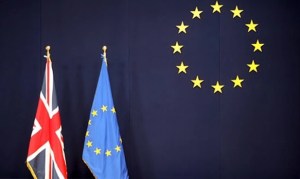
There is a near-universal political consensus among the establishment that the European Union is a Good Thing. That this one particular very dated mid-century form of internationalism represents the future of European governance, and that the nation state is antiquated and passé. A vocal minority of British people begged to differ, and now – despite the kicking and screaming of the establishment – we are going to have a referendum to decide whether or not we want to remain part of the Brussels club. The Westminster elite always claimed that there was such a popular pro-EU consensus that a referendum was unnecessary, but clearly this was not so.

And so it goes, from issue to issue. What are in fact gross and damning failures of imagination or political courage from the main political parties are continually presented as some high-minded form of consensus that Britain has got all of the major questions figured out. But the rise of UKIP, the Green Party, the SNP and the coming EU referendum tell us that this is in fact not the case at all.

Therefore it is worth going back to Janan Ganesh’s assertion and asking which came first: the chicken or the egg? Are many voters really disengaged and apathetic because they are broadly satisfied with the status quo and an often-artificial consensus between the main political parties? Or is this dull, suffocating consensus actually the reason why so many people are politically disengaged in the first place?

Nothing in Ganesh’s article provides convincing proof that it is the former – that millions of people stay home on election day because they are broadly happy with the way things are. That’s not to say that such people do not make up an element – potentially a sizeable part – of disengaged voters. But even these voters are not excused.

Maybe these people really are content with the status quo and impatient to get on with their lives, more concerned with moving up the property ladder or buying the latest iDevice to show off to their friends than they are with tedious subjects like welfare reform or the EU referendum.

But such people should be criticised and urged to step up, not praised or held out as an proof that the system “works”. There is nothing noble about forgetting one’s duties as a citizen as soon as one reaches a position of economic comfort and security. Having 2.4 children, a house with a paid-off mortgage and some cash in the bank does not alleviate one’s responsibility to think about how best to secure prosperity, security and freedom for everyone else. And so long as the state has the power to regulate the things which we are allowed to drink, smoke, eat, read, hear, associate with or say, we are derelict in our duty as citizens if we blithely ignore what the government of the day is doing.

Janan Ganesh does an excellent job of summarising where we are, of describing what Britain is like at the moment. But where he and I part company is our differing view of whether the status quo is anything to be remotely pleased about.

Swing Voters - Couch Potato

Agree with this article? Violently disagree? Scroll down to leave a comment.

Follow Semi-Partisan Politics on TwitterFacebook and Medium.

Lost In The Media’s EU Referendum Coverage: Any Mention Of Democracy

EU Referendum - Brexit - Democracy

The media’s fixation with personality politics and the petty ups and downs of individual political careers distracts us from the only thing that matters when it comes to the EU referendum – the future of our democracy

The Times’ Red Box briefing email today leads with more sneering commentary about the supposed shortcomings of the broader anti-EU, pro-democracy Leave campaign:

Maybe it’s a stunt to show how difficult it is to work together for the greater good, thus undermining a key argument for staying in the European Union.

Or maybe the campaigns to leave the EU are a total bloody shambles.

While Remain was pumping out letters to ten million homes yesterday, the Outers were out to get each other. Again.

The briefing continues:

The infighting is also causing another problem: who would want to join this rabble?

Lord Lawson, the former chancellor, has suggested that a senior cabinet minister will eventually lead the Out campaign, though refused at the weekend to say who that might be.

There are suggestions that Chris Grayling and Theresa Villiers are not high profile enough, and the likes of Michael Gove will fall in line and support the PM.

Which leaves Iain Duncan Smith, a former Tory leader who remains popular in some parts of the party and has long argued against staying in the EU.

Yet he too has history with Cummings, who was his director of strategy during his ill-fated leadership before quitting and later declaring: ” Mr Duncan Smith is incompetent, would be a worse prime minister than Tony Blair, and must be replaced.”

Because of course that is the most important question in this whole debate – whose reputation and political prospects will be most enhanced or damaged by the stance they take on the future of British political governance.

What ambitious, self-respecting politician would want to associate their glittering career with the grubby and laughable concepts of national sovereignty and democracy? Which of the petty, superficial personalities who pass for statesmen today will win a coveted promotion, and which will find their career progression halted because they pick the wrong horse in this race? The sheer superficiality of the media’s EU referendum debate coverage absolutely beggars belief.

Is there currently a lot of unseemly (to outward appearances) infighting among the eurosceptic, pro-Brexit crowd? Yes. But a lot of this is necessary fighting. Though our first instinct may be to separate the squabbling factions with cries of “can’t we all just get along?”, in actual fact this fighting serves an important purpose.

Many people and organisations who purportedly oppose the European Union are actually either ambivalent about leaving, or busy spewing out contradictory and uninformed messages which will ultimately harm the Leave campaign and provide the Remain side with plentiful campaign fodder. This harms the Brexit cause, and so must be confronted and dealt with if the Leave campaign is to win the referendum.

Vote Leave in particular is filled to the brim with people who don’t actually want Britain to leave the European Union, but simply want the government to use a “leave” vote as a bargaining chip to extract concessions from Brussels. Meanwhile, UKIP and others are often guilty of promoting an overly simplistic view of Brexit, conjuring a fantasyland where Britain quits the EU on Day 1, bans all immigration on Day 2, and holds a big Bonfire of the Regulations on Day 3.

None of these things are possible, nor even desirable. And pretending that they are achievable reflects badly on the entire Brexit movement. And so while it may appear unseemly to outsiders and the half-interested media, it is essential that eurosceptics have these essential debates now, while relatively few people are watching, so that we go into the campaign with the message that carries the greatest chance of success.

As Ben Kelly points out over at The Sceptic Isle:

[..] it is impossible for everyone to agree and therefore impossible to have one unifiedLeave campaign. The Remain campaign is entirely based on disseminating fear, uncertainty and doubt amongst the populace and propagating myths about Brexit. Thus, as a movement Remain is easy to unify; Europhiles are unified in their duplicity, unjust smugness, their lack of faith in democracy and their inability to stop clinging to an archaic ideology and an ideal that is redundant and bad for Britain.

The debate over leaving the EU is more nuanced and therefore necessarily divided; this makes the europhiles positively gleeful because they see it as an advantage. It isn’t. Those of us who want to leave the EU are now involved in a great competition, a battle of ideas, over how exactly we achieve Brexit both in terms of convincing the public, winning the referendum, and the plan for what we should do with our independence.

Remember, this referendum is the europhiles’ to lose. They have the government on their side, nearly the entire political establishment, the European Union itself and the lion’s share of the funding. They also have the most powerful advantage of all – the incorrect perception, fuelled by the media, that this referendum is a contest between staying in the EU as it is now (the “safe” status quo), and taking some deathly plunge into the unknown. Both of these axioms are utterly wrong, but they are widely believed and toxic to the Brexit cause.

Of course, in reality there is no status quo when it comes to the European Union. The EU is but a process, set in motion half a century ago, whose end destination is a single European state. And frankly, I am getting tired of pointing this out when the EU’s founding fathers and today’s euro-federalists have repeatedly said so in their own words.

At this point, it is for the pro-EU campaigners to explain why a humble organisation that supposedly only wants to promote free trade and co-operation requires a parliament, a judiciary, a flag and an anthem in order to accomplish these basic tasks. It is most certainly not for me to continually explain why the person pointing a gun in our face and demanding that we hand over our cash is in fact a mugger, and not a kind-hearted charity collector.

But it is hard to promote any kind of message about democracy, governance or anything else when all of the oxygen in the debate is sucked up and wasted on breathless speculation about whose careers will be helped or hindered by their eventual stance on the Brexit question.

I couldn’t care less whether Boris Johnson biding his time is a smart move in terms of his Tory leadership ambitions, or whether the likes of Theresa May and Sajid Javid are wise to lie low and obey David Cameron’s command for eurosceptics to keep quiet while his pro-EU ministers are given free reign to sing endless hymns of praise to Brussels. It doesn’t interest me. The only abundantly clear thing is the fact that none of the supposed Conservative eurosceptics truly care about safeguarding our democracy and sovereignty, because if they did they would be promoting Brexit for all they are worth rather than weighing up the options and deciding whether campaigning for Brexit might hurt their careers.

I know it is hard for the legacy media to remain focused on issues rather than personalities for any length of time, but given the gravity of this particular debate – and its profound, far-reaching consequences for how the British people will be governed in ten, twenty, thirty years’ time – it would be nice to see more than the usual token effort.

The current gossipy, high school style fixation with personality politics and the petty ups and downs of individual reputations and political careers is more toxic than all of the Remain campaign’s lies, distortions and evasions put together. For it distracts us from the only thing that matters in this referendum: democracy, and whether we surrender it out of fear, or stand and fight for it.

Britain - UK - European Union - Referendum - Brexit - Punishment Beating

Agree with this article? Violently disagree? Scroll down to leave a comment.

Follow Semi-Partisan Politics on TwitterFacebook and Medium.

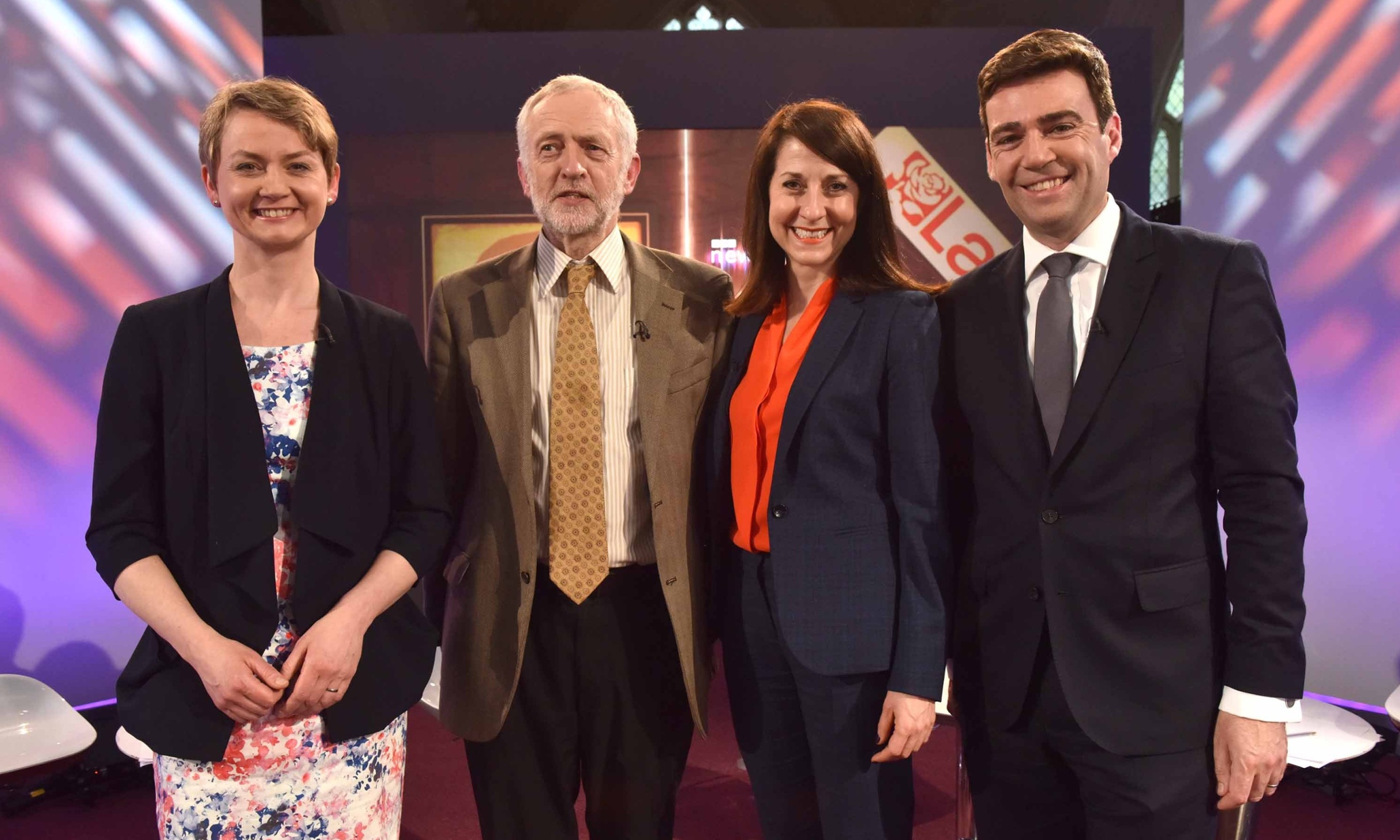
No, Jeremy Corbyn’s Labour Leadership Candidacy Is Not A Disaster


It’s encouraging to see the Telegraph’s Rupert Myers echo this blog’s view that the presence of Jeremy Corbyn in the Labour leadership contest is a good thing, and not the unmitigated disaster that conventional wisdom and repetitious Labourite talking heads continue to say it is.

From Myers’ column today:

A Corbyn victory would allow the free democratic choice not between two shades of middle, but between what could properly be definied as the left and the right. Angry voices calling for true, radical alternatives to capitalism would (we can pray) be silenced for a generation (or at least a few months) if Jeremy had the chance to present a bold, socialist agenda for Britain. Floating voters would have the opportunity not to pick between politicians with similar manifestos, but to decide a political battle waged in technicolour. The Corbyn ultimatum would bring the far left from out of the shadows of a Labour HQ intent on fussing about how to win elections, and test the rhetoric of a legion of angry young socialists against the wisdom of the electorate.

Voters like a real, solid, discernable choice. If Labour pick Jeremy Corbyn and Tom Watson to head their efforts between now and 2020, I predict a renaissance of political engagement. Rather than spend the next five years arguing about the threshold of tax allowances, we could argue the merits of state ownership of the railways, banks, fast food industry, and the Premier League.

Instead of bureaucratic tinkering with foreign aid, we’d be debating whether to drop our borders to allow the unrestricted movement of people. PMQs could be a discussion on how to cap pay to the level of tube drivers, to be set at £200,000 a year. New Labour might not like the image which emerges, but at least Corbyn would turn the contrast button up to full and then rip it off the set.

Absolutely. It’s long past time we had a proper political debate in this country again, instead of these interminable, finickity squabbles about negligible ideological differences.

Continue reading

Why Jeremy Corbyn’s Labour Leadership Candidacy Matters

Jeremy Corbyn - Labour Leadership - Dan Hodges - Tories4JeremyCorbyn - 1

You don’t have to agree with Jeremy Corbyn to welcome his presence in the Labour leadership contest

It is a pity that the inclusion of Jeremy Corbyn in the Labour leadership race is pretty much only being discussed in the context of the growing #Tories4Corbyn movement.

CapX explains the phenomena:

Putting Corbyn on the ballot paper does have one unintended consequence, which is amusing the Conservatives greatly. Suddenly, there is great interest from senior Tories in helping Labour to elect Corbyn, because they think, rightly, that it would equal oblivion for Labour and a generation of Tory rule.

There is a practical way Tory voters can help, the Conservatives have realised. For just £3 anyone can sign up as a Labour supporter and a get a vote in the party’s leadership contest. On Twitter, Ruth Davidson, the Scottish Tory leader, has already described getting the chance to help make the completely unelectable Jeremy Corbyn Labour leader as a notable bargain.

This Tories4JeremyCorbyn movement could take off. How long before someone establishes a website and Twitter account explaining how Tory voters can win it for Jeremy?

This is all well and good, but it is also a distraction, the type of fun Westminster parlour games that the political class like to play to entertain themselves, leaving the vast majority of Britons either oblivious or turned off. Meddling in the other side’s leadership election might elicit smirks and chuckles in the Westminster Arms, but it hardly does anything to improve the reputation of a political class seen as totally cut off from the people.

Continue reading

Brendan O’Neill Is Right – Not Voting Can Be The Honourable Choice

Polling Station - Voter Apathy - Voter Disengagement - General Election 2015


It speaks volumes about the dire state of our politics and our democracy that best thing yet written about the 2015 British general election campaign is not a stirring paean to any of the political parties – not even one of the populist insurgents – but an angry, snarling article which mocks the illusion of voter choice and actively discourages people from bothering to vote at all.

And no, it’s not another Russell Brand intervention – he of The Trews sold out spectacularly this week, urging his legions of fans to vote Labour and install Ed Miliband in 10 Downing Street because apparently “this bloke will listen to us”. As if.

The true standard bearer for the politically engaged but fiercely indifferent contemporary British voter is Spiked editor Brendan O’Neill, who lets rip against the stale centrism of British politics with a powerful piece in The Spectator entitled “I’m not voting on Thursday – but don’t you dare call me apathetic“.

Directly contradicting the endless conveyor belt of career politicians who have been telling us incessantly that this is the most important election for a generation (as was the last, and the one before that), O’Neill writes:

Well, I’m not voting on Thursday, and don’t you dare call me apathetic. It isn’t indolence of mind — ‘sluggishness, laziness, love of ease’ — that’s keeping me out of the voting booth. On the contrary, it is an agitation of mind, a love of difficulty, that’s making me withhold my vote.

I, like many others, want my politics hard, existential, frightening even, addressing the biggest questions facing humanity: freedom, progress, morality, war, the future. But all we’re being offered is a choice between managers, primarily of Britain’s economic decline. ‘Who will YOU trust to shave the public deficit?’

Continue reading