The Big Tent Ideas Festival

Stepping Stones Report - Goals and Risks - Brexit - EU Referendum

Searching for the missing conservative soul in a Berkshire field

Various people have been raving about an event which took place last week in Twyford, Berkshire, where Conservative MP George Freeman set up a few yurts in a field and held an impromptu late-summer symposium on how to renew British conservatism.

The Big Tent Ideas Festival is a laudable ongoing effort to refresh and reset British conservatism while the Tory party is still in government, as opposed to waiting until they languish in opposition. This is easier said than done – as anybody can plainly see, Theresa May’s listless and fratricidal government has run out of what little ideological steam it inherited from David Cameron’s equally muddled tenure. Now they sit, idling in neutral, on the cusp of making an almighty mess of Brexit and being kicked out of office without a single lasting achievement to their name.

Mark Wallace of Conservative Home was in attendance, and describes the extent of the challenge:

The Right’s challenge is that time in government saps the energy, and increases the centralisation, of any movement. The never-ending trials of running the country drag in, and burn through, many of the policies and people. Indeed, we produce our best ideas and develop our greatest new talents when the variety of interests that exist across the centre right movement have room to breathe and freedom to operate. Often that happens in Opposition – the Party’s apparatus, authority and powers of patronage are more limited, and there’s a clear objective to pursue.

That’s as true for Labour as it is for the Conservatives – consider the contrast in energy between the respective camps of Major and Blair, or Brown and Cameron. The task for our movement today is to break that cycle: to renew and innovate now, while the Conservative Party is still in power. To do so requires us to recapture that freedom and urgency enjoyed in the years between 2004 and 2010, which saw such fertile growth of new thinking and campaigning organisations, the development of new outlets to communicate our ideas (not least ConservativeHome), the development of a raft of strong, new policies and the emergence of a generation of talented campaigners, thinkers and communicators.

The Big Tent is currently focusing on three main strands of renewal: Social Renewal, Political Renewal and Economic Renewal. Fair enough – these designations seem to make sense. And some of the questions being debated across all three areas resonate very strongly with topics that this blog cares deeply about, namely:

  • What are the causes of the deepening crisis of disconnection between government and the citizens it is supposed to serve?
  • How do we define a meaningful notion of citizenship with reciprocal responsibilities with the state, which works for us all?
  • How do we better support our third sector and encourage volunteering?
  • How do we reform our benefits system?
  • How do we build lifelong learning, from antenatal, through the early years, school and adulthood, and incorporating resilience, emotional and social learning, as well as key skills? How do we get parents and communities to support this in the poorest areas?
  • Is the rise of extremism – to left and right – a function of failure in the mainstream centre or simple liberation of the radical fringes?
  • Given the public’s rejection of mass low wage migration, how can we achieve the transformational skills and training revolution of the UK workforce which has defied policymakers for 150 years?

And particularly:

  • How do we embed lifelong learning to increase workforce resilience for the coming tech change tsunami so we do not make the same terrible mistakes as happened in 1980s mining areas (and from which we have still not recovered)?

Remarkably, though, the housing crisis was not called out as a separate issue for discussion, even though it is the pre-eminent challenge driving a wedge between the Tory party and otherwise potentially sympathetic voters. This is a very curious feat of omission, to the extent one wonders whether it can have been accidental. As with Conservative policy since 2010 there seems to be a deliberate refusal to acknowledge the need to do anything which might annoy the current rural, home-owning, NIMBYish Tory base by threatening the continual upward trajectory in the value of their houses.

This is short-sighted, and needs to be addressed urgently. Housing should be one of the absolute key issues being debated by the Big Tent, not something whispered about on the margins or tangentially as part of another discussion. In the 2017 general election, the Tories did not win a majority of any demographic until the average age ticked over fifty. Fifty! Conservatives no longer merely have a problem with youth voters, though we are certainly more radioactive than ever among this crowd. We are now almost equally unpopular among young professionals and people in early middle age.

At least the Tories of Margaret Thatcher’s day had some slick city Yuppies with stripy shirts and enormous cellphones in their corner. I have lived and worked in a professional capacity in London for a decade now, and can count the number of fellow “out of the closet” conservatives in my social circle on two hands, with fingers to spare. That CCHQ does not presently view this deficit among young, educated voters as an existential crisis speaks volumes about their complacency and sheer incompetence.

This is a demographic time bomb waiting to explode in the Conservative Party’s face. The metaphorical conveyor belt carrying young idealists from left-wingery to conservatism as they age cannot be taken for granted – it has only worked in recent decades because as people get older, government policy has allowed them to acquire a greater stake in society, primarily through home and equity ownership. People do not just magically start voting Conservative when they get their first grey hair, and people who have been consistently screwed over by selfish, short-termist policies which pander to the Tory base at the expense of the wider national interest will develop a lasting antipathy to the Conservative Party and to conservatism in general.

Dodging the housing issue is not an option. It must be tackled head-on, and (unlike Theresa May’s “dementia tax” debacle) it must be done with care and sensitivity. So long as Jeremy Corbyn or somebody like him leads the Labour Party, the Tories will have a bit of political cover to do something radical on housing – even if it enrages a section of their base, few of these people will defect to a Labour Party eager to tax them to death. Failing to act before Labour falls back into centrist hands means that the Conservatives’ scope for manoeuvre will be greatly reduced.

Additionally, while the tripartite focus on social issues is laudable at first glance, this area should not be allowed to dominate the discussion as it dominated much of Cameronism and now Theresa May and Nick Timothy’s very statist, paternalistic brand of conservatism.

Yet Toby Guise at The American Conservative reports that the “society” tent was by far the most popular:

The mainly young delegates heard speakers in tents marked “politics,” “economics,” and “society.” Tellingly, the last of these was the largest—with a program that opened with pitches from the founders of two significant charities focused on social exclusion. This theme reflected the fact that accusations of a compassion-deficit are at the heart of Labour’s attack on the Conservatives.

This reflects the current priorities and incentives for success in conservative Westminster politics. Being seen as a beardy Nick Timothy acolyte seeking to extend government influence into every home and mind is viewed as trendy and forward-thinking, while sitting at a desk thinking about how to encourage entrepreneurship and decrease reliance on the state is seen as excessively “ideological”.

It may sound harsh, but conservative renewal will not come about by focusing relentlessly on social issues, as though the state can and should provide an answer to every single social ill in Britain. It is tempting to believe that government must fill this expansive role these days, especially since the Tories are pounded day after day by Labour’s wobbly-lipped moralisers about how they are supposedly so callous and unfeeling. It is only natural in these circumstances to want to begin offering scattergun policy prescriptions to address every last issue which happens to excite the Joseph Rowntree Foundation.

Indeed, the phrase “compassionate conservatism” only plays into the Left’s hands by wrongly conceding that ordinary vanilla conservatism is somehow cruel and uncompassionate, and that we can only redeem ourselves by accepting statist, left-wing talking points and policies. This is a dangerous nonsense.

People say that they are interested in social justice and equality, particularly at dinner parties, when talking to pollsters or otherwise needing to make themselves look good. But when they are in the privacy of the voting booth they actually care about the economy and the general direction of the country. That means that to make a measurable difference in the fortunes of the Conservative Party, the Big Tent should focus primarily on the Economic and Political renewal branches, trusting that improving the overall health of the nation and spurring the reinvigoration of civil society will improve conditions for all. Rather than more government intervention, we need to create the conditions for a rapid growth of charitable (real charities, not 90% government-funded money laundering outfits) and private solutions to entrenched social problems rather than the clunky, failed attempts at social engineering preferred by New Labour and their successor Tory governments.

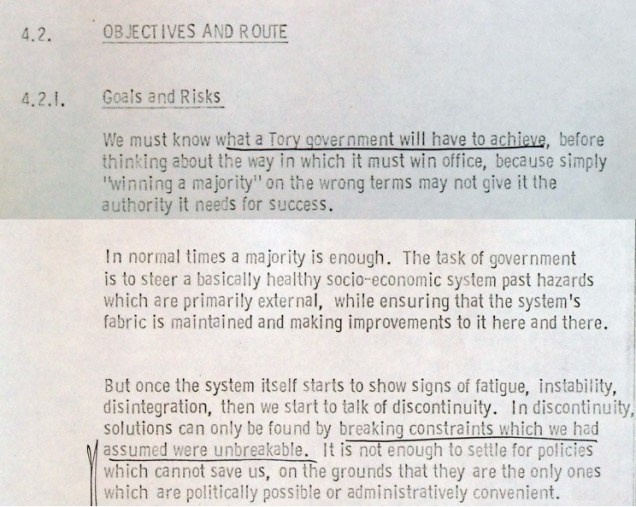
The good news is that there is precedent for all of this. In 1977, the “Stepping Stones” report was published by the late John Hoskyns and Norman Strauss, two businessmen (at IBM and Unilever respectively) who took it upon themselves to diagnose the “British disease” which threatened to doom us to long-term national decline, and propose radical solutions. Crucially, the treatment prescribed by Stepping Stones was not a mixed basket of scattergun solutions to individual problems, but rather a coherent package of reforms which sought to simultaneously treat all of the symptoms of the British disease while also identifying and destroying the root cause (the grip of statist socialism and the unions).

The Britain of the 1970s, wallowing deep in the failing post-war consensus, can hardly be described as being highly receptive to radical right-wing thinking at the time Stepping Stones was published. But that didn’t matter – Hoskyns and Strauss managed to get the ear of aides to Margaret Thatcher back when she was still Leader of the Opposition, and when she walked into Downing Street in 1979 she did so with Stepping Stones in her handbag and on her mind. Then, as now, the important thing to begin with was not that the country understands the entire plan or knows that the Tories view the current status quo as a disease to be cured, but just that the government seems to have energy and purpose again. The plan will reveal itself in good time, just as Stepping Stones did.

That doesn’t mean that the Tories can avoid coming up with a better narrative than “Strong and Stable” or “Brexit means Brexit”. These were appalling battle cries with which to fight the 2017 general election, and deserved to be mercilessly picked apart and ridiculed by the media and a newly-confident Labour Party. A new narrative is certainly needed, but this must be both authentically conservative and it must avoid clashing with policies that the government intends to adopt. For instance, it is no good for the Tories to publicly wring their hands about such-and-such social issue when they have little intention of directly tackling it through the levers of government. That’s why I am hesitant to support the Big Tent’s heavy focus on social renewal – it opens up endless opportunities for the sanctimonious parties of the Left to attack us for weasel words or hypocrisy, while at the very best all we can hope to do is fight the socialists to a draw.

But of course, back in 1977-79 all of this ideological and rhetorical renewal was done from the relative comfort and obscurity of opposition. Now, an intellectually exhausted Tory Party must effectively perform the same feat while in government and seeing their worldview held accountable for every little thing that goes wrong up and down the land. This is a much harder task, bordering on the impossible.

Yet that is exactly what we need. We need a new Stepping Stones report for the Britain of 2017, recognising that the challenges we face today – globalisation, automation, mass migration, Islamist terror and Brexit – are very different to those faced by the incoming Thatcher government in 1979, but that these contemporary problems must be tackled with exactly the same spirit and according to the same conservative values.

Hopefully the Big Tent can play an important role in this process. If nothing else, it is hugely encouraging to see somebody, anybody else finally acknowledge that the Conservative Party does actually need to renew itself and come up with a compelling conservative vision for Britain rather than arrogantly waiting for Jeremy Corbyn to fail. This blog has been something of a voice in the wilderness on this topic since mid way through the coalition government – hammering home the point here, here, here, here, here, here, here, here, here, here, here, here, here, here, here, here, here, here, here, here, here, here, here, here, here, here, here, here, here, here, here, here, herehere and here – but it is good to be belatedly joined by a chorus of establishment journalists and conservative commentators who have finally woken up to the fact that the Tories need an explicitly ideological answer to Jeremy Corbyn and Labour’s resurgent socialism.

Toby Guise is broadly hopeful that the Big Tent has potential:

Disheartened conservatives should remember that cultural Marxism was born out of weakness not strength—specifically, the failure of Western proletariats to obey Marxist doctrine by revolting during World War One. Since the fall of Communism, the strategy has been pursued with ever-greater vigour as a displacement activity from discussing discredited economic ideas. When British Labour politicians are put on the spot about policy, they often flounder spectacularly. Yet the overall direction of travel in Jeremy Corbyn’s speech today at the Labour national convention was clear: towards a Venezuelan-style command economy based on nationalization and authoritarianism. Equipped with this tried-and-failed policy program, it’s no surprise that the party machine diverts as much attention away from economics and onto kulturkampf. By refusing to engage this strategy—and instead directing attention firmly onto clear-minded political solutions that make markets work for all—the Big Tent Ideas Festival is precisely the right type of response.

Mark Wallace was also pleasantly surprised:

I’m pretty sure I saw some Hunter wellies, and some conversations did occasionally threaten to induce a minor wince. But, if we’re honest, there was probably less of each of those phenomena to be seen in the beautiful Berkshire sun than there will be in Manchester next week.

Crucially, they did not outweigh the value of the event, which grew on me as the day went on. Here were Conservatives, entrepreneurs, inventors, charity founders, policy experts, young people, older people and a mix of journalists and politicians talking about ideas for a whole day. That shouldn’t be unusual, but it is. The election, and the problems suffered by the Conservative Party among certain key demographics, was the inevitable backdrop to the discussion, but the Big Tent encouraged people to exchange views openly, to hear experiences alien to their own, and to consider how their principles might be applied to real world issues.

With about 220 people in attendance, it wasn’t a lobbying-fest, or a jockeying arena for glad-handing and card-swapping. It felt more like what I’d imagine to be Steve Hilton’s ideal wedding reception (except with more shoes): tents and bunting, a good buffet, and a bar of sustainably-produced beverages, along with speeches about the environment, prison reform and the impact of technology on democratic culture.

This wasn’t a representative sample of the Conservative Party, still less of the electorate, either socially or ideologically, but I found it refreshing to see people applying their minds and experiences to pressing problems.

I have also now volunteered my time and effort to the cause. And in a way, I will regard whether my offer of help is taken up as a sign of whether the Big Tent has the potential to be a useful vehicle for conservative renewal. Not because I am so amazing, talented and inspired that I can single-handedly save British conservatism, but because if they start listening to independent bloggers and other voices (besides the usual MPs, journalists, Westminster types, charity representatives and community organisers) then it will be a clear sign that British conservatism is willing to entertain ideas from outside the bubble. That having hit intellectual rock bottom they are finally willing to take a dispassionate look at their failings and make some vital changes.

Stepping Stones, which literally formed the blueprint for saving Britain from 1970s-style national decline, was not borne of a cosy conversation between people inside the Westminster political elite. It took outsiders – from the world of business, in this instance – to hold a mirror up to the country and to the establishment, showing them that the old path was unsustainable and that new ideas, previously dismissed as unworkable or politically unpalatable, were required to get Britain back on track.

We need a new Stepping Stones report for the Britain of 2017, and a Conservative Party with the ambition, courage and clarity of thinking to get on and carry out its recommendations, effectively executing a dramatic mid-term course change rather than waiting fearfully for Jeremy Corbyn’s Labour Party to cast them back into opposition.

God speed to the Big Tent and the work they are doing; Lord knows that it is desperately needed.


Stepping Stones Report - Wiring Diagram

Support Semi-Partisan Politics with a one-time or recurring donation:

Agree with this article? Violently disagree? Scroll down to leave a comment.

Follow Semi-Partisan Politics on TwitterFacebook and Medium.

Theresa May’s One Chance For Redemption: Sacrificing Her Leadership For A Sane Brexit

Theresa May - Brexit - Article 50 declaration signing

Theresa May will never be remembered as a great prime minister because she is timid, calculating and lacks any positive vision for the country. But she can still redeem her failed premiership by sacrificing it in order to achieve a sane Brexit

The fate of Brexit hangs in the balance, primarily because two equal and opposing forces are selfishly attempting to hijack Britain’s negotiating stance for their own purposes.

One one hand there are the Brexit Ultras (or the Brexit Taliban, to use the less charitable but evocative phrase) who insist, like religious fundamentalists, that theirs is the One True Brexit, the only route to heaven, while all other interpretations are dangerous heresy. These people – your Steve Bakers, John Redwoods, Jacob Rees-Moggs and Suella Fernandeses – do not see Brexit as meaning departure from the political entity known as the European Union. To them, Brexit means severing virtually all ties and treaties with the EU while retaining nearly all of the current perks, while making up for any economic shortfall by effortlessly completing a series of swashbuckling free trade deals with countries often far less important to the UK economy than our nearest neighbours.

But on the other hand, there are forces who are arguing passionately for a “soft Brexit” with strong and enduring ties to the Single Market, not because they believe in Brexit or have accepted it, but because they see this as the first step to reversing the result of the EU referendum and keeping Britain in the European Union (generally by means of a second referendum, which they believe – erroneously, I think – that they could win). These people are not to be trusted. During the referendum campaign they could be found loudly insisting that any change in Britain’s relationship with the EU would result in political isolation and economic Armageddon, yet now they claim (somewhat more plausibly) that it is only separation from the Single Market which will cause harm. Their old argument was therefore a lie, a fig leaf to justify their determination for Britain to remain part of European political union at any cost.

And sandwiched between these two fanatical, opposing forces, are the saner Brexiteers – such as those connected to the Leave Alliance – who have been arguing all along that Brexit is not a sudden event but a process of unpicking 40 years of political and regulatory integration, and that the best way to achieve our political ends without causing undue economic damage is by means of a transition that involves rejoining EFTA and trading with EU member states on the terms of the EFTA-EEA agreement.

At the moment, however, Theresa May’s inability to exert control over her own party means that the government’s negotiating stance is effectively held hostage by the Brexit Ultras, who see the slightest moderation on trade as a “betrayal” of Brexit, despite laws relating to the EEA accounting for just 20 percent of the total EU acquis. Despite having languished in the political wilderness for decades, getting 80 percent of what they want on the back of a tight referendum result is somehow not good enough for the Brexit Taliban – and their selfish greed for the full 100 percent needlessly imperils the whole endeavour, and our economy with it.

But it need not be like this. As Stephen Bush points out in the New Statesman, there is no shortage of MPs willing to work with Theresa May to achieve a softer, saner Brexit (at least for a transitional period) if only she was willing to work in a bipartisan way rather than remaining a hostage to her own backbenchers.

Bush writes:

As Parliament has ratified Article 50, passed May’s Queen Speech and thus lost control of its ability to directly influence the government’s negotiations, when the final Brexit deal comes before the House of Commons, the option they will be voting on will be “Theresa May’s Brexit deal or no deal”. As I’ve written on several occasions, no deal is a great deal worse than a bad deal. No deal means, at best, exit on World Trade Organisation terms, no deal to allow British airplanes to fly to the European Union or the United States, chaos at borders and an immediate and hard border between Northern Ireland and the Republic.

This all has one massive upside for May: while there are many Conservative MPs who don’t accept this to be true, the opposition parties all know it to be the case. May will always be able to count on enough MPs from the parties of the centre and left being unwilling to make their own constituents’ lives drastically worse.

But the snag remains:

But that would require her to pursue a Brexit deal that wasn’t focused on keeping her government on the road –  one that saw getting the best deal as more important than preventing May being removed by her own backbenchers. The difficulty is that Theresa May displayed precious little desire to pick a fight with her own party before she threw away their first parliamentary majority in 23 years and she has even less of one now.

This is one of those times when a presidential-style system of government would actually aid Britain enormously. With a separately-elected head of government, more autonomous and less beholden to the rank and file of their political party, it would be easier to forge a winning coalition in Parliament to pass a more sensible, measured Brexit bill. Unfortunately, with the British parliamentary system, any attempt by Theresa May to make overtures to pragmatists across the political aisle would immediately put her premiership in grave peril. A leadership challenge would all but certainly be triggered immediately, and it would then be a race against time to pass the bill before the self-destructive forces at work within the Tory Party concluded their ghastly business and replaced May with a One True Brexit fanatic.

But at this point, there is precious little to lose – not for the country, anyway (though Tories with medium-term hopes for future political careers may feel somewhat differently). And there is precious little for principled conservatives to lose either, given that Theresa May’s government has given every indication from Day 1 that it intends to fight a rearguard retreating battle against encroaching statism rather than take it on with a bold, alternative vision.

The prime minister and her Conservative Party have had all summer to dwell on the reasons for their disastrous election campaign and their their growing unpopularity among people with their original hair colour, and to come up with at least a sketched outline of a new approach. And what was the best scheme they managed to cook up between themselves in all that time? A puny, derisory pitch to reduce interest rates on student loan debt, in the risible hope that doing so might win the affections of young voters currently seduced by Jeremy Corbyn.

The ambition has gone from this Conservative government, together with any semblance of intellectual rigour in their policymaking. Rather five years of Jeremy Corbyn, constrained by his own centrist MPs and a Tory party in opposition, than any more of this decay and damage to our reputation. At least the government’s approach to Brexit might be somewhat more pragmatic if led by people who do not expect the European Union to freely offer all of the benefits of the Single Market for none of the costs or commitments. And then, when Corbyn’s Labour Party have proven themselves to be a shambles in every other respect, the Conservative Party might bounce back into government under the direction of a leader more worthy of respect.

What great development are Theresa May’s supporters hanging on for? What great new policies or achievements do they imagine her accomplishing with her puny non-majority in the time before she is inevitably toppled by one of her Cabinet members? There is nothing. So better to bring the suffering to a close and stop deferring the inevitable.

If the prime minister were better advised, she might also see the advantages of this option. Theresa May is a weakened leader, barely in control of her directionless party which itself is unpopular with voters after seven wasted years in government. At present, her premiership is set to come to an ignominious close with no significant accomplishments to her name. But this need not be so.

In a final act of defiance – and as an extravagant and substantial gesture to help bring the country together after the EU referendum and its fallout – Theresa May should stand up to her backbenchers and to the Brexit Taliban, and work with willing MPs from the opposite benches to ensure that a more considered Brexit Bill is passed by Parliament. This need not and should not be a formal arrangement with the Leader of the Opposition, who will have his own motives. Jeremy Corbyn’s support remains shallow within the Parliamentary Labour Party, and willing supporters could be found by going round the Labour whips.

At present, the very future of Brexit is being imperilled by zealots who foolishly insist that forty years of political and economic integration with the EU be unpicked in the space of just two years. These people need to be sidelined, and if the price of doing so is the end of an otherwise hopeless premiership and the provoking of a long-overdue existential crisis within the Tory party then it is a price very much worth paying.

There is nothing else that Theresa May can do which would impact so positively on her legacy at this point. The prime minister should consider her options.


Britain - UK - European Union - Referendum - Brexit - Punishment Beating

Support Semi-Partisan Politics with a one-time or recurring donation:

Agree with this article? Violently disagree? Scroll down to leave a comment.

Follow Semi-Partisan Politics on TwitterFacebook and Medium.

Why Theresa May Needs To Go Now

Theresa May - Tory Leadership -resignation

Every day that Theresa May remains in office is another day that the Conservative Party is idling in neutral, failing to retool and re-energise itself to take on Jeremy Corbyn’s marauding socialists

Tim Montgomerie, writing in the Evening Standard, explains quite comprehensively why there is only downside and no upside to keeping Theresa May in 10 Downing Street a moment longer than it will take the Conservatives to organise a leadership contest to replace her.

Montgomerie writes:

Tory MPs, returning in a shell-shocked daze to Westminster for this week’s low-fat, low-content Queen’s Speech, must quickly recognise that Theresa May is as finished as Mrs Clinton. Every day she remains in charge is a wasted day. Every day the country inches closer to an election for which Jeremy Corbyn will have added more activists to his impressive turnout machine. Equally, the Conservatives will have one less day to rebuild their own offering and operation.

Mrs May’s flat-footed response to the Grenfell Tower tragedy was not just further proof she’s not that good at politics. It was another moment of not rising to the occasion as a leader with vision would do. The horrific burning alive of largely poor and marginalised people was — like 2008’s crash — another reminder of unjustifiable vulnerabilities at the bottom of society and inadequate responsibility from those at the top.

Yes. This blog has noted the number of commentators who leapt to the prime minister’s defence in terms of her out-of-step public response to the horrific Grenfell Tower fire last week. A significant minority seem to have convinced themselves that the prime minister’s excessive reserve terror at the thought of interaction with the public is somehow an admirable thing, the epitome of British stoicism, rather than further dismal evidence of Theresa May’s inability to lead.

These claims dismiss critics of Theresa May as reactionaries who just want to see the prime minister emote for the cameras and hug a few of the survivors, but this dismissive attitude completely misses the point. I don’t think anybody in Britain had any great desire to see the prime minister weeping with the Grenfell Tower victims on the evening news bulletins. They did, however, expect her to show up, even if it was politically awkward, just as American political leaders show solidarity with disaster victims in the United States and French political leaders in the aftermath of terror atrocities in France. This is not an unreasonable, irrational demand. It is Leadership 101, and Theresa May has been failing the test in manifold ways since well before the general election.

Montgomerie continues:

The most fitting memorial to those who perished [in the Grenfell Tower fire] is not to comfort the bereaved as all half-decent societies would. The best way of honouring the dead would be to deliver the scale of house-building that Conservative PMs such as Churchill and Macmillan championed but which an ideologically rigid Thatcherite dogma has since discouraged. For good measure, a government building more homes in the South would also significantly expand infrastructure in the North. The everyday so-called current government spending still needs trimming but leaving the next generation with inadequate roads, railways and broadband is just as irresponsible as leaving them up to their necks in debt.

I’d put believing that Elvis Presley is still alive on equal par with the claim that Mrs May could launch this agenda or something similar. Despite the words she uttered in Downing Street after first becoming PM she has done nothing of consequence for communities suffering most from the multigeddon of globalisation, open borders, automation and the collapse of the working-class family.

Rather than overhauling a threadbare party machine that helped lose a 20 per cent opinion poll lead, she has reappointed her Tory chairman. Those thinking the days of treating her Cabinet with disdain are over should look at her careless loss of two of the Brexit department’s four key ministers last weekend, a week before today’s starting gun for talks.

Also true. While this blog has focused on the need for conservatives to start transmitting a positive, optimistic message and defence of their worldview if they want to stand a chance of competing with the parties of the Left for the youth vote, good messaging alone is not enough. And while acts of pandering and voter bribery – such as matching Labour’s pledge for free university tuition – are rightfully unacceptable to conservatives, it should not be impossible for the Tories to recognise that their current housing policy (or lack thereof) is a punch in the gut to any young person not fortunate enough to inherit from their parents or be helped onto the housing ladder by them. Planning laws need to be urgently reviewed and liberalised. The Left wants to build council houses for all, so that everybody is dependent on the state for one more thing. Conservatives should counter with a bold proposal to expand the supply of private housing for rent and purchase.

Montgomerie is also right to criticise the party machine. CCHQ has presided over the near-total gutting of the party in recent years, from the winding up of the terminally dysfunctional Conservative Future youth movement to the neutering of the constituency associations and the megalomaniacal insistence of central control over candidate selection so as to ensure the continuance of the current system of patronage and nepotism which gave us such wonderful “rising stars” as Ben Gummer. Theresa May is not responsible for the party machine that she inherited when she became prime minister last year, but neither has she shown the slightest interest in revamping the party and opening it up to outside talent. The necessary change will not come so long as she remains leader.

Montgomerie’s conclusion is also strong:

A new PM and a contest necessary to establish who it should be will not be good for the nation’s immediate peace of mind or for business sentiment, but there are no easy options from where we are. What Britain does have is a two- to three-month window before September’s German elections. After that, Brexit negotiations will be fast and furious.

The Tories need a contest thorough enough to identify a team as much as a leader, and an agenda for social renewal as much as for Brexit. With both established, there is a real chance of stopping the momentum building behind Jeremy Corbyn — and it must be stopped. His views on tax, state power and defence would enfeeble this country.

We must not underestimate Corbyn. Voters who yearn for change may well roll the dice if forced to choose between Corbyn and “the same old Tories”. If, after all, people can convince themselves that the moon landings were staged, they may even believe Corbyn is equipped for Britain’s highest office.

There is never a good time to instigate a divisive, ugly leadership election campaign between general elections, but far better that Conservatives bite the bullet now than wait until a year into Brexit negotiations before swapping out the leader of the country. It’s bad enough to have to consider changing horses at the water’s edge of Brexit negotiations; changing horses mid-stream would only undermine the British negotiating position further.

And as Tim Montgomerie rightly says, a leadership contest is needed to identify not just a leader but also a team and a set of values – not just relating to Brexit – around which the party can coalesce and campaign. The 2017 general election campaign was a miserable affair in which Tories – led from the top by Theresa May – refused to make a bold, positive affirmation of free markets or other traditional conservative standards, instead portraying “austerity” and limits on the state as a necessary evil rather than as a potentially good thing in and of themselves.

The Tories were tricked into fighting on Labour’s turf (arguing about inequality) when they should instead have proudly made the case that conservative policies expand the pie for all while Jeremy Corbyn’s focus on equality of outcome promises only more equal slices of a rapidly diminishing national pie. Conservatives essentially went to fight in this general election only to discover that their leader had broken their best ideological weapon in advance of the battle. No wonder they lost ground against Jeremy Corbyn’s uplifting (if loopy and fiscally nonsensical) vision for Britain.

And then there is the elusive, undefinable sense of momentum. Whatever momentum Theresa May had when she took over from David Cameron, she has now squandered it all. Jeremy Corbyn, meanwhile, is on the march. Through her inept leadership and hopelessly prosecuted general election campaign, Theresa May literally gave 1970s style socialism a foothold back in our national politics, and raised the real risk that Corbyn could enter 10 Downing Street as prime minister if her shaky minority government were to fall. Prior to the election her aura of strength and stability was severely knocked by the multiple terror attacks on British soil, some of which exposed failings for which she was directly accountable as Home Secretary.

And now the Grenfell Tower disaster response has revealed the prime minister to be a shrunken, fearful and traumatised figure, clinging on day by day while colleagues openly worry about her mental state of mind. Jeremy Corbyn and Sadiq Khan between them have assumed the role of national Consoler-in-Chief, while Theresa May skulks in Downing Street and only meets with the survivors and bereaved relatives under duress. This might be partly excusable if she had organised a first-class disaster response plan a la Gordon Brown, but she didn’t. Instead there were days of chaos and confusion before Whitehall finally took over the response from Kensington & Chelsea council.

Rightly or wrongly – and the vast majority of criticism directed at Theresa may has been fully justified – the impression is of a prime minister in over her head, unable to regain her political footing and behaving in an entirely reactive way rather than giving the country the proactive leadership that it needs. There is no coming back from such a self-inflicted calamity. There is no PR job that can be done to repair the damage. And if Theresa May is hanging on in some desperate bid to burnish her legacy with a smattering of minor accomplishments before her inevitable removal then she is not only deluding herself but also putting herself before the Conservative Party, and party before the country.

So let’s bring on the contest. Let 48 Tory MPs submit their letters to the 1922 Committee and formally trigger a leadership challenge, forcing the prime minister’s resignation. There is no reason for us to continue to “bear those ills we have / Than fly to others that we know not of”. The undiscover’d country could hardly be any worse.


Theresa May - Downing Street

Support Semi-Partisan Politics with a one-time or recurring donation:

Agree with this article? Violently disagree? Scroll down to leave a comment.

Follow Semi-Partisan Politics on TwitterFacebook and Medium.

General Election 2017: Tory Apocalypse / Brexit Salvation Reax

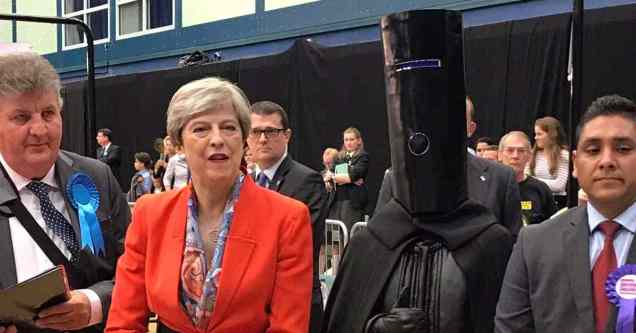
Theresa May - Lord Buckethead

A self-inflicted catastrophe for small-C conservatives with one – potentially enormous – silver lining

Who knew that Theresa May was quite so staggeringly incompetent? I mean, we all knew that she wasn’t a real conservative, at least in the best Thatcherite traditions of the party. That much was made clear from successive party conference speeches and her idiotic manifesto’s all-out assault on the libertarian or free market wing of the party.

But her years plugging away in the Home Office and quietly manoeuvring herself into the most powerful job in the country belied the fact that as prime minister, Theresa May would be revealed as little more than a puppet manipulated by her two closest aides (also both cuckoos in the conservative nest) with almost zero reliable judgment of her own.

Through her sheer campaigning ineptitude and inability to articulate a positive conservative vision (remember how this blog kept banging on about the need for one of those?), Theresa May has allowed Jeremy Corbyn’s brand of 1970’s style socialism to regain a foothold in British politics, and for this unforgivable high crime alone she needs to be sent to political Siberia with no undue delay.

But as I made clear in my election night live-blog, Jeremy Corbyn also deserves enormous credit for improving Labour’s electoral position and enthusing so many people with socialist politics. Sure, in one sense it is easy to sway people with the promise of endless free stuff, always paid for by someone else. But as I noted a couple of weeks ago, it is still necessary to overcome voter scepticism that the promised Utopian land of plenty can actually be achieved.

Jeremy Corbyn successfully made the pitch to lots of people – or at least got them to temporarily suspend their disbelief. And he did so in the context of a still-centrist Parliamentary Labour Party which hates his guts and has been trying to undermine him since before his leadership even began, not to mention a hostile television news media which only fell into something approaching balance when election campaign rules took effect, and a pro-Tory print media which pulled out all the stops to get Theresa May over the finish line. That is no small feat.

The other major factor was the youth vote. While we still don’t actually know how many young people voted or quite to what extent they broke for Jeremy Corbyn’s Labour Party, it seems clear that the promise of free university tuition – and let’s face it, just an ounce of empathy for a generation coming of age at a time when the prospect of home ownership is more distant and potential career paths more disjointed and precarious – won the support of millions of young people.

Apparently when it comes to closing time at nightclubs, young people are spontaneously breaking into the sung refrain “Oh, Jeremy Corbyn!“. The naive chant of mostly low-information voters who wear their political views more as a trendy fashion statement than a considered position? Sure. But also a demographic which Theresa May and her campaign team, in their infinite wisdom, did absolutely nothing to court.

I blogged about this in the heat of the moment on election night, and then split out my thoughts into a separate piece here. And it seems clear to me that British conservatives (I use a small C deliberately) simply cannot go on writing off the youth vote and ceding it to the parties of the Left. We have been doing so for far too long, at our peril, and now that a charismatic conviction politician (in the unlikely form of Jeremy Corbyn) has come along who can actually speak to this demographic we are totally defenceless.

And then there’s Brexit.

The one silver lining of this confused election result is that Theresa May’s stubborn insistence that “Brexit means Brexit” – by which she means that Brexit means abandoning the EEA, denying the existence of non-tariff barriers to trade, demanding a bespoke comprehensive free trade agreement within two years and threatening to walk away with no deal if the EU failed to acquiesce – may now be moderated by more sensible voices which lean toward the once-maligned “Norway Option”.

The DUP, on whose support the Conservatives must now rely to command a majority in the House of Commons and remain in government, are against a hard Brexit, as are many Tory Remainers and many small-C conservative Brexiteers across the country. While the Tory Brexit Taliban (a wonderful phrase concocted by Pete North) will kick up an almighty fuss if they sense any dilution of their maximalist approach to Brexit, suddenly it has become a lot harder to see the pathway toward that goal. Good.

Aside from these thoughts, I am still digesting the surprising election result and the potential ramifications of a new political reality with many moving parts. But below are some of the hot takes and more considered reactions which have resonated most with me in the hours since the fateful exit poll was released.

Author and blogger Paul Goldsmith rips into the Tories’ awful manifesto, the incompetence of their leadership and their small-minded, fear-based campaign:

Let’s not beat around the bush here. Theresa May’s manifesto was almost like saying ‘come on, I dare you to vote for us’. The idea that people who had worked all their lives and paid taxes and national insurance to build up a nest-egg to pass onto their children and grandchildren should run down that nest-egg to the last £100,000 to pay for care they thought was part of their social contract with the state in return for those taxes and that insurance? A return to a grammar school system that might look superficially advantageous to poorer children but with no clarity on how it wouldn’t once again abandon 75% of the population to the mental slavery of under-education? A free vote on fox hunting? A determination to insist that the ‘will of the people’ had been clearly expressed for the hardest of Brexits including withdrawal from the Single Market and customs union and immigration controls that include the preposterous 100,000 a year immigration cap?

Let’s add that to the person delivering this, it turned out, far more madcap scheme. Theresa May came across as arrogant, complacent, prickly when challenged, and downright mendacious when insisting ‘nothing had changed’ during her unprecedented manifesto u-turn on social care. Then there was the refusal to engage in TV debates. I wonder if any leader will do THAT again. Her refusal to properly involve her Cabinet in creating that manifesto left them hung out to dry when defending it, as they were reduced to constant ‘dead cat’ strategies of shouting ‘IRA’, ‘MARXIST’ and ‘TERRORIST SYMPATHIZER’ at Jeremy Corbyn, because they had so little positive to say.

Then look at what she was up against. Every night I would watch the news with Mrs G. We are not, and never will be ‘Corbynistas’, but by g-d did he look good compared to the Prime Minister. Mrs G often said it herself “every night he seems like the only person in this election who really believes what he is saying.”

This last point is particularly valid. Don’t underestimate the attraction of a political leader who (regardless of the rightness or wrongness of their policies) actually sincerely believes what they are saying, and has the courage to defend those beliefs.

When Theresa May first called this general election, I wrote a piece pondering whether Jeremy Corbyn’s likely defeat would spell the end for conviction politics altogether. How wrong I was. If anything, the Tory implosion and Corbyn’s solid showing (and the enthusiasm he has generated among many young people) have reminded us that having strong principles and the willingness to defend them can actually be attractive to voters. If only the conviction politician in this case had been on the Right rather than the Left.

Daniel Hannan, writing for the Washington Examiner, reaches for some low-hanging fruit about how young people voted for Free Stuff:

It’s true that the Conservative campaign could have been better, but that is true of every campaign in history. The prime minister, Theresa May, was criticized for calling an unnecessary election and then refusing to participate in the televised debates. But that doesn’t come close to explaining how Labour rose from 30 to 40 percent support during the campaign.

No, I’m afraid we’re down to the simplest and most depressing explanation. Quite a few voters will support any party that seems to be offering them free stuff.

Labour’s manifesto was a ridiculous list of public handouts. More money was promised for healthcare, schools, the police, public sector pay rises, pensions and free university tuition. All the extra cash was vaguely supposed to come from “big business” and “the rich.” In the event, an awful lot of people liked the sound of goodies that someone else would pay for.

The Labour vote came disproportionately from people under the age of 25, who turned out in unprecedented numbers, confounding every opinion poll. Few of voters of that generation know about the IRA bombing campaign in the 1970s and 1980s, which far surpassed today’s Islamist terror in its scale. They do not remember the Cold War. They do not even recall, except in the vaguest sense, the last Labour government which, in 2010, left Britain with a deficit higher than Greece’s.

On polling day, a Labour activist tweeted a photograph of students queuing outside a polling station. It was, she said, a sign of the political upheaval that was taking place. But my immediate thought was: “If your guy implements the socialism he wants, we’ll all have to get used to queuing.”

He’s right. The case for free markets and fiscal conservatism has to be made anew in every generation. Many of the young people who helped power Jeremy Corbyn to victory are at best dimly aware of the extent to which post-war consensus, socialist policies doomed Britain to slow and steady decline up to 1979. They didn’t experience the Winter of Discontent themselves, just as I didn’t.

But if nobody makes the case for the kind of policies which rescued Britain from near-terminal decline and which are at the root of the historic prosperity and plenty which we now enjoy, then they will take this stability and prosperity for granted, assuming that it is the baseline, the default setting. They will wrongly assume that things can only be improved by overturning conservative policies and attacking the free market, when in fact conservative economic policies and free markets underpin nearly every good thing in their lives, from the clothes they wear, the variety of food in the grocery stores where they shop to the smartphones in their hand from which they glibly re-tweet “For the many, not the few”.

Here’s Margot James, Conservative MP for Stourbridge, making a similar point in Conservative Home:

Apart from a level of debt which is unsustainable over the long term, the economy is now in good shape.  We have brought sanity to the public finances, as we promised we would. Consequently, the economy has not been to the fore when people have been deciding how to vote.  Labour have been able to latch on to this relative economic security by peddling a message that the state should provide more at every turn.

The election descended into a profligate binge over how much taxpayers’ money Labour proposed to give away: keeping the triple lock for pension increases, maintaining winter fuel payments for older people as a universal benefit, thousands more police officers (regardless whether or not they are needed, given the changing nature of crime), more money for schools, health, and social care…all this was added to the billions needed for the nationalisation of the railways and the Royal Mail. And finally, the game-changer: an end to tuition fees for higher education.

The moment I heard Labour’s policy of free university education I knew young people would turn out to vote in unprecedented numbers.  This was a policy that would deliver votes in the same way that the sale of council houses did for us during the 1980s.

At a radio hustings I took part in, we were asked what we would do for young people.  Labour was all about handouts: free higher education with no regard for how universities were to be funded, the reintroduction of housing benefit for 20 olds and an equal minimum wage.  I was a lone voice calling for improving opportunities for young people to gain skills, start businesses, and access better jobs brought about by encouraging investment.

Paul Goldsmith picked up on this point, too:

Many right-wing commentators have pointed out that all Jeremy Corbyn was doing was bribing people with other peoples’ money. One said that the election could be summed up in six words: ‘young people vote for free stuff’. Yes, there is an argument for both. But this is why it was incumbent upon Theresa May and the few people she takes advice from to present an optimistic picture of the benefits of the free market, or maybe stepped back, considered that if you keep on cutting spending per pupil in education the country will pay the price for generations, and changed course in a way that stays true to the now normal Conservative consensus that instead of spending a load of money to manage demand, money should go towards increasing productivity and supply, and demand will take care of itself.

But no. Instead we got the cowardice of fear. Fear of proper debate, fear of the demands of those on the Eurosceptic right who  will not stand for a single penny going to the EU and who insist with no justification that the world will simply dance to our tune, and fear of antagonising those who fund her party. Meanwhile, Jeremy Corbyn offered the audacity of hope, a hope that economic theory might be turned on its head, a hope that people who would be milked for money would turn it over quietly, but more importantly a hope that no-one in this rich country will live in desperation anymore.

It is astonishing, the degree to which the Conservative Party fought the election and generally structured its messaging according to the terms of the socialist Left. Restraining the growth of the state has continually been portrayed as a regrettable necessity rather than a good thing in itself. And that’s when certain ex-advisers who shall not be named (cough, Nick Timothy) were not busy advocating an even more activist role for the state altogether.

When you start speaking in the other side’s tone of voice, using their turns of phrase and echoing their agenda (Theresa May’s first act as PM was to stand on the steps of 10 Downing Street and talk about how government could help the “Just About Managing” rather than getting out of the way and lowering their tax burden) then you legitimise their arguments. If you concede that it is the job of an activist, paternalist state to help everybody by shovelling benefits in their direction and artificially limiting their choices, why would anybody vote for the Tories when Labour promise to do the job so much more enthusiastically?

Sam Bowman, of the Adam Smith Institute, is not in a forgiving mood:

The Tories did so badly in part because they did not give people a reason to vote for them; in part because they doubled down on a hard Brexit strategy; in part because they neglected and even attacked their own base. For many years they and almost everybody else have totally failed to make a broad-brush case for free markets, with the honourable exception of a few think tanks and newspaper columnists. With that in mind, why is it surprising that someone who despises markets is so popular? How good the moderate and coherent Osborne brand of social liberalism and fiscal conservatism now looks.

[..] The Tories did not offer anything to voters or to their own supporters. A free market manifesto could have energised Tory campaigners and candidates who would have had a reason to go to bat for May when she stumbled. It could have included policies that would have been popular with voters, like stamp duty and inheritance tax cuts, or ways of unlocking more infrastructure investment, that could have been sold on the doorstep as a reason to vote for them if you didn’t like them on Brexit. Fox hunting doesn’t count.

[..] Virtually no time at all was spent on the economy. What a colossal mistake. Many people’s incomes are the same in real terms as they were ten years ago, which is unprecedented. It was insane to ignore this and not to offer policies that might have boosted investment (chronically low in Britain by international standards) and people’s wages. All we got was a crude parody of continental European industrial policy, which in practice meant hectoring firms about worker representation on their boards and baseless claims about price gouging. What good is a polling lead on the economy for a right-wing party if you’re only interested in talking about business to attack it?

The Conservatives could have had a powerful and, to their base, exciting election platform. More homes, more investment, and better infrastructure could all have been delivered through smart, density-focused planning reforms, by restoring capital allowances in the corporation tax and cutting the part of business rates that falls on property investment, and by allowing local government to finance new infrastructure from private investment.

These ideas are free market to the core but are about fixing the problems that ordinary people have. Standing for free market conservatism does not mean having to be a dogmatic ideologue — something May and her team never understood.

Over on Facebook, Brendan O’Neill – who does himself no favours with his strident insistence that his is the only One True Brexit – does make some good points, first about the nature of the current Labour Party:

As more election number-crunching is carried out, it’s becoming clear that the Tories and Labour now play entirely different roles to the ones they played just 20 or 30 years ago.

The first thing that’s becoming clear is that people have overstated the extent to which Labour won over Leave voters. According to Lord Ashcroft’s exhaustive national survey, 60 per cent of Leavers voted for the Tories and only 25 per cent voted for Labour. John Curtice, the BBC’s key number-cruncher, reports that the biggest swings to the Tories were in Leave areas, while it was in “seats which voted Remain last year [that] Labour pulled off some of its best performances”. This means the Tories had huge swings in very poor areas like Boston and Skegness and working-class areas like Bolsover — which are Leave areas — while Labour made enormous gains in Hampstead, Kensington and Canterbury, which are Remain areas and / or well-off areas. The Tories made inroads with the poor, Labour made gains among the posh. This is fascinating.

More number-crunching is needed, but two things are becoming clear. 1) The idea that the Brexit issue or the Brexit divide has gone away is a fantasy. It merely takes a different form now, with Leave largely orientating around the Tories and Remain around Labour. Ashcroft says 68 per cent of Tory voters are Leavers and 64 per cent of Labour voters are Remainers. That is extraordinary. It’s the divide of our time, and we shouldn’t deny that. And 2) Labour, even led by Corbyn, is not a party of the working class. In fact it is becoming something else. It is morphing, or at least might morph, into being a party of the middle class that wants to *keep in check* working-class anger with institutions like the EU. Let that sink in. And let’s see what happens next.

And:

Okay, the wild Labour celebrations are getting weird now. Labour didn’t win. Even against grey, dull, U-turning May — the worst Tory leader of my lifetime, by far — it didn’t win. It is testament to Labour’s low ambitions that it is getting so excited about this. This is clearly a party that never expects to be in government again and must therefore welcome upward blips and handfuls of gains as the best it can get, proof it still has a pulse.

I also agree with O’Neill on the excessive celebration of the youth vote, as though their participation in the democratic process is somehow more valuable than that of older voters:

The message we’ve been bombarded with since Brexit and the Corbyn surge is that when the old vote, everything goes to shit, and the sooner these selfish, nostalgic bastards die, the better; but when the young vote, it’s all milk and honey and roses and light, and the sooner this fresh, caring generation takes over society, the better. The old are demonised, the young sacralised, giving rise to what must surely be one of the nastiest divides in our society right now. I can’t get behind the enthusiasm for the youth vote, I’m afraid, because much of it seems to me to be driven by a culture-war sense of entitlement against the apparently unfeeling, uneducated elderly. The culture war has come to the ballot box.

Now of course we should celebrate when a normally apathetic demographic group actually turns out to vote, but there is a worrying narrative building of young people, furious at having had their “futures taken away” by the selfish Leave votes of older people, finally striking back by supporting Jeremy Corbyn.

As well as being false, this is highly offensive. As though old people – many of whom sacrificed and laboured to give their EU-supporting kids the best possible chances in life – were not thinking about their children’s futures when they voted for Brexit, and as though young people – literally members of generation Me Me Me, consumerists who struggled to frame the EU referendum debate in terms other than what it meant for them and their own travel opportunities, love lives, mobile roaming charges etc. – were high-mindedly voting for the good of society and the future of our democracy. I have no time for this sanctimonious, false narrative, and it is good to see O’Neill also forcefully pushing back.

Turning to Brexit, here’s Pete North, angrily rebutting those who continue to fatuously declare that “the people” voted only for their specific, idiotic brand of Brexit:

As to the assertion that remaining in the single market is not leaving the EU, this is a zombie argument used by liars. The single market as it stands now is a collaborative venture between the EU and Efta states – and Norway etc only adopt about one in five EU rules by way of a system of co-determination – laws which we will likely have to adopt even if we left the single market – but without any means of disputing council decisions. Not least since many of them are rooted in global conventions.

I won’t go into the gory details because I will revisit these issues in the near future. The point of this post is simply to say that leavers do not get to call the shots on how we depart. They were given that opportunity over a year ago and declined the opportunity. It is therefore up to all of us to debate. Democracy is a continuum and though the decision to leave may well be sacrosanct the mode of departure still hangs in the balance and there is everything to play for.

You probably already know my views on this. There is no economic gain or utility in terms of sovereignty from leaving the single market. The main objective and the the single most important one is that we end political union with the EU and an off the shelf treaty is the fastest and safest path to that outcome. The rest can be sorted out later and revisited by way of EEA review.

There is no scenario where we don’t have to make compromises and fetishising sovereignty for its own sake is pointless since absolute sovereignty no longer exists unless you’re a regulatory superpower like China or the USA. Diverging from the existing regime brings us no efficiencies and comes at the cost of European trade. That was a tough pill to swallow for me being a long standing critic of EU regulation – but that is the reality of it nonetheless.

[..] In that regard do not let anyone tell you the debate is settled or let them interpret the result of the election for you. The question of how we leave has always been open ended and there is every reason to get involved. Plenty of people want to close down the debate by telling lies. The usual suspects. I’m not standing for it and this ain’t over til it’s over. The fight over Britain’s destiny did not end in June last year. The referendum was only the beginning and hardline leavers do not own this debate.

Meanwhile, the Telegraph columnist Christopher Booker can’t believe our good fortune in having inadvertently steered a course between two dangerous options (Corbynite socialism and Mayite Brexit illiteracy) with the electorate’s inconclusive verdict:

After a very short night, I was woken before 8am on Friday by a call from my son Nick, 5,000 miles away in India, who had been following the drama 8,000 feet up in the Himalayan foothills. “This is yet another amazing tribute,” he said, “to the unconscious political genius of the British people. They have somehow managed to steer between the Scylla of Corbyn’s suicidal economic illiteracy and the Charybdis of Mrs May’s hard Brexit.”

“She will only be able to govern with the support of 10 Northern Irish MPs who insist that we must keep a ‘frictionless border’ with Ireland and the 13 Scottish Tories who, with Ruth Davidson, are equally insistent that we must somehow remain free to trade in the single market. That is brilliant for the Union, because both Northern Ireland and Scotland are crucial to her survival.

“With all the other parties also somehow committed to staying in the European market, plus many of the less reckless Tories, that means that it will be extremely difficult for her to press on with her hard-Brexit, ‘walk away without a deal’ line. “I am now more optimistic about Britain’s future”, Nick concluded, “than I have been for a long time.” Many of my readers, I know, will be shocked, if not surprised, to hear that I agree with him.

Booker’s son is not wrong – and this is what makes the election result so bittersweet from my own perspective. Anything that moderates the nature of Brexit and injects some light rather than heat into the debate is clearly a good thing. But Theresa May has led the Conservative Party to a very bad place, perilously close to defeat, and there is no guarantee that either she or her replacement will learn the correct lessons.

The danger is that the Tories, rather than rediscovering their ideological backbone and making the case for free markets and a less activist state to the people, instead now join Labour in a full-on race to the political left, which would be devastating for conservatism as a whole as well as being a competition which the Right can simply never win. Must the price for Brexit be the shifting of the Overton window ten degrees back toward the Corbynite Left? It looks increasingly as though this may be the case.

Conservative Home’s Paul Goodman looks at the mechanics of the Conservative Party’s current predicament:

Better by far, say the wise old owls, to hang on.  An arrangement with the DUP would give the new Government a majority, they say.  There is no prospect of a no confidence vote succeeding.  And May can find shelter behind our old friend, the Fixed Terms Parliament Act.  Maybe she should see the Brexit talks through, some muse, and then depart with the thanks of a grateful nation.

Perhaps the old birds are right.  But this site is nagged by the uncomfortable feeling that they may be failing to see the wood for the trees.  May won the biggest Tory share of the vote since Margaret Thatcher, but the landslide she anticipated did not take place.  Voters seem to have mulled her refusal to level with them over social care, her reluctance to debate, her lack of ease with campaigning and engagement – and, having weighed her in the balance, found her wanting.  It is not certain that she has the flexibility and adaptability to share power with her Cabinet and Party and Parliament, as she must now do to survive.

It is all very well to take refuge behind fixed terms plus hope in the DUP.  David Cameron had a majority, and his government was crippled by rebellions.  May was at mercy of the Commons even before the election: remember the Budget and national insurance?  Conservative MPs may not yet have grasped that we face the possibility of five years of a Do Nothing Government – with all that this implies for the proper management of the country’s finances.  On paper, such an administration may be able to stagger on – at the mercy of tide and chance, with a Party leader vulnerable at any moment to a leadership challenge via letters to Graham Brady.  But in practice?

No, Theresa May needs to go now. None of the pieces I have read since that exit poll came out have convinced me otherwise, well argued though some of them are. In a sense, it doesn’t really matter that none of the likely options to replace her are any better (and Pete North forcefully explains why this is the case). The key is that the contenders could hardly be any worse, either in their zeal for a particularly destructive form of Brexit with almost no real thinking behind it, or in their dubious commitment to free markets and restraining the size of the state. And recall, May’s successor will be equally constrained in their Brexit approach by parliamentary arithmetic, so there is no need to keep May around for fear of a more hardline approach to Brexit.

Theresa May needs to go because she single-handedly destroyed her own authority, not just within her party or the country at large, but on the world stage too. These are momentous times, and with the metro-Left political elites of most countries currently scoffing at Britain for supposedly relegating ourselves from the ranks of serious countries by voting for Brexit, we need a strong, charismatic leader who is capable of going toe to toe with Emmanuel Macron, Angela Merkel and Donald Trump. Not a weak supplicant caretaker PM whose permission to continue representing us is extended only one day or one week at a time.

Perception matters, and right now Theresa May is correctly perceived as a loser with no authority. Better to make the change now, even if it means enduring five more years of aggrieved leftists who don’t understand how our system of government works (or make any effort to change it) moaning about another unelected Tory prime minister. Better to make the switch now rather than changing horses midstream in the middle of Brexit negotiations. And while whoever replaces Theresa May will probably be just as, uh, problematic from a conservative viewpoint, we should compensate by using the turmoil to finally promote some of the more Thatcherite, liberty-minded backbenchers – the likes of James Cleverly or Kwasi Kwarteng – to cabinet positions so that next time around we have a better talent pool to fish in.

The only problem is that by the time of the next general election, the Tories will have been in government (mostly in coalition / confidence and supply agreement, but also alone) for the past seven-plus years. The window for making radical changes to the way the country operates, tantalisingly opened after the Great Recession but stymied by David Cameron’s failure to win an outright majority against Gordon Brown, will have fully closed again. How many political parties or administrations can you think of which suddenly burst to life with original ideas and bold new policies 7+ years after first coming to power? Surely none. Anything radical must happen at the beginning, before the impetus wears off, steady state sets in and the people ultimately tire of the party of government and demand a change.

Regrettably, the Tories have wasted their years of potential firstly in coalition with the LibDems, then alone after the 2015 victory and now in some still-to-be-decided arrangement with the DUP, and accomplished very little save holding the EU referendum which gave us Brexit and presiding over a reduction (but not eradication) of the budget deficit. It is now quite possible that we must soon suffer through some form of left-wing government – perhaps a progressive alliance of the childlike Left, though who can now put it past Jeremy Corbyn to secure a majority of his own if May’s government falls? – before the Tories can then return once again to fix or limit the damage.

And yet in mitigation of this depressing fact, there is now a fighting chance that the new parliamentary arithmetic will see Brexit taking a more sensible, palatable and less destructive form, which is what this blog wanted all along.

Politics giveth and politics taketh away.


These are my current thoughts on the fluid post-election situation, together with some reactions from other people which have resonated with me since election night. I have quite a busy few days coming up so the blog may go a little bit quiet for the next week with only an occasional sporadic update, but normal service should be resumed by next weekend.

Stay tuned to the Twitter feed @SamHooper for more short-form ranting in the interim.


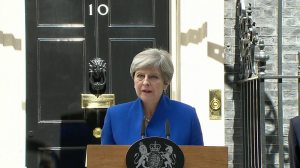
Theresa May - Downing Street speech

Support Semi-Partisan Politics with a one-time or recurring donation:

Agree with this article? Violently disagree? Scroll down to leave a comment.

Follow Semi-Partisan Politics on TwitterFacebook and Medium.

General Election 2017: Conservatives Cannot Give Up On The Youth Vote

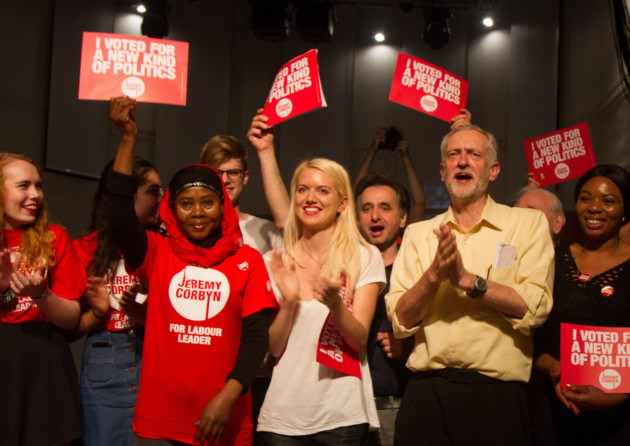
Jeremy Corbyn - Youth vote

British conservatives can no longer afford to cede the youth vote to the parties of the Left without putting up a fight for their hearts and minds

One thing seems absolutely crystal clear to me: the Conservative Party can no longer allow itself to glibly write off almost the entire youth vote and cede youth politics to the various parties of the left.

In some ways, Jeremy Corbyn seems like a most implausible politician to court the youth vote – an old, grey haired career politician with absolutely zero interest in doing anything fashionable, sartorially or politically. But my god, he is an authentic conviction politician. And if your average voter hates overgroomed, telegenic bland politico-bots then young people clearly hate them even more. Canned soundbites don’t work on social media-savvy young people, if they work on anyone. And yet the Conservatives went into battle – largely thanks to the “genius” Lynton Crosby – with an arsenal made up almost exclusively of glib, canned soundbites in place of anything remotely authentic.

Not that authenticity alone is enough. Right wing politics are clearly hugely toxic to many young people, who would sooner die than consider voting Conservative, let alone admitting any conservative leanings to their social circle. The Tories are too closely associated with grey, uninspiring “austerity”, even though austerity is largely a myth. The Tory brand, fair or unfair, is still toxic to many people. And the parties of the left have perfectly tapped into the consumerist politics of Me Me Me by promising to firehose endless sums of money into the gaping, insatiable mouth of Britain’s public services.

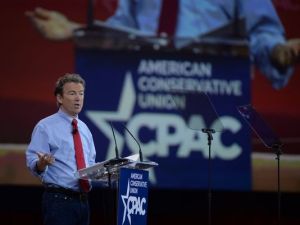
It seems painfully apparent to me that we need a prominent, national vessel for the development and promotion conservative policies (and personalities) separate from the Conservative Party, which simply can no longer be trusted to make the case for its own worldview. I wrote ages ago, back in 2015, that we need a British CPAC – a well funded and media savvy conservative campaign group which exists outside the dusty, dysfunctional Tories.

CPAC is the Conservative Political Action Conference in the United States, and while it has had its share of controversies it serves an important role in nurturing small-C conservative talent, seeding new ideas and generally providing an opportunity for advancement and self-promotion outside the structures of the Republican Party. It also plays a role in youth outreach, as do other organisations like Ron Paul’s Young Americans for Liberty.

The seeds of such a movement already exist – there is the excellent Conservatives for Liberty group, for which I am proud to have written numerous times. But for all the good work they do, they remain associated directly with the Tory brand and are too easily sidelined when a rabid anti-Thatcherite like Theresa May seizes control of the party and tries to drag it to the statist centre-left. Meanwhile, other think tanks which sometimes do good work (and sometimes not so good) – the Adam Smith Institute, the IEA, the Centre for Policy Studies – are very much of the political elite and by the political elite. They have neither the makings of a mass movement, nor the inclination to become one – and quite rightly, for this is not their speciality.

Worse still, the Conservative Party’s own efforts to build a youth wing tend to attract the kind of tweed-wearing teens and twenty-somethings who only further the perception of the party as being for posh, wealthy and generally insufferable types. Conservative Future, their most recent attempt, seemed to operate like a kind of pyramid scheme with promises of future candidacies dangled in front of naive young activists, and was rife with a bullying culture which led to the group’s closure.

No. For reasons of branding and basic administrative competence, any future small-C conservative movement hoping to gain traction with young people must be distinct from the Conservative Party, free of that residual toxicity and free to criticise the Tory party in government and in opposition when it proposes policies which either betray core values or threaten the interests of young people. A British CPAC and Young Brits for Liberty-style organisation could nurture talent of its own, outside the corrupting, nepotistic influence of the Conservative Party hierarchy, and would greatly increase their collective clout by helping or withholding support from future Tory election campaigns and individual candidacies based on policy, not party loyalty.

It is only through outside groups like this that the image of conservatism stands a chance of being rehabilitated among young people. It is only through a British version of CPAC or YAF that young conservative or agnostic students at university stand a chance against being steamrollered by the fashionable left-wing identity politics which are almost de rigeur for social acceptance and advancement.

Look at the people who might be considered contenders to take over from Theresa May when she is rightly consigned to the dustbin of conservative political history. Do you see the youth vote ever breaking in significant numbers for Philip Hammond or Michael Fallon? David Davis or Michael Gove? Maybe Boris Johnson might win a few, but he is widely hated by starry-eyed young Europhiles for supposedly “taking away their future”.

No, the future Conservative leader who stands even a chance of fighting the parties of the left for the youth vote must come up from outside the existing party structure, if they are to emerge at all. They must articulate a message of conservatism as being pro-freedom, pro-opportunity, pro-dynamism. Some compromises must be made, with the party finally addressing issues which screw the younger generation and force them into the waiting arms of the Labour Party – a serious housebuilding programme (not council houses, but houses for private sale and rent) for example. The end of universal benefits being lavished upon rich, self-entitled pensioners who don’t need them.

The Tories need a leader who can make self-sufficiency and freedom seem cool rather than callous, admirable rather than shameful, particularly to younger voters. I don’t see anybody on the Conservative front bench who stands a chance of doing that. Maybe James Cleverly or Kwasi Kwarteng from the backbenches, if they were to step up and gain some ministerial experience? Priti Patel?

Regardless, one thing is clear: the Tories can no longer be relied upon to keep the torch of conservatism lit by themselves. Theresa May half extinguished it with her statist left-wing manifesto, half stolen from the Labour Party, and her inept campaigning and toxicity among young people provided the final coup-de-grace.

We need a strong external repository for conservative principle, capable of engaging with young people who have been continually taught that leftist progressivism = forward-thinking “compassion” while liberty, independence and self-sufficiency from government are evidence of greed and moral failure.

Theresa May’s Conservative Party shamefully surrendered the youth vote without so much as trying to win them over. The broader British conservative movement must learn from this dismal failure and ensure that it is never repeated.


Rand Paul - CPAC

Support Semi-Partisan Politics with a one-time or recurring donation:

Agree with this article? Violently disagree? Scroll down to leave a comment.

Follow Semi-Partisan Politics on TwitterFacebook and Medium.