Latest Front In The Social Justice War: Censoring Beloved Children’s Books

the-magic-faraway-tree-enid-blyton-childrens-literature

We must resist the insidious rewriting of beloved classics to make them retroactively conform to today’s social attitudes and dogmas

This blog has been (justifiably) quite hard on Ariane Sherine, the Spectator’s latest affirmative action hire, expressing exasperation with her wide-eyed surprise that Ukippers and pro-Brexit folks don’t immediately lynch every single Asian person they come across and suggesting (ahem) that she represents everything that is wrong with the closed shop of Westminster political journalism.

But credit where credit is due – her latest piece in The Spectator identifies a real and insidious issue, and Sherine even manages to come down on the right side of it.

That issue: the censorship and rewriting of beloved children’s literature to make the texts conform to with the current dogma that young people must not be exposed to old-fashioned turns of phrase, ideas or even names which jar with today’s coddling, infantilising and achingly PC culture.

Sherine writes:

Six years ago, the publishers Hachette took the well-meaning yet preposterous step of making ‘sensitive text revisions’ to Enid Blyton’s classic Famous Five books. So ‘tinker’ was changed to ‘traveller’, ‘mother and father’ to ‘mum and dad’ and ‘awful swotter’ to ‘bookworm’. The suggestion that tomboy George needed ‘a good spanking’ became ‘a good talking to’, while girly Anne’s assertion, ‘You see, I do like pretty frocks — and I love my dolls — and you can’t do that if you’re a boy’ had its final clause removed, rendering the sentence throwaway rather than poignant. Unsurprisingly, given that all the charm had been stripped out of them, the revised editions flopped, and last weekend it was reported that Hachette were reverting to the originals. The publishers conceded that the updates had proved ‘very unpopular’.

But Hachette isn’t the only culprit. Earli­­­er this year, I bought my five-year-old daughter one of the Blyton titles I had enjoyed most as a child, The Magic Faraway Tree. I read it aloud to her, expecting to feel warmly nostalgic, but I merely felt baffled and irritated to discover that the publishers, Egmont, had also made several unnecessary changes. The names Fanny and Dick had been changed to Frannie and Rick. At first, I thought this was a misguided effort to avoid schoolchildren giggling at unintentional innuendo, but then I found that the names Jo and Bessie had also been pointlessly updated to Joe and Beth.

Joe and Beth? It wasn’t enough for Hachette to butcher beloved Enid Blyton characters, they really had to turn them into preening, insufferable hipsters too? No, this is too much.

Sherine continues:

Decisions to amend old, politically incorrect texts are based on a myth: that children are malleable, delicate creatures. Let’s eradicate anything remotely contentious! But anyone with a child over five knows that to edit the past is to insult both their intelligence and their resilience. My little girl is astute, tough and robust, and gleefully recounts gruesome fairy tales she has heard from friends. A colleague’s young sons delight in reading Old Testament stories of massacres and murders in their 1960s version of the Bible. These parables won’t turn our children into serial killers, and nor will Blyton’s unreconstructed slant on the world adversely influence their characters. I spent ages five to 12 engrossed in Blyton’s novels, and am yet to be branded sexist, racist or classist.

She’s lucky; I myself have been accused of the holy trifecta (sexism, racism and classism) despite being a mixed race person from pretty humble socio-economic background, primarily because I fail to spout the “correct” progressive left wing opinions on social justice, affirmative action and redistribution – but I don’t hold my avid readership of The Five Find-Outers to blame.

But Sherine is absolutely right, children are resilient creatures. In fact, children are the the epitome of anti-fragility – that precious quality of actually becoming stronger and more durable the more they are challenged and stretched in their thinking. And yet we seem determined to beat this precious quality out of our young people today, and we do so with such zeal that by the time they leave school for university many young adults are quivering wrecks, convinced that any exposure to conflicting ideas or any feedback less than warmly affirming will somehow gravely injure them and even “invalidate” their carefully-constructed “identities”.

More:

In fact, older books’ anachronisms can prompt useful conversations about changing attitudes towards race, sex, sexuality and class. The comedy writer Nathaniel Tapley recently encouraged his young son Thomas to read the 1967 children’s book Lion Adventure by Willard Price, remembering the boys’ adventure series as being rip-roaring fun. When his son asked: ‘Daddy, what does, “This is black man’s country’ mean?”’ they went on to discuss how differently people think about race these days, and whether or not people should live together.

[..] Children should not be patronised or mollycoddled — they should be free to read all about the amusingly quaint ideas, thoughts, words and names from the olden days, however sexist, unpalatable or wrong these may be considered now. They can learn from the past — but only if it remains uncensored.

This is a really important point. I was born in 1982, and some of the things I read in Enid Blyton books seemed strange or jarring to modern sensibilities even then. Did this in any way detract from my enjoyment of the books? No. Did it cause me to absorb the 1940s attitudes toward race and gender contained within? No. Did it prompt a conversation or two with my mother about why things were different, or why characters talked a certain way? Probably, yes. And from those discussions I learned and grew, as will young children today if they are given the chance to read the unadulterated, uncensored Enid Blyton.

This doesn’t just apply to children’s literature, of course. In 2011, a pinch-faced, hectoring Social Justice edition of Huckleberry Finn was released, in which the racist term “nigger” was replaced with the more emollient “slave”. This in turn was in response to numerous schools dropping the American classic from their curriculum because the PC zealots in charge preferred to pander to the imagined fragility of their students rather than read and teach through the awkwardness to understand the time and context in which the book was written.

But whether it is adult literature or beloved children’s classics, publishers have no business vandalising and defacing important artefacts from human civilisation just because they fail to live up to the tremulous, wobbly-lipped standards of the Permanently Offended.

Ariane Sherine is right to be outraged at the censorship of Enid Blyton. We should all be outraged. Because as with everything else connected with social justice, the progressive censors are not really signalling their low approval of these long-dead authors. No, what they are actually doing is signalling their disapproval of us. They are saying that we either are too pathetic and delicate to understand these social and literary anachronisms, or that we simply cannot be trusted to hear racist, sexist or homophobic dialogue in the context of great or beloved works of literature, lest the lumpen masses seek to recreate the 1950s (or the 1850s) in today’s world.

In other words, the progressive censors believe that you are either a perpetual victim or a would-be future racist, sexist or thought criminal. And if there is any ugly sentiment which should be purged from the world, the progressive metro-left’s sneering contempt for ordinary people would rank very high indeed on the list.

 

the-worst-part-of-censorship-is

Top Image: “The Magic Faraway Tree” by Kerry Darlington

Support Semi-Partisan Politics with a one-time or recurring donation:

Agree with this article? Violently disagree? Scroll down to leave a comment.

Follow Semi-Partisan Politics on TwitterFacebook and Medium.

Tales From The Safe Space, Part 41 – UCL Archaeology Students Triggered By ‘Scary Bones’

In tracking the spread of social justice/identity politics poison through the academic world, every day now seems to bring some new ridiculous example of petty intolerance or exaggerated student fragility. And each new story prompts the incredulous reaction that things can’t possibly get any more surreal, that we must surely have now reached Peak SJW. And then something even more ridiculous transpires on a Western university campus.

From the Daily Mail:

Students at UCL taking the archaeologies of modern conflict course have been told that they will encounter ‘historical events that may be disturbing, even traumatising’.

If they feel stressed, they can ‘step outside’ for the rest of the class ‘without penalty’, though they should catch up by copying the notes of another student.

Lecturer Gabriel Moshenska, who co-ordinates the UCL course on how archaeology can help unearth the truth about 20th and 21st century conflicts, said some students had been in the Armed Forces and may have suffered psychological trauma.

He admitted no one had ever complained that they found one of his talks upsetting and said the alert was ‘precautionary’.

What’s particularly concerning here is that the professor involved, Gabriel Moshenska, took the decision to add the precautionary trigger warning to his class entirely voluntarily, through his own initiative. There was no coercion to do so by angry students staging a sit-in outside his office, or through a coordinated social media campaign. Moschenska simply decided that people who had signed up to study the archaeology of modern conflict might need to be warned that they would encounter the remnants of conflict during the course of their studies.

What this shows us is that the Cult of Social Justice and Identity Politics, and its associated infantilising of students, has reached a critical mass whereby the culture of enforcing safe spaces, trigger warnings and treating grown adults like they are children takes place automatically without any further need for threats or campaigns. Professors and lecturers are capitulating to the student babies before anything is even demanded of them, either because they simply want an easy life and to avoid conflict, or because they actively support these efforts to infantilise young adults.

This is not a good development. If we thought it was bad when universities like Yale and Mizzou limply rolled over and capitulated when threatened by snarling, baby-faced SJWs with their protests and boycotts, that’s nothing compared to the further setbacks we may witness when faculty are active co-conspirators.

And this can lead nowhere good, as Brendan O’Neill laments The Spectator:

But of course there’s a major problem here: the relentless infantilisation of students, the treatment of them as overgrown children liable to be plunged by mere words or images into actual trauma (‘a disturbing experience which affects the mind or nerves of a person so as to induce hysteria or psychic conditions’: OED). The very idea of the university becomes impossible if students are presumed to be so mentally fragile that even class chatter could unhinge them psychically.

[..] This presumption of mental frailty among students, now seen as so psychically vulnerable that even F Scott Fitzgerald might traumatise them, is antithetical to the whole idea of university life, whose starting point must surely be that young adults are not only mentally competent but morally autonomous and intellectually curious. The overuse of the word ‘trauma’ to describe everything from an archaeology class to an old play shows how entrenched this view of students has become. As an American professor of psychology says, ‘When we describe misfortune, sadness or even pain as trauma… [we] turn every event into a catastrophe, leaving us helpless, broken and unable to move on’. In short, the more we tell young adults that everything is potentially traumatic, the more likely they are to experience everything as traumatic, or at least terrifying. We’re seriously teaching young people to see Shakespeare as potentially harmful to their mental health.

Strikingly, the UCL archaeology lecturer says that so far none of his students has accepted his offer to leave a ‘traumatic’ class discussion. That’s encouraging. It’s also revealing. It suggests the new campus craziness, the wild allergy to difficult debate and fear of offensive texts, doesn’t always come from students themselves. It’s been institutionalised, among actual academics, to such an extent that universities no longer instil in their students the Kantian idea that one should ‘Dare to know’ but rather tell them: ‘Sometimes it’s risky to know. What you find out might hurt you. So maybe you shouldn’t know that thing, or read that book, or listen to this lecture.’ The safety of ignorance.

Brendan O’Neill is more optimistic than I – he sees it as a positive thing that none of Nanny Moshenska’s students have yet chosen to avail themselves of their Right to Flee. And I suppose it is a good thing. But when professors provide even the option of leaving the classroom when confronted with learning material that arouses anything but positive emotions, they effectively legitimise the idea that words and ideas can cause actual physical harm, that being exposed to contrary viewpoints or shocking information is somehow dangerous, and that avoidance coping (staying away from things that upset you) actually works. In reality, there is no proof for any of these assertions, and many reasons to suspect that they are complete psychobabble hokum.

This year’s intake of Archaeologies of Modern Conflict students may be a hardy bunch (by the low standards we now set for young adults, meaning they won’t burst into tears and soil themselves at the sight of a human skull). But now that it is widely known that professors and Serious Adults consider it perfectly acceptable if students do have extreme reactions to academic material and need to flee the lecture hall, such behaviour is normalised and given the tacit approval of university authorities, making it much more likely that future students – believing it to be normal – will opt out of lectures which cause them emotional or intellectual discomfort.

In other words, academic freedom (and the reasonable expectation that students be treated like responsible adults) is now trapped in a pincer movement, with angry SJWs demanding to be infantilised on one side, and spineless collaborationist professors happy to oblige them on the other.

If there is an upside to all this, it can only be that with student populations and turncoat faculties now racing to outdo each other in their contempt for academic freedom and personal resilience, we will now reach our eventual rock bottom – wherever that may be – sooner than was previously the case.

Rejoice and be glad.


Safe Space Notice - 2

Support Semi-Partisan Politics with a one-time or recurring donation:

Agree with this article? Violently disagree? Scroll down to leave a comment.

Follow Semi-Partisan Politics on TwitterFacebook and Medium.

Inclusive Language Week – This Is How Western Civilisation Commits Suicide

https://www.youtube.com/watch?v=KbTt8Xcia6I

Ball pits, puppy dog videos and safe spaces – the seeds of Western civilisational decline are being sown on the university campus

Heat Street reports on the slow-motion suicide of Western civilisation:

During its “inclusive language” campaign, California State University-Northridge students lounged in a bouncy-ball pit and held forth about words that hurt their feelings in a so-called “vent tent,” Heat Street has learned after exclusively reviewing documents and video footage.

CSU-Northridge’s event stretched on for an entire week, teaching students about “potentially hurtful phrases” and cautioning that “using non-inclusive language can have a negative affect on others.”

The University Student Union, a student-led nonprofit campus organization, spent more than $1,000 in student fees on the event, according to invoices. Urging students to avoid hurtful language, USU came up with a list of offensive words — and then printed them in huge, all-caps text, hanging the poster on campus regardless of their supposedly triggering potential.

[..] USU also created a spinning wheel of the phrases it deemed offensive, hiring a videographer and prompting students to describe why a word or term could cause emotional harm and what language they’d use instead.

Most students acquiesced. Some suggested that specific words be banned outright.

The article doesn’t quite do it justice. Apparently California State University-Northridge also laid on a ball pit for their infantilised students to sit in and carp on endlessly about their feewings.

Katherine Timpf, who does an excellent job covering the social justice beat for the National Review, reports:

Students at the California State University–Northridge sat around in a big ball pit (which they a called a “vent tent”) and talked about hurtful words and their feelings as part of a school-sponsored inclusive language campaign.

According to video and documents obtained by Heat Street, the campaign lasted for a week, was put on by the University Student Union (USU), and cost more than $1,000 in student fees. It’s not clear exactly how much of that money was spent on the ball pit rental, or if there is any research supporting the idea that sitting in a ball pit while having a discussion provides any educational and/or therapeutic benefits.

Maybe Glenn Reynolds was right the first time – if these infantilised people are so desperate to be treated like children, maybe we really do need to look at temporarily removing the franchise from them by raising the voting age.

It is obscene as it is absurd that the current generation of students in the English-speaking West, living in the most prosperous and technologically advanced age in history and enjoying tools and luxuries undreamed of by their grandparents, have nonetheless been raised to be so self-involved and determined to wallow in their own confected fragility. What are we doing?

This is the way the world ends
Not with a bang but a whimper.


Safe Space Notice - 2

Support Semi-Partisan Politics with a one-time or recurring donation:

Agree with this article? Violently disagree? Scroll down to leave a comment.

Follow Semi-Partisan Politics on TwitterFacebook and Medium.

The Cult Of Social Justice: Many Students Do Not Want To Be Coddled, But Universities Give Them No Choice

Would you rather your child went to a university which promotes rigorous debate and the search for truth, or a coddling daycare centre which seeks to shelter young adults from contradictory opinions and unpleasant facts while enthusiastically validating their every life choice?

In this short, entertaining lecture delivered to American high school seniors preparing for college, social psychologist Jonathan Haidt (and co-author of “The Coddling Of The American Mind“) switches between characters to portray two different university recruitment speakers, one representing Strengthen University and the other attempting to attract students to Coddle University.

Strengthen U. is described in these terms:

We are kind of a cult. We worship truth – this is our sacred value. We will throw anything overboard if it conflicts with this sacred value. In fact, the one act of sacrilege in our school is dishonesty.

Our motto actually comes more recently, from Thomas Jefferson: “For here we are not afraid to follow truth wherever it may lead, nor to tolerate any error so long as reason is left free to combat it.”

[..] So at Strengthen University, we offer hard classes. Everybody doesn’t get an A. You might even get some Ds, you might even fail a course. At Strengthen, we will not do anything to bolster your self esteem. We will teach you skills, we will give you opportunities to succeed, and if you do, you will feel very proud of yourself, you will deserve your self esteem. But we will not build it for you.

We will give you no safe spaces. We do not buy Play Doh and put it in safe spaces for students who feel “threatened”. We will never give you a trigger warning. When you are in a course, if the professor assigns a book we expect that you will not be destroyed by reading the book. If it has ideas you don’t like, we hope you’ll object.

At Strengthen, our sacred value is truth. And what that means is that we are very vigilant – that we never allow a climate in which our students feel they are walking on eggshells. If everybody is afraid of saying something, afraid that if they open their mouth and say what they think they’ll get pulled over by PC Principal [..] that is just death for free inquiry. So we will not allow that to happen.

So here’s the most dangerous thing you need to know about Strengthen University. Adults will not get involved in your relationships. Now think about this: what are you gonna do if somebody insults you? What are you gonna do if somebody uses a racial slur? What are you going to do if someone uses the N-word?

Now, for thousands of years – up until the 1990s – students dealt with this on their own. They might fight back, they might shame the person, they might talk to the person. Since the 1990s there have been speech codes that give adults authority to punish people who commit hate crimes or who use hate speech. What I’m telling you is that we are currently fighting the Department of Education on this, and we expect to win [..] and we expect that we will be legally allowed to stay out of your relationships. We expect you to handle it yourself.

While Coddle U. is pitched to the students in this way:

It’s a wonderful school, a very safe school, supportive school, I urge you to come. We were founded in 1965 based on the ideas of Herbert Marcuse, who was a German sociologist and political philosopher. He came to America – fleed the Nazis, did much of his work at Brandeis and many other schools.

At Coddle, our sacred value is Inclusion. We create a safe, welcoming space for all students. Any colour, any gender, any gender identity, whatever it is, we want to include you. Our sacrilege – the worst thing you can do at Coddle – is blame victims. We will not allow this, that is a violation of our sacred value. We don’t want anyone to feel excluded.

We have very good justification for this policy because the works of our founder, Dr. Marcuse. He wrote this wonderful essay in 1965, it was published in a book “A Critique of Pure Tolerance”, in which Marcuse explained why it is that things should not be tolerated if they impede “the chances of creating an existence without fear and misery”. Of course that’s our goal – don’t we all want the world to be free of fear and misery? So if certain kinds of actions and speech impede the creation of that world, why should we tolerate them?

[..] He goes on to describe what he calls “liberating tolerance”, which would mean intolerance against movements from the Right – because they are intolerant – and toleration of movements from the Left. We will make space for any movement from the Left, but we will not allow movements from the Right at Coddle University.

[..] We are based on a very simple psychology which is that people are fragile. People are so easily hurt. Anything that upsets you could trigger trauma, repressed trauma, unrepressed trauma, trauma that you somehow put up there in the closet and forgot to take – there’s trauma all over your mind and your memory. And we don’t want to trigger your trauma. That could damage you.

And this is especially true for members of the six protected classes [women, African Americans, Latinos, LGBTQ, differently abled, and Native Americans]. If you are a member of one of the six marginalised and oppressed groups you are especially vulnerable. You’ve been traumatised and oppressed your whole lives. Microaggression theory teaches us that when people repeatedly cut these little nicks, these little insults, these little exclusions, they don’t develop calluses, they bleed to death. And so we will not let you be cut while you are at Coddle. We will protect you. Now don’t try to do it yourself, that’s very dangerous. WE will protect YOU from aggression.

At Coddle University we offer access to therapists 24/7. Just dial 811 from any phone, or we have this new feature – just raise three fingers, go like this [he gestures] and we have sensors all around campus, go like this and a therapist will be airlifted right into you. We are a campus-wide safe space, there is no risk of exposure to non-progressive ideas. You will not find it in our curriculum, that would be triggering.

Watch the whole thing when you have a chance.

As amusing as this short video is, it is remarkable how little Jonathan Haidt had to exaggerate his pastiche of a modern liberal university campus. Save for the drones buzzing around, ready to winch fully-trained therapists down to soothe your emotional crisis at a moment’s notice, everything which Haidt talks about is already the norm on many campuses.

Non-progressive groups are banned or their speakers disinvited from campus.

The curriculum is mutilated in an attempt to replace the western canon with “marginalised voices” of dubious lasting value.

Those who do not go along with the progressive orthodoxy are subject to violence and intimidation.

However, there are just a few encouraging signs that we might finally be approaching Peak SJW, that the sheer intolerance of academic freedom and debate shown by the Cult of Social Justice and Identity Politics is becoming untenable within an academic environment. At the University of Missouri, scene of campus protests, sit-ins and hunger strikes in sympathy with the Black Lives Matter movement, new student enrolment is significantly down and financial crisis beckons. Turns out, many parents have qualms about sending their kids off to shrill social justice indoctrination factories when they could be getting a rigorous education elsewhere.

Jonathan Haidt’s presentation distils the issue neatly, and asks a group of young school-leavers what kind of institution they think will best serve their future interests – the overbearing, 24/7 watchfulness of Coddle U or the resilience and antifragility-building environment of Strengthen U.

It is a question which needs to be put to more school leavers as they make their decisions over which universities to apply to. Though the Cult of Social Justice and Identity Politics is hard at work subverting secondary/high schools, for now it remains the case that most school leavers will not yet have been indoctrinated into the cult. There is a narrow, precious window to reach these young people to emphasise the importance of academic freedom, and Jonathan Haidt’s lecture should be required watching for all school-leavers.

In fact, combining thought-provoking talks like this with better information as to the state of academic freedom at different institutions (as with Spiked‘s Free Speech University Rankings) could help many students make better, more informed choices about which institution they choose to spend the next three or four years of their lives.

And while a pervasive hostility to conservative ideas and contempt for free speech may matter less to most students than a lively social scene and the prospect of cheap beer, those students who value academic freedom and robust debate should be given the information to vote with their feet.


Safe Space Notice - 2

Support Semi-Partisan Politics with a one-time or recurring donation:

Agree with this article? Violently disagree? Scroll down to leave a comment.

Follow Semi-Partisan Politics on TwitterFacebook and Medium.

Tales From The Safe Space, Part 40 – The University Of Chicago Fights Back

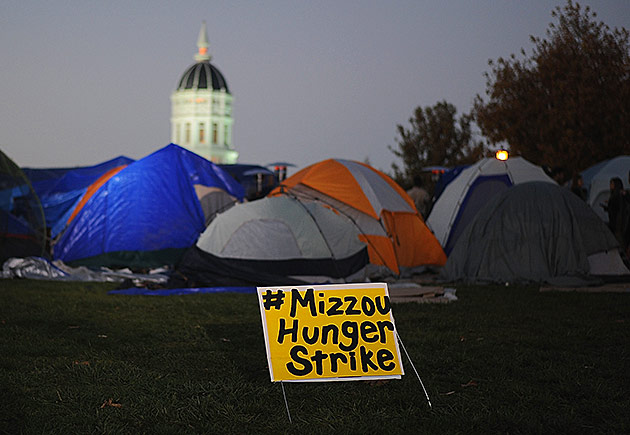
University of Missouri - Mizzou Hunger Strike

Yes, some things – like academic freedom – are more important than the delicate feelings of new undergraduate students. Kudos to the University of Chicago for making their incoming freshman class aware of that hard fact up front.

In a refreshing contrast to the usual depressing tales of faculty capitulations to the whining, self-involved voices of the Cult of Social Justice and Identity Politics, the University of Chicago decided to make a bold stand for academic freedom.

From Heat Street:

The University of Chicago, one of America’s most prestigious and selective universities, is warning incoming students starting this fall not to expect safe spaces and a trigger-free existence during their four-year journey through academia.

In a letter sent to the class of 2020, university officials said one of the defining characteristics of the school was its unwavering commitment to freedom of inquiry and expression. Civility and mutual respect are vital to the campus culture, the letter states, but not at the expense of shielding students from unpopular opinions or ideas.

“Our commitment to academic freedom means that we do not support so-called “trigger warnings,” we do not cancel invited speakers because their topics might prove controversial, and we do not condone the creation of intellectual “safe spaces” where individuals can retreat from ideas and perspectives at odds with their own,” the letter states.

Expect the University of Chicago to be rewarded for their courage and integrity through greater application and enrolment numbers, as well as higher levels of achievement from the incoming undergraduate class as those delicate snowflakes too enraptured by their own vulnerability and completely unable to process dissenting opinions decide to study at other, more large-L liberal schools.

Already we have started to see a backlash against those institutions and university leaderships which are too quick to capitulate to petulant SJW demands to alter the curriculum, suppress free speech, disinvite conservative speakers and turn the campus from being a place of fearless debate to one of infantilising self-affirmation and victimhood.

The University of Missouri, roiled by campus protests last year in which marauding Social Justice Warriors forced the resignation of the university president for failing to treat black students like helpless victims, has seen its enrolment and profitability fall off a cliff. Good. If there is any justice, enrolment at Mizzou will dwindle until there is nothing left but tumbleweeds and the shrieking activists who drove out reason from a place of learning. And closer to home, the University of Oxford’s Oriel College had to frantically appease angry alumni donors who were ready to cancel their donations to the college in protest at Oriel’s limp capitulation to the Rhodes Must Fall movement.

In this very “Tales From The Safe Space” series, we have previously highlighted other examples of academic institutions standing up to their crybully students rather than rolling over and letting them seize control – the uncompromising example set by Dr. Everett Piper, president of Oklahoma Wesleyan University, is particularly encouraging.

As Dr. Piper memorably warned his students:

If you’re more interested in playing the “hater” card than you are in confessing your own hate; if you want to arrogantly lecture, rather than humbly learn; if you don’t want to feel guilt in your soul when you are guilty of sin; if you want to be enabled rather than confronted, there are many universities across the land (in Missouri and elsewhere) that will give you exactly what you want, but Oklahoma Wesleyan isn’t one of them.

At OKWU, we teach you to be selfless rather than self-centered. We are more interested in you practicing personal forgiveness than political revenge. We want you to model interpersonal reconciliation rather than foment personal conflict. We believe the content of your character is more important than the color of your skin. We don’t believe that you have been victimized every time you feel guilty and we don’t issue “trigger warnings” before altar calls.

Oklahoma Wesleyan is not a “safe place”, but rather, a place to learn: to learn that life isn’t about you, but about others; that the bad feeling you have while listening to a sermon is called guilt; that the way to address it is to repent of everything that’s wrong with you rather than blame others for everything that’s wrong with them. This is a place where you will quickly learn that you need to grow up.

And flatly reminded them:

This is not a day care. This is a university.

A long-overdue reminder for some students.

And so the University of Chicago’s stand against the SJWs did not happen in isolation; nor was it possible without a rigorous examination of the negative trends in campus life and the various ways in which academic freedom is under attack. And that is precisely what they did – back in 2014 the university commissioned a report on the state of freedom of expression at universities nationwide and reaffirming their own commitment to the timeless value of free speech over and above any passing social fashion.

From the report (my emphasis in bold):

Because the University is committed to free and open inquiry in all matters, it guarantees all members of the University community the broadest possible latitude to speak, write, listen, challenge, and learn. Except insofar as limitations on that freedom are necessary to the functioning of the University, the University of Chicago fully respects and supports the freedom of all members of the University community “to discuss any problem that presents itself.”

Of course, the ideas of different members of the University community will often and quite naturally conflict. But it is not the proper role of the University to attempt to shield individuals from ideas and opinions they find unwelcome, disagreeable, or even deeply offensive. Although the University greatly values civility, and although all members of the University community share in the responsibility for maintaining a climate of mutual respect, concerns about civility and mutual respect can never be used as a justification for closing off discussion of ideas, however offensive or disagreeable those ideas may be to some members of our community.

[..] In a word, the University’s fundamental commitment is to the principle that debate or deliberation may not be suppressed because the ideas put forth are thought by some or even by most members of the University community to be offensive, unwise, immoral, or wrong-headed. It is for the individual members of the University community, not for the University as an institution, to make those judgments for themselves, and to act on those judgments not by seeking to suppress speech, but by openly and vigorously contesting the ideas that they oppose. Indeed, fostering the ability of members of the University community to engage in such debate and deliberation in an effective and responsible manner is an essential part of the University’s educational mission.

And it is that last part which presents such a challenge to many of today’s students – young people today are not only arriving at university unable to tolerate let alone contest ideas which they oppose, they are outraged at the very suggestion that they should learn to cope in such a way.

And not entirely through their own fault, for mine is a snowflake generation raised to believe that we are special, unique, perfect and above any reproach which might damage our self-esteem. We are taught not that sticks and stones may break our bones but words will never hurt us, but rather that sticks and stones may break our bones but words can kills us stone dead.

From early childhood education on upward we are taught that hurting someone’s feelings is just as bad – if not worse – than physically assaulting them. And all the while we are told to present our tear-stained faces to the relevant authorities the moment that somebody upsets us, so that they can receive their just punishment. We are not taught self sufficiency, resilience and the power of reason, but rather are encouraged to exalt in our weaknesses and wear our fragility like a badge of honour.

Little wonder, then, that when my generation reach university and fall under the intoxicating presence of the Cult of Social Justice and Identity Politics (student protests always appearing edgy and cool, but this incarnation representing a dangerous shift in attitude and tactics) so many of us immediately buy in to the idea that our personal worldview and beliefs are never to be questioned.

The University of Chicago alone cannot do anything about the way that people in the English-speaking Western world raise their children or educate them at a young age. They cannot challenge the toxic rise of baby-centred parenting, where parents and adults contort themselves to conform to the whims and sensitivities of their historically pampered children rather than promoting respect, deference and anti-fragility. The University of Chicago is but one academic institution facing a tidal wave of consequences from years of bad parenting, educational and child-rearing trends in society.

But what the University of Chicago can do – what they did do, admirably – is boldly restate who and what they are as an organisation, and what they stand for as an institute of higher education. They can boldly restate their commitment to the timeless values of academic freedom, and the fostering of personal and intellectual growth through robust debate and the free exchange of views. They can tell their incoming freshmen that no matter how accustomed they are to getting gold stars simply for participating, or demanding positive affirmation of even their most questionable decisions, the days of coddling will end the moment they set foot on campus.

This is what the University of Chicago did. This is what every university in America, Britain and the entire English-speaking world needs to do now if they are to avoid regressing into nothing more than adult daycare centres where the Play-Doh and puppy videos are piled high while challenging books burn in a pyre outside the library.


Safe Space Notice - 2

Top Image: Sports Illustrated, Michael B. Thomas/Getty Images

Support Semi-Partisan Politics with a one-time or recurring donation:

Agree with this article? Violently disagree? Scroll down to leave a comment.

Follow Semi-Partisan Politics on TwitterFacebook and Medium.