What Conservative Government? – Part 8, Theresa May Is Wrong To Embrace Socialism In Defence Of The Nation State

theresa-may-conservative-party-conference-2016-birmingham-2

By openly declaring war on the libertarian wing of the Conservative Party, Theresa May reveals that she cannot tell the difference between defending the nation state (good) and shoehorning the state into every aspect of citizens’ lives (bad)

Why does British politics suffer from the scourge of unambitious, technocratic centrism which does more than anything else to drive voter apathy and disengagement?

Largely because of the enthusiastic and approving reception that such acts of ideological cross-dressing as we saw from Theresa May at Conservative Party Conference yesterday receive from Tory-friendly Westminster journalists who seem to care far more about whether the Conservative Party gains and keeps power than what they actually do with that power while in office.

From Matt Chorley’s Times Red Box morning briefing email today:

Theresa May used her impressive speech closing the Tory party conference yesterday to make a direct appeal to the Labour voters which Ed Miliband used to think he could count on.

Perhaps she just forgot but it was quite something from someone who had been in the cabinet for six years to suddenly declare herself the agent of change. (She used the word 29 times).

The PM promised to go after rogue bosses, tax dodgers, rigged markets and powerful companies giving people a bad deal. “I’m putting you on warning. This can’t go on any more.”

She boasted that the Tories were now the party of workers, the NHS and public servants, claims which would have had Labour HQ spluttering on their lattes. The call for state intervention where government can “do good” will have brought some Tory traditionalists up short too.

The high-wire act was all the more impressive because it also had Ukip fuming about her stealing all of their ideas too. Much of the language might have been to the left but the policy, including grammar schools and tackling immigration, was lifted from the right. May ranged across the political spectrum. Because she can.

While Times columnist Philip Collins notes:

This is a clearer endorsement of state activity than David Cameron would ever make. Throughout the speech there are paeans to the power of government to make the world better which makes for a paradox. “The elite” politicians have featured early on as the problem yet here, ten minutes later, they turn up as the solution.

Typically, political journalist types are impressed with – and subsequently choose to focus on – what they see as clever political manoeuvring rather than matters of substance. They are interested in the game of politics, not its higher purpose.

So never mind that Theresa May’s rhetoric and wholehearted embrace of the state effectively puts the final nails in the coffin of Thatcherism, the ideology which saved this country from previous national decline – instead we are to fawn over the new prime minister for spotting a wide open political goal in the absence of an effective Labour opposition and deciding to shoot left instead of right.

And “semi-socialist Tory” Tim Stanley immediately proceeds to do so:

May understands what Corbyn understands, that people want to be a part of something. Oh the capitalist gifts of a Starbucks mug and a cheap flight to Ibiza are nice, but what about identity? Community? The most appealing parts of Labour’s programme reach back into folk memories of Attlee and the world of unionised factories.

[..] But her sympathies do lie with a Britain that is more suburban or rural than metropolitan, more ancient than contemporary. What is wrong with this? Often I’ve heard Remainers – who will be as irrelevant in a few years’ time as Corn Law advocates or the NUM – saying that Britain risks becoming smaller in outlook. Good! There have been too many wars. Too much hypercapitalism. Too little of the local, of the familiar, of building the kinds of bonds that you get when people know each other and take responsibility for each other. Far too little Christian socialism – which, in the British context, was always more Christian than socialist.

How utterly depressing. It is entirely possible to promote that sense of community and belonging for which people yearn by doing a better job promoting British values and the cultural integration of thousands if not millions of people who have made their homes here yet have no intention of regarding themselves as “British”. Wouldn’t this be a good place to start, rather than responding to the Brexit vote by co-opting Labour’s collectivism and elevation of the state?

As my Conservatives for Liberty colleague Chris Manby laments in his new blog:

Mrs May wants the Tories to be the party of “ordinary working-class people”. That is an admirable ambition, one best delivered through a strong economy.

Libertarians hate poverty too. But we know it is not government that creates economic growth, jobs, and prosperity. It is the actions of millions of individuals living in a free society under the rule of law. Want to eliminate poverty? Free up markets, cut taxes and enforce the damned rule of law.

We’ve been down this road before. The social-democratic consensus of the postwar years left British industry stagnant; British democracy under siege from militant trade unionism; and the British economy a high inflation, high unemployment laughing stock. It took Margaret Thatcher’s hard-fought revolution in the 1980s to restore national confidence. That revolution was left half finished.

The government already does far too much. We pay nearly half our income in taxes. Britain’s tax code is so long and complicated it rewards big business who can afford to pay shrewd accountants and lawyers. Planning restrictions and cheap money drive up the cost of housing and penalise saving. State investment in renewables drives up energy bills. Government borrowing is still out of control.

The problem with staking out the “centre ground” of politics is that you allow your opponent to control the terms of debate. There can be no compromise between good ideas and bad ones. The last female Tory Prime Minister grasped this point. I fear that Mrs May does not.

While Allister Heath warns:

Thirty years [after Thatcher and Reagan] free-market ideas are in retreat. The drift began well before the financial crisis, and was at first camouflaged by the ongoing march of globalisation, technology and consumerism. New Labour increased spending and intervention; likewise George W Bush, who also subsidised sub-prime mortgages; central bankers injected moral hazard into everything; and David Cameron introduced new workers’ rights, property levies and environmental rules. He increased far more taxes than he cut and bashed bankers. Sir John Major’s government was the last to make, if falteringly, the case for markets, competition and choice; and Michael Howard was the last Tory leader to advocate capitalism.

It is in this context that Theresa May’s speech needs to be understood. It was as emphatic a repudiation of the Thatcher-Reagan economic world-view as it was possible to get without actually naming them: time and again, she said that government was the solution, not the problem. She took explicit aim at small-state libertarians: the subtext was that collectivist, paternalistic Christian Democrats, not individualistic classical liberals, are back in charge of the party. She believes in a large, powerful, aggressively interventionist state that can, she feels, regenerate the country and protect ordinary workers. It will have helped Lord Heseltine get over Brexit; ironically, her vision of conservatism is very continental.

And makes an important and welcome rebuttal to Theresa May’s declaration of war on the libertarian wing of her party:

Yet the speech went further than toughening language or extension of policies. Cameron’s Big Society was based on the correct notion that society is separate from the state; May blurs those concepts. Classical liberals and libertarians believe in voluntary action; they believe in the family and communities, in charities and helping those who cannot help themselves. It is a basic error to confuse their philosophy with atomism or extreme selfishness.

Peter Oborne, though, sees Theresa May’s speech in an altogether more positive light:

Here is another, crucial difference between Mrs May and her predecessor. David Cameron was, in essence, a liberal prime minister. Mrs May marks a reversion to traditional conservatism.

She intends her premiership to challenge the liberal internationalism of Cameron and Blair. They assumed that nation states — including Britain — count for less and less in the modern world.

They accepted the liberal dogma that nations are essentially powerless against huge international corporations, mass immigration, the relentless advance of communications, and untrammelled free movement of international capital — the cumulative process often known as globalisation.

But now Mrs May has rejected this consensus, and in doing so she is attempting to define what it means to be British. Her speech amounted to a passionate statement that she believed in the nation state, and she spelt out her reason: that it has a fundamental role in supporting the weak and vulnerable.

I’m not unsympathetic to a lot of what Oborne says. This blog has been banging on about the need to defend the nation state as the primary guarantor of our fundamental rights and freedoms for years now, and I’ll take no lectures in that regard. But supporting the nation state and acknowledging the negative effects of globalisation does not inherently require adopting more left-wing, interventionist policies. Supporting the nation state should not mean advocating for its involvement in every aspect of our lives, especially when small government conservative policies have been proven time and again to be a much better generator of wealth and better for working people.

Furthermore, a full-throated embrace of capitalism needn’t be at odds with the politics of community and national identity. Just look at the United States, that exemplar of capitalism, where small government is celebrated (in theory if not always in practice) yet there is open pride in the flag, the national anthem, the military and shared national holidays and traditions which transcend ethnic or religious lines.

Americans embrace capitalism and have an inherent cultural distrust of an overbearing centralised state, yet they also stand and pledge allegiance to the flag at school, stand for the national anthem before even school sports events and celebrate Independence Day together whether they are white, black, Hispanic, Asian, Christian, Jewish, Muslim, Buddhist, Sikh or atheist. And one of the reasons that the American national identity is strong is because the state does not insert itself into every aspect of life, meaning that there is then more respect and appreciation for the state where it is visible.

What a devastating pity that Theresa May seems (from her hugely concerning conference speech) unable or unwilling to reconcile support for markets and capitalism with support for community and identity. She is turning British politics into a zero sum game, forcing conservatives to choose which core principle – economic freedom or a strong and cohesive sense of nationhood – they wish to preserve. And many voices in the conservative-friendly media seem more than willing to enable the prime minister in her destructive, short-termist scheming.

No good can come of forcing conservatives (or the wider country) into making the arbitrary and entirely unnecessary choice between a strong nation state and freedom from the state in our personal lives – and Theresa May is making a grave mistake by interpreting the Brexit vote as a call for bigger government.
 

david-cameron-coke-zero-conservative-i-cant-believe-its-not-miliband

Top Image: Carl Court / Getty Images, International Business Times

Support Semi-Partisan Politics with a one-time or recurring donation:

Agree with this article? Violently disagree? Scroll down to leave a comment.

Follow Semi-Partisan Politics on TwitterFacebook and Medium.

Remainers Are Trying To Rewrite History, Claiming Media Coverage Favoured The Leave Campaign

eu-referendum-media-coverage-television-news-bias-2

Yes, the BBC let the public down with their spineless, uninquisitive EU referendum coverage. But this only benefited the Remain campaign, not the Brexiteers, and to suggest otherwise is absurd

Disappointed Remain activist Hugo Dixon takes to the pages of InFacts with with a sullen litany of the many ways in which the (ahem) notoriously eurosceptic television news media supposedly hindered the pro-EU camp’s chances and aided the fact-free Brexiteers at every turn.

Dixon writes:

The BBC has rightly been criticised for its weak referendum coverage. If the broadcaster had done a better job of challenging interviewees, informing the public and making room for a variety of viewpoints, voters would have had a better chance of sifting fact from fiction. The BBC, after all, dominates our news coverage: 77% of the public use it as a news source, according to Ofcom.

The most common criticism aired against the BBC is one of phoney balance – namely that it gave equal airtime to experts and their opponents’ unsubstantiated bluster. But this is probably not the most serious charge. After all, it would not have been fair to deny the two sides of the referendum equal airtime or to keep off the air campaigners who were telling fibs or spinning fantasy.

However, what the BBC could and should have done was grill its guests more vigorously – and make more space for coverage that didn’t fit into the tired Punch-and-Judy style battle between spokespeople put up by the two official campaigns.

There is a kernel of a sensible point in here. This blog has written numerous times that sensationalist or craven news coverage which merely allows two opposing talking heads to scream at each other without any effort to arbitrate or discern truth is a pox on our journalism – whether it is infecting the US presidential election or the EU referendum in Britain.

Dixon is also admirably on-point when he criticises the media’s reliance on the sanitised, focus-group approved  media grids of the two opposing lead campaign groups, effectively suggesting to their viewers that these incompetents and nepotism beneficiaries represented the full spectrum of eurosceptic and pro-European thought:

This wasn’t the BBC’s only failing. It also allowed too much of its coverage to become a Punch-and-Judy style battle between the official campaigns. The broadcaster, of course, had to give a lot of airtime to Vote Leave and Stronger In. But it allowed its coverage to be virtually dictated by their agendas.

I know the Remain side of the story better. Stronger In had a “grid”, on which it set out what stories it wanted to push on particular days and which people it wanted to push those messages. It coordinated this grid closely with Craig Oliver, David Cameron’s director of communications. Indeed, Stronger In was effectively in Number 10’s pocket. It rarely put forward people who weren’t on message with its Project Fear strategy.

The BBC should not have allowed itself to be manipulated in this way, particularly since it was aware of the potential problem. Its guidelines said: “Where there is a range of views or perspectives, that should be reflected appropriately during the campaign.” They went on to say: “The designated Campaign Groups – whilst offering spokespeople to programme-makers and other content producers – cannot dictate who should or who should not appear on BBC output.”

But the broadcaster didn’t do enough to resist the pressure. As a result, Downing Street and its puppets dominated the Remain camp’s share of airtime, and people who wanted to make a positive case for Britain’s involvement were edged out. Even Gordon Brown – who was trying to argue that we should lead Europe, not leave Europe – found it hard to be heard.

While Hugo Dixon’s heart wells over with sympathy for Gordon Brown’s inability to claim his fair share of the limelight, this blog would point to the many independent and non-aligned voices on the Brexit side who struggled to get a hearing of any kind, despite (in some cases) holding media events in the heart of Westminster under the very nose of the establishment.

So on both of these complaints, Dixon is on solid ground. But to go on and suggest that intellectually lazy journalism which impacted the Leave side every bit as much as the Remain campaign somehow decisively swung the outcome of the referendum is to venture into the realm of fantasy.

Dixon concludes:

For every such example, the BBC could presumably come up with a counter-example. But when its senior figures search their souls, do they really think they fulfilled their mission of informing and educating the public well during the referendum? And, if not, what are they going to do about it? How about an independent, public audit of how the BBC fared during the referendum backed up by recommendations on how to do better in future?

The world is not getting any simpler. Hard, honest thinking about how to cover often very complicated questions could stand the BBC in good stead. Audiences and license fee payers definitely deserve it.

The underlying assertion, carefully left unsaid, is that these various journalistic failures added up to a succession of “microbiases” which somehow cumulatively tipped the referendum result, and that if only BBC and other television news presenters had challenged guests and demanded more “facts” then the British people would have come to their senses and realised just how star-spangled awesome the European Union really is.

And maybe in an alternative universe that was the case – that there simply weren’t enough highly credentialed experts, both hysterical and sober, using abundant media platforms to lecture the British people that seeking freedom from the EU would be an unmitigated disaster.

Why oh why were these noble voices, these latter-day Cassandras so cruelly shut out of the national debate, swamped by a relentlessly pro-Brexit television media amplifying the Leave campaign’s monopoly on falsehoods and scaremongering?

But that’s not how I remember the EU referendum campaign.

Hugo Dixon inhabits an interesting parallel universe, and no doubt a comforting one for disappointed Remain campaigners so deeply invested in their failed euro-federalist dream. But it bears no resemblance to the real world, where the plucky, haphazard, incoherent and almost terminally disorganised Leave campaign triumphed against the arrayed forces of the establishment and a television news media which only amplified rather than diminished their influence in support of the status quo.


European Union - United Kingdom - Britain - Flags

Support Semi-Partisan Politics with a one-time or recurring donation:

Agree with this article? Violently disagree? Scroll down to leave a comment.

Follow Semi-Partisan Politics on TwitterFacebook and Medium.

Politicians Aren’t Entitled To Their Own Facts, But Neither Is The Media

An independent political press corps with the knowledge and authority to call the shots and confidently call out lies when politicians tell them – rather than giving equal credence to two diametrically opposed crazy positions – is a great idea. If only our media was sufficiently trustworthy and capable of performing such a nuanced, sensitive role

Something funny seems to have happened to the New York Times.

For the past week or so, the newspaper which once twisted itself into a risible-looking pretzel trying to justify calling the practice of waterboarding “torture” when inflicted by America’s enemies but “enhanced interrogation” when conducted by American forces has discovered a new passion for clarity and bold truth-telling.

Peter Beinart explains, over at The Atlantic:

Last Saturday, The New York Times published an extraordinary story. What made the story extraordinary wasn’t the event the Times covered. What made it extraordinary was the way the Times covered it.

On its front page, top right—the most precious space in American print journalism—the Times wrote about Friday’s press conference in which Donald Trump declared that a) he now believed Barack Obama was a US citizen, b) he deserved credit for having established that fact despite rumors to the contrary and c) Hillary Clinton was to blame for the rumors. Traditionally, when a political candidate assembles facts so as to aggrandize himself and belittle his opponent, “objective” journalists like those at the Times respond with a “he said, she said” story.

Such stories, according to the NYU journalism professor Jay Rosen, follow this formula: “There’s a public dispute. The dispute makes news. No real attempt is made to assess clashing truth claims in the story … The symmetry of two sides making opposite claims puts the reporter in the middle between polarized extremes.”

[..] But the Times, once a champion practitioner of the “he said, she said” campaign story, discarded it with astonishing bluntness. The Times responded to Trump’s press conference by running a “News Analysis,” a genre that gives reporters more freedom to explain a story’s significance. But “News Analysis” pieces generally supplement traditional news stories. On Saturday, by contrast, the Times ran its “News Analysis” atop Page One while relegating its news story on Trump’s press conference to page A10. Moreover, “News Analysis” stories generally offer context. They don’t offer thundering condemnation.

Yet thundering condemnation is exactly what the Times story provided. Its headline read, “Trump Gives Up a Lie But Refuses to Repent.” Not “falsehood,” which leaves open the possibility that Trump was merely mistaken, but “lie,” which suggests, accurately, that Trump had every reason to know that what he was saying about Obama’s citizenship was false.

In other words, the New York Times has sporadically started to report objective facts and truth, rather than doing what has long been traditional among the political press corps – walking a neutral tightrope between two partisan positions of staggeringly obvious falsehood or stupidity.

Despite his protestations and evasions, Donald Trump has been one of the key players in the birther movement from the beginning – picking up from the memorably loopy Orly Taitz – and has certainly been the conspiracy movement’s most public face. I remember blogging about it over four years ago, back in 2012.

Given the context of a presidential election and the extra scrutiny on media bias, it is surprising and rather heartening to see the Times displaying the courage to report fact rather than controversy; the same headline a month ago might easily have read “Trump Withdraws Birther Allegation”, with no reference to the established facts and outcome of the story.

Jon Stewart (formerly of The Daily Show) must be smiling. Since 2004 and even earlier, Stewart railed against political coverage which ginned up conflict in pursuit of ratings and incessantly reported issues through the prism of Left vs Right, Democrat vs Republican without ever seeking to either restrict coverage to facts or move beyond partisan talking points to get to the truth. The video at the top of this article shows Stewart’s memorable appearance on CNN’s Crossfire show, in which he castigated the hosts for “hurting America” by injecting partisanship and sucking nuance out of the political discourse.

Obviously the New York Times does not inhabit quite the same infotainment space as Crossfire, but the basic operating principle has been very much the same of late – present two or more strongly opposing partisan viewpoints, let the talking heads (or journalistic sources) slug it out in defence of their respective positions, and then move on without ever really applying any kind of judgment as to the respective merits of the contrasting positions.

Nowhere is this approach better summed up than the slogan of the Fox News Channel – “we report, you decide”. It is a relativist worldview which suggests there is no truth in even quite straightforward binary debates, and that we are free to pick our own facts and construct our own reality in accordance with our personal biases and interests.

Now, there is yet more evidence that the New York Times is moving away from this risk-averse and rather cowardly stance – yesterday the newspaper described as “false” Donald Trump’s claims that Hillary Clinton has sinister plan to destroy the Second Amendment:

In justifying his remarks, Mr. Trump falsely claimed that Mrs. Clinton wants to “destroy your Second Amendment,” apparently a reference to her gun control policies.

My emphasis in bold.

At face value this is a good development – the “he said she said” approach to political coverage is what has enabled so much of the spineless print journalism and sensationalist, conflict-stoking television news reporting in Britain and America. Seeing a “respectable” institution finally buck that trend and push back against the toxic idea that reality is malleable and truth exists only in the eye of the super-partisan beholder is, in theory, a very good thing.

Peter Beinart certainly seems to think so:

A certain etiquette has long governed the relationship between presidential candidates and the elite media. Candidates stretch the truth, but try not to be too blatant about it. Candidates appeal to bigotry, but subtly. In turn, journalists respond with a delicacy of their own. They quote partisans rather than saying things in their own words. They use euphemisms like “polarizing” and “incendiary,” instead of “racist” and “demagogic.”

Previous politicians have exploited this system. But Trump has done something unprecedented. He has so brazenly lied, so nakedly appealed to bigotry, and so frontally challenged the rule of law that he has made the elite media’s decorum absurd. He’s turned highbrow journalists into referees in a World Wrestling Entertainment match.

Last Saturday, the Times answered Trump’s challenge. He’s changed the rules, so it did, too.

But this analysis only holds if one has reasonable grounds to trust the journalistic institution or media outlet doing the reporting; will they reserve their merciless news analysis features for instances when there really is a right and wrong binary perspective, or will editorial judgment and personal bias cloud the picture?

Remember, the New York Times was happy to characterise the EU referendum and the Brexit campaign as being motivated not out of concerns for democracy and sovereignty but primarily by xenophobia and anti-immigrant prejudice. And while there were highly visible elements of the latter, under the “News Analysis” model what would prevent the Times deciding that the entire Leave campaign was based on racism and then reporting this skewed perspective to their readers as simple, self-evident “truth”?

While the “he said, she said” ra-ra approach may be divisive and unseemly, it at least offers a right of reply to those whose views are misinterpreted or deliberately slandered by shameless opponents. And while conventional wisdom might hold that it is more often conservative voices who live in a sealed bubble of their own facts, in reality we would all be vulnerable to a style of news reporting in which reporters and editors are given sweeping new authority to pass what often amount to value judgments on behalf of readers. At some point in the future, any one of us could find our unpopular, minority opinion almost entirely  frozen out of the public discourse.

So this blog will cautiously cheer along with Peter Beinart at the New York Times’ sudden willingness to call out lies – provided that this is to be genuinely bipartisan new scrutiny rather than merely a one-sided club with which to bash the Trump campaign.

But we should be aware that we are at the top of a slippery slope here. Smacking down candidates and their statements is a positively good thing when we are dealing with easily proven questions of who said what, and when. But the temptation to apply this swashbucklingly assertive style of journalism to more subjective debates (like economic policy, immigration or foreign affairs) may prove to be irresistible for journalists with human biases and editorial boards with agendas.

In case they hadn’t noticed, the mainstream media doesn’t presently enjoy a particularly enviable trustworthiness rating among the general public. Abuse “news analysis” by using it as a blatantly partisan cudgel and they will drive that rock-bottom rating still lower.


donald-trump-fox-news

Support Semi-Partisan Politics with a one-time or recurring donation:

Agree with this article? Violently disagree? Scroll down to leave a comment.

Follow Semi-Partisan Politics on TwitterFacebook and Medium.

No, Donald Trump Did Not Call For Hillary Clinton’s Assassination (This Time…)

Donald Trump already provides ample evidence that he is temperamentally unsuitable to be US president without the biased, pro-Hillary American media putting words in his mouth

There is a particularly pernicious story making the rounds at the moment that Donald Trump supposedly called for the assassination of Hillary Clinton (again).

From the New York Times:

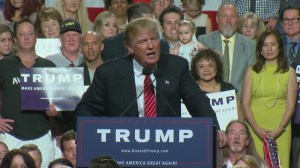
Donald J. Trump once again raised the specter of violence against Hillary Clinton, suggesting Friday that the Secret Service agents who guard her voluntarily disarm to “see what happens to her” without their protection.

“I think that her bodyguards should drop all weapons,” Mr. Trump said at a rally in Miami, to loud applause. “I think they should disarm. Immediately.”

He went on: “Let’s see what happens to her. Take their guns away, O.K. It’ll be very dangerous.”

In justifying his remarks, Mr. Trump falsely claimed that Mrs. Clinton wants to “destroy your Second Amendment,” apparently a reference to her gun control policies.

[..] On Friday night, breaking from his prepared remarks and turning his gaze from the teleprompters, Mr. Trump looked straight into the crowd as he made the insinuation about Mrs. Clinton’s safety. He gestured emphatically with his hands as he spoke, at one time pointing to a member in the crowd to find agreement.

And the US Guardian:

In a sometimes bizarre 45-minute speech on Friday night, which opened with the unfurling of a new “Les Deplorables” battlefield flag backdrop, the Republican nominee went off-script to call for his opponent’s bodyguards to “disarm immediately” – adding, “Let’s see what happens to her.”

“Take their guns away!” Trump demanded to loud cheers during a section of the speech in which he said his rival wanted to “destroy your second amendment” and he accused Clinton of “arrogance and entitlement”.

In a statement, Clinton campaign manager Robby Mook denounced Trump’s comments: “Donald Trump, the Republican nominee for President, has a pattern of inciting people to violence. Whether this is done to provoke protesters at a rally or casually or even as a joke, it is an unacceptable quality in anyone seeking the job of Commander in Chief.”

“But we’ve seen again and again that no amount of failed resets can change who Donald Trump is.”

The call to leave the Democratic nominee protected by unarmed secret service agents, first made by Trump in May, raised eyebrows as a reversion to the undisciplined candidate of the primaries rather than the more scripted one of recent weeks. Trump also suggested in August that if Clinton was elected president, “the second amendment people” might be able to stop her from appointing judges. That statement was widely interpreted as a veiled assassination threat as well at the time.

The tone and inference of both of these articles are shockingly misleading.

The point that Donald Trump was making was that it is rather hypocritical of Hillary Clinton to advocate for stronger gun control laws which potentially limit the ability of the citizenry to defend itself when she herself is surrounded by the best trained and equipped armed guards in the world, and does not have to worry for her own safety. Trump was suggesting that were Clinton’s Secret Service protection revoked, forcing her to provide for her own personal security, she might not be so keen to limit the types of weapons available to private citizens.

Now, one can disagree with the premise of Trump’s point and poke all kinds of holes in the logic (though this blog considers the basic thrust of the argument to be quite sound), but by no stretch of the imagination does this amount to a snide assassination threat. It does not even amount to a charge of inciting his supporters to imagine the horrific scenario of an assassination. It is merely a reductio ad absurdum argument intended to make the point that well-protected senior members of the US government should perhaps refrain from dictating to ordinary Americans the manner in which they can defend themselves.

John Hinderaker of the Powerline blog makes the same point:

Trump obviously was making the point that he and countless others have made many times before: liberals like Hillary Clinton, who are protected 24/7 by armed guards, are deeply hypocritical when they try to disarm millions of Americans who don’t have taxpayer-funded protection and rely on their own firearms for self-defense. The point is a powerful one, which is why liberal reporters don’t want to acknowledge it. Instead, they absurdly pretend that Trump was hinting that Hillary should be assassinated.

This kind of thing fools no one. Millions of Americans are quietly fuming over the press’s overreach, going over the top, day after day, to defeat Donald Trump. The blowback is building, and will continue building until election day.

At one point, when I was opposing Trump during the GOP primaries, I said to the press: Stop attacking Trump! Liberal reporters often began with a valid point, but their hysterical hatred for Trump caused them to go too far, making arguments that were patently unfair and unsustainable. Therefore, the more they attacked Trump the more his support grew. The same thing is happening now: most Americans have a pretty good sense of fair play, and they know that Trump is being treated badly by the establishment–a group for whom most Americans have no great affection.

But the media, always on the lookout for the next Trumpian outrage, refused to see reality in these terms. Rather than reporting Trump’s rather simplistic but sound argument – one which was worthy of discussion and a response – many media outlets instead chose to claim, with no evidence, that Trump had done something far worse.

This blog has no problem calling out Donald Trump’s extreme and unacceptable language when he actually says something bad – the infamous “second amendment remedies” comment in August being of another order altogether. But on this occasion, Trump was not making an extremist or reckless point, though the media chose to report the two stories with the same level of outrage.

And it is this behaviour, right here, which erodes public trust in the mainstream media. It is tawdry, opportunistic media overreaches like this, so clearly betraying a seething partisan agenda, which drive decent but concerned citizens into the arms of the extremist fringe and the conspiracy theorists.

Sometimes, to watch the American media openly campaign for Hillary Clinton, one wonders if everybody else inhabits a slightly different universe. We all witnessed disturbing footage of Clinton’s lifeless body being dragged into the back of her waiting secret service van on the occasion of the 9/11 memorial in New York City, yet the chirpy presenter on MSNBC that afternoon casually announced that she merely “stumbled” a little – the definition of “stumbled” having been temporarily extended to include loss of motor control and even consciousness. What we see with our own eyes and what the media choose to report are increasingly two very different things.

And while Donald Trump has a treasure trove of past incendiary statements positively bulging with potential scandal, that is apparently not enough for the media – they must also twist Trump’s words and breathlessly and falsely report to the public that the Republican presidential nominee just called for the assassination of his rival.

You don’t need to admire or support Donald Trump to be outraged at the lazy, biased journalism on display here. This blog is certainly no Trump fan. But if someone does happen to support Trump then these unnecessary extra efforts by the media to demonise the candidate and his supporters will only harden their support and erode what little trust is left in the media.

Those perpetually outraged American liberals in the media, on the hunt for their next anti-Trump scandal, should bear in mind that hysterical and obviously-inflated charges will not have the effect of somehow “bringing Trump supporters to their senses”. On the contrary, it will simply drive Trump loyalists and even wavering voters to alternative, less scrupulous sources which echo rather than castigate their beliefs.

Lying to the American public and pretending that Donald Trump’s remarks were a de facto call for Hillary Clinton’s assassination will not cause a single person to flip from supporting Trump to supporting Clinton. But it will ensure that a number of readers wave goodbye to the New York Times and the Guardian, instead placing their trust in pro-Trump outlets like InfoWars or Mike Cernovich.

Now, is the catharsis of manufactured outrage and liberal media grandstanding really worth the potential risk of shoring up Trump’s base?


Donald Trump Rally

Support Semi-Partisan Politics with a one-time or recurring donation:

Agree with this article? Violently disagree? Scroll down to leave a comment.

Follow Semi-Partisan Politics on TwitterFacebook and Medium.

Picking Through The Wreckage Of Defeat: The Electoral Reform Society’s Report On The EU Referendum

The Electoral Commission - EU Referendum Ballot Paper - Brexit - Biased Voting Guide

You don’t commission an urgent post-mortem report to look into something wonderful that has just happened. So the mere existence of the Electoral Reform Society’s tremulous report warning about the danger of future referendums tells us all we need to know about their attitude to Brexit and the people who voted for it

“The people have spoken. Or have they?”

So begins the Electoral Reform Society‘s autopsy report of the EU referendum and Britain’s shock decision to leave the European Union. The simpering “or have they?” tells you everything that you probably already suspect about this report – that despite whatever other good work the ERS might do, this is a metro leftist, superficially and uncritically EU-loving effort to come to grips with what they evidently view as a political disaster.

If something bad like a plane crash happens, the Air Accidents Investigation Branch will pick over the wreckage and file a report outlining the chain of events leading up to the tragedy. It is the kind of report which damns by its very existence – nobody commissions a sober post mortem report about something delightful that has just happened. The ERS’s perspective on Brexit is established in the first seven words, and even before then by its very existence.

That’s not to say that the report is worthless – despite its clear bias (I’ll eat my hat if author Will Brett or any of the other major contributors actually voted to leave the EU) there are some thoughtful deliberations on how to get citizens involved in any future referendum planning process so that the procedure feels less like something which was suddenly foisted on the people, the rules being made entirely by shadowy people in Parliament.

Nor can I argue with the report’s recommendation to extend citizenship lessons in primary and secondary school. This blog has long stood for mandatory civics classes thoughout the duration of secondary education, not only as a way of developing good future citizens in place of self-entitled little snowflakes, but also as a means of celebrating, transmitting and reinforcing core British values on classes which may be very ethnically and culturally mixed, thus helping to end self-enforced apartheid.

Read the whole thing here – it touches on more areas than this single blog post can feasibly analyse.

But soon the wheels start to come off the report. This first happens when the ERS make egregiously misleading use of the “factoid” that there was a large spike in Google searches of the phrase “What is the EU?” in the immediate aftermath of the result. This was immediately taken by the stunned Remainiac establishment to be proof that we bovine Brits had voted for something which we did not even understand.

But this scandalous interpretation is wrong, as the Telegraph patiently explained:

Google Trends data isn’t actually representative of the number of total searches for a term, but a proportion of all searches at a given time. The company highlights spikes in searches based on what else is being Googled at a given moment in a geographical area.

So in the early hours of Friday morning searches for “What is the EU” briefly spiked compared to what else was being asked. To put it in context, the search only outstripped that for “weather forecast” between 01:30 and 04:30 in the morning, but by 05:00 that had changed.

Data from AdWords, which offers more specific numbers for search terms, shows that the 250 per cent increase in searches actually correlated to about 1,000 people asking the question.

In other words, bitter Remainers called into question the intelligence of half the country based on the Google search activity of no more than a thousand late night stoners who didn’t know what the European Union is but who were also far too moronic to find their polling station, let alone put an X in a box. Yet the ERS still considered this deceptive factoid worthy of inclusion at the beginning of their report.

But here’s where it really goes wrong:

At the start of the regulated period the Electoral Commission, or a specially commissioned independent body, should publish a website with a ‘minimum data set’ containing the basic data relevant to the vote in one convenient place . A major source of complaint about the conduct of the referendum was the supposed lack of independent information available about the vote. While there are real difficulties in separating out fact from political argument in these cases, a minimum data set ought to be possible.

In other words, rather than assuming that the British people are mature and capable enough to frame the debate in the terms which matter most to them, the Electoral Reform Society would have some shadowy committee decide in advance the terms on which the referendum should be fought, and then produce a “minimum data set” of presumably quantitative data to guide decision-making.

This is a truly terrible idea. The EU referendum probably meant something slightly different to every single one of the millions of Britons who voted. Even assuming that an approximate minimum data set could be hammered out, what was included and what was left out would inevitably reflect the biases or interests of those involved. We have enough trouble trying to come up with a referendum question which both sides feel eliminates bias or inappropriate suggestion. What makes the ERS think that producing a commonly agreed “minimum data set” would be anything but fraught, contentious and ultimately impossible?

Besides which, the key issue of the EU referendum was intangible: do we think that British democracy is best preserved inside the EU or without? One can come up with endless (often contradictory) statistics debating the economic benefits, but what could one possibly collate to form the “minimum data set” to vote based on democracy?

As political blogger I have read scores of history and politics books including some of the definitive critiques and praises for the EU, and the more I learned the less I realised I knew. In fact, as referendum day inched closer and closer and I saw other, established journalists and politicians make continual fools of themselves with their superficial and misleading analyses, I found it harder, not easier, to write. There is so much that I don’t know about how the EU works in practice and how international trade functions that I’m loathe to write much at all, and I actually spend spare moments reading some of this stuff and trying to learn. So what would be the Electoral Reform Society’s ideal minimum reading list for the country?

But of course they are not suggesting a reading list at all. When the ERS propose a minimum standards set, what they really mean is a short list of bullet points emphasising all the ways that Brexit could harm the economy in the short term, assuming a worst case scenario. They want a beefed up version of the government’s already utterly immoral £9 million propaganda leaflet sent to voters before the EU referendum. Just to altruistically ensure that people are “better informed”, of course. Right-o.

Is the current system perfect? No. Many Britons did complain that they felt they lacked sufficient information, or that they could not trust the information they were given. One could scarcely escape these modern-day Hamlets bleating their confusion on BBC Question Time. But in fact, while the status quo may be far from perfect, the giant flaws in more activist approaches like that proposed by the ERS are far worse.

Will people sometimes make their referendum decision judgements based on poorly chosen criteria? Yes, of course they will. Would seeking to prevent this by artificially restricting the terms of the debate be any better? No, it would be a thousand times worse. Rather that power sits with sometimes-confused citizens than with politicians or civil servants with very fixed ambitions of their own.

Besides, the awkward fact remains that while many voters may have liked to complain about not having all of the required information handed to them on a silver platter, a proportion of them were simply covering for their own laziness. As an ardent Brexit supporter I know I’m supposed to be waxing lyrical about the deep wisdom of the British people right now, but the fact is that there are a lot of stupid people out there, on both sides of the debate – people whose bovine cries of “but nobody is giving information” belies the fact that they haven’t watched the news in years because the TV remote got buried under a pile of pizza delivery boxes.

But the worst recommendation from the ERS report is yet to come:

An official body – either the Electoral Commission or an appropriate alternative – should be empowered to intervene when overtly misleading information is disseminated by the official campaigns. Misleading claims by the official campaigns in the EU referendum were widely seen as disrupting people’s ability to make informed and deliberate choices. Other countries including New Zealand have successfully regulated campaign claims – the UK should follow suit.

Again, this reeks of mistrusting the electorate – of course, we already know that the ERS does so, it is the very reason for this report in the first place. But to see it spelled out quite so blatantly is remarkable indeed. For in the opinion of the ERS, citizens are not mentally equipped – even in the Age of Google, when everybody has a smartphone in their pocket capable of accessing the accumulated knowledge of mankind – to analyse political messages and determine truth or untruth, validity or invalidity. Rather, we are apparently in need of some external authority to pre-screen our reality for us.

How on earth this is supposed to work is beyond comprehension. Set 100 top-tier university students the essay question “The EU brought peace to Europe. Discuss” and you will get 100 different subjective arguments, each with a unique perspective and most drawing from at least some unique sources. Say the Leave campaign takes a dislike to such a claim by the pro-EU side: what threshold would they have to meet to bring a complaint, and who has the final say as to whether the statement is misleading or not? And if a statement is found to be misleading, what should be the remedy? Front-page advertisements by the Electoral Commission in every national newspaper? Another propaganda leaflet through everyone’s door? Interrupting Coronation Street with some breaking news?

As a policy prescription it is entirely unworkable, but as a middle class, metro-leftist sulk at the supposed lies and deceit of the Bad Man Nigel Farage and the Evil Tor-eees it makes perfect sense. And sadly, that is precisely why the idea of a Referendum Censor entered the Electoral Reform Society’s report.

And shockingly, this leads the Electoral Reform Society to conclude that given the nature and outcome of the EU referendum campaign, maybe we would all be better off eschewing future freewheeling referendums for the safety and security of “parliamentary democracy”, preferring this to even their recommendations for more pre-determined, moderated, government-mediated future referendum campaigns:

Given the frequency of party-political imperatives behind the calling of referendums, it is worth asking: what are the conditions where a referendum is really the best way of settling a political question? Perhaps parties and politicians should make a habit of reflecting on some of the difficulties around calling and then responding to referendums, and – where possible – seek to find a way through the thicket of representative democracy instead.

Douglas Carswell sees many of the same flaws in the ERS report that this blog also identifies:

How do you give people more control over government? I’ve always believed the answer is direct democracy: more decisions made by voters, fewer by politicians and officials. But the Electoral Reform Society seems to think the opposite. They want to give officialdom more control over direct democracy. Why?

The ERS’s latest recommendations come from its scathing report on the referendum campaign. I also thought some of the conduct in the campaign was disgraceful. But much of their critique is misplaced.

There is, for example, barely any criticism of the Remain propaganda issued by Downing Street at taxpayers’ expense. And no mention of the use of the civil service as an extension of the Remain campaign. Apparently, co-opting the organs of the State to gain an unfair edge is no big deal.

The report also says people felt ill-informed, and the campaigns provided disinformation. Yet there is no admission that many of the outlandish claims came from supposedly independent “experts” – many of whose warnings, especially on the economy, have already been proven wrong.

And concludes:

But the big problem with the idea of official arbiters for campaign information is not the practical execution, but the premise behind it. In a democracy, we already have an arbiter: it’s called the people. The whole point of democracy is that voters analyse what they are told by the opposing sides, and make their own decision.

Underlying the ERS’s report is the sense that people can’t really be trusted to know what they are voting on, so instead we should let unelected technocrats decide for them. That’s not the kind of electoral reform Britain needs.

And yet the report makes some worthwhile observations despite its inherent biases. The information made available to the general public through the media was indeed shockingly bad, as the ERS complain, with MPs and household name journalists alike vying with one another for the title of Most Ignorant on a daily basis. More galling for sites such as this, those of us who strove to deepen our knowledge were routinely shut out of the discussion.

I doubt there is a better-researched and thoroughly produced political blog in the whole country than eureferendum.com, and Dr. Richard North’s “Flexcit” Brexit plan, yet few have ever heard of it thanks partly to the establishment closing ranks against somebody they view as an outsider but also to the fact that the Westminster political/media establishment are lazy, and don’t like putting in the hours of work it takes to speak confidently and knowledgeably on the real intricacies of Brexit and international trade.

But whatever the individual merits of each point in the report, it still ultimately comes back to the question of why the report was produced in the first place. Had the EU referendum result been inverted and the Remain side triumphed in a 52-48 victory, would the Electoral Reform Society still have produced a report, albeit one streaked with fewer Remainer tear stains? I’ll be generous and say yes, they probably would.

But would the content of the report and the ensuing recommendations be identical to the current version, with its overt worries about misinformation and an ill-informed population? I very much doubt it.

And that tells you everything you need to know about the political bias of the Electoral Reform Society.


Electoral Reform Society - ERS - EU Referendum Report - Brexit

Support Semi-Partisan Politics with a one-time or recurring donation:

Agree with this article? Violently disagree? Scroll down to leave a comment.

Follow Semi-Partisan Politics on TwitterFacebook and Medium.