What do Jeremy Corbyn And Tim Montgomerie Have In Common?

Tim Montgomerie - Jeremy Corbyn

Martin Kettle tells us in his latest Guardian column:

Tim Montgomerie and Jeremy Corbyn make unlikely bedfellows. The Tory activist and journalist – founder of ConservativeHome.com – is a self-proclaimed admirer of Margaret Thatcher. She’s the reason Montgomerie went into politics. For the leader of the Labour party, on the other hand, Thatcher embodies everything he would like a Labour government to dismantle, reverse and bury.

Yet the two men agree about one thing. Montgomerie tore up his Tory party card on Thursday, protesting that there is very little that David Cameron and George Osborne are doing, not least in Brussels this week, that Blairites or Cleggites could object to. When Corbyn ran for the Labour leadership last year, he made pretty much the same charge. What’s more, he won the contest because a lot of supporters agreed with him.

Montgomerie and Corbyn see the world very differently. But they both now belong to the growing part of the British public that believes parties must stand for more sharply defined aims that reflect a distinct view of the world. Many of this group believe, in addition, that the voters are crying out for such a change to be offered to them.

Kettle goes on to reach wildly different conclusions than this blog – his piece ends with an implied warning that ideology of either side should be kept firmly in the box, lest we end up with a British version of the US Republican Party. But in terms of surveying the scene, he is absolutely right.

Most recently, the backlash against centrism has been more a phenomenon of the Left than the Right. The Labour leadership contest blew open long-suppressed divisions and resentments about the direction of the party, and (remarkably) actually saw the long-subjugated old-school socialists regain control. The Right, by contrast, has not been so divided. Sure, we’ve had the rise of UKIP as a serious threat on the eurosceptic and traditionalist fronts, but most Tories have been so happy just to be back in majority government that there has been no real disquiet over what David Cameron is actually getting their party to do while in power.

But this could all be about to change. The EU referendum on 23 June will pit Tory against Tory as each of us confront the existential question facing our country. As Chris Deerin warned a year ago based on his experience of the Scottish independence referendum, the coming battle will be bitter and divisive. And only a hopeless optimist could think that once this internal Conservative warfare starts, other issues will not quickly be dragged into the debate – deeply suppressed differences over fiscal policy, housing policy, defence, welfare, energy and climate.

Kettle’s piece suggests that he would disagree, but I regard all of this to be an extremely welcome thing. The ridiculously narrow Overton window staked out by our two main political parties has left many millions of British people without a voice on some of the greatest issues of our day. Worse still, it stinks to high heaven – whether it is always the case or not – of an establishment collusion to protect the interests of the political class over and above the good of the country.

Anything which helps to break open the stranglehold of centrist, consensus politics on our public discourse should therefore be welcomed. That’s why this blog supported Jeremy Corbyn’s leadership of the Labour Party despite disagreeing with him on virtually every issue of substance. And it is why I will enthusiastically cheer any development which causes stress and discomfort to David Cameron, who – as Tim Montgomerie lamented – has undone nearly all of Thatcher’s radical influence on the Conservative Party.


Read my take on Tim Montgomerie’s resignation from the Conservative Party here, as part of the “What Conservative Government?” series.


Tim Montgomerie

Agree with this article? Violently disagree? Scroll down to leave a comment.

Follow Semi-Partisan Politics on TwitterFacebook and Medium.

Only The Brave Now Dare Admit To Being Conservative Or Eurosceptic

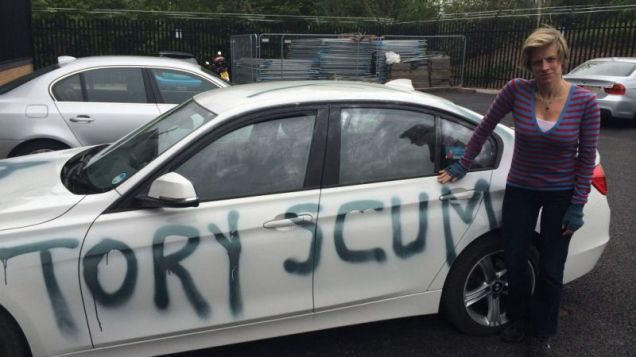
Tory Scum - Graffiti Car

When ordinary people with perfectly mainstream opinions are hesitant to express themselves for fear of being accused of racism, prejudice, stupidity or worse, our democracy is in real trouble

If you voted Conservative or UKIP at the 2015 general election, you could be forgiven for wondering where the other fifteen million people who made the same choice are currently hiding themselves. David Cameron’s leadership may be uninspiring and his government’s achievements few, but these are hardly the paranoid, dying days of the Brown government – ordinarily there should still be a level of authentic, spontaneous support to be found out and about the country.

Equally, you may wonder how on earth it was possible for Ed Miliband and Labour to have lost that election, given the fact that social media and popular culture roar their hatred of the Evil Tories louder than ever, that it is almost impossible to find kindred spirits willing to admit to voting Conservative or UKIP, and the fact that conservative policies and beliefs are routinely derided as ignorant and selfish at best, and violent and vengeful at worst.

The current political environment can be quite lonely for anybody with conservative leanings – and it makes one wonder why the people who delivered David Cameron his House of Commons majority and propelled UKIP into a remarkably strong third place are so desperate to avoid drawing attention to themselves.

There have been a couple of worrying pieces in the media this week which highlight the fact that furious open hostility toward anything vaguely conservative or eurosceptic – often emanating from a small but determined band of opposing activists – is having a chilling effect on the political discourse and preventing small-c conservatives from openly articulating their opinions.

First, the Independent carries a letter from former Labour MP Tom Harris, who only felt able to “come out” as a eurosceptic after having left elected office. Sounding as though a weight had been lifted off his shoulders, Harris writes:

I was never a fully paid-up member of the Euro team. Early signs of unsoundness manifested themselves in my outright opposition to British membership of the euro when it was first launched. The whips’ office had its eye on me after I added my signature to a letter, back in 2002, warning the then Chancellor, Gordon Brown, to resist committing to abolishing the pound. And once you’ve decided to oppose that central mechanism for the creation of a European superstate, it’s a fairly short step to being painted as “anti-EU”.

But my instinct to vote Leave (probably running at 53 to 55 per cent right now) is not something that can be confessed in polite middle-class company. Such an admission might too easily be interpreted as a dislike of foreigners or, worse, a tolerance of Nigel Farage.

[..] The question is precisely the same one we were asked in 1975: should we stay or should we go? In the meantime, if asked over dinner how I intend to vote, I’ll do the sensible thing and change the subject to the range of breads in the Marks & Spencer food hall. Or The Archers.

And follows up in the Telegraph:

As for me, I will continue to pursue this enigma known as “the normal life” by having, expressing, then rejecting various opinions. No doubt they will be variously correct, wrong, misplaced, insightful and dangerous. I may believe in all of them, some of them, or none of them.

What’s it to you?

But among Labour circles and much of the wider Left, it is simply no longer “permissible” to hold eurosceptic views, or to believe that Britain’s democracy and vital national interests would be better served by leaving an explicitly political and ever-more closely integrating union which we never realised we were joining in the first place. The Tories are perceived to be eurosceptic (even though many of them are not), and so the prevailing dogma has it that one must be pro-EU to be anti-Tory.

Aside from the few brave (and mostly decidedly retro) souls who form Labour Leave, the question of Britain’s ongoing EU membership simply is not up for discussion. And to express any doubt whatsoever about Britain playing an enthusiastic part in this European political union is seen as treachery, automatic disqualification from membership of the movement.

Look at Jeremy Corbyn’s reversal on the issue. Love or hate Corbyn, he has been willing to stand up to a mostly hostile Parliamentary Labour Party on issue after issue, from military action in Syria to the Paris attacks to the question of Trident renewal. On all of these issues, the Labour leader has proven himself willing to enrage many of his MPs by holding firm to his deeply held convictions.

But what of his eurosceptic convictions? Jeremy Corbyn has been a lifelong eurosceptic, and voted for Britain to leave the European Community in the 1975 referendum. Corbyn holds this view about as strongly as any other, and yet it was on this issue alone where he instantly capitulated to the establishment and became a pro-EU advocate. What should rightly be a non-partisan issue pertaining to sovereignty and self-determination is instead imbued with nearly the same cultural weight and quasi-religious fervour as one finds in the American culture wars. Such is the power of the Left’s infatuation with the EU.
Jeremy Corbyn - EU Referendum - 1975 - Eurosceptic

The second article of concern is this worrying testimonial from a conservative-leaning history supply teacher who found himself drummed out of the school where he taught because colleagues complained when he failed to join in their frequent denunciations of the Tory government and all things conservative.

Joe Baron writes in The Spectator:

After keeping schtum for two months, I finally challenged a colleague’s view of the Tories. ‘Why are Tory voters thick?’ I asked. ‘Is it just because they happen to disagree with you?’

‘No,’ he replied. ‘Because they voted for cuts’.

‘Perhaps they saw the cuts as necessary,’ I said. ‘Surely it’s better to make savings now, rather than keep spending money we don’t have, go bankrupt and, like the Labour government of 1976, be forced to make even deeper cuts after going cap in hand to the IMF.’

‘That’s rubbish!’ said another colleague. And so it continued, though no one actually raised their voices, until they brushed off my argument with a blasé ‘yeah, yeah, yeah’ before gesturing towards the office door as if dismissing a recalcitrant child.

If Joe Baron had been loudly and forthrightly expressing his views in favour of Ed Miliband and the Labour Party, he would have been met with a chorus of approval and the respect of his colleagues. But in choosing to defend conservative ideas like government fiscal responsibility and personal self-sufficiency, Baron chose another path. A darker path:

I was called into the head’s office and told that, after a complaint from colleagues in my department, the school would no longer require my services. So I was effectively being dismissed for holding the wrong views, though of course the head dressed it up in a different garb: it was my manner rather than my opinions. Apparently I was ‘too assertive’.

As I remember it, my interlocutors were both red-faced and angry, and more than willing to use inflammatory language. I was told, at one point, that I was unfit to teach.

Interestingly, the head of department who refused to work with me — effectively calling for my dismissal — had several weeks previously decried the cruelty of zero-hours contracts. Where was her left-wing compassion when it came to sacking me, a married man with two children to support?

I suppose I’ve only got myself to blame. For a brief moment, I deluded myself into believing that schools actually encouraged tolerance and the questioning of orthodoxies through intellectual exploration, freedom of thought and speech. How silly of me.

Both cases – Tom Harris the former MP and Joe Baron the supply teacher – are examples of the visceral, real-world retribution which is threatened (and sometimes carried out) by those on the Left against people who have committed the thought crime of being a conservative. And this climate of anti-Tory hate-mongering not only distorts our political discourse, but undermines the health of our democracy, whose proper functioning relies on people with political differences being able to speak their consciences in good faith.

My own personal experience of this phenomenon has thrown up more depressing anecdotes than I can relate here. Friends who have sat next to me on the couch shouting at the television when one smug-faced Question Time panellist (or audience member) after another have deliberately misinterpreted and sanctimoniously condemned Nigel Farage or David Cameron, but who fall fearfully silent when the inevitable anti-Tory hate mobs form around the water cooler or on social media.

Or the senior PR executive I was chatting with at a recent event for the launch of Dan Hodges’ excellent chronicle of the 2015 general election, “One Minute To Ten”, who furtively looked around and dropped her voice to a hushed whisper before confiding to me that she actually voted Conservative, picking David Cameron over Ed Miliband.

Or the look on the faces of people I speak with in my hometown of Harlow, Essex, at the precise moment when a voice in the back of their head tells them to self-censor their speech and hold back their real opinions, for fear of ridicule or attack. They may have re-elected an excellent local Conservative MP in Robert Halfon, but few are willing to proudly and publicly stand by their decision months later, away from the privacy of the polling booth.

You just don’t see this same reticence on the other side. For a political movement which makes a great performance of supposedly being the voice of the voiceless and most marginalised people in the country, left-wingers have a near monopoly in many areas of the public discourse, particularly in the arts and entertainment sectors. And there are far fewer occasions or settings where it is necessary to pause and “read the room” before confessing one’s left-wingery than there are situations where conservatives have brutally learned the wisdom of self-censorship.

The problem is that it is not just the unhinged crazies sharing misspelled memes on the internet and typing in ALL CAPS below the line on news website articles. People like that exist on all points on the political spectrum from left to right, and the misogynistic ranting of one barking CyberKipper no more represents UKIP than the conspiratorial, anti-Semitic sermons of a self-declared Corbyn supporter reflect on Labour.

No, the real problem is the softer bigotry of bien-pensant public opinion – the arrogant assumptions of the dinner party set, well-heeled professional people in the office or having dinner at Carluccio’s – the middle class clerisy, Brendan O’Neill called them. Their willingness to lazily believe and repeat hysterical left-wing smears about conservatism and to virtue-signal in front of their friends by flaunting their vague and incoherent opposition to the Evil Tory government are the problem.

And it becomes a self-fulfilling prophecy. The more that left-wingers openly flaunt their views while attacking or shunning anybody who thinks differently, the more likely they are to only ever hear ideas and opinions which chime with their own worldviews, and falsely assume that they are universal.

But it’s not true. The 2015 general election proved that there is no silent left-wing majority in Britain, and there will be no “rainbow coalition” of left-wing political parties coming together to kick the Evil Tories out of office any time soon.

In fact, the only question is how much longer the Left can continue to punch above their rhetorical weight before the British people finally tire of the sanctimonious yapping of a bunch of ideologically incoherent, virtue-signalling, anti-aspirational opportunists and the temper tantrum they are throwing in the face of a very mild and utterly unremarkable centrist government.

How much longer will the silent majority-makers of this country be willing to silence themselves, censor their speech and edit their public opinions solely to avoid the screeching disapproval of these losers?

Right now, it may be hard for some to “come out” as conservatives. But the Left are loudly and brazenly overplaying a very weak hand, and the sooner that more of us start calling them out on it, the easier it will be for more people to stand up and take pride in not being just another centre-left drone.
Iain Duncan Smith - Tory Scum - Conservative Party - Nazis

Agree with this article? Violently disagree? Scroll down to leave a comment.

Follow Semi-Partisan Politics on TwitterFacebook and Medium.

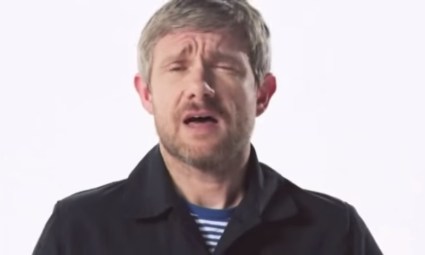
Bilbo Baggins Dials Back The Anti-Conservative ‘Tory Scum’ Rhetoric

Martin Freeman – the artist best known as Bilbo Baggins / Dr. Watson – now says that it is wrong to call conservatives ‘evil’. But that’s not what he was hinting before the general election…

Now that he is no longer shilling for Ed Miliband and the Labour Party, actor Martin Freeman has come over all thoughtful and introspective.

Well, everything’s relative. But in a new interview given to the pretentious Rake magazine, Freeman pontificates that it is wrong and unfair to call Tories and those with conservative political opinions “evil”.

The Spectator notes:

In an interview with The Rake, Martin Freeman — who starred in Labour’s election broadcast when Ed Miliband was leader — says it’s unfair to call all Tories ‘evil’, as the left has been responsible for more deaths in recent years.

While Rake quotes Freeman as saying:

My team — the left, generally — has been responsible for more deaths in the last century than the other team if you count Stalin, Mao, the Khmer Rouge, the Shining Path… that’s not a good team.

The left is quite at home with evil bastards, actually. Religion doesn’t have a downpayment on genocide: there are atheists, materialists and socialists who have gone on quite happily with rape and murder.

How magnanimous of Martin Freeman, placing us all (conservatives, left-wingers and genocidal maniacs alike) on the same end of the sliding scale of evil – as though there were no difference between government making an honest and sometimes flawed effort to help and work for citizens on the one hand, and deliberately terrorising and oppressing them on the other.

But Bilbo Baggins was not always so well disposed to people on the political Right. Only a few short months ago, Martin Freeman’s face was barking at us from our television screens with his Labour-supporting party political broadcast, part hagiography of Milibandism and part bully pulpit from which to bash the Evil Tories.

Just for fun, let’s remind ourselves of what Martin Freeman was saying about anybody who failed to appreciate the wonders of Ed Miliband before the general election. I’ll interject with some observations of my own every now and then.

It’s a choice between two completely different sets of values. A choice about what kind of country we want to live in.

Well, if by “completely different” you mean New Labour with a red rosette and New Labour with a blue rosette, then yes. The colours under which the two main parties are fighting the campaign, blue and red, are indeed very different.

Now I don’t know about you, but my values are about community, compassion, decency, that’s how I was brought up.

Won’t somebody give that saint a halo already? The man cares about decency and compassion, didn’t you hear him? And as we all know, the basic human tenets of compassion and decency can now only be found in those who espouse left-wing politics.

So yeah, I could tell you the Tories would take us on a rollercoaster of cuts while Labour will make sure the economy works for all of us, not just the privileged few – like me. But it’s not just about that.

He could tell you that the Evil Tories are the barbarians at the gate, chomping at the bit to sink their fangs into our Precious Public Services and rip them to shreds. Martin Freeman could tell you that. He could wax eloquent on the subject for days. But he’s just a humble guy like you and me; he isn’t the kind of person to sully himself with party politics. So he’ll just let you know what he would say, were he inclined to mention the Tories.

I could tell you it seems like the Tories don’t believe in the NHS, while Labour is passionate about protecting it.

Martin Freeman could tell us that the Tories hate Our Blessed NHS, but since it would be based on absolutely no evidence whatsoever – neither the declared intentions of the Conservative Party or a reasonable inference from observing their behaviour in government over the past five years – instead he will just leave the vague accusation hanging ominously in the air. Because that’s what humble, regular guys like Martin Freeman do all the time. It certainly isn’t a long-practised political smear.

I could tell you that the Tories have got sod all to offer the young, whereas Labour will invest in the next generation’s education and guarantee – that word again – apprenticeships for them.

If Martin Freeman were so uncouth as to talk politics with us, he could mention how the Evil Tories absolutely loathe the young, and yearn for a future where a failed generation of ill educated and uninspired young people sit around getting pregnant, committing crimes and claiming endless benefits. As we all know, the Tories simply love it when people fail to reach their potential as human beings and live stunted lives of despair, deprivation and grinding poverty. What can I say – it gives us a warm glow inside. And Martin Freeman could tell us all about that, if only his speech were some kind of political message.

I could tell you that Labour will put the minimum wage up to £8, and ban those ‘orrible zero hours contracts, while the Tories would presumably do more of their tax cutting for millionaires.

Bilbo could tell us this, but he doesn’t know for sure. As the inclusion of the word “presumably” indicates, Martin Freeman didn’t actually bother to do any research before standing in front of the camera to pitch for Ed Miliband. Maybe the Tories would undo some more of Gordon Brown’s spiteful and counterproductive tax hikes on the rich (tax cuts for millionaires!), or maybe they might – oh, I don’t know – introduce a national living wage of £9 per hour, even higher than Labour propose. But since he couldn’t say for certain before the election, it was probably right to assume that those Nasty Tories will keep turning the screws on the poor.

But real though all that stuff is, and important though it is if you’re young in this country or broke in this country or if you’re unwell in this country – and let’s face it, we all need the NHS at some point – or if you are just plain working hard and finding life tough, there is a choice of two paths. The bottom line is what values are we choosing. Because in the end this choice we make really does matter.

Labour: they start from the right place. Community, compassion, fairness – I think all the best things about this country. I love this country so much and I love the people in it, and I think you do too. But really, for me, there’s only one choice. And I choose Labour.

Martin Freeman loves this country and everyone in it. Everyone, that is, apart from those people who disagree with him and think that a Labour government and a prime minister Ed Miliband would have been an unmitigated disaster and an utter failure of national aspiration. Those people, Bilbo Baggins somehow isn’t quite so keen on.

So to paraphrase Martin Freeman’s sanctimonious, moralising, self-aggrandising attitude toward the nearly 50% of his fellow British citizens who voted for a more right-leaning party in 2015: “I’m not saying that all Tories are Evil Nazi Scum. They may hate the sick and yearn to destroy Our NHS. They may have no compassion, unlike we Virtuous People of the Left. They may not care about the future of our children. But they’re not evil. Heavens, no. I certainly never intended to give that impression. The Tories aren’t scum, they’re just ethically challenged.”

Conservatives should rejoice, to thus receive the benediction of Martin Freeman. They aren’t evil after all. They just hold evil values. Not proper, wholesome Labour values.

What pious, self-regarding, moralising nonsense Bilbo Baggins talks. In fact, Martin Freeman represents everything that is wrong with left-wing politics today – captivated by its own supposed virtue, yet utterly bereft of ideas for improving or transforming the country besides the same old, tired schemes to bash the rich, punish success and reward mediocrity.

And now here comes Martin Freeman once again – a diminished and discredited figure after his beloved Ed Miliband barely persuaded his own friends and family to vote Labour at the general election – attempting to worm his way back into the good graces of the public by smugly pontificating against those who took him at his word back in May, and who now hysterically accuse conservatives of being “evil”. Suddenly, calling conservatives “evil” is a terribly gauche and inappropriate thing to do.

But that’s not what you were saying back in April and May 2015, is it, Mr. Freeman? When the general election campaign was raging, you lent your voice, image and public profile to a party political broadcast designed to benefit the Labour Party and in which you made highly speculative and slanderous statements about the priorities and the very character of conservative-minded voters.

Well, Martin Freeman can keep his values, and he can stick them. The hobbit’s newfound realisation that it is wrong to demonise half the population as being greedy, avaricious and soulless monsters is tired, belated and hypocritical in the extreme – especially considering the fact that Bilbo Baggins was leading the charge against the Evil Tory Scum on national television only a few months ago.

Martin Freeman: your half-hearted, obscure non-apology is most sincerely not accepted.


Martin Freeman - Labour Party - Tory Scum - Left Wing Hate Watch

Agree with this article? Violently disagree? Scroll down to leave a comment.

Follow Semi-Partisan Politics on TwitterFacebook and Medium.

Dreams Of The Rainbow Coalition

bbc-challengers-debate-leaders-debate-general-election-2015-nigel-farage-stands-alone

Left-wing collusion to lock the Conservatives out of power will not work, and would massively backfire were it even attempted

Remember Nicola Sturgeon’s dream of a rainbow coalition of left-wing political parties putting their differences aside and coming together to lock the Evil Tories out of government and usher in a new era of endless abundance for all, courtesy of the Magic Money Tree?

It hasn’t gone away. That insufferable, sanctimonious, morally superior dream has still not died. Here’s Brian Barder, writing in LabourList as though it were still May 6, 2015:

If the Tories, under a new leader enjoying a honeymoon, are to be dethroned, and if Labour alone can’t dethrone them, it’s simple logic that the job can be done only by an alliance of the progressive parties, led by Labour as the biggest of them. Such a multi-party association can take several forms: a loose alliance supporting a minority Labour government, or a slightly more formal ‘confidence and supply’ understanding with the other progressive parties, or a formal coalition of some or even all of them, each represented in a government of the broad left.

Similarly, the policies of a broad progressive alliance to replace the Tories in office can be agreed before an election (or even after it, as in 2010) in a detailed agreed document, or there can be a more general understanding in support of a progressive programme whose core elements all the progressive parties agree to support, or the other parties can be free to decide ad hoc which policies of a minority Labour government they will support as they go along.

This is all a response to the dawning realisation that whatever his arguable virtues (and this blog has been a cautious fan), Jeremy Corbyn is not currently positioning himself to sweep Labour back to power in 2020.

To his credit, Brian Barder is not panicking, and is instead trying to come up with a pragmatic way for the Left to make an impact without relying on overly sunny predictions about getting rid of Jeremy Corbyn any time soon. That much is good. But Barder’s solution and call for a left-wing coalition is no less silly than the calls for the Parliamentary Labour Party to split from the national party, pick their own leader and form a self-serving Westminster caucus without a local or national support base.

“So what if Labour can no longer enthuse enough people to march to their polling station to vote the party back into government”, goes this line of thinking. “There are enough other people out there vaguely like us that if we all band together in a cynical and self-serving coalition, we will be able to deny the British people the government that the electoral system should have produced and do the job ourselves, even though individually we are about as popular as a swarm of Brazilian mosquitoes”.

In other words, it’s complete nonsense. The general election we had just nine months ago proves that there is no great and silent left-wing majority in Britain. If there were, Labour would not have been decimated throughout south-east England, and the Greens and Liberal Democrats would have won enough seats between them to make ganging together to force Ed Miliband on a reluctant Britain politically viable. But they were decimated, and Ed Miliband is now making tedious speeches from the back benches.

Yet the denial is strong. In even proposing such a left-wing collaboration, Brian Barder reveals that he clearly spends his time percolating in the same confirmation bias-reinforcing ideological echo chambers as many others on the Labour left, and has mistaken a Twitter timeline full of David Cameron pig jokes and anti-Tory human rights hysteria for a representative sampling of the British public.

Or as blog said on 8 May, immediately after the election, which still holds true now:

Until the exit poll came in, it was simply inconceivable to many on the left that there could be any result other than a rainbow coalition of Britain’s left wing parties, coming together to lock the Evil Tories out of Downing Street and immediately get to work cancelling austerity and providing everyone with material abundance through the generosity of the magic money tree.

It is simply unthinkable to the like of Barder that the people of Britain might actually reject left-wing dogma and prefer David Cameron’s eminently pragmatic, reassuringly non-ideological form of watered down conservatism. Clearly the British people need saving from an Evil Tory government that they did not want, and therefore any electoral machination to achieve this end would be justified.

Except that it wouldn’t. The quietly patriotic, un-ostentatiously self-sufficient real majority in this country already believe that they are the victims of an establishment stitch-up when it comes to issues like Europe and immigration, where there was (rightly) perceived to be a false consensus among political parties, shutting down an important debate and denying millions of people the opportunity to have their voices heard and listened to.

How much worse, then, would the public’s reaction be if the next election sees an arrogant multi-party coalition of left-wing losers band together to lock the largest party out of power? How much rage would such a presumptive move cause?

Yet Barder (and others) are deadly serious in their daydreaming for a rainbow coalition of left-wing parties:

The first cautious step is for a group of the Labour leadership representing all its main strands of opinion to start private and non-committal talks with the leaders of the other progressive parties, to explore their attitudes to some form of possible progressive alliance. If these produce a positive response, the next step should be meetings to identify common policy ground which all concerned could agree to support.

We are not yet one year into the first term of the first all-Conservative government in eighteen years, and already fantasy plans are being drawn up for furtive meetings leading to grand summits between Jeremy Corbyn, Angus Robertson, Caroline Lucas and whoever now leads the Liberal Democrats.

The seductive dream of a united left-wing coalition against the Tories simply will not die. But that says far more about the Left’s unhinged and hysterical response to David Cameron’s bland, centrist government – and its relentless seizing of the middle ground – than it does about the possibility of such an odious coalition delivering a Labour prime minister in 2020.


Labour Party - General Election 2015 - Ed Miliband Resignation

Agree with this article? Violently disagree? Scroll down to leave a comment.

Follow Semi-Partisan Politics on TwitterFacebook and Medium.

The Daily Toast: Peter Oborne, A Fellow Jeremy Corbyn Admirer

Peter Oborne is a journalist of uncommon principle; what he says should be taken seriously and treated with a measure of respect. But Peter Oborne has publicly stated his admiration for Jeremy Corbyn…

This blog has often felt like something of a voice in the conservative wilderness for not viewing Jeremy Corbyn as an unmitigated disaster for British politics.

One does not have to agree with Jeremy Corbyn’s sometimes loopy policies to admire the way his unexpected leadership of the Labour Party has shaken up a dull, lumpen, self-satisfied consensus among the Westminster elite, and put the fear of the voters back into a good many Members of Parliament who were more focused on the smooth progression of their own careers than the trifling concerns of the electorate.

That’s where this blog stands. I’m the first to criticise Jeremy Corbyn for his particularly crazy policies (like building a paper tiger nuclear deterrent with all the expensive submarines minus the all-important warheads) and his naive political operation (as embarrassingly revealed during the so-called Revenge Reshuffle). I’m also willing to give credit where credit is due, such as the holistic way Corbyn looked at education during the Labour leadership contest (and his proposed National Education Service).

What I don’t understand are conservatives who endlessly criticise Jeremy Corbyn because he doesn’t think or say all the same things as David Cameron or Tony Blair (and who could pick those two apart if blindfolded?)

Surely having two party leaders who think and say different things is the point of democracy. The fact that Britain has increasingly been afflicted with party leaders who say and think nearly identical things (once the rhetorical embellishment is stripped away) since Margaret Thatcher left office is the root of our current centrist malaise, and one of the primary reasons why a third of the electorate don’t show up to vote at general elections.

What’s the point in voting if the choice is between Prime Minister Bot A and Prime Minister Bot B, both of whom will automatically praise the NHS without looking more seriously at fixing healthcare, both of whom will tinker around the edges of welfare reform to get the Daily Mail off their backs but without doing anything substantive to fix our broken non-contributory system, both of whom are achingly politically correct at all times (“It’s Daesh, not ISIS! I can’t believe you called it Islamic State!“) and both of whom have so little faith in Britain’s ability to prosper as an independent, globally connected democracy that they strive (overtly or covertly) to keep us yoked to the European Union?

I’m a conservative libertarian. I have enough of a task on my hands trying to push the Conservative Party in a less authoritarian, more pro-liberty direction without worrying about what the Labour Party is doing every minute of the day. And I have enough confidence in my political worldview that I believe conservative principles will win the battle of ideas when promoted and implemented properly (hence my ongoing despair with the current Tories).

But many of my fellow conservatives, particularly those in the media, are in despair at the rise of Jeremy Corbyn and the return of real partisan politics. Why? Their professed concern that Britain have a “credible” opposition (meaning one almost identical to the governing party in all respects) stretches belief to breaking point and beyond. I can only think that their fear of Jeremy Corbyn reflects some personal doubt that their own political ideas and philosophies might not be superior after all – that Jeremy Corbyn might actually win people over in large numbers and have a shot at taking power.

I have no such fear. I believe that the principles of individual liberty and limited government beat discredited, statist dogma hands down, every day of the week. And I believe that the rise of Jeremy Corbyn might force conservatives to remember why they hold their views in the first place, and even refine and improve their own ideas through rigorous debate – if only they could get over their collective outrage that a socialist is in charge of the Labour Party.

In this spirit, I share the video of Owen Jones’ recent conversation with former Telegraph columnist Peter Oborne – see above. Oborne is an articulate writer, an unapologetic conservative and a thoughtful journalist of real integrity. That Peter Oborne also finds something to admire in Jeremy Corbyn (despite disagreeing with him politically) is helpful reassurance that I am not alone.

I don’t agree with everything that Oborne says in the video. But on the near-conspiracy of the political class and the media to undermine Corbyn (not to merely disagree with him but to portray his ideas as “unthinkable”) and on foreign policy (castigating our closeness with Saudi Arabia, an odious regime with whom we fawningly do business and lend our diplomatic legitimacy in exchange for oil and intelligence) he is spot on.

And I think that’s what makes Jeremy Corbyn’s detractors so angry. No man can be consistently wrong about everything all the time, and on rare occasions Jeremy Corbyn gets it conspicuously right – such as with his criticism of our closeness with the Saudi regime. People accustomed to either being in power or just one election away from power look at somebody who (whatever other baggage he may have) is unsullied by the continual act of compromise and ideological drift, and it makes them mad. It forces them to ask themselves how many of the compromises, reversals and deals from their own careers were strictly necessary, and how many resulted either from failures of courage or pursuing power for its own sake.

Sometimes, the haters were probably right to do what they did. Governing a diverse nation of 65 million people is not possible without the art of compromise, as Jeremy Corbyn would soon discover if the impossible happened and he became prime minister. But sometimes they were not. And the cumulative effect of all of these small compromises by Labour and the Conservatives over the years were two very slick but ideologically bankrupt political parties that looked and sounded nearly exactly the same on a whole host of issues. Issues (like the EU) which the political class had arrogantly deemed to be settled once and for all, though the voters had other ideas.

I understand this. I sense that Peter Oborne understands this. And if that means there are still only two non-Corbynites in Britain who don’t think that Jeremy Corbyn’s leadership of the Labour Party is an unmitigated disaster – well, at least I’m in good company.

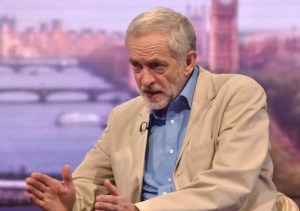
Jeremy Corbyn - Labour Party - Andrew Marr Show - BBC

Agree with this article? Violently disagree? Scroll down to leave a comment.

Follow Semi-Partisan Politics on TwitterFacebook and Medium.