Owen Jones Has An Epiphany, Figures Out The Root Of Jeremy Corbyn’s Appeal

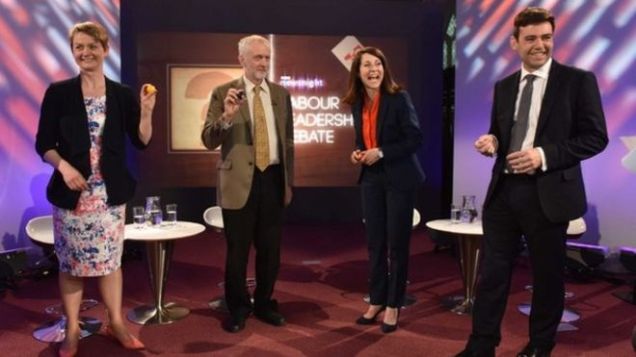
Labour Party - Labour Leadership - 2015

Owen Jones has an epiphany: centrist Labour MPs are responsible for the rise of Jeremy Corbyn

One of the annoying things about being part of Britain’s marginalised political blogging community (see what I did there?) is the regular insult of seeing ideas first expounded on this blog being subsequently “appropriated” by high profile, celebrity journalists who come late to the party and then claim all the credit (and pageviews) for ideas that they did not originate.

I stay up late into the night ranting sometimes (I hope) semi-original analysis into WordPress, and then three months later some SW1-dweller pops up on the Sky News paper review making the same point as though it is astonishingly fresh insight, getting paid for being late to the party and taking all of the credit.

[Pauses]

Meanwhile, on a completely unrelated note, Owen Jones has worked out that Jeremy Corbyn did not sweep to the leadership of the Labour Party in a vacuum, and that the rise of Corbyn was only made possible because of the accumulated failings of Labour’s centrist MPs.

From Owen’s totally original Guardian column (my emphasis in bold):

There are many decent Labour MPs, but it is difficult to think of any with the stature of the party’s past giants: Barbara Castle, Nye Bevan, Ernie Bevin, Herbert Morrison, Margaret Bondfield, Harold Wilson, Stafford Cripps, Ellen Wilkinson. Machine politics hollowed out the party, and at great long-term cost. If, last year, there had been a Labour leadership candidate with a clear shot at winning a general election, Labour members might have compromised on their beliefs: there wasn’t, and so they didn’t.

[..]  Corbyn’s harshest critics claimed superior political nous, judgment and strategy, then launched a disastrously incompetent coup in the midst of a post-Brexit national crisis, deflecting attention from the Tories, sending Labour’s polling position hurtling from poor to calamitous, and provoking almost all-out war between Labour’s membership and the parliamentary party: all for the sake of possibly gifting their enemy an even greater personal mandate. They denounce Corbyn’s foreign associations, but have little to say about former leader Blair literally having been in the pay of Kazakhstan’s dictator Nursultan Nazarbayev, whose regime stands accused of torture and the killing of opponents. Corbyn’s bitterest enemies preach the need to win over middle-class voters, then sneer at Corbynistas for being too middle class (even though, as a point of fact, polling last year found that Corbyn’s voters were the least middle class). They dismiss Corbynistas as entryists lacking loyalty to the Labour party, then leak plans to the Telegraph – the Tories’ in-house paper – to split the party.

It is the absence of any compelling vision that, above all else, created the vacuum Corbyn filled. Despite New Labour’s many limitations and failings, in its heyday it offered something: a minimum wage, a windfall tax on privatised utilities, LGBT rights, tax credits, devolution, public investment. What do Corbyn’s staunchest opponents within Labour actually stand for? Vision was abandoned in favour of finger-wagging about electability with no evidence to back it up.

Jones concludes:

Corbyn’s opponents have long lacked a compelling vision, a significant support base and a strategy to win. When Labour fails at the ballot box, its cheerleaders are often accused of blaming their opponents rather than examining their own failures.

The same accusation can be levelled now at Corbyn’s opponents. They are, by turns, bewildered, infuriated, aghast, miserable about the rise of Corbynism. But they should take ownership of it, because it is their creation. Unless they reflect on their own failures – rather than spit fury at the success of others – they have no future. Deep down, they know it themselves.

Slow hand clap. Finally, acknowledgement from a “mainstream” political commentator of what this blog has been saying consistently, even back when a Jeremy Corbyn victory in the leadership election was seen as an absurdity.

Jeremy Corbyn did not become leader of the Labour Party in a vacuum. A cloud did not suddenly descend on Labour Party members, making them crazy and amenable to markedly more left-wing politics. There was no extraneous event on which blame can be pinned, save Ed Miliband’s disastrous tenure as Labour leader, culminating in the 2015 general election victory. The problems are far more deeply rooted, and go way back beyond Ed Miliband and Gordon Brown.

Good job, Owen.

Of course, readers of this blog will know that I have been consistently making the same point, repeatedly, stretching back well before the 2015 general election:

Why Isn’t Labour Working?

Why Jeremy Corbyn’s Labour Leadership Candidacy Matters

No, Jeremy Corbyn’s Leadership Candidacy Is Not A Disaster

In Memoriam – Labour Party: 1900-2015

Stop The Anti Jeremy Corbyn Hysteria – ‘Entryism’ Is Not A Dirty Word

Why Is The Right Suddenly Scared Of Jeremy Corbyn

Is Jeremy Corbyn The Cure For British Conservatism’s Centrist Virus?

Are You A Populist Simpleton?

Labour Has Lost The Ability To Persuade Its Own Members, Let Alone The Voters

Time For Jeremy Corbyn Detractors To Put Up Or Shut Up

What Are The Aims And Values Of The Labour Party?

The Latest Victim Of The Labour Purge: The Party’s Soul

Stop Worshipping ‘Centrist’ Voters

The Labour Party’s Soul Searching Exercise Is Off To An Unpromising Start

In Defence Of Jeremy Corbyn

The Hypocrisy Of Centrist Labour’s War Against Jeremy Corbyn


So well done Owen. You got there in the end, nearly a year late.

But now that this blog’s ideas have been given voice by the boy wonder, maybe they will actually receive some due consideration and debate.

Who needs acknowledgement or recognition or money or credit, anyway?

 

Owen Jones talks back on the EU referendum - European Union - Brexit

Support Semi-Partisan Politics with a one-time or recurring donation:

Agree with this article? Violently disagree? Scroll down to leave a comment.

Follow Semi-Partisan Politics on TwitterFacebook and Medium.

Purge Tom Watson From The Labour Party, Not The Corbynites

Tom Watson - Jeremy Corbyn

If there is to be a Labour Party purge, leave the Corbynites and centrists alone and purge disgusting people like deputy leader Tom Watson

Charles Moore is quite right to identify the real odious usurper within the top echelons of the Labour Party – deputy leader Tom Watson:

The majority opinion is that it is a disgrace that Jeremy Corbyn is the leader of the Labour Party. Actually, the real disgrace is that Tom Watson is its deputy leader.

It is a question of character, not of political views. Mr Watson is an inveterate plotter (see, for example, his almost successful political assassination plot against Tony Blair in 2006, to assist Gordon Brown). He is also the purveyor of utterly unsubstantiated malicious rumour.

Moore reviews Watson’s inglorious history:

In 2012, collaborating with the website Exaro, he used parliamentary privilege to allege “clear intelligence” of a “powerful paedophile network” in Parliament and Downing Street. He called on the Metropolitan Police to investigate, and later passed them “information”. This led to a series of operations by the police – Fairbank, Fernbridge, Midland – which looked credulously into allegations, some blatantly crazy, about child abuse, torture and even murder by leading figures in politics and society.

The investigations collapsed this year, but not before they had defamed the late Sir Edward Heath, ruined the last years of Lord Brittan, tormented the wife who then became his widow, and persecuted Field Marshal Lord Bramall (who is still, I am glad to say, robustly with us) and many more.

And then explains why the odious Tom Watson actively hinders the efforts of Labour’s suddenly reviled centrists to dislodge Jeremy Corbyn:

Now Mr Watson alleges that the Labour Party is being infiltrated by Trotskyists. “Some old hands [are] twisting young arms,” he says, making it sound like his favoured subject of child abuse. He may actually be right in this case. But the Corbyn team clearly finds it easy to say Mr Watson is “peddling baseless conspiracy theories”: he has done so before. It is utterly dismaying to see Labour led by the hopeless Mr Corbyn, unless you want a permanent Tory government (which I certainly don’t), but Labour moderates who oppose him do not seem to understand why they cannot gain the moral high ground. A big part of the answer is Mr Watson.

I’m actually with Owen Jones on this one – the idea that Trotskyist entrists are of any significance  in Labour’s influx of new members is ridiculous overstatement. Anyone who has ever been to a party conference or a political demonstration knows just how fringe these wizened far-leftists are, with their cheaply produced pamphlets and anachronistic slogans.

The fact that Tom Watson seeks to portray these people as having outsized influence is quite understandable, given his thuggish imperative to topple his leader and restore the rule of the centrists, but that does not make it true. In fact, it is a great slander on the hundreds of thousands of people who have flocked to the Labour Party, attracted by the fact that Jeremy Corbyn offers something other than the muddled centrism practised by Blair-Brown-Cameron-Miliband.

Tom Watson is exactly the kind of bruising, Chicago-style machine politician that we should be working to purge from our politics, not looking to as our salvation from Corbynism. He is the epitome of New Labour’s headline-led approach to governing – the fact that Watson’s first major act as an MP was to agitate for a ban on Gary Glitter albums shows a slavish desire to win the approval of The Sun and a brutal authoritarian streak which has been revealed numerous times since, not least in his Herculean efforts to take down Tony Blair in 2006, acting as Gordon Brown’s hired gun.

Is Jeremy Corbyn the great white hope of British politics? Of course not – his ideology and policy obsessions come pretty much unreformed from the 1970s, his foreign policy is alarmingly anti-American and he has any number of unpleasant friends and associations, at home and abroad. But at least he offers a gosh darn alternative to the centrist consensus.

Ambitious Conservatives in particular should appreciate that Corbyn’s efforts to shift the left hand border of Britain’s political Overton window makes it equally possible for a future radical Conservative leader (anyone? anyone?) to push the other boundary further to the right.

And for that potential alone, Jeremy Corbyn is worth 650 Tom Watsons.


Tom Watson - Labour Party - Deputy leader

Top Image: ITV

Bottom Image: International Business Times

Support Semi-Partisan Politics with a one-time or recurring donation:

Agree with this article? Violently disagree? Scroll down to leave a comment.

Follow Semi-Partisan Politics on TwitterFacebook and Medium.

Mandatory Reselection Of MPs Should Be The Norm For British Political Parties, Not A Scandalous And Controversial Idea

Jeremy Corbyn - Mandatory Reselection Labour MPs

MPs do not have a divine right to represent their constituencies forever once selected by their local party, Jeremy Corbyn is quite right to consider mandatory reselection for MPs and all political parties that profess to care about democracy should follow his lead

The Telegraph leads today with a breathless piece warning of Jeremy Corbyn’s intention to press for mandatory reselection of MPs whose constituencies are changed as a result of the coming boundary review, assuming he prevails in the Labour leadership contest.

Jeremy Corbyn’s allies are planning to end the parliamentary careers of dozens of critical Labour MPs by approving plans for mandatory reselection by the end of the year.

The Telegraph understands his supporters will use their increased majority on the party’s ruling body to clarify rules about which MPs can stand for election after the 2018 boundary review.

Rhea Wolfon, elected to the Labour’s National Executive Committee [NEC] this week, hinted at the move by saying the party must have a “conversation” about “mandatory reselection”.

However Andy Burnham, Labour’s new mayoral candidate for Greater Manchester, said it would “pull the rug from under our MPs” and fuel a “climate of distrust”.

While Politics Home reports that Steve Rotheram, Jeremy Corbyn’s PPS and now Labour’s candidate for the Liverpool city regional mayoralty, has also made approving noises about challenging the “divine right” of MPs to remain in their position come what may:

Steve Rotheram, who serves as Jeremy Corbyn’s parliamentary private secretary, said elected politicians should not think Westminster is the “repository of all the best ideas”.

It comes after Rhea Wolfson, a newly elected member of Labour’s ruling National Executive Committee, said the party should have a “conversation” on the mandatory reselection of MPs.

When asked whether he was in favour of such a proposal, Mr Rotheram said he was “attracted” to Tory MP Zac Goldsmith’s 2014 plan that would see misbehaving MPs face a by-election if 5% of constituents signed a “notice of intent to recall” and 20% then sign a “recall petition”.

He said he did not support Mr Goldsmith’s defeated amendment to the Recall of MPs Bill amid concerns about the exact motion he was putting before the House of Commons.

The MP for Liverpool Walton added: “But yes, I think that MPs should reflect what the membership who select them are putting them into parliament to do. We shouldn’t believe that we’re down here and that we’re the repository of all the best ideas.

“We really should be looking at what our members are telling us to do and I think that’s part of the role as a Member of Parliament.”

Cue shock, horror and clutching of pearls from the political establishment – Andy Burnham, himself about to jettison a Westminster career cul-de-sac in the hope of municipal glory in Manchester, says that it would be “pulling the rug” out from underneath MPs. Well, perhaps MPs need to have the rug pulled out from underneath them. Perhaps they need the rug to be yanked hard enough so that they either become genuinely responsive to the party activists who work to get them elected or quit the field of play altogether.

The great thing about democracy at its best is that it rewards those who show up when the times comes to choose. Old people reliably vote in large numbers, therefore government policy when it comes to housing, welfare spending and any number of other policy areas is generously skewed in their favour. If only young people could put their Pokemon Go games down for long enough to make it to a polling station, government policy might begin reflecting their concerns too. But they don’t, so it isn’t.

Unfortunately, the way MPs are currently selected by Britain’s main political parties takes this important aspect of democratic responsiveness and throws it out the window. Once an MP has been chosen as their party’s nominee, they have very little use for their own party activists. These dedicated and principled people are hardly likely to ever support a candidate from another party, and therefore an unscrupulous MP can abuse and betray them to their heart’s content knowing that they automatically qualify as their party’s parliamentary candidate the next time a general election rolls around.

And inevitably this can lead to a growing gulf between the political stance of a constituency party and the views espoused (and votes taken) by that constituency’s Member of Parliament. This is what we now see happening to the Labour Party, where depending on your view either the parliamentary party has shifted to the right or the membership has shifted dramatically to the left (in reality a bit of both) and no longer stand for the same principles.

The brutal truth right now is that many Labour MPs, including some quite prominent ones like former leadership contender Angela Eagle, are now irreconcilably out of step with their own local parties. Why, therefore, should they have the automatic, divine right to continue to represent local parties who despise them and wish to put forward someone for parliament who more closely reflects their own priorities and positions?

When viewed this way, Jeremy Corbyn’s proposal seems quite tame. In fact, this blog would go further – MPs should not only face mandatory reselection in the case of constituency boundary review (the specific circumstance currently under discussion) but every five years ahead of a general election. This would bring Britain into line with other countries like the United States, where Representatives and Senators do not have “jobs for life” and must compete in party primaries if they wish to run for their seat at the next election. Such a move would put the wind up an often self-entitled political class, forcing MPs to justify their worthiness of a place on the ballot at regular intervals and forcing many of the older, less useful bench warmers off into retirement.

No constituency should be lumbered with a doddering old MP who doesn’t care any more, or a sharp-elbowed go-getter who ignores their constituency as they focus on climbing the greasy pole. Mandatory reselection goes a long way to solving those problems.

The current system, by contrast, is an abomination – incumbent MPs, often initially selected to stand for parliament in their constituencies through dubious, opaque or even downright corrupt means are then largely free from scrutiny by their own party for the rest of their career. As soon as they enter parliament they are enveloped in the Westminster self-protective cloak which serves to insulate parliamentarians from the consequences of their behaviour and political decisions.

If you know that nothing you can do will ever get you fired – if there is no political betrayal (like, say, pretending to be a eurosceptic during selection and then turning around and supporting the Remain campaign) for which you will ever be held to account – then there is every incentive to lie about your real political beliefs and motivations during selection, and then behave in as abominable and self-serving a way as you please as soon as your are elected to the Commons.

The status quo needs to change, and whatever else one may think of Jeremy Corbyn (and however self-serving his motivations may be), he should be applauded for taking a stand for democracy and accountability and against the entrenched privilege of the political class.

If political parties are to be accountable to their supporters then there needs to be an established process for the base to hold their candidates to account for decisions taken in office. Mandatory reselection – together with a proper right of recall, empowering constituents to recall a failing or unpopular MP subject to a certain percentage of the local electorate signing a petition – is an important aspect of that process.

Under a properly democratic system, MPs should fear the wrath of their local constituency party and be closely responsive to their priorities and concerns. At present, too many MPs take their local party for granted as soon as their selection is assured, shunning the activists who knock on doors and deliver leaflets on their behalf in order to cravenly pander to the centre.

This needs to change. This can change. And Jeremy Corbyn should be commended for trying to do something about it.


Ed Miliband Labour One Nation

Top Image: Huffington Post

Support Semi-Partisan Politics with a one-time or recurring donation:

Agree with this article? Violently disagree? Scroll down to leave a comment.

Follow Semi-Partisan Politics on TwitterFacebook and Medium.

What Next For The Labour Party?

https://www.youtube.com/watch?v=aLa67mjm7hg

And when Jeremy Corbyn storms to re-election as Labour leader, what then?

Ben Kelly despairs:

To see just how low the Labour Party has sunk don’t look at Jeremy Corbyn, look at the usurper the rebels have chosen; Owen Smith. Is that really the best they have to offer? He is a total non-entity with no personal charm whatsoever. His combination of smarm and Corbyn-lite policy ideas are sure to repel the electorate and offer no hope for redemption for his wretched party. His ambition vastly outsizes his talent and the fact his pitch has been an attempt to attract Corbyn supporters exposes him as not just weak, but utterly pointless.

If Owen Smith miraculously manages to win the leadership race is he really going to bring salvation for the Blairites? He asserts that he is the only person who can unite the Labour Party but it is clear that he hasn’t the courage or the political intelligence to confront the Corbynite activist base, nor has he got the full blooded support of the Parliamentary Labour Party.

The harsh truth is that those figures in the Labour Party who really want to be leader have opportunistically ducked out of this race because they don’t want to enter a leadership race they will probably lose. They are too cowardly to take on the Momentum crowd and want to bid for the leadership when they can cruise into the position in some fantasy future when the Corbnyites realise the error of their ways.

Before Corybn Labour were already losing voters and it was mainly due to welfarism and immigration. Owen Smith is in no better position to win back the voters that have abandoned his party because of these issues than Corbyn. To that you can also add his Europhilia and his commitment to push for a second referendum in a blatant attempt to prevent Brexit. Ideologically his is little more attractive to the electorate and personally? This creep isn’t going to be embraced by the British people anytime soon.

The spending commitments in his cringeworthy, amateur hour, 20 policy pledges is quite enough to repel the wider electorate. The 28% that Corbyn’s hapless Labour Party is polling at the moment is clearly an over estimation, and the idea that Owen Smith is the man to reverse this dire situation is laughable.

The fact that even the man trying to oust Corybn thinks Britain wants socialism of any kind, even after Milibandism was comprehensively rejected in 2015, is a clear indication that Labour is in very serious trouble. It will either split or leap head first into electoral oblivion from which it will likely never recover.

Pete North is similarly unenthused:

https://twitter.com/PeteNorth303/status/761532183458803716

Well, at least Corbyn is powering a thriving socialist folk song revival.

This blog’s assessment, however, remains unchanged:

If Jeremy Corbyn remains as leader and takes Labour to an historic defeat in the 2020 general election, the party will be out of power for nine more years at most. But if the centrists, acting in a fit of pique at finding themselves out of favour and influence for once, decide to split the party then it will be ruined and broken forever. The time horizon in the minds of the centrist rebels conveniently gels with the likely length of their own political careers. When centrist Labour MPs earnestly declare that the future of the Labour Party is at stake, what they really mean is that their own parliamentary careers are at stake. The Labour Party has survived bad leaders before. What it cannot survive is the treachery and self-serving behaviour of the majority of its own parliamentary caucus.

If Labour’s centrists are serious about regaining control of their party and influence within in, there is only one course of action. And it involves sitting down, shutting up and letting Corbyn drive Labour off a cliff at the 2020 general election. Anything less than their full-throated support (or at least their tacit acceptance of his rule) will see bitter Corbynites attempt to pin the blame for their defeat on lack of enthusiasm (or indeed sabotage) within the parliamentary party. If Corbyn is to be deposed and Corbynism rejected once and for all, he and McDonnell must be given a clear shot at the general election and allowed to fail on their own.

“But people can’t take nine more years of Tory rule”, sanctimonious centre-leftists wail, indulging in their favourite pastime of painting themselves as the sole Defenders of the Poor. This would be a marginally more convincing if there was actually a radical, Thatcherite conservative government in office rather than the Cameron/May Tories who preach statist, paternalistic big government solutions to every problem – effectively Tony Blair’s missing fourth term.

It would be more convincing if there was more than a cigarette paper’s difference between centrist Labour and the leftist Toryism practised by a party which has more to say about “social justice” than liberty and freedom. But since there is so little difference, it doesn’t really matter whether Labour are in power or not – so they may as well take this decade to get their house in order and decide exactly what kind of party they want to be.

And if, at the end of that process of sober reflection, the decision remains that the party would be better off splitting into a hard left contingent and a centrist contingent for the professional political class then so be it. But this is a grave and permanent decision indeed, of sufficient magnitude that it ought to be determined by something more than the frustrated career aspirations of a few restless centrist Labour backbenchers.

Advice that will doubtless be ignored as this failed generation of exceptionally unexceptional Labour centrist MPs howl, rage and bring the Labour Party crashing down upon their heads, beside themselves with self-entitled rage at being out of power and influence for even a few short years.


Owen Smith - Labour Party Leadership Coup

h/t Christopher Snowdon – Thank you for the music

Support Semi-Partisan Politics with a one-time or recurring donation:

Agree with this article? Violently disagree? Scroll down to leave a comment.

Follow Semi-Partisan Politics on TwitterFacebook and Medium.

Shameless, Conniving Centrist Labour MPs Plot To Create A Shadow Party

Jeremy Corbyn - Labour Leadership Coup

In threatening to break away and form their own parliamentary caucus of anti-Corbyn MPs vying for recognition as the official opposition, Labour’s coddled centrist MPs are pitching a giant “if I can’t run it, no one can” tantrum in which the future of one of Britain’s great political parties is at stake

So it has come to this: a failed rump of centrist Labour MPs who inspire such great devotion among the party faithful that their preferred candidates somehow lost to Jeremy Corbyn last year and whose sole stalking horse is set to lose to him again this year are now plotting to strike out on their own.

From now on, if the plotters get their way, centrist Labour will no longer be wedded to those pesky ordinary people who make up the party rank and file – now, they will be an entirely self-serving, autonomous bloc, jostling with Jeremy Corbyn for use of the Labour Party brand and quite possibly pitching Britain into a constitutional crisis in the process.

The Telegraph reports:

Senior Labour rebels are so convinced that Jeremy Corbyn will win the leadership contest that they are planning to elect their own leader and launch a legal challenge for the party’s name.

Leading moderates have told The Telegraph they are looking at plans to set up their own “alternative Labour” in a “semi-split” of the party if Mr Corbyn remains in post.

The move would see them create their own shadow cabinet and even elect a leader within Parliament to rival Mr Corbyn’s front bench and take on the Tories.

They are considering going through the courts to get the right to use Labour’s name and assets including property owned by the party across the country.

They would also approach John Bercow, the Commons Speaker, and argue that having more MPs than Mr Corbyn means they should be named the official opposition.

While the plans are in an “embryonic” stage, it will increase fears that the party will further fracture if Mr Corbyn wins the leadership on September 24.

Ladies and gentlemen, this is why the political class is so reviled, and why MPs are so widely distrusted. People have long feared that politicians are in it for themselves, that their pious and self-congratulatory words about representing the people are just boilerplate language, going through the motions, while in reality they care only about acquiring and exercising power for its own sake. Well, now centrist Labour is giving the doubters just the proof that they need, and making fools of all of us who have defended politicians and tried at times to think the best of them.

Never mind the betrayal of Labour Party members that this would represent – the parliamentary party effectively sticking two fingers up at the ordinary people who pound the pavements, knock on doors, hand out leaflets and make telephone calls to get them elected in the first place. Never mind the appalling visual of a political class which cannot stand the people who put them in office, a parliamentary caucus which arrogantly presumes the right to sit in the House of Commons as non-aligned MPs when they were elected under the banner of the Labour Party. And never mind the potential constitutional crisis which could be triggered when this army of self-serving rebels calls on the Speaker to be made the official opposition when Jeremy Corbyn is currently recognised as Leader of the Opposition.

None of these things matter, apparently. Because the real injustice, the thing which should be making us all angry, is the fact that people like Chuka Umunna and Yvette Cooper don’t get to take the Labour Party in their preferred direction for a few years while Corbyn and McDonnell have a go. And the professional frustration of these Red Princes is apparently worth destroying a 116-year-old political party.

The political history of this country stretches back entire millennia, and its main political parties have all been in existence for over a century. Yet Labour’s centrist MPs are apparently willing to ignore this history, casting it aside because of what they perceive as weak electoral chances in one measly general election. The short termism on display here is remarkable – but drearily predictable.

After all, if Jeremy Corbyn remains as leader and takes Labour to an historic defeat in the 2020 general election, the party will be out of power for nine more years at most. But if the centrists, acting in a fit of pique at finding themselves out of favour and influence for once, decide to split the party then it will be ruined and broken forever. The time horizon in the minds of the centrist rebels conveniently gels with the likely length of their own political careers. When centrist Labour MPs earnestly declare that the future of the Labour Party is at stake, what they really mean is that their own parliamentary careers are at stake. The Labour Party has survived bad leaders before. What it cannot survive is the treachery and self-serving behaviour of the majority of its own parliamentary caucus.

If Labour’s centrists are serious about regaining control of their party and influence within in, there is only one course of action. And it involves sitting down, shutting up and letting Corbyn drive Labour off a cliff at the 2020 general election. Anything less than their full-throated support (or at least their tacit acceptance of his rule) will see bitter Corbynites attempt to pin the blame for their defeat on lack of enthusiasm (or indeed sabotage) within the parliamentary party. If Corbyn is to be deposed and Corbynism rejected once and for all, he and McDonnell must be given a clear shot at the general election and allowed to fail on their own.

“But people can’t take nine more years of Tory rule”, sanctimonious centre-leftists wail, indulging in their favourite pastime of painting themselves as the sole Defenders of the Poor. This would be a marginally more convincing if there was actually a radical, Thatcherite conservative government in office rather than the Cameron/May Tories who preach statist, paternalistic big government solutions to every problem – effectively Tony Blair’s missing fourth term.

It would be more convincing if there was more than a cigarette paper’s difference between centrist Labour and the leftist Toryism practised by a party which has more to say about “social justice” than liberty and freedom. But since there is so little difference, it doesn’t really matter whether Labour are in power or not – so they may as well take this decade to get their house in order and decide exactly what kind of party they want to be.

And if, at the end of that process of sober reflection, the decision remains that the party would be better off splitting into a hard left contingent and a centrist contingent for the professional political class then so be it. But this is a grave and permanent decision indeed, of sufficient magnitude that it ought to be determined by something more than the frustrated career aspirations of a few restless centrist Labour backbenchers.

There is a long-term case for splitting the Labour Party if its warring factions cannot coexist. But it deserves far more thought and consideration than today’s hot-headed parliamentarians and commentators seem willing to bring to bear on the question.


Jeremy Corbyn - PMQs

Support Semi-Partisan Politics with a one-time or recurring donation:

Agree with this article? Violently disagree? Scroll down to leave a comment.

Follow Semi-Partisan Politics on TwitterFacebook and Medium.