Blast From The Past: Jonah Goldberg Lashes Out At Political Centrists

A refreshing tirade against political centrism

Most regular readers will know that this blog has time for just about anyone on the political spectrum, save the out-and-proud centrists, those virtue-signalling, sanctimonious oiks who think that by eschewing strong opinions and continually fudging every issue they are somehow morally superior to us hot-headed partisan folk.

That’s why this blog has been a consistent supporter of Jeremy Corbyn’s leadership of the Labour Party. While I would never vote for him myself – and what’s with this trend of demanding that even the leaders of parties we would never vote for still agree with us on key issues? – far better that the Labour Party has at its head someone who stands for vaguely socialist principles than another rootless centrist in the mould of Tony Blair or David Cameron.

That’s one of many reasons why this blog campaigned tirelessly for Brexit and a vote to leave the European Union. Bland, woolly, resigned pro-Europeanism – the centrist belief that Britain is hopeless, the nation state is outdated and that security and prosperity can only come by surrendering sovereignty to an unaccountable supranational body – was the watchword among every single one of Britain’s main political parties, save UKIP. Brexit slapped that smug consensus off the face of Britain’s politicians, and their pampered cheeks will be smarting for years to come as a result.

All of this is an unnecessarily long way of labouring the point – again – that I really, really, don’t like centrists. I may have written about this already, once or twice before:

Bring up the subject of taxation, to pick a random example, and you’ll get a group of people who strongly feel that taxes should be cut in order to stimulate the economy and allow taxpayers to keep more of what they earn, and you’ll get another group of people who think that it’s morally obscene that some people are enjoying themselves, so we should make the tax code more punitively progressive to help bring about social ‘equality’. But you’ll also get a third group of rather bovine people who look up from Britain’s Strictly Come Bake-Off On Ice, wipe the pizza grease from their mouths and just say “what?”

At present, we tend to think of this last group of people as “centrists” or “swing voters”, simply because they do not quote direct from either the Labour or Conservative Party manifesto when asked to offer a political opinion. But are they really centrists? There’s a world of difference between someone who carefully studies the competing policies of different parties to arrive at a considered position half way between two extremes, and someone who mutters something about politicians being “all the same” before their eyes glaze back over.

[..] And can we also please disenthrall ourselves of the unsupported and misleading notion that these “centrist” voters will immediately startle like shy fauns if they encounter a strong political opinion once in awhile, when most of them probably could not run for the bus in the morning, let alone into the arms of another political party?

Which seems as good a time as any to revisit this Jonah Goldberg video taken from an interview with Glenn Reynolds, in which Goldberg is promoting his (then) new book, “The Tyranny of Cliches”.

Here is Goldberg on how centrists are overrated:

We all see the centre as this incredibly privileged and wonderful place, right? The mainstream media constantly talks about the centre as if it’s just the greatest place in the world, and centrists are somehow wiser and more noble than the rest of us — “Shh! David Gergen’s about to talk!” And it’s all nonsense.

First of all, the whole idea of the centre as being this privileged place is actually one of these enlightenment myths. There’s this whole slew of argumentation about how Galileo and Copernicus “dethroned mankind” by getting rid of geocentrism, that the theory of heliocentrism, that we revolve around the sun rather than the Earth being the centre of the world [sic] was an elevation or promotion for mankind, and in our arrogance we couldn’t handle it and the Catholic church beat up on it. And it’s not a real left-right thing, except in the regard that it explains how we understand the whole geographic political landscape.

The reason why the Catholic church and pretty much everybody else opposed geocentrism was one, they weren’t sure the science was right because it was a novel theory at the time, but two, because they considered it a promotion. In medieval understanding, in ancient Greek understanding, Jewish medieval understanding and Catholic, Thomas Aquinas understanding, the centre of the world, the centre of the universe is literally the asshole of the universe. The centre of the universe is considered the lowest and most disgusting and turgid place in the whole cosmos. In Dante’s Inferno, the lowest pit of hell is the centre of the universe. Maimonides talks about this, Aquinas talks about this and it is this myth of the modern mind that somehow geocentrism, getting rid of geocentrism somehow elevated mankind. It completely misunderstands where the medieval mind was, and we carry it forward to today.

There are a lot of huge arguments we have with the Left, or are between the Left and the Right. The Left says we have to build this bridge over a canyon, it’s a stimulus thing, it’s infrastructure, we need this bridge. The Right says are you frigging crazy? We can’t afford it, we don’t need the bridge, it’s a bridge to nowhere, it makes no sense, blah blah blah. That’s an honest argument – one side says let’s build the bridge, the other side says let’s not build the bridge. The friggin’ pinky-extending centrists parachute in and says no no, let there be peace among you. We’ll compromise – we’ll build half a bridge that goes halfway across the canyon.

It is these difference splitters who drive me absolutely batty, and we treat them as if they hold this privileged place when we don’t even understand that the centre is a geographic metaphor, it’s not an actual place in politics. All the serious ideas in politics have always come from where they were considered to be the extreme at one point or another.

Brexit and the reclaiming of our nation state democracy from the failing euro-federalist experiment in Brussels was considered a niche and even extremist idea for most of the past 40 years. And look at us now – with the only remaining resistance consisting of Owen Smith’s pitiful, petulant bleating and a few pathetic europhiles with the EU flag painted on their faces, Brexit is happening.

All the serious ideas in politics have once been described as extreme and unmentionable, says Jonah Goldberg. Darn straight.

And nobody has ever built a monument to a centrist.

 

Political centrism

Support Semi-Partisan Politics with a one-time or recurring donation:

Agree with this article? Violently disagree? Scroll down to leave a comment.

Follow Semi-Partisan Politics on TwitterFacebook and Medium.

The Cult Of Social Justice: Many Students Do Not Want To Be Coddled, But Universities Give Them No Choice

Would you rather your child went to a university which promotes rigorous debate and the search for truth, or a coddling daycare centre which seeks to shelter young adults from contradictory opinions and unpleasant facts while enthusiastically validating their every life choice?

In this short, entertaining lecture delivered to American high school seniors preparing for college, social psychologist Jonathan Haidt (and co-author of “The Coddling Of The American Mind“) switches between characters to portray two different university recruitment speakers, one representing Strengthen University and the other attempting to attract students to Coddle University.

Strengthen U. is described in these terms:

We are kind of a cult. We worship truth – this is our sacred value. We will throw anything overboard if it conflicts with this sacred value. In fact, the one act of sacrilege in our school is dishonesty.

Our motto actually comes more recently, from Thomas Jefferson: “For here we are not afraid to follow truth wherever it may lead, nor to tolerate any error so long as reason is left free to combat it.”

[..] So at Strengthen University, we offer hard classes. Everybody doesn’t get an A. You might even get some Ds, you might even fail a course. At Strengthen, we will not do anything to bolster your self esteem. We will teach you skills, we will give you opportunities to succeed, and if you do, you will feel very proud of yourself, you will deserve your self esteem. But we will not build it for you.

We will give you no safe spaces. We do not buy Play Doh and put it in safe spaces for students who feel “threatened”. We will never give you a trigger warning. When you are in a course, if the professor assigns a book we expect that you will not be destroyed by reading the book. If it has ideas you don’t like, we hope you’ll object.

At Strengthen, our sacred value is truth. And what that means is that we are very vigilant – that we never allow a climate in which our students feel they are walking on eggshells. If everybody is afraid of saying something, afraid that if they open their mouth and say what they think they’ll get pulled over by PC Principal [..] that is just death for free inquiry. So we will not allow that to happen.

So here’s the most dangerous thing you need to know about Strengthen University. Adults will not get involved in your relationships. Now think about this: what are you gonna do if somebody insults you? What are you gonna do if somebody uses a racial slur? What are you going to do if someone uses the N-word?

Now, for thousands of years – up until the 1990s – students dealt with this on their own. They might fight back, they might shame the person, they might talk to the person. Since the 1990s there have been speech codes that give adults authority to punish people who commit hate crimes or who use hate speech. What I’m telling you is that we are currently fighting the Department of Education on this, and we expect to win [..] and we expect that we will be legally allowed to stay out of your relationships. We expect you to handle it yourself.

While Coddle U. is pitched to the students in this way:

It’s a wonderful school, a very safe school, supportive school, I urge you to come. We were founded in 1965 based on the ideas of Herbert Marcuse, who was a German sociologist and political philosopher. He came to America – fleed the Nazis, did much of his work at Brandeis and many other schools.

At Coddle, our sacred value is Inclusion. We create a safe, welcoming space for all students. Any colour, any gender, any gender identity, whatever it is, we want to include you. Our sacrilege – the worst thing you can do at Coddle – is blame victims. We will not allow this, that is a violation of our sacred value. We don’t want anyone to feel excluded.

We have very good justification for this policy because the works of our founder, Dr. Marcuse. He wrote this wonderful essay in 1965, it was published in a book “A Critique of Pure Tolerance”, in which Marcuse explained why it is that things should not be tolerated if they impede “the chances of creating an existence without fear and misery”. Of course that’s our goal – don’t we all want the world to be free of fear and misery? So if certain kinds of actions and speech impede the creation of that world, why should we tolerate them?

[..] He goes on to describe what he calls “liberating tolerance”, which would mean intolerance against movements from the Right – because they are intolerant – and toleration of movements from the Left. We will make space for any movement from the Left, but we will not allow movements from the Right at Coddle University.

[..] We are based on a very simple psychology which is that people are fragile. People are so easily hurt. Anything that upsets you could trigger trauma, repressed trauma, unrepressed trauma, trauma that you somehow put up there in the closet and forgot to take – there’s trauma all over your mind and your memory. And we don’t want to trigger your trauma. That could damage you.

And this is especially true for members of the six protected classes [women, African Americans, Latinos, LGBTQ, differently abled, and Native Americans]. If you are a member of one of the six marginalised and oppressed groups you are especially vulnerable. You’ve been traumatised and oppressed your whole lives. Microaggression theory teaches us that when people repeatedly cut these little nicks, these little insults, these little exclusions, they don’t develop calluses, they bleed to death. And so we will not let you be cut while you are at Coddle. We will protect you. Now don’t try to do it yourself, that’s very dangerous. WE will protect YOU from aggression.

At Coddle University we offer access to therapists 24/7. Just dial 811 from any phone, or we have this new feature – just raise three fingers, go like this [he gestures] and we have sensors all around campus, go like this and a therapist will be airlifted right into you. We are a campus-wide safe space, there is no risk of exposure to non-progressive ideas. You will not find it in our curriculum, that would be triggering.

Watch the whole thing when you have a chance.

As amusing as this short video is, it is remarkable how little Jonathan Haidt had to exaggerate his pastiche of a modern liberal university campus. Save for the drones buzzing around, ready to winch fully-trained therapists down to soothe your emotional crisis at a moment’s notice, everything which Haidt talks about is already the norm on many campuses.

Non-progressive groups are banned or their speakers disinvited from campus.

The curriculum is mutilated in an attempt to replace the western canon with “marginalised voices” of dubious lasting value.

Those who do not go along with the progressive orthodoxy are subject to violence and intimidation.

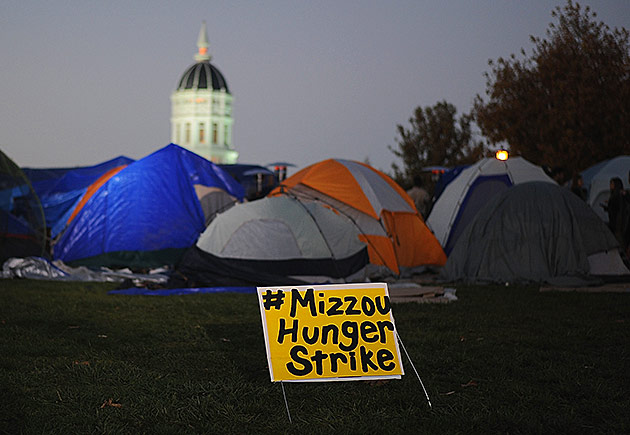
However, there are just a few encouraging signs that we might finally be approaching Peak SJW, that the sheer intolerance of academic freedom and debate shown by the Cult of Social Justice and Identity Politics is becoming untenable within an academic environment. At the University of Missouri, scene of campus protests, sit-ins and hunger strikes in sympathy with the Black Lives Matter movement, new student enrolment is significantly down and financial crisis beckons. Turns out, many parents have qualms about sending their kids off to shrill social justice indoctrination factories when they could be getting a rigorous education elsewhere.

Jonathan Haidt’s presentation distils the issue neatly, and asks a group of young school-leavers what kind of institution they think will best serve their future interests – the overbearing, 24/7 watchfulness of Coddle U or the resilience and antifragility-building environment of Strengthen U.

It is a question which needs to be put to more school leavers as they make their decisions over which universities to apply to. Though the Cult of Social Justice and Identity Politics is hard at work subverting secondary/high schools, for now it remains the case that most school leavers will not yet have been indoctrinated into the cult. There is a narrow, precious window to reach these young people to emphasise the importance of academic freedom, and Jonathan Haidt’s lecture should be required watching for all school-leavers.

In fact, combining thought-provoking talks like this with better information as to the state of academic freedom at different institutions (as with Spiked‘s Free Speech University Rankings) could help many students make better, more informed choices about which institution they choose to spend the next three or four years of their lives.

And while a pervasive hostility to conservative ideas and contempt for free speech may matter less to most students than a lively social scene and the prospect of cheap beer, those students who value academic freedom and robust debate should be given the information to vote with their feet.


Safe Space Notice - 2

Support Semi-Partisan Politics with a one-time or recurring donation:

Agree with this article? Violently disagree? Scroll down to leave a comment.

Follow Semi-Partisan Politics on TwitterFacebook and Medium.

Tales From The Safe Space, Part 40 – The University Of Chicago Fights Back

University of Missouri - Mizzou Hunger Strike

Yes, some things – like academic freedom – are more important than the delicate feelings of new undergraduate students. Kudos to the University of Chicago for making their incoming freshman class aware of that hard fact up front.

In a refreshing contrast to the usual depressing tales of faculty capitulations to the whining, self-involved voices of the Cult of Social Justice and Identity Politics, the University of Chicago decided to make a bold stand for academic freedom.

From Heat Street:

The University of Chicago, one of America’s most prestigious and selective universities, is warning incoming students starting this fall not to expect safe spaces and a trigger-free existence during their four-year journey through academia.

In a letter sent to the class of 2020, university officials said one of the defining characteristics of the school was its unwavering commitment to freedom of inquiry and expression. Civility and mutual respect are vital to the campus culture, the letter states, but not at the expense of shielding students from unpopular opinions or ideas.

“Our commitment to academic freedom means that we do not support so-called “trigger warnings,” we do not cancel invited speakers because their topics might prove controversial, and we do not condone the creation of intellectual “safe spaces” where individuals can retreat from ideas and perspectives at odds with their own,” the letter states.

Expect the University of Chicago to be rewarded for their courage and integrity through greater application and enrolment numbers, as well as higher levels of achievement from the incoming undergraduate class as those delicate snowflakes too enraptured by their own vulnerability and completely unable to process dissenting opinions decide to study at other, more large-L liberal schools.

Already we have started to see a backlash against those institutions and university leaderships which are too quick to capitulate to petulant SJW demands to alter the curriculum, suppress free speech, disinvite conservative speakers and turn the campus from being a place of fearless debate to one of infantilising self-affirmation and victimhood.

The University of Missouri, roiled by campus protests last year in which marauding Social Justice Warriors forced the resignation of the university president for failing to treat black students like helpless victims, has seen its enrolment and profitability fall off a cliff. Good. If there is any justice, enrolment at Mizzou will dwindle until there is nothing left but tumbleweeds and the shrieking activists who drove out reason from a place of learning. And closer to home, the University of Oxford’s Oriel College had to frantically appease angry alumni donors who were ready to cancel their donations to the college in protest at Oriel’s limp capitulation to the Rhodes Must Fall movement.

In this very “Tales From The Safe Space” series, we have previously highlighted other examples of academic institutions standing up to their crybully students rather than rolling over and letting them seize control – the uncompromising example set by Dr. Everett Piper, president of Oklahoma Wesleyan University, is particularly encouraging.

As Dr. Piper memorably warned his students:

If you’re more interested in playing the “hater” card than you are in confessing your own hate; if you want to arrogantly lecture, rather than humbly learn; if you don’t want to feel guilt in your soul when you are guilty of sin; if you want to be enabled rather than confronted, there are many universities across the land (in Missouri and elsewhere) that will give you exactly what you want, but Oklahoma Wesleyan isn’t one of them.

At OKWU, we teach you to be selfless rather than self-centered. We are more interested in you practicing personal forgiveness than political revenge. We want you to model interpersonal reconciliation rather than foment personal conflict. We believe the content of your character is more important than the color of your skin. We don’t believe that you have been victimized every time you feel guilty and we don’t issue “trigger warnings” before altar calls.

Oklahoma Wesleyan is not a “safe place”, but rather, a place to learn: to learn that life isn’t about you, but about others; that the bad feeling you have while listening to a sermon is called guilt; that the way to address it is to repent of everything that’s wrong with you rather than blame others for everything that’s wrong with them. This is a place where you will quickly learn that you need to grow up.

And flatly reminded them:

This is not a day care. This is a university.

A long-overdue reminder for some students.

And so the University of Chicago’s stand against the SJWs did not happen in isolation; nor was it possible without a rigorous examination of the negative trends in campus life and the various ways in which academic freedom is under attack. And that is precisely what they did – back in 2014 the university commissioned a report on the state of freedom of expression at universities nationwide and reaffirming their own commitment to the timeless value of free speech over and above any passing social fashion.

From the report (my emphasis in bold):

Because the University is committed to free and open inquiry in all matters, it guarantees all members of the University community the broadest possible latitude to speak, write, listen, challenge, and learn. Except insofar as limitations on that freedom are necessary to the functioning of the University, the University of Chicago fully respects and supports the freedom of all members of the University community “to discuss any problem that presents itself.”

Of course, the ideas of different members of the University community will often and quite naturally conflict. But it is not the proper role of the University to attempt to shield individuals from ideas and opinions they find unwelcome, disagreeable, or even deeply offensive. Although the University greatly values civility, and although all members of the University community share in the responsibility for maintaining a climate of mutual respect, concerns about civility and mutual respect can never be used as a justification for closing off discussion of ideas, however offensive or disagreeable those ideas may be to some members of our community.

[..] In a word, the University’s fundamental commitment is to the principle that debate or deliberation may not be suppressed because the ideas put forth are thought by some or even by most members of the University community to be offensive, unwise, immoral, or wrong-headed. It is for the individual members of the University community, not for the University as an institution, to make those judgments for themselves, and to act on those judgments not by seeking to suppress speech, but by openly and vigorously contesting the ideas that they oppose. Indeed, fostering the ability of members of the University community to engage in such debate and deliberation in an effective and responsible manner is an essential part of the University’s educational mission.

And it is that last part which presents such a challenge to many of today’s students – young people today are not only arriving at university unable to tolerate let alone contest ideas which they oppose, they are outraged at the very suggestion that they should learn to cope in such a way.

And not entirely through their own fault, for mine is a snowflake generation raised to believe that we are special, unique, perfect and above any reproach which might damage our self-esteem. We are taught not that sticks and stones may break our bones but words will never hurt us, but rather that sticks and stones may break our bones but words can kills us stone dead.

From early childhood education on upward we are taught that hurting someone’s feelings is just as bad – if not worse – than physically assaulting them. And all the while we are told to present our tear-stained faces to the relevant authorities the moment that somebody upsets us, so that they can receive their just punishment. We are not taught self sufficiency, resilience and the power of reason, but rather are encouraged to exalt in our weaknesses and wear our fragility like a badge of honour.

Little wonder, then, that when my generation reach university and fall under the intoxicating presence of the Cult of Social Justice and Identity Politics (student protests always appearing edgy and cool, but this incarnation representing a dangerous shift in attitude and tactics) so many of us immediately buy in to the idea that our personal worldview and beliefs are never to be questioned.

The University of Chicago alone cannot do anything about the way that people in the English-speaking Western world raise their children or educate them at a young age. They cannot challenge the toxic rise of baby-centred parenting, where parents and adults contort themselves to conform to the whims and sensitivities of their historically pampered children rather than promoting respect, deference and anti-fragility. The University of Chicago is but one academic institution facing a tidal wave of consequences from years of bad parenting, educational and child-rearing trends in society.

But what the University of Chicago can do – what they did do, admirably – is boldly restate who and what they are as an organisation, and what they stand for as an institute of higher education. They can boldly restate their commitment to the timeless values of academic freedom, and the fostering of personal and intellectual growth through robust debate and the free exchange of views. They can tell their incoming freshmen that no matter how accustomed they are to getting gold stars simply for participating, or demanding positive affirmation of even their most questionable decisions, the days of coddling will end the moment they set foot on campus.

This is what the University of Chicago did. This is what every university in America, Britain and the entire English-speaking world needs to do now if they are to avoid regressing into nothing more than adult daycare centres where the Play-Doh and puppy videos are piled high while challenging books burn in a pyre outside the library.


Safe Space Notice - 2

Top Image: Sports Illustrated, Michael B. Thomas/Getty Images

Support Semi-Partisan Politics with a one-time or recurring donation:

Agree with this article? Violently disagree? Scroll down to leave a comment.

Follow Semi-Partisan Politics on TwitterFacebook and Medium.

Banning The Burqa And Burkini Is Not The Correct Liberal Response To Conservative Islam

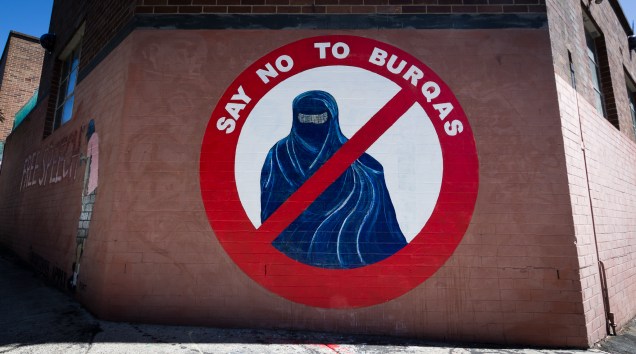
Free Speech - Say No To Burqas - Burkini - Mural

In a liberal democracy, government has no business dictating what clothing is or is not acceptable to wear – and banning the burqa or burkini only further delays the long-overdue day of reckoning between conservative Islam and modern Muslim women

France is now taking its official ban of the burqa one step further, as the mayor of Cannes announces a ban on burkini beachwear on the grounds that the concealing garment poses a security risk.

The New York Times reports:

The mayor of the French resort city of Cannes has barred women from bathing on public beaches in swimsuits that reveal too little skin.

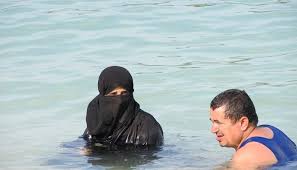
At issue are the full-body, head-covering garments worn in the water by some Muslim women, which have been nicknamed burkinis, an amalgam of burqa and bikini. The mayor’s ban has drawn protests from French Muslims who say it is discriminatory.

That the debate is occurring on the Riviera, the Mediterranean vacation area that has been on edge since the terrorist attack on a Bastille Day celebration in nearby Nice, has only added to the controversy.

Critics of the ban say it risks deepening rifts with France’s Muslims. It is the latest example of the long-running tensions between France’s forceful — some say inconsistent — commitment to secularism and the desire of many Muslims to express traditional values like modesty through their attire.

The mayor’s ordinance, which runs until Aug. 31, bars people from entering or swimming at the city’s public beaches in attire that is not “respectful of good morals and secularism” and that does not respect “rules of hygiene and security.” Offenders risk a fine of 38 euros, or about $42.

Why are burkinis against the rules? “Beach attire that ostentatiously displays a religious affiliation, while France and places of worship are the target of terrorist acts, is likely to create risks to public order,” the ordinance says.

If this were being done in a public place on the grounds of security, the mayor of Cannes would be in a much stronger position, and would gain this blog’s sympathy, particularly after the appalling terrorist truck attack in Nice on Bastille Day. There is a very logical and powerful argument to be made against the prohibition on wearing any overtly concealing clothing when entering public buildings such as town halls, courts, public schools, parks or beaches, just as motorcycle owners are asked to remove their helmets before entering a bank branch.

But the mayor of Cannes has taken this action with specific reference not to security, but in the name of  laïcité (the separation of church and state). We know this because French government officials have explicitly said so:

This costume [the burkini], Mr Lisnard [the mayor] declared, “ostentatiously displays religious affiliation”, could “disrupt public order”, and might even, in the words of one official, demonstrate “an allegiance to terrorist movements”.

Now secular government is broadly a very good thing, and societies become more free as they cast off the remaining vestiges of theocracy – one of the reasons that this blog is so keen to get rid of the Lords Spiritual and remove Britain from Iran’s company as the only countries where unelected theocrats sit in the legislature by right.

However, while citizens – even those of faith – should absolutely demand secularism from their government, it does not follow that the government can unjustly impose secularism on the people as they go about their lives. That would be a grave wrong, and the growing movement to ban the burqa represents an abuse of power by governments against their own citizens.

The Telegraph’s Juliet Samuel agrees:

Now it’s hard to muster much enthusiasm for the burkini. It harks back to an age, still dominant in much of the world, when a woman’s worth was measured by her modesty. It belongs to a belief system in which women cannot experience one of the joys of the natural world – feeling the wind and sea on her body. It suggests that the female form is shameful and provocative. But those who want to ban the burkini for these reasons are forgetting one of the most important values of a free society: we don’t all have to believe the same thing in order to live together.

Every day, thousands of Britons wake up and do things I think are crazy and wrong. They drink instant coffee, listen to Magic FM and wear Spandex. Some wear high heels or bowties. Others have plastic surgery, get tattoos, cheat on their spouses, drink too much, shout too much and vote Labour. They get their news from Facebook and watch hours of trashy TV. Many of them pray to a god, convert to Buddhism, believe in crystal healing or sing in Church on Sundays with their eyes closed and their arms in the air. I don’t do or understand any of these things. But I let them get on with it.

[..] Like a theocratic regime, the Cannes burkini ban forces some Muslim women to choose between their religious and their national identity and perniciously suggests that their choice of dress is a political statement, whether they mean it to be or not. It is unsurprising that the French should lead the way in this kind of thinking, because in France nothing is allowed until the law permits it, whereas in Britain, everything is allowed until the law forbids it. So, in the name of enforced secularism, France forbids covering the face in any public setting, whether it’s for religion or Hallowe’en, and bans religious symbols like hijabs (hair coverings) in state institutions such as schools. The burkini ban takes this illiberal trend even further by making it illegal to wear “ostentatious” religious symbols even when going about one’s own private business.

[..] A normal Muslim, who has grown up seeing a hijab as an unremarkable but important symbol of womanhood, finds herself forced to choose between respect for the law and her family’s everyday customs. Is this senseless, banal and brutal ban more likely to awaken a hidden feminist creed and a love of La République in her heart or to make her feel attacked and excluded from mainstream society?

Strong societies cannot permit parallel legal or political systems, such as Sharia courts or caliphates. But they can cope with differences in dress and customs. They should not allow obstructive religious clothing like face‑coverings to disrupt teaching or court hearings. But if a Muslim woman wants to wear a baggy wetsuit and go for a swim on a public beach, that does not make her a threat to Western society. The real enemies of freedom are not the burkini-wearers, but the politicians who want to ban them.

Amen to this. Samuel is quite right to fear the politicians over the burkini-wearers, even if we may disagree with their sartorial and religious motivations. Indeed, we should fear any further legitimisation of the idea that our rights derive from the state, who can suspend our freedoms at will in the name of “security”.

One of the most alarming things about this century has been the rejuvenation of authoritarianism, spurred on by the growing threat of Islamist terror. Whether it is manifested in airport security theatre, the banning of religious jewellery or other symbols from the workplace or the dystopian suppression of free speech in universities, public squares and social media, we have become markedly less free in sixteen years with precious little to show for it.

But more than all of that, if we are serious about tackling the skewed ideology and belief system which preaches that women must be modest to the point of having to bathe fully clothed, then a government ban is the absolute worst way to go.

Such a diktat of law effectively exonerates conservative Islam (or fundamentalists of other religions) from any responsibility to reform and recognise the equality of women, gay people and other minority groups. Ban the burqa (or burkini) and conservative Muslims may obey. But not only will they immediately be able to portray themselves as victims in the process, claiming persecution for their religious beliefs, they will be under no further internal pressure to reconsider and reform centuries-old religious diktats in the changed context of modern society.

If we want a world where the burqa is relegated to fringe extremists and museums, then the pressure must come primarily from Muslim women. Only when they demand their right to dress as they please and force the reluctant accommodation of religious authorities will they be able to win the parity of treatment which has been missing for so long.

The job of Western governments in all of this is not to interfere or seek to be a white knight, banning the burqa or burkini on the behalf of oppressed women. Government’s role is to make sure that Muslim women have full access to the legal system to sue for their equal treatment in court where it is being infringed, and to clamp down insidious efforts to set up parallel justice systems based on Sharia law or any other religious code instead of shamefully welcoming them in the name of “multiculturalism”.

We should be encouraging a more liberal form of Islam to prevail over the more oppressive and fundamentalist conservative wings. We need more Ahmadis and others like them, openly tolerant of other faiths and proudly patriotic. And when these groups of progressive Muslims are attacked we should stand shoulder to shoulder with them rather than shamefully currying favour with their persecutors in the name of “multiculturalism”.

But ultimately, this is an internal enlightenment which must take place within Islam. It is not the job of provincial mayors in France or government departments in Britain to “rescue” their female Muslim citizens from oppression; nor would any such rescue hold any legitimacy. Western society can take certain actions to encourage this revolution among its Muslim communities, but ultimately the heavy lifting must be done by Muslim women standing up to claim their own full rights as citizens.

Widespread bans on the burqa or burkini may make us feel good or even allow some of us to burnish our feminist credentials, but that is the only good that they will accomplish. And meanwhile, the long-overdue day of reckoning between modern Muslim women and the conservative wing of the Islamic faith will be deferred indefinitely, to everyone’s cost.


Burkini ban

Top Image: Impulse Today

Support Semi-Partisan Politics with a one-time or recurring donation:

Agree with this article? Violently disagree? Scroll down to leave a comment.

Follow Semi-Partisan Politics on TwitterFacebook and Medium.

Police Should Spend Less Time Persecuting Citizens For Free Speech Offences And More Time Serving Communities

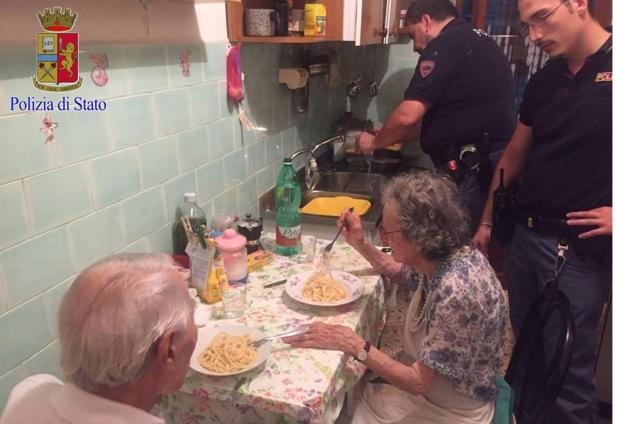
Rome Police - Old Age Loneliness - Questura di Roma

Our police forces should be knitting communities together and keeping them safe, not prancing around in military gear and threatening citizens who dare to express themselves on social media

A heartbreaking (or heartwarming, depending on your perspective) story from Rome forces us to ask stark questions of our own society, the way we treat our elderly compatriots and the proper community role of the police.

From the Evening Standard:

Kindly police officers came to the aid of an elderly Italian couple after neighbours called emergency services when they were heard crying in their apartment – because they were so lonely.

Officers rushed to the flat in the Appio area of Rome after nearby residents heard shouting and crying coming from inside, and found and 84-year-old Jole, and her 94-year-old husband Michele.

The couple said they had not been victims of crime, but were overcome by emotion after watching sad stories on the news.

The pair, who have been married for 70 years, said they had not had visitors for a long time and were very lonely.

While they waiting for an ambulance to arrive to check the couple over, the officers prepared a hot meal.

They then sat down to have a chat while the elderly couple ate the spaghetti with butter and parmesan they had prepared.

More:

The police force said on its Facebook page: “Especially when the city empties and the neighbors are away on holiday, sometimes loneliness dissolves into tears.

“It can happen, as this time, that someone screams so loud from despair that eventually, someone calls the State Police.

“There is not a crime. Jole and Michele are not victims of scams and no thief entered the house – there is no one to save.

“This time, for the boys, there is a more daunting task – two lonely souls who need reassuring.”

Meanwhile, what do our police spend their time doing?

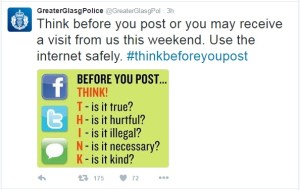
Well, no day is complete without threatening members of the public. Greater Glasgow Police in particular love to ostentatiously warn people that they are lurking on Twitter and Facebook 24/7, ready to pounce the moment anybody posts something deemed the least bit capable of causing offence.

And London’s own wonderful Metropolitan Police also love nothing more than turning up on the doorstep of people who dare to tweet the “wrong” opinions and sentiments, hauling them away to the police station and delivering them to the hands of the criminal justice system.

But never let it be said that the Met Police never leave their comfortable office desks. A new batch of them have recently acquired dystopian-looking, military grade combat uniforms and strutted their stuff before Britain’s news cameras in some kind of perverse authoritarian fashion parade. Ostensibly this new armed response unit is intended to keep us safer from Islamist terror attacks mentally ill people, though doubtless we will soon see the same militarised response to other, less violent incidents too. As is so often when it comes to the militarisation of the police, where America leads, Britain duly follows.

Counter Terrorist Armed Police - London

Meanwhile, communities go unpatrolled and some become no-go areas. Local police, either swamped with paperwork or too busy hounding innocent citizens for daring to exercise their right to free speech online, refuse to show up to cases of reported vandalism or burglary (though they mysteriously appear within minutes if a speech or thoughtcrime is reported by some beady-eyed public collaborator).

And to add insult to injury, we now live in a country where the idea of the police carting you away for something you write on Facebook seems perfectly normal, while the idea of the police coming to cook a meal for a lonely elderly couple is so rare that it makes the news headlines when it happens in another country.

Local Police and Crime Commissioners do not seem to have had much of an effect, though at this early stage it is difficult to be sure whether this is due to a lack of powers, regulatory capture by the police forces they are supposed to control or garden variety incompetence. And so here we are.

Is this the police force that we really want?

Is this the policing strategy that actually knits communities together, making them happier and safer?

Absolutely not. It would be very interesting to see a force-by-force breakdown of the number of police officers, civilian staff and other resources devoted to monitoring and curtailing the free speech rights and other civil liberties of Britons. And then immediately shutting down those statist, authoritarian programmes and diverting all of the freed resources to more worthy causes, like helping to tackle old age loneliness.

We’re not talking about police officers cooking roast dinners instead of catching criminals, but surely it should not be beyond the wit of man for police to act as an intermediary, perhaps connecting isolated elderly couples they come across in their work to suitable neighbours who could check in with them once in a while, or provide much needed regular social visits. The police already work with AgeUK to tackle scam criminals and improve home security. There is no reason why this collaboration could not be greatly extended.

At present, we have a police force of two extremes – small numbers of highly militarised officers, armed to the teeth with every counter-assault weapon one can possibly imagine, and a much larger force who seem unable to respond to garden variety crime in an acceptable way, and who are all too rarely visible on the streets.

If local, county and national government is serious about improving police-community relations, they could do far worse than by immediately ordering a halt to the nasty, frivolous and often arbitrary persecution of individuals on free speech and “hate crime” grounds and diverting those funds and resources to a much more worthy cause – helping to tackle the growing problem of old age loneliness in our society.


Postscript: You can donate to Age UK here.


Greater Glasgow Police - THINK - Social Media - Police State - Free Speech

Middle Image: BT

Support Semi-Partisan Politics with a one-time or recurring donation:

Agree with this article? Violently disagree? Scroll down to leave a comment.

Follow Semi-Partisan Politics on TwitterFacebook and Medium.