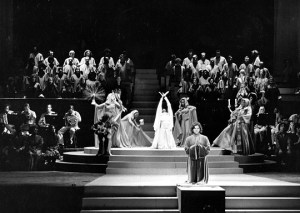
Is there a more beautiful 20th century chorale than “Almighty Father”, the hushed invocation from Leonard Bernstein’s Mass? If so, I struggle to bring one to mind.
Almighty Father, incline thine ear
Bless us, and all those who have gathered here
Thine angel send us,
who shall defend us all.
And fill with grace,
All who dwell in this place.
Amen.
Leonard Bernstein is my favourite composer. Several of his compositions make my Top 50 list – Serenade for Violin and Strings in particular, but also Chichester Psalms and Symphony no. 2, The Age of Anxiety – and while other pieces of music by other composers often get more of a hearing on my iPhone, it is my contention that these Bernstein compositions contain some of the most beautiful (and profoundly human) music ever written.
This is certainly the case with Mass. As to whether Bernstein’s dramatic staged reworking of the Latin Mass works as a cohesive whole, my answer probably varies day by day and according to my mood. Mass is certainly transcendent, flawed, beautiful, stark, cheesy, smug, original in places, derivative in others and often achingly rooted in 1970s style.
The orchestral meditations, interspersed throughout the piece, have a uniquely haunting beauty of their own – particularly the first meditation, whose desolate questioning in the ethereal violin phrase followed by the slowly-building crisis and final, soothing, repeated falling notes on the organ are about as close to a religious experience as music has yet taken me.
A rather mediocre recording of the first meditation is here:
The complete recording of a recent (2012) performance of Mass at the BBC Proms is below:
The late, great Glenn Gould dissects one of my favourite fugues from the Well-Tempered Clavier, Fugue no. 9 from Book II.
As Glenn Gould says, at the conclusion of his discussion with biographer Bruno Monsaingeon:
It’s rudimentary material, but it makes for one of the most gloriously fulfilled codas he [Bach] ever wrote, I think.
True. Unlike the brisk and rather superficial version of this fugue in Gould’s complete recording of the WTC, here he takes it at a funereal pace, allowing each voice to truly sing on its own. The slow, steady accumulative effect of Bach’s ingeniously weaved, achingly unresolved theme makes the incredible catharsis of the final coda all the greater.
The British artistic and cultural community’s almost reflexive support for the European Union and disdain for reclaiming our democracy should be a source of great shame
Like this blog, the Telegraph’s Allison Pearson is surprised that a conclave of the nation’s most successful creative types seem to prefer the dull conformity and supranational managerialism of the European Union to the democracy and freedom which could potentially flourish outside the EU.
What they really love, then, is a platonic ideal of Europe, of solidarity between friendly nations with each other’s best interests at heart. Marvellous idea, darlings, until you look at Greece. Punished, fearful and running out of medicine, the Greek people had to be sacrificed for the greater European ideal. Orwell was right. All animals are equal, but some animals are more equal than others.
Why do all these senior cultural figures support the rotten EU status quo when they should be leading the revolt against it? Munira Munzi, who was in charge of cultural policy in London under Boris Johnson, claims that many arts people agree with Brexit, but “they are worried about their careers and what people might think of them. They assume that everyone who wants to leave the EU must be anti-immigration”.
Still, not all creative types are too mushily politically correct to understand what’s at stake on June 23. Take the actor who said: “There’s so much in the 21st century that’s stymied by bureaucracy and mediocrity and committee.” His name was Benedict Cumberbatch.
The “platonic ideal of Europe” – that’s exactly it. Not the reality.
There are two factors at work here. First is the immense groupthink and social pressure within the cultural elite to hold right-on, progressive political opinions, and the potential ostracisation (or worse) which could befall particularly young artists and actors trying to make professional connections, build a network and establish their careers if they associate themselves with a movement lazily assumed to be all about xenophobia and nationalism.
Many of the key people and institutions are rabidly pro-EU beyond all reason. Classical Music magazine spent most of Friday pumping out endless “Save the EU Youth Orchestra” propaganda on Twitter, regardless of the sentiments of their readers about the coming referendum, and utterly oblivious to the fact that moments like these are precisely why the EU funds orchestras and the like in the first place – so that they have a guaranteed praise chorus ready to spring into action as soon as the hand which feeds finds itself threatened, in this case by Brexit.
(The EUYO is under threat because of a recent withdrawal of funding from Brussels, and not specifically because of Brexit).
Say you are a young orchestral musician and a supporter of democracy. Knowing that a majority of your colleagues, the trade publications and the key influencers with the ability to help your career are all passionate defenders of the EU, are you more likely to say “the hell with it!” and publicly campaign for Brexit anyway, or quietly swallow your political feelings and go with the crowd? And who could blame such a person from choosing the latter, quieter path?
The second factor leading to the infamous Britain Stronger in Europe letter is good old fashioned woolly thinking – the idea that the warm, platonic ideal of Europe in the minds of the EU’s supporters in any way actually resembles the snarling, antidemocratic beast which exists in reality.
This referendum is serious business. So can Remainers please stop projecting whatever they desperately wish the EU to be onto an organisation which has never really been about friendly trade and cooperation, but is actually all about slowly and inexorably becoming a supranational government of Europe. And which is not going to abandon that long-held goal just because the British are now expressing a few doubts.
Right now, too many of our cultural leaders and elites are letting short term financial greed and/or wishful thinking about the EU’s true nature get in the way of their responsibility to think and act as engaged citizens.
Sure, if one buries one’s head in the sand and ignores the stated intentions of the EU’s founding fathers, the trajectory of integration since the 1957 and the imperative for further integration if the euro is to survive, one might successfully convince oneself that the EU is just a harmless gathering of countries who come together to trade, tell jokes, save the Earth and advance human rights. It takes near Olympian levels of denialism or apathy to maintain this self delusion, but clearly a great number of our most prominent actors, directors, producers and musicians are willing to do what it takes.
Pretending that the EU is a benign club with no pretensions or aspirations to statehood is ridiculous, and increasingly untenable. But even more unforgivable than that is being willing to overlook this reality in the grubby pursuit of grants and funding from EU bodies, or out of a desperate desire to appear forward-thinking and progressive.
And the unedifying sight of so many “household name” artists lining up to sing the praises of an explicitly political construct which falsely attempts to take credit for the cultural achievements of an entire continent is, frankly, sickening.
Though repression can occasionally produce its own kind of tortured beauty (see Shostakovich), generally speaking the extent to which an artist is not free and is required to make their work conform to certain external directives, requirements or purposes is the same extent to which their output falls short of greatness.
Real artists care about freedom, and cannot function without it. Unlike Benedict Cumberbatch and Sir Patrick Stewart, they don’t actively collude in suppressing freedom in order to protect the integrity of their EU begging bowl.
–
Support Semi-Partisan Politics with a one-time or recurring donation:
–
Agree with this article? Violently disagree? Scroll down to leave a comment.
I’m currently back in the United States to celebrate Christmas with family in Texas. These short “Postcards from America” will document a few of my thoughts as I escape the political whirlwind of Westminster and look back at Britain from the vantage point of our closest ally
–
A musical contrast between Britain and America
I have been trying to find a way to describe the feeling I always get when I arrive back in the United States of America, a land I consider to be my spiritual home even though I am not yet a citizen (though married to one).
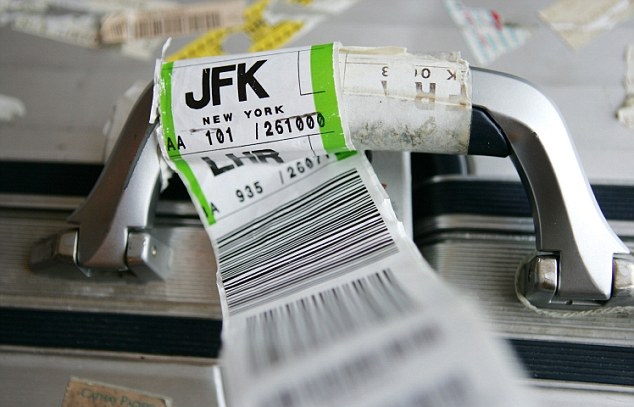
It is very difficult to put into words the emotion that wells up even before exiting the airport, whether it be New York JFK, Chicago, Cleveland, Dallas, Houston, Miami, Seattle or any of the other gateways I have used on my well over fifty arrivals here. The feeling of having arrived in a land of promise and possibility, an electricity in the air and a repose for the spirit which I feel even while waiting to collect the suitcases from the carousel.
But when words fail, music sometimes speaks. And the best way I can find to describe the difference experienced when travelling from the United Kingdom to the United States is with this musical analogy.
Two performances of the same piece of music, recorded by two legendary artists. Prelude no. 3 in C Sharp Major, BWV 872 fromThe Well-Tempered Clavier by Johann Sebastian Bach, performed first by Sviatoslav Richter and then by Glenn Gould, my favourite pianist.
Imagine that this first recording represents life in Britain:
This is the Richter version of the Bach prelude. Languid and undeniably beautiful, yes, with the edges softened by extensive use of the pedal. You can almost sense the nearly three centuries spanning the prelude’s composition and the present day in this warm but muffled recording.
Now imagine moving from this setting to the utterly different world of the Glenn Gould version, representing America:
The two recordings could hardly be more different.
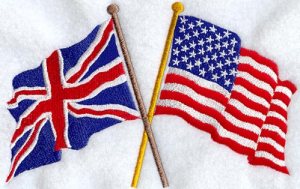
The musical notes are the same, just as Britain and America share a common language and very similar cultures by virtue of our shared history. But the two interpretations are worlds apart, just as everything from local culture to local government is different on either side of the Atlantic.
Nobody had ever played the music this way until Glenn Gould came along. Prior to Gould, playing Bach on the piano was a dry and dusty affair, characterised by performances and recordings which shrouded the intellectual beauty and emotional resonance with thick layers of stultifying sameness. And then Glenn Gould turned things upside down and showed that Bach’s keyboard music did not have to be a revered but inherently boring exercise; that by engaging with the music with a creative mind, it was possible to bring dead music to life.
The Gould version is bright and clear. The first half of the prelude is strutting and unselfconscious, while the second part takes off like a rocket – joyful, vibrant and carefree. The individual lines of both the prelude and fugue are more clearly articulated and easier to distinguish, while still contributing to a powerful and musically convincing whole. E pluribus unum. That’s America, right there in this recording.
To my mind, this is the experience of moving from Britain to the United States. From an ancient land of history and heritage – the mother country – to the bright promise of the newer, bold and assertive superpower. The place where even in these difficult times, all things still seem possible.
A land where the sun shines infinitesimally brighter (my first action on arriving in Louisiana was to purchase new sunglasses. In December.) A land where the sky literally seems bigger, and the horizon wider. A land where the flavours are bolder, the entertainment glitzier, the music more vibrant and the people unfailingly friendly.
A country whose best features and deepest flaws are both so much more exaggerated than is the case in Britain – whether it be the remarkable philanthropic and community spirit on one hand, or the endemic tragedy of gun violence on the other.
But more than that, a country which still feels consequential in terms of shaping human events. A country whose politics and politicians – however glib and anti-intellectual they can sometimes be – still possess the aspiration and self-confidence to deal with weighty matters, to forge ahead in search of the best pathway to freedom and prosperity. And whose people still believe in their country as a force for good in the world, when they stay true to their values.
You can see the difference by comparing the raucous presidential primary debates currently underway here in America with the spirit-crushingtelevised encounters in Britain ahead of the May general election. In America, issues like healthcare, immigration, government surveillance and foreign intervention are debated fiercely in public – with both sides making reference to that most wonderful of things, a written constitution which makes the people sovereign and grants government strictly limited powers, rather than the other way around.
On existential matters like Britain’s place in the world, the best way to promote economic growth or to ensure future national security, the British political debate during the election campaign could not have cared less – and there was virtually no difference in the statist paternalism of the two main parties, other than in rhetoric. No political party had the courage to suggest that our outdated, 1940s model of state healthcare delivery might need serious reimagining in the twenty-first century, and only a handful of us cared enough to call them out for their craven refusal to acknowledge this difficult truth, and many others besides.
Fewer than four million of us believed strongly enough in the principle of national democracy and sovereignty that we cast a vote for the one party which explicitly objected to the gradual absorption of Britain into the supranational state known as the European Union.
And through it all, this blog has felt like something of a voice in the wilderness, with no politician or party to champion the causes of personal liberty, free markets and national sovereignty upon which everything else rests – but which too many other people seem happy to forsake in exchange for a chimerical, temporary measure of security and prosperity.
Here in the United States, for the precious couple of weeks until we go home, I don’t have to think about any of that. Of course America has issues of its own – big, intractable problems and burning injustices which befit a country of her size and consequence to address and overcome. But at least Americans still (just about) know who they are. At least they have not yet fractured into a messy coalition of competing special interest groups, to the extent which Britain has now splintered.
Patriotism and love of country still mean something in America. Yes, sometimes the sentiment expresses itself badly, through an ignorance of the rest of the world and the lazy assumption that America is always the best at any given thing. But perhaps unnoticed by many in Britain, there is also here an abundance of that quiet patriotism – the celebration of Independence Day and Thanksgiving, the flags flown in school classrooms without the ludicrous fear that it might “offend” someone of minority ethnic heritage, or the way that veterans are honoured and soldiers in uniform routinely invited to fill empty first class seats on airplanes – symbols and gestures which are the bedrock of a strong and cohesive society.
Of course debates rage fiercely in America – over Donald Trump, Hillary Clinton, the Koch brothers, the Tea Party, the Iraq war, the ISIS threat, birtherism, abortion, LGBT rights, church and state, the mainstream media and much more. The many are not always one. But when it really counts, they are one people. They bleed red, white and blue together.
America the beautiful: this is where I come to recharge my spiritual batteries. And as I prepare to throw myself into the battle for Brexit – defending the country of my birth and the concept of the nation state itself from an insidious form of supranational governance whose advocates have repeatedly failed to explain how democracy will be preserved in their brave new world – I will need all the power I can muster.
God bless Texas.
God bless America.
God save the Queen.
–
Agree with this article? Violently disagree? Scroll down to leave a comment.









 Semi-Partisan Politics