Conservatism, Behind Enemy Lines

Rod Dreher reports on a fascinating (and depressing) exchange posted on the wall of Princeton professor Robert P. George, between Professor George and a closeted conservative colleague.

The recounted exchange is worth posting in full:

Closeted conservative colleague: “I don’t feel I can say what I think, at least not at this stage. I have a family to care for and other responsibilities, you know.”

Me: “Sure. I’m not criticizing you.”

CCC: “I’ve seen people’s careers ruined for saying what they think.”

Me: “I have, too. I’m really not criticizing you. I assume you’re following your conscience.”

CCC: “You say what you think and you’ve survived. But your the exception.”

Me: “I’ve been very fortunate. That’s true. But there are plenty of others. I’m not unique. There’s Harvey Mansfield, Hadley Arkes, Mary Ann Glendon, Jim Ceaser, and others. Even some people they’ve tried hard to destroy have survived. Mark Regnerus at the University of Texas, Austin,” for example. They threw everything they could find at him, every calumny imaginable. They tried to get him formally investigated and fired. But he has beaten them. I predict he’ll be promoted to full professor this year.”

CCC: “Yes, but there have been lots of victims, too.”

Me: “Yes. Alas. Lots of victims.”

CCC: “You think I should say what I think.”

Me: “I think you should follow your conscience.”

CCC: “That’s just your way of saying I should say what I think.”

Me:; “Look, as I said, I’m not criticizing you. Only you can discern the demands of your own conscience. I didn’t even bring this whole subject up, you did.”

CCC: “I know what you tell your graduate students to do. You tell them not to hide their politically incorrect views.”

Me: “Well, yes, I hardly hide my advice to them. They initially find it counterintuitive. Their natural instinct is to hide their dissenting beliefs or downplay them. I think that’s risky from a character point of view and also not the best strategy for success.”

CCC: “You ARE judging those of us who keep our opinions to ourselves, then.”

Me: “For heaven’s sake, I’m just saying that there is a certain moral hazard in not speaking your mind. As scholars, we’ve got a special obligation to truth and a vocation to truth-telling. Of course, everybody has a basic obligation to honor the truth, as best they grasp it, but our obligation is even more central to who we are. So, speaking for myself, I don’t see what the point of being a scholar is if we’re not willing to speak the truth as best we understand it. I mean, there are lots of other fields we could go into. We could be lawyers, or doctors, operate hedge funds. There’s the insurance business. Wendy’s franchises. Anyway, again speaking for myself, if I felt I couldn’t speak the truth out loud, I would abandon academic life and go do something else.”

CCC: “You’re not afraid to say what you think because you’ve been able to get away with it without your academic career being ruined.”

Me: “That’s exactly backwards. I’ve been able to get away with it because I’m not afraid to say what I think. Fear empowers the bullies. They’re far less bold and aggressive when they know you’re not afraid of them.”

CCC: “Well, I am afraid of them.”

What emotion do you suppose is primarily motivating CCC? I think that the answer is quite clear: terror. Sheer, unbridled terror at the thought of being purged not only from one’s current job but from one’s profession field altogether if one so much as questions the progressive, social justice/identity politics dogma which has descended on academia like a suffocating blanket.

Where else in history have we seen such terror, such fear of having one’s heretical personal beliefs exposed and punished by the state or the mob? It’s hard not to give way to hyperbole, but this is literally the stuff of Orwell’s 1984, or (back in the real world) Soviet Russia during the purges.

And for what? To bring about forced adherence to the new orthodoxy on gender identity, racial politics, climate change, immigration and any other left wing cause du jour. Left-wing academics and students have abandoned any glancing interest in persuasion as a tool, and have jumped straight to brutal enforcement. Some academic fields will take longer than others to fall under the jackboots of this new authoritarianism – the STEM subjects are still relatively free, the humanities dangle over the precipice while the social sciences have long since fallen – but all are heading in the same direction.

And this is why Robert P. George’s own stance matters, and is correct. Just as there can be no equitable accommodation with people who want to establish a fundamentalist Islamist caliphate across the West, neither can conservative academics and other defenders of free speech split the difference with the authoritarian, petty tyrants who are busy consolidating their control over the university campus. One either has academic freedom and the right to free speech, or one does not. There is either censorship and an ideological test for working in certain professions, or there is not.

The time for keeping one’s head down and trying to avoid trouble is over. Those of us who believe in free speech and unrestricted academic enquiry have an obligation to speak out in defence of those being persecuted or intimidated for their beliefs, today and in the future, whether we agree with the particular speech in question or not.

They can’t arrest us all and they can’t fire everyone simultaneously. Conservatism needs to make a stand, to boldly assert that it will not be intimidated and purged from academia without a fight, or without exposing the progressive, social justice cultists as the modern day tyrants that they are.


academia-learning-conservatism

Support Semi-Partisan Politics with a one-time or recurring donation:

Agree with this article? Violently disagree? Scroll down to leave a comment.

Follow Semi-Partisan Politics on TwitterFacebook and Medium.

Inclusive Language Week – This Is How Western Civilisation Commits Suicide

https://www.youtube.com/watch?v=KbTt8Xcia6I

Ball pits, puppy dog videos and safe spaces – the seeds of Western civilisational decline are being sown on the university campus

Heat Street reports on the slow-motion suicide of Western civilisation:

During its “inclusive language” campaign, California State University-Northridge students lounged in a bouncy-ball pit and held forth about words that hurt their feelings in a so-called “vent tent,” Heat Street has learned after exclusively reviewing documents and video footage.

CSU-Northridge’s event stretched on for an entire week, teaching students about “potentially hurtful phrases” and cautioning that “using non-inclusive language can have a negative affect on others.”

The University Student Union, a student-led nonprofit campus organization, spent more than $1,000 in student fees on the event, according to invoices. Urging students to avoid hurtful language, USU came up with a list of offensive words — and then printed them in huge, all-caps text, hanging the poster on campus regardless of their supposedly triggering potential.

[..] USU also created a spinning wheel of the phrases it deemed offensive, hiring a videographer and prompting students to describe why a word or term could cause emotional harm and what language they’d use instead.

Most students acquiesced. Some suggested that specific words be banned outright.

The article doesn’t quite do it justice. Apparently California State University-Northridge also laid on a ball pit for their infantilised students to sit in and carp on endlessly about their feewings.

Katherine Timpf, who does an excellent job covering the social justice beat for the National Review, reports:

Students at the California State University–Northridge sat around in a big ball pit (which they a called a “vent tent”) and talked about hurtful words and their feelings as part of a school-sponsored inclusive language campaign.

According to video and documents obtained by Heat Street, the campaign lasted for a week, was put on by the University Student Union (USU), and cost more than $1,000 in student fees. It’s not clear exactly how much of that money was spent on the ball pit rental, or if there is any research supporting the idea that sitting in a ball pit while having a discussion provides any educational and/or therapeutic benefits.

Maybe Glenn Reynolds was right the first time – if these infantilised people are so desperate to be treated like children, maybe we really do need to look at temporarily removing the franchise from them by raising the voting age.

It is obscene as it is absurd that the current generation of students in the English-speaking West, living in the most prosperous and technologically advanced age in history and enjoying tools and luxuries undreamed of by their grandparents, have nonetheless been raised to be so self-involved and determined to wallow in their own confected fragility. What are we doing?

This is the way the world ends
Not with a bang but a whimper.


Safe Space Notice - 2

Support Semi-Partisan Politics with a one-time or recurring donation:

Agree with this article? Violently disagree? Scroll down to leave a comment.

Follow Semi-Partisan Politics on TwitterFacebook and Medium.

Lionel Shriver Makes A Bold Defence of Cultural Appropriation

lionel-shriver-brisbane-writers-festival

The purpose of literature and fiction writing is not to serve the grand design of the social justice and identity politics movement – and Lionel Shriver should be commended for standing up for artistic freedom against the new age censors

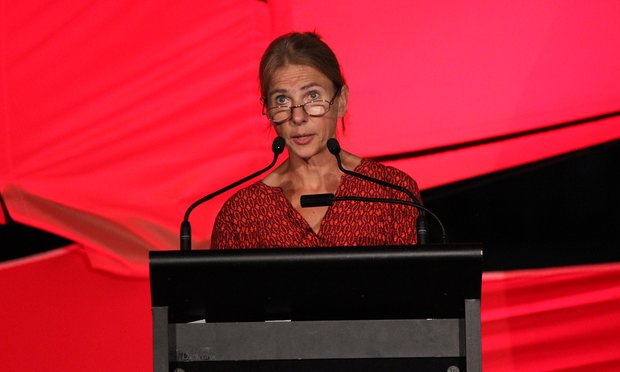
At a recent speech given at the Brisbane Writers Festival, the author Lionel Shriver makes a passionate and compelling defence of the concept of “cultural appropriation”, standing up to the rabid social justice warriors who would seek to impose a new cultural apartheid and the return of “separate but equal” division between races, cultures, genders and social groups.

From Shriver’s speech, which begins by making reference to college campus scandals over the supposed “cultural appropriation” and “harm” caused by non-Mexican students wearing sombrero hats at tequila parties or Mexican-themed restaurants:

But what does this have to do with writing fiction? The moral of the sombrero scandals is clear: you’re not supposed to try on other people’s hats. Yet that’s what we’re paid to do, isn’t it? Step into other people’s shoes, and try on their hats.

In the latest ethos, which has spun well beyond college campuses in short order, any tradition, any experience, any costume, any way of doing and saying things, that is associated with a minority or disadvantaged group is ring-fenced: look-but-don’t-touch. Those who embrace a vast range of “identities” – ethnicities, nationalities, races, sexual and gender categories, classes of economic under-privilege and disability – are now encouraged to be possessive of their experience and to regard other peoples’ attempts to participate in their lives and traditions, either actively or imaginatively, as a form of theft.

Shriver’s barnstorming speech goes on to list many great works of literature which would be greatly diminished or simply not exist at all were their authors (like many writers today) bullied and pressured to avoid writing about cultural experiences and customs other than their own.

Yet were their authors honouring the new rules against helping yourself to what doesn’t belong to you, we would not have Malcolm Lowry’s Under the Volcano. We wouldn’t have most of Graham Greene’s novels, many of which are set in what for the author were foreign countries, and which therefore have Real Foreigners in them, who speak and act like foreigners, too.

In his masterwork English Passengers, Matthew Kneale would have restrained himself from including chapters written in an Aboriginal’s voice – though these are some of the richest, most compelling passages in that novel. If Dalton Trumbo had been scared off of describing being trapped in a body with no arms, legs, or face because he was not personally disabled – because he had not been through a World War I maiming himself and therefore had no right to “appropriate” the isolation of a paraplegic – we wouldn’t have the haunting 1938 classic, Johnny Got His Gun.

We wouldn’t have Maria McCann’s erotic masterpiece, As Meat Loves Salt – in which a straight woman writes about gay men in the English Civil War. Though the book is nonfiction, it’s worth noting that we also wouldn’t have 1961’s Black Like Me, for which John Howard Griffin committed the now unpardonable sin of “blackface.” Having his skin darkened – Michael Jackson in reverse – Griffin found out what it was like to live as a black man in the segregated American South. He’d be excoriated today, yet that book made a powerful social impact at the time.

(Shriver’s speech was too much for one delicate snowflake. Australian activist Yassmin Abdel-Magied, whose sheltered mind was unable to tolerate hearing of a worldview which didn’t put her own identity on a pedestal, decided to walk out during the speech and then pen a tear-stained, self-involved piece about her feewings for the Guardian, aggrandising her supposed victimhood).

But what exactly is Lionel Shriver’s beef with the modern idea that cultural appropriation is heresy? It seems that what angers her – quite rightly – is the idea that any group, marginalised or not, can be the sole custodians of their traditions, granting or withholding license to “borrow” from their culture like a movie studio scouring YouTube for pirated videos.

According to Shriver, nobody, least of all an artist, should have to approach anyone for “permission” to write from a certain perspective, include a certain character or touch on any cultural tradition:

The author of Who Owns Culture? Appropriation and Authenticity in American Law, Susan Scafidi, a law professor at Fordham University who for the record is white, defines cultural appropriation as “taking intellectual property, traditional knowledge, cultural expressions, or artifacts from someone else’s culture without permission. This can include unauthorised use of another culture’s dance, dress, music, language, folklore, cuisine, traditional medicine, religious symbols, etc.”

What strikes me about that definition is that “without permission” bit. However are we fiction writers to seek “permission” to use a character from another race or culture, or to employ the vernacular of a group to which we don’t belong? Do we set up a stand on the corner and approach passers-by with a clipboard, getting signatures that grant limited rights to employ an Indonesian character in Chapter Twelve, the way political volunteers get a candidate on the ballot?

While Shriver justifiably bristles at the consequences of weaponised identity politics, she does not use her speech to dwell on the reasons for the rise of this hyper self-conscious, self-censoring phenomenon. Fellow author Ian McEwan, on the other hand, is more than happy to point out the root causes of the identity politics resurgence, recently commenting in an interview:

“These children have grown up in an era of peace and plenty, and nothing much to worry about, so into that space comes this sort of resurgence that the campus politics is all about you, not about income inequality, nuclear weapons, climate change, all the other things you think students might address, the fate of your fellow humans, migrants drowning at sea. All of those things that might concern the young are lost to a wish for authority to bless them [..] rather than to challenge authority.”

To which this blog responded:

Doesn’t that just perfectly sum up the Cult of Social Justice and Identity Politics? A generation of students raised at a time of great material abundance, peace and prosperity arrive at university to find most of the great injustices of the past already slain by previous generations of campaigners. Bereft of purpose but still feeling the strong student urge to embrace a cause, they crank up their sensitivity settings to perceive any slight or inequity, however small or unintentional, to be evidence of the systematic oppression of one or more classes of prescribed victim groups.

McEwan’s last sentence is particularly profound – the idea that today’s young people no longer rail against authority in the way that student activists of old did, but rather make tear-stained appeals to authority figures to intercede on their behalf. This is the victimhood culture, clearly distinct from an honour culture (which would encourage the individual to stand up to minor sleights or “microaggressions” and confront the issue themselves) or a dignity culture (which would only sanction involving authorities in case of grave injury).

Later in her speech, Shriver hits out at the fad of shoehorning various “oppressed group” minorities into television shows in the name of making up some social justice quota, and the growing demand by some critics for the same affirmative action to take place in literature:

My most recent novel The Mandibles was taken to task by one reviewer for addressing an America that is “straight and white”. It happens that this is a multigenerational family saga – about a white family. I wasn’t instinctively inclined to insert a transvestite or bisexual, with issues that might distract from my central subject matter of apocalyptic economics. Yet the implication of this criticism is that we novelists need to plug in representatives of a variety of groups in our cast of characters, as if filling out the entering class of freshmen at a university with strict diversity requirements.

You do indeed see just this brand of tokenism in television. There was a point in the latter 1990s at which suddenly every sitcom and drama in sight had to have a gay or lesbian character or couple. That was good news as a voucher of the success of the gay rights movement, but it still grew a bit tiresome: look at us, our show is so hip, one of the characters is homosexual!

We’re now going through the same fashionable exercise in relation to the transgender characters in series like Transparent and Orange is the New Black.

Fine. But I still would like to reserve the right as a novelist to use only the characters that pertain to my story.

Besides: which is it to be? We have to tend our own gardens, and only write about ourselves or people just like us because we mustn’t pilfer others’ experience, or we have to people our cast like an I’d like to teach the world to sing Coca-Cola advert?

That last question is a good one – how on earth is a fiction author or television screenplay writer possibly to satisfy the competing demands to include more characters from diverse backgrounds yet avoid the unpardonable sin of presuming to write from their vantage point?

No doubt the social justice warriors would decree that fiction writing, so long a solitary pursuit, must now always be a collaborative effort, with a team of character writers standing by to offer their perspectives on a character’s true “voice” and authenticity. Or perhaps the process could be accomplished at the end of writing, by submitting draft novels to an Office of Social Justice Censorship where beady-eyed zealots who claim to speak on behalf of their entire social group go through the manuscript with a red pen, changing the author’s words and ideas to conform to some standard set in secret, behind closed doors.

You can see where the inexorable logic of these shrill demands ultimately leads: nowhere good. We either end up in a world where brilliant authors are too terrified of potential repercussions to ever pick up a pen in the first place, or one ends up with Soviet-style official “approved” art and literature, written to precise specifications in order to best glorify the Cult of Social Justice and Identity Politics.

As Shriver puts it:

Thus in the world of identity politics, fiction writers better be careful. If we do choose to import representatives of protected groups, special rules apply. If a character happens to be black, they have to be treated with kid gloves, and never be placed in scenes that, taken out of context, might seem disrespectful. But that’s no way to write. The burden is too great, the self-examination paralysing. The natural result of that kind of criticism in the Post is that next time I don’t use any black characters, lest they do or say anything that is short of perfectly admirable and lovely.

[..] Especially for writers from traditionally privileged demographics, the message seems to be that it’s a whole lot safer just to make all your characters from that same demographic, so you can be as hard on them as you care to be, and do with them what you like. Availing yourself of a diverse cast, you are not free; you have inadvertently invited a host of regulations upon your head, as if just having joined the EU. Use different races, ethnicities, and minority gender identities, and you are being watched.

Extra marks for the snide attack on the European Union – brilliant stuff.

As this blog has explained time and again, above all else social justice is not about fairness and equality but rather about power – specifically, the acquisition of power by the beady-eyed authoritarians who wield their weaponised victimhood and competitive tolerance as cudgels, granting them the power to determine what the rest of us can and cannot do or say. Television has already on the verge of falling to this long-running cultural siege, and the clear message coming from “progressive” reviewers in the literary community is that fiction is next.

Lionel Shriver has issued a timely warning to her fellow authors – let us hope that there is sufficient time and willpower to resist the final assault when it comes.


Lionel Shriver: how not to read - Do Something magazine

Safe Space Notice - 2

Top Image: Guardian, Daniel Seed

Support Semi-Partisan Politics with a one-time or recurring donation:

Agree with this article? Violently disagree? Scroll down to leave a comment.

Follow Semi-Partisan Politics on TwitterFacebook and Medium.

Social Justice Is About Power And Control, But Not For The Benefit Of The Powerless

SJW white people dreadlocks social media

What happens when a white Social Justice Warrior encounters a mixed race person who fails to hold the “correct” opinions about cultural appropriation?

If you still need convincing that the “social justice” movement is in fact nothing to do with justice or equality and everything to do with wielding power over other people to control what they think, say and do, then let this picture be your guide.

Here we have a comment posted by a young Social Justice Warrior – an online activist who spends their time trying to police the public discourse and censor others – on the tumblr social network, in which the user Party Island (pronouns: they/them) confesses a dilemma.

You see, Party Island is very much against the phenomenon known as “cultural appropriation”, that timeless phenomenon where cultures, customs and fashions spread across different national or ethnic groups. While some Bad People might think that cultural appropriation is a good thing, responsible for everything from the pop music we hear to the fusion cuisines we eat, in fact cultural appropriation is a terrible tool of oppression in which arrogant white people claim credit for the cultural innovations of other marginalised groups, either for personal or commercial gain. Or so say the SJWs.

And Party Island was posting on the evils of white people wearing their hair in dreadlocks (a particularly contentious issue in the SJW community) when one of his mixed-race friends dared to utter the now-blasphemous assertion that people of any race or background should be able to wear their hair any way they damn well please, and that Party Island was massively overreacting.

As the complaint reads:

I’m at a loss. I posted about white people & black hair on Facebook and my old roommate, who is mixed race but white passing, is telling ME I’m overreacting and that “people should wear their hair how they want.” I don’t know how to approach this. I don’t want to talk over her because even if she’s white passing, she holds more authority over me in race related issues. I don’t know what to do.

The friend’s statement that “people should wear their hair how they want” is shocking to the ears of Party Island, who is used to playing the role of white saviour to the “oppressed” black masses by being a jumped-up, self-righteous little internet censor, persecuting anyone who fails to use the latest up-to-the-minute politically correct terminology and customs.

Now Party Island has been told to lay off, not by a fellow white person – their peer at the bottom of the inverted hierarchy of privilege – but by someone who is mixed race, and therefore occupying a more senior position in the pyramid. In Social Justice World, you see, power and legitimacy to speak on any issue derives from one’s place in the pyramid. On feminist issues, for example, being a woman (or any guy with a penis who decides to identify as a woman) gives one a certain right to speak about feminist issues, but being a black, disabled woman means you occupy an even higher position in the inverted pyramid and that your words, therefore, count for much more.

If a white person had told Party Island that they were overreacting by getting upset at other white people who “appropriate black culture” by wearing their hair in dreadlocks, Party Island could demand that they “check their privilege”, insist that they were being oppressive and send them off to educate themselves on issues of racial justice and cultural appropriation. But the friend is not white, they are mixed race. And this presents Party Island with a dilemma.

On the one hand, there is the strong instinct to “punish” the friend’s blasphemous statement that white people should be allowed to wear dreadlocks, because this is how these parasitical people gain power and influence over our discourse, culture and society in the first place – by meting out public shamings and other punishments to heretics in order to advance their own ideology. But on the other hand, Party Island knows that as a white person in the presence of a mixed race person (though “white passing”, they tell us, as mitigating evidence) their duty is to bow obsequiously and defer to whatever the mixed race person happens to say on the subject of race.

This creates an unresolvable logical error in the SJW brain of Party Island. They want to be a good foot soldier in the Social Justice Army and “re-educate” this blasphemer, but the blasphemer is of superior rank in the social justice hierarchy. It’s a bit like a zealous, well-trained infantry private discovering his captain breaking the army code of conduct. The desire to call out the crime and administer “punishment” is overwhelming, but the captain’s rank causes hesitancy and a failure of courage.

So what does Party Island do? Unable to confront their mixed race friend directly about their Evil Thoughtcrime and insufficient anger at the cultural appropriation of dreadlocks, this SJW flags his problem to the wider community in the hope that it will be seen by other properly-educated SJWs who occupy equal or greater rank in the hierarchy of victimhood, and who therefore have the power and legitimacy to correct this erroneous mixed race person. Ideally, in this warped world, a “black passing” black person who is also a transexual, disabled rape survivor will come passing by, notice the exchange and unload on Party Island’s poor mixed race friend with the full weight of their exalted position in the pyramid.

If all of this seems ludicrous and a million miles away from doing anything which might conceivably affect or help actual black people in America, you would be right. Because at its dark, festering core the Social Justice movement is not about delivering justice, equality or doing any other kind of social good. Social wrongs are merely the fuel which power the machine to perform its true purpose – controlling the language and the thinking of society in order to establish beady-eyed little zealots like Party Island as the indispensable clerisy who tell everyone else what to say and do.

Social Justice is, above everything else, about the acquisition and exercising of power. Victimhood is actively sought and eagerly weaponised by members of this Social Justice clerisy in their scramble for status amongst their peers and contemporaries. The legitimate problems and grievances of minority communities become irritating background noise, a distraction from what really matters – this finickity, juvenile, university campus parlour game in which casting oneself as the most vulnerable, oppressed but simultaneously tolerant person imaginable confers tremendous power, while the slightest slip (such as accidentally using the wrong word) can lead to immediate excommunication from the group.

That’s what is going on here.

That’s what “social justice” is really all about.


Bonita Tindle - Assault White Student for Cultural Appropriation - Identity Politics

Support Semi-Partisan Politics with a one-time or recurring donation:

Agree with this article? Violently disagree? Scroll down to leave a comment.

Follow Semi-Partisan Politics on TwitterFacebook and Medium.

Brexit Will Not Cure The Cancer Of Authoritarianism In Our Society

Terence Nathan - UKIP - Facebook

Death to Remainers!

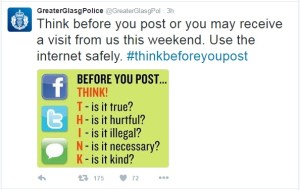
Imagine for a second just how much safer our communities might be if local police forces spent half as much time patrolling the streets and engaged in community outreach as they do scouring Twitter for “offensive” speech.

Imagine just how much more responsive and well resourced our public services might be if local councils took complaints about potholes and vandalism nearly as seriously as they seek to persecute idiots for airing their half-baked opinions online.

Well, you can snap out of that reverie:

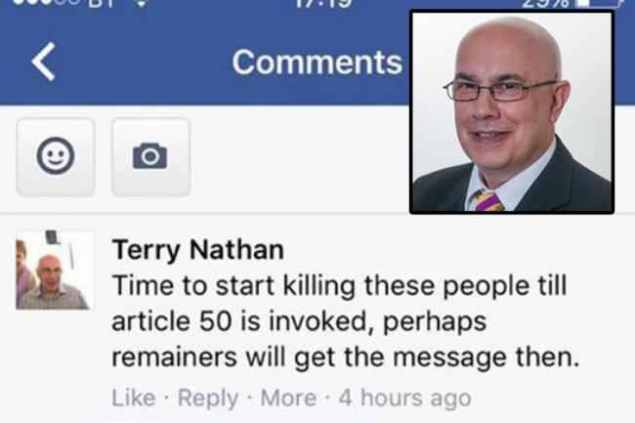
An investigation has been launched after a Ukip councillor made comments on Facebook suggesting those who voted Remain in the EU referendum should be killed.

The comments appeared on Terence Nathan’s Facebook page, councillor for Cray Valley West in Bromley, on Tuesday night.

The post, written in response to a news article referring to legal efforts against the Brexit vote, mentions Article 50 of the Lisbon Treaty, which when triggered would initiate the UK’s departure from the EU.

Mr Nathan wrote: “Time to start killing these people till article 50 is invoked”, adding “perhaps remainers will get the message then.”

After another Facebook user raised concern over Mr Nathan’s rhetoric, he replied in a second comment: “Not threatening anyone, no need for threats just a bullet.”

Mr Nathan has since apologised for the comments saying: “My comments were only intended to be taken with a pinch of salt.”

The Independent article concludes ominously:

Police and council officials have said they are looking into the remarks.

A Bromley Council spokesman said: “The Council has launched an investigation into the alleged comments made but it would not be appropriate to comment further at this stage.”

Bromley Metropolitan Police Service said: “Police in Bromley are aware of comments apparently posted online by a Bromley Councillor. Enquiries into this matter are ongoing.”

Is it not enough for Mr. Nathan to have made a complete fool of himself for all the world to see, and torpedoed whatever hopes he may have entertained promotion within UKIP or higher political office? Is it not enough that society’s natural self-righting mechanisms saw the man challenged and upbraided by other people exercising their own free speech to oppose him?

Must we really now assign some bored police constable and dreary office bureaucrat to sift through his Facebook profile, looking for further nonexistent evidence of a dastardly plot for Mr. Nathan to slaughter his way through the electoral register? Do we really need to be that pinch-paced, authoritarian society?

What possible good does this serve?

“But Jo Cox!”, I already hear some insufferable idiot screeching in protest.

No. Mentally disturbed people who snap and kill innocent bystanders almost by definition do not casually announce their intention to do so on social media beforehand. And though I don’t have statistics to hand, I would bet the house that a single police officer can prevent more human harm in one year on the beat than they would scouring social media and arresting every single cretin who voices a generic, non-targeted violent opinion.

Of course Mr. Nathan was being stupid when he called for Remainers to be killed until the British government invokes Article 50 of the Lisbon Treaty. But why can’t we leave it at that? Who actually benefits from bringing the fearsome correctional power of the state crashing down on somebody just for being an idiot? Isn’t being the kind of intellectually tepid individual who jokes about killing people online punishment enough?

Sadly not. Britain is fast becoming an authoritarian hellhole populated by an army of thin-skinned victims-in-waiting who leap at the chance to criminalise those who disagree with them, and ruled by an activist big government which is eager, proactive even, in taking their side.

How utterly depressing.


Greater Glasgow Police - THINK - Social Media - Police State - Free Speech

Support Semi-Partisan Politics with a one-time or recurring donation:

Agree with this article? Violently disagree? Scroll down to leave a comment.

Follow Semi-Partisan Politics on TwitterFacebook and Medium.