British Conservatives And The Youth Vote: The Failed Promise Of Activate

Activate - Tory Momentum campaign - conservatism - youth vote

It is easy to mock youthful conservative activists when their attempts at social media outreach go awry, but at least they are trying – none of the supposed adults in the Conservative Party seem remotely interested in salvaging conservatism’s toxic reputation among younger voters

The media has been having a lot of fun today at the expense of an organisation called Activate, a newly-launched independent conservative campaign group of young people, by young people and for young people.

Some of this criticism has been justified – the launch on social media was uncoordinated and the messaging…suboptimal, at best. One could certainly argue that Activate tried to run before it could walk, entering the political fray before the values and priorities of the group had been fully defined and agreed.

(Full disclosure: I was very tangentially involved in the pre-formation of this group earlier in the summer, participating in several group chats and offering occasional words of advice. This was in line with my strong belief – stated many, many, many, many times – that British conservatism will die out unless it urgently finds a way to reach and inspire younger voters with a positive message).

Inevitably, the reviews have not been kind, with outlets from the Independent, New Statesman, The SpectatorHuffington Post, Political ScrapbookRed Pepper and Esquire all forming an orderly queue to mock the group and question its grassroots bona fides.

The Guardian was actually one of the kindest:

A new Conservative grassroots campaign inspired by Labour’s Momentum movement will attempt to engage more young people in rightwing politics, though the group’s launch has been widely mocked on social media.

Activate, which aims to “engage young people with conservatism”, has close links with senior party activists, and is chaired by former Tory campaign manager Gary Markwell, a councillor in West Sussex. A Conservative spokesman said Activate was “not officially linked to the Conservatives and it receives no party funding”.

The group’s constitution says it will be independent from the party, though all members are expected to be members of the main party.

The campaigning group launched with a Twitter picture of the Labour leader, Jeremy Corbyn, followed by a picture of Star Wars character Admiral Ackbar, saying “It’s a trap”.

The group’s use of multiple hashtags and a meme that was last popular in the early 2000s led to widespread derision on the social network.

Somewhat cringeworthy? Of course. Not what I would have done or recommended. But you can look at this two ways.

On one hand, you can take the attitude of the scornful left-wing press (and even some of the right-wing blogs like Guido Fawkes) and make fun of Activate’s enthusiastic but undeniably amateurish initial foray into grassroots political campaigning. And indeed, many journalists and commentators have been only too happy to mock the sincere efforts of 17-year-old students who at least take the time to educate themselves about political issues and live up to their responsibility to be good engaged citizens. That is certainly one approach, albeit a rather cynical one.

But the other attitude – a far more constructive one – is to ask why the hell it is being left to a group of enthusiastic but inexperienced teenage and twenty-something activists to do what the Conservative Party should have been doing all along, namely trying to engage in meaningful outreach to sceptical younger voters.

Recall: Theresa May’s brilliantly inspired general election campaign saw the Tories lose the 18-19 year old first time voter demographic by a margin of 47 points. The Conservative Party is getting nowhere with young people and struggling with nearly everyone else because they cannot clearly articulate what they stand for and simply offer a bland, repetitive, uninspiring and entirely defensive message.

With no positive message to rally around, no formal conservative youth movement and national party leadership totally devoid of charisma, the combined forces of present-day young conservative activists could probably all fit comfortably within a League One football stadium, with room to spare. Unfortunately, people who unironically wear bow ties and read economics at Cambridge are pretty much all we have right now in terms of boots on the ground – would that it were otherwise. But at least Activate is trying to expand the appeal of conservatism.

Maybe rather than mocking the earnest sixth-former wearing a bow tie in his bio picture, the likes of Guido Fawkes should instead be asking why it has been left to young kids like this to take all the initiative of creating a grassroots youth conservative movement on their own, with almost no help from senior Tories, party grandees, external think tanks or anybody else with abundant time, money and influence.

Maybe they should ask what possible excuse party leader Theresa May and her CCHQ cronies can offer for falling down on the youth outreach job so spectacularly. Maybe they should try holding the prime minister to account for swanning off to Italy after having presided after this disaster of an election campaign rather than staying put to undo a small fraction of the damage that she has done to the Conservative brand.

Maybe the likes of the IEA, Adam Smith Institute and Centre for Policy Studies should be a little more concerned about where their pipeline of future fellows and supposed thinkers will possibly come from when nearly every young person in the country hates the Tories with the burning heat of a thousand suns, and retains that hatred well into middle age. Kate Andrews is great, and a breath of fresh air on Question Time, but there is a limit to the number of articulate young conservative thinkers we can import from the United States. At some point we will have to develop some more homegrown talent.

But no. Rather than engaging in the slightest bit of introspection, too many conservative voices seem content to continue writing their asinine hot takes about the daily developments in the Brexit negotiations, speculating pointlessly about the next Tory leadership contest or simply getting drunk on Pimms and having Jacob Rees-Mogg’s face tattooed on their chests. Because summer silly season nonsense is so much more fun than tending to the existential question of who will keep the flame of conservatism lit when its present custodians are no more.

Maybe Activate did make a really bad start to their campaign. Maybe their name lends itself too easily to mockery. Maybe their logo wasn’t produced by the best graphic designers that money can buy. Maybe their initial foray into social media was more worthy of a Jacob Rees-Mogg fanclub than a serious political entity. But everything they have done thus far, they accomplished without a scintilla of help from anybody else in the British conservative movement. Contra much of the leftist press, this really is an unaffiliated grassroots movement.

Faced with the immense tarnishing of the conservative brand and reputation among young voters inflicted by Theresa May, her Cabinet and all the other supposed adults in the room, a group of sincere and well-meaning young conservative activists stepped up at a time when our elected conservative politicians have effectively fled the field of battle. That counts for something, and deserves acknowledgement.

Activate received no help from from the increasingly unworthy political party that bears the conservative name, and certainly no help from the constellation of think tanks, institutions, media outlets or commentators who think themselves so well-connected and influential. Unlike Momentum on the political Left, Activate has no prominent champions in the wider conservative movement, no real mentors (so critical to getting a youth organisation off the ground) and no funding that I am aware of. If anything is embarrassing, it isn’t a dated Star Wars meme on Twitter – it’s the fact that besides these well-meaning if sometimes naive people, nobody else is even making an effort.

It is time to face a number of difficult truths. Conservatism as an ideology and a political movement is radioactive to the majority of today’s young people. We are in retreat in schools, on the university campus, in the world of the arts, in the laboratories, in popular culture and the media, not to mention the House of Commons. And our inability to connect with younger voters and inspire them with a positive message about how conservative values and policies will benefit them and benefit the country is arguably the biggest threat that we face.

Faced with this shameful lack of leadership from anybody in Westminster, Activate is at least trying to do something to face up to these threats and begin tackling conservatism’s huge deficit of trust and inspiration among young voters.

And that is vastly more than can be said of all those people who spent today laughing smugly at their struggle.


Conservative Party Logo - Torch Liberty - Tree

Support Semi-Partisan Politics with a one-time or recurring donation:

Agree with this article? Violently disagree? Scroll down to leave a comment.

Follow Semi-Partisan Politics on TwitterFacebook and Medium.

Edinburgh Fringe Comedy Routine Mocking Leftist Dogma Falls Flat With Leftists

Dawsons Creek - Dawson Crying

After pious leftist orthodoxy is mocked by several comedians at the Edinburgh fringe, po-faced Guardianistas suddenly decide that comedy is too divisive

The Guardian is up in arms because several stand-up comedians performing at this year’s Edinburgh Festival fringe have dared to include material poking gentle fun at the Left’s growing elitism and obsession with identity politics in their routines.

Comedy critic Brian Logan wails:

Identity politics has gone too far. PC has gone mad. These aren’t unfashionable opinions: they’re practically mainstream. What’s new in fringe comedy is that we’re now hearing it from leftwing comics. That’s both a fascinating phenomenon, and a troublesome one. Fascinating because there may be some truth in these propositions, and the left needs to interrogate them. Troublesome because standup doesn’t always favour nuance and fine margins, and one or two of these leftwing comedians – whether they’re mocking champagne socialists, rehabilitating slavery or defending the Iraq war – can start to sound (accidentally or on purpose) pretty rightwing.

Dear God. Jokes made at the expense of leftist orthodoxy are insufficiently nuanced, and therefore fail to reinforce the point that left-wing groupthink is actually correct and inviolable? The horror!

Arousing the particular ire of Brian Logan is standup comedian Fin Taylor, who receives this cool response to his routine:

It begins with Taylor recalling his resolution to give up being leftwing for January; to stop, in other words, “being a whiney little bitch”. Leftwing people, he goes on, are dismissive, pedantic and smug. Labour has been captured by the middle classes, who can afford to be blase about actually winning. Virtue signalling is their (our?) obsession, alongside political correctness, which “is about demonising and shaming people”. You’ve probably already identified the problem with all this – as an argument, if not as comedy. In short, Taylor’s screed is a carnival of generalisations and misrepresentations. Again and again, he alights on legitimate arguments, then comes at them from the most extreme or crude available position. It’s fair enough to mock Stoke Newington’s (hipster, “ethical living”) local economy, but to argue that those communities “don’t know what reality is”, or that their lifestyles “aren’t making the world better, just making it worse in a different way”? Not so much. Likewise, the left’s lack of clarity on Islamic fundamentalism – that’s fair game, but Taylor’s assertion that “white liberals don’t want to criticise Saudi Arabia” is nonsense.

Another left-wing “apostate” (Brian Logan’s word, not mine) comedian, Andrew Doyle, is also called out for failing to cast leftist thinking in a sufficiently positive light:

I have seen Andrew Doyle at the Stand, whose show describes – with as easy a recourse to generalisation as Taylor’s – his post-Brexit falling out with all his liberal friends. Again, the bogeyman is the middle-class lefty, caricatured as ever as a privately educated, quinoa-guzzling exile from reality. Against them, Doyle claims – via a working-class grandad, seemingly – a hotline to the common man, whom the left now hates.

Logan frets about whether “these shows are … starting the conversation” that needs to be had – because comedy can’t just be comedy, it has to be a vehicle for social change and browbeating people into accepting one’s own political views.

And he closes his review by plaintively asking “whether, in these antagonistic, divisive times, we really need this kind of divisive, antagonistic comedy”. Yes, heaven forfend that comedians do anything to demonise people or be divisive. We certainly wouldn’t want that, would we? Except that it was apparently just fine when nearly every British comedian from Frankie Boyle to Russell Howard eagerly divided the country into decent moral (left-wing) people and evil (far right-wing) eurosceptics.

No, the only kind of division that leftist Guardianistas can’t stand is the kind which places them anywhere but first place on the podium of wisdom and moral virtue. They happily threw nuance out of the window and chuckled along when their favourite leftist comedians mocked, misrepresented and demonised conservatism and Brexit, but having dished it out in such generous portions they seem unable to take even the smallest amount of similar treatment in return.

How awful that they are now experiencing what it feels like to have their own dearly-held political beliefs less than lovingly, accurately and sympathetically treated by comedians. Conservatives and Brexiteers certainly couldn’t possibly begin to imagine how that feels. Could we?

Could we?


h/t The Sparrow and Angharad, who I trust will forgive me for making her thoughtful tip the focus of my latest rant.


The Mash Report - Nish Kumar - BBC - Satire - Comedy - Bias - Leftism

Support Semi-Partisan Politics with a one-time or recurring donation:

Agree with this article? Violently disagree? Scroll down to leave a comment.

Follow Semi-Partisan Politics on TwitterFacebook and Medium.

Tales From The Safe Space, Part 56 – ‘Compassionate’ Leftist Professors Bully Their Students

Professors are now free to bully and harass their students with impunity on American college campuses, but don’t worry – it is all done in the name of social justice

Things are getting seriously out of hand on the American college campus.

Watch this video, which depicts several professors – professors! – at the University of Nebraska-Lincoln, circling around a conservative student who was recruiting for her campus chapter of Turning Point USA (TPUSA), a national conservative student organisation, taunting and insulting her.

Addressing TPUSA chapter president Katie Mullen, one graduate teaching assistant screams “Neo-fascist Becky right here! Becky the neo-fascist right here. Wants to destroy public schools, public universities, hates DACA kids” while stalking around holding a sign declaring “Just say no to neo-fascism!”.

Other professors and teaching assistants then join in a chant of “No KKK, no NRA” (because a white supremacist movement and an organisation set up to defend the Second Amendment are clearly comparably sinful).

The first professor – a middle aged white woman – then paces around shouting “Fight white nationalism! Fight white supremacy!”, yards from the TPUSA stall.

Campus reform reports:

Mullen told Campus Reform that a university administrator eventually came out and told her she could not table because she was in a free speech zone. Campus police were called, however, and after assessing the situation they informed Mullen that she had the right to stay and table.

“I was honestly shocked and scared. I was there for a couple hours and had no real issues but a couple debates,” Mullen told Campus Reform. “They came with posters screaming profanities at me and people passing by.”

“I didn’t even engage, but I kept tabling as I wasn’t going to let them silence me,” she continued, but conceded that after a while, “I got overwhelmed and scared and started to cry,” at which point the professors “screamed [that] I was crying for attention.”

“It shocks me that these are professors that are supposed to teach and support students and they were bullying me,” she remarked.

And what was Katie Mullen’s crime? Simply recruiting for her lawful university society and handing out literature with slogans such as “Socialism Sucks!”. And for this transgression against the new illiberal order on campus, these professors, these supposed custodians and mentors of young minds, felt it appropriate to bully Mullen to the point where she started to cry.

Watch this video and then tell me that the social justice and identity politics movement is one based on love and tolerance.

No, this is evil. There is no other word, and following a recent wake-up call I have resolved not to mince my words any more. These professors are behaving in an evil fashion, and their hearts are clearly filled with something dark and malicious, not something benevolent and empathetic.

Note the professor shouting about white supremacy. She is doing what all white members of the Cult of Social Justice and Identity Politics are required to do to remain part of the movement – namely debase herself, publicly acknowledge her own supposed white privilege and be seen to be agitating against all forms of oppression at all times.

Elliot Kaufman made this point in the National Review, with reference to the ACLU’s recent craven capitulation before the idol of identity politics:

But that may be what it takes to be a good “ally,” the term the Left has developed for white supporters of social-justice movements. Their job is to subordinate themselves to non-white “marginalized peoples,” and help those peoples to be heard. As Mia McKenzie, a queer Black feminist who founded the popular website Black Girl Dangerous, has written, the key to being a good ally is to “shut up and listen.”

Almost every article about how to be an ally begins with some version of this advice. Ben & Jerry’s created a list of eight steps. The first two are “It’s not about you” and “We must listen up.” This reflects the ideology of the identity-politics Left: Who you are, and where that places you on the hierarchy of victims, determines the merit accorded to your views.

These movements will take what help they can get, but whiteness can never escape from the doghouse. It will always be suspect. White allies, many in the movement worry, will always be insufficiently invested in the cause because of their whiteness. For them social justice can be a game, whereas for truly marginalized “people of color,” it is real-life. It is for this reason that white leftists are constantly being “called out” for stepping out of line or “crowding out marginalized voices” with their own — that is, for claiming to know better than people who are more oppressed.

The only way to prove oneself as an ally is to demonstrate absolute devotion and selflessness; for an ally, Dhimmitude will always be the name of the game. And the best way to demonstrate that is to defer to “marginalized” social-justice warriors even when it makes no sense to do so.

And now the desperate quest to retain one’s place within the Cult of Social Justice and Identity Politics is leading professors to publicly bully and shame their own students in an hysterical attempt to prove their woke bona fides.

Note that even if these University of Nebraska-Lincoln professors were correct to harass one of their students to the point of tears simply for holding different political views – and they most certainly were not – their behaviour is still counterproductive, because they are devaluing the definition of “white supremacy” to such an extent that it becomes meaningless.

When tremulous social justice warriors see white supremacy in garden variety conservatism, or even being marked down for bad spelling or grammar, then what word do we have left to describe lynchings, cross-burnings, assaults and discrimination? And when grown adult professors behave as though fascism is returning to the United States, they magnify a serious but containable issue out of all proportion.

But none of these considerations matter to the bully-professors. These leftist academics must now continually prove their allyship by prostrating themselves and persecuting dissenting students in servile and fearful hope that they will win some small scrap of favour from their new masters, the leftist SJW activists – particularly those who claim some exalted position on the hierarchy of victimhood.

And depressingly, the spineless academics are increasingly willing to do so, knowing that the social justice activists will soon come for them unless they taunt and terrify an innocent student and commit other similar acts of public fealty to the movement.

In 56+ posts on the subject of campus censorship in the name of social justice, I have typically reported instances of angry leftist students bullying their professors and university administrators into fearful compliance with their childish demands. But now it seems that some of these professors are turning around and redirecting that bullying right back at students who dare to express heretical, out-of-favour political opinions.

May God help them to see the error of their ways.


Katie Mullen - University of Nebraska-Lincoln - Turning Point USA - professors bully campus conservative

Support Semi-Partisan Politics with a one-time or recurring donation:

Agree with this article? Violently disagree? Scroll down to leave a comment.

Follow Semi-Partisan Politics on TwitterFacebook and Medium.

When Corporations Become Parents: The Infantilisation Of Professional Knowledge Workers

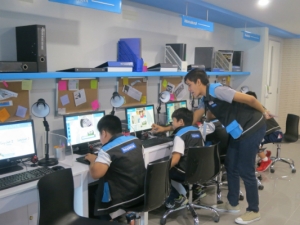
Kidzania - where kids do big things

Corporations purchase your labour in exchange for a salary and other defined benefits. Yet skilled professional workers are increasingly demanding that their employers also play the role of a nurturing, identity-affirming auxiliary parent.

Today, on my weekly scroll through corporate networking social media site LinkedIn, I came upon that most annoying of phenomena – the corporate humblebrag.

In case you are unfamiliar, the corporate humblebrag is a status update or article generally written by some cretinous individual who takes excessive pride in their firm (outside of which they have no life) and thinks that their organisation’s craven feats of pandering to the social justice priesthood somehow reflect a deep-seated virtue in themselves.

LinkedIn is chock full of such posts. Just as online pornography is said to account for up to 30% of total internet traffic, so the vast majority of posts on LinkedIn now consist of corporate humblebrags, people trying to ingratiate themselves with their current and future employers and colleagues by conspicuously and repeatedly trumpeting even the most banal of news items about their companies.

The corporate humblebrag which prompts this blog post is particularly bad, and centres on global consulting firm Accenture’s efforts to bring about harmony between world religions – a feat which has eluded the world’s greatest thinkers, theologians and statesmen, but which is apparently all in a day’s work for a modern global professional services outfit.

Ellyn Shook, Chief Leadership and Human Resources Officer of Accenture writes:

Those of you who are regular readers have heard me talk about Accenture’s aspiration to be the most truly human organization in the digital age. As we continue to peel back the layers on what “truly human” means, at the heart is helping our people be successful both professionally and personally. And, to be at our best, we need to be comfortable being our true selves and expressing our feelings at work.

Peeling back the layers on what “truly human” means? This is the type of existential question which has consumed humankind for millennia, without resolution. It hardly seems likely that Accenture’s drive to be “the most truly human organization in the digital age” is going to crack the secret of life when the most prominent philosophers, theologians, artists and scientists throughout history have all come up short.

The self-aggrandising article continues:

We started our “Building Bridges” journey last year in the midst of racial unrest in the U.S. Our people told us that it’s stressful when they feel they can’t talk openly in the workplace about things that happen in the world or at home that affect them deeply. It makes them feel like they don’t belong and that perhaps their co-workers are unaware or don’t care about things that are important to them.

Why do I get the distinct feeling that Accenture’s “Building Bridges” scheme is probably only receptive to some viewpoints and perspectives about the racial unrest in America – and that the people being encouraged to speak and rewarded for doing so are those who propagate the current identity politics dogma which dictates that race is not something to be ignored but rather scrupulously and punishingly observed, with everybody seen not as an individual, not as an American but as a member of an oppressed community (or the oppressing white male group)?

Somehow I imagine that were an Accenture employee to stand up in one of these “Building Bridges” meetings and venture the kind of opinion typically made on this blog – that we should be colourblind in our interactions with people and that identity politics only serves to fracture society and create a self-fulfilling culture of passive victimhood – that they would find themselves up in front of HR pretty fast, and out the door escorted by security not too long afterwards. But perhaps I am being uncharitable.

More:

We recently convened a Building Bridges session in New York on the topic of religion. Yes, one of those supposed taboo topics that you’re advised to avoid – along with politics – right?!  Well, the bottom line is religion is important to many of our people. And, it’s critical to foster cross-faith and multicultural understanding and respect. At the very least, it helps us understand the religious observances of our colleagues. But what I really see is deeper connections among our people.

Oh goody, religion in the workplace. At this point, Ellyn Shook hands over to her sycophantic underling Dan Eckstein, head of Accenture New York’s Interfaith Employee Resource Group – which apparently started out as a Bible study group for Christian employees before being hijacked and taken over in order to fulfil the glorious higher purpose of social justice activism.

Here’s Dan, in his own words:

As an observant Jew, I’ve always been passionate about inclusion and diversity, especially the topic of one’s faith at work. After graduating college, it was a challenge to figure out how I wanted to balance my religion and my work. I found myself trying to compartmentalize my work life from my religious life. But it didn’t feel right. I asked my parents, grandparents and mentors for advice. I’ll never forget the story of my Grandpa when he arrived in NY after the Holocaust and surviving the Auschwitz concentration camp. He was a fur matcher and he told me that almost every Friday in the winter he would leave work early to get home for the Sabbath by sundown. When Monday came around he would go back to work and they would fire him for leaving early. As a survivor, my Grandpa taught me to always be proud of who I am and to stand up for my beliefs.

I ultimately decided to wear my Kippa to work because I wanted to be transparent about who I am, and be consistent both inside and outside the office. I feel it represents my true self and is something that I’m proud of. As a leader, I also hope that I am a role model to others, encouraging authenticity.

Fine. That’s all well and good – people should certainly be free to express themselves at work as far as practicable and in line with their role. But then it starts to get weird:

Our Interfaith ERG hosted a Building Bridges session on August 11 where over 100 people packed into the NY office training room to talk about faith at work. We decided to anchor this session around the theme of “story telling.” Everyone has a story, but we’re often so busy or distracted at work that we don’t take time to ask or share.

[..] We ended our session by asking local faith leaders – Rev. Doyeon Park, Brahmachari Karuna, Rabbi Larry Sernovitz, Mohammed Al-Mathil and Rabbi Bob Kaplan – to reflect on the day and offer messages around hope, transparency, courage and community. Mohammed Al-Mathil encouraged us to ask questions from a place of respect and to do a bit of homework when coming to conversations about religion. Brahmachari Karuna shared a story of his father, a Human Resources leader, who seeks to find points of beauty in other religions, which helps to spark conversations with colleagues to explore commonalities and points of beauty across their different faiths.

It’s amazing that anyone in Accenture’s New York office finds time to align boxes in PowerPoint, sit on 3-hour client conference calls or just do some good old fashioned smoke testing on a new SAP deployment when they are all so busy learning about other faiths and affirming one another’s chosen identities.

And this is just the tip of the iceberg. The same culture now pervades nearly every large company with offices in major world cities or key industry hubs – any place where college educated knowledge workers gather in high concentration. For example, it is now almost compulsory for corporations to conspicuously endorse Pride Month and acknowledge it with a veritable festival of sponsorships and office activities.

There is nothing particularly wrong with this – if executives want to engage in corporate virtue-signalling then this is their choice. But these forays into social activism inevitably come down hard on one specific side of the debate, with little tolerance for those with differing views – even if they are conscientious and upstanding employees.

For example, this is what the Head of HR Strategy for one multinational firm had to say on LinkedIn about the recent Google Memo saga, in which developer James Damore was summarily fired for publishing a frequently and deliberately-misrepresented memo calling for Google to look again at the policies through which it aims to increase diversity:

Inclusion and diversity can be a prickly topic, although these issues don’t need to be sticky if handled in an appropriate manner. A great example set by Google’s CEO following the engineer’s ‘anti- I&D manifesto’. Having sent a clear email to all employees, he fired the employee in question and returned from his holiday immediately to take time to discuss the topics further with Googlers. Bravo for great leadership, mirroring words with actions. #strongleadership #diversity #inclusion

How then is an employee of this corporation who happens to agree with James Damore’s perfectly reasonable argument supposed to feel when it becomes clear that their own Head of HR strongly supports the firing of people such as themselves simply for failing to agree with the prevailing social justice groupthink; that every kind of diversity is encouraged in their firm, except for ideological diversity?

More to the point, why is it now necessary for our employers to continually nurture and affirm us as though we are needy toddlers? Why do we look to the corporations we work for to be our moral lodestar, a source of emotional support and a powerful auxiliary parent to adjudicate every petty interpersonal dispute that may arise between us and our coworkers?

When you work for a company you are selling them your labour – manual, mental or sometimes emotional – and in exchange you get paid a wage or a salary. That’s the sum total of the relationship that should exist between employer and employee in a capitalist system, and that’s a good thing. We don’t want to go back to the Victorian days where wealthy industrialists took it upon themselves to watch over the moral fibre of their workforce, regulating speech, recreation and behaviour in purpose-built company towns.

Of course people form important professional connections and bonds of friendship with colleagues, and employees are required to buy into whatever company culture exists in the various ways that it manifests (at least if they want their careers to prosper), but this still falls under the remit of labour. And the corporation has traditionally only been interested in nurturing such relationships to the extent that they help the employee perform their job and improve their skills (and consequently the value of their labour) – through training and intra-company networking events, for example.

I won’t deny that it is nice when corporations take sensible measures to improve the wellbeing of their workforce and increase employee engagement – and there are a whole range of ways to accomplish these goals, from bonus systems and employee reward schemes to the nature of performance appraisals and even small token gestures like free fruit or snacks for staff. I have personally benefited from many such initiatives in my own corporate career. But again, these schemes were designed to incentivise me to stay with the company or to work harder, not to fill in gaping holes in my psyche.

Yet apparently thousands if not millions of well-educated and gainfully employed people look to their employers – huge corporations which ultimately often have little allegiance to either their home country, country of operations or indeed their employees – to help realise their potential as human beings. That’s just plain creepy.

And note also that this is a mental affliction which only seems to affect middle class workers in the creative, tech or professional service industries. You don’t get minimum wage burger-flippers at McDonald’s demanding that the corporation “peel back the layers” of their humanity or otherwise validate their existence and identity at every turn. The relationship is purely transactional – they show up for work, put in a shift, go home and get paid. The same goes for retail work, semi-skilled clerical work and those in the service industries.

(In fact the only organisation where such intimate involvement in the private lives, personalities and identities of their staff seems remotely appropriate is the military, which in order to make people into effective warriors and leaders must essentially deconstruct and rebuild people from the ground up during basic training, with very different boundaries of privacy and intimacy to other private or public sector employment).

In other words, this phenomenon or corporate coddling is something that upper middle class professional knowledge workers are bringing on themselves, not something which is imposed upon them (as one might have imagined from following the Google Memo saga). It is no longer enough for corporations to provide a water cooler, cheap coffee and a relatively consistent ambient air temperature – now rank and file employees are effectively demanding that their employers pander to their every emotional need as well, be it support with their sexuality, gender identity, religion or any number of other issues which are best tended to in one’s own personal time.

I must say that I find this trend fascinating and repellent, in equal part. I genuinely struggle to identify with the kind of mindset that would prompt an intelligent, driven employee to organise an interfaith religious symposium for their office, or to facilitate a training workshop in LGBTQ+ allyship on company time – other than the obvious excuse of wanting to avoid the tedium of doing real, actual value-adding work (which I totally get).

If I were still working in a large professional services firm with one of these gung-ho HR departments, I would sooner that they fire everybody with the word “diversity” in their job title and raise my salary by a couple of quid than be continually validated in my identity as an trans-class, mixed-race, semi-privileged cisgender heterosexual male by some gimlet-eyed, Kool-Aid drinking corporate apparatchik. But apparently I am in the minority.

Admittedly, LinkedIn isn’t the best gauge of these things, being populated mostly by fellow corporate Kool-Aid drinkers who share endless posts about how “proud” they are that their firm won some industry award for sustainability in toilet paper consumption. But there are clearly enough people who value – nay, demand – being condescended to in this way by their employers that large firms are willing to pull out all the stops and treat their employees like the children they apparently yearn to be.

Perhaps I am a grouch and an outlier on this, and I would certainly welcome the input and perspective of anybody who works in corporate HR or one of these diversity or employee-nurturing workstreams. But to me, this trend is just another casualty of the Cult of Social Justice and Identity Politics, not to mention a symbol of the relentless infantilisation of Western society, with grown adults in prestigious jobs now seeking to regress back into coddled childhood, one insipid LinkedIn status update at a time.


Kidzania - corporate children - infantilisation

Support Semi-Partisan Politics with a one-time or recurring donation:

Agree with this article? Violently disagree? Scroll down to leave a comment.

Follow Semi-Partisan Politics on TwitterFacebook and Medium.

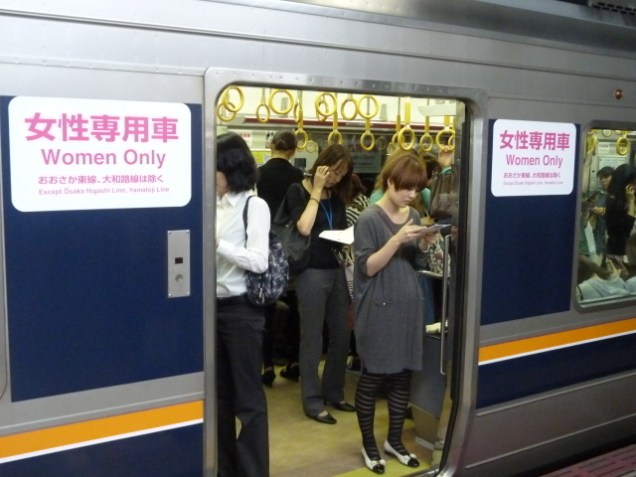
Women-Only Train Carriages: Identity Politics Leads To Calls For Segregation, Once Again

Women only train carriages

Is there any contemporary problem that the identity politics Left will not propose solving through the introduction of segregation?

I see that the recurring debate about whether or not to introduce female-only train carriages has bubbled up again from the swamp of leftist thinking.

Charlotte England tries to make the best case she can for theocratic-style gender segregation over at Left Foot Forward:

There is a pragmatic argument for women-only carriages as an interim measure, which is being largely buried by simplistic rhetoric and a disingenous framing of the original proposal. Arguing against the policy on ideological grounds ignores the experience of many women and young girls who are assaulted and become afraid of travelling alone on public transport. It ignores the fact that they feel forced to alter their behaviour already.

When he first proposed the policy two years ago Corbyn made it clear the aim was to give women more freedom than they currently have, not less.

“It is unacceptable that many women and girls adapt their daily lives in order to avoid being harassed on the street, public transport, and in other public places from the park to the supermarket,” he said. “This could include taking longer routes to work, having self-imposed curfews or avoiding certain means of transport.”

He also did not suggest the measure in isolation, floating the idea of a 24-hour hotline for women to report harassment, along with broader measures to tackle assault in society such as tougher rules for licence holders on reporting incidents on their premises and cabinet members for women’s safety on local councils.

A 24-hour hotline for women to report harassment? Perhaps somebody should inform Charlotte England that such a line already exists, and that you can reach it 24/7 by dialling 999.

At some point the Left will have to confront the fact that they have devalued terms such as racism, white supremacy, sexual assault and “rape culture” to such a degree that if we are now to take them literally, the police would have to be called to millions of incidents which qualify as crimes every single day. Blurring the line between socially inappropriate behaviour (including microaggressions) and criminal behaviour has helped the Left to point to rapidly rising reported statistics and claim that an epidemic is underway – of racism, Islamophobia, other generic hate crime, you name it. But it is also creating undue alarm and making it harder to focus resources and policy on the most pressing issues.

If sexual harassment on trains is a serious and growing issue – and I’m not arguing otherwise – then the correct response by train companies (and the Office of Rail and Road) to their customers frequently being bothered and assaulted onboard rail services is to dramatically improve security. That means ensuring that CCTV is installed and functional on all trains, placing more passenger alarms in carriages and hiring more guards. Or perhaps the train companies could deploy the private militias they have hired to zealously crack down on fare-dodging to also protect passengers from unprovoked attack. And when ticket fares rise by 20% or 30% to cover the additional cost, we can all pay the extra money knowing that we are helping to clamp down on sexual harassment.

Alternatively, perhaps the citizenry should be legally permitted the means to defend themselves, if not with firearms then at least with tasers and pepper spray, rather than being forced by government to remain at the mercy of thugs, hooligans, sexual harassers and terrorists.

But the Left don’t want to do any of this. They don’t like it when people are given the right to defend themselves, and they certainly don’t like it when private companies take independent action to tackle issues. They want government to step in with a heavy-handed, one-size-fits-all mandate instead, because then leftist politicians (rather than the private sector) can claim credit for the results. And if those policies ride roughshod over civil liberties or equality then who cares?

In no way do I mean to diminish the experiences and suffering of those who have experienced sexual harassment. But when the Left defines the term downward so far that it now includes clumsy flirtation, it does a disservice to those who are verbally threatened or physically groped, stalked, flashed or assaulted – and counter-intuitively makes it harder to focus on eradicating criminal behaviour rather than behaviour which merely causes social offence.

But this is only one of the ways that the leftist identity politics argument for segregated train carriages comes unstuck. To use the language of the Left, there is apparently a growing problem of sexually aggressive behaviour in the male population of this country – behaviour which makes some female citizens feel concerned for their safety. And the Left’s answer to this problem is to offer gender-segregated seating on public transport for those who feel unsafe sitting in unrestricted areas because of the heinous actions of a small subgroup of the male population.

Now try applying the same logic to – oh, I don’t know – let’s say the British Muslim population. The vast majority of British Muslims are upstanding, patriotic citizens whose behaviour is generally above reproach, yet there is a small minority within this population who plot and carry out heinous terrorist attacks for religiously motivated reasons. And this spike in Islamist terror attacks has arguably caused some people to “adapt their daily lives” (as Charlotte England puts it) to reduce their exposure to risk, or at least to constantly be thinking and worrying about the possibility of a terror attack as they go about their day.

Is it reasonable, then, given that Islamist terrorists have historically targeted public transport, that train companies offer segregated carriages for non-Muslims in order that other travellers might feel safer? Of course not. Is it more unreasonable for someone to feel nervous standing next to a Muslim on the tube than it is for a woman to feel nervous sitting in the same train carriage as a man? I would argue that both are equally unreasonable.

But the Left do love to pick and choose their favoured victim groups, and “people who are legitimately afraid of Islamist terror” generally don’t get much sympathy from the identity politics brigade, while women in fear of sexual harassment are deemed worthy of protection by extraordinary means.

Segregating men from women and Muslims from non-Muslims would infringe on the natural rights of both groups, reduce them to second class citizens, provide them with a lesser service (fewer available seats per train) and stigmatise both groups as being inherently dangerous. And yet while the Left would be up in arms if such a proposal were targeted at Muslims – and rightly so – they advance exactly the same argument for male/female segregation without seeing the contradiction.

But assuming that the Left were able to implement their scheme (over what I’m sure would be the strenuous objection of train companies, who would have to fund and enforce the policy) how long would this gender segregation last? Jeremy Corbyn, Charlotte England and other fellow travellers of the hard Left may claim that they only propose female-only train carriages as a stop-gap measure while other actions are taken to tackle the supposed sexual assault epidemic. But this only begs the question of what actions they propose. Mandatory anti-rape classes for boys at school? Re-education of adult males?

If you are going to propose introducing segregation into British society in the 21st century – to place Britain in the happy company of theocratic states such as Saudi Arabia, who similarly keep their females locked away lest they arouse the lust of helpless men – I think you have a duty to be straightforward and explain why the same identical logic does not apply when it comes to protecting people who don’t make the cut for inclusion in the Left’s hierarchy of victimhood. And given that temporary laws have a pesky habit of becoming permanent, anyone proposing such a draconian, authoritarian policy should also clearly outline how it will be time-limited, and how the underlying root issue will be addressed by other means.

Jeremy Corbyn, Charlotte England and others on the Left promoting this divisive and discriminatory policy have no answers to any these questions and have no intention of providing such answers, because this isn’t actually about making women safer at all. It is about gaining political support by being seen to be on the side of minorities, oppressed peoples or perceived victimhood groups, gaining their support and then failing to meaningfully help said groups once in office.

Just as affirmative action hasn’t done a damn thing to increase representation of black and Hispanic students at American universities (because it papers over the cracks rather than tackling the deep underlying issues), so forcibly segregating men from women on public transport will neither tackle the root causes of male sexual harassment nor protect women from danger for the vast majority of the time when they are not travelling on trains. (After all, why stop at trains? Why not introduce gender segregated cinemas, swimming pools, workplaces, nightclubs, stadiums, universities?). Proposing gender segregated train carriages may not be effective, but it sure will make certain leftist politicians and commentators look good to their base.

This isn’t compassion. This isn’t applying creative thinking to an entrenched social problem. This is cheap virtue-signalling at the expense of threatening fundamental civil liberties and rights, while promising to place Britain in the unfortunate company of some of the most backward and oppressive theocratic regimes in the world.

Slow hand clap, leftists (or should that be slow jazz hands?). You’ve really outdone yourselves this time.


200178589-001

Support Semi-Partisan Politics with a one-time or recurring donation:

Agree with this article? Violently disagree? Scroll down to leave a comment.

Follow Semi-Partisan Politics on TwitterFacebook and Medium.