Lost In The Media’s EU Referendum Coverage: Any Mention Of Democracy

EU Referendum - Brexit - Democracy

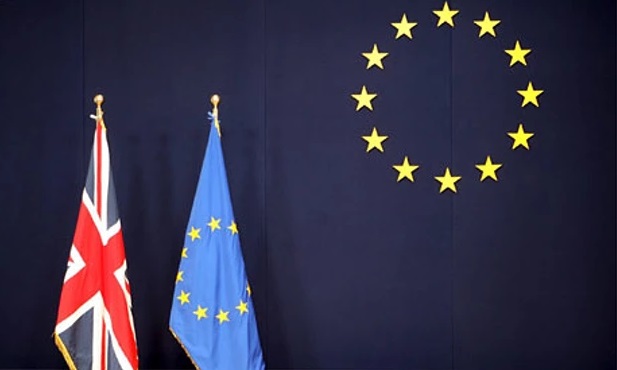
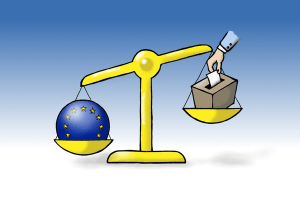
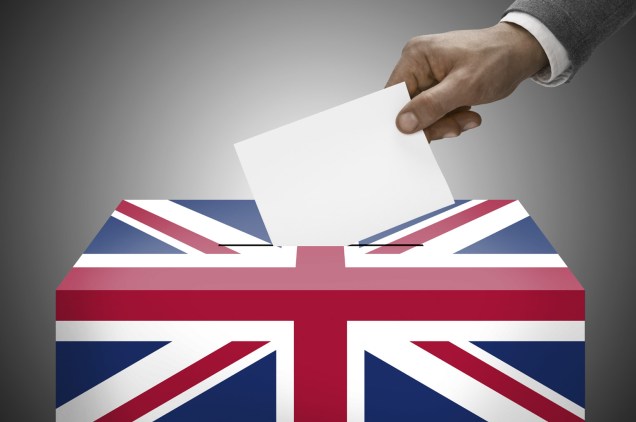
The media’s fixation with personality politics and the petty ups and downs of individual political careers distracts us from the only thing that matters when it comes to the EU referendum – the future of our democracy

The Times’ Red Box briefing email today leads with more sneering commentary about the supposed shortcomings of the broader anti-EU, pro-democracy Leave campaign:

Maybe it’s a stunt to show how difficult it is to work together for the greater good, thus undermining a key argument for staying in the European Union.

Or maybe the campaigns to leave the EU are a total bloody shambles.

While Remain was pumping out letters to ten million homes yesterday, the Outers were out to get each other. Again.

The briefing continues:

The infighting is also causing another problem: who would want to join this rabble?

Lord Lawson, the former chancellor, has suggested that a senior cabinet minister will eventually lead the Out campaign, though refused at the weekend to say who that might be.

There are suggestions that Chris Grayling and Theresa Villiers are not high profile enough, and the likes of Michael Gove will fall in line and support the PM.

Which leaves Iain Duncan Smith, a former Tory leader who remains popular in some parts of the party and has long argued against staying in the EU.

Yet he too has history with Cummings, who was his director of strategy during his ill-fated leadership before quitting and later declaring: ” Mr Duncan Smith is incompetent, would be a worse prime minister than Tony Blair, and must be replaced.”

Because of course that is the most important question in this whole debate – whose reputation and political prospects will be most enhanced or damaged by the stance they take on the future of British political governance.

What ambitious, self-respecting politician would want to associate their glittering career with the grubby and laughable concepts of national sovereignty and democracy? Which of the petty, superficial personalities who pass for statesmen today will win a coveted promotion, and which will find their career progression halted because they pick the wrong horse in this race? The sheer superficiality of the media’s EU referendum debate coverage absolutely beggars belief.

Is there currently a lot of unseemly (to outward appearances) infighting among the eurosceptic, pro-Brexit crowd? Yes. But a lot of this is necessary fighting. Though our first instinct may be to separate the squabbling factions with cries of “can’t we all just get along?”, in actual fact this fighting serves an important purpose.

Many people and organisations who purportedly oppose the European Union are actually either ambivalent about leaving, or busy spewing out contradictory and uninformed messages which will ultimately harm the Leave campaign and provide the Remain side with plentiful campaign fodder. This harms the Brexit cause, and so must be confronted and dealt with if the Leave campaign is to win the referendum.

Vote Leave in particular is filled to the brim with people who don’t actually want Britain to leave the European Union, but simply want the government to use a “leave” vote as a bargaining chip to extract concessions from Brussels. Meanwhile, UKIP and others are often guilty of promoting an overly simplistic view of Brexit, conjuring a fantasyland where Britain quits the EU on Day 1, bans all immigration on Day 2, and holds a big Bonfire of the Regulations on Day 3.

None of these things are possible, nor even desirable. And pretending that they are achievable reflects badly on the entire Brexit movement. And so while it may appear unseemly to outsiders and the half-interested media, it is essential that eurosceptics have these essential debates now, while relatively few people are watching, so that we go into the campaign with the message that carries the greatest chance of success.

As Ben Kelly points out over at The Sceptic Isle:

[..] it is impossible for everyone to agree and therefore impossible to have one unifiedLeave campaign. The Remain campaign is entirely based on disseminating fear, uncertainty and doubt amongst the populace and propagating myths about Brexit. Thus, as a movement Remain is easy to unify; Europhiles are unified in their duplicity, unjust smugness, their lack of faith in democracy and their inability to stop clinging to an archaic ideology and an ideal that is redundant and bad for Britain.

The debate over leaving the EU is more nuanced and therefore necessarily divided; this makes the europhiles positively gleeful because they see it as an advantage. It isn’t. Those of us who want to leave the EU are now involved in a great competition, a battle of ideas, over how exactly we achieve Brexit both in terms of convincing the public, winning the referendum, and the plan for what we should do with our independence.

Remember, this referendum is the europhiles’ to lose. They have the government on their side, nearly the entire political establishment, the European Union itself and the lion’s share of the funding. They also have the most powerful advantage of all – the incorrect perception, fuelled by the media, that this referendum is a contest between staying in the EU as it is now (the “safe” status quo), and taking some deathly plunge into the unknown. Both of these axioms are utterly wrong, but they are widely believed and toxic to the Brexit cause.

Of course, in reality there is no status quo when it comes to the European Union. The EU is but a process, set in motion half a century ago, whose end destination is a single European state. And frankly, I am getting tired of pointing this out when the EU’s founding fathers and today’s euro-federalists have repeatedly said so in their own words.

At this point, it is for the pro-EU campaigners to explain why a humble organisation that supposedly only wants to promote free trade and co-operation requires a parliament, a judiciary, a flag and an anthem in order to accomplish these basic tasks. It is most certainly not for me to continually explain why the person pointing a gun in our face and demanding that we hand over our cash is in fact a mugger, and not a kind-hearted charity collector.

But it is hard to promote any kind of message about democracy, governance or anything else when all of the oxygen in the debate is sucked up and wasted on breathless speculation about whose careers will be helped or hindered by their eventual stance on the Brexit question.

I couldn’t care less whether Boris Johnson biding his time is a smart move in terms of his Tory leadership ambitions, or whether the likes of Theresa May and Sajid Javid are wise to lie low and obey David Cameron’s command for eurosceptics to keep quiet while his pro-EU ministers are given free reign to sing endless hymns of praise to Brussels. It doesn’t interest me. The only abundantly clear thing is the fact that none of the supposed Conservative eurosceptics truly care about safeguarding our democracy and sovereignty, because if they did they would be promoting Brexit for all they are worth rather than weighing up the options and deciding whether campaigning for Brexit might hurt their careers.

I know it is hard for the legacy media to remain focused on issues rather than personalities for any length of time, but given the gravity of this particular debate – and its profound, far-reaching consequences for how the British people will be governed in ten, twenty, thirty years’ time – it would be nice to see more than the usual token effort.

The current gossipy, high school style fixation with personality politics and the petty ups and downs of individual reputations and political careers is more toxic than all of the Remain campaign’s lies, distortions and evasions put together. For it distracts us from the only thing that matters in this referendum: democracy, and whether we surrender it out of fear, or stand and fight for it.
Britain - UK - European Union - Referendum - Brexit - Punishment Beating

Agree with this article? Violently disagree? Scroll down to leave a comment.

Follow Semi-Partisan Politics on TwitterFacebook and Medium.

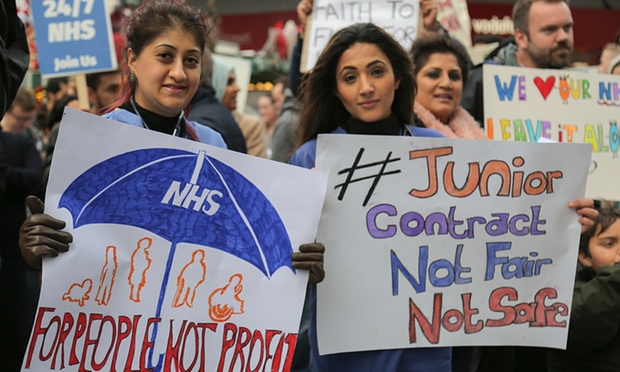
Who Is To Blame For The NHS Junior Doctors’ Strike? Look In The Mirror

NHS Junior Doctors Contract Strike

By reflexively worshipping the NHS, vilifying people who don’t and rewarding politicians who tell us only what we want to hear, the junior doctors’ strike – and everything else wrong with the health service – is our fault, and ours alone

Who is to blame for the NHS junior doctors’ strike?

Is it heartless Jeremy Hunt, that doctor-hating, treatment-denying Conservative villain at the Department of Health? Is it the Evil Tories in general, with their single-minded obsession (mysteriously never realised despite all their accumulated years in power) with privatising and destroying Our Precious NHS? And if not them, who could it be? The capitalists? The bankers? Katie Hopkins?

Surely anyone and everyone is to blame, apart from ourselves.We love Our NHS. We are good people who believe that healthcare free at the point of use is one of the fundamental rights of citizenship. We stick up for the NHS at every turn, demanding that politicians pay obsequious lip service to the organisation every time they run for office. We’ll happily slap the NHS logo on our Facebook profile picture, paint it on our faces, wear it on a badge, lapel pin or t-shirt. You name it, we’ll do it to virtue-signal the love we have for Our NHS.

And that, right there, is the problem. Not Jeremy Hunt, not the Evil Tories, not Katie Hopkins. Us.

We don’t want elected officials who take a hard, uncompromising look at changes in medical treatments, life expectancies, the public finances and best practice from overseas to continually assess whether the NHS – that uniquely British solution to healthcare coverage – is still fit for purpose in the twenty-first century, and what changes may be beneficial or necessary.

We don’t want elected officials who tell us that difficult decisions might have to be made – that providing the latest treatments to an ageing, fattening population will cost all of us more in taxes, require radical overhaul of the NHS model, or both. We want our politicians to find the money to provide a world-class health service without disrupting other areas of public spending, or the fatness of our own wallets.

And we certainly don’t want elected officials who do anything to upset the NHS-Industrial Complex – that vast network of people, organisations and vested interests who are first to squeal and protest (always in the name of “public safety”) when their own livelihoods or ways of working are threatened. Like children listening to a trusted school teacher, we innocently take the words of such people as gospel.

Of course, this situation is quite unsustainable. And when any one element of this vast human bureaucracy reaches breaking point – whether that is manifested in industrial action, hospital death scandals or longer waiting lists – we will look for anyone to blame and attack for the fact that these problems have gone unaddressed. Anyone other than ourselves.

The Economist reaches the same conclusion in a very welcome “plague on all their houses” review of the context behind the first junior doctors’ strike:

[..] there is a more serious way in which the public is to blame for the sickness of the health service. The electorate that notionally adores “our NHS” and propels a saccharine song by health workers to the top of the Christmas charts shows remarkably little willingness to pay more in tax towards what remains a relatively cheap system. Without extra money and facing ever wider and wrinklier patients, the NHS must tighten its belt by £30 billion ($43 billion), or about one-fifth, by 2020. It is in this context that Mr Hunt is trying to expand services to evenings and weekends. Pity the well meaning health secretary, pity the hardworking doctors—and blame the sentimental but hypocritical British public.

The famous maxim says that people get the politicians and leaders that they deserve. Well, the same can be said for healthcare, too. We refuse to look difficult truths in the eye, preferring to ignore them in the risible hope that a healthcare system built in 1948 can still be fit for purpose in 2016, if only we pump a bit more money into it. And a bit more. And a bit more again.

We deserve the NHS we currently have, with its air of permanent crisis, in all its faded glory. It is the sum total of all our misplaced pride, boastfulness, smugness, ignorance, fear of change, intellectual laziness and lack of vision.

We have become self-entitled public service consumers rather than thinking citizens, demanding easy answers and instant results from our elected leaders, while rewarding all of the wrong behaviours when it comes to healthcare policymaking.

We have become the kind of intellectually dull society that will happily produce a cheesy Christmas hymn to the NHS and then propel it to Number 1 in the charts, but prefers to sit and vegetate in front of Britain’s Strictly Come Bake-off On Ice rather than question whether the organisation we were just singing about is fundamentally fit for purpose.

On this rare occasion, the Economist’s editorial line is quite correct. When it comes to the failings and shortcomings of the NHS, the government, the health secretary of the day and individual NHS staff are comparatively blameless.

It is we, the British people, who are most at fault for singing worshipful hymns of praise to a healthcare system we will neither properly fund, nor meaningfully reform.

NHS Choir - Harriet Nerva - 2

Agree with this article? Violently disagree? Scroll down to leave a comment.

Follow Semi-Partisan Politics on TwitterFacebook and Medium.

Jeremy Corbyn’s Yellow Submarine Policy

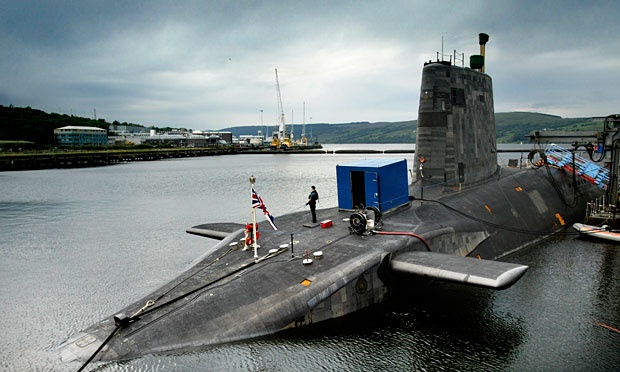
Trident Nuclear Submarine - Faslane Naval Base

Jeremy Corbyn’s yellow submarine proposal is nothing but a white elephant, with all the cost and none of the benefits of nuclear deterrence

Spare a thought for those in peril on the Labour Party’s Trident renewal commission. As they seek to square their leader’s avowed nuclear disarmament stance with the parliamentary party’s broad support for Trident renewal, they are being forced to consider – and publicly discuss – ever more ridiculous potential compromises.

Jeremy Corbyn’s latest proposal is particularly bad, and would involve spending billions of pounds designing and building the next generation Trident submarines, but – crucially – not arming them with any new weapons.

The Guardian reports:

Jeremy Corbyn has suggested the UK could have Trident submarines without nuclear weapons, a move that would mean disarmament while protecting defence jobs in Scotland and Cumbria.

The Labour leader raised the idea on the BBC’s Andrew Marr Show as a possible compromise between his opposition to nuclear weapons and the position of the trade unions, which want to protect the jobs of workers who will build replacement Trident submarines.

In an interview over the weekend, the Labour leader argued it was not a binary decision on whether to replace Trident submarines, suggesting a possible compromise. Pressed on the Marr Show as to what this meant for Trident, Corbyn said: “They don’t have to have nuclear warheads on them.”

[..] Asked again whether he was suggesting that new submarines could be built to be used without nuclear warheads, Corbyn said: “There are options there. The paper that Emily Thornberry has put forward is very interesting and deserves study of it. I hope there will be a serious and mature response.” He also stressed that he would want to maintain employment for people in the defence industry, who would be involved in building Trident submarines, as a “first priority”.

Thornberry told the BBC’s Sunday Politics: “The way that it works is that the Japanese have got a capability to build a nuclear bomb…[but] you can then put them on to, or you can use them, in various delivery forms. So that’s a possibility, that is an option.” She said she would not speculate on what the review would recommend but she added that Corbyn “said there’s a number of options, and I said the Japanese already have this as the way that they use theirs”.

This is ludicrous.

Nuclear-powered submarines capable of carrying and launching Trident nuclear warheads are very expensive, as you would expect from high-tech stealth technology designed to last for a generation. Their only value is the fact that they provide a near-undetectable, continuous at-sea presence, so that any would-be aggressor knows that whatever attack they may launch at Britain, a retaliatory response always remains possible.

Investing in a new generation of nuclear submarines but failing to simultaneously build a new generation of missiles and warheads to deliver them would be like… well, it would be like commissioning two new aircraft carriers which will come into service without any aircraft capable of launching from them.

But at least this ludicrous defensive gap of the Conservative government’s making is only temporary. The aircraft to complement the Queen Elizabeth class carriers will follow the commissioning of the ships, albeit an embarrassing couple of years late.

Not so the Trident missiles to supply the next generation of submarines. Under Jeremy Corbyn’s proposal, Britain’s four (or three? Two?) new Vanguard replacement submarines will dart around under the ocean carrying no weapons and providing no deterrence of any kind. In fact, they may not launch at all, since Jeremy Corbyn probably sees little value in keeping a Navy. So in theory, Britain could end up spending over £20 billion designing and building four new ICBM-carrying submarines, only to sit back and watch them grow cobwebs in dry dock.

Jeremy Corbyn would counter – and indeed his ministerial colleague Emily Thornberry has already pointed out – that Britain would retain the ability to produce nuclear weapons under Labour’s latest plan. But this is extraordinarily misleading. By their nature, the kind of potential nuclear crises that Trident protects us from every day are impossible to anticipate and come about suddenly or with no warning. And in such cases, having the ability to one day rebuild a nuclear deterrent capability is very far indeed from having a system already live and operational.

In cases of nuclear blackmail or brinkmanship, it is not enough to say to our enemy “just you wait 12 months while we build our own nuclear weapon to destroy you, then you’ll be sorry!”. When you need the credible threat of nuclear weapons, you need it now, not after a lengthy lead time during which our design and construction facilities would be vulnerable to sabotage from within or attack from without. But this is precisely what Jeremy Corbyn proposes.

This is socialist pacifism at its most absurd. When people criticise Corbynite policies, their defenders retort that we misrepresent them by taking their publicly expressed ideas to illogical extremes. But in this case, Jeremy Corbyn himself has stated that the illogical extreme is his preferred option.

Jeremy Corbyn’s Britain would be a country which builds things not to use them or gain any utility from them at all (in this case the valuable insurance policy of nuclear deterrence), but rather just to give the people with a vested interest in their construction something to do. In this perverse worldview, keeping union chiefs happy and workers employed is a worthy national objective, but guaranteeing Britain’s national security and promoting our interests by ensuring that we are taken seriously as a military power is of no importance.

But never let it be said that the Corbynites don’t do compromise. Jeremy Corbyn may find the idea of nuclear weapons – or any military spending at all, really – to be morally repugnant and utterly indefensible, but because the trades union like the jobs which come from submarine construction and maintenance, he is willing to tolerate Britain’s continued construction of the things – just so long as we don’t ever use them.

What next? Why not have the armed forces spend all their time rolling massive boulders up hills in the Peak District, sending them tumbling down and pushing them back up again, in order to give the military something to do which doesn’t involve handling weapons? Why not extend the same principle to the British people at large, and pay everyone currently on JSA thirty grand a year to do the same?

A nation of people industriously labouring away to build complex, expensive machines whose purpose they fail to understand, and which they neither appreciate nor value. Just so that people have something to do besides watching Jeremy Kyle on daytime TV.

Welcome to Corbynland.

Unarmed Trident missile fired from HMS Vigilant

Agree with this article? Violently disagree? Scroll down to leave a comment.

Follow Semi-Partisan Politics on TwitterFacebook and Medium.

The Daily Toast: Iain Martin’s Brexit Ultimatum To Tory Ministers

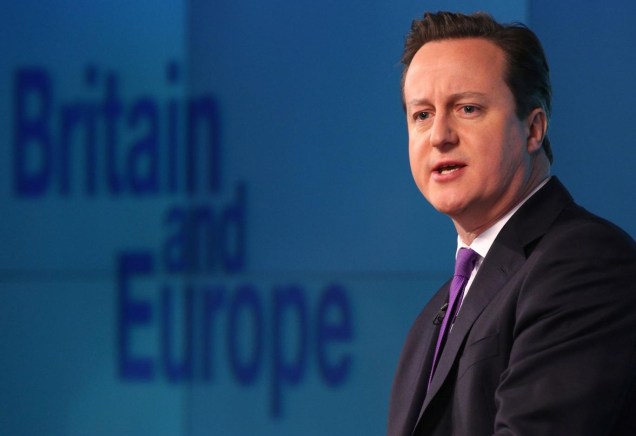
Conservative Eurosceptics - Brexit - David Cameron

Politicians with the integrity to openly declare their stance on the biggest political issue of our generation should be the rule, not the exception

Like most people in Britain, Iain Martin has had enough of equivocating politicians – specifically Conservative cabinet ministers – refusing to take a public position on Britain’s EU membership, and maintaining the fiction that David Cameron’s cosmetic “renegotiation” can have any possible impact on their decision.

Martin goes so far as to call Conservative ministers “a bunch of careerist scaredy cats”, writing in CapX:

Britain’s looming vote on the EU is not – or should not be – politics as normal. It is a historic moment, in which the UK will decide to take one of two quite different paths. Party management and careers matter, of course, but sometimes there are choices that should be about something more than the mere game of politics. The EU referendum is one such event.

This is absolutely correct. Whatever one’s views on the European Union and Brexit, surely all of us can agree that this debate is infinitely more important than the minor tweaks to education, healthcare and fiscal policy which separate the various political parties.

Having established the importance of the coming referendum, Iain Martin issues the following challenge:

Ministers, it is make your mind up time. Although David Cameron’s renegotiation with the EU for new membership terms could have been the real deal, it is clear that it will deliver very little. It is In or Out, probably as soon as this summer. For that reason, ministers need to do something that is highly unfashionable and considered downright deranged in the British Establishment: decide what you believe – enthusiastically for In, reluctantly for In, or Out because you think it is best for your country – and get ready to fight for it at public meetings across the land. Don’t be scared. You are grown men and women. You might even be surprised how much voters like politicians saying what they believe rather than what is convenient for their careers.

This argument is – I know – a stretch, considering how careerist politics has become. But for anyone playing a leading role in the affairs of a nation to base such a vital decision purely on career progression or fear of friends is not only wrong, it’s pathetic. And in ten years time, none of it, all the hedging and game-playing, will matter a jot. By then David Cameron will be having a snooze after lunch in rural Oxfordshire. Osborne will be running the World Bank or a hedge fund. The decision on the EU, on the other hand, now that will have mattered a lot.

The current failure of Conservative ministers and other senior politicians to break cover and nail their colours to the mast only contributes to the (depressingly accurate) perception of contemporary politicians as principle-free careerists squabbling over the right to sit in technocratic management of our public services, rather than principled statesmen grappling with weighty political issues.

In our current political climate, where the Conservative Party runs away from small government principles in pursuit of the centre ground and Jeremy Corbyn’s Labour Party is criticised for actually being left-wing, it is clear that the vast majority of politicians prefer the former to the latter.

Power is pursued for its own sake, even if it means the centrist coalition of supporters cobbled together to deliver victory make it impossible to do anything remotely radical, transformational or different once in office. Thus, despite the overwrought rhetoric from both sides, neither Labour nor the Conservatives  propose a single policy which would move Britain away from its current centrist landscape.

Politicians who came of age in this age of the Tyranny of Centrism find it inordinately difficult to express a strong, sincerely held political opinion because all of their training and professional experience teaches them that pragmatic caution and a reflexive fear of fixed beliefs are the surest route to success.

Whether it’s the NHS, tax reform, constitutional reform or Britain’s relationship with Europe, MPs are strongly predisposed to fiddling around the edges themselves, while accusing others of partisan recklessness. Thus change is only ever incremental, and nearly always in the direction of More Government – the path of least resistance for any elected official.

Unfortunately, too many within the public and the media are willing to excuse this state of affairs, urging us to put ourselves in the politicians’ shoes rather than demanding sincerity and principle from our elected officials. It is therefore particularly pleasing to see Iain Martin losing patience with the status quo and demanding that those who seek to run the country actually declare the direction in which they would lead us.

The Tyranny of Centrism can only continue so long as we tolerate and enable it by rewarding glib superficiality and punishing strong displays of principle from our politicians. And on an issue as important as Britain’s future relationship with the EU, this is no time for fence-sitters, careerists or cowards.

EU Renegotiation - Brexit - European Union

Agree with this article? Violently disagree? Scroll down to leave a comment.

Follow Semi-Partisan Politics on TwitterFacebook and Medium.

Pro-EU Campaigners Can’t Decide Whether Brussels Is Friend Or Frenemy

Britain - UK - European Union - Referendum - Brexit - Punishment Beating

The Good Cop/Bad Cop routine of the EU’s British cheerleaders betrays the fundamental weakness of the europhile argument

I have always struggled to wrap my head around that strain of pro-Europeanism which declares “the EU is a benevolent and harmless group of countries working together for mutual gain” on the one hand, and “the EU will ruthlessly punish us and seek to make an example out of us if we ever try to leave” on the other.

Call me stupid, but the two visions of Brussels don’t seem to be compatible. Either the European Union is a harmless coming together of independent European nations seeking to work together to meet challenges that no single country can face alone (ha!), or the EU is a process whose ultimate destination is a single sovereign entity possessing most of the executive, legislative and judicial powers which it gradually usurped from the member states.

If it is the former, nobody would much care whether Britain stayed or departed. Why would they, when the EU is just a harmless club of countries coming together voluntarily to deal with mutual challenges?

But if it is the latter – if the EU is in fact a deadly serious political project with clear federal aspirations, which dare not make themselves known for fear of alarming the electorate – then its portrayal as a snarling, vindictive beast when scorned suddenly starts to make a lot of sense. Any member state attempting to leave such an organisation would represent a stunning repudiation of over forty years of incremental, relentless political integration, and therefore it is a very helpful piece of deterrence if people believe that any country trying to leave would be dealt with ruthlessly and punitively.

Of course, the cynical pro-EU “Remain” campaign tries to have it both ways. When it suits them in their campaigning, the EU is a happy-go-lucky club of like-minded countries who frolic and trade with one another. But when that hopelessly naive, childlike view of Brussels is questioned by eurosceptics and Brexiteers, out comes the other portrait of a snarling, vicious EU which will ruthlessly destroy Britain if we continue to drag our feet or think about leaving.

Good cop, bad cop. Europhiles will normally try the “good cop” routine first when engaging with undecided voters. But this tends to come unstuck as soon as eurosceptics and Brexiteers counter with their own positive vision of Britain restored as a sovereign democracy playing a full and engaged role in global trade and world affairs.

Since the pro-EU crowd are unable to share their own repugnant vision of a politically integrated Europe for fear of scaring people away, they are instead forced to go negative, hence the rapid and disconcerting pivot from “See how nice the European Union is, and all the wonderful things it does for us” to “If we try to leave the EU, they’ll rough us up”. Truly, their position is less a serious argument about governance and diplomacy, and more the tortured thought process of a battered spouse trying to rationalise staying in an abusive relationship.

Latest to play the part of the battered spouse is Labour MP Stephen Kinnock, who spuriously claimed in Parliament:

Article 50 of the Lisbon treaty states that, on announcing its intention to withdraw from the European Union, the withdrawing state will automatically be excluded from all meetings of the European Council and, if agreement is not reached within two years, the withdrawing state will be automatically excluded from the negotiated terms. Does the right hon. and learned Gentleman agree that a withdrawing state is therefore liable to suffer what would amount to a punishment beating to dissuade others from withdrawing, and that therefore there is no such thing as a soft Brexit?

Of course, this is alarmist, hyperbolic nonsense emanating from the mouth of somebody who is either catastrophically stupid and truly believes his own fiction, or who hails from that school of thought which believes that pro-EU evangelists are allowed to tell blatant lies in service of the Greater Good.

The truth is that remaining EU member states could not be overtly vengeful toward a departing Britain even if they wanted to. The European Union is required by law to negotiate constructively and in good faith with any member exercising its Article 50 right to secede, besides which there are powerful business interests on both sides who have a lot riding on continued trade and good relations between Britain and the EU, and who would assert overwhelming pressure on politicians to overcome whatever petty personal gripes they may have in order to reach a pragmatic deal with the EU’s biggest trading partner.

As Ben Kelly points out over at Conservatives for Liberty:

The notion that the EU would refuse to cooperate, or even seek to “punish” the UK in the event of secession – thereby clearly violating EU law as well as failing to comply with international law – is beyond the realm of realistic politics. As Sir David Edward, the first British Judge of the European Court, has said – EU law requires all parties to negotiate in good faith and in a spirit of cooperation.

Article 50 requires the EU to conclude an agreement with the seceding state, “taking account of the framework for its future relationship with the Union“. Notably, Articles 3, 4 8 and 21 of the Treaty on European Union require the EU to “contribute to … free and fair trade” and to “work for a high degree of cooperation in all fields of international relations, in order to … encourage the integration of all countries into the world economy, including through the progressive abolition of restrictions on international trade” and to adhere to the “principle of sincere cooperation […] in full mutual respect” and “assist each other in carrying out tasks which flow from the Treaties.”

Add to that the sheer illogicality of effectively launching a trade war against the only vaguely dynamic economy and trading partner in the entire region, and the idea of the EU “punishing” Britain starts to look like the absurd scaremongering hyberbole which it so clearly is.

But being demonstrably wrong does nothing to deter the European Union’s cheerleaders within the British political establishment. Only back in October, this blog had to take Conservative MP Mark Field to task for tremulously suggesting that a vote for Brexit would somehow give France just cause to cease all co-operation with reciprocal border controls by way of retaliation:

On the border question, Mark Field seems to accept that it would be right and proper for France to retaliate against Brexit by ceasing all border co-operation and actively helping to funnel more illegal immigrants to Britain. If this is really what he thinks France would do – if he really believes that the French hold this attitude to the British – he should be railing against the French for their supposed immaturity and recklessness in the face of a European migration crisis, not holding it up as a warning to Britons not to provoke the French into doing something so patently unreasonable.

At every turn, Mark Field seems to not only imagine the worst, most apocalyptic response possible from our EU partners, but also then assumes that they would be somehow justified in being so intransigent and punitive in their dealings with Britain, and that it would somehow be our fault for having provoked them.

Where does this dismal, pessimistic attitude come from? Why does Mark Field think so little of his own country, our status and our potential that he sincerely believes that other (mostly smaller) countries would bully us if we vote to leave the European Union, and that not only would Britain be totally unable to withstand this bullying, but that they would be right to bully us in the first place?

Displaying Olympian feats of cognitive dissonance, the EU’s cheerleaders within the Remain campaign are somehow able to hold a number of poisonous and utterly contradictory ideas within their heads at all times, including the following rigid beliefs:

  1. The EU is our benevolent protector, always looking out for us
  2. The EU is a jealous lover, demanding our absolute fidelity
  3. The EU will attack us mercilessly if we ever decide to leave it
  4. Britain will deserve any attack by the EU if we choose to leave
  5. Britain is incapable of standing up to any act of bullying by the EU

Like a battered spouse, many pro-EU campaigners and commentators have convinced themselves that Brussels is always in the right, and Britain – with our pesky, awkward hangups about sovereignty and democracy – is perpetually in the wrong.

Like a battered spouse, many of the EU’s British cheerleaders have internalised the corrosive, national self-doubt and occasional sabre-rattling from the continent to such an extent that they sincerely believe that any punishment or retaliation coming our way would somehow be deserved.

And like a battered spouse, the Remain campaign are under the spell of an autocratic (and in this case imaginary) bully whose power to coerce is completely illusory – once we make the brave decision to leave.

But here’s the really good news: Britain does not have to remain in this abusive relationship any longer. There will be no retaliation for leaving, because there can be no retaliation – even if intemperate heads within Brussels wanted to make an example out of Britain, they would be constrained both by law and commercial imperative.

Better still, a rational and thorough plan of escape already exists, laying out a detailed strategy to separate Britain from the EU’s political tentacles in a phased, low-risk approach. That plan is called Flexcit (or The Market Solution), and any serious Brexit campaigner – or engaged citizen – should give it their serious attention.

By contrast, the pro-EU side – as well as being unable to decide whether Brussels is a trusted partner or an abusive spouse – have no plan for how Britain should react when the EU takes the next inevitable step toward fiscal and political union, leaving Britain with the choice of limited influence within the core (at the price of adopting the Euro) or complete irrelevance on the periphery. The status quo is not an option in this referendum.

And given the choice between the timid, euro-parochialism of the Remain campaign and the Leave campaign’s positive vision of a prosperous and democratic United Kingdom outside the EU, there is simply no contest.

EU Democracy - Brexit

Agree with this article? Violently disagree? Scroll down to leave a comment.

Follow Semi-Partisan Politics on TwitterFacebook and Medium.