Journalists Buying Fake Twitter Followers, Another Symptom Of Institutional Decay

Journalists buying fake Twitter followers - fraud

Some journalists and political pundits choose to buy artificial Twitter followers because being good at their job matters (and is incentivised) less than appearing like the Next Hot Thing.

I’ll admit it – in earlier years, in my weaker moments as a struggling political writer, I have idly thought about purchasing Twitter followers. But I have not and never will do so, and deplore those in journalism and politics who choose to sell out in this way.

The New York Times recently reported that a company called Devumi was offering dummy Twitter followers (either fabricated individuals or the fruits of identity theft) to those seeking to boost their social media stature for mere cents per follower. A whole swathe of celebrities were implicated (most of whom promptly rolled over and blamed their managers or PR people) but so too were a number of journalists at supposedly respectable outlets of the legacy media.

From the New York Times:

Genuine fame often translates into genuine social media influence, as fans follow and like their favorite movie stars, celebrity chefs and models. But shortcuts are also available: On sites like Social Envy and DIYLikes.com, it takes little more than a credit-card number to buy a huge following on almost any social media platform. Most of these sites offer what they describe as “active” or “organic” followers, never quite stating whether real people are behind them. Once purchased, the followers can be a powerful tool.

“You see a higher follower count, or a higher retweet count, and you assume this person is important, or this tweet was well received,” said Rand Fishkin, the founder of Moz, a company that makes search engine optimization software. “As a result, you might be more likely to amplify it, to share it or to follow that person.”

Twitter and Facebook can be similarly influenced. “Social platforms are trying to recommend stuff — and they say, ‘Is the stuff we are recommending popular?’” said Julian Tempelsman, the co-founder of Smyte, a security firm that helps companies combat online abuse, bots and fraud. “Follower counts are one of the factors social media platforms use.”

In some ways, this temptation is just one of many ways that using social media can warp our behaviours and motivations, as Jacob Brogan writes for Slate:

Twitter is a machine designed to generate ugly feelings. Here everything is subject to quantification: the number of people who like the things you tweet, the number who share your words with their own followers, and, perhaps most of all, the number who follow you. If you spend too much time on the platform, those numbers quickly become an index of your own self-worth, and no matter how high they get, they will always be too small.

Purchasing fake followers is thus rather grubby and slightly pathetic, but perhaps still fair game if you are a TV star looking to make a bit more money sending promotional tweets for haemorrhoid cream. But what if the person deceiving the public is somebody whose job it is to inform, educate and tell the truth? Surely then it becomes quite unambiguously wrong?

Well, lots of political journalists clearly don’t think so, according to NBC News:

Big media outlets have embraced Twitter as a distribution platform but still struggle with how reporters and editors use the social media service, particularly when they appear to be breaching journalism ethics.

This sizable gray area came into clearer focus this week, after a New York Times exposé revealed that more than a dozen news media figures had paid to artificially pump up the number of followers they have on Twitter.

Journalists and commentators, who presumably joined the platform to enhance their stature, instead found themselves grasping to explain why they had paid for counterfeit supporters. When contacted by NBC News, the journalists identified by The Times as having bought Twitter followers had a range of responses: Many ducked requests for comment, others blamed associates, while just one sounded chastened.

This practice doesn’t bother me so much when it takes place in other fields; if you’re a mediocre provincial stand-up comedian who wants to pretend you have an audience of half a million eager people hanging on your every word, so be it. Good luck to you. Same if you’re a B-list actress, a celebrity chef, an unremarkable footballer or a giver of lousy TED-style talks about personal development. I expect no realism from such people, and personalities from these fields who choose to over-inflate their popularity do no real harm.

Not so with journalists and political commentators, both those who parade around beneath the banner of the blue-tick Twitter verified logo and those scrambling for the Ultimate Recognition. Political Twitter is a nasty swamp of obnoxiousness at the best of times, but those of us who choose to lurk within it do so in the vague hope of coming across useful information or commentary once in awhile. And since nobody has time to vet every account that crosses one’s timeline to determine whether they deserve a follow or a clickthrough, a quick glance to see whether they have a decent (or at least a baseline) level of followers is a useful first line of due diligence.

Is this person for real? Well, their profile picture is the default egg icon and they have eleven followers. Hmm, probably not going to click that link or believe their sensational “report” about Theresa and Philip May using a ouija board in the Downing Street basement to seek inspiration and advice from Britain’s failed prime ministers of the past (plausible though that one actually sounds).

Buying Twitter followers makes a mockery of what the rest of us are trying to do, and undermines one of the few metrics left for gauging success (financial reward having long since ceased to be either a possibility or a useful indicator). I have a mere 2,500 followers on Twitter. However, unlike the cheaters, I earned my entire following by providing consistently useful or entertaining (intentionally or otherwise) content to my audience. Whether it is links to my blog, links to bloggers in my circle, flagging news articles of interest, engaging in feuds with trolls or writing in-depth threads on a particular topic, around two thousand people care enough about what I have to say to stay tuned on an ongoing basis (I imagine that many of the remaining 500 are either businesses or largely dormant accounts).

A study from 2016 suggested that of those people who had tweeted once within a six month period, their average number of followers was 707. This figure seems a little high to me, as I routinely interact with people whose following/follower figures are only in the double figures – but this may be a function of swimming almost exclusively in the political niche rather than venturing out into the deeper oceans of celebrity Twitter. Anyhow, the study would suggest that anything over 707 is then a pretty good sign, and in lieu of an affirmative action-gifted writing gig for The Spectator I am proud of my 2,500 followers as a sign that my hours in front of the keyboard are not entirely wasted.

Ultimately, all this predictable scandal tells us is what a fraud so much of journalism and political commentary has become. Portentously spewing words into the void of Twitter knowing that most of your audience is actually imaginary can’t bring positive feelings of journalistic pride, since one would be aware of the fraud. All that those followers can do is burnish one’s reputation and make one seem like an important person to get drinks with or be seen talking to at one of the many insufferable events that take place every day in Westminster or Washington, D.C.

And the problem is that for those journalists who buy Twitter followers, that’s just fine. They don’t want to organically build an engaged audience of followers who find what they say to be genuinely insightful. They may not object were it to happen, but actual professional accomplishment is clearly no longer the prize to these people. What they want is the aura of success, to be seen as uniquely knowledgeable, titillating or controversial without putting in the labour to do it themselves.

We see the same thing with many of our politicians. Twenty months on from the EU referendum and the number of MPs who have even a basic grasp of the technical issues relating to trade arising from Brexit can probably be counted on two hands. An even smaller number have paid much thought to the constitutional ramifications and the opportunities and threats to our future governance, if any at all. The most significant political development to happen in Britain in decades, and only a handful of our parliamentarians have bothered to stop spouting slogans from the referendum campaign to actually master the issues at hand.

Why is this? Because sitting down with books and consulting advisers in a spirit of humility and willingness to learn is boring and unsexy. The personal payoff just isn’t there, particularly when one can do so much more for one’s career by bleating an angsty speech about the Evil Tor-ees in the Commons chamber or going viral on social media with a well-timed quip on Question Time. And the only reason that our star journalists – the ones who pull in the big bucks and now get terribly worked up at the thought that their celebrity pay packets might not be “equal” – have not rumbled the politicians and revealed the extent of their ignorance is because much of the legacy media is in an equally benighted state.

The whole reason our politics are currently so dysfunctional is that being good at your actual job is no longer adequately incentivised. Looking good and frantically maintaining all the appropriate outward signs of success and positive momentum are what matters most, not solid work diligently performed in the spirit of self-improvement. That’s why people cut corners and do things like participate in Twitter follower-purchasing frauds – because they believe, often correctly, that the rewards which flow from mastering an issue or having an original idea are far less than those which flow from being on some insufferable “Westminster’s 100 people to watch in 2018” list.

You can write for months or years before establishment journalists (as I did) that the Tories were going on an ideology-free jaunt into political oblivion, or that Jeremy Corbyn ought to be taken seriously because the public responds to conviction and consistency, but it doesn’t matter. You won’t get the slightest credit, because nothing has officially been thought or written until it has come from certain approved sources within the Westminster Bubble. And even within the bubble exists a hierarchy, with all of the attendant temptations to level-up by artificially boosting one’s standing.

And that’s why I never have and never will buy Twitter followers. It represents everything that is rotten, sleazy and stupid about modern politics, and the alarming frequency with which people who shouldn’t be within ten promotions from the top of their respective fields end up prancing around at the pinnacle, lording it over the rest of us (be that the prime minister, whole swathes of Parliament, the editors of several newspapers, numerous television news personalities and various assorted celebrity columnists).

We will never live in a perfect meritocracy, and it is stupid to set unrealistic goals which ignore human nature. But one thing you ought to be able to trust in this day and age is that the Very Serious Journalist with the blue “verified” tick next to their Twitter account name is not perpetrating a fundamental fraud every time they broadcast their news, analysis and opinions.

I earned my Twitter audience, and my follower count rises and falls according to the value I deliver. Anything short of this basic standard of behaviour is akin to selling a used car having first tampered with the odometer. And while social media juicing may not be illegal, we should look upon those who engage in it with the same scorn and distrust one might reserve for a convicted fraudster.

 

Twitter for journalists

Support Semi-Partisan Politics with a one-time or recurring donation:

Agree with this article? Violently disagree? Scroll down to leave a comment.

Follow Semi-Partisan Politics on TwitterFacebook and Medium.

We Need To Constrain Unchecked Government Power, For The Sake Of Brexit And Our Future Democracy

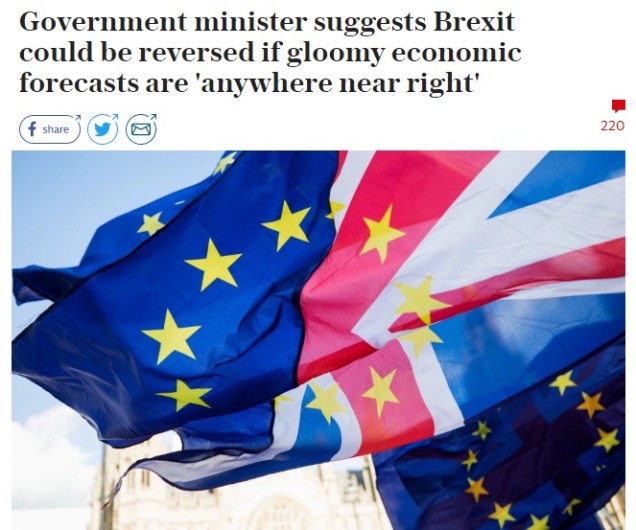
Dr Phillip Lee MP - Tory government minister - reverse Brexit based on economic forecasts

Does the UK government have the unilateral right to ignore instructions from the electorate if it finds them to be “harmful” based on narrowly subjective criteria? And if so, shouldn’t we do something to constrain that power?

A couple of days ago I mused that the most fundamental question facing both Britain and America right now is that of whether or not the people should be permitted to make mistakes as they participate in the democratic process.

Regardless of whether one thinks that electing Donald Trump and voting for Brexit were “mistakes” or not (and I strongly believe that Trump was a mistake and that Brexit is not), it is a question we must ask ourselves because of the nature of the opposition to both. In both countries, large parts of the opposition are not content to let events play out and then capitalise at the next election; rather, many want to thwart these unwelcome electoral decisions altogether.

This is best encapsulated by the #Resistance movement in America and by the #FBPE (follow-back pro-European) social media movement in Britain – people convinced that their nation has made the wrong choice, and unwilling to wait for the “regular order” of the normal democratic process to reverse what they see as an existential mistake made by the voters.

Yesterday I wrote:

In both cases, the objectors – those who want to summarily impeach Donald Trump or overturn the EU referendum result in the light of “new facts” – are actually saying something quite serious. They are saying that in the cases of highly consequential decisions, the people are wrong and should not be allowed to inflict their wrongness on the country via the ballot box.

The implication is that some decisions are simply too important, consequential or irreversible to be left to the direct judgment of the people (unless, conveniently, the choice in question can be blended with a bunch of other decisions in a general election, supported by all the main political parties and thus be preserved in perpetuity). And the clear subtext is that the ruling classes know best, are imbued with a deeper wisdom and sense of morality which must prevail any time there is a conflict between the governed and the governing.

I also wrote that politicians rarely if ever explicitly come out and actually say that they reserve the right to overturn or ignore a decision made by the people and expressed through the political system if they happen to dislike it. Rather, they obfuscate and couch this point (or threat, depending on how you interpret it) with grave warnings about the dangers of populism – some of which are valid, but which are never accompanied by an explicit statement of the precise circumstances under which the political class reserves the right to reject an electoral decision made by the people.

But no sooner had I published these thoughts than I came across a story in the Huffington Post reporting that Conservative junior government minister – Dr. Phillip Lee MP – last night made the following statement in a short burst of posts on Twitter:

The next phase of Brexit has to be all about the evidence. We can’t just dismiss this and move on. If there is evidence to the contrary, we need to see and consider that too. 1/3

But if these figures turn out to be anywhere near right, there would be a serious question over whether a government could legitimately lead a country along a path that the evidence and rational consideration indicate would be damaging. This shows the PM’s challenge…2/3

The PM has been dealt some tough cards and I support her mission to make the best of them. It’s time for evidence, not dogma, to show the way. We must act for our country’s best interests, not ideology & populism, or history will judge us harshly. Our country deserves no less 3/3

My emphasis in bold. Phillip Lee is stating here what most politicians are only willing to tiptoe around – the fact that the government and the political class reserves the absolute right to ignore an instruction from the electorate if an ill-defined process of “rational consideration” of a certain pool of “evidence” that they themselves select means they think that it would be unwise to do so.

Still we get no specifics about just how potentially damaging a scenario would have to be or what form the damage would have to take for this antidemocratic override of elitist salvation to kick in, but here we have an admission in plain English, from the mouth of a government minister, that senior politicians think in this way. But if government ministers are going to publicly claim the prerogative to ignore an instruction from the electorate if they happen to dislike it, at the very least the people have a right to know the precise circumstances and criteria under which this might happen, both now relating to Brexit and in the future relating to the many other important national decisions that we will have to make in coming decades.

And as I wrote yesterday, this is just further evidence that Britain needs to debate and ratify a written constitution for the United Kingdom, one which “upgrades” the patchwork of our unwritten constitution and augments or replaces large parts of it with a document which clearly sets out the limits on government, the rights of the people, electoral and judicial processes and more, all in a language which people have a fighting chance of understanding.

But in the short term, for Brexit’s sake if nothing else, we also need to challenge Dr. Phillip Lee’s casual but totally unproven assertion that “evidence and rational consideration” might give the government legitimate grounds to ignore the result of the EU referendum. Phillips is clearly talking here only about the economic case – he references the leaked Brexit Impact Report. But by restricting his focus on the reasons for Brexit to such a narrow point he is saying that either the non-economic reasons for voting to leave the European Union don’t exist, or that they do exist but are outweighed by the economic reasons to remain.

This is a considerable feat of omission by Phillip Lee, one which is best illustrated with an example.

Imagine – and I acknowledge that this is an extreme example to which I draw no direct parallel, though it clearly illustrates my point – that one were to take Dr. Phillip Lee back to the Britain of 1939 as war loomed, or in 1940 after Dunkirk. Would he have counselled appeasement of Germany on the same grounds? After all, if one considers only the economic metric, the Second World War was always going to be utterly ruinous for Britain. Aside from the military and civilian casualties our cities were levelled, our industry appropriated by the government (and in some cases not returned to private hands for decades), food and clothing were rationed, arts and science were overshadowed and our footprint on the world stage shrank in every conceivable way.

Surely, then, the right course of action would have been to make a deal with Hitler, no? Peace at any costs? After all, we are only considering the economic metric here, because we are “rational” and look only at Approved Facts. After all, life under a puppet Westminster government wouldn’t have been so bad for most of us. Who really needs self-determination so long as the occupying power is delivering the many fruits of a non war-ravaged economy? And hey, who knows, maybe the Nazi war machine might even have helped modernise British industry, which was already falling behind our competitors at the time. On every front, things would have been better had Britain stayed out of the war. Loved ones would have lived and families remained intact. Our major cities would not have been pockmarked with bomb damage. Coventry Cathedral would not be a burned out shell (though I mean no disrespect to its replacement).

Now, the decision to go to war in 1939 is not the same as the decision to leave the European Union. But it was Phillip Lee, not me, who proposed a vague, ethereal set of criteria under which the government might claim the right to overrule the people in the event that politicians think they know better on a key national issue. I am simply showing one reasonable endpoint of applying the very framework that he proposes.

In reality I do Phillip Lee the courtesy of assuming that he would not have been an appeaser, that his intellect and moral code would have compelled him to risk immense short-term harm – not just to Britain’s economy but to our very continued existence as a country – in service of a higher goal, namely freedom. Further, I am convinced that Phillip Lee would not have had to sit down for a second weighing the risks and creating economic forecasts before arriving at his decision. Because Dr. Lee knows as well as I do that cold hard numbers do not encapsulate the value of this country or the dignity, resilience and potential of her people.

And yet Dr. Lee is quite happy to pretend – again, I do him the courtesy of presuming that he is intelligent enough to actually understand that other very valid and serious arguments were in play during the EU referendum but simply chooses to ignore them to bolster his argument – that the entire decision should be based on a government cost-benefit analysis or the output of an Excel spreadsheet on a Whitehall computer.

We see this again and again from Remainers – this steadfast, stubborn, furious refusal to look at the question of Britain’s membership of the European Union in anything other than their own chosen short-term economic terms. People doubtless have their own reasons for thus deliberately restricting their peripheral vision, but at this late stage none of those reasons can be deemed honourable or respectable. Dr. Lee knows full well that whether one agrees with them or not, there were very valid arguments about sovereignty, self-determination, trade relationships, immigration and national identity which together with the economic warnings formed the complex backdrop against which every single one of us cast our vote on 23 June, 2016.

To pretend that the sudden discovery of “new evidence” (as if the publication of a new economic forecast can be called “evidence”, given their consistent record of alarmism and inaccuracy) constitutes anywhere near sufficient reason to overturn a national plebiscite which was based on a multitude – a multitude – of factors, is deeply disingenuous and really an affront to any notion of democracy.

Furthermore, it is a total fallacy to talk piously about the need to respect “evidence and rational consideration” when deliberately focusing only on the evidence you want to see, and simply pretending that no other evidence and no other rational arguments exist for the opposing side.

Even if you are an ardent Remainer, this should concern you. Because after the government uses this get-out clause to avoid following the direction given to them by the EU referendum, what’s not to stop them from starting to disregard other, future directives from the electorate? After all, we have no written constitution to constrain the government or make our rights and the separation of powers crystal clear.

I think that Dr. Phillip Lee knows all of this. I believe he is a good person simply trying to win the argument for his side, or perhaps just blinded against other perspectives after years of percolating inside a bubble where the very idea of life outside a supranational government of Europe seems absurd. But he his also spinning a falsehood. Remainers in general are spinning a pernicious falsehood, and have been doing so since the referendum campaign began. And now that this falsehood threatens the integrity not only of the EU referendum vote but of our wobbly, unwritten constitutional settlement it needs to be confronted and stopped.

If Dr. Phillip Lee genuinely thinks that the government has the authority to unilaterally disregard the result of a referendum in which it committed in its own propaganda to obey, let him clearly state the case. Let him publicly outline first the legal and then the moral basis on which such an act might be justified, and provide other examples of when such a code might apply.

And then let’s have another talk about that boring old campaign for a written constitution.


Update – 31 January

Reports suggest that Dr. Phillip Lee MP has now been slapped down by Downing Street and told to “air his views in private” rather than on Twitter in future. However, the government has not explicitly repudiated Lee’s argument. Whether this is due to their continuing incompetence, internal division or secret agreement remains to be seen.


Political System of the United Kingdom - Britain - UK

Support Semi-Partisan Politics with a one-time or recurring donation:

Agree with this article? Violently disagree? Scroll down to leave a comment.

Follow Semi-Partisan Politics on TwitterFacebook and Medium.

Don’t Expect Better Political Outcomes In Britain Until We Change The System

Brexit - EU protesters - Breverse

Upset by how Brexit is being prosecuted by the government, overseen by Parliament and reported on by the media? It’s time to stop lamenting the symptoms and fixing the underlying issues with our constitution and system of government

Of the sum total of British political discourse at all levels, a good 95 percent is probably spent whining about events with just 5 percent devoted to thinking about the systemic issues which all but ensure that our political system continually throws up results we don’t like or believe to be illegitimate, over and over again.

I was musing on this the other day, and started a rambling Twitter thread on the state of British democracy which I thought was worth spinning into a slightly longer blog post, if for no other reason than to prevent the words being buried deep in the dusty archives of Twitter. And so here are those same words, expanded and transplanted to the even dustier archive of this blog instead.

The great question before us in these challenging times is this: Should the people, as they participate in the democratic process, be permitted to make mistakes? This is the underlying but often obscured contention behind some of the most contentious issues in British and American politics right now, namely Donald Trump and the “resistance” to his presidency in the United States, and the effort to undermine or reverse Brexit here in the UK.

Rightly or wrongly, the political classes of both countries, as a whole, object both to the policy initiatives of Trump and Brexit as well as the tone and context in which these events transpired. Parliament may have voted convincingly for Britain to invoke Article 50 of the Lisbon Treaty and commence the process of secession from the European Union, but few MPs believed that it was a good idea and many only voted to do so under duress. In America, most Republican politicians have either chosen to circle the wagons around Donald Trump or study feigned ignorance of his unsuitability for high office, in both cases because they see him as a useful idiot and an automatic pen with which to sign their own policy priorities. Yet hardly any of these Republican politicians are firmly aboard the Trump Train.

Whether it is Republican politicians using illegal immigration as an issue to get themselves elected in opposition only to blanch at the idea of illegal immigration actually being significantly impeded or reversed now they are in power, or Tory MPs building entire careers on moaning about Britain being ruled by a nascent European superstate only to fall in line with David Cameron and the Remain campaign during the referendum, there is a deep and unpleasant hypocrisy at work – a hypocrisy which needs to be acknowledged and confronted whether or not one agrees with the policies in question.

In both cases, the objectors – those who want to summarily impeach Donald Trump or overturn the EU referendum result in the light of “new facts” – are actually saying something quite serious. They are saying that in the cases of highly consequential decisions, the people are wrong and should not be allowed to inflict their wrongness on the country via the ballot box.

A degree of catastrophisation is required to pull off this argument, given how odious and undemocratic it sounds when stated plainly. And so we hear wildly overwrought tales about how Donald Trump represents a near-physical threat to designated minority groups, or that Brexit will see the UK economy returned to the stone ages.

The implication is that some decisions are simply too important, consequential or irreversible to be left to the direct judgment of the people (unless, conveniently, the choice in question can be blended with a bunch of other decisions in a general election, supported by all the main political parties and thus be preserved in perpetuity). And the clear subtext is that the ruling classes know best, are imbued with a deeper wisdom and sense of morality which must prevail any time there is a conflict between the governed and the governing.

Yet rarely do the decisions thus normally kept out of the reach of the people rise to this level of irreversible calamity. Take immigration. If throttling illegal immigration would harm the economy, do politicians have the right to override electoral wishes, even if the decision could be reversed? How great would the economic harm have to be, how would it be measured and how would it be balanced against any other factors?

Secession from the EU is rather more complicated, since reversal would likely involve the UK returning to the bloc on worse-than-current membership terms and therefore only ever be partially complete. But again, it could be done. So should politicians have the right to prevent the people from making only semi-reversible decisions? And if so, what are the criteria which should be met in order for politicians to step in and ignore popular opinion in order to effectively prevent the public from potentially scraping their knees?

Sometimes, though, the argument becomes more distasteful. Many polls have suggested that the British public would back the restoration of the death penalty given a straight-up referendum. Should politicians allow people to make that “mistake” too, and if not, what clearly written and easy for laymen to understand justification is there or should there be for thwarting such an odious policy change?

I am not (yet) a constitutional lawyer and I don’t have answers to all of these conundrums, but it seems clear that the current processes (if you can even call flying by the seat of your pants and making it up as you go along a “process”) that we in Britain have in place to adjudicate questions of vital importance are wholly inadequate to the decisions now before us.

When should referenda be offered, and when should they not? If they are to be offered, when should they be advisory and when should they be binding? When should blanket decisions be made at the national, supranational or local levels, and are exemptions ever to be allowed, and under what circumstances? What recourse should the public have when repeatedly rebuffed on a subject by politicians?

Many of these questions could be foreseen & mitigated through a well-written constitution which clearly prescribes the powers reserved by the people and those which are lent to local, national and supranational government. If we abandoned the Traditional British Fudge in favour of a written constitution, no longer could we so plausibly claim that we didn’t know what we were doing or that the outcome of any constitutionally legitimate process was unfair.

Of course a written constitution would not be a cure-all. Much would depend on the process of drafting such a document, who could participate and whether the process was taken seriously or simply used by special interests as an excuse to shoehorn every last entitlement onto the statute books as a “corporate necessity” or “human right”.

Britain’s constitutional monarchy is another complication, being one of those institutions which nobody would think to invent today but which arguably serves its purpose well enough and is part of the rich cultural fabric of our country that cannot be measured and summed up in an Excel spreadsheet. Embarking on any kind of constitutional convention would immediately generate enormous friction with the monarchy and its strongest supporters, which is one of the key reasons why such a movement has never properly gotten off the ground (with some honourable near-exceptions).

But unless we bite the bullet and physically write down a code of governance under which we are all willing to live, we are going to keep coming up against political elites of one faction or another assuming a divine right to attempt to implement their own worldview, wholesale, over the objections of others.

It’s worth noting too that such a national conversation was neither realistically possible nor worthwhile so long as Britain was bound to remain a member state of the European Union. When you are busy being slowly subsumed into a supranational government of Europe with its own ideas of federalism and subsidiarity, tinkering around with a little old national domestic constitution is almost laughably pointless, comparable to an animal grooming itself in ignorance of its surroundings while a much bigger predator sneaks up from behind.

It is only now that we have taken the first (hesitant and often erroneous) steps toward undoing the error – or great national act of settling for second best – that was our EU membership that we more fully realise the flaws in our own system and have the opportunity for a serious discussion about what comes next.

So what would such a constitutional document look like? That is a big question best left to a separate blog post but at the highest level I believe that any law or treaty which threatens to impinge on the life, liberty or property of other citizens – things like the death penalty or confiscation of property – should, *if* ever put to a referendum, require such a super-majority that the process is not easily abused by demagogues.

Other decisions, though, should be put within much readier reach of the hands of the people – such as whether successive UK governments are authorised to freely give up vast areas of sovereignty, wholesale, without sufficient oversight or realistic chance of painless future revocation.

I am open, for example, to the argument that the EU referendum should have required a certain threshold of victory to achieve quorum and passage, but then so every significant EU treaty signed by successive UK governments should have been put to the British people – the most recent of which would certainly not have been approved and ratified. But we are where we are and there is very little point crying over spilt milk – the best we can do is fix the system for the future.

At present there are virtually no meaningful checks and balances in our democracy. Victory goes who whoever can summon the loudest and most vociferous outrage, either on the pages of the tabloids or (far more effectively, though curiously less controversial) at the dinner parties & papers of those in the governing class.

By all means, we can keep blundering on as we are, lurching from crisis to crisis, failing to tackle our problems in a systemic way and then just working ourselves into a spittle-flecked outrage each time our broken system throws up a result we don’t like. That’s Option 1. Option 2 involves stepping back a bit and thinking about what kind of constitutional, governmental processes are most likely to yield outcomes which we can all get behind.

Option 2 is far more boring and requires more work, and lacks the appeal of being a meme-worthy MP, smug newspaper editor or shouty TV news talking head. But that’s what we need to do at this point, because given the period of discontinuity we have entered (one which affects many other countries too), there will be other hugely consequential decisions to make down the line, and we need to handle them a hell of a lot better than we are currently handling Brexit.

As a country, our capacity to competently govern ourselves has atrophied and withered during our 4+ decades of EU membership. That membership, combined with a bipartisan but increasingly broken centrist consensus, succeeded in masking the extent of the rot for some time, but no longer. Now the rot has been revealed and the full horror of the decay is clear to us, effecting every branch and level of government from the town council to 10 Downing Street.

If, as a side benefit, a period of serious reflection on how we govern ourselves as a country (whether or not that leads to a constitutional convention) further exposes just how ill equipped many of our institutions and present leaders are to navigate these national challenges, so much the better.

Sunlight can often be the best disinfectant.


Scene at the signing of the Constitution of the United States - Howard Chandler Christy - Hamilton musical - Brexit

Support Semi-Partisan Politics with a one-time or recurring donation:

Agree with this article? Violently disagree? Scroll down to leave a comment.

Follow Semi-Partisan Politics on TwitterFacebook and Medium.

Over-Emoting Is A Growing Distraction In Live Music Performance

Overwrought emotional displays which detract from the music are not new to live performance, but are they becoming more pervasive and insufferable?

In an interesting segment from last night’s Ben Shapiro Show, Shapiro focuses on one stand-out act of celebrity leftist virtue signalling at the recent Grammy Awards in order to riff on performer over-emoting in more general terms.

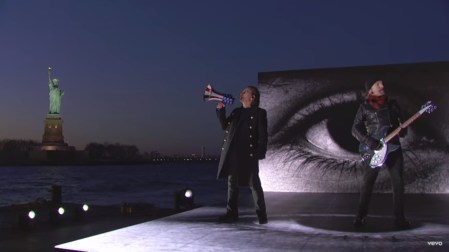
The specific performance that raised Ben’s ire featured U2’s Bono – an Irishman, it’s worth remembering, not a US citizen – singing in front of the Statue of Liberty, and praising the “shitholes of the world” as the source of America’s greatness, intended as a rebuttal to President Trump’s use of the vulgar phrase in a meeting with members of Congress about immigration.

While looking wistfully at the sky and prancing around in front of the Statue of Liberty, Bono portentously intones into a megaphone:

Blessed are the shithole countries, for they gave us the American Dream.

And to this nonsense, Shapiro responds:

As a musician for many many years, my favourite violinist – as is every violinist’s favourite violinist – is Jascha Heifetz. One of the things I love about Jascha Heifetz is that there is no histrionics. Jascha Heifetz, when he plays the violin – go look at a tape of him – is just stone faced. He just plays, and it’s great.

One of the things I hate the most about modern music is modern music is all based on energy and histrionics. It’s all based on you making faces while you sing, and looking up to the sky like Bono. Look at him, looking up to the sky with his red, white and blue loudspeaker.

This is something that I also find incredibly annoying and distracting. Of course this kind of preening and prancing has long been connected with music, and performers caring more about how they look and portray their socio-political opinions than how they sound on record is hardly a new phenomenon.

Nineteenth century Romantic pianist and composer Franz Liszt cultivated such a following that it coined a term – “Lizstomania” – where women would fight even over his coffee dregs and discarded cigars. And Lizst himself egged on this behaviour, being one of the first concert pianists to rotate the piano so that he would face the side of the stage at a right-angle to the audience, the better that they could appreciate his dashing profile.

Neither are all of the musicians I admire entirely innocent of this behaviour. Conductor-composer Leonard Bernstein also cut a dashing figure and was famous for the “Lenny leap” where he would sometimes clear a full foot from the podium. Glenn Gould, long my favourite pianist, is almost as well-known for his eccentricities – such as humming as he played, sitting on a battered folding chair when giving concerts and dressing for winter even in the height of summer – as he is for his revelatory interpretations of Bach, Beethoven or Brahms. But in the latter’s defence, many of his defining idiosyncrasies were clearly innate rather than studied, and in fact Glenn Gould had so little time for being a celebrity that he stopped giving concerts altogether at a young age to focus his energies on the recording studio.

British violinist Nigel Kennedy could likewise hardly be described as a staid, boring performer, yet his eccentricities somehow draw one into the performance rather than distracting or repelling the audience or listener. Watch Kennedy break normal concert protocol by addressing this BBC Proms audience immediately before launching into Elgar’s violin concerto and you’ll see what I mean:


But to me there is a definite order of magnitude between the baseline level of emoting that we see in classical music today and the more restrained (on average) approach of even thirty years ago. I confess that as technically brilliant as the likes of superstar pianists Lang Lang or Daniil Trifonov may be, I struggle to watch them because of the on-stage theatrics (in my opinion Yuja Wang does a far better job of being engaging and contemporary without appearing like a cholera patient on a storm-tossed sailboat).

I don’t care if you’re hamming up the rubato while playing some Chopin, there’s no need to lash your head around or make anguished faces as though someone is lurking under the piano pulling out your toenails as you play. But then maybe that’s just because I like my classical musicians the same way I like my journalists and TV news anchors – scruffy and unkempt, too dedicated to their craft to waste time worrying about being a walking shampoo commercial.

Now some of these behaviours and tics – maybe even a majority – can be put down to the understandable exuberance and vanity of youth. But I think a significant minority are inspired by a recognition that being brilliant is not enough unless one also looks and acts the part. And the look and act that audiences increasingly demand and reward is high on emoting, high on dazzling feats of technical brilliance (what Glenn Gould once derisively referred to as “piano-playing” in a self-critique of his earlier work) and lower on the kind of subtlety and introspection which is often needed to bring out the best in even some of the more bombastic repertoire.

And so might it be the case that the real problem with efforts to expand the market for classical music are not the things that usually get traditionalists so worked up – wearing jeans to the opera, mandatory white tie for orchestral musicians, informal lunchtime concerts and so on – but rather the fact that more and more classical performers are adapting to the Age of YouTube by attempting to groan and grimace their way to profundity just like every street busker who sings Lady Gaga’s “Poker Face” at a quarter speed, or Ke$ha’s overwrought performance at this year’s Grammys?

The point of classical music is, unsurprisingly, to convey ideas through the medium of music itself. Of course individual musicians will want to put their own stamp and interpretation on works, either in service of what they believe to be the composer’s original intent or to shed new light on what can sometimes be over-familiar works in the repertoire. But if you frequently find yourself pounding the piano keyboard like you’re playing Whack-A-Mole or sawing away at the violin while grimacing like your appendix just ruptured, you’re probably doing it wrong. The emotion should go through the music and not be lost in the gaudy, inefficient heat exchange of on-stage pantomime.

Performer eccentricities, when unintentional and/or in service of the music, are fine, and sometimes even a blessing. But Ben Shapiro is right; when they detract from the music itself then that can become a problem – in classical music as much as pop music with all the schmaltzy, simplistic political preening of Bono’s preachy Grammy performance.


Bono - US - 2018 Grammy Awards Performance - Virtue Signalling - Immigration - Blessed are the shithole countries

Support Semi-Partisan Politics with a one-time or recurring donation:

Agree with this article? Violently disagree? Scroll down to leave a comment.

Follow Semi-Partisan Politics on TwitterFacebook and Medium.


Henry Bolton And The Death Of UKIP

Henry Bolton - UKIP leadership - vote of no confidence

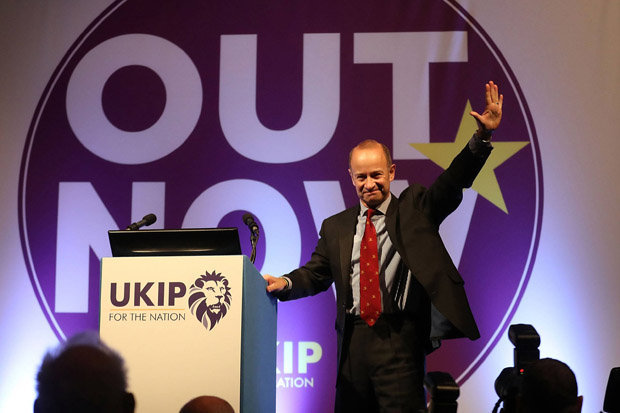
As party leader Henry Bolton gives a majestic display of the power of denial and refuses to resign, UKIP seems determined to go out not with a bang but a whimper

What an ignominious end for a political party which only a couple of years ago seemed to be dictating the rhythm of British politics and the headlines of our newspapers. But after a slew of leadership changes, cringeworthy scandals and bizarre disciplinary issues it seems pretty clear that there is nothing now left worth salvaging.

Several of the party’s remaining senior figures (none really warrant the title “big beast”) have resigned from the party following leader Henry Bolton’s refusal to immediately stand down after a unanimous vote of no confidence in his leadership, and everyone else may as well just follow suit and cut up their membership cards because there is no positive outcome to be had. Either Bolton tries to cling on until UKIP becomes a party of one, or he goes and makes room for another nonentity aboard the party leadership carousel.

Political parties drift when they lack any kind of unifying purpose or positive vision (though sometimes a strongly negative, reactionary position will do just as well in a pinch). We saw this with Jeremy Corbyn’s takeover of the Labour Party when the centrist “moderates” were found to believe in nothing and stand for nothing, and we see it now in the Tory Party as Theresa May’s government fiddles while the few forward-thinking people in the party are shooting off in a million directions with their own uncoordinated plans for conservative reform.

UKIP have less of an excuse for their current predicament, though. It was always known that they would face an existential moment of reckoning in the event that an EU referendum was secured and won, and they did far too little – probably nothing – to prepare for that moment. And for a single-issue party (or at least a party viewed by many to be single-issue) this was an unforgivable strategic error.

I covered and live-blogged the UKIP annual conference in Doncaster back in September 2015, when the referendum had been secured but the official campaigns had not yet officially kicked into gear. I wrote going into the event that this was a “make or break conference”, not because of the referendum but because this was the last, best opportunity to solidify exactly what it was that the party stood for besides secession from the European Union before the referendum and its aftermath would signal the closing of that window.

As I wrote back then:

When we look back on 2015, this could be seen as the conference which makes or breaks UKIP. Not in the sense that any careers are on the line today, or that terrible consequences await any missteps made over the next few days. But decisions taken at this conference – and more importantly, the general tone and sense of direction given by the party leadership – could be vital in determining whether UKIP is strongly positioned to survive the turmoil of the next five years in British politics, or if the party is destined to go the way of New Labour.

As long as the target of the 2016/2017 Brexit referendum looms ever larger in our sights, the unlikely coalition that makes up UKIP’s support base are likely to continue cohabiting without any real problem. But what happens when the European question is settled?

UKIP is a vastly more established political party than it was this time last year, and is almost unrecognisable from the party it was at the time of the last election, back in 2010. And this has been an unquestionably good thing for our stale, consensual politics.

However, interested observers will be watching closely for any signs indicating the type of party UKIP is likely to become by 2020. And a lot could ride on the answer.

And unsurprisingly, UKIP totally ducked the challenge at their conference. Everybody who wasn’t indulging in the traditional UKIP pastime of shooting themselves in the foot with unnecessary squabbles and gaffes was drunk on referendum fever and in no mood to contemplate any event past June 2016, be that their preferred method of Brexit (a failure which has already come back to bite) or the preferred shape of their party when banging the eurosceptic drum no longer attracts votes.

Nigel Farage himself offered only a vague non-answer:


Over the course of the conference I spoke to a number of senior UKIP figures in addition to Nigel Farage, including Mark Reckless, Douglas Carswell and a number of lesser-known but deeply involved activists, and of those people only Douglas Carswell had a vaguely plausible vision for what UKIP could become – a vision that was so at odds with Nigel Farage’s own that Carswell jumped/was pushed out only eighteen months later.


Thus the tension between the various different UKIPs was never resolved. The party continued to be a fractious circus tent encompassing a dwindling cohort of libertarian types, a rump of ex-Conservative eurosceptics and an influx of new, more economically left-wing voters and activists.

Immediately after the 2015 conference, I wrote:

The United Kingdom Independence Party currently draws its support from a number of quite distinct support bases. There are the social conservatives and traditionalists, mostly ex-Tory voters. Then you have the “lost Labour” voters, those who are repelled by the modern Labour Party’s superficial virtue signalling, unquestioning embrace of uncontrolled immigration and perceived lack of patriotism.

There is also a significant body of support from the so-called economically “left behind” voters from Britain’s faded coastal resort towns, where pro-UKIP sentiment is very strong. And finally, there are the young (and old) libertarian types – for so long the backbone of the party, until relatively recently.

All of these disparate groups are currently joined under the UKIP banner in an uneasy alliance because they share the common goal of a Britain independent of the EU. But what happens when the EU referendum is won (or lost)? What, if anything, will keep these separate groups together in the post-election landscape?

That’s the conversation which should have started taking place at this conference. But it is a conversation which has been assiduously avoided by nearly everyone, including the party leader.

There was very much a self-sacrificial tone at that 2015 party conference. Nigel Farage seemed to have little concern that the party might burn up in the wake of the EU referendum, no doubt presuming that his own personal prospects would be fine in any event. But nobody else in the party had any excuse for so much complacency. And the personal squabbles and increasingly ludicrous crises to rock the party are partially a result of that failure to plan for the future.

As I write, Henry Bolton is giving a statement to the press in Folkestone affirming that he has no intention to resign, and instead proposing a new party constitution – in the hubristic manner of all banana republic dictators in history. Others know the detailed history of UKIP, with all of its personality clashes and policy squabbles, far better than I. But I can’t help feeling a little sad that the most consequential insurgent political party in decades seems so determined to end not with a bang but a whimper.


Nigel Farage - UKIP Conference 2015 - Doncaster

Support Semi-Partisan Politics with a one-time or recurring donation:

Agree with this article? Violently disagree? Scroll down to leave a comment.

Follow Semi-Partisan Politics on TwitterFacebook and Medium.