A Third Runway At Heathrow Or Fixing Potholes In Roads? We Need To Be Bigger Than This In The Age Of Brexit

aviation-airplane-on-tarmac-at-airport

It is Westminster politicians and journalists, not Brexiteers, who have been short sighted and parochial

The Telegraph’s James Kirkup poses an interesting question about the expansion of Heathrow Airport and other national political priorities in the post-Brexit world:

Almost 70 per cent of commuting is done by car so roads are clearly of interest to voters, never mind the wider economics.   But it’s hard to avoid the conclusion that big shiny infrastructure projects like runways and high-speed railways are simply more glamorous and interesting to politicians and, yes journalists, who spend more time in London (where most people commute using public transport) than stuck at a roundabout trying to get onto a bypass.

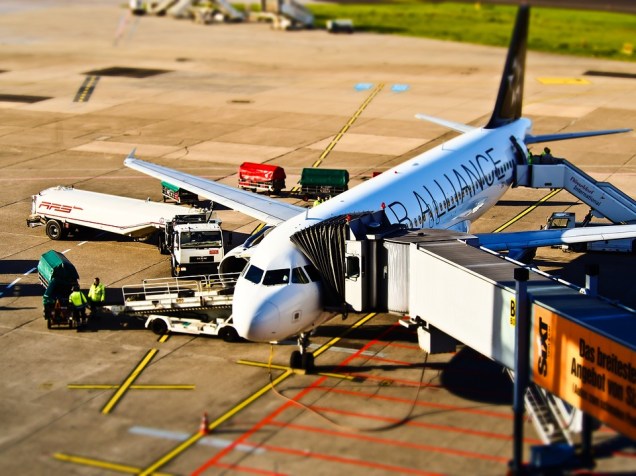
Airport expansion is about international trade and competitiveness, our national self-image and our global role. All the important things that important people in London spend so much time talking about, in other words.  And rightly so. We should have another runway at Heathrow, and one at Gatwick, come to that: the more competition the better

But then our leaders really should start talking about things that are actually important to the people they work for: clogged roundabouts, congested junctions and potholes.

Earlier this year, the Treasury gave councils £50 million extra to fill holes in roads. Councils reckon they need £12 billion more to fill them all. That’s close to the £16 billion that might need to be spent on new roads around an expanded Heathrow. Which would voters choose in a referendum?

Read the whole thing – it is a thoughtful piece. And of course James Kirkup is right to point out that key national infrastructure projects and local community investment need not be mutually exclusive.

Personally, I make no apologies for firmly supporting the expansion of Heathrow Airport, as well as new runways for Gatwick Airport any any other airport which wants to expand to the benefit of our aviation sector.

As this blog previously ranted:

Air travel is great. It takes rich tourists from wealthy countries and brings them to poorer countries where they boost the local economy with their money. It keeps the wheels of business turning, from the CEO flying from New York to London for a meeting, the office worker commuting to Berlin every week for a project, to doctors and scientists gathering for international conferences.

Air travel bridges the distance between our towns and cities and helps knit the planet together through a web of far-flung family members, friendships and business relationships. And in doing so, the aviation industry helps to foster trust and understanding, bridging cultural divides and doing more to affirm our common humanity than any third-sector institution or political movement.

And yet we seem intent on attacking aviation, thwarting its growth and choking the life out of the industry with punishing airport taxes and insurmountable barriers to expansion. And for what? So that human beings can creep meekly across the surface of the planet, apologising for our very existence and ostentatiously offsetting the carbon dioxide we emit whenever we open our mouths?

But I must admit to bristling a bit at Kirkup’s analogy comparing Brexiteers to downtrodden locals worried only about potholes in their roads, while the Remain-supporting establishment are cast in the role of far-sighted metropolitan elites who alone acknowledge and face up to the long term problems facing our country.

If anything, it is actually the other way around. By continually divesting Westminster of more and more decision-making authority through successive EU treaties and agreements, it is the British political class who effectively dragged the level of our political discourse down to the level of squabbling about NHS waiting times, train delays and potholes in the roads. When all of the consequential decisions – like trade, and increasingly foreign relations – are taken at the European level, all that’s left for British politicians is to squabble about whether the BBC should be forced to up its bid for The Great British Bake-Off.

That’s why we now have a wishy-washy parliament and civil service which is having to rebuild atrophied trade negotiation competencies almost from scratch, while we look to our prime minister less as a world leader or person of real consequence, and more as a glorified Comptroller of Public Services, someone to moan about on social media when the local library closes or the street lights don’t get repaired quickly enough.

The British people instinctively realised this, too, when they voted in the EU referendum. They realised that they only way to even begin to regain control over the full range of domestic and foreign affairs which trickle down to impact their lives was by leaving the failing supranational, federalist experiment known as the European Union.

Kirkup suggests that our leaders “our leaders really should start talking about things that are actually important to the people they work for: clogged roundabouts, congested junctions and potholes”. Well excuse me, but I specifically do not want the prime minister of my country to be wasting her time fussing over potholes and traffic jams. I want the political leadership of this country to set its sights on higher matters for once. In fact, the rule of thumb should be that Westminster only takes an interest if a decision cannot be fairly and responsibly made at a lower level.

And as for Kirkup’s fact that £50 million was given by the Treasury to local authorities to fill in potholes, this is simply more evidence that all government in Britain is vastly overcentralised – that the work of constitutional and governance reform must continue well beyond Brexit. Why not vastly reduce the amount of personal income tax or VAT claimed by central government, and devolve increased tax-levying powers to the counties instead? That way, the people of Liverpool and Bristol can pursue policies which work for them, while the people of rural Essex or Cambridgeshire can do likewise – whether they choose to prioritise filling in more potholes or attracting new investment by slashing taxes or offering incentives to business.

The real danger of Brexit is that nothing much changes and we fail to rock the boat; that we fail to properly grab this once-in-a-lifetime chance to critically re-examine the way in which we govern ourselves and make important decisions at a personal, community and national level. Securing an economically stable secession from the European Union should be the minimum requirement, not the grand prize. Why go to the effort of leaving the EU simply to return to being governed by the same set of domestic institutions which orchestrated our national decline prior to joining the European Economic Community, and then gave away more and more power to EU institutions once we were inside?

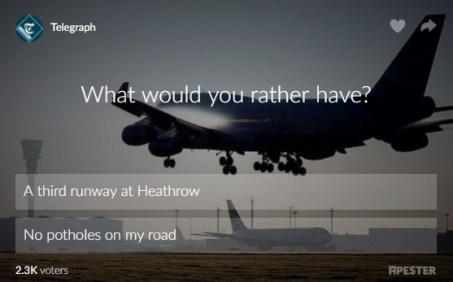
Ultimately, the media does us a disservice by framing idiotic questions and false choices like whether we would prefer a new runway at Heathrow Airport or for the potholes on our road to be fixed:
third-runway-at-heathrow-airport-or-no-potholes-on-my-road

Ask your average group of people whether they want to see enacted a policy which benefits them personally or one which has larger but more disparate benefits spread among a much larger population, and a majority will vote with their own immediate self interest – 67% to 33% as it currently stands on the Telegraph’s online poll.

Does that mean that this is the better policy? Absolutely not. There are times when we are one nation and must subordinate the narrow interests of certain interest groups in order to further the national interest, and there are many other times when we should be able to organise ourselves as communities and regions without the heavy-handed interference of Westminster. And while central government should absolutely be rolled back in many areas, subjecting new airport runway capacity decisions to a citizen’s pothole veto is precisely the wrong way to run a country or frame important strategic decisions.

We need to up our game. Politicians, journalists, ordinary citizens alike, all of us need to try harder to live up to the momentous times in which we find ourselves.

If we stop shooting for the middle and actually try to make the most of the historic opportunity afforded by Brexit then in a decade’s time we might witness a rebirth of local democracy and improve citizen participation in the democratic process at all levels. Better still, we might stop behaving like such dependent children, looking petulantly to Westminster for solutions to every issue we face. And if we stopped demanding that the same people who deal with matters of war and peace and the economic stewardship of the country also ensure that the Number 12 bus runs on time then maybe, just maybe we might improve both the quality and speed of critical decision making in this country.

And yes, maybe then there will finally be a gleaming new runway at Heathrow Airport, and at Gatwick too. Because voting for Brexit was the far-sighted, responsible act of enlightened citizens, not grumbling, parochial NIMBYs. And it should be the first of many such acts, not the last.
 

heathrow-airport-departure-lounge

Top Image: Michael Gaida, Pixabay

Bottom Image: LadyDisdain, Pixabay

Support Semi-Partisan Politics with a one-time or recurring donation:

Agree with this article? Violently disagree? Scroll down to leave a comment.

Follow Semi-Partisan Politics on TwitterFacebook and Medium.

German Politicians, Drunk On Power, Prepare A Fresh Assault On Free Speech

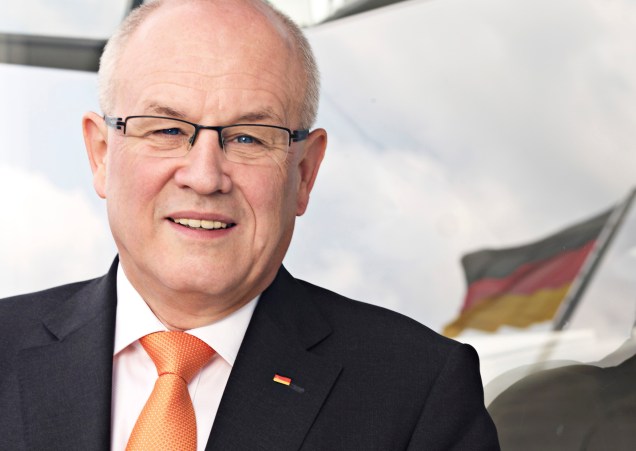
volker-kauder-free-speech-social-media-censorship

German social media users test their leaders’ patience by exercising awkward, unruly free speech at their own peril

German politicians, ever anxious to squash strident criticism of their unilateral and, uh, somewhat controversial decision to expand the population by nearly a million migrants and refugees in the space of a year, are rounding on social media companies to strike another blow on already-constrained freedom of speech in Europe.

From Deutsche Welle:

Volker Kauder, a member of German Chancellor Merkel’s CDU, has said Facebook should pay for failing to remove online hate comments. There has been a surge in xenophobic posts as refugees have arrived over the last year.

Speaking to German magazine “Der Spiegel,” Kauder said: “The time for roundtables is over. I’ve run out of patience.” He said if companies like Facebook, Google and Twitter failed to remove offensive comments within a week of them being posted, they should be penalized with a 50,000 euro ($54,490) fine.

Social media websites needed to rethink their strategy, he said. “Otherwise, I have another suggestion. Cigarette packs always carry a warning that smoking can be dangerous. Why don’t we ask these [social network] providers to carry a warning on their websites, saying: ‘Anyone who communicates here must expect insulting remarks,'” Kauder said.

Kauder also insisted that the justice ministry should demand that the companies submit the IP addresses of people who posted hate messages on social networks.

Because heaven forfend that politicians should have to explain their decisions and win support for their actions (or better yet, follow the will of the people in the first place once in awhile). Far better to simply make it increasingly difficult for people to register their boisterous dissent.

Note the language. Kauder has “run out of patience”, suggesting that free speech in Germany is something granted to citizens at the sufferance of their thin-skinned leaders rather than an inalienable right. And of course that is exactly how it is in Germany, and most of Europe (including Britain). If some jumped-up politician decides that the civil discourse has become too un-civil – or, let’s be realistic too critical of them – then it is perfectly legitimate for them to turn the screws on private companies to shut it down.

Note too the ludicrous “public health” defence creeping into politicians’ language. One interpretation of Kauder’s threat to slap a mandatory trigger warning on the home pages of social networks is that he thinks so little of the German people’s intelligence that he genuinely believes they might currently be unaware that websites where political issues are discussed may contain opinions with which they disagree. That is one interpretation. But the other one (and the correct one in my view) is that it is simply a way of trying to hurt private enterprise for not bending the knee and doing government’s bidding.

Stephen Fuchs of the German-American culture blog German Pulse shares the same suspicions:

Do I think Germany is out of line to expect a level of cooperation to remove highly offensive posts once reported? No, not entirely. Where I begin to disagree though comes when any government starts policing excessively to the point where our outlets for expression become restricted by a set of rules that make any level of opinion a bannable offense.

How long until Germany pushes Facebook to delete any negative comments or opinions about a certain political party or candidate?

Negative remarks about refugees are deemed hate speech in Germany, but what about the negative remarks about Merkel’s refugee policies? Should we expect Facebook or Twitter to delete those immediately as well?

Maybe the government would be better off addressing the real issues that lead to the divisiveness, instead of playing the “you hurt my feelings” game online.

This is why free speech needs to be an absolute and indivisible right. It is a fragile freedom, with the slightest infringement causing a crack which easily grows and fractures our entire right to self expression. And while some (like Fuchs) may find it distasteful, the battle for freedom of speech must be fought at the unpalatable margins. Only by defending the rights of the racist to spew their bile about Syrian refugees can we be confident of preserving the upstanding citizen’s right to criticise German immigration policy without fear or expectation of censorship.

And as German Pulse rightly points out, no one step, no new draconian crackdown on freedom of expression is ever enough – just as one new health warning on cigarettes sugary food is never enough for the public health police. Individuals and companies cede more of their rights and autonomy, and it only ever emboldens the state to demand yet more.

Demanding that social media companies submit the IP addresses of users who post “hateful messages”to the justice ministry suggests that the German government (or at least significant factions within the ruling Christian Democratic Union) aims to become much more proactive in their persecution of thought and speechcrime. Why dream of building a massive database of social media users who type unacceptable keywords or are reported for causing “offence” by their thin-skinned peers unless you plan on unleashing some kind of retribution on them in response?

This is yet another dark day for free speech in Europe, but perhaps there is an upside – Theresa May will be able to find so much common cause with Angela Merkel over their mutual contempt for basic civil liberties that their shared authoritarianism could yet grease the wheels of the upcoming Brexit negotiations.


facebook-censorship-free-speech

Top Image: Wikimedia Commons

Support Semi-Partisan Politics with a one-time or recurring donation:

Agree with this article? Violently disagree? Scroll down to leave a comment.

Follow Semi-Partisan Politics on TwitterFacebook and Medium.

No Amount Of ‘Education’ Will Make Sceptical Europeans Love The EU

What to do when the continent’s biggest military power and second-largest economy decides to leave your crumbling, tarnished and perennially unwanted supranational political union? Finally consider meaningful reforms? Engage in a sincere listening exercise? Devolve power back to nation states and local communities? Do anything, anything at all, to signal that the European Union might be something that works for the people rather than something which is done to them?

Of course not. When faced with incontrovertible evidence that citizens are starting to rebel en masse against the idea of shared sovereignty, dissolving borders and supranational government, clearly the correct thing to do is to declare that European citizens simply don’t understand the wonderful gift bequeathed to them, and then pledge to funnel more money towards their re-education.

From the Guardian:

The European commission will spend tens of millions more euros promoting the ideal of the EU citizen, in defiance of British ministers, under plans drawn up by officials in Brussels in the wake of the Brexit vote.

Officials for the European parliament claim there is now a clear need for a significant increase in spending on the Europe for Citizens (EFC) programme, which aims to foster the notion of an EU citizenry. The programme had its budget cut from €215m (£185m) to €185.5m (£159m) after a request from Britain in 2013.

“Considering the current political climate, in which an increasing number of citizens question the foundations of the EU, decisive action is indispensable,” an assessment of the programme by officials in the European parliament reports.

“It is for this reason that the reduction in funding for the EFC programme is a serious handicap to successful implementation: to reiterate, the budget for the current EFC programme is €185.5m (down from €215m under the previous programme), which amounts to merely 0.0171% of the EU multiannual financial framework.”

The aim of EFC is said to be that of developing “a better understanding” of the EU across all its member states, to fund remembrance events for key moments in European history and combat scepticism about the EU project.

The assessment document says that funding “which promotes and enables citizens to engage in European matters is of vital importance, especially in times when Euroscepticism is on the rise”.

This only emphasises the degree to which the European Union is an answer to a question which was never even asked. If the various peoples of Europe had gradually come to realise over the course of the 20th century that they shared such a common heritage of laws, language, culture and strategic interests that they wanted to institute a shared common government then the EU or something like it would have developed organically.

But of course no such thing happened – the idea of supranational political union was artificially imposed on European people largely by stealth and in secret over the course of many decades. And while many members of the European political elite get misty-eyed over the EU, the majority of its citizens tolerate rather than welcome this extra layer of government. The flag and the anthem are utterly meaningless to most of the EU’s 510 million citizens – the spine does not stiffen nor the heart quicken at the sight of the twelve stars or the strains of “Ode to Joy”. And unlike the American founding fathers, the secretive “founders” of the EU are unknown, unloved and languish in richly-deserved obscurity.

The hard truth for the euro-federalists is that no amount of money spent on “education” will make people fall in love with the European Union. Love of family, community and country is something which must well up from within; it cannot be successfully imposed by external agents. And likewise, if people do not feel instinctively European over and above their distinct national identities, a true European demos cannot be created – despite the best efforts of the European Union’s architects to defy both human nature and democracy.

Double the peak budget and spend another €215m on idealising the European Union and creating uncritical, misleading propaganda and it will still make no difference, save lining the pockets of opportunistic “cultural” and “artistic” parasites who will happily take taxpayer money to plaster the EU logo over their concerts, plays and workshops.

In other words, it is the perfect EU project. Just don’t expect it to make the slightest bit of difference to anything at all.


eu-europe-for-citizens-programme

Support Semi-Partisan Politics with a one-time or recurring donation:

Agree with this article? Violently disagree? Scroll down to leave a comment.

Follow Semi-Partisan Politics on TwitterFacebook and Medium.

Handed A Softball Question On ISIS, A Miscalculating Owen Smith Self Destructs

Owen Smith, the supposedly mature and electable alternative to Jeremy Corbyn, is nothing but a pale, naive and cheap imitation

There could hardly have been an easier question asked of the two Labour leadership contenders, Jeremy Corbyn and Owen Smith, during the hustings/debate broadcast on the BBC’s Victoria Derbyshire show this morning.

Moving the focus on to the Islamic State (sorry, so-called Islamic State – this being BBC world), Derbyshire asked both men whether or not they believed that any peace process in Syria should involve representatives from ISIS.

Immediately alarm bells should have been sounding in Owen Smith’s head, for this was the most primitive of political traps. Anything other than a robust “hell no!” would instantly be taken to mean woolly socialist accommodation with Islamist extremism, and so the correct thing to do was clearly to temporarily forget nuance, give the robust “hell no!”, and then move on.

Even Jeremy Corbyn managed to get it right. He was clearly lying through his teeth – given his public statements on Hamas and other violent organisations, everyone knows that a Prime Minister Jeremy Corbyn would fawningly seek to include ISIS in any negotiations. That’s just who he is. But even Jeremy Corbyn, the man who supposedly lacks a political radar, recognised the trap and said “They’re not going to be around the table, no” when put on the spot by Derbyshire.

Meanwhile Owen Smith, desperate to out-socialist Corbyn at every turn while portraying what he mistakenly thinks is an air of grown up realism, charged headlong into the trap, saying:

My record is I’m somebody who has worked on the peace process in Northern Ireland for three years, I was part of the UK’s negotiating team that helped bring together the loyalist paramilitaries, the DUP in particular into the process, alongside Sinn Fein, and my view is that ultimately all solutions to these sorts of crises, these sorts of international crises, do come about through dialogue. So eventually, if we are to try and solve this, all of the actors do need to be involved but at the moment ISIL are clearly not interested in negotiating.

I’m sorry, which one is the waffling socialist dilettante with no understanding of political communications again? Because for all the world it looks as though Owen Smith is the prevaricating incompetent here, not Jeremy Corbyn.

Let us count the ways in which Owen Smith is wrong. Firstly, there is no comparability between the Troubles in Northern Ireland and the ideology-driven, pan-national phenomenon of the Islamic State.

While it sounds statesmanlike and mature (clearly what Owen Smith was striving for) to intone that serious compromises have to be made on both sides in the pursuit of peace, citing the Northern Ireland peace agreement as evidence, it is a very poor comparison. For the Troubles, for all their complex history, were characterised very much by the narcissism of small differences – the furious hatred  which built up between two very similar communities living side by side (Catholic vs Protestant, Nationalist vs Unionist).

When peace negotiations were underway, both sides were prevailed upon to accept a power-sharing agreement in a devolved assembly as well as weapons decommissioning and early prison release for convicted terrorists on both sides. The shared pain was ultimately acceptable to both sides because there was an attractive, shared goal to work towards in the form of a peaceful and more prosperous Northern Ireland.

The difference between the West and the Islamic State (or even between peace-loving Syrians and the Islamic State) does not fit this profile in the slightest. We are not talking the narcissism of small differences, but the belligerence of exceedingly large differences. Islamic State seeks to conquer and occupy territory, and impose its impossibly strict, fundamentalist Wahhabist dogma on all those with the misfortune to become its citizens. There is no compromise, no half-way terms of peace for which the subjugated people of Iraq or Syria could sue, let alone countries like Britain, France and America ,which are the Islamic State’s overseas targets.

The kind of negotiations fancifully suggested by Owen Smith in his failed bid to appear mature and statesmanlike are simply not possible with Islamic State. By their own words and actions, ISIS does not compromise or water down its demands or dogma. “Live and let live” is neither possible nor desirable. Nobody is realistically going to get the Iraqi government to agree to a power-sharing deal involving the surrendering or dilution of sovereignty over its cities. And in the case of Syria, the ongoing civil war means that there is no one authority to speak on behalf of Syrians anyway.

More than anything, this incident serves to underline the sheer superficiality of the Owen Smith candidacy. While this blog was previously encouraged that Smith had at least a few policy ideas of his own (one step better than the hapless Angela Eagle, whose pitch for the top job seemed to rest entirely on her winning personality) these have proven to be nothing but a restatement of Jeremy Corbyn’s own ideas, the kind of policies which a Corbyn manifesto would no doubt have outlined prior to the general election anyway.

With almost zero policy difference between the two candidates, Owen Smith’s only remaining advantage over Corbyn was his supposed electability. Unlike Corbyn, we were told, Owen Smith will avoid making the faux-pas, media missteps and party management howlers which have caused the parliamentary party such unease. And yet in his desperation to defend his left flank, Owen Smith walked into the kind of headline-generating trap that even Jeremy Corbyn managed to avoid.

Did the Parliamentary Labour Party really just squander any opportunity to take the fight to the Tories after the EU referendum and the ascension of Theresa May just to replace Jeremy Corbyn with a third-rate flop of a leadership candidate in the form of Owen Smith? Is this oily, vacuous dilettante really the best that they can do?

Where are the latter-day equivalents of Barbara Castle, Peter Shore, Hugh Gaitskell, Clement Attlee, Aneurin Bevan or Tony Benn?

How small are the creatures who now seek to bestride the shrunken Labour Party?


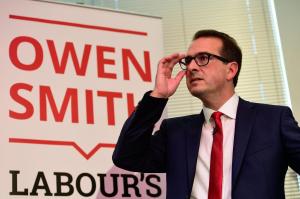
Owen Smith - Labour Party Leadership Coup

Support Semi-Partisan Politics with a one-time or recurring donation:

Agree with this article? Violently disagree? Scroll down to leave a comment.

Follow Semi-Partisan Politics on TwitterFacebook and Medium.

Banning The Burqa And Burkini Is Not The Correct Liberal Response To Conservative Islam

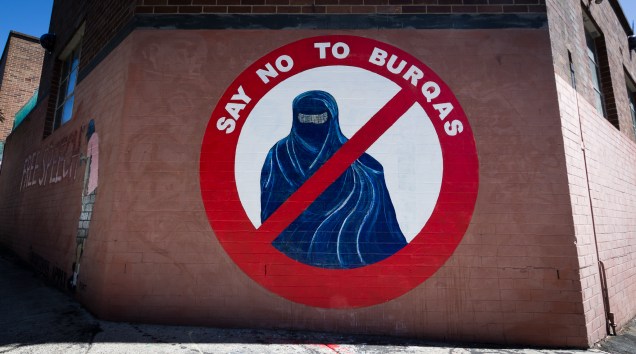
Free Speech - Say No To Burqas - Burkini - Mural

In a liberal democracy, government has no business dictating what clothing is or is not acceptable to wear – and banning the burqa or burkini only further delays the long-overdue day of reckoning between conservative Islam and modern Muslim women

France is now taking its official ban of the burqa one step further, as the mayor of Cannes announces a ban on burkini beachwear on the grounds that the concealing garment poses a security risk.

The New York Times reports:

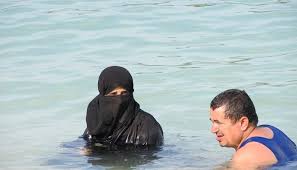
The mayor of the French resort city of Cannes has barred women from bathing on public beaches in swimsuits that reveal too little skin.

At issue are the full-body, head-covering garments worn in the water by some Muslim women, which have been nicknamed burkinis, an amalgam of burqa and bikini. The mayor’s ban has drawn protests from French Muslims who say it is discriminatory.

That the debate is occurring on the Riviera, the Mediterranean vacation area that has been on edge since the terrorist attack on a Bastille Day celebration in nearby Nice, has only added to the controversy.

Critics of the ban say it risks deepening rifts with France’s Muslims. It is the latest example of the long-running tensions between France’s forceful — some say inconsistent — commitment to secularism and the desire of many Muslims to express traditional values like modesty through their attire.

The mayor’s ordinance, which runs until Aug. 31, bars people from entering or swimming at the city’s public beaches in attire that is not “respectful of good morals and secularism” and that does not respect “rules of hygiene and security.” Offenders risk a fine of 38 euros, or about $42.

Why are burkinis against the rules? “Beach attire that ostentatiously displays a religious affiliation, while France and places of worship are the target of terrorist acts, is likely to create risks to public order,” the ordinance says.

If this were being done in a public place on the grounds of security, the mayor of Cannes would be in a much stronger position, and would gain this blog’s sympathy, particularly after the appalling terrorist truck attack in Nice on Bastille Day. There is a very logical and powerful argument to be made against the prohibition on wearing any overtly concealing clothing when entering public buildings such as town halls, courts, public schools, parks or beaches, just as motorcycle owners are asked to remove their helmets before entering a bank branch.

But the mayor of Cannes has taken this action with specific reference not to security, but in the name of  laïcité (the separation of church and state). We know this because French government officials have explicitly said so:

This costume [the burkini], Mr Lisnard [the mayor] declared, “ostentatiously displays religious affiliation”, could “disrupt public order”, and might even, in the words of one official, demonstrate “an allegiance to terrorist movements”.

Now secular government is broadly a very good thing, and societies become more free as they cast off the remaining vestiges of theocracy – one of the reasons that this blog is so keen to get rid of the Lords Spiritual and remove Britain from Iran’s company as the only countries where unelected theocrats sit in the legislature by right.

However, while citizens – even those of faith – should absolutely demand secularism from their government, it does not follow that the government can unjustly impose secularism on the people as they go about their lives. That would be a grave wrong, and the growing movement to ban the burqa represents an abuse of power by governments against their own citizens.

The Telegraph’s Juliet Samuel agrees:

Now it’s hard to muster much enthusiasm for the burkini. It harks back to an age, still dominant in much of the world, when a woman’s worth was measured by her modesty. It belongs to a belief system in which women cannot experience one of the joys of the natural world – feeling the wind and sea on her body. It suggests that the female form is shameful and provocative. But those who want to ban the burkini for these reasons are forgetting one of the most important values of a free society: we don’t all have to believe the same thing in order to live together.

Every day, thousands of Britons wake up and do things I think are crazy and wrong. They drink instant coffee, listen to Magic FM and wear Spandex. Some wear high heels or bowties. Others have plastic surgery, get tattoos, cheat on their spouses, drink too much, shout too much and vote Labour. They get their news from Facebook and watch hours of trashy TV. Many of them pray to a god, convert to Buddhism, believe in crystal healing or sing in Church on Sundays with their eyes closed and their arms in the air. I don’t do or understand any of these things. But I let them get on with it.

[..] Like a theocratic regime, the Cannes burkini ban forces some Muslim women to choose between their religious and their national identity and perniciously suggests that their choice of dress is a political statement, whether they mean it to be or not. It is unsurprising that the French should lead the way in this kind of thinking, because in France nothing is allowed until the law permits it, whereas in Britain, everything is allowed until the law forbids it. So, in the name of enforced secularism, France forbids covering the face in any public setting, whether it’s for religion or Hallowe’en, and bans religious symbols like hijabs (hair coverings) in state institutions such as schools. The burkini ban takes this illiberal trend even further by making it illegal to wear “ostentatious” religious symbols even when going about one’s own private business.

[..] A normal Muslim, who has grown up seeing a hijab as an unremarkable but important symbol of womanhood, finds herself forced to choose between respect for the law and her family’s everyday customs. Is this senseless, banal and brutal ban more likely to awaken a hidden feminist creed and a love of La République in her heart or to make her feel attacked and excluded from mainstream society?

Strong societies cannot permit parallel legal or political systems, such as Sharia courts or caliphates. But they can cope with differences in dress and customs. They should not allow obstructive religious clothing like face‑coverings to disrupt teaching or court hearings. But if a Muslim woman wants to wear a baggy wetsuit and go for a swim on a public beach, that does not make her a threat to Western society. The real enemies of freedom are not the burkini-wearers, but the politicians who want to ban them.

Amen to this. Samuel is quite right to fear the politicians over the burkini-wearers, even if we may disagree with their sartorial and religious motivations. Indeed, we should fear any further legitimisation of the idea that our rights derive from the state, who can suspend our freedoms at will in the name of “security”.

One of the most alarming things about this century has been the rejuvenation of authoritarianism, spurred on by the growing threat of Islamist terror. Whether it is manifested in airport security theatre, the banning of religious jewellery or other symbols from the workplace or the dystopian suppression of free speech in universities, public squares and social media, we have become markedly less free in sixteen years with precious little to show for it.

But more than all of that, if we are serious about tackling the skewed ideology and belief system which preaches that women must be modest to the point of having to bathe fully clothed, then a government ban is the absolute worst way to go.

Such a diktat of law effectively exonerates conservative Islam (or fundamentalists of other religions) from any responsibility to reform and recognise the equality of women, gay people and other minority groups. Ban the burqa (or burkini) and conservative Muslims may obey. But not only will they immediately be able to portray themselves as victims in the process, claiming persecution for their religious beliefs, they will be under no further internal pressure to reconsider and reform centuries-old religious diktats in the changed context of modern society.

If we want a world where the burqa is relegated to fringe extremists and museums, then the pressure must come primarily from Muslim women. Only when they demand their right to dress as they please and force the reluctant accommodation of religious authorities will they be able to win the parity of treatment which has been missing for so long.

The job of Western governments in all of this is not to interfere or seek to be a white knight, banning the burqa or burkini on the behalf of oppressed women. Government’s role is to make sure that Muslim women have full access to the legal system to sue for their equal treatment in court where it is being infringed, and to clamp down insidious efforts to set up parallel justice systems based on Sharia law or any other religious code instead of shamefully welcoming them in the name of “multiculturalism”.

We should be encouraging a more liberal form of Islam to prevail over the more oppressive and fundamentalist conservative wings. We need more Ahmadis and others like them, openly tolerant of other faiths and proudly patriotic. And when these groups of progressive Muslims are attacked we should stand shoulder to shoulder with them rather than shamefully currying favour with their persecutors in the name of “multiculturalism”.

But ultimately, this is an internal enlightenment which must take place within Islam. It is not the job of provincial mayors in France or government departments in Britain to “rescue” their female Muslim citizens from oppression; nor would any such rescue hold any legitimacy. Western society can take certain actions to encourage this revolution among its Muslim communities, but ultimately the heavy lifting must be done by Muslim women standing up to claim their own full rights as citizens.

Widespread bans on the burqa or burkini may make us feel good or even allow some of us to burnish our feminist credentials, but that is the only good that they will accomplish. And meanwhile, the long-overdue day of reckoning between modern Muslim women and the conservative wing of the Islamic faith will be deferred indefinitely, to everyone’s cost.


Burkini ban

Top Image: Impulse Today

Support Semi-Partisan Politics with a one-time or recurring donation:

Agree with this article? Violently disagree? Scroll down to leave a comment.

Follow Semi-Partisan Politics on TwitterFacebook and Medium.