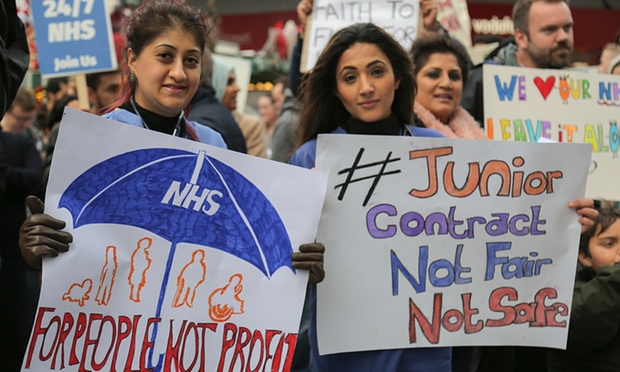
Who Is To Blame For The NHS Junior Doctors’ Strike? Look In The Mirror

NHS Junior Doctors Contract Strike

By reflexively worshipping the NHS, vilifying people who don’t and rewarding politicians who tell us only what we want to hear, the junior doctors’ strike – and everything else wrong with the health service – is our fault, and ours alone

Who is to blame for the NHS junior doctors’ strike?

Is it heartless Jeremy Hunt, that doctor-hating, treatment-denying Conservative villain at the Department of Health? Is it the Evil Tories in general, with their single-minded obsession (mysteriously never realised despite all their accumulated years in power) with privatising and destroying Our Precious NHS? And if not them, who could it be? The capitalists? The bankers? Katie Hopkins?

Surely anyone and everyone is to blame, apart from ourselves.We love Our NHS. We are good people who believe that healthcare free at the point of use is one of the fundamental rights of citizenship. We stick up for the NHS at every turn, demanding that politicians pay obsequious lip service to the organisation every time they run for office. We’ll happily slap the NHS logo on our Facebook profile picture, paint it on our faces, wear it on a badge, lapel pin or t-shirt. You name it, we’ll do it to virtue-signal the love we have for Our NHS.

And that, right there, is the problem. Not Jeremy Hunt, not the Evil Tories, not Katie Hopkins. Us.

We don’t want elected officials who take a hard, uncompromising look at changes in medical treatments, life expectancies, the public finances and best practice from overseas to continually assess whether the NHS – that uniquely British solution to healthcare coverage – is still fit for purpose in the twenty-first century, and what changes may be beneficial or necessary.

We don’t want elected officials who tell us that difficult decisions might have to be made – that providing the latest treatments to an ageing, fattening population will cost all of us more in taxes, require radical overhaul of the NHS model, or both. We want our politicians to find the money to provide a world-class health service without disrupting other areas of public spending, or the fatness of our own wallets.

And we certainly don’t want elected officials who do anything to upset the NHS-Industrial Complex – that vast network of people, organisations and vested interests who are first to squeal and protest (always in the name of “public safety”) when their own livelihoods or ways of working are threatened. Like children listening to a trusted school teacher, we innocently take the words of such people as gospel.

Of course, this situation is quite unsustainable. And when any one element of this vast human bureaucracy reaches breaking point – whether that is manifested in industrial action, hospital death scandals or longer waiting lists – we will look for anyone to blame and attack for the fact that these problems have gone unaddressed. Anyone other than ourselves.

The Economist reaches the same conclusion in a very welcome “plague on all their houses” review of the context behind the first junior doctors’ strike:

[..] there is a more serious way in which the public is to blame for the sickness of the health service. The electorate that notionally adores “our NHS” and propels a saccharine song by health workers to the top of the Christmas charts shows remarkably little willingness to pay more in tax towards what remains a relatively cheap system. Without extra money and facing ever wider and wrinklier patients, the NHS must tighten its belt by £30 billion ($43 billion), or about one-fifth, by 2020. It is in this context that Mr Hunt is trying to expand services to evenings and weekends. Pity the well meaning health secretary, pity the hardworking doctors—and blame the sentimental but hypocritical British public.

The famous maxim says that people get the politicians and leaders that they deserve. Well, the same can be said for healthcare, too. We refuse to look difficult truths in the eye, preferring to ignore them in the risible hope that a healthcare system built in 1948 can still be fit for purpose in 2016, if only we pump a bit more money into it. And a bit more. And a bit more again.

We deserve the NHS we currently have, with its air of permanent crisis, in all its faded glory. It is the sum total of all our misplaced pride, boastfulness, smugness, ignorance, fear of change, intellectual laziness and lack of vision.

We have become self-entitled public service consumers rather than thinking citizens, demanding easy answers and instant results from our elected leaders, while rewarding all of the wrong behaviours when it comes to healthcare policymaking.

We have become the kind of intellectually dull society that will happily produce a cheesy Christmas hymn to the NHS and then propel it to Number 1 in the charts, but prefers to sit and vegetate in front of Britain’s Strictly Come Bake-off On Ice rather than question whether the organisation we were just singing about is fundamentally fit for purpose.

On this rare occasion, the Economist’s editorial line is quite correct. When it comes to the failings and shortcomings of the NHS, the government, the health secretary of the day and individual NHS staff are comparatively blameless.

It is we, the British people, who are most at fault for singing worshipful hymns of praise to a healthcare system we will neither properly fund, nor meaningfully reform.

NHS Choir - Harriet Nerva - 2

Agree with this article? Violently disagree? Scroll down to leave a comment.

Follow Semi-Partisan Politics on TwitterFacebook and Medium.

The Daily Toast: Iain Martin’s Brexit Ultimatum To Tory Ministers

Conservative Eurosceptics - Brexit - David Cameron

Politicians with the integrity to openly declare their stance on the biggest political issue of our generation should be the rule, not the exception

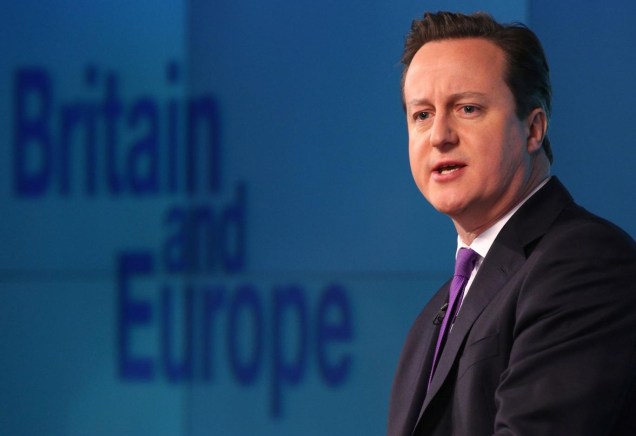
Like most people in Britain, Iain Martin has had enough of equivocating politicians – specifically Conservative cabinet ministers – refusing to take a public position on Britain’s EU membership, and maintaining the fiction that David Cameron’s cosmetic “renegotiation” can have any possible impact on their decision.

Martin goes so far as to call Conservative ministers “a bunch of careerist scaredy cats”, writing in CapX:

Britain’s looming vote on the EU is not – or should not be – politics as normal. It is a historic moment, in which the UK will decide to take one of two quite different paths. Party management and careers matter, of course, but sometimes there are choices that should be about something more than the mere game of politics. The EU referendum is one such event.

This is absolutely correct. Whatever one’s views on the European Union and Brexit, surely all of us can agree that this debate is infinitely more important than the minor tweaks to education, healthcare and fiscal policy which separate the various political parties.

Having established the importance of the coming referendum, Iain Martin issues the following challenge:

Ministers, it is make your mind up time. Although David Cameron’s renegotiation with the EU for new membership terms could have been the real deal, it is clear that it will deliver very little. It is In or Out, probably as soon as this summer. For that reason, ministers need to do something that is highly unfashionable and considered downright deranged in the British Establishment: decide what you believe – enthusiastically for In, reluctantly for In, or Out because you think it is best for your country – and get ready to fight for it at public meetings across the land. Don’t be scared. You are grown men and women. You might even be surprised how much voters like politicians saying what they believe rather than what is convenient for their careers.

This argument is – I know – a stretch, considering how careerist politics has become. But for anyone playing a leading role in the affairs of a nation to base such a vital decision purely on career progression or fear of friends is not only wrong, it’s pathetic. And in ten years time, none of it, all the hedging and game-playing, will matter a jot. By then David Cameron will be having a snooze after lunch in rural Oxfordshire. Osborne will be running the World Bank or a hedge fund. The decision on the EU, on the other hand, now that will have mattered a lot.

The current failure of Conservative ministers and other senior politicians to break cover and nail their colours to the mast only contributes to the (depressingly accurate) perception of contemporary politicians as principle-free careerists squabbling over the right to sit in technocratic management of our public services, rather than principled statesmen grappling with weighty political issues.

In our current political climate, where the Conservative Party runs away from small government principles in pursuit of the centre ground and Jeremy Corbyn’s Labour Party is criticised for actually being left-wing, it is clear that the vast majority of politicians prefer the former to the latter.

Power is pursued for its own sake, even if it means the centrist coalition of supporters cobbled together to deliver victory make it impossible to do anything remotely radical, transformational or different once in office. Thus, despite the overwrought rhetoric from both sides, neither Labour nor the Conservatives  propose a single policy which would move Britain away from its current centrist landscape.

Politicians who came of age in this age of the Tyranny of Centrism find it inordinately difficult to express a strong, sincerely held political opinion because all of their training and professional experience teaches them that pragmatic caution and a reflexive fear of fixed beliefs are the surest route to success.

Whether it’s the NHS, tax reform, constitutional reform or Britain’s relationship with Europe, MPs are strongly predisposed to fiddling around the edges themselves, while accusing others of partisan recklessness. Thus change is only ever incremental, and nearly always in the direction of More Government – the path of least resistance for any elected official.

Unfortunately, too many within the public and the media are willing to excuse this state of affairs, urging us to put ourselves in the politicians’ shoes rather than demanding sincerity and principle from our elected officials. It is therefore particularly pleasing to see Iain Martin losing patience with the status quo and demanding that those who seek to run the country actually declare the direction in which they would lead us.

The Tyranny of Centrism can only continue so long as we tolerate and enable it by rewarding glib superficiality and punishing strong displays of principle from our politicians. And on an issue as important as Britain’s future relationship with the EU, this is no time for fence-sitters, careerists or cowards.

EU Renegotiation - Brexit - European Union

Agree with this article? Violently disagree? Scroll down to leave a comment.

Follow Semi-Partisan Politics on TwitterFacebook and Medium.

Why I Write

Political Blogging

At the risk of sounding like a PBS telethon…

Why isn’t there more good journalism out there? Gawker paints a depressing picture for those of us who toil away in the often thankless business of writing.

Hamilton Nolan writes:

Many writers believe that our brilliant writing will naturally create its own audience. The moving power of our words, the clarity and meaning of our reporting, the brilliance of our wit, the counterintuitive nature of our insights, the elegance with which we sum up the world’s problems; these things, we imagine, will leave the universe no choice but to conjure up an audience for us each day.

Time and experience have long since disabused me of any such idea. Fortunately, writing about politics and public policy – if immensely frustrating at times – is also its own form of reward.

Nolan concludes:

Maybe there is a talented young writer out there with a dream of starting the very best, smartest magazine or website that has ever existed, and building it into their very own historic legacy. I am here to tell you that it will not work. The business of media has very little, if anything, to do with quality journalism. If you aspire to be a Writer of Legitimately Good Things, the best you can hope for is to get the prestige spot that is paid for by the garbage. To hope for a prestige spot that is not paid for by garbage, or by a lone rich wacko, or by a new advertising technology, but instead by the mass audience that will flock to your brilliance is to ask for too much. If you are able to get a job writing good stuff, you are one of the lucky ones in the big Exercycle of Mindless Entertainment that is “the media.”

Now, political writing certainly shouldn’t be an easy career option. After all, it takes a certain arrogance to expect to be remunerated for sitting at a keyboard ranting about the state of the world and pontificating on the “obvious” solutions to society’s ills, particularly when there are people out there doing real work like serving in the armed forces, providing healthcare, creating world-class art, working out how to get to Mars or producing amazing, unthought-of new consumer products.

There are certainly times when my own efforts at political writing seem depressingly far from the high ideal set out by George Orwell, and much closer to the ranting of the pub bore or the slick keyword focus of the SEO marketer – though having done this (with varying levels of commitment) for four years now, I hope that I am somewhat better than when I started out.

Earlier this week I was at a talk given by Dan Hodges about his general election book “One Minute To Ten”, and got chatting to a senior journalist from the Sunday Times. I put to him that while political blogging may have been ripe with promise ten years ago, the format seems to have dried up today, and readers left with the choice between established legacy media outlets or the latest viral clickbait funnelled through social media.

He didn’t disagree, and hammered home the fact that many readers currently have almost zero loyalty to any specific news outlet, and instead get their news according to what happens to be trending on social media or appear in their (often bias-reinforcing) news feeds. This trend is reflected in the traffic stats for Semi-Partisan Politics. A sizeable minority of traffic now comes through Facebook in particular, and there is always the temptation to devote time and effort to promoting pieces on Facebook to get more eyeballs on the latest piece, even if it brings in few potential long-term readers with whom one can develop a relationship.

The one positive trend at present is the growing and thriving community of Brexit bloggers and campaigners coalescing around eureferendum.com and the work of Dr. Richard North to promote Flexcit – by far the best (and only) properly thought-through plan for how Britain might best leave the European Union and re-emerge as a globally engaged, prosperous sovereign democracy.

If only the same collegial, rigorous and dedicated spirit could be found elsewhere in the political blogosphere as exists among many of my fellow Brexiteers (see links in the sidebar on the right), journalism in this country – particularly citizen journalism and the concept of the campaigning blog – might not be in quite such a parlous state.

Regardless: whatever the people at Gawker say, Semi-Partisan Politics will continue to grow and flourish as we enter 2016, and will campaign – loudly and unapologetically – for the following goals and ideals:


Brexit: freedom from the European Union

Democracy and national sovereignty

Constitutional reform and a federal UK

Separation of church and state

Healthcare reform, not NHS worship

Smaller, smarter government

Free speech, without restriction

Fighting timid centrism on the Right

Fighting empty virtue-signalling on the Left


If you agree with these objectives and enjoy this blog’s coverage of UK politics and current affairs, please do consider using the PayPal tip jar to make a small regular contribution or a one-time donation:


Any reader donations will 1) be a personal ego boost to myself, 2) help me to do more original reporting, like the successful live blog of last year’s UKIP annual conference, and 3) help me promote this site and the work of other like-minded writers – particularly in the crucial effort to win a “Leave” vote in the coming Brexit referendum – so that we can actually make a difference.

Small donations from individual contributors are not only greatly appreciated by me, but also help to preserve independent journalism and commentary in general – so that nobody has to rely exclusively on the BBC, the Guardian or the Telegraph to understand what’s going on in our country and around the world.

But it’s not all about the money. What matters even more than that (for me) is spreading the word and sharing the message – and these days, like it or not, that means social media. So if you read something you like here, don’t just sit on it. Share it on Twitter or Reddit. Email it to a friend. Be that person on Facebook who posts provocative political articles on their timeline.

2016 is already off to a good start – pageviews and comments are at their highest ever, and an appearance on a certain major national political TV show (to be announced soon) is in the works. Onwards and upwards!

Many thanks to all my readers for your continued generous support.

Follow Semi-Partisan Politics on TwitterFacebook and Medium.

Corbynites And Moderates Share The Blame For Revenge Reshuffle Chaos

Miliband appoints Abbott as Health Minister

Nobody in the Labour Party comes away from the shadow cabinet reshuffle looking very good. But particular anger should be reserved for the supposedly mature moderates and centrists, whose claim to be more dignified and trustworthy than the Corbynites has been utterly destroyed

When it comes to the conduct of Labour MPs during the so-called “revenge reshuffle”, LabourList’s Emma Burnell is very much of a “plague on all their houses” mindset.

Of Jeremy Corbyn and his intemperate supporters, Burnell writes:

On what planet is it a good idea to start briefing about a reshuffle and it’s potential casualties over the period more commonly dedicated to peace, goodwill and a slow news cycle?

On what planet is it a good idea to then hold that reshuffle on the day your activists got up super-early, in the cold and the rain to leaflet stations across the country thus stepping all over your own fares campaign?

On what planet is it OK to brief the potential loss of your Shadow Foreign Secretary, then brief he’s staying, then brief he might be going after all, then keep him? I’m sure the public is completely convinced of your faith in him and the job he’s doing. Anyway, not like it’s an important role…

On what planet is it even slightly a good idea to take four days to reshuffle what turns out to be a derisory number of posts?

Valid questions, all. The way that Corbyn conducted this reshuffle can be most generously described as bumbling and naive, but the aggravating words of some of his supporters and loyalists – including John McDonnell and Diane Abbott – make it seem downright vindictive and vicious.

To take just one example, it helps nobody that Labour’s shadow foreign secretary now clings on to his job a diminished figure, drained of authority after days and weeks of speculation that he would be sacked. If Jeremy Corbyn wanted to get rid of Hillary Benn because of their opposing views on Syria, that is his prerogative as leader. But to leave Benn twisting in the wind for days on end was not just personally cruel, but also very poor party management.

Of the Corbyn-hating moderates, Burnell writes:

You are not entitled to a Shadow Cabinet position. When you get sacked, take it like a grown up and act with some dignity. Particularly if you know in your heart you’ve given the Leader every reason to do it. Yes, the crowing on the left is hideous. Don’t fight hideous with hideous.

If you want to coordinate a revolution, it will take more than three junior MPs with similar politics. If Corbyn is as unelectable as you think and should be got rid of, stop bloody serving in his Cabinet. Don’t idle up to saying so, resign and get it on a bloody t shirt. If you aren’t going to do that – en masse – then shut the hell up.

Stop blaming everyone else for your woes. “It’s the Soft Left’s fault” “It’s Ed Miliband’s fault” “It’s Andy Burnham’s fault” “It’s Tom Watson’s fault” “It’s Lord Collins’ fault”. It’s your fault. You lost an election and riled the selectorate so badly with reheated, rehashed out of date Blairism. I’m not talking about Liz Kendall’s campaign (though there was far too much Blair there) I’m talking about the last 20 years. Years of disengagement, disrespect and downright dishonesty towards a membership who chose to have their revenge after suffering fools with only seething resentment for too long.

Amen. This blog has been saying the same thing since Jeremy Corbyn was first elected as Labour leader – and even earlier. The self-entitled centrists of the Labour Party are currently willing to blame anyone and everything for the rise of Jeremy Corbyn other than the fact that there exists only a rotting abscess where their own sincerely held policies and positive vision for Britain should reside.

When Labour Party members, affiliates and supporters cast their votes in the Labour leadership contest, they were asked to pick between Jeremy Corbyn, two bland machine politicians (Yvette Cooper and Andy Burnham) and one unapologetic Blairite (Liz Kendall) whose political bravery could not make up for the fact that she was seen as too similar to the present centrist Conservative government (not that David Cameron’s hysterical critics are willing to accept the fact that the government is centrist).

Given the soul-sapping choice faced by Labour supporters, it is entirely understandable that many of them embraced Jeremy Corbyn, a man who is no Tony Benn but at least maintained the courage of his socialist convictions through long years of unpopularity in the political wilderness. Jeremy Corbyn’s candidacy awoke something in the hearts of thousands of people (and not only those on the Left) who had slowly come to realise that for all the calculated bluster there was actually vanishingly little to choose between Labour and the Conservatives, or the bland centrist consensus which captures both parties.

Corbyn’s restive critics within the Labour Party seem to think that Jeremy Corbyn is the problem when in reality he is only the symptom. They think that by continually undermining their leader and forcing him from office they can make everything well again, when in reality they will still be no closer to answering the existential question facing them: what does the Labour Party of 2016 actually stand for? At least Jeremy Corbyn is able to answer the damn question without resorting to focus group approved platitudes – and that’s why he is now leader.

So who is more to blame for the “revenge reshuffle” chaos? I agree with Emma Burnell that neither the Corbynites nor the centrists-in-exile covered themselves in glory this past week, or even these past three months. In fact, the petulant, childish public behaviour exhibited by both sides has been utterly depressing.

Ultimately, however, one has to reserve special criticism, scorn and disappointment for the supposedly calm and rational Labour moderates, including those unremarkable prima donnas who flounced out of Jeremy Corbyn’s shadow cabinet this week.

Remember, the socialist Left of the Labour Party has not tasted power or influence for well over two decades, in which time their ideas have been marginalised and their ranks depleted. If we are to forgive anyone for acts of political naivety or excessive zealousness these past few months, it should probably be the people who have no living experience of official opposition, let alone government.

Jeremy Corbyn’s centrist critics, on the other hand, have no such excuse for their behaviour. They cannot blame their undignified public temper tantrums on a lack of experience – their wing of the party has been in the ascendency for years, and they know what it is to live and work under the sensationalist eye of the Westminster media. When they feed their foot-stomping anti-Corbyn screeds to the newspapers, they know exactly what they are doing.

Right now, the only claim to legitimacy held by Labour moderates is the rapidly fraying notion that they are the mature, sensible ones in this debate – that unlike the partisan extremists of the Corbyn wing, they are well versed in the art of government and compromise, and can be trusted to provide a rational, serious alternative to the Conservatives.

That claim is currently being shot to pieces, and all because a ragtag group of thoroughly unexceptional moderate Labour MPs are kicking up such a stink about their brief exile from the halls of influence that they would sooner bring the Labour Party crashing down around their heads than suck it up and accept that Jeremy Corbyn gets to call the shots until such time as he loses the support of his party membership.

If an older family member picks a fight with a younger sibling, one typically sides with the child on the basis that the adult should know better, being possessed of so much more maturity and life experience. We would rightly hold the adult to a higher standard.

At present, Labour’s moderates and centrists are holding themselves to the same desperately low standard of behaviour as the most partisan of Corbynites. And it is increasingly difficult to tell which side are the adults in the Labour family, if indeed there are any left at all.

img_0013

Agree with this article? Violently disagree? Scroll down to leave a comment.

Follow Semi-Partisan Politics on TwitterFacebook and Medium.

The Daily Toast: The Christian Case For Brexit, And Against The EU

Christianity - Europe - EU - Brexit - 3

There’s nothing Christian – or in any way moral – about throwing away our hard-won democracy in the drooling pursuit of European political union

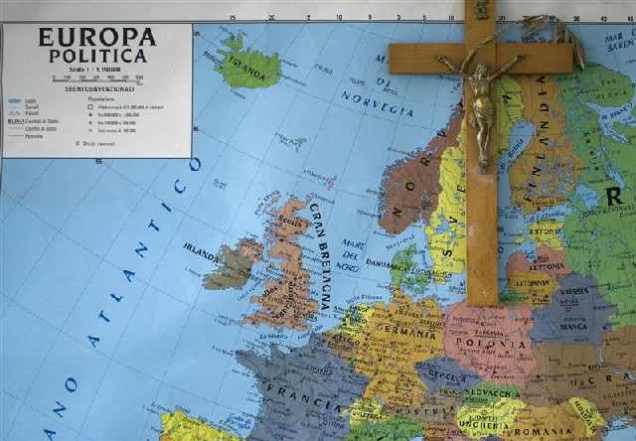
Adrian Hilton of the excellent Archbishop Cranmer blog has a very noteworthy piece in Reimagining Europe, making the rare (but very welcome) argument against the European Union from a Christian perspective.

Hilton writes:

Unlike many politicians and most bishops and other circulating elites, I don’t equate historic Europe with the political civic empire called the EU, and it seems that my desire for UK secession from this artificial construct makes me ‘un-Christian’.

How welcome these words are. The lazy but insidious notion that the continent of Europe and the political construct known as the European Union are one and the same thing is hugely damaging yet near-universally held. People worry about “leaving Europe” as if by leaving one particular (very expensive) geopolitical club, Britain would literally be levering herself away from the continent of Europe, walling ourselves off in Fortress Britain, when this is clearly not the case.

But the lazy belief that British membership of the European Union is somehow as logical and essential as our geographical location within the continent of Europe is widespread, and so it is unsurprising to see it mindlessly repeated by the Church of England.

The same goes for the risible idea that leaving the EU would be to cease any kind of friendship or cooperation with the other countries of Europe, another argument commonly deployed by europhiles, as Hilton recounts:

“So we stop working with our neighbours; finding common ground; influencing for good – not my idea of Christian,” [Lord Deben] tweeted to me a few weeks ago. Like Jeremy Corbyn, it seems, I’m locked into an otiose 1970s view of the world. Everything has changed, and I just haven’t realised that sovereign nations can no longer work effectively with their neighbours on matters such as trade, taxation and regulation: “Most big international decisions (are) made between EU and US,” Lord Deben asserted, before needling: “Why do you want Britain excluded?”

You see how the caricature goes? The EU is ‘top table’ (though it really isn’t, but that’s another blog post), and Christians who favour UK-EU secession become isolationist, xenophobic, un-(anti?)-Christian ‘little Englanders’. He didn’t say ‘fruitcakes, loonies and closet racists’, but he might as well have done. My ‘idea of Christian’ is self-evidently blinded by nationalistic bigotry and naively fomenting apocalypse. No matter how much you try to reason back with gracious statistics, humble facts and philosophical insights, the inference is clear and crushing: there is no place in the Church of the Enlightenment for those who identify with the narrow, sectarian parochialism of a national democratic polity. No informed, intelligent or discerning Christian could possibly be so spiritually witless or theologically illiterate as to advocate withdrawal from the EU.

But of course there is nothing Christian about allowing the United Kingdom – our flawed but essentially decent democracy – to be subsumed into an explicitly political supranational union which is the peculiar, flawed vision of founding fathers who – unlike their American predecessors – are largely unknown and unloved, because their elitist vision for technocratic governance so utterly fails to resonate in the hearts of Europe’s citizens.

Neither is there anything “moral” or Christian about divesting ourselves of judicial, legislative and executive sovereignty, only to slowly and stealthily transfer and pool those powers into an entity with which most of us feel absolutely no heartfelt love, affiliation or loyalty.

Or as Hilton so eloquently puts it:

I support the Leave campaign not because I desire economic isolation or social exclusion from the Continent, but to extricate the UK from the unaccountable elitist pursuit of unending politico-economic integration at the expense of democracy, accountability and liberty, which, to me, are perfectly sound biblical principles.

Ask a europhile how these principles are to be preserved in a European Union of relentless, unapologetic political integration and you will be met with a very long silence.

Ask a europhile how they plan to preserve democracy when they undermine the nation state at every turn, and give its powers to a supranational organisation which commands no feeling of affinity, and you will get tumbleweeds. Because they have no answer. Either they have not thought the issue through, or – far more frightening – they have thought about the ramifications for our democracy, but simply don’t care.

Hilton concludes:

We, the governed, ask ‘Who governs?’, and the answer is lost in a pathology of bureaucracy and unfathomable institutional structures which seem purposely designed to convey a façade of democracy while shielding the executive elite government from the inconvenience of elections. We are governed by a wealthy, supranational, technocratic oligarchy, and no popular vote can remove them or change the direction of policy. This might fulfil Lord Deben’s apprehension of righteous government, and I am sensible to the fellow-feelings of European humanity in its unanimous yearning to eradicate civil strife and internecine war. But all I see are disparate peoples desperate for the restoration of national identity against the failures of forced continental integration.

UKIP. Front National. The Danish People’s Party. Jobbik. The Freedom Party. Finns. All across Europe, eurosceptic parties – some mainstream, some more extreme and less pleasant – are flourishing because of a growing number of citizens who have had enough of enforced European political unity and remote government-by-technocrat, and who would much rather that meaningful power returned from Brussels to the level where they feel a sense of belonging – be that their region, province or country.

Too often – at least in Britain, with the media’s patronising and dismissive coverage of UKIP leading up to the European and general elections – we explain away these populist movements, or belittle their support base by suggesting that they are all economically left-behind losers or curtain-twitching village racists.

And it’s partly true, only not as an insult. If you are a well paid professional in rude financial health you can better afford to be a consumer rather than a thinking citizen. You can use your vote to signal your virtue (anyone but UKIP!) or advance your lazily thought out utopian daydreams, with little fear of the consequences. But those of our fellow citizens on the sharp edge of globalisation – those whose livelihoods are impacted by deindustrialisation, new technology, outsourcing and the information economy – tend to see things differently.

This doesn’t mean that we should adopt every nativist, protectionist policy that comes along – because barriers to trade are never the right answer. But it does mean that we should acknowledge that the eurosceptic parties of the Right and the Left are at least asking some important questions that the mainstream parties, trapped in their centrist consensus groupthink, have consistently failed to do.

And too often the Church has sided with the establishment, reflecting the voice of the political class and the prosperous middle class rather than the informed citizenry or the imperilled working class. Worse still, it has done so while shamelessly dressing itself in the robes of enlightened internationalism, progressivism and virtue.

If nothing else, it is encouraging to see that thanks to the likes of Adrian Hilton, they will no longer be allowed to do so unchallenged.

More semi-partisan commentary on Re-imagining Europe here and here.

Christianity - Europe - EU - Brexit

Agree with this article? Violently disagree? Scroll down to leave a comment.

Follow Semi-Partisan Politics on TwitterFacebook and Medium.