NHS Heresy, Part 2

born-in-the-nhs-idolatry-national-religion-nhs-industrial-complex

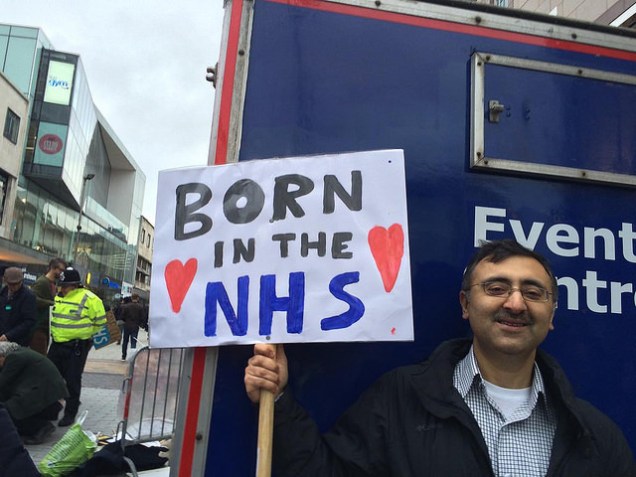
It takes real courage to speak out against the Cult of the NHS, particularly for people on the political left who are expected to be the biggest cheerleaders of all

From a brave commenter at Left Foot Forward, reacting to the same piece of sentimentalist NHS idolatry which prompted my article here:

I am disabled and faced horrendous treatment on the NHS when I unfortunately required help, I never once criticised staff individually but still every time I tried to talk about what I faced I was shouted at, told I hate the NHS, that I want to copy the US… I’ve seen the same thing happen to NHS staff whistleblowers. At this point it seems protecting “our NHS” from any and all criticism (that is not crouched in “don’t get me wrong, I love the NHS”) is more important than the wellbeing of both the patients and the staff and the functioning of the healthcare system.

I have since moved elsewhere in Europe to my husband’s country where the PUBLIC healthcare system (health insurance and private doctors are not a common thing here either), though it has flaws as everywhere does, functions as a healthcare system much better. If you want to change the pressures the NHS is under then it needs to become socially acceptable to talk about the NHS without referring to it as the “envy of the world” constantly or being accused of hating it and the staff working for it.

Heretic! Heretic!

BURN THE WITCH!

This statement takes courage, perhaps particularly from somebody who is clearly on the political left herself, and so is expected to be a particularly enthusiastic priestess of the Cult of the NHS. I admire her bravery – I fear that she (and others like her) will continue to be demonised for daring to acknowledge glaring reality.


Postscript: An alternative vision for healthcare in Britain, penned back in 2008 by Professor Karol Sikora, former chief of the World Health Organisation Cancer Program.


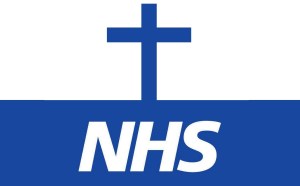
NHS Logo - Cross - National Religion - Worship - Idolatry

Support Semi-Partisan Politics with a one-time or recurring donation:

Agree with this article? Violently disagree? Scroll down to leave a comment.

Follow Semi-Partisan Politics on TwitterFacebook and Medium.

Mark Serwotka’s Emotional Blackmail On Behalf Of The NHS Industrial Complex

In a piece for Left Foot Forward, Mark Serwotka plays the “I’m on the waiting list for a heart transplant” card to heap even more uncritical praise on the NHS:

This is something I honestly think Jeremy Hunt and the Tories will never fully grasp, or don’t want to. They don’t have a genuine sense of how the whole NHS is run. Or our other public services, for that matter. They see them as bureaucracies, first to be vilified, the better then to be cut down to size.

I don’t know how long I’m going to be in here before my transplant, but my stay so far really has hardened my resolve to ensuring we defend our NHS with everything we’ve got.

That means defending the services from budget cuts and privatisation. And it means defending the health workers who have been treated appallingly, with their pay and pensions slashed, their contracts ripped up and even hints now that foreign doctors won’t be welcome in the UK in the future.

This last point makes me particularly angry because from day one, when I first started having problems in 2010, I’ve been looked after by fantastic and dedicated doctors and other professionals from all over the world.

We really can’t say it often or loud enough — our NHS is very special. The greatest achievement of a time of political optimism, when national pride meant public investment. Our health service is the envy of the world, and we can’t afford to let the Tories grind it down.

Really, we can’t say it often or loud enough? It certainly seems as though uncritically praising the NHS from dawn to dusk is all that some of us ever do, whether we are childishly painting the NHS logo on our faces, propelling a mediocre song to #1 in the Christmas charts or flaunting our virtuous NHS-love on social media.

The envy of the world? Tell that to the thousands of people whose cancer wasn’t spotted until it was too late or who could not benefit from the latest treatments, the people who died of hospital superbugs or the families of those left to starve in dysfunctional hospital wards run by psychopaths.

Mark Serwotka’s hymn of praise to the NHS mirrors every other piece of leftist propaganda designed to aid the NHS Industrial Complex. The template goes something like this:

  1. Talk about current or past grave illness to elicit sympathy
  2. Praise the “amazing care” received, as though heart transplants or chemotherapy are uniquely British
  3. Wax lyrical about how the unending bureaucracy of state healthcare and the fact that the NHS is the world’s fifth largest employer is actually a good thing, somehow
  4. Historical amnesia, where every other significant or inspiring British contribution to the world is forgotten or diminished while government-run hospitals are put on a pedestal and worshipped
  5. Attack the Evil Tor-ees for being insufficiently devout in their observance of Britain’s new national religion

One certainly wishes Mark Serwotka the very best, that a suitable new donor is available soon and that his upcoming transplant is a success. But as a people, we really need to stop being so gullible and open to emotional manipulation that we allow ourselves to be swept along by these “but the NHS set my broken arm / cured my case of Ebola / saved my premature baby” testimonials.

No, the NHS did not save your life. Doctors, nurses and modern technology saved your life. And guess what? In other countries, the systems that they wrap around those doctors, nurses and technologies often deliver better healthcare outcomes for their people than Our Blessed NHS (genuflect) is able to produce.

But what really damns Mark Serwotka and his NHS-loving amen chorus is the fact that they will not even allow the British people to look at the benefits of other healthcare delivery models. The NHS Industrial Complex has the British Left (and whole swathes of the Right) so wrapped around its fat little finger that to even question whether the NHS model should remain the One True Faith of these islands is to invite potential excommunication from political life.

And all it takes to perpetuate this nauseating Divine Office of praise for the National Health Service is for occasional feel-good stories like this one to make us wipe away a tear, lean back with a smile and know that we benefit from the Best Healthcare System In The World. So good, in fact, that it is replicated by jealous rivals in precisely zero other countries.

A reading from the book of St. Mark Serwotka.

Thanks be to Bevan.


NHS Logo - Cross - National Religion - Worship - Idolatry

Support Semi-Partisan Politics with a one-time or recurring donation:

Agree with this article? Violently disagree? Scroll down to leave a comment.

Follow Semi-Partisan Politics on TwitterFacebook and Medium.

Remainers Are Trying To Rewrite History, Claiming Media Coverage Favoured The Leave Campaign

eu-referendum-media-coverage-television-news-bias-2

Yes, the BBC let the public down with their spineless, uninquisitive EU referendum coverage. But this only benefited the Remain campaign, not the Brexiteers, and to suggest otherwise is absurd

Disappointed Remain activist Hugo Dixon takes to the pages of InFacts with with a sullen litany of the many ways in which the (ahem) notoriously eurosceptic television news media supposedly hindered the pro-EU camp’s chances and aided the fact-free Brexiteers at every turn.

Dixon writes:

The BBC has rightly been criticised for its weak referendum coverage. If the broadcaster had done a better job of challenging interviewees, informing the public and making room for a variety of viewpoints, voters would have had a better chance of sifting fact from fiction. The BBC, after all, dominates our news coverage: 77% of the public use it as a news source, according to Ofcom.

The most common criticism aired against the BBC is one of phoney balance – namely that it gave equal airtime to experts and their opponents’ unsubstantiated bluster. But this is probably not the most serious charge. After all, it would not have been fair to deny the two sides of the referendum equal airtime or to keep off the air campaigners who were telling fibs or spinning fantasy.

However, what the BBC could and should have done was grill its guests more vigorously – and make more space for coverage that didn’t fit into the tired Punch-and-Judy style battle between spokespeople put up by the two official campaigns.

There is a kernel of a sensible point in here. This blog has written numerous times that sensationalist or craven news coverage which merely allows two opposing talking heads to scream at each other without any effort to arbitrate or discern truth is a pox on our journalism – whether it is infecting the US presidential election or the EU referendum in Britain.

Dixon is also admirably on-point when he criticises the media’s reliance on the sanitised, focus-group approved  media grids of the two opposing lead campaign groups, effectively suggesting to their viewers that these incompetents and nepotism beneficiaries represented the full spectrum of eurosceptic and pro-European thought:

This wasn’t the BBC’s only failing. It also allowed too much of its coverage to become a Punch-and-Judy style battle between the official campaigns. The broadcaster, of course, had to give a lot of airtime to Vote Leave and Stronger In. But it allowed its coverage to be virtually dictated by their agendas.

I know the Remain side of the story better. Stronger In had a “grid”, on which it set out what stories it wanted to push on particular days and which people it wanted to push those messages. It coordinated this grid closely with Craig Oliver, David Cameron’s director of communications. Indeed, Stronger In was effectively in Number 10’s pocket. It rarely put forward people who weren’t on message with its Project Fear strategy.

The BBC should not have allowed itself to be manipulated in this way, particularly since it was aware of the potential problem. Its guidelines said: “Where there is a range of views or perspectives, that should be reflected appropriately during the campaign.” They went on to say: “The designated Campaign Groups – whilst offering spokespeople to programme-makers and other content producers – cannot dictate who should or who should not appear on BBC output.”

But the broadcaster didn’t do enough to resist the pressure. As a result, Downing Street and its puppets dominated the Remain camp’s share of airtime, and people who wanted to make a positive case for Britain’s involvement were edged out. Even Gordon Brown – who was trying to argue that we should lead Europe, not leave Europe – found it hard to be heard.

While Hugo Dixon’s heart wells over with sympathy for Gordon Brown’s inability to claim his fair share of the limelight, this blog would point to the many independent and non-aligned voices on the Brexit side who struggled to get a hearing of any kind, despite (in some cases) holding media events in the heart of Westminster under the very nose of the establishment.

So on both of these complaints, Dixon is on solid ground. But to go on and suggest that intellectually lazy journalism which impacted the Leave side every bit as much as the Remain campaign somehow decisively swung the outcome of the referendum is to venture into the realm of fantasy.

Dixon concludes:

For every such example, the BBC could presumably come up with a counter-example. But when its senior figures search their souls, do they really think they fulfilled their mission of informing and educating the public well during the referendum? And, if not, what are they going to do about it? How about an independent, public audit of how the BBC fared during the referendum backed up by recommendations on how to do better in future?

The world is not getting any simpler. Hard, honest thinking about how to cover often very complicated questions could stand the BBC in good stead. Audiences and license fee payers definitely deserve it.

The underlying assertion, carefully left unsaid, is that these various journalistic failures added up to a succession of “microbiases” which somehow cumulatively tipped the referendum result, and that if only BBC and other television news presenters had challenged guests and demanded more “facts” then the British people would have come to their senses and realised just how star-spangled awesome the European Union really is.

And maybe in an alternative universe that was the case – that there simply weren’t enough highly credentialed experts, both hysterical and sober, using abundant media platforms to lecture the British people that seeking freedom from the EU would be an unmitigated disaster.

Why oh why were these noble voices, these latter-day Cassandras so cruelly shut out of the national debate, swamped by a relentlessly pro-Brexit television media amplifying the Leave campaign’s monopoly on falsehoods and scaremongering?

But that’s not how I remember the EU referendum campaign.

Hugo Dixon inhabits an interesting parallel universe, and no doubt a comforting one for disappointed Remain campaigners so deeply invested in their failed euro-federalist dream. But it bears no resemblance to the real world, where the plucky, haphazard, incoherent and almost terminally disorganised Leave campaign triumphed against the arrayed forces of the establishment and a television news media which only amplified rather than diminished their influence in support of the status quo.


European Union - United Kingdom - Britain - Flags

Support Semi-Partisan Politics with a one-time or recurring donation:

Agree with this article? Violently disagree? Scroll down to leave a comment.

Follow Semi-Partisan Politics on TwitterFacebook and Medium.

Politicising The Supreme Court: A More Liberal SCOTUS Is Nothing To Celebrate

Jeffrey Toobin in The New Yorker salivates at the prospect of a President Hillary Clinton loading the Supreme Court with a bunch of zealous, ideological progressives:

For the first time in decades, there is now a realistic chance that the Supreme Court will become an engine of progressive change rather than an obstacle to it. “Liberals in the academy are now devising constitutional theories with an eye on the composition of the Court,” Justin Driver said. The hopes for a liberal Court will begin—or, just as certainly, end—with the results on Election Day.

Of course there have been times when conservative Republicans have bent the spirit or the letter of the law in pursuit of their own obsessions – cracking down too restrictively on voting rights stands as an obvious, shameful example. But liberal excitement about getting to stamp their mark on the makeup of the Supreme Court seems to extend far beyond merely righting these examples of conservative overreach:

The liberal wish list expands rapidly from there—limited only by the imaginations of law professors, advocates, and the Justices themselves. One possibility is that the Court might recognize a constitutional right to counsel in civil cases. (Currently, only criminal defendants are guaranteed legal representation.) In criminal law, the Court might adopt the idea, which Sotomayor has suggested, that the Constitution forbids incarcerating individuals who are too poor to pay fines. Several scholars have proposed a constitutional right to education, which might force increased funding for poor districts, or, even more speculatively, a right to a living wage.

These goals range from the worthy (no longer imprisoning people who are so poor that they have no prospect of paying large court fines) through the interesting-but-unworkable, all the way to the downright authoritarian and unconstitutional (a federal “living wage”).

But while the Supreme Court is the third and equal branch of government, activists on all sides of the political spectrum are playing with fire when they seek to co-opt the court to be an “engine of progressive change” (or resistance to that change) where they cannot muster popular support to achieve their goals through Congress or, if necessary, amend the Constitution.

The Supreme Court has long been politicised, and American democracy has suffered as a result. And while it may be wishful thinking that the tit-for-tat partisan drama will come to an end any time soon, liberals in particular should be careful. For their side is already ascendant or even victorious on many fronts in the culture war. Social changes which would have been unthinkable three decades ago are now a tangible reality – often a positive thing, sometimes less so. Seeking to gain the last 10% of their social objectives by turning the screws on American conservatives through the Supreme Court will only foster resentment and sow division.

Perhaps liberals genuinely don’t care. Perhaps they are fine with the idea of achieving their goals by circumventing the political process and pushing their “living constitution” interpretations to the limit of coherency. But there will be a backlash, just as there are always consequences when political elites of any stripe push stubbornly ahead with their agendas while forgetting to bring the country with them.


US Supreme Court

Support Semi-Partisan Politics with a one-time or recurring donation:

Agree with this article? Violently disagree? Scroll down to leave a comment.

Follow Semi-Partisan Politics on TwitterFacebook and Medium.

Latest Front In The Social Justice War: Censoring Beloved Children’s Books

the-magic-faraway-tree-enid-blyton-childrens-literature

We must resist the insidious rewriting of beloved classics to make them retroactively conform to today’s social attitudes and dogmas

This blog has been (justifiably) quite hard on Ariane Sherine, the Spectator’s latest affirmative action hire, expressing exasperation with her wide-eyed surprise that Ukippers and pro-Brexit folks don’t immediately lynch every single Asian person they come across and suggesting (ahem) that she represents everything that is wrong with the closed shop of Westminster political journalism.

But credit where credit is due – her latest piece in The Spectator identifies a real and insidious issue, and Sherine even manages to come down on the right side of it.

That issue: the censorship and rewriting of beloved children’s literature to make the texts conform to with the current dogma that young people must not be exposed to old-fashioned turns of phrase, ideas or even names which jar with today’s coddling, infantilising and achingly PC culture.

Sherine writes:

Six years ago, the publishers Hachette took the well-meaning yet preposterous step of making ‘sensitive text revisions’ to Enid Blyton’s classic Famous Five books. So ‘tinker’ was changed to ‘traveller’, ‘mother and father’ to ‘mum and dad’ and ‘awful swotter’ to ‘bookworm’. The suggestion that tomboy George needed ‘a good spanking’ became ‘a good talking to’, while girly Anne’s assertion, ‘You see, I do like pretty frocks — and I love my dolls — and you can’t do that if you’re a boy’ had its final clause removed, rendering the sentence throwaway rather than poignant. Unsurprisingly, given that all the charm had been stripped out of them, the revised editions flopped, and last weekend it was reported that Hachette were reverting to the originals. The publishers conceded that the updates had proved ‘very unpopular’.

But Hachette isn’t the only culprit. Earli­­­er this year, I bought my five-year-old daughter one of the Blyton titles I had enjoyed most as a child, The Magic Faraway Tree. I read it aloud to her, expecting to feel warmly nostalgic, but I merely felt baffled and irritated to discover that the publishers, Egmont, had also made several unnecessary changes. The names Fanny and Dick had been changed to Frannie and Rick. At first, I thought this was a misguided effort to avoid schoolchildren giggling at unintentional innuendo, but then I found that the names Jo and Bessie had also been pointlessly updated to Joe and Beth.

Joe and Beth? It wasn’t enough for Hachette to butcher beloved Enid Blyton characters, they really had to turn them into preening, insufferable hipsters too? No, this is too much.

Sherine continues:

Decisions to amend old, politically incorrect texts are based on a myth: that children are malleable, delicate creatures. Let’s eradicate anything remotely contentious! But anyone with a child over five knows that to edit the past is to insult both their intelligence and their resilience. My little girl is astute, tough and robust, and gleefully recounts gruesome fairy tales she has heard from friends. A colleague’s young sons delight in reading Old Testament stories of massacres and murders in their 1960s version of the Bible. These parables won’t turn our children into serial killers, and nor will Blyton’s unreconstructed slant on the world adversely influence their characters. I spent ages five to 12 engrossed in Blyton’s novels, and am yet to be branded sexist, racist or classist.

She’s lucky; I myself have been accused of the holy trifecta (sexism, racism and classism) despite being a mixed race person from pretty humble socio-economic background, primarily because I fail to spout the “correct” progressive left wing opinions on social justice, affirmative action and redistribution – but I don’t hold my avid readership of The Five Find-Outers to blame.

But Sherine is absolutely right, children are resilient creatures. In fact, children are the the epitome of anti-fragility – that precious quality of actually becoming stronger and more durable the more they are challenged and stretched in their thinking. And yet we seem determined to beat this precious quality out of our young people today, and we do so with such zeal that by the time they leave school for university many young adults are quivering wrecks, convinced that any exposure to conflicting ideas or any feedback less than warmly affirming will somehow gravely injure them and even “invalidate” their carefully-constructed “identities”.

More:

In fact, older books’ anachronisms can prompt useful conversations about changing attitudes towards race, sex, sexuality and class. The comedy writer Nathaniel Tapley recently encouraged his young son Thomas to read the 1967 children’s book Lion Adventure by Willard Price, remembering the boys’ adventure series as being rip-roaring fun. When his son asked: ‘Daddy, what does, “This is black man’s country’ mean?”’ they went on to discuss how differently people think about race these days, and whether or not people should live together.

[..] Children should not be patronised or mollycoddled — they should be free to read all about the amusingly quaint ideas, thoughts, words and names from the olden days, however sexist, unpalatable or wrong these may be considered now. They can learn from the past — but only if it remains uncensored.

This is a really important point. I was born in 1982, and some of the things I read in Enid Blyton books seemed strange or jarring to modern sensibilities even then. Did this in any way detract from my enjoyment of the books? No. Did it cause me to absorb the 1940s attitudes toward race and gender contained within? No. Did it prompt a conversation or two with my mother about why things were different, or why characters talked a certain way? Probably, yes. And from those discussions I learned and grew, as will young children today if they are given the chance to read the unadulterated, uncensored Enid Blyton.

This doesn’t just apply to children’s literature, of course. In 2011, a pinch-faced, hectoring Social Justice edition of Huckleberry Finn was released, in which the racist term “nigger” was replaced with the more emollient “slave”. This in turn was in response to numerous schools dropping the American classic from their curriculum because the PC zealots in charge preferred to pander to the imagined fragility of their students rather than read and teach through the awkwardness to understand the time and context in which the book was written.

But whether it is adult literature or beloved children’s classics, publishers have no business vandalising and defacing important artefacts from human civilisation just because they fail to live up to the tremulous, wobbly-lipped standards of the Permanently Offended.

Ariane Sherine is right to be outraged at the censorship of Enid Blyton. We should all be outraged. Because as with everything else connected with social justice, the progressive censors are not really signalling their low approval of these long-dead authors. No, what they are actually doing is signalling their disapproval of us. They are saying that we either are too pathetic and delicate to understand these social and literary anachronisms, or that we simply cannot be trusted to hear racist, sexist or homophobic dialogue in the context of great or beloved works of literature, lest the lumpen masses seek to recreate the 1950s (or the 1850s) in today’s world.

In other words, the progressive censors believe that you are either a perpetual victim or a would-be future racist, sexist or thought criminal. And if there is any ugly sentiment which should be purged from the world, the progressive metro-left’s sneering contempt for ordinary people would rank very high indeed on the list.
 

the-worst-part-of-censorship-is

Top Image: “The Magic Faraway Tree” by Kerry Darlington

Support Semi-Partisan Politics with a one-time or recurring donation:

Agree with this article? Violently disagree? Scroll down to leave a comment.

Follow Semi-Partisan Politics on TwitterFacebook and Medium.