Like, Why Can’t British Politicians Talk Fancy No More?

Great political speeches are only possible when there are great ideas to be expressed, and great leaders to express them

After watching the semi-famous video of former Labour minister Peter Shore arguing passionately against Britain’s membership of the EEC during a 1970s Oxford Union debate, Mark Wallace of Conservative Home has realised that the quality of contemporary British political oratory is perhaps not what it once was.

Wallace observes:

What’s striking is to try to list the modern speeches by Parliamentarians which have achieved the same quality. I’ve wracked my brains and, frankly, I can’t think of any. To be quite honest, while there are many excellent MPs in today’s House of Commons, I can’t think of a single one who speaks so well. Probably the most famous good speech of recent years was delivered by Hilary Benn, in the Syria debate – but watch it back, and you’ll see that while it was effective, it was done with notes and is still seen as exceptional rather than normal.

Depressingly, most of our Parliamentarians do not seem to prize public speaking. Indeed it’s a fairly regular occurrence to see some of them apparently struggling to convincingly read out loud from a bit of paper. Many are perfectly serviceable speakers, but compare modern performances to those from 40 or 50 years ago and it seems that today’s greats are not as great, the average is somewhat worse than it was, and the worst are now really quite dire.

Indeed. In actual fact, Hilary Benn’s speech on Syria wasn’t particularly good at all – it is memorable mostly because of the dramatic circumstances of its delivery during a period of unrest over Jeremy Corbyn’s leadership of the Labour Party, not the rhetorical exhortations of a man with all the charisma of a Quentin Blake illustration.

People also frequently praise the speeches of leftist politicians such as Mhairi Black (whose maiden speech in the House of Commons went drearily viral all over social media), but these speeches are also not particularly well-constructed or persuasive – they are simply very emotive, which makes them seem good in an age when feelings trump reason and reality TV has diminished our collective capacity to think.

Wallace continues:

Somewhere along the way, we ceased to value oratorical skill in our politicians. Perhaps it was the decline of the public meeting and the rise of soundbite-dominated TV campaigning that did it. Or maybe the decision not to teach school pupils how to debate left millions unduly intimidated by the idea of even trying to speak in front of an audience. There’s also a suspicion in some quarters that public speaking is somehow inherently elitist – a fallacy, given the many great orators who once arose, largely self-taught, from the union movement in particular, but a self-fulfilling belief, in that if you tell the majority of kids that only the rich and posh do speeches then you run the risk that they will believe you.

This is a clear loss to the character and effectiveness of our politics. How often do we hear people lament that politics is boring, that its main characters are bland, or that they don’t understand what it’s all about? It cannot have helped to have reduced the art and feeling in how we communicate about politics, and abandoned a means to compellingly communicate often complex concepts to mass audiences.

I am very glad that Mark Wallace and Conservative Home have woken up to the crisis in British political rhetoric. This blog has been lamenting the abysmal quality of British political speechwriting (and delivery) for years, not least here, here, here, here, here and here. Hopefully with the “bigger guns” of ConHome now trained on the problem we might force the discussion into the mainstream.

But good political rhetoric does not exist in a vacuum. Contra Mark Wallace and Peggy Noonan, the internet and social media are not a guaranteed friend of good political speechwriting, heralding a coming renaissance in speechifying. While it is true that some political YouTubers are able to gather massive numbers of followers with their witty or acerbic rants, I can’t think of any high profile social media activists who communicate in a genuinely persuasive way.

Case in point: if one looks at the likes of Owen Jones on the hard left or Paul Joseph Watson on the conspiratorial/alt-right (nobody outside the extremes has much of a following), these people are good only at preaching to the converted in order to generate clicks and likes. They will hardly ever cause somebody to reconsider their own deeply held convictions unless a process of personal political transition is already underway. This also applies to the likes of The Young Turks, Steven Crowder, Ben Shapiro and other voices in American politics, some of whom are good, but who tend not to do bipartisan outreach.

No, the art of British political speechwriting can only be revived if there is a simultaneous renaissance in British political thinking. And there are precious few signs of such a revival taking place any time soon. Right now both main parties are pretty much intellectually dead. The Labour centrists, utterly exhausted and discredited after the Blair/Brown years, are finished – and in their place is a holdover from the 1970s in the form of Jeremy Corbyn. Meanwhile, the soft and non-threatening quasi-conservatism of Cameron/Osborne gave way to the statist paternalism of Theresa May, another throwback to the 1970s which can hardly be considered progress.

Nowhere was this dearth of visionary thinking mirrored by equally uninspired rhetoric reflected more clearly than in the EU referendum campaign. This was a highly consequential, even existential political decision for the people of Britain, and yet rather than bold speeches and compelling narratives on either side we were offered little more than glib soundbites and canned catchphrases.

As I wrote at the time:

When the history of Britain’s 2016 EU referendum comes to be written, what will we remember? Of all the particularly dramatic moments in the campaign to date, none of them have been speeches. Sure, sometimes the fact of a speech has been newsworthy, such as when an unexpected establishment figure has been wheeled out to say that Brexit will usher in the apocalypse, but the content – the oratory itself – has rarely raised hairs or stiffened spines.

In fact, proving Eleanor Roosevelt’s famous assertion that great minds discuss ideas, average minds discuss events and small minds discuss people, the media has determinedly reported almost exclusively on the latter two. Of course that is always the temptation for journalists, but our politicians have hardly given the media much to work with on the ideas front, even if they were minded to cover them.

This is a depressing state of affairs. This most important debate should be bringing out the best in our politicians and our media. We should be witnessing a straight-up fight between advocates of the democratic, independent nation state and those who ardently believe in the euro-federalist dream, adjudicated by a press corps  beholden to neither side and always willing to challenge baseless assertions rather than merely provide a “fair and balanced” platform for two partisan idiots to yell at each other for an equal amount of time.

We will not see a revival in political speechmaking in this country until British politicians actually start having ideas and advocating policies worthy of grander rhetoric. So long as there remains in place a technocratic, managerialist consensus between centre-left and centre-right (which very much remains the case and has only been partially broken by Brexit), there will be no bold new ideas in British politics, and in turn there will be no speeches worth listening to.

When even the prime minister of our country sees her role as more of a glorified Comptroller of Public Services than a world leader representing a great and consequential nation, why would we expect her speeches to be any more memorable than the platform announcements at Waterloo station? And if the prime minister’s words are so utterly uninspiring and inconsequential then why bother listening to the words of those who are not even at her level, but merely vying to replace her in that diminished role?

Our current political debates are often petty and parochial, and so are the words we use to fight them. And those issues which might potentially generate bold ideas matched by bold words tend to be furiously ignored by political leaders – look at their refusal to properly confront the Islamist threat, or the staggeringly superficial debate about Brexit.

Great political rhetoric only occurs when there are great issues at stake and great minds willing and able to tackle them. Think of Franklin Delano Roosevelt’s “The only thing we have to fear is fear itself“, delivered as the American economy buckled under the Great Depression. John F. Kennedy’s “We choose to go to the moon” speech at Rice University, setting the United States the ambitious goal of landing a man on the moon and returning him safely to earth. Winston Churchill’s “We shall fight on the beaches“, given after Britain’s deliverance at Dunkirk. Ronald Reagan’s “Tear down this wall“, made at the Brandenburg Gate in Berlin (and ironically helping to usher in the post-Cold War world which for all its wonders also sucked much of the vitality from Western politics, together with our raison d’être).

And maybe part of the reason that there are no great contemporary British political speeches reflects our diminished status in the world, no longer a superpower or the pre-eminent actor in world affairs. Lofty words are easier to reach for when one reasonably expects that they might reshape the world. Perhaps this is why American political oratory has undergone a similar decline in the post-Reagan era, now that Pax Americana is drawing to an end and the uncertain new multipolar world emerges.

But one thing is certain: without conviction politics, there can be no speeches of great conviction. At best, a centrist or technocratic politician might be able to mimic the grandeur and cadences of famous speeches – as President Obama did so effectively, talking loftily of hope and change while a very different reality played out on the ground – but they will never truly achieve that perfect synergy of subject, argument and tone that is the hallmark of a great speech.

Why are there no great contemporary British political speeches? Well, try picturing one in your head, given the kind of issues we typically argue about and the politicians who represent us.

Imagine future historians studying the impact of rousing speeches about lowering corporation tax by a few percentage points or abolishing the so-called “bedroom tax”.

Imagine schoolchildren memorising the words to that famous speech opposing HS2 or supporting the renationalisation of Southern Rail.

Picture a crowd of thousands of people brought to its feet in genuine excitement by a pledge to reduce NHS waiting times by 15 percent in the next parliament, hire a few hundred more nurses or increase the minimum wage to an astronomic £8 an hour by the year 2020.

And there’s your answer.
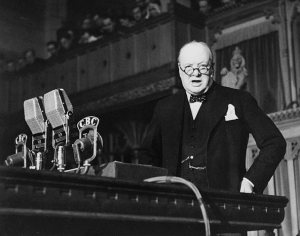
Winston Churchill speech to Canadian Parliament - 1941

Support Semi-Partisan Politics with a one-time or recurring donation:

Agree with this article? Violently disagree? Scroll down to leave a comment.

Follow Semi-Partisan Politics on TwitterFacebook and Medium.

British Conservatives And The Youth Vote: The Failed Promise Of Activate

Activate - Tory Momentum campaign - conservatism - youth vote

It is easy to mock youthful conservative activists when their attempts at social media outreach go awry, but at least they are trying – none of the supposed adults in the Conservative Party seem remotely interested in salvaging conservatism’s toxic reputation among younger voters

The media has been having a lot of fun today at the expense of an organisation called Activate, a newly-launched independent conservative campaign group of young people, by young people and for young people.

Some of this criticism has been justified – the launch on social media was uncoordinated and the messaging…suboptimal, at best. One could certainly argue that Activate tried to run before it could walk, entering the political fray before the values and priorities of the group had been fully defined and agreed.

(Full disclosure: I was very tangentially involved in the pre-formation of this group earlier in the summer, participating in several group chats and offering occasional words of advice. This was in line with my strong belief – stated many, many, many, many times – that British conservatism will die out unless it urgently finds a way to reach and inspire younger voters with a positive message).

Inevitably, the reviews have not been kind, with outlets from the Independent, New Statesman, The SpectatorHuffington Post, Political ScrapbookRed Pepper and Esquire all forming an orderly queue to mock the group and question its grassroots bona fides.

The Guardian was actually one of the kindest:

A new Conservative grassroots campaign inspired by Labour’s Momentum movement will attempt to engage more young people in rightwing politics, though the group’s launch has been widely mocked on social media.

Activate, which aims to “engage young people with conservatism”, has close links with senior party activists, and is chaired by former Tory campaign manager Gary Markwell, a councillor in West Sussex. A Conservative spokesman said Activate was “not officially linked to the Conservatives and it receives no party funding”.

The group’s constitution says it will be independent from the party, though all members are expected to be members of the main party.

The campaigning group launched with a Twitter picture of the Labour leader, Jeremy Corbyn, followed by a picture of Star Wars character Admiral Ackbar, saying “It’s a trap”.

The group’s use of multiple hashtags and a meme that was last popular in the early 2000s led to widespread derision on the social network.

Somewhat cringeworthy? Of course. Not what I would have done or recommended. But you can look at this two ways.

On one hand, you can take the attitude of the scornful left-wing press (and even some of the right-wing blogs like Guido Fawkes) and make fun of Activate’s enthusiastic but undeniably amateurish initial foray into grassroots political campaigning. And indeed, many journalists and commentators have been only too happy to mock the sincere efforts of 17-year-old students who at least take the time to educate themselves about political issues and live up to their responsibility to be good engaged citizens. That is certainly one approach, albeit a rather cynical one.

But the other attitude – a far more constructive one – is to ask why the hell it is being left to a group of enthusiastic but inexperienced teenage and twenty-something activists to do what the Conservative Party should have been doing all along, namely trying to engage in meaningful outreach to sceptical younger voters.

Recall: Theresa May’s brilliantly inspired general election campaign saw the Tories lose the 18-19 year old first time voter demographic by a margin of 47 points. The Conservative Party is getting nowhere with young people and struggling with nearly everyone else because they cannot clearly articulate what they stand for and simply offer a bland, repetitive, uninspiring and entirely defensive message.

With no positive message to rally around, no formal conservative youth movement and national party leadership totally devoid of charisma, the combined forces of present-day young conservative activists could probably all fit comfortably within a League One football stadium, with room to spare. Unfortunately, people who unironically wear bow ties and read economics at Cambridge are pretty much all we have right now in terms of boots on the ground – would that it were otherwise. But at least Activate is trying to expand the appeal of conservatism.

Maybe rather than mocking the earnest sixth-former wearing a bow tie in his bio picture, the likes of Guido Fawkes should instead be asking why it has been left to young kids like this to take all the initiative of creating a grassroots youth conservative movement on their own, with almost no help from senior Tories, party grandees, external think tanks or anybody else with abundant time, money and influence.

Maybe they should ask what possible excuse party leader Theresa May and her CCHQ cronies can offer for falling down on the youth outreach job so spectacularly. Maybe they should try holding the prime minister to account for swanning off to Italy after having presided after this disaster of an election campaign rather than staying put to undo a small fraction of the damage that she has done to the Conservative brand.

Maybe the likes of the IEA, Adam Smith Institute and Centre for Policy Studies should be a little more concerned about where their pipeline of future fellows and supposed thinkers will possibly come from when nearly every young person in the country hates the Tories with the burning heat of a thousand suns, and retains that hatred well into middle age. Kate Andrews is great, and a breath of fresh air on Question Time, but there is a limit to the number of articulate young conservative thinkers we can import from the United States. At some point we will have to develop some more homegrown talent.

But no. Rather than engaging in the slightest bit of introspection, too many conservative voices seem content to continue writing their asinine hot takes about the daily developments in the Brexit negotiations, speculating pointlessly about the next Tory leadership contest or simply getting drunk on Pimms and having Jacob Rees-Mogg’s face tattooed on their chests. Because summer silly season nonsense is so much more fun than tending to the existential question of who will keep the flame of conservatism lit when its present custodians are no more.

Maybe Activate did make a really bad start to their campaign. Maybe their name lends itself too easily to mockery. Maybe their logo wasn’t produced by the best graphic designers that money can buy. Maybe their initial foray into social media was more worthy of a Jacob Rees-Mogg fanclub than a serious political entity. But everything they have done thus far, they accomplished without a scintilla of help from anybody else in the British conservative movement. Contra much of the leftist press, this really is an unaffiliated grassroots movement.

Faced with the immense tarnishing of the conservative brand and reputation among young voters inflicted by Theresa May, her Cabinet and all the other supposed adults in the room, a group of sincere and well-meaning young conservative activists stepped up at a time when our elected conservative politicians have effectively fled the field of battle. That counts for something, and deserves acknowledgement.

Activate received no help from from the increasingly unworthy political party that bears the conservative name, and certainly no help from the constellation of think tanks, institutions, media outlets or commentators who think themselves so well-connected and influential. Unlike Momentum on the political Left, Activate has no prominent champions in the wider conservative movement, no real mentors (so critical to getting a youth organisation off the ground) and no funding that I am aware of. If anything is embarrassing, it isn’t a dated Star Wars meme on Twitter – it’s the fact that besides these well-meaning if sometimes naive people, nobody else is even making an effort.

It is time to face a number of difficult truths. Conservatism as an ideology and a political movement is radioactive to the majority of today’s young people. We are in retreat in schools, on the university campus, in the world of the arts, in the laboratories, in popular culture and the media, not to mention the House of Commons. And our inability to connect with younger voters and inspire them with a positive message about how conservative values and policies will benefit them and benefit the country is arguably the biggest threat that we face.

Faced with this shameful lack of leadership from anybody in Westminster, Activate is at least trying to do something to face up to these threats and begin tackling conservatism’s huge deficit of trust and inspiration among young voters.

And that is vastly more than can be said of all those people who spent today laughing smugly at their struggle.


Conservative Party Logo - Torch Liberty - Tree

Support Semi-Partisan Politics with a one-time or recurring donation:

Agree with this article? Violently disagree? Scroll down to leave a comment.

Follow Semi-Partisan Politics on TwitterFacebook and Medium.

Edinburgh Fringe Comedy Routine Mocking Leftist Dogma Falls Flat With Leftists

Dawsons Creek - Dawson Crying

After pious leftist orthodoxy is mocked by several comedians at the Edinburgh fringe, po-faced Guardianistas suddenly decide that comedy is too divisive

The Guardian is up in arms because several stand-up comedians performing at this year’s Edinburgh Festival fringe have dared to include material poking gentle fun at the Left’s growing elitism and obsession with identity politics in their routines.

Comedy critic Brian Logan wails:

Identity politics has gone too far. PC has gone mad. These aren’t unfashionable opinions: they’re practically mainstream. What’s new in fringe comedy is that we’re now hearing it from leftwing comics. That’s both a fascinating phenomenon, and a troublesome one. Fascinating because there may be some truth in these propositions, and the left needs to interrogate them. Troublesome because standup doesn’t always favour nuance and fine margins, and one or two of these leftwing comedians – whether they’re mocking champagne socialists, rehabilitating slavery or defending the Iraq war – can start to sound (accidentally or on purpose) pretty rightwing.

Dear God. Jokes made at the expense of leftist orthodoxy are insufficiently nuanced, and therefore fail to reinforce the point that left-wing groupthink is actually correct and inviolable? The horror!

Arousing the particular ire of Brian Logan is standup comedian Fin Taylor, who receives this cool response to his routine:

It begins with Taylor recalling his resolution to give up being leftwing for January; to stop, in other words, “being a whiney little bitch”. Leftwing people, he goes on, are dismissive, pedantic and smug. Labour has been captured by the middle classes, who can afford to be blase about actually winning. Virtue signalling is their (our?) obsession, alongside political correctness, which “is about demonising and shaming people”. You’ve probably already identified the problem with all this – as an argument, if not as comedy. In short, Taylor’s screed is a carnival of generalisations and misrepresentations. Again and again, he alights on legitimate arguments, then comes at them from the most extreme or crude available position. It’s fair enough to mock Stoke Newington’s (hipster, “ethical living”) local economy, but to argue that those communities “don’t know what reality is”, or that their lifestyles “aren’t making the world better, just making it worse in a different way”? Not so much. Likewise, the left’s lack of clarity on Islamic fundamentalism – that’s fair game, but Taylor’s assertion that “white liberals don’t want to criticise Saudi Arabia” is nonsense.

Another left-wing “apostate” (Brian Logan’s word, not mine) comedian, Andrew Doyle, is also called out for failing to cast leftist thinking in a sufficiently positive light:

I have seen Andrew Doyle at the Stand, whose show describes – with as easy a recourse to generalisation as Taylor’s – his post-Brexit falling out with all his liberal friends. Again, the bogeyman is the middle-class lefty, caricatured as ever as a privately educated, quinoa-guzzling exile from reality. Against them, Doyle claims – via a working-class grandad, seemingly – a hotline to the common man, whom the left now hates.

Logan frets about whether “these shows are … starting the conversation” that needs to be had – because comedy can’t just be comedy, it has to be a vehicle for social change and browbeating people into accepting one’s own political views.

And he closes his review by plaintively asking “whether, in these antagonistic, divisive times, we really need this kind of divisive, antagonistic comedy”. Yes, heaven forfend that comedians do anything to demonise people or be divisive. We certainly wouldn’t want that, would we? Except that it was apparently just fine when nearly every British comedian from Frankie Boyle to Russell Howard eagerly divided the country into decent moral (left-wing) people and evil (far right-wing) eurosceptics.

No, the only kind of division that leftist Guardianistas can’t stand is the kind which places them anywhere but first place on the podium of wisdom and moral virtue. They happily threw nuance out of the window and chuckled along when their favourite leftist comedians mocked, misrepresented and demonised conservatism and Brexit, but having dished it out in such generous portions they seem unable to take even the smallest amount of similar treatment in return.

How awful that they are now experiencing what it feels like to have their own dearly-held political beliefs less than lovingly, accurately and sympathetically treated by comedians. Conservatives and Brexiteers certainly couldn’t possibly begin to imagine how that feels. Could we?

Could we?


h/t The Sparrow and Angharad, who I trust will forgive me for making her thoughtful tip the focus of my latest rant.


The Mash Report - Nish Kumar - BBC - Satire - Comedy - Bias - Leftism

Support Semi-Partisan Politics with a one-time or recurring donation:

Agree with this article? Violently disagree? Scroll down to leave a comment.

Follow Semi-Partisan Politics on TwitterFacebook and Medium.

Women-Only Train Carriages: Identity Politics Leads To Calls For Segregation, Once Again

Women only train carriages

Is there any contemporary problem that the identity politics Left will not propose solving through the introduction of segregation?

I see that the recurring debate about whether or not to introduce female-only train carriages has bubbled up again from the swamp of leftist thinking.

Charlotte England tries to make the best case she can for theocratic-style gender segregation over at Left Foot Forward:

There is a pragmatic argument for women-only carriages as an interim measure, which is being largely buried by simplistic rhetoric and a disingenous framing of the original proposal. Arguing against the policy on ideological grounds ignores the experience of many women and young girls who are assaulted and become afraid of travelling alone on public transport. It ignores the fact that they feel forced to alter their behaviour already.

When he first proposed the policy two years ago Corbyn made it clear the aim was to give women more freedom than they currently have, not less.

“It is unacceptable that many women and girls adapt their daily lives in order to avoid being harassed on the street, public transport, and in other public places from the park to the supermarket,” he said. “This could include taking longer routes to work, having self-imposed curfews or avoiding certain means of transport.”

He also did not suggest the measure in isolation, floating the idea of a 24-hour hotline for women to report harassment, along with broader measures to tackle assault in society such as tougher rules for licence holders on reporting incidents on their premises and cabinet members for women’s safety on local councils.

A 24-hour hotline for women to report harassment? Perhaps somebody should inform Charlotte England that such a line already exists, and that you can reach it 24/7 by dialling 999.

At some point the Left will have to confront the fact that they have devalued terms such as racism, white supremacy, sexual assault and “rape culture” to such a degree that if we are now to take them literally, the police would have to be called to millions of incidents which qualify as crimes every single day. Blurring the line between socially inappropriate behaviour (including microaggressions) and criminal behaviour has helped the Left to point to rapidly rising reported statistics and claim that an epidemic is underway – of racism, Islamophobia, other generic hate crime, you name it. But it is also creating undue alarm and making it harder to focus resources and policy on the most pressing issues.

If sexual harassment on trains is a serious and growing issue – and I’m not arguing otherwise – then the correct response by train companies (and the Office of Rail and Road) to their customers frequently being bothered and assaulted onboard rail services is to dramatically improve security. That means ensuring that CCTV is installed and functional on all trains, placing more passenger alarms in carriages and hiring more guards. Or perhaps the train companies could deploy the private militias they have hired to zealously crack down on fare-dodging to also protect passengers from unprovoked attack. And when ticket fares rise by 20% or 30% to cover the additional cost, we can all pay the extra money knowing that we are helping to clamp down on sexual harassment.

Alternatively, perhaps the citizenry should be legally permitted the means to defend themselves, if not with firearms then at least with tasers and pepper spray, rather than being forced by government to remain at the mercy of thugs, hooligans, sexual harassers and terrorists.

But the Left don’t want to do any of this. They don’t like it when people are given the right to defend themselves, and they certainly don’t like it when private companies take independent action to tackle issues. They want government to step in with a heavy-handed, one-size-fits-all mandate instead, because then leftist politicians (rather than the private sector) can claim credit for the results. And if those policies ride roughshod over civil liberties or equality then who cares?

In no way do I mean to diminish the experiences and suffering of those who have experienced sexual harassment. But when the Left defines the term downward so far that it now includes clumsy flirtation, it does a disservice to those who are verbally threatened or physically groped, stalked, flashed or assaulted – and counter-intuitively makes it harder to focus on eradicating criminal behaviour rather than behaviour which merely causes social offence.

But this is only one of the ways that the leftist identity politics argument for segregated train carriages comes unstuck. To use the language of the Left, there is apparently a growing problem of sexually aggressive behaviour in the male population of this country – behaviour which makes some female citizens feel concerned for their safety. And the Left’s answer to this problem is to offer gender-segregated seating on public transport for those who feel unsafe sitting in unrestricted areas because of the heinous actions of a small subgroup of the male population.

Now try applying the same logic to – oh, I don’t know – let’s say the British Muslim population. The vast majority of British Muslims are upstanding, patriotic citizens whose behaviour is generally above reproach, yet there is a small minority within this population who plot and carry out heinous terrorist attacks for religiously motivated reasons. And this spike in Islamist terror attacks has arguably caused some people to “adapt their daily lives” (as Charlotte England puts it) to reduce their exposure to risk, or at least to constantly be thinking and worrying about the possibility of a terror attack as they go about their day.

Is it reasonable, then, given that Islamist terrorists have historically targeted public transport, that train companies offer segregated carriages for non-Muslims in order that other travellers might feel safer? Of course not. Is it more unreasonable for someone to feel nervous standing next to a Muslim on the tube than it is for a woman to feel nervous sitting in the same train carriage as a man? I would argue that both are equally unreasonable.

But the Left do love to pick and choose their favoured victim groups, and “people who are legitimately afraid of Islamist terror” generally don’t get much sympathy from the identity politics brigade, while women in fear of sexual harassment are deemed worthy of protection by extraordinary means.

Segregating men from women and Muslims from non-Muslims would infringe on the natural rights of both groups, reduce them to second class citizens, provide them with a lesser service (fewer available seats per train) and stigmatise both groups as being inherently dangerous. And yet while the Left would be up in arms if such a proposal were targeted at Muslims – and rightly so – they advance exactly the same argument for male/female segregation without seeing the contradiction.

But assuming that the Left were able to implement their scheme (over what I’m sure would be the strenuous objection of train companies, who would have to fund and enforce the policy) how long would this gender segregation last? Jeremy Corbyn, Charlotte England and other fellow travellers of the hard Left may claim that they only propose female-only train carriages as a stop-gap measure while other actions are taken to tackle the supposed sexual assault epidemic. But this only begs the question of what actions they propose. Mandatory anti-rape classes for boys at school? Re-education of adult males?

If you are going to propose introducing segregation into British society in the 21st century – to place Britain in the happy company of theocratic states such as Saudi Arabia, who similarly keep their females locked away lest they arouse the lust of helpless men – I think you have a duty to be straightforward and explain why the same identical logic does not apply when it comes to protecting people who don’t make the cut for inclusion in the Left’s hierarchy of victimhood. And given that temporary laws have a pesky habit of becoming permanent, anyone proposing such a draconian, authoritarian policy should also clearly outline how it will be time-limited, and how the underlying root issue will be addressed by other means.

Jeremy Corbyn, Charlotte England and others on the Left promoting this divisive and discriminatory policy have no answers to any these questions and have no intention of providing such answers, because this isn’t actually about making women safer at all. It is about gaining political support by being seen to be on the side of minorities, oppressed peoples or perceived victimhood groups, gaining their support and then failing to meaningfully help said groups once in office.

Just as affirmative action hasn’t done a damn thing to increase representation of black and Hispanic students at American universities (because it papers over the cracks rather than tackling the deep underlying issues), so forcibly segregating men from women on public transport will neither tackle the root causes of male sexual harassment nor protect women from danger for the vast majority of the time when they are not travelling on trains. (After all, why stop at trains? Why not introduce gender segregated cinemas, swimming pools, workplaces, nightclubs, stadiums, universities?). Proposing gender segregated train carriages may not be effective, but it sure will make certain leftist politicians and commentators look good to their base.

This isn’t compassion. This isn’t applying creative thinking to an entrenched social problem. This is cheap virtue-signalling at the expense of threatening fundamental civil liberties and rights, while promising to place Britain in the unfortunate company of some of the most backward and oppressive theocratic regimes in the world.

Slow hand clap, leftists (or should that be slow jazz hands?). You’ve really outdone yourselves this time.


200178589-001

Support Semi-Partisan Politics with a one-time or recurring donation:

Agree with this article? Violently disagree? Scroll down to leave a comment.

Follow Semi-Partisan Politics on TwitterFacebook and Medium.

Stephen Hawking vs Jeremy Hunt: The Insidious Cult Of The NHS

BRITAIN-POLITICS-HEALTH-DEMO

Stephen Hawking vs Jeremy Hunt, a beloved national treasure going up against somebody who actually knows a thing or two about healthcare systems – in NHS-worshipping Britain, this could only end one way

If your car breaks down in the middle of the desert, who would you rather have come to your aid – the world’s most famous and accomplished concert pianist, or a fully equipped mechanic with a bit of a bad reputation?

Unless you particularly want to die of dehydration amid the sand dunes you pick the dodgy mechanic every time. At least he has some experience with the subject matter at hand, after all. And would you listen to angry protestations from other people who said that the concert pianist was equally entitled to tinker with your car, just because he has been driven around in many cars throughout his career? Of course not. Making use of the functions of an automobile is not the same as understanding how a vehicle works or being able to diagnose technical faults with the engine.

And yet as soon as the national conversation turns toward Our Blessed NHS, this kind of common sense goes out the window. So desperate are many British people to receive confirmation bias-affirming propaganda about “Our NHS” that when theoretical physicist Stephen Hawking got into a debate with Health Secretary Jeremy Hunt on the subject of healthcare, people essentially chose the concert pianist over the mechanic. Proudly and unequivocally.

This is the mental poison spread by the Cult of the NHS. It warps thinking, is impervious to reason and transforms what should be a measured, rational and unemotional debate about how best to provide healthcare services to a country of 70 million people into a frenzied orgy of emotionalism and unconditional praise for government bureaucracy, combined with a seething intolerance of anybody who dares to question the status quo.

Most unbecoming for a scientist, Stephen Hawking leaned heavily on emotional rather than empirical arguments to make his case, writing in the Guardian:

Like many people, I have personal experience of the NHS. In my case, medical care, personal life and scientific life are all intertwined. I have received a large amount of high-quality NHS treatment and would not be here today if it were not for the service.

The care I have received since being diagnosed with motor neurone disease as a student in 1962 has enabled me to live my life as I want, and to contribute to major advances in our understanding of the universe. In July I celebrated my 75th birthday with an international science conference in Cambridge. I still have a full-time job as director of research at the Centre for Theoretical Cosmology and, with two colleagues, am soon to publish another scientific paper on quantum black holes.

Whereas in France, Germany, Australia, Canada or Japan he would have been left to die in the street? This is misleading, emotionally manipulative balderdash of the first order. Newsflash, Stephen Hawking – the NHS did not save your life. Doctors and nurses and technicians and administrators did. And all of these professions can be found outside of our own creaking nationalised healthcare system.

Universal healthcare and treatment free at the point of use are not innovations unique to the United Kingdom. Other countries manage to do it too, using a variety of different delivery models – many of which achieve better healthcare outcomes (ultimately the only thing that matters to patients) than Our Blessed NHS.

And Stephen Hawking knows this full well. Yet he is happy to take advantage of the British public’s sentimentality for the NHS and lack of awareness of healthcare in other countries to create a false impression that motor neurone disease patients such as himself – indeed, people suffering from any disease or injury – are somehow left to die on the street in other countries, and that it is only in socialist Britain that people enjoy modern healthcare. This is the kind of dishonesty and low skulduggery that belongs in the field of politics, not science. Hawking should be ashamed of himself.

But he isn’t done yet. He continues:

Last year my personal experience of the NHS and my scientific life came together when I co-signed a letter calling for healthcare policy to be based on peer-reviewed research and proper evidence. The specific issue addressed in the letter was the “weekend effect”. Jeremy Hunt, the health secretary, had claimed that thousands of patients died unnecessarily because of poor hospital care at the weekend, and used this to argue that we needed to implement a seven-day NHS. I had mixed feelings about the issue. Having spent a lot of time in hospital, I would like there to be more services available at weekends. Also, it seems possible that some patients spend more time in hospital than is necessary because certain diagnostic tests can only be done on weekdays.

However, as we showed in the letter, Hunt had cherry-picked research to justify his argument. For a scientist, cherry-picking evidence is unacceptable. When public figures abuse scientific argument, citing some studies but suppressing others to justify policies they want to implement for other reasons, it debases scientific culture. One consequence of this sort of behaviour is that it leads ordinary people to not trust science at a time when scientific research and progress are more important than ever.

Yes, we wouldn’t want to cherry pick evidence now, would we Stephen? Like resolutely pretending that the only alternative to the NHS is “a US-style insurance system”, conveniently ignoring the wealth of other examples out there?

But even more asinine than this is Hawking’s assertion that healthcare policy should be based on “peer-reviewed research and proper evidence”. This is all well and good as far as it goes, but we are talking about designing complex human organisations here, not conducting a controlled physics experiment.

The only peer-reviewed research and evidence that can possibly be brought to bear on the question of how to design an optimal healthcare system for a medium-sized advanced economy will come from the social sciences, which are inexact and often unquantifiable by their very nature. What’s more, in academia the social sciences are populated almost exclusively by leftists and are effectively locked into a self-perpetuating purity spiral. When there is no diversity of perspective or political thought in the field, how can one have the slightest confidence in the outcome of the resulting studies?

Do you really think that scientists check their political opinions at the door of the library or laboratory? If so, where were all the economists during the EU referendum declaring in TV interviews that Brexit might be bad for the economy but still worthwhile overall? They were nonexistent. Why? Because they all started from a place of liking the European Union and wanting Britain to remain a member. Facts and evidence which contradicted this desired outcome were determinedly pushed aside, again and again.

Oliver Norgrove gets it right on this point:

The other issue I have with Professor Hawking’s comments is that they essentially capture the nauseating emotional connection that Brits have with healthcare provision. It is odd because healthcare needs are, by their very nature, private and oughtn’t represent bargaining chips for politicians at election time. ‘Groupthink’ surrounding the NHS is rife and poisonous. I particularly loathe the term ‘our NHS’. In using it we promote unhealthy tribalism, which blockades against meaningful debate about how we improve a stagnant system of healthcare. Diluting this poisonous emotional attachment is perhaps the first step to achieving a market-based system, similar to those seen all around the continent.

Notice also the reliance upon using the American healthcare system as some kind of stick with which to beat free marketeers in Britain. It is as if there are only two structures globally, and we must protect one from becoming the other. Professor Hawking, a clever man, knows full well that by instigating comparison with the United States he can more aptly generate support for the maintenance of the NHS. Which I believe, given changes to demographics, life-expectancy and population-induced strains, is bad for our healthcare outlook.

Increasingly, academics believe that, almost by right, they are entitled to transfer their authority in a particular field to other fields, often for the sake of making noise and boosting their own public profile. This became especially apparent during Britain’s referendum on European Union membership. Of course, I am not saying that academics should not have the right to speak and be heard. Nobody values the importance of free speech more than I do. The issue is that by association alone they are afforded disproportionate exposure and their words a special (and often unwarranted) significance. This is damaging to debate as it promotes laziness and useless conventional wisdom.

And besides, Stephen Hawking doesn’t really want to design an optimal healthcare system. No, he is attached to the present system for emotional reasons, and is busy corralling facts and figures which confirm his own biases and preferences. A rational scientist would start with a blank sheet of paper, not a crayon drawing of the NHS logo with girlish hearts scribbled all around it, à la Hawking.

Yet Hawking preposterously claims to be a dispassionate observer in all this:

A physicist like me analyses a system in terms of levels of approximation. To a first approximation, one can see the situation facing healthcare in this country in terms of forces with different interests.

Quite. So let’s talk about the NHS Industrial Complex, that byzantine and interconnected web of special interests from pharma companies to suppliers to logistics providers to medical schools to clinical staff on the taxpayer dollar, to the army of administrators and bureaucrats required to run what is – astonishingly – the fifth largest employer on the face of the Earth. All of these actors have a vested interest in the current system perpetuating itself – it’s how they get their pay cheques and make their profits. Disruption to steady-state operations is therefore unwelcome and to be resisted at all costs, even if there are potential windfalls for patients.

But these are not the malevolent forces that Stephen Hawking wishes to discuss. He wants to go on a generic leftist rant about the “multinational corporations, driven by their profit motive” – forgetting that the profit motive he so despises helped to spur the development of many drugs and healthcare technologies which save lives every day. He also takes the economically illiterate view that there is a fixed amount of money in the economy and healthcare system, and that shareholder profit necessarily means less funding available on the front line. This is nonsense, as any sixth-form economics student could have explained.

Hawking ends his cri de coeur with this rousing message:

If that all sounds political, that is because the NHS has always been political. It was set up in the face of political opposition. It is Britain’s finest public service and a cornerstone of our society, something that binds us together. People value the NHS, and are proud that we treat everyone equally when they are sick. The NHS brings out the best in us. We cannot lose it.

Isn’t it funny that if you want to make an establishment leftist sound like a frothing-at-the-mouth Ukipper all you have to do is whisper the letters “NHS”, at which point they will immediately start ranting about British culture and values, the importance of our unique island history and our unquestioned superiority over every other country.

And yet we see smug, superior headlines from the likes of the Independent, sardonically declaring “It’s brave of Hawking to take on an intellect like Hunt“, as though Stephen Hawking’s brilliance when it comes to physics somehow automatically translates to the complex political and organisational considerations involved in healthcare reform. This is basic, superficial thinking of the first order – and yet nearly every newspaper clapped along like trained seals, without stopping to think whether Hawking really has any credentials to be pontificating on the future of the NHS. He doesn’t.

Stephen Hawking is little more than an NHS Ukipper, with no more right to meddle in British healthcare reform than your garden variety Ukipper should be allowed to go up against Michel Barnier in the Brexit negotiations. But his ignorance and emotional manipulation are given cover by a bovine public raised to worship the NHS unquestioningly, and by a sycophantic media who prefer to make smartass headlines about Jeremy Hunt’s intellectual deficit rather than stopping to question who makes the better argument.

And as it happens, both men are wrong. Stephen Hawking is busy trying to reanimate the mortal remains of Aneurin Bevan, while Jeremy Hunt is tinkering around the edges of a failing system which needs redesigning from the ground up.

This is what passes for a debate about healthcare reform in this country, and the cost of all the virtue-signalling, NHS-worship and half-hearted reforms can be counted in human lives.


Stephen Hawking - Jeremy Hunt - NHS debate

Support Semi-Partisan Politics with a one-time or recurring donation:

Agree with this article? Violently disagree? Scroll down to leave a comment.

Follow Semi-Partisan Politics on TwitterFacebook and Medium.