Tales From The Safe Space, Part 53 – Enforcing Social Justice Dogma, From Student Protest To Academic Coercion

Language Police

“Linguistic intervention” is the polite term for coercing students into adopting certain language, phrases and social justice codewords on pain of academic penalty

The Cult of Social Justice and Identity Politics continues to capture and subvert our academic institutions, but until now the high priests of social justice have generally contented themselves with shouting down opponents, physically suppressing free speech and socially ostracising those who do not enthusiastically buy into their warped worldview.

That was bad enough. But as nervous university administrations seek to stay one step ahead of their restive student bodies, in some cases they are now going further than the activists and seeking to use their power and authority to enforce new speech codes and language guidelines – rules that do not merely govern personal conduct while on campus, but which impose academic penalties on students who hold the wrong beliefs or use the wrong language in their work.

From the Guardian:

Students at Hull University face losing marks on essays unless they employ “gender-sensitive” language.

Documents obtained under freedom of information legislation show undergraduates at the university have been advised that “language is important and highly symbolic” and informed they should be “aware of the powerful and symbolic nature of language and use gender-sensitive formulations”, while “failure to use gender-sensitive language will impact your mark”.

The document, obtained by the Sunday Times, related to undergraduates on a religious activism course in the university’s school of social science.

The direction follows moves by a number of universities to promote gender-neutral language.

Cardiff Metropolitan University’s code of practice on language has a “gender-neutral term” checklist, giving alternatives for words or phrases, including using “efficient” for “workmanlike” and “supervisor” for “foreman”. Bath University encourages neutral alternatives to “mankind” such as “humanity”, “humans” or “people”.

Two years ago, the University of North Carolina handed out a gender-inclusive language guide, which encouraged students away from using words such as “mailman” , “policeman”, “man-made” and other terms, giving alternative titles or descriptions, such as “postal carrier”.

The Hull University directive is seen as going further, with some critics describing it as “linguistic policing”.

Frank Furedi, the emeritus professor of sociology at Kent University, told the Sunday Times: “Usually such threats are implicit rather than spelt out as in the case of Hull. This linguistic policing is used as a coercive tool to impose a conformist outlook. The alternative is to pay a penalty of being marked down.”

In other words, if you commit a sin such as writing “mankind” rather than “humankind” when submitting an essay at Hull University then you will now be at risk of incurring grade penalties and potentially jeopardising your future. Mastery of the academic principles and subject matter contained within the curriculum are no longer sufficient – now one must also think the “correct” things and use the correct language, unrelated to one’s own subject, in order to maintain an unblemished record.

If you are an English literature student who happens to prefer the cadence and evocations of older language when writing an essay, that’s just tough – every piece of coursework now has to help strike a hammer blow for social justice by drawing from the current leftist lexicon, on pain of penalty.

If you’re a mathematics or engineering geek who deals in empirical data and has little time for the subtleties of the English language, that’s tough too – you’d better learn fast how “words can harm” and ensure that your work meets academic standards while simultaneously avoiding the hair-trigger sensitivities of the most demented leftist professor.

And if you are a conservative religious student who sincerely believes that the new progressive orthodoxies on gender and sexuality are wrong and in conflict with your beliefs, that’s also tough. Now you must continually self-censor, guarding against ever inadvertently expressing what is in your heart, or run the risk that those beliefs might colour your writing, lest a misplaced pronoun or awkward turn of phrase cost you a vital grade.

And all of this shall be done, of course, in the name of creating a safe and inclusive environment for all students and faculty.

We are in new territory here. Most of the social justice outrages covered by this blog have involved cultists enforcing their ideology by either threatening heretics with social stigmatisation or using their power to shout down opponents and bend people to their will. That is bad enough. But this goes to another level – this is a university administration using its power to enforce social justice-compliant language (and thus thinking) among students.

For once, rather than scrambling to keep up with restive campus activists, the university is coming out in front of them, preemptively doing their bidding by forcing every last disinterested student to use the same prissy, stilted language as the most committed social justice zealot.

Fortunately, Hull University’s draconian move has also provoked a measure of dissent within the wider academic ranks:

Prof Judith Baxter, emeritus professor of applied linguistics at Aston University, said: “The principle of gender-neutral language has been around for at least 30 years. Businesses, schools, publishing, academic and educational texts use gender-neutral language now. So there is a total expectation.

“Most universities have just incorporated it in their general way of things. So it is a little bit odd that they have made it regulatory. I just think that is a step too far. Taking this regulatory, punitive attitude to the whole business of gender neutrality is a backward step. What it does is set up resistance. It will make people annoyed, not want to comply, when I think the majority of students would incorporate these sorts of approaches anyway.”

Precisely so. Leaving aside the most extreme linguistic absurdities to emanate from the Cult of Social Justice and Identity Politics, most people are happy to use respectful terminology in their public interactions, as a matter of basic politeness. To use the threat of academic penalty to coerce adherence to a speech code – the vast majority of which most students are happy to follow anyway – is a massive overreach.

More than that, it is simply wrong. Academic discovery can only take place when people are free to challenge existing orthodoxies, theories and beliefs. Insulating any worldview – especially such a new and untested one as intersectionalism-soaked social justice – from academic enquiry and criticism goes against the core duty of a university. Whether it is theoretical physics or (as in this case) the social sciences, ideas can only be refined, proven or disproven if people are free to question them. Nobody and no theory should be exempt from such criticism.

With this punative, draconian policy, Hull University is essentially teaching their entire student body that some ideas are above criticism, above reproach. They are functioning not as a university but as a social justice madrassa – because, ultimately, the Cult of Social Justice and Identity Politics is less science, even less objective fact, and far more like a religion.


Safe Space Notice - 2

Support Semi-Partisan Politics with a one-time or recurring donation:

Agree with this article? Violently disagree? Scroll down to leave a comment.

Follow Semi-Partisan Politics on TwitterFacebook and Medium.

Remainers Have A Cunning Plan To Thwart Brexit

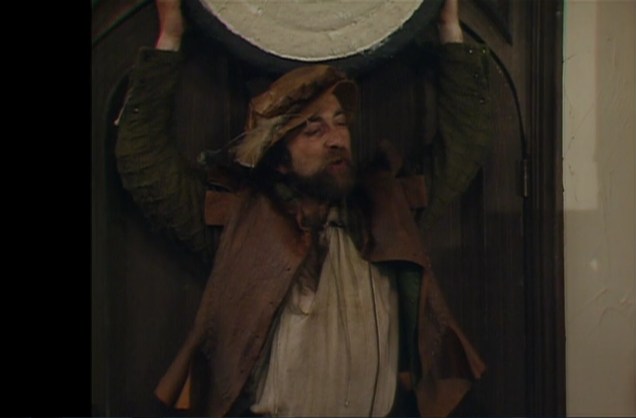
Baldrick - Blackadder

Brexiteers will never see it coming

As anguished “British Europeans” come to terms with the triggering of Article 50 (and, no doubt, their delicate selves) this week, Oxford University professor of European Studies Timothy Garton Ash has come up with a cunning plan to snatch victory from the jaws of defeat and stop Brexit in its tracks.

Our intrepid plotter plans to cosy up to Brexiteers – no more metropolitan lefty winger-wagging from he! – in order to gain their confidence, and then craftily turn them against Brexit through gentle persuasion rather than the haughty contempt which has been the prevalent attitude of most Remainers thus far. Yes, the new plan is for Remainers to be like secret agents working deep behind enemy lines in Theresa May’s dystopian Brexitland, dodging the lynchings and summary executions (which will naturally be a daily occurence) in order to sow doubt among the population and keep alive the flame of “liberal” fidelity to the EU.

Unfortunately, by writing it all down in a column for the Guardian, Garton Ash rather gives the game away, warning everyone in advance of his plan:

This week opened Act III of a five-act drama called Brexit. The play will take at least five years, more likely 10, and only Act V will reveal whether it is a tragedy, a farce, or some very British theatre of muddling-through. The many millions of us in Britain who identify ourselves as Europeans must not give up now, as if the show were over. It’s not, and we’re not just the audience. We are actors in this play and our main task is to persuade our fellow actors.

Yeah yeah, we get it, you’re so European, I feel like I’m in Venice just reading your words.

In order to get there, we British Europeans have to work out ways of reaching some of those Brexit voters, recognising that they are in no mood to be lectured by metropolitan liberals. We need to penetrate the echo chambers of populism with plain facts and good British common sense.

Instead of going on about “stopping Brexit”, which allows us to be quite effectively pilloried as whingeing remoaners, we should state the new goal positively.

Of course I still want Britain to remain a member of the EU, just as a Brexiteer would still have wanted Britain to leave it if the referendum had gone the other way – and we should never say never. But as I wrote just after the referendum, our strategic goal should be “to keep as much as possible of our disunited kingdom as fully engaged as possible in the affairs of our continent”.

Theresa May talks of a “deep and special partnership” with the EU: let’s make that very deep and very special. And who knows what opportunities the next years might bring? We are only at the opening of Act III, and there is still much to play for.

So no more actively talking about seeking to thwart Brexit, and lots more silent manoeuvrings to thwart Brexit behind people’s backs instead? Pretending to sincerely engage with Brexiteers and speak to their concerns and aspirations after having spent years furiously denouncing them as low-information, xenophobic reactionaries who were tricked by an Evil Bus into voting against their own evident self-interest? What could possibly go wrong?

HEY! SEE THIS HOUSE? THIS ONE OVER HERE, THE ONE THAT’S CLEARLY OCCUPIED, WITH A CAR PARKED IN THE DRIVEWAY? THE ONE WITH THE OWNER STICKING HIS HEAD OUT THE WINDOW TO SEE WHO’S SHOUTING IN THE STREET? I’M GOING TO ROB HIS HOUSE IN A MINUTE! I’M GOING TO RING THE DOORBELL AND PRETEND TO BE A SALESMAN, AND WHEN I’M INSIDE I’M GOING TO ASK FOR A CUP OF TEA AND THEN STEAL ALL OF THE VALUABLES WHEN HE ISN’T LOOKING. THAT’S MY SUPER-STEALTHY CUNNING PLAN. DID YOU HEAR ME? OKAY, HERE I GO!

Ding dong.


Monkey Cymbals

Support Semi-Partisan Politics with a one-time or recurring donation:

Agree with this article? Violently disagree? Scroll down to leave a comment.

Follow Semi-Partisan Politics on TwitterFacebook and Medium.

On Article 50 Day

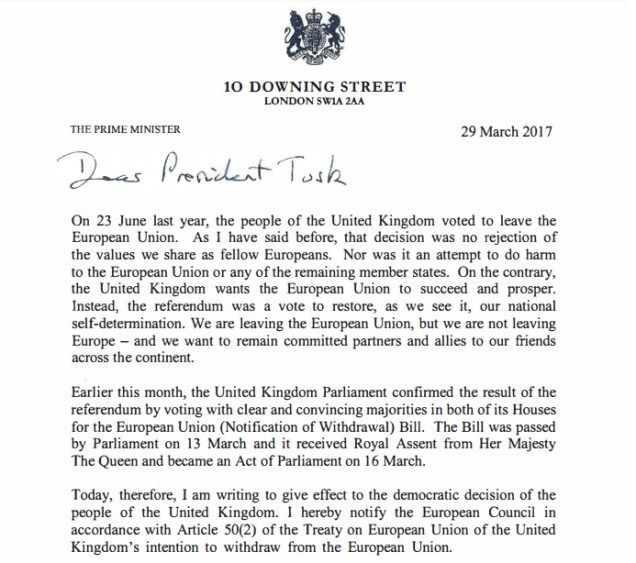
United Kingdom Britain EU Secession - Article 50 Letter - Downing Street - Theresa May - Donald Tusk - European Union

A genuine opportunity for democratic renewal – if we can keep it

Many believed – either through arrogance or hopelessness – that this day would never come.

Article 50 Day: the day that the British government triggered Article 50 of the Lisbon Treaty and formally signalled to the European Union our decision to secede from that dysfunctional, anachronistic and profoundly anti-democratic political union, conceived more than a century ago and constructed in a post-war age now almost completely alien to us.

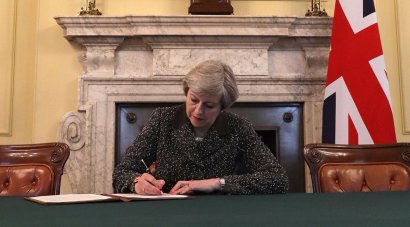
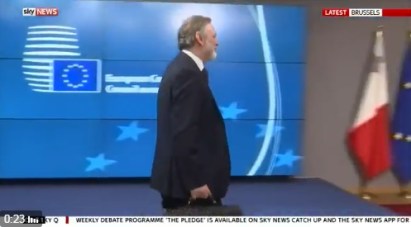
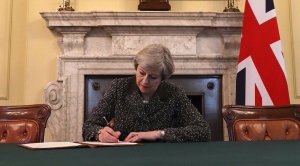
Of the many pictures which may come to represent “Brexit Day” in historical memory, the two images which struck me are the photograph of Theresa May signing the Article 50 notification letter in Downing Street last night, and the television footage of the British official (Ambassador Sir Tim Barrow) in Brussels, striding into the European Council building to deliver the note to president Donald Tusk.

Why? Because these images more than any other represent the astonishing triumph of democracy over the near-unanimous will of the political establishment.

Theresa May signing Article 50 Letter - Downing Street - Brexit - EU

Sir Tim Barrow - Article 50 letter - Brexit- European Union - Britain

Theresa May did not want to sign the Article 50 letter. During the referendum she campaigned, albeit half-heartedly and often nearly invisibly, for Britain to remain in the European Union before accepting the inevitable and promising to implement Brexit as she manoeuvred for the Tory leadership.

And the British civil service, foreign office and diplomatic corps, represented here by Tim Barrow, our Permanent Representative to the EU, certainly did not want to deliver the letter, so accustomed are they to thinking and operating only within the narrow tramlines of those competencies not surrendered to Brussels..

The generations of politicians, diplomats and bureaucrats who currently run Britain were raised on a narrative of national decline and inevitable dependence on the Brussels political union as the only means of amplifying our fading voice in world affairs. Their formative years were spent during the Winter of Discontent and marked by one post-war national humiliation after another. The tremendous post-1970s (Thatcherite) revival has failed to disabuse them of the utterly false, poisonous notion that Britain is a small and insignificant country, no longer capable of governing herself in the manner of other independent countries such as Canada or Australia, let alone as the fifth largest economy and major cultural, commercial, diplomatic and military power that we truly are.

By huge margins, these people were deeply wedded to Britain’s inevitable future as a European Union member state, and consider Brexit a huge mistake bordering on a tragic act of national self-harm. And yet Theresa May signed the letter, Tim Barrow delivered it, Article 50 was duly triggered and the process of Britain’s secession from the European Union was put into motion.

Why is this something to be celebrated? Because at a time when there is every reason for cynicism and doubt, it shows that at a fundamental level, the British people are indeed still in charge of their own destiny.

Theresa May did not want to sign the letter and Tim Barrow did not want to deliver it, but they did so because they retain a sufficient fear of (if not respect for) the public that they dared not abuse their power by overriding the results of a public referendum. Note that there is no such reticence about subverting democracy in the diminished union we are now leaving – unfavourable referendum results in member states (relating to EU treaties or the ill-fated constitution) have consistently been treated as unfortunate but minor setbacks and then sidestepped by the Brussels machinery, its leaders safe in the knowledge that they are so insulated from democratic accountability that they will suffer no consequences for their actions.

In Britain, however, there remained just enough fear of the people for our leaders to be forced to do the right thing, against their will. That’s not to say that they will get Brexit right, not by a long stretch – right up until Referendum Day, many Brexiteers were too busy hating the EU to identify the future relationship they wanted to have with it, while bitter Remainers did much to poison public and media opinion against the kind of transitional EEA deal which would have caused the least economic disruption. But given a mandate to take Britain out of the European Union our leaders are now doing so, however clumsily and against their will. This is as it should be.

Brendan O’Neill also gets it:

What we’re witnessing in Britain today, with Theresa May triggering Article 50, is something radical: the political class is going against its own judgement under the duress of the demos. The polite, peaceful duress of the demos, it should be pointed out.

We know that 73 per cent of MPs want to stay in the EU. We know many in the House of Lords are horrified by Brexit and were keen to hold it up. We know 70 per cent of business leaders wanted Britain to remain, and that some of them launched costly legal battles to try to stymie the Brexit momentum. And yet in the end, all of them, every one, has had to roll over and give in to the masses: to the builders, nurses, teachers, mums, old blokes, unemployed people and others who effectively said to the political class: ‘You’re wrong. We should leave’. To the people surprised that such a state of affairs can exist, that the political set can be made to do something it doesn’t want to by the mass of society, including even uneducated people: what did you think democracy meant? This is what it means.

Yes, this is what democracy means. To do anything else – to override or subvert the referendum decision for Brexit – would mean the triumph of technocracy  and well-meaning dictatorship over democracy.

We tend to forget, because it has not been this way within living memory for many citizens, but in a democracy the leaders are supposed to fear and respect the people and their judgment, not the other way around. As government relentlessly expanded and the bureaucratic state encroached ever more on our lives, we have unfortunately come to fear the government far more than government leaders fear the public – but not so with Brexit. Government ministers know that to defy the Brexit vote and seek to remain in the EU against the wishes of the people would visit such anarchy and destruction upon the country that they daren’t seriously even consider it (save inconsequential politicians such as Tim Farron). And so no matter how much they dislike it, today they implement our instructions.

Of course, Brexit is just one issue. In many other arenas of public life, officials have absolutely no qualms about defying public opinion and treating voters as polling units to be managed or placated rather than autonomous, thinking and engaged citizens to be feared and respected. We must take care not to merely repatriate powers from Brussels back into the arms of a power-hungry, over-centralised Westminster government that will fail to act in the interest of the UK’s diverse home nations and regions, and which carelessly surrendered its own powers to Brussels without democratic consent in the first place. Now, more than ever, we must hold our politicians and civil servants to account.

Brexit is the start of an opportunity for real democratic and constitutional reform, not an outcome in itself. Secession from the European Union makes the rejuvenation of our democracy possible, but by no means inevitable.

When queried by a stranger as to the outcome of the constitutional convention he was leaving, American founding father Benjamin Franklin famously replied: “A Republic, if you can keep it”.

Today, as Theresa May’s government (for all its many flaws) triggers Article 50 and serves notice on the European Union, we seek to reclaim our national self-determination and renew our democracy – if we can keep it. If we can rise to the occasion and collectively seize the great opportunity which now stands before us.


Theresa May signing Article 50 Letter - Downing Street - Brexit - EU

Support Semi-Partisan Politics with a one-time or recurring donation:

Agree with this article? Violently disagree? Scroll down to leave a comment.

Follow Semi-Partisan Politics on TwitterFacebook and Medium.

What European Identity? Part 2 – Classical Music Edition

European Union Youth Orchestra

How can we possibly continue to enjoy Beethoven or watch touring European orchestras perform in evil, isolationist Brexit Britain?

Today’s Peak Guardian article is an account of an interview recently given by the legendary pianist/conductor Vladimir Ashkenazy to the Observer newspaper, in which Ashkenazy urges classical musicians to “keep up British links with Europe in the face of Brexit”.

A distilled summary of the Guardian’s breathless spin: Brexit gravely threatens Britain’s continued participation in the international arts and culture scene, but if enough brave musicians come together in a spirit of cooperation then it may be possible to ride out the gravest threat to Europe since World War 2 and the Cold War.

From the piece:

Vladimir Ashkenazy, one of the most revered figures in classical music, has called on musicians to strive to keep up British links with Europe in the face of Brexit. The great Russian conductor and pianist, who made his name as a soloist in the 1960s and 70s, spoke passionately to the Observer about his continued faith in European culture.

“Music will win in the end,” he said, speaking publicly on the subject for the first time. “After all, music is not just an exercise in making sounds. It is a reflection of our joint spiritual endeavours.”

Comparing Britain’s impending split with Europe to other political schisms of the 20th century, such as the rise of fascism and the cold war, Ashkenazy, 79, said he was optimistic that those who love making music together will find a way to keep connections going across the Channel. “I am sorry about it, and I know it will be difficult to get used to a totally different situation, but for musicians many things will remain the same, simply because we will work to find a way to make agreements for the sake of music,” he said.

Many British classical musicians expect Brexit to set up new travel barriers and present fresh difficulties for orchestras receiving EU funding. The potential threat to free travel for working musicians has already prompted the European Union Baroque Orchestra to announce a move to Belgium this summer. It has been based in Oxfordshire since 1985. Meanwhile, the well-regarded European Union Youth Orchestra (EUYO) is considering a move to the continent after 40 years in Britain.

Of course, this feeds nicely into the Guardian’s (and the entire British metro-Left’s) little conceit that by extricating ourselves from a dysfunctional and failing supranational political union we are also somehow hacking away at the cultural and historical ties which bind us to the continent, and so naturally they seize on the Ashkenazy interview as a perfect example of how enlightened artists can help to save Britain from the brutish and self-destructive decision made by the Evil 52%.

Now, Vladimir Ashkenazy is not particularly to blame for any of this. If you want somebody to play a Rachmaninov prelude in such a dazzling way that it makes your hair stand on end and brings a lump to your throat then Ashkenazy is your very man. If, however, you want somebody to give you a good overview of geopolitics and assess the relative failings and merits of the European Union, then you are probably better off turning to someone else. So the point is not that Ashkenazy is wrong (and even he is generous enough to admit that Brexit is slightly less evil than Soviet communism, which is very kind) – that much is entirely forgivable, given that he is operating far from his natural competencies.

No, the problem is the entirely predictable way that the Guardian picks up this narrative and unquestioningly burnishes and amplifies it without stopping even for a moment to consider the validity of the point being made. Where they could take a step back and actually seek to educate their readers about a whole bunch of issues touching on this story, instead they strut and pose and play to the gallery, feeding them the self-affirming story that they expect rather than the hard dose of reality that they might actually benefit from hearing.

The Guardian could have dwelled for a moment on exactly why cross-border co-operation in classical music is supposedly imperilled by Brexit (giving more concrete examples than the unspoken and unprovable suggestion that Britain would deliberately make it harder for talented musicians to tour or work here). But instead, they uncritically write about how musicians will bravely “find a way to keep connections going across the Channel” without stopping for a moment to consider the fact that British orchestras and ensembles tour numerous non-EU countries in the world without the protective shelter of political union, while many non-European ensembles somehow make it to the BBC Proms and give numerous other performances in Britain despite their musicians lacking EU passports.

But the ulterior motive soon becomes clear when the article bemoans the relocation of the European Union Baroque Orchestra and the European Union Youth Orchestra, two EU propaganda outlets funded by taxpayers to instil in us a sense of European identity which still stubbornly fails to materialise. In London, with so many preeminent ensembles already located here, did we ever really need these two explicitly political additions to our cultural scene? No, of course not – and the Guardian’s duplicitous attempts to upgrade these obscure ensembles to “major orchestra” status is straining the boundary of journalistic integrity. Their sole purpose was to indoctrinate the young and cause us to associate the European Union with benevolent funding of the arts rather than their tawdry, relentless attacks the nation state.

(The EU Baroque Orchestra has a slightly more successful legacy of seeding other baroque ensembles with past alumni, work which can continue in their new Belgian home.)

None of this is to deny the value of youth orchestras – I was a member of one myself for several years, and greatly enjoyed the opportunities for performance and collaboration that it afforded me – but the EU’s propaganda outlets are neither central to the British classical music scene nor an essential bridge to Europe. Take them away and nothing really changes.

Compare the EU’s musical propaganda outlets with a far more worthy exercise in cross-cultural bridge-building, Daniel Barenboim’s West–Eastern Divan Orchestra, and I know which I would rather preserve – the one which seeks to promote peace and cross-cultural understanding in the turbulent Middle East, not the one which uses European taxpayer funds to shore up a creaking, failing 1950s regional super-bloc.

The United States, by contrast, does not need to keep itself together by funnelling federal money into youth orchestras in a desperate attempt to inculcate a sense of American-ness. And while many pertinent criticisms can be made about funding of the arts in America, it must also be acknowledged that many of the finest ensembles and artistic companies in the world – the Metropolitan Opera, the New York and Los Angeles Philharmonics, the New York City Ballet, as well as the feeder schools, companies and institutions which mould the next generation of artists – are based in the United States and do not have to suckle at the teat of taxpayer funding in order to survive.

When government does not try to do everything, private initiative and private philanthropy are often able to step in to do the job far more successfully and lavishly. They need only be given the space to do so – but the EU has no interest in getting out of the way and allowing the arts to flourish on their own, because then the results would not bear the imprimatur of Brussels and thus would have zero propaganda value.

Is the threat posed by Brexit to the European Union Youth Orchestra a good reason to scrap the whole endeavour and remain part of the EU? Of course not.

Has the European Union Youth Orchestra done anything to meaningfully shift the sense of European identity among those who are not directly involved, or the misty-eyed eurocrats who profaned Beethoven’s Ninth Symphony by co-opting the final movement as their anthem? No.

Does Britain’s departure from an explicitly political union necessarily or inevitably mean that artistic links between the United Kingdom and the continent must be weakened? No – or at least, the Guardian have given us no good cause to believe that there is a danger.

(Incidentally, Vladimir Ashkenazy himself lives in Switzerland, which is also famously not a member of the European Union, and yet seems to be able to maintain a fruitful international career including many concerts and residencies in Britain).

The whole Guardian article hangs together only if one is content to take the most superficial view of Brexit, skating around on the thin ice of metro-left shibboleths about how international cooperation and peace only exist thanks to the benevolent hand of Brussels. To take the threats spun from the Ashkenazy interview seriously, one must actually drink the Remainer Kool-Aid and believe that Brexit means isolationism, and in all its forms – economic, social, cultural. To be that cretinous, one must be an unapologetic bubble dweller, proud and stubborn in one’s ignorance of the opposing side.

But then that’s the Guardian for you: a newspaper tailor-made for poseurs who believe (or at least want to signal to their friends) that they already know and understand the nuances of every issue, and that the One True Way just conveniently happens to lean in the same stridently left-wing, pro-EU direction as their pre-existing beliefs.

Among Guardian journalists and readers alike there is zero intellectual appetite to actually get under the hood of any issue and talk about the meaning of democracy and self-determination, whether state funding or private philanthropy does a better job of funding the arts or any other substantial question that is ripe for debate. They just want to take a glib headline and serve it up as red meat to their metro-left, superficially culturally literate peer group (see last year’s uncritical, months-long homage to the NHS).

And so what could have been a useful jumping-off point for a real discussion about the future of the fine arts, the best way to foster cross-border co-operation and whether existing mechanisms of funding are a) effective, and b) a good use of taxpayer funds instead becomes just another wobbly-lipped ode to the Brave Artists Resisting Evil Brexit.

The only result of this “journalism” is that everyone is left slightly more attached to their pre-existing bias, while the opportunity to enrich the public discourse is squandered in favour of yet more left-wing, pro-EU virtue-signalling and alarmist Brexit catastrophisation.

Mission accomplished once again, Guardian. Great job.


Save EUYO - European Union Youth Orchestra - Propaganda

Support Semi-Partisan Politics with a one-time or recurring donation:

Agree with this article? Violently disagree? Scroll down to leave a comment.

Follow Semi-Partisan Politics on TwitterFacebook and Medium.

What European Identity?

Remainer paints EU flag on her face - European Union - Brexit

No, watching an arthouse movie twice a year doesn’t count

Pete North puts into rather forceful words a sentiment which inchoately bubbles up within me every time I see a tearful Remainer painting the EU flag on their face and weeping into an eagerly waiting television camera about how the cruel, racist vote for Brexit has somehow ripped their “European identity” away from them.

North scoffs:

For all that cretinous bilge from remainers about us Brexiteers “stealing my European identity”, I say bollocks. You have no European identity. It is a figment of your imagination. You weren’t watching [a] French cop show on Netflix last night were you? You didn’t go and see a Spanish superhero film at the cinema last week. You know more about US politics than you do about the EU. Culturally, militarily and politically we are Anglospheric. That is a fact.

For all that we have seen remainers amphibious with grief, I say go and look at the traffic jams and the behaviour of drivers in Rome or go and watch the Spanish torture a bull to death and tell me that your culture is in any way reflected in Europeans. That’s when I tell you to fuck right off.

If I have to pick an empire to be allied with, I choose the USA every single time. The land of The Wire, South Park, Rick and Morty, the First Amendment. The country that never needed any persuading that Communism is the manifestation of evil on earth.

Say what you like about Donald Trump, but Donald Trump is not America. Trump is for four years or so. Moreover, Trump is a good sign. Yes, he’s a brash, oafish wrecker but he was elected on the back of a total rejection of American leftism. That which has aggressively moved to bury all moral norms and free speech along with it.

This is why Trump is weakening relations with the EU. Ultimately the diseased politically correct establishment in the USA is the consequence of a detached and corrupt liberal elite. In that respect the USA is in a more advanced state of decay than the EU – but we should view it as a warning. The soft left political consensus of the EU, with its deeply ingrained NGOcracy is that same disease. Brexit is not Trump. Brexit means we avert having one of our own.

I concur wholeheartedly.

Ask a Remainer what their favourite television show is, and they are far more likely to cite an American show than a European one.

Ask a Remainer what their favourite movie is, and they are far more likely to cite something from Hollywood than a worthy-but-subtitled movie from France, Spain or Italy.

Ask a Remainer who their favourite pop music artist is, and they are far more likely to cite an American artist than a European one.

Ask a Remainer to name a political hero or inspiration and I would wager that they are far more likely to reach for Abraham Lincoln, Franklin Delano Roosevelt, John F Kennedy or Barack Obama than Jacques Chirac, Gerhard Schröder, Silvio Berlusconi or Angela Merkel.

Ask a Remainer to cite a famous legal case or decision from a jurisdiction other than their own, and they are far more likely to name a famous case from the US Supreme Court – Brown v Board of Education, Roe v Wade – than a case from the European courts, or those of any member state.

For that matter, look at our legal system of Common Law, which influenced the formation of the American legal system (in the original colonies through to the federal system) and which is markedly different to the civil law traditions prevalent on the continent.

There are exceptions, of course. There are some areas where Europe does exert a stronger gravitational pull over us than North America or the wider Anglosphere. But besides geographic proximity, they are few and far between. Those who claim that we are somehow predominantly “European” in culture tend to either do so from a position of wishful thinking, wanting to position us closer to European social democratic tradition because they wish that our politics would move further in that direction, or from the blinkered perspective of their own narrow social circles.

None of this is to claim that British people lack an affinity for Europe, have nothing in common with other European countries or are in any way hostile to European culture. Many Brits do have deep and abiding links with the continent, myself included – I have a deep and abiding affinity with France and the French culture and people dating back to my teenage years, but I am clear in my mind that this is a relationship nurtured with a culture distinct from and different to my own, not a mere extension of my own culture.

And anybody who seriously surveys the full sweep of cultural connections – legal, governmental, artistic, musical, touristic, commercial – and tries to tell you that the British people have more in common with mainland Europe than with our friends in the Anglosphere (particularly the United States and Canada) is deliberately trying to deceive you, and deluding themselves in the process.


People hold banners during a demonstration against Britain's decision to leave the European Union, in central London

Support Semi-Partisan Politics with a one-time or recurring donation:

Agree with this article? Violently disagree? Scroll down to leave a comment.

Follow Semi-Partisan Politics on TwitterFacebook and Medium.