Harvey Weinstein Hypocrisy And The Westminster Cesspit

Westminster Big Ben Telephone Box

British journalists have reported and commented extensively on the Harvey Weinstein scandal, yet seem curiously unwilling to lift the lid on the seediness and sexual harassment which routinely takes place within their own industry

In the aftermath of the Harvey Weinstein scandal (were you as stunned as I was?!) we have seen a range of responses from genuinely shocking and awful first-hand accounts of serious harassment and abuse to the now-obligatory collective guilt lectures delivered condescendingly to All Men.

But I am particularly interested in the response of journalists and commentators in Britain who took the time to report on a sexual harassment scandal unfolding in Hollywood while remaining curiously silent about a similar culture at work in their own industry.

I make no pretence of being a Westminster insider, but in my life on the far, far outer periphery I have attended a number of political functions, meetings, party conferences, boozy book launches and parties where very high profile journalists and moderately high profile politicians were present, and I have seen behaviour with my own eyes which would shame some of those who lent their voices to the chorus of condemnation of Harvey Weinstein and other serial alleged harassers. I have also heard disturbing personal accounts of inappropriate and unwanted advances by married men in the media, though having been relayed to me in confidence, these are not my stories to tell.

The seediness of Westminster politics is reasonably well known, but while political journalists are generally now willing to report on politicians when they come a cropper, most are understandably much less eager to lift the lid on their own sub-clique. Yet ultimately, journalism is no different from many other professions where people work, travel, eat, rest and play with the same group of colleagues in a high-pressure environment. Throw in the fact that politics and political journalism falls squarely into the “showbusiness for ugly people” category and is dominated by big beasts who grew up in a very different Fleet Street era and young people desperate to get a break, and a pulsating atmosphere of illicit romances, scandals and unwanted advances is all but guaranteed.

I have been to events where wine-sodden journalists said eyebrow-raisingly inappropriate things which made others feel uncomfortable, or in some cases made fumbling physical advances which had to be repeatedly warded off by the unfortunate recipient. Most of these incidents amounted to little more than general slovenliness and lechery, the kind of thing which reflect badly on a person but should not necessarily end a career or put somebody in court. But other times the behaviour I witnessed and heard about fell distinctly into the dodgy end of the grey zone.

And yet so far the only people from the political media world to have faced any kind of scrutiny in Britain are the writers Rupert Myers and Sam Kriss – both of whose cases were summarily tried in the fiery crucible of the Twitter and Facebook Star Chamber with no due process. As happened for so long in Hollywood pre-Weinstein, a couple of relatively minor fish in British political journalism are being made scapegoats so that the Big Fish can swim on unsated, undaunted and unchecked.

Much is being written about the bravery (or lack thereof) exhibited by certain individuals in Hollywood in their dealings with Harvey Weinstein and other powerful men accused of sexual harassment. And many of us probably feel rightful admiration for the brave few who first came forward at considerable personal risk, and shake our heads at the powerful A-listers who didn’t once think to risk anything to warn or protect others.

But I am curious about the household name journalists who behave nearly as badly at SW1 events or party conference hotel ballrooms yet go unreported and unpunished year after year. And I am particularly interested in their media peers, who know exactly what is going on and whether or not it fits a pattern of behaviour, and find all the time in the world to excoriate Harvey Weinstein while saying nothing about the atrocious behaviour that occurs right under their noses.

Tom Bradby, former ITV News political editor and current anchor of News at Ten wrote quite a stirring call-to-arms about an unpleasant “lads culture” at his old rugby club and various stag parties he later attended. Yet after all his years at the top of British political journalism he couldn’t think of any relevant anecdotes about his own peers and colleagues of sufficient concern to make it into the article? Perhaps not; Bradby may very well have purposefully avoided many of the booze-fuelled, bacchanalian evening events which make up the Westminster social calendar, and saw nothing. But I suspect that many others of equal seniority and profile to Bradby know exactly what goes on but give their own industry a Get Out Of Jail Free card.

As anyone who works in politics and answers truthfully will attest, Westminster can be a very seedy place. I understand that the ascension of Jeremy Corbyn in 2015 saw some dispossessed Labour centrists indulge in behaviour which would have been considered scandalous at King Belshazzar’s feast. It seems likely that Theresa May’s bungled campaign and the trauma of election night this summer saw some similar desperation-fuelled behavioural lapses on the Right.

The two mini scandals du jour – Labour’s Clive Lewis getting a bit verbally carried away at a Momentum event in Brighton or Jared O’Mara having posted unsavoury comments on the internet fifteen years ago as a young man  – barely scratch the surface of what goes on. Indeed, these cases are almost decoys, relatively minor transgressions being seized upon so that the accused can be made scapegoats for the graver sins of a much larger group. One almost wonders whether the enthusiasm with which the UK political blogosphere, print and television media picked up these stories was a way of over-compensating for the profound silence about what takes place within their own camp.

But this seediness and sexual harassment within British politics and journalism will not be eradicated by offering up some scrawny, barely-known writer from Vice or a slightly bigger deal from GQ Magazine as a sacrifice to the Twitter gods. It will take a big fish to land a big fish – a heavyweight figure from a major publication or broadcaster must put their credibility on the line. The world of politics and journalism, like Hollywood, is a very hard industry to crack and those struggling to gain admittance from the outside risk everything by speaking out, even as they are the ones predominantly being preyed upon by grotesque, self-satisfied insiders.

One day – perhaps quite soon, given the rapidity with which Harvey Weinstein fell from grace – one of the big beasts of UK political journalism will be revealed for what they are. Somebody who everybody in the Westminster political/media world has been paying obsequious homage to for years will receive first one allegation of improper conduct, then another, and then a steady drip-drip of accusations until the sudden resignation, admission of “errors of judgment” and flight to celebrity rehab inevitably follow.

And when that happens, we will all be sitting here wondering how it was that so many people whose sole job it is to unearth and report stories of public interest – so many respected, well remunerated household names – somehow neglected to mention what was going on in their own back yard.

And what little scrap of credibility the Westminster media retains will be gone for good.
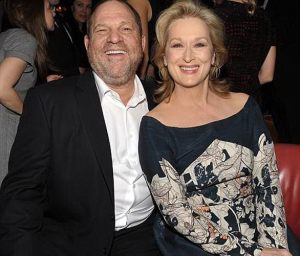
 

Harvey Weinstein - Meryl Streep

Support Semi-Partisan Politics with a one-time or recurring donation:

Agree with this article? Violently disagree? Scroll down to leave a comment.

Follow Semi-Partisan Politics on TwitterFacebook and Medium.

The Conservative Party Has Lost The Pulse Of The Nation

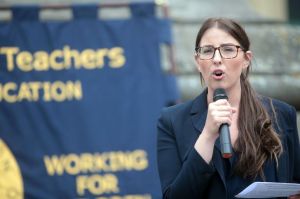
Laura Pidcock - Labour MP North West Durham - 2

Labour’s statist, redistributionist policies are as bad as ever, but unlike the Tories they increasingly have the pulse of the nation

Once again I find myself in the strange position of agreeing with a stridently left-wing MP in their criticism of this drifting Conservative government and the failing centrist consensus which it represents.

As Jon Trickett continues to curate LabourList for the week, North West Durham MP Laura Pidcock writes:

Those people who sit on the government benches, who speak very well and pronounce their excellence and their firm grasp of the system, probably do believe it was their hard work that got them there. I’m sure they believe that it was some unique brilliance that put them in a position of power, not their childhood classrooms with numbers in single figures; not their personal allowances whilst at university: not their ability to recover from failures, because of the large cushion they sit upon. Not everybody who is wealthy and privileged is like this, but it certainly – and evidently – it makes it harder for those that are to understand the reality of what is happening to ordinary people.

This is why you get a system like universal credit, like the bedroom tax, the rape clause, the sanction system, the work capability assessments and he hugely alienating disability benefits system. It is why there are fines and punishments associated with all aspect of working class life: parking, smoking, littering, debt payments, libraries, electricity meters. When I had a book that was overdue to return to the Commons Library, I did not receive a fine. Undoubtedly it was assumed that I was too busy, that I had better things to be doing. Do the same presumptions apply to 99 per cent of Britain? Of course, not. On the contrary, they seen are lazy, feckless and are perceived to be “cheating” the system for turning up minutes late to a benefits assessment. Then they are hit where they won’t recover: through their finances, and so the cycle continues.

Of course, Pidcock ultimately goes on to spoil it all with economically illiterate class envy and a programme based more on tearing down the privileged rather than giving greater opportunities to the underprivileged:

We must expose the absurdity of our current system, we should shine a light on the cosy, privileged networks which lock out our people, our communities and our class. We have to call out poverty pay for what it is: it is robbery from the real wealth creators.

This much at least is socialist piffle. Yes of course there are some exclusive, exclusionary networks that are unwelcoming to minorities and working class people, and this is reprehensible when it occurs. And yes, recruitment to the SpAdocracy and cadre of parliamentary researchers and advisers which acts as a recruitment pool of future MPs is often too narrowly targeted at people from the same homogeneous background. But as this blog discussed yesterday in the wake of the Oxford University diversity non-scandal, the real issue is a problem with the supply of qualified people from under-represented backgrounds, not a lack of demand for them.

Most institutions remotely connected with government are under huge pressure to improve their diversity ratios, and face constant political pressure and bad publicity when they fail to do so. The fact that insufficient progress has been made tells us that the pipeline of qualified (or interested) candidates remains restricted, not that willing and capable people are necessarily being turned away.

But strip away the leftist agenda and the rest of Pidcock’s criticism is spot-on. Of course there are honourable exceptions, but MPs sometimes manage to display a remarkable lack of empathy for the struggles of the squeezed middle. This manifests in a multitude of ways, and is by no means restricted to the Conservative Party.

The London-raised metro-left Labour MP parachuted into a safe Northern constituency but boasting a voting record more attuned to the priorities of Islington than Darlington is every bit as out of touch as the privately-educated Tory MP who cannot comprehend why a six-week gap between applying for Universal Credit and receiving a payment might be problematic. Or the Tory MP who is confused that a selfish housing policy which chronically restricts the supply of housing stock to benefit older homeowners simultaneously alienates younger voters. Or the rural Tory MP who devotes all their energy to supporting NIMBY causes and then wonders why each election leaves him with fewer and fewer colleagues from urban constituencies.

My concern is not that the Labour Party is suddenly coming up with compelling, inventive new solutions to the problems we face as a country. By and large, they are not. My concern is that Labour are at least correctly identifying some of those problems and speaking to them in a way which makes people think they care, while the Conservative Party steams on in the same dismal direction as before, bereft of vision or policy ideas and with an unfortunate tendency to loudly insist that everything is great when everybody can see otherwise.

My concern is that more than four months after a general election result which has seemingly prompted no change in strategy by Theresa May’s government, Labour MPs are starting to make more sense – and sound more like they live in the real world – than their Conservative counterparts.

And when that happens, it usually means that the out-of-touch party is heading for a spell on the Opposition benches.


Laura Pidcock - Speech

Support Semi-Partisan Politics with a one-time or recurring donation:

Agree with this article? Violently disagree? Scroll down to leave a comment.

Follow Semi-Partisan Politics on TwitterFacebook and Medium.


Laurie Penny, Gaslighter

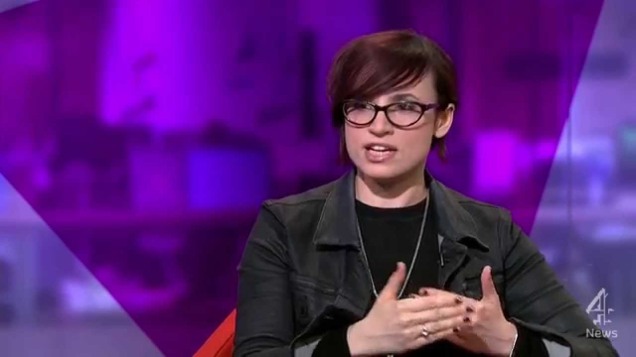
Laurie Penny

According to Laurie Penny, conservatives are the true enemies of free speech and the illiberal student activists who beat them up, ‘no platform’ their speakers and disrupt their events are merely questioning the establishment

As they stagger on under the “leadership” of Theresa May, this Conservative government continues to cast about aimlessly for some kind of raison d’être, a justification for showing up for work in the morning which sounds marginally more noble than “because daytime TV sucks”.

And so it came to pass that the unremarkable minister for universities, Jo Johnson, decided to jump on the increasingly popular right-wing bandwagon of bashing identity politics, demanding that universities uphold a commitment to free speech and promise not to use no-platforming or safe spaces to suppress the exchange of ideas on pain of being fined or even deregistered as an institution by the Office for Students.

This is all incredibly boring. Jo Johnson was head of the Downing Street Policy Unit from 2013-2015 under David Cameron, right at the time when illiberal identity politics zealots were cementing their power. If Johnson had a burning desire to protect free speech, he could have persuaded Cameron to take up the cause. He did not do so. It is also curious that he now wants to become a crusader for free speech when working for an authoritarian prime minister whose every instinct points the opposite way, toward more regulation and censorship. In short, this whole thing is a PR stunt by a rudderless Tory Party chasing headlines rather than following an ideological compass.

But all this is only to be expected. More noteworthy is the response to Johnson’s posturing by identity politics priestess Laurie Penny, who took to the New Statesman to claim not just that conservatives are exaggerating the threat to free speech but that it is entirely a figment of their imagination.

Penny’s article begins dishonestly, and then gets worse:

The nonsensical consensus amongst the centre-right that today’s students are a bunch of censorious cry-babies plays well with the base, so Johnson Minor has jumped on the rickety bandwagon barreling down the road to the palace of convenient fictions, where a delicate banquet of delusion will be served to those whose cash and status protect them from ever having to hear their opinions questioned by a bunch of rowdy kids.

Conservatives seeking protection from having their opinions questioned? This is an interesting inversion. Rather than trying to minimise the issue and argue that the threat to free speech on campus has perhaps been blown out of proportion and is perhaps not as bad as portrayed, Laurie Penny insists – rather shamelessly – that the problem does not exist at all, that it is all a figment of our imagination.

Penny must be a secret neo-conservative fan girl because this is a consummate Karl Rove strategy, whereby she shamelessly accuses her opponents of the identity politics Left’s own glaring flaws. Where is the lengthy list of prominent left-wing speakers who have been banned from college campuses by conservatives? Where are the left-wing professors who fear for their job security if they question conservative ideas? Where are the left-wing students expelled or suspended from college because they made conservatives feel “unsafe” and contributed to a hostile, non-inclusive atmosphere? They don’t exist.

The problem is not that crusty old establishment figures are upset that brave, radical students are questioning their judgment. The problem is that these illiberal students do not merely question ideas, they actively suppress them on the grounds that they amount to dangerous “hate speech” with the power to wound or even kill. Yet through immense self-deception, Penny is able to cast actions which deliberately prevent speech from taking place as mere protest:

This is a non-controversy, and it’s unbelievable that otherwise intelligent commentators are taking it seriously. “No-platforming” is just another word for student protest – the practice of opposing invited speakers with bigoted views is a time-honoured one. The cooked-up row over “student censorship” is led by the sort of trembly-whiskered outrage-merchants for whom “censorship” means “making me feel bad about holding certain views”.

But protesting an idea and infringing on the rights of another person to express that idea are two very different things. One could excuse any act of violent oppression using Penny’s logic. “But lynching is just another word for protest”, said the Klansman to the sheriff as he was caught red-handed tying a noose. “I believe that black men are a menacing sexual threat to white women. Doesn’t matter if it’s true or not, I sincerely believe that it is and on that basis you have no right to stop me stringing up DeShawn over here for making my wife stare at him lustfully”.

And so it is with the SJWs. They sincerely believe that words are violence (or at least some of them do – I can’t help but think the smarter ones know full well that words are not deadly, but pretend that they are as justification for censoring unwanted ideas) and on that basis they claim the right to “protest” by shutting down the offensive speech, preventing it from taking place or exacting severe physical, financial or bureaucratic consequences for the speaker who dares to persist.

Laurie Penny continues:

There is, I ought to say, a rhetorical difference here that causes some confusion. Today’s students are simply more likely to use the language of empathy and trauma in their politics. They’re more likely, initially, to say “this book about how women aren’t really human might make some of us feel unsafe” than they are to say “this book is bullshit”. They’re more likely to say “you’re doing harm” than they are to say “fuck you”.

This is partly because a lot of today’s young radicals come from demographics for whom it’s far more dangerous to say “fuck you”. They are young women, young queer people, young people of colour. Their way of questioning authority is simply less actively aggressive. Today’s angry young people are more likely to show you their scars than their fists. That might be passive-aggressive, but it’s not politically unsound.

This is nonsense. Today’s SJWs and Antifa (the movement’s Faith Militant) are equally happy inflicting scars as they are flaunting their own to garner sympathy. It doesn’t take long to dig up both high-profile and more obscure cases where the pseudo-victimhood of supposedly marginalised and oppressed groups morphed suddenly into violent aggression on campus.

Witness student Bonita Tindle pushing and shoving a white male student who had the temerity to wear his hair in dreadlocks. Witness the recent incident at University of California – Santa Cruz, in which protesters shut down a meeting of the College Republicans and one protester claimed that she literally felt unsafe meeting in a library which was previously used by college Republicans. Witness the aggression of Jerelyn Luther getting hysterical about Halloween costumes. Witness Black Lives Matter shutting down an ACLU free speech event at William and Mary College, holding up banners declaring that speech kills. Note, too, the rising trend of outraged leftists demanding that speakers and publishers of wrongthink retract their “harmful” ideas and articles rather than going to the effort of disproving them. The Cult of Social Justice and Identity Politics is causing many on the Left to forget how to argue at all.

Laurie Penny dismisses the current ideological focus on “harm” as a mere difference in rhetoric compared to previous generations, which is blatantly false. If you think a prominent idea is “bullshit” and evidently false then you generally relish the opportunity to publicly tear it down and discredit its proponents. But the SJWs do not do this. All too often, they don’t even attempt to engage with the substance because they claim that even hearing contrary thoughts expressed will do them physical and emotional harm.

There is hardly a shortage of literature and academic research on the rise of victimhood culture and learned fragility/unresilience. One thinks particularly of the paper “Microagression and Moral Cultures” by Bradley Campbell and Jason Manning, which discussed the difference between dignity, honour and victimhood cultures, or Jonathan Haidt’s development of these ideas.

Laurie Penny is doing a fantastic job of telling often well-meaning leftists exactly what they want to hear. She seeks to assuage any doubts that some wavering souls may feel about their movement’s snarling illiberalism by waving away any concerns as the desperate squeaking of a racist, misogynist old guard who are simply upset at the loss of their hegemony. After all, it is much easier to dismiss concern as the self-interest of oppressive powers rather than reflect on the ideological oppression they themselves are inflicting in the name of social justice.

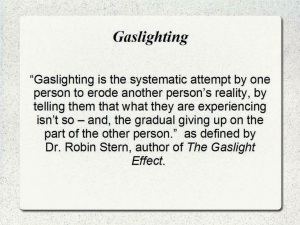
But in telling conservatives that persistent, concrete efforts by the Left to paint their ideas as intolerably extremist and forbid their expression on campus are merely imagined, Penny is actively gaslighting. She is engaging in that coercive, manipulative behaviour more common to spousal abusers by portraying her opponents as crazy and flat-out denying observable reality in order to delegitimise conservative concerns about free speech suppression.

That Laurie Penny feels able to lie and deceive so freely in the pages of the New Statesman shows just how strong the Cult of Social Justice and Identity Politics has become. Adherents to this illiberal, censorious cult no longer fear being discredited or held to account for their lies. So complete is their control over academia and so cowed and enslaved are the media and many politicians that people like Laurie Penny can now create their own reality and demand that others accept it as real.

If a conservative were to insist that capitalism was completely flawless or deny that poverty exists, they would be laughed out of town and rightly lose all credibility. Yet Laurie Penny can use her exalted perch in the New Statesman to deny that things we can all see taking place on Western university campuses are even happening at all, yet still be taken seriously the next time she spouts off on TV.

That’s the protective power of the Cult of Social Justice and Identity Politics at work.

That’s how close conservatives and defenders of free speech are to losing this war.


Gaslighting definition - Dr Robin Stern

Support Semi-Partisan Politics with a one-time or recurring donation:

Agree with this article? Violently disagree? Scroll down to leave a comment.

Follow Semi-Partisan Politics on TwitterFacebook and Medium.

Does Oxbridge Discriminate?

Brideshead Revisited - Oxbridge - Social Class - Discrimination

Oxbridge has every incentive to admit more students from disadvantaged and minority backgrounds. If diversity has failed to improve then it is our fault as individuals, families, communities and voters for failing to provide elite universities with a bigger, better talent pool

Another day, another tedious story about Oxbridge being a terrible bastion of privilege and discrimination where the few working class students who manage to evade the perimeter and matriculate find themselves mocked mercilessly by Bullingdon toffs while students of darker complexion are forced to drink from separate water fountains.

The trigger for this year’s rehashing of the predictable dirge was a freedom of information request submitted by Labour MP David Lammy, who selectively requested and interpreted data to paint the bleakest possible picture of barriers to elite higher education in Britain.

The Guardian reports on the “shocking” findings, and then have the temerity to criticise the Oxford University press office for daring to defend themselves rather than meekly accepting criticism and submitting to corrective punishment:

Oxford and Cambridge have been accused of failing to engage in serious debate over their lack of diversity by the former education minister David Lammy, who first highlighted the issue with data obtained by freedom of information requests.

The Labour MP said the universities had been “trying to make journalists change their stories” rather than address how little progress they were making in recruiting talented students by race, social class and location in England and Wales.

His accusation came after sparking national controversy over data – first published in the Guardian – that showed that as many as 16 Oxbridge colleges failed to offer any places to black British applicants in 2015, the most recent figures under the FOI request.

Note that when leftists call for a “serious debate” on something, in actual fact they do not want a debate at all. What they want is for you to flop over submissively on the ground and agree to whatever Utopian socialist pipe dream they have in mind. Back in the real world, Oxford and Cambridge do little else these days other than engage in never-ending symposia about diversity. The reason that these debates don’t satisfy the Left is because they do not end with Britain’s elite universities sacrificing their brands and academic standards by further lowering their entrance requirements to attract less qualified applicants who happen to tick the right diversity checkboxes.

David Lammy huffs in the Guardian that “seven years have changed nothing at Oxbridge”, but this is totally untrue. Elite universities are falling over themselves to admit minority and working class students to improve their admissions statistics. They face immense political and even financial pressure to do so. Seven years have indeed changed Oxbridge, but only in the direction of being even more amenable to considering applications from underrepresented groups. What has not changed, though, are the stubborn social and environmental factors which continue to restrict the pool of minority applicants in which Oxbridge and other elite universities must fish.

Of course, Labour were quick to pile on with predictable, cookie-cutter criticism:

Angela Rayner, Labour’s shadow education secretary, said: “This is the latest damning evidence on the government’s failure to widen access to our most selective universities.

“The proportion of comprehensive school pupils getting in to top universities under the Tories is lower than when Labour left office, and this data shows that the problem is especially serious at Oxford and Cambridge.

“Ministers claim their system is working, but these figures show that it isn’t.”

Because any imbalance simply must be the fault of institutions, and ultimately the government who wield absolute power over everything and everyone. The idea that poverty, social stability, family structure, engaged parenting or personal responsibility might play a part in the under-representation of certain groups at Oxbridge is unthinkable. Heavens, no. Successive British governments have created a perfectly egalitarian society, and the only reason that the enrolment at Oxford University does not perfectly match the makeup of the general population is because evil admissions officers in Oxford colleges harbour a seething, visceral hatred of poor, brown kids.

Lammy goes on to complain:

During this period [2010-2015], an average of 378 black students per year got 3 A grades or better at A-levels. With this degree of disproportionately against black students, it is time to ask the question of whether there is systematic bias.

Really? Now is the time? I’m so glad, because this conversation is indeed long overdue. Nobody has once raised the issue until this watershed moment, courageously midwifed into existence by David Lammy. At long last we can finally ask why, a time when every other institute of higher education in the country have conspicuously prostrated themselves before the Cult of Social Justice and Identity Politics, Oxford and Cambridge continue to openly revel in institutional racism.

This is asinine.

Getting angry at Oxbridge for not admitting more ethnic minority and working class applicants is putting all the blame for societal, cultural and family problems at the foot of higher education. I am technically a BAME individual (oh, how I hate that stupid, infantilising acronym) from a poor, single-parent family, yet I was admitted to Cambridge University and neither experienced discrimination while there nor witnessed anybody else facing discrimination. On the contrary, there was a rigorous, fiercely intellectual atmosphere (aside from all the drinking and punting) which cared only about what you think, not what you look or sound like.

If anything, given the incentives and political pressure faced by universities today, I would not be surprised if many elite institutions already do more than they should to correct for social and government policy failures by accepting students from under-represented backgrounds that would not stand a chance if they were white and middle class. I know that if I was a university administrator and my performance appraisal, reputation or funding were at stake then I would be very tempted to selectively lower standards.

To properly address this issue we need to have “honest conversations” not about institutional discrimination but about family structure, culture, parenting, wealth and both primary and secondary education. We need to ruthlessly eliminate influences which tell certain impressionable youngsters that academic achievement is uncool, that being a useless parent is socially acceptable, and which peddle myths about Oxbridge based on hazy recollections of Brideshead Revisited.

We also need to stop the media hand-wringing. Hysteria about the lack of BAME people at Oxbridge only feeds a false narrative that minorities are unwelcome at Britain’s elite universities. It is very hard to increase representation when you simultaneously tell a certain group that they probably won’t get in to Oxbridge and will likely have a very bad time there if they do manage to beat the odds.

What we cannot do is expect our best universities, the engine of Britain’s innovation and research, to expend scarce time and resources bringing some candidates up to the basic level they need to be starting at. Some remedial classes are already offered to students who arrive at universities without the required study skills. It would be unfortunate if this reactive solution were to bed down at Oxbridge.

It is very convenient for politicians such as David Lammy to point to an evil, imaginary bogeyman which is responsible for a lack of diversity rather than admitting the more complex and intertwined failures which contribute to the problem. But as a “BAME” person (ugh) from a relatively disadvantaged background who was accepted into Oxbridge, the narrative being spun by the Left smacks of cynicism and a lack of serious thought.

To be clear, I’m not suggesting that discrimination does not exist at the margins, or in the form of so-called microaggressions. I’m sure that it does. But I do not believe that it is systemic, particularly given that Oxbridge faces so many incentives and coercions to increase diversity.

Rather than badgering our elite universities to fix upstream issues and single-handedly correct disparities in the opportunities available to different demographic groups, we need to call individuals, families, communities and (yes) government to account for their failings and shortcomings. We need to foster a universal culture of ambition and respect for academic achievement which transcends lines of gender, ethnicity, wealth, culture or social background. This probably means making a thousand small and often inconvenient changes to the way that we behave as individuals, parents, teachers, students and policymakers, which is much harder work than joining the David Lammy Chorus and blaming everything on discrimination.

But the easy solutions are rarely the correct ones, and when it comes to increasing minority representation at our elite universities we must do what is hard rather than what feels good.

Formal Hall - Fitzwilliam College Cambridge University

Support Semi-Partisan Politics with a one-time or recurring donation:

Agree with this article? Violently disagree? Scroll down to leave a comment.

Follow Semi-Partisan Politics on TwitterFacebook and Medium.

Resurrecting The Citizen Politician

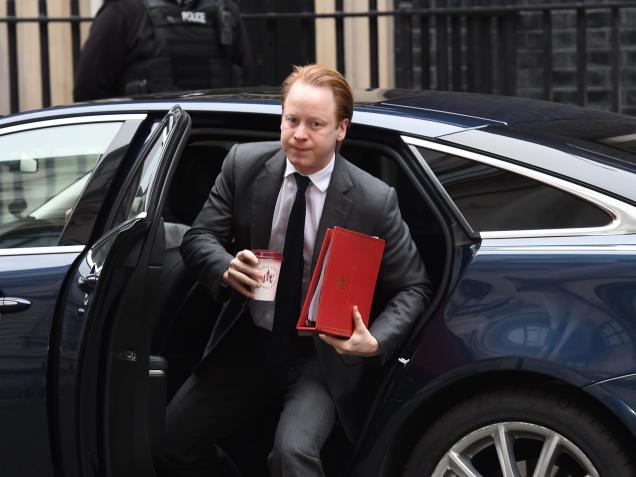
Ben Gummer MP

After Brexit, attracting more exceptional citizen politicians and fewer mediocre career politicians is the next crucial step towards democratic renewal in Britain

A worthwhile article by new Labour MP Laura Smith for LabourList underlines the urgent need for more politicians who look and sound like contemporary human beings rather than cautious clones who have been training to become MPs their whole life.

Laura Smith writes:

I’m new to politics. I’ve never been in local government; I was an activist, a member of the union and came from a long-standing Labour Party family. I haven’t come from a background of jargon and empty words, and I know what it’s like when life throws you a curve ball that takes the wind from your sails and the plans that you had made lay shattered in a million pieces. I can say with integrity that I will try my best to fight against the injustice that members in my constituency feel, and I’ll do it with vigour and sincerity.

Entering Westminster has been an eye opener without a doubt. Never have I been more sure that the ambitions of many there come from a place of self-indulging hypocrisy, and the decisions that they make are sheer games rather than coming from a place of care.

I don’t know the parliamentary protocol nor do I care much for it, I speak with a northern accent, I came to the door with an overdraft, no savings and a limited wardrobe purchased on a credit card to try and look smart.

I am what I am and that is representative of millions of women in Britain. My class has been with me my whole life, forged from the experiences of my Scottish mining grandfather, and I’ve ridden on the rollercoaster of the ups and downs of life. I’m proud to be working class, I’m proud of my people and for as long as my constituency wish to keep me in Westminster I will fight for the working people of this country.

How refreshing it is to hear a politician – especially a Labour politician – speak passionately about the politics of class rather than the politics of identity. Both are divisive, to be sure, but the former is at least reassuringly familiar and relatively harmless these days, while the latter is doing more than anything else right now to tear apart the fabric of British society.

I would probably disagree strongly with about eighty percent of what Laura Smith stands for, but there can be no denying that this is exactly the kind of decent, committed person we should want to attract to Westminster – somebody with strong convictions, a record of community service but also, crucially, a life outside politics (Smith held real jobs and ran her own business).

It cannot hurt to have more MPs of all parties who know what it is to live on a budget as Smith has done, or to have struggled with debt, unemployment or work-life balance issues, to complement those who know how to be an ambitious party functionary but little else. Being an MP is a calling and not a career, but certain accommodations can and should be made which would make serving in Westminster more appealing while still demanding sufficient dedication to public service.

Smith’s dismissal of parliamentary protocol will also chime with many people, including all those SNP MPs who didn’t understand why clapping after a speech was verboten while braying like a donkey at Prime Minister’s Questions is positively encouraged. While there will always be an important place for tradition and rituals which remind us of our heritage and the small part we play in our larger shared history, it is also undeniable that certain habits and protocols are hopelessly outdated and serve no useful purpose. There is no reason why Parliament should not adopt electronic voting, for instance, rather than wasting time while MPs physically traipse in and out of the Commons chamber to record their vote.

But most impressive in Laura Smith’s article is the fact that she clearly went to Westminster with a purpose greater than her own political advancement. Not every MP can or should be a statesman, a philosopher or a leader, though MPs of all backgrounds and ideologies have fulfilled these roles. We also need MPs who care deeply about their constituents and about particular issues, campaigning MPs who want to use their term(s) in office to make a specific difference. Indeed, such MPs can often be far more valuable and effective than those who merely spout reheated rhetoric from four decades ago, be it Michael Foot-style socialism or unreconstructed Thatcherite dogma.

Yet too often we let motivated MPs of this calibre languish for a term or two on the backbenches before they either become disillusioned and stand down, or else lose their inner fire and slowly transform into unremarkable, uninspired time-servers.

One of the best recent citizen politicians in Parliament was former Conservative MP Dan Byles, a man who was the first in his family to attend university, received a prestigious Army scholarship, served on active duty in Bosnia, rowed across the Atlantic, climbed mountains and served on the board of several charities before serving a single term in Parliament from 2010-2015.

This is exactly the kind of person who should now have a senior Cabinet role, and whose charisma and leadership skills might presently be leading the Conservative Party in a more inspiring, less suicidal direction. Yet despite becoming one of relatively few first-term backbench MPs to rack up some real accomplishments to his name (including constitutional reform of the House of Lords via a private member’s bill), Byles stood down in 2015 to “pursue new challenges”. Some of our most exceptional people no longer feel that they can make a meaningful difference by serving in Parliament.

Westminster attracts the power-hungry, the ambitious but also – thanks to elitism and nepotism – the mediocre and the self-serving. And too often, the genuinely talented are overlooked in favour of the well-connected. Witness Theresa May’s government, which managed to find a place for the utterly unremarkable Ben Gummer (son of former Tory minister John Gummer) in Cabinet while leaving thoughtful and intelligent conservative voices like Kwasi Kwarteng or James Cleverly to languish on the backbenches. Note also how Harlow MP Rob Halfon, who could actually articulate a positive (if controversial) vision for conservatism, was sacked as a minister while Theresa May kept faith in Home Secretary Amber Rudd, who entered politics not to advance any deeply-felt political agenda but to “get a grip on her life” and add another accomplishment to her CV.

As if the chaotic Brexit negotiations did not already make it abundantly clear, the calibre of leadership we manage to attract at the national level does not serve us well. This is in significant part due over-centralisation at Westminster and the neutering of local government in Britain, where at present there is probably only one executive role outside of Cabinet – the mayoralty of London – which might remotely prepare a politician to plausibly step into the role of prime minister. But it is also because we expect too little from the people we choose to represent us.

To take the next step in renewing British democracy, we must break the stranglehold that national political party headquarters wields over candidate selection. We must do away with affirmative action shortlists and central casting candidate lists alike, empower constituency party organisations and allow them to nominate candidates who they feel best represent their values and their concerns. We must devolve and decentralise significant powers away from Westminster to the counties and the regions, so that local government can transform from being adult daycare to a useful incubator of future national leadership talent.

And we must re-embrace the idea of the citizen politician, valuing the contributions of those candidates with different backgrounds.We must identify and advance talent wherever it is found rather than demanding that passionate and inspired MPs with executive experience outside politics first spend years acting as bag-carrier for other ministers before being trusted with any real responsibility.

Only if we embrace this radical decentralisation and ideological renewal – here it is particularly important that committed small-C conservatives seize back control of the Tory Party from the dead hand of Theresa May, just as the Corbynite Left deposed the centrists within Labour – can we take the next step after Brexit and finally begin the democratic renewal of Britain.

The alternative is more of the same uninspiring, grinding disappointment with which Britain has sadly become so familiar.


Theresa May - Conservative campaign bus - photo op campaign phony

Support Semi-Partisan Politics with a one-time or recurring donation:

Agree with this article? Violently disagree? Scroll down to leave a comment.

Follow Semi-Partisan Politics on TwitterFacebook and Medium.