Heathrow Airport Expansion And Decision Paralysis, A Symbol Of British Political Failure

Heathrow airport expansion cut back - third runway - mini terminal 5 - infrastructure planning in Britain

Government indecision and cowardice over the expansion of Heathrow Airport is just one tangible, high profile manifestation of the British political disease

There is no better analogy for the broken, dysfunctional nature of British politics and strategic government planning than the ongoing saga over whether and how to expand London’s Heathrow Airport, an undertaking which most serious people concede needs to happen yet generations of Cabinet ministers seem quite unable to make a reality.

A year after it finally appeared that the decades-long decision process had at long last produced a result, we now learn that plans for a new terminal are being scaled back and the timeline further extended.

From the Times:

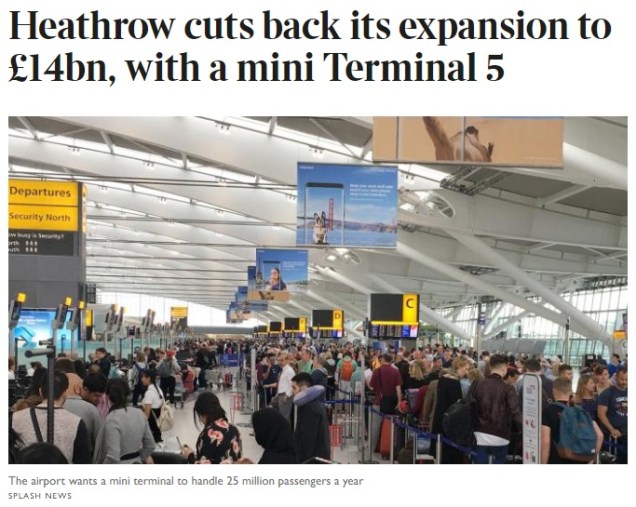
Heathrow is planning to build a mini version of Terminal 5 as part of slimmed-down proposals to expand Europe’s biggest airport.

The airport is considering building a new terminal a few hundred metres west of T5 to handle 25 million passengers a year as part of updated plans for a third runway, The Times has learnt.

Heathrow is also planning to phase all building work over as many as 15 years to reduce the cost of expansion by about £2.5 billion. The plan will be one of a series of options put to public consultation in mid-January.

Heathrow says that the proposals would bring the total cost down to about £14 billion, allowing the airport to keep passenger landing charges close to current levels.

Airlines have been concerned that Heathrow’s private owners would increase charges to pay for the project, potentially pricing out many passengers. At present fees add £21.75 to the price of each ticket. Chris Grayling, the transport secretary, has indicated that keeping landing charges flat would be a condition of building a third runway. The proposals have to pass a parliamentary vote early next year and be approved by planners in the 2020s.

In other words, the original plans for a new full-size terminal located next to the planned new runway have been downgraded to plans for what amounts to little more than a satellite terminal adjacent to Terminal 5.

And even this reduced ambition has to be justified to the grey mass of naysayers who would sooner go their whole lives without ever making a consequential decision, with Heathrow Airport’s owner now deliberately emphasising what a small, puny and inadequate solution this new micro-terminal would actually be, as though mediocrity and lack of ambition were a selling point (which in today’s Britain they are):

Any comparison with T5, which cost £4.2 billion and was delayed by a four-year planning inquiry, could cause major concerns. However, Heathrow insists that the new terminal would be smaller, catering for 25 million passengers compared with 35.5 million at T5. It would be built in two blocks, creating an initial facility for 15 million.

Wait! We can make this development worse and ensure that it fails even more to keep up with capacity demand by the time it gets built! Give Heathrow Airport another year and they will be proposing little more than a wedding marquee tent and a few folding tables.

The government understandably does not want air passengers to pay an unbearably steep cost to finance the expansion, yet it does not occur to them that adequate relief could easily be provided to passengers by cutting the ludicrously high Air Passenger Duty, an exercise in environmental virtue-signalling which makes Britain one of the most expensive and unattractive countries to fly from, and which is close to being a national embarrassment.

A real Conservative government might see the ideal opportunity and justification for a tax cut in this case, but sadly we do not have a real Conservative government at present – we have Theresa May’s strong and stable government, limping from day to day by offering as many concessions to the Left as is humanly possible without changing the Tory party logo from a tree to a hammer and sickle.

Of course there are some very specific reasons why countries like China and the United Arab Emirates can complete vast civil engineering projects in the same time it takes Britain to convene a planning committee – an authoritarian government, the absence of inconvenient democracy, few planning regulations, lax health and safety standards, cheap labour and/or a tolerance for slave labour being among the chief distinguishing factors.

And indeed one of the key factors which sets Britain apart from certain other countries is the importance we place on our preserving our heritage, our built environment and taking local concerns into account when giving the green light to major new projects. Any government can quickly see to the construction of a giant, soulless mega-mall in the desert, or a dubious national ego-boosting skyscraper in a locale where there is no real need to build upward. It takes far more inspiration and resourcefulness to create and expand critical national infrastructure or important new commercial developments in sympathy with natural surroundings which have often existed for many centuries.

But still, Britain is too hesitant when it comes to authorising critical new infrastructure projects of national importance, and our failure holds us back as a country. Whether it is central government failing to bite the bullet and commit to a decision for fear of political fallout, NIMBY campaigns effectively trumping the national interest with the local or ill-considered privatisations or public-private partnerships allowing responsibility for key decisions to slip through the cracks, decisions which should be made at a local level in a healthy democracy are instead commandeered by central government, and strategic decisions which should take two years instead take twenty.

One of the very first pieces written on this blog nearly six years ago lambasted the Tory-LibDem coalition government for kicking the can down the road on Heathrow airport expansion. It is a subject I have returned to again and again in subsequent years – and yet we are no closer to striking ground on a project which is essential to maintaining the pre-eminence of Heathrow as a key European hub. At this point, even if one of the alternative schemes (such as Gatwick expansion or a new airport in the Thames estuary) is chosen instead of a third runway and new terminals at Heathrow, we are rapidly reaching the point where any decision is better than no decision.

And as it is with Heathrow Airport expansion, so it is with nearly everything else in British politics. There are an array of slow-burning, pressing issues facing this country which successive governments have either tackled half-heartedly or ignored altogether. It is wrong to call them “crises” as there will be no sudden national implosion if they are not all fixed within six months, but our continued failure to tackle the housing shortage, low worker productivity, education reform, healthcare reform and immigration leads to a slow and steady erosion of trust in politics and our democratic institutions, as well as making Britain a less attractive place to live, work or invest.

The retrenchment of British ambition and capability is not emblemised by Brexit, as many tremulous Remainers like to claim. The symptoms have been all around us for years, decades even, and we have been too lazy or calculating to subordinate the short-term political interest to the long-term strategic need. Look at the big issues facing the West and the world in general in 2017 – global migration flows, Islamist terror, globalisation, outsourcing, automation and more – and there is not one of these complex problems which we as a country have failed to comprehensively sweep under the rug or otherwise avoid meeting the challenge.

Even on those occasions when the people have recognised burning problems and the need for bold new solutions, public opinion (such as on Brexit and immigration) has been repeatedly slapped down over the years by a cohort of politicians who think it is their job to explain and defend the current status quo to the citizenry rather than change the status quo according to the demands of the citizenry.

The managerialist, consensus politics which has characterised Britain since the end of the Thatcher and Major governments is partially justifiable when the economy, society and the world are operating in something like steady-state, and governments have but to tweak a few dials here or there to keep the system running smoothly. But this brand of aloof technocracy is lethal to national prosperity and security in times of discontinuity such as the period in which we find ourselves today, when the prevailing political consensus is conspicuously broken and the worn-out old policy prescriptions no longer command sufficient confidence or support.

As this blog has been warning repeatedly, and will continue to warn – even if nobody listens – the time for denial and evasions is over. But so too is the time for cosmetic, superficial pseudo-reforms or scattergun crisis management. Rather, we need to develop a set of mutually supporting new policies based on a clear analysis and understanding of the challenges facing modern Britain and the various ways in which they are interlinked. This is what the CPS did in 1977 with their “Stepping Stones” report, paving the way for Margaret Thatcher’s transformative government, and that is what we must do again today.

And until such time as we demand political solutions and visionary government equal to the challenges of the stormy present, every aspect of future Britain will soon come to resemble the cautionary tale of Heathrow Airport – dilapidated, twenty years behind the curve, fatally stymied by strategic indecision and increasingly avoided by anyone with the means to do so.


UPDATE – 19 December

Based on positive reader feedback to this and other articles, I am actually now trying to do something to turn this idea (the need to respond to discontinuity with radical but coordinated new policies) from a mere blog post to an actual project or initiative in the real world. We clearly can’t leave it to the usual inhabitants of Westminster to do this on their own – new ideas and fresh faces will be needed, just as they were in 1977.

If anyone who reads this article feels called to action, please do get in touch with me, either using the “contact” menu link at the top of the page, or directly at semipartisansam@gmail.com

Thanks.

Conservative Party Logo - Torch Liberty - Tree

Globalisation

Support Semi-Partisan Politics with a one-time or recurring donation:

Agree with this article? Violently disagree? Scroll down to leave a comment.

Follow Semi-Partisan Politics on TwitterFacebook and Medium.

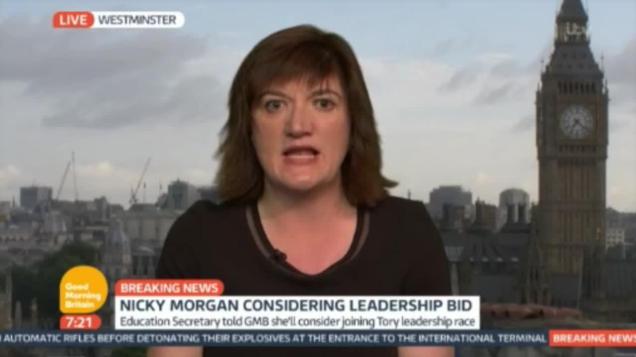
The Importance Of Conservative Principles, By Nicky Morgan

Nicky Morgan - conservative principles

Teach us, O great one

It’s good to see that Nicky Morgan has discovered the importance of fundamental driving principles to an effective government.

Writing in Conservative Home, Morgan graces us with this pearl of wisdom:

Values and principles matter. It isn’t enough to have great policies. People want to know what our motives are and they are looking for authenticity in their politicians. We need people to be clear that we are talking about aspiration, social mobility, mental health, education, housing, animal welfare and lots of other areas, not because a focus group told us to do so but because they matter to us, personally, and we aren’t prepared to put up with the status quo.  Last week has also deepened my understanding of why principles matter, and why it is worth defending them however difficult things get.  And that some people, despite saying they like MPs with principles, actually only like those with principles that they agree with.

It’s amazing how politicians can sometimes say all the right things yet so conspicuously fail to let their actions reflect their words. Ask any random Conservative activist what strand of conservatism Nicky Morgan represents, or what a Morganite government might look like or differ from Theresa May’s, and besides a difference of tone on Brexit you would draw blank faces nearly every time.

It is all well and good pontificating on the need for “authenticity”, but it doesn’t count for much when one served unremarkably in the thoroughly un-ideological Cabinet of David Cameron, or when one’s sole reputation for political steadfastness springs from a newly discovered fetish for our unwritten constitution, spurred by the electorate’s rejection of the pro-EU consensus and a burning desire for the pro-EU House of Commons to have the last word.

Morgan’s last point, whining about people demanding MPs with principles but then disliking MPs whose principles they disagree with, is particularly asinine. Many people do indeed respect MPs with strong and unapologetic convictions, but this does not have to translate into respect for their particular policies or moral code.

This blog has long supported Jeremy Corbyn’s leadership of the Labour Party on the grounds that the present centrist, managerialist consensus is conspicuously failing Britain in this period of political discontinuity, and because having the two viable parties of government both camped out in the same narrow centre ground is a recipe for political disengagement and fringe extremism.

But in no way is this an endorsement of Jeremy Corbyn’s economic or foreign policies, his closeness to Palestinian or Irish terrorist groups or endorsement of authoritarian leftist regimes which drive their countries into the ground. In other words, it is possible to respect the presence of principle while deploring individual policies, and Nicky Morgan should not be surprised that having finally taken something resembling a stand for something resembling a principle, she is now receiving a degree of political blowback. Unfortunately, that much comes with the territory.

And so long as MPs like Nicky Morgan continue to equate democratically legitimate calls for the deselection of MPs with other more concerning actions like online trolling or threats of violence, it is very hard to conclude other than that the entire exercise is really just a cynical ploy to grasp the mantle of victimhood and avoid accountability to the people.

Conservative Party Logo - Torch Liberty - Tree

Support Semi-Partisan Politics with a one-time or recurring donation:

Agree with this article? Violently disagree? Scroll down to leave a comment.

Follow Semi-Partisan Politics on TwitterFacebook and Medium.


CCHQ Should Not Automatically Protect Tory MPs From Deselection

Conservatives Tories start candidate selection process early - mandatory reselection - deselection of rebels

A seat in the House of Commons is not a job for life. And just as the Parliamentary Labour Party should not be encumbered with MPs increasingly at odds with their local constituency parties, so Tory MPs should not be immune from deselection if they repeatedly ignore the priorities and concerns of grassroots Conservative Party members

Try as I might, I simply cannot get myself worked up about the government’s “shock” defeat over the amendment to the EU Withdrawal Bill. While the legislative drama seems to have Hard Brexiteers up in arms and Remainers parading their newfound (and one suspects rather less than genuine) love and respect for Parliamentary sovereignty, I don’t see that these machinations will have any real bearing on the eventual outcome.

So Parliament gets to have a “meaningful” vote on the terms of the UK-EU agreement? Fine, so be it – though I have always held that the people, not Parliament, should be sovereign, and that no government should be able to divest itself of fundamentally important powers or seek to repatriate such powers without an explicit and specific mandate from the people. Of course, if we had a written constitution then such things would likely be enshrined automatically rather than be up for furious debate as new issues and obstacles are encountered along the road. But then if we had a written constitution we likely would never have ceded so much sovereignty to the European Union in the first place and would not now be in this position, making it all a rather moot point.

Of far more interest to me is the fact that talk of deselection of MPs has bubbled up again. We saw this last year as Jeremy Corbyn and his supporters sought to cement their control of the Parliamentary Labour Party, and for democratic reasons I supported the idea of mandatory reselection in principle. And now there are new calls to deselect sitting MPs, this time from Conservative politicians and activists angry at what they see as the Tory rebels’ deliberate undermining of the prime minister and the country’s negotiating position with the EU:

On this occasion I do not share the Tory Brexiteer outrage, but their case is every bit as compelling as was that of the Corbynite leftists who wanted to rid their party of centrist MPs who do not reflect the values and priorities of their local associations. While I personally find it hard to work myself into a spittle-flecked fury at the antics of Dominic Grieve or Heidi Allen, if it is the case that these MPs represent Leave-voting constituencies and a majority of local party activists find their voting record objectionable then I see no reason why they should be protected and continually re-imposed on an unwilling local party organisation.

Of course, CCHQ and the Tory Party machinery vehemently disagrees. Reflexively opposed to any notion that grassroots activists or local constituency associations should have any input as to the direction, policies or running of the party, CCHQ sees individual conservatives as little more than indentured servants campaign material distributors at election time, to be put to work when necessary and then roundly ignored the rest of the cycle.

Nick Timothy, Theresa May’s intellectual bloodbank-in-exile, makes it perfectly clear that the present Conservative leadership remains determined to run the party (if not the entire country) as their personal private fiefdom, and that local constituency associations should shut up and do as they are told, whether they like the candidate or MP chosen for them or not. Timothy unapologetically and shamelessly spelled out as much on Twitter today:

https://twitter.com/NickJTimothy/status/941254029488873472

This is an open admission that Theresa May, the prime minister and leader of the Conservative Party, saw fit to interfere in local constituency business and keep an unwanted MP foisted on an unwilling local party.

But what the hell business should it be of the prime minister who gets to stand as a Conservative candidate in a local constituency? This is everything that is wrong with the current Tory party – overcentralised and overbearing, with CCHQ pig-headedly declaring that it knows best while confidently marching us all to ruin. Given the litany of gaffes, unforced errors, scandals and bad judgements which have emanated from Theresa May’s cabinet, I would sooner entrust a panel of ten individuals randomly selected from the phone book to choose good Tory candidates than I would have Theresa May make the judgement call.

Of course, there is a counter-argument to all this, as a reader pointed out on Twitter:

We certainly don’t want a situation where conscientious, independent-minded MPs are peremptorily driven from office or from their political party because they fail to toe the hardest of hard lines demanded by their activists. We have recently witnessed just such a phenomenon lead the Republican Party to ruin (at best Pyrrhic victory) in America, where a succession of primary challenges and forced retirements saw an influx of ideologically uncompromising Tea Party politicians into Congress, hard-liners who thwarted any attempt at sane governance in the second term of Barack Obama, rendered the Republican congressional caucus unmanageable and ineffective and set the stage for Donald Trump’s hostile takeover of the GOP.

In actual fact we need both of these opposing forces – greater responsiveness to grassroots opinion and a cool, dispassionate process to adjudicate in the event of rogue or underperforming MPs – to be in balance. We need a far greater measure of accountability of MPs to their local party associations, and a more meritocratic system of selection (preferably primaries) which draws more people into the political process and prevents the mediocre-but-well-connected from leveraging their connection to CCHQ to be shortlisted or ultimately foisted on a constituency.

But we also need to build safeguards into the system so that the bar for triggering deselection is high but achievable – the recourseshould only become available at the time of a general election or by-election, so that MPs are judged on the body of their work and their voting record throughout a Parliament and not on the basis of any one single contentious vote.

Ultimately, the resurgent argument about deselection of MPs reminds us that Brexit is a necessary but not a sufficient condition for meaningful democratic renewal in Britain. Brexit was never going to be a cure-all no matter what some cynical Brexiteers may have implied, and we must all now recognise this fact. Achieving Brexit only to return power to the hands of the same MPs who negligently frittered it away in the first place, and who think so little of the people who campaign to put them in office that they seek to be made immune from their judgement, will not solve anything.

To this extent, the worries of Hard Brexiteers that the EFTA/EEA route may be used as cover by some Remainers in order to thwart Brexit entirely are quite valid. When there are so few penalties or recourses available to voters when politicians betray their own supporters, the trust required to sustain a well-functioning democracy is inevitably corroded.

But the real tragedy is that when we should be discussing how to respond to the period of disruption and discontinuity facing Britain, developing bold new mutually-reinforcing policies to tackle 21st century challenges, instead the Conservative Party is bickering about process and thwarting any attempts to clear out the intellectual deadwood and bring in some new ideas and personalities. Constitutional and electoral reform is important and eventually necessary, but there are pressing issues facing Britain which cannot be put on the back burner while we argue about the rules of play. Unfortunately, we seem less interested in these big debates and more interested in arguing about process stories.

When the Conservative Party fails to stand for anything – and Lord knows that under the rootless leadership of Theresa May, the Tories stand for little more than surviving the day at hand – it has plenty of time to devote to juvenile, internecine spats like the one playing out over the EU Withdrawal Bill rebels.

This is highly entertaining for the political media and a gift for Jeremy Corbyn and the Labour Party, but very bad indeed for everyone else.

Conservative Party Logo - Torch Liberty - Tree

Support Semi-Partisan Politics with a one-time or recurring donation:

Agree with this article? Violently disagree? Scroll down to leave a comment.

Follow Semi-Partisan Politics on TwitterFacebook and Medium.

Upset An MP On Social Media? Prepare To Lose Your Voting Rights

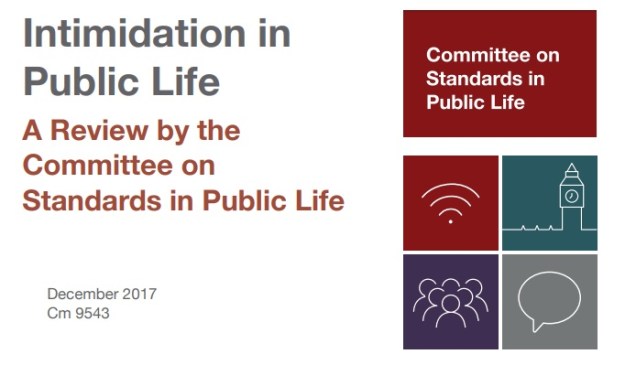
Intimidation in Public Life report - Committee on Standards in Public life - Parliament - Britain - UK - online social media abuse

Hurt an MP’s feelings and lose your civil rights. This could be a reality in the prissy, authoritarian, neo-puritanical Britain we inhabit

Having learned nothing from the past three years of populist insurgency, rather than facing up to their shortcomings and accepting the validity of justified criticism (and the inevitability of unjustified criticism) the political class is instead preparing to further insulate itself from public accountability.

A new report published by the Committee on Standards in Public Life proposes punishments such as barring people from voting or removing them from the electoral register as suitable punishments for the “new electoral offence of intimidating
Parliamentary candidates and party campaigners during an election” – which if enforced with the same arbitrary capriciousness as all other UK speech laws would inevitably see many people unjustly stripped of their basic civil rights while other, worse “offenders” who happen to hold officially sanctioned opinions go unmolested.

We in Britain now have a government which would give convicted prisoners the right to vote while stripping the franchise from certain free citizens who commit vague and loosely-defined acts of speechcrime – including hurting the feelings of an MP or Parliamentary candidate.

The report (prefaced with a quote from the late Jo Cox MP, so as to imbue the document with an air of incontestable wisdom and grace) graciously concedes that the existing restrictive framework of draconian anti-free speech laws does not need augmenting to protect the feelings of MPs at this time, but then immediately ventures the possibility of unprecedented new punishments for those accused of speechcrime:

Electoral law can overlap with and complement the criminal law, such that offences with criminal sanctions can also involve sanctions under electoral law. These sanctions are specific to the election process, such as being barred from voting for a certain period, or removal from the electoral register. Such sanctions recognise that these offences, such as undue influence or electoral fraud, are offences against the integrity of the electoral process, and that it is therefore appropriate that individuals face sanctions relating to their own privileges within that process.

[…] However, the Committee considers that the issue of intimidation is of particular significance because of the threat that it poses to the integrity of public service and the democratic process.

During an election period, it would therefore be appropriate to have specific electoral sanctions that reflect the threat that intimidation of Parliamentary candidates and their supporters poses to the integrity of elections. Any such offence in electoral law should be tightly defined, to capture intimidatory behaviour that is directed towards an individual specifically in their capacity as a Parliamentary candidate or party campaigner, which intends unduly to influence the result of the election (for example, by affecting their candidature or inhibiting their campaigning).

[..] the introduction of a distinct electoral offence will serve to highlight the seriousness of the threat of intimidation of Parliamentary candidates to the integrity of public life and of the electoral process, and will result in more appropriate sanctions. We believe that specific electoral offences will also serve as an effective deterrent to those who are specifically targeting Parliamentary candidates and their supporters.

The Committee on Standards in Public Life, a body whose intended purpose was to ensure that elected and non-elected officials uphold standards of behaviour appropriate to those who serve the public in high office, now seems far more interested in passing haughty judgment on whether members of the public are abiding by the new speech codes dictated by our puritanical, thin-skinned rulers.

I would be interested to know which of the Seven Principles of Public Life the committee believes it is defending by proposing new speechcrime punishments which attack so fundamental a civic right as voting – particularly as each of these principles sets a standard specifically for “holders of public office” and not private citizens. The only tenuous link offered in the entire report is this throwaway sentence:

[..] the Committee considers that the issue of intimidation is of particular significance because of the threat that it poses to the integrity of public service and the democratic process.

Ah, that’s okay then. So because the rowdy public is supposedly threatening “the integrity of public service” (presumably by scaring people away from getting involved in politics, because those who are already inclined to get involved in politics of course tend to be shy fauns who take fright at verbal hostility) the Committee on Standards in Public Life can use this as an excuse to regulate the behaviour not of people in positions of power, but of those who seek to express their feelings about people in power.

Of course, MPs are not the only people to find themselves at the receiving end of vitriol on social media, as anybody with even a semi-public profile or the desire to talk about politics on Facebook or Twitter can attest. Twice in recent months I have been at the receiving end of such a barrage, first when a “comedian” chose to misrepresent one of my tweets to his baying audience of pro-EU Remain supporters and again when an SNP MP sicced his Twitter supporters on me for daring to write about the office of Scottish First Minister in less than worshipful terms. None of the hate I received (on those occasions) amounted to the level of death threats, but other private citizens have suffered far worse.

Yet the political class seem to want to carve out a special protection in terms of exempting themselves from harsh criticism while doing nothing for anybody else. As Members of Parliament they already occupy a high-status, well-remunerated position in society, are generally endowed with a level of intelligence which enables them to articulate their priorities and concerns and be taken seriously, and make laws and decisions which impact our present reality and future happiness. Yet many of these same people now seem determined to portray themselves as shrinking violets, vulnerable victims-in-waiting, a discriminated against minority group who require the special and proactive additional protection of the law. This is absurd and insulting to the citizenry they notionally represent.

But in addition to protecting the powerful from the masses, these puritanical proposals also fundamentally misunderstand the problem. As even many victims of social media harassment would likely agree, the really damaging part of online abuse is not the individual insults but their combined, collective effect. One person insulting or mocking you can be laughed off or brushed aside, but this is not so easily done when one’s notifications fill up with a constant wall of such derogatory, negative messages. Indeed, when under attack on social media, at times it can be difficult to step back and remember that the strident opinions of social media moralisers is not reflective of the feelings of the country or society as a whole. At times, I myself have momentarily allowed hate and derision on social media to interfere with my self-esteem, despite my fairly thick skin.

The answer to online trolling and abuse (whether directed at politicians or private citizens) is not to criminalise individual acts of strident, unpleasant or insulting speech, let alone to curtail the fundamental civil rights of individual citizens as punishment for (or deterrence of) something which is in large part a swarm effect, an unpleasant but distastefully necessarily defensible part of our society’s commitment to free speech.

To do so would be akin to criminalising the act of gathering together in crowds because of the risk that somebody might be crushed or trampled, punishing individuals for what in itself is often a very small contribution to a larger group effect. No single individual is usually responsible for a stampede, just as very few individuals commit specific acts on social media which alone trigger substantial distress, and barring such people from voting (one wonders what offence merits losing the franchise while retaining one’s liberty) will not deal with the vast bulk of abuse on social media and consequently the vast bulk of suffering resulting from it.

The issues addressed by the report are real, worthy of discussion, and are already being debated at length. There is no lack of editorialising or scholarship on the impact of social media on public political discourse, and the way in which the semi-anonymity of interacting online brings out a far more vicious side of human nature than is usually visible during face-to-face interactions. These are problems which we need to face up to as a society at a time when we are learning on the go. But the solution is not to announce further new restrictions on freedom of expression, as though filling in gaps in the statute books will in any way compensate for filling in the mental and spiritual void which turns some people (including the highly educated and outwardly successful) into social media trolls.

Furthermore, at a time when the yawning disconnect between the ruling class and many of the people they represent is growing wider and fuelling all kind of populist outbursts (some welcome and others far less so) it is the height of irresponsibility for those in power to publicly toy with the notion of punishing the plebs for insulting their masters by stripping them of their voting rights.

The Committee on Standards in Public Life should cast their haughty, disapproving gaze back where it belongs – on those who debase their political offices or abuse the public trust. Now more than ever is a time for humility and introspection from the ruling class, not a whinnying list of grievances about those who fail to sing their praises.


By election - ballot box - Democracy

Support Semi-Partisan Politics with a one-time or recurring donation:

Agree with this article? Violently disagree? Scroll down to leave a comment.

Follow Semi-Partisan Politics on TwitterFacebook and Medium.

Happy Thanksgiving – Here’s Why We Urgently Need A Similar Holiday Of Our Own In Britain

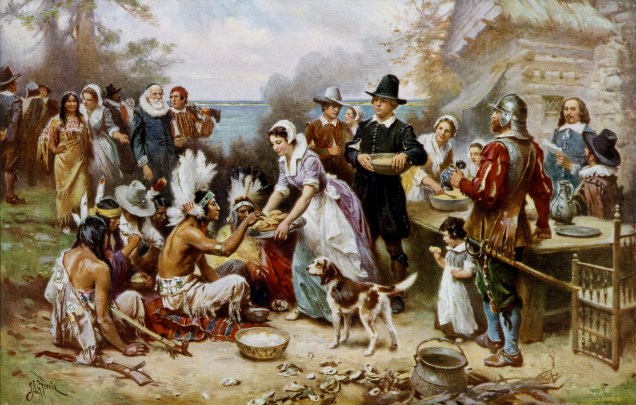
The first Thanksgiving

Most Brits probably do not know or care that Thursday 23rd November is the Thanksgiving holiday in the United States of America. Yet many of us are getting ready to hunt for bargains and pre-Christmas deals on Black Friday.

Take a trip to your local big box superstore – or virtually anywhere online – in the next day or so and you will be treated to wall-to-wall promotions about the upcoming Black Friday sales. “Get ready for Black Friday!” scream the advertisements, as one company after another tempts you with sweet promises of unbelievable savings. Yes, Black Friday is coming to Britain – again.

And so it has been for the past few years now. We in Britain have successfully imported the commercially lucrative, post-coital rump of a cherished American national holiday – Thanksgiving – while neatly skipping over all the pesky fundamentals that give it real meaning: you know, those pesky things like love, family, gratitude and patriotism, tiresome distractions that don’t give us an excuse to shop and which will never generate a good Return On Investment.

This is as strong a contender for Tasteless Corporate Act of the Year (Large Retailer category) as we are likely to witness this side of Christmas. And we Brits have certainly thrown ourselves into the spirit, crushing one another in the stampede for discounted TVs and getting into fights which have to be broken up by the police.

But apparently – and rather gratifyingly – a number of Brits have started to recognise Thanksgiving too, in our own semi-comprehending way (I’ve seen Yorkshire pudding and roast beef being served at some British Thanksgiving dinners, which is definitely cultural appropriation gone wrong), with retailers now stocking up with pumpkin pie and other traditional Thanksgiving fare in time for the holiday.

Full disclosure: I’m married to a Texan girl, so our household observes both British and American holidays – which means that Jenny gains Boxing Day while I gain Thanksgiving. And for the past five years we have held a Thanksgiving dinner the weekend closest to the day itself, and invited as many friends as we’ve been able to squeeze into our succession of tiny shoebox apartments. I’m responsible for the turkey, Jenny takes charge of the stuffing and the sweet potato casserole (you mock the idea of marshmallows on top of sugared, spiced sweet potato until you’ve tried it) and we split everything else between us with our flatmate.

And if I may say so myself, this annual event has become roaringly popular, to the extent that who gets invited and who doesn’t quite make the cut has become a rather delicate political dance. This year there will be fourteen of us squeezed into an improbably small space, and all fourteen places were snapped up as soon as my wife sent the Facebook invite back in April.

But not everybody is happy that Thanksgiving is gaining a foothold in Britain, including Daily Mail columnist Richard Littlejohn who argues that just like American GIs after the Second World War, Thanksgiving has outstayed its welcome on our shores:

Yet until about five minutes ago, none of this madness existed. Like Halloween, another tacky American import which has hijacked Guy Fawkes Night, and about which I wrote recently, both Thanksgiving and Black Friday are now fixtures in our calendars.

Supermarkets tempt us with ‘traditional’ Thanksgiving treats. Colour supplements carry recipes for Thanksgiving dinners. The Sunday Times Magazine this weekend devoted several pages to telling readers how to prepare mouth-watering delights such as pumpkin pie, candied sweet potatoes and green chilli cornbread.

Why? Do the editors imagine that out there in Middle England, people are thinking to themselves: ‘I could murder a slice of green chilli cornbread’?

He goes on to rant:

We don’t celebrate France’s Bastille Day, or Canada Day, or Mexico’s Dia de los Muertos (the Day of the Dead). So why the hell should we adopt U.S. holidays?

Apparently it does not occur to Littlejohn that the British may be increasingly curious about Thanksgiving because the very idea of a unifying, non-commercialised national holiday which binds us together as a United Kingdom and calls on us to be thankful rather than petulantly self-entitled is so curiously alien to this country – especially the contemporary Britain of 2017.

A couple of years ago I took part in a TV debate on London Live, arguing that we should absolutely not make the festivals of Eid and Diwali UK public holidays, for fear of muddying the cloudy waters between religion and state yet further:


I was outnumbered, but I made the case as strongly as I could that what Britain desperately needs is a unifying, secular public holiday that can bring us all together as one people – not another cynical, politically correct and divisive nod to multiculturalism.

The intervening years have only proved my point, with ISIS flags flying from London housing estates, disaffected young Muslim teens stealing away from the country which gave them life and liberty to join the Islamic State and deadly terror attacks in London and Manchester. On the domestic front things are little better, with a painfully wide chasm emerging between those of us who voted to leave the European Union and those who wanted us to Remain, those who think that Jeremy Corbyn is a living saint while the Tories are evil on the one hand and people who think the exact opposite on the other.

Meanwhile, increasingly everything is being politicised and dragged into the gravity of our culture war. Only this week greeting card firm Paperchase was in the news after they were bullied by left-wing activists into a grovelling public apology for having dared to advertise in the Daily Mail, thereby prompting an equal (and deserved) reaction against the company from people who are not leftist ideologues.

In short, we in Britain are in desperate need of a reminder that we still have an awful lot in common with our neighbours, even if we vote or worship differently. But the ties that bind us together – frayed for so long by successive referenda, general elections, the culture wars and the toxic swamp that is political social media – need to be continually renewed, even if some of us do find patriotism “problematic“. And what better way to do so than with a national holiday which celebrates something in our rich, shared history of which we can all be proud?

There is no shortage of possibilities. While some seem to enjoy talking down Britain and our substantial contributions to world commerce, art, science and culture, I’m sure that if we put our heads together we might find something in the last few centuries of our national story worth elevating as an occasion of which all Britons can be proud (but please, just not the Fifth of July).

Magna Carta Day (15th June), Trafalgar Day (21st October), VE Day (8th May) or Commonwealth Day (second Monday in March) are just a few possible candidates which are existing days that could be “upgraded” to a UK-wide celebration of quiet patriotism, community service and thanksgiving, and which already have some historic resonance.

Such resonance is important. In the United States, President’s DayIndependence Day and Thanksgiving have meaning for all Americans because they are rooted in shared history and not political views, ancestry or sadly-waning Christian faith. The newly arrived immigrant can take up these celebrations immediately upon arrival at no cost to their existing traditions and without any potential religious conflict. And that is exactly what Britain needs right now.

So before you scoff at the idea of our American cousins eating themselves into a stupor for seemingly no good reason, I would ask you to do two things — firstly, spare a thought for me as I try to avoid burning a massive turkey that barely fits inside our oven while also cooking it sufficiently well that I don’t send fourteen angry people to the hospital with food poisoning. But secondly and more importantly, take some time to reflect on the reasons that you – and that we all – have for being thankful this year, and on the many traits and aspirations which we still have in common, even amidst Brexit, the culture war and the politicisation of everything.

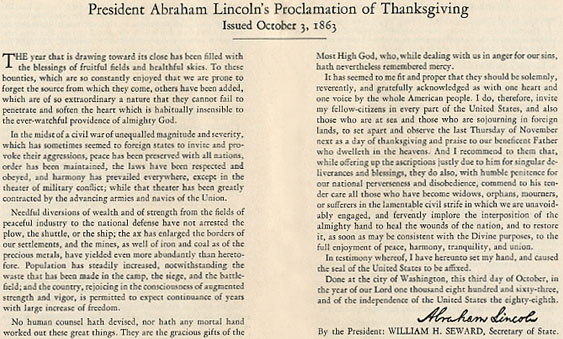
As Abraham Lincoln – the president who in 1863 fixed the observance of Thanksgiving to be the fourth Thursday in November – implored in his first inaugural address:

We are not enemies, but friends. We must not be enemies. Though passion may have strained, it must not break our bonds of affection.

After another year in which the idea of what it means to be British has become increasingly muddled and uncertain, let’s humble ourselves and dare to take a lesson from our former American colonies. Let us find inspiration in our storied history, our rich culture and also from within our own hearts. Let us find that elusive common thread of Britishness that should unite us all, transcending race and religion and politics.

I would argue that maybe some of the reason that more British people are starting to notice and observe Thanksgiving as well as the Black Friday sales we have imported from America is that deep down we subconsciously yearn for the sense of gratitude, social solidarity and civic-mindedness which Thanksgiving brings, and acutely feel the lack anything similar in our own national life.

So let’s change that.

Thanksgiving Proclamation - President Abraham Lincoln - 1863

Happy Thanksgiving

Support Semi-Partisan Politics with a one-time or recurring donation:

Agree with this article? Violently disagree? Scroll down to leave a comment.

Follow Semi-Partisan Politics on TwitterFacebook and Medium.