The Story Of Hamilton Is Also The Story Of Brexit

Hamilton musical - London - Brexit

What do the latest imported smash hit musical from America and Britain’s historic vote for Brexit have in common? The answer, it turns out, is nearly everything.

It has been frequently remarked, that it seems to have been reserved to the people of this country, by their conduct and example, to decide the important question, whether societies of men are really capable or not, of establishing good government from reflection and choice, or whether they are forever destined to depend, for their political constitutions, on accident and force
—  Federalist No. 1, Alexander Hamilton

Yesterday evening I succumbed to the hype and went to see the London production of Lin-Manuel Miranda’s hit musical Hamilton, newly opened at the Victoria Palace Theatre.

Hamilton tells the story of Alexander Hamilton, American statesman and Founding Father, most famous for having been a delegate at the constitutional convention of 1786, writing many of the Federalist Papers, moulding the new country’s financial system as Treasury Secretary during George Washington’s presidency and having been killed in a dual by political rival Aaron Burr. Through his words and intellect, Hamilton made an enormous contribution to the birth of America, yet his untimely death robbed him of as prominent a place in history as his legacy deserved.

At first glance this might not seem the most promising material for a musical show, but theatre aficionados have been buzzing about Hamilton since it premiered in New York to rave reviews back in 2015. Such has been the show’s rapturous reception that it is fairly hard to find a negative review, let alone a ticket, especially in New York where tickets for the Broadway production have traded hands on the secondary market for insane sums of money.

Being something of a contrarian, I arrived at the theatre in sceptical mood, perhaps too eager to find fault with something that was being universally praised by everyone else. I was sceptical that the rap and hip-hop musical styles which predominate would be a good fit with the narrative material, and worried that the much-discussed “colour-conscious casting” might be little more than a convenient excuse to shoehorn an identity politics lecture into what should be an evening of entertainment.

As it turned out, my scepticism was blown away and any worries about ideological virtue signalling were (mostly) unfounded. Hamilton is an excellent show, the musical genres and clever allusions to other composers from Gilbert & Sullivan to The Notorious B.I.G. draw you in to the story rather than distracting from it, and the source material (Lin-Manuel Miranda based his show on the 2004 biography of Alexander Hamilton written by Ron Chernow) is catnip for history and constitutional geeks like me.

But as I watched the first act build to a climax – after Alexander Hamilton has arrived in New York, become involved in the revolutionary movement, served as General George Washington’s aide-de-camp, fought at Yorktown, studied law in New York after independence was won and ultimately chosen to be that state’s junior delegate to the constitutional convention in Philadelphia, which laid the foundations for the United States of America as we know it today – something else occurred to me.

It provoked groans and assorted expressions of incredulity from my wife and our friend when I confessed my epiphany during the interval, but as the show progressed I realised that the story of Hamilton – of people forging a new and uncertain path through a world in flux – is also the story of Brexit. Bear with me, and I shall explain why.

After they won the War of Independence, Americans didn’t know exactly what they were creating or the experiment they were embarking on. They knew that remote and authoritarian rule from an overseas power was intolerable and injurious to their right to freedom and self-determination, but having thrown off the shackles of monarchy there was no set template for them to follow, no clear-cut alternative to which they should naturally gravitate.

Much of the detail as to how freedom from empire would actually work in practice had to be hashed out in contentious discussions, first formalised in the 1777 Articles of Confederation between the thirteen original states and later in the 1787 Constitutional Convention. This was a time of uncertainty, but it was also an exciting time ripe with promise. Then, as now, there was a new world to build.

Today, we face similarly profound questions about how humanity should best govern itself in changing times, as the epoch of the nation state finds itself threatened and undermined by powerful forces such as globalisation, automation, mass migration and the need to balance smart regulation of international trade in all its technical complexity with the need to preserve democracy and the ability of ordinary people to defend their local priorities and concerns in the face of corporate technocracy.

The existing political order has never looked less equipped to deal with these challenges, or been so discredited and seemingly unequal to the serious task at hand. In Britain, the political class have forged ahead with a centrist, corporatist vision regardless of which political party was in power for the past three decades, an incredibly narrow Overton Window effectively shutting out a huge range of reasonable, non-extremist political ideas from the national political debate. And in the United States, politicians of both parties peddled the illusion that the post-war manufacturing economy could be resurrected together with the promise of a comfortable middle-class lifestyle sustained by semi-skilled manual labour requiring limited education.

In both cases the people themselves were partially to blame for falling for false promises and in some cases practically demanding to be lied to by pandering politicians, but regardless of ultimate fault it has increasingly dawned on people that national and international institutions as presently configured have not met the challenge of our times and can not keep pace with a world increasingly knitted together by technology.

The European Union, held up by its naive supporters as the unquestionably superior way for nations to peacefully cooperate (despite not being replicated on any other continent), has conspicuously failed to effectively tackle nearly all of the big challenges thrown its way, from the migration crisis to the pitfalls of monetary union to rampant corruption in some member states and growing authoritarianism in others. And through all this, despite Herculean efforts and vast sums of money spent with the aim of forging a cohesive European demos – a body of people who hold their European identity in equal or greater worth than their national identity – no such demos has formed.

The EU’s “if you build it, they will come” strategy, creating all of the institutions required for a supranational political state in the expectation that a demos would magically follow along to grant them legitimacy, has failed. Outside Britain, where misguided and low-information young idealists sing Kumbaya and paint the EU flag on their faces, euroscepticism among young people is increasing as more people recognise that the institutions of Brussels present a beguiling but erroneous vision of the future. To all these challenges and more the European Union has nothing to offer save more political integration for the sake of political integration. The EU has no answer, just as remote and exploitative monarchy failed to redress the legitimate grievances of the American colonists.

A recent article by Bradley Birzer in The American Conservative about the limited lifespan of any system or institution of government certainly applies to the European Union and other pillars of the post-war world order as much as it does to the nation state:

One must remember that no republicans believe their republic can last forever. A republic, by its very essence, must rely on its organic nature, a living thing that is born, flourishes, decays, and dies. It is, by nature, trapped in the cycles of life, bounded by the walls of time. While a cosmic republic might exist—as understood by Cicero’s “Cosmopolis” and Augustine’s “City of God”—it existed in eternity and, therefore, aloof of time.

For better or worse, the Roman Republic reflected not just nature, but the Edenic fall of nature as well. We can, the Roman republican Livy recorded, “trace the process of our moral decline, to watch, first, the sinking of the foundations of morality as the old teaching was allowed to lapse, then the rapidly increasing disintegration, then the final collapse of the whole edifice.” The virtues of the commonwealth—the duties of labor, fate, and piety—gave way to the avaricious desires for private wealth. When young, the Romans rejoiced in the little they had, knowing that their liberty from the Etruscans meant more than all the wealth of the material world. “Poverty, with us, went hand in hand with contentment.” As the republic evolved and wealth became the focus of the community, not sacrifice, so the soul decayed. “Of late years,” Livy continued, “wealth has made us greedy, and self-indulgence has brought us, through every form of sensual excess, to be, if I may so put it, in love with death both individual and collective.”

Who can deny that some aspects of our present society – our materialism, individualism and instinctive fear of anything that might (no matter its virtue or long-term benefits) temporarily disrupt the steady accumulation of wealth, assets and positive experiences which we increasingly expect and demand – are worryingly reflected in Livy’s words?

To paraphrase Birzer, all things must come to an end. The Britain of today is not the Britain of thirty years ago, just as the dogmas of Ronald Reagan’s “Morning in America” no longer automatically apply to the American present. We have witnessed tremendous progress in that time, but also political and social atrophy. We are not what we once were, and neither should we cling on in futility to what is past. Many Remainers, having fixed in their minds the false image of Brexiteers as Mafeking stereotypes – curmudgeonly old retired colonels pining for lost empire – fail to realise that through their devotion to the European Union it is they who yearn to preserve the past, slavishly devoted to an anachronistic mid-century blueprint for a new world order, one which came to partial fruition, peaked and then found itself wholly inadequate to the stormy present.

Brexit is not a magical elixir sufficient to address the stormy present or dissipate the challenges we face, but it is a necessary first step to confronting them, just as Alexander Hamilton and the other Founding Fathers could not fully contemplate and realise their revolutionary new system of government until they had first thrown off the shackles of monarchy. Looking at Brexit as a narrow and obstinate project to reclaim full sovereignty or purely as a technocratic matter of trade regulations is to miss the point – we are seeking not to go back but forward, and Brexit is a necessary (though not a sufficient) condition to enable this progress.

It pains me to read much of the coverage and commentary around Brexit, which overwhelmingly ignores the big picture and the long term to obsess over speculative short term costs. It is vital to consider short-term costs and risks in any endeavour, but good policymaking is only possible when short-term considerations are balanced with a broader, longer-term perspective. Remainers often react with incredulity to the suggestion that anything might matter beyond next year’s GDP growth rate, but the American colonists of Hamilton’s day were every bit as concerned about their economic prosperity and security as their modern-day British counterparts; they just also realised that other issues were at stake, issues worth enduring the hardship and destruction of a revolutionary war to correct.

We in modern Britain are called to make no sacrifice remotely comparable to that of the inhabitants of the thirteen colonies as they struck out on their own to form a more perfect union. It would be laughable to compare even the worst of mismanaged Brexits to the price that Hamilton’s peers paid for their freedom and for the opportunity to advance the model of human governance. Yet so great is our present culture of consumerism and so diminished our sense of citizenship or civic duty that few of us are capable of thinking in terms greater than the pursuit of whatever might sate our present desire for comfort and stability. And even when this stability is under long-term threat, such is our fear of disruption that we would rather cling on to the slow, familiar degredation than take any risk by seeking to prevent it.

Today we have a tendency to think of ourselves as having transcended our past, that we inhabit what Francis Fukuyama called “The End of History”, a time when all major human challenges have been vanquished and we inhabit some kind of permanent, beneficent steady-state from which any departure would be an intolerable disruption. And from this perspective, Brexit does indeed appear to be a crazy, irrational endeavour, threatening to unleash a backslide into the fascism and totalitarianism with which we struggled in the twentieth century.

But of course we have not reached the end of history. We are continually presented with new challenges and opportunities, and try as we might to pretend that our existing institutions and policies need only tweaking or adjusting to meet them, recent events have proven this to be patently false. Not all Brexiteers may have voted to leave the European Union based on these high ideals but as Shakespeare wrote, “There is a tide in the affairs of men. Which, taken at the flood, leads on to fortune. Omitted, all the voyage of their life is bound in shallows and in miseries.”

Through Brexit, history has gifted us the opportunity to imagine a new and improved form of government, one which strives to meet our future challenges rather than cower from them (all that EU membership offers, most telling in the rhetoric used by Remainers) or pretend that they do not exist (favoured by the more retrograde Brexiteers who envisage a simple rollback to the old nation state). We must seize this opportunity and be a beacon for other nations, all of which must ultimately grapple with the same issues though they may deny or postpone them for a time.

As I recently wrote:

It has been decades since Britain truly took the lead in influencing world affairs. But having voted for Brexit and thrown into the open many pressing debates which other countries remain desperate to defer or ignore, we can now be both a laboratory and a beacon for the world.

Rather than feeling rancour or relitigating the 2016 referendum result, we should feel the same sense of excitement and possibility that Alexander Hamilton and his co-revolutionaries felt as they debated among themselves how to keep the new republic that they had created. We must rediscover that spark within ourselves.

Perhaps it is no coincidence that a stirring tale about forging a new, more democratic future, a story kindled in America, is set to take Britain by storm as we negotiate our secession from the European Union and look questioningly but optimistically towards the future. Perhaps it is no coincidence that the spirit of Alexander Hamilton is flickering back to life on a London stage at this specific time and place.

Because when you strip away the political games and the media sideshow, the catastrophisation, recriminations, denunciations, speculations and bifurcations, the story of Hamilton may just also be the story of Brexit – if we have the courage and vision to make it so.


Hamilton tickets and information here.
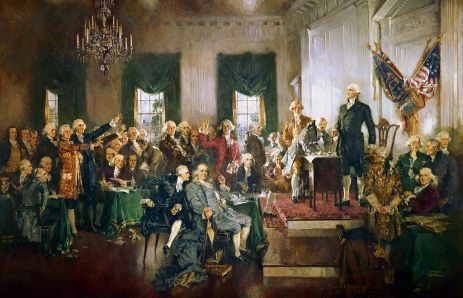
 

Scene at the signing of the Constitution of the United States - Howard Chandler Christy - Hamilton musical - Brexit

Support Semi-Partisan Politics with a one-time or recurring donation:

Agree with this article? Violently disagree? Scroll down to leave a comment.

Follow Semi-Partisan Politics on TwitterFacebook and Medium.

The Age Of Perpetual Crisis

The Age of Anxiety - Ballet

When every single issue is falsely portrayed as a burning crisis, none of our national challenges will receive the considered attention they deserve

“We would rather be ruined than changed
We would rather die in our dread
Than climb the cross of the moment
And let our illusions die.” 
― W. H. Auden. The Age of Anxiety: A Baroque Eclogue

The housing crisis. The migrant crisis. The productivity crisis. The deficit crisis. The tedious, annual NHS winter crisis. Brexit. Nearly every important issue or event in our politics is portrayed as a pressing, existential crisis, despite few of them even remotely living up to the definition. If you are sceptical, just ask somebody who was alive and situationally aware in 1940 whether any of the issues which excite politicians and newspaper editors today amount to a real crisis, and see what they have to tell you.

And as it is in Britain, so it is across the Atlantic in America. Surveying the present scene, David French writes in the National Review:

In politics, when everything’s a crisis, it turns out that EVERYTHING’S A CRISIS!

We keep reading that Donald Trump is a unique danger to American democracy, a threat we should put aside partisan tribalism to defeat. Then, seconds later, we read that giving Americans the choice to buy health insurance will kill people by the thousands. Seconds after that, we learn that an entirely conventional Republican tax plan will not only kill people but also extinguish American democracy as we know it. Finally, we read that the end of net neutrality — a regulatory doctrine that only the smallest percentage of Americans even remotely understand — will extinguish American liberty.

[..] For the average American, who pays less attention to politics than to his professional and personal lives, all of this is exhausting. It’s numbing to the point where he can’t possibly determine what’s important and what’s not. So he checks out. He throws his hands in the air and gives up. But for the Americans who care the most about politics and drive our public debate, perpetual crisis is invigorating. It provides meaning and purpose.

A nation’s political culture is always defined by the people who care the most, and the people who care the most in our nation have lost all sense of proportion.

Charles Cooke makes a similar point, but at the more personal level, in the same publication:

Ours is a moment in which millions rush breathlessly to exclaim. In defense! In resistance! In bloody-minded persistence! “I will not back down!” we are told, by people who have not been asked to, and could not be compelled to. They won’t be “intimidated” either, nor “silenced,” nor “bullied” nor, it seems, pushed to any form of self-reflection. Indignation, not analysis, is the perennial order of the day, and the tone of our debates is ineluctably Twitteresque. Retweets are points on the board, and hyperbole gets you oodles of them. The worst. Ding! Insane. Ding! Crisis. Ding, ding, ding! Congratulations, you have been promoted to the next level.

I don’t think I have ever read a more perceptive or honest summary of how political Twitter works, and as a denizen of this world I see more than a few of these negative traits in my own work, some due to personal failures but more often because the difficult pathway to being heard and gaining an audience on social media incentivises some pretty negative behaviours.

It is in the nature of those involved in politics – either doing or writing about it – to imbue their work and their passions with an air of existential importance. In many ways, this is understandable – it is hard to get a hearing in the media, or from the People Who Matter, with a piece of sober, rational analysis addressing a long-running issue; harder still when the competition presents every new report or white paper as some kind of magical elixir to the nation’s woes.

Given the choice, most people want to be Neil Armstrong and not the dedicated but overlooked engineers and project managers who made the Apollo Program a reality. Or if politics is showbusiness for ugly people then most players want to walk the red carpet and be photographed, not lurk in obscurity editing screenplays or building sets. This is human nature, but it has the unfortunate side effect of warping our political process, bending it towards flashy but superficial quick fixes and wonder cures rather than holistic analysis and serious reform.

The word “crisis” in particular is used far too readily at present, by people who should know better. The nature of politics and public policy means that nearly every important decision will ultimately have some direct or indirect impact which can be measured in terms of human lives, thus making it existentially important to at least a few people. In fact, the Left in particular rely on this very phenomenon, since their conspicuous compassion policies front-load the emotional benefits of throwing resources at a problem while deferring or even denying the costs – after all, it is easy to win applause and positive headlines by opposing welfare or healthcare reform, but much harder to counsel delayed gratification or highlight the cumulative toll of welfare dependency on the quality and duration of human life.

But in actual fact there are very few actual full-blown crises facing us at the present time, despite the best efforts of opportunistic politicians and the media to suggest otherwise. Rather, there are a series of slow-burning, serious and often intractable problems which need to be tackled, few of which are likely to lead to sudden national ruin but many of which – if left unattended much longer – have the potential to chip away incessantly at our economic prosperity, national security, democratic health or the stability and cohesion of our society.

The appalling failure of successive governments to adopt a sensible housing policy and increase the housing stock will not lead to an explosion in homelessness or destitution overnight, but it will lead to a continuing sense of rage, disillusionment and alienation among younger voters, as it is already doing. Continuing to stand by an immigration system which proudly fails to make skills or likelihood of assimilation and popular consent the key drivers will not lead to riots in the street tomorrow, but it will continue to drive a wedge between the political class and much of the country. Continuing to enshrine the NHS as our national religion and abide by the strict political doctrine of NHS non tangere will not create an immediate spike in death rates, but it will ensure that UK health outcomes continue to further lag behind those countries with the best healthcare systems.

Labelling something a “crisis” suggests imminent peril requiring immediate remedy, even if the resulting damage control ultimately creates other problems or only succeeds in kicking the can down the road. It advocates for quick fixes, which is exactly what we don’t want at this time. In this period of discontinuity, where the old political settlement has broken down and traditional, familiar policy prescriptions neither work effectively nor command sufficient public confidence, what we need are carefully thought-out and mutually supporting policies rooted in an uncompromising, forensic analysis of the precise problems we face. What we absolutely do not need are a bunch of panicked gimmicks and pseudo-policies cooked up in silos by desperate politicians and leaders whose sole objective is to survive the day and avoid negative headlines.

The difficult truth is this: there is no one pressing crisis the resolution of which will solve all our problems and keep us safe and prosperous in a changing world, and there is no universal and comprehensive solution to any of the problems we deem to be crises. Housing cannot be addressed without revising planning rules, but it is also impossible to adequately plan future housing and infrastructure when there is no meaningful control over mass immigration. Low productivity cannot be addressed without looking at corporate governance, secondary and tertiary education, workers’ rights, union power and addressing the weak commitment to R&D. Indeed across the board there is no silver bullet, no quick fix, no political party with all the right answers, no system of government ideally equipped for the challenge. We must forge a new path.

Far from focusing attention and driving positive change, labelling everything a crisis merely creates apathy, causes many voters to check out and encourages many politicians to either view problems in a highly compartmentalised way or else simply consider them insurmountable, facts of life to be dealt with rather than challenges to be overcome – just as many in the British establishment seemed resigned to irreversible national decline in the 1970s, before Thatcherism finally equipped Britain with the tools to dig ourselves out from the last major period of discontinuity this country faced.

Britain emerged stronger from the late 1970s and 80s because after years of paralysing indecision and timid half-measures from Tory and Labour governments alike we finally made a calm, methodical and dispassionate analysis of the problems holding us back – excessive union power, flawed monetary policy, excessive state involvement in the economy – and set about tackling each of these issues in a coordinated way, as part of a comprehensive national turnaround strategy.

We need to adopt just such a process again today in order to overcome this new period of discontinuity and the specific challenges that it brings. And the first step is to stop viewing every last issue as a standalone, burning crisis.


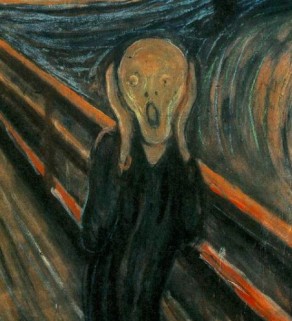
Munch - The Scream

Support Semi-Partisan Politics with a one-time or recurring donation:

Agree with this article? Violently disagree? Scroll down to leave a comment.

Follow Semi-Partisan Politics on TwitterFacebook and Medium.


Happy Thanksgiving – Here’s Why We Urgently Need A Similar Holiday Of Our Own In Britain

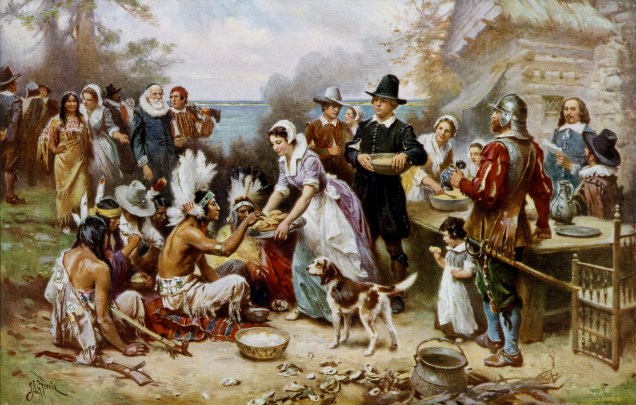
The first Thanksgiving

Most Brits probably do not know or care that Thursday 23rd November is the Thanksgiving holiday in the United States of America. Yet many of us are getting ready to hunt for bargains and pre-Christmas deals on Black Friday.

Take a trip to your local big box superstore – or virtually anywhere online – in the next day or so and you will be treated to wall-to-wall promotions about the upcoming Black Friday sales. “Get ready for Black Friday!” scream the advertisements, as one company after another tempts you with sweet promises of unbelievable savings. Yes, Black Friday is coming to Britain – again.

And so it has been for the past few years now. We in Britain have successfully imported the commercially lucrative, post-coital rump of a cherished American national holiday – Thanksgiving – while neatly skipping over all the pesky fundamentals that give it real meaning: you know, those pesky things like love, family, gratitude and patriotism, tiresome distractions that don’t give us an excuse to shop and which will never generate a good Return On Investment.

This is as strong a contender for Tasteless Corporate Act of the Year (Large Retailer category) as we are likely to witness this side of Christmas. And we Brits have certainly thrown ourselves into the spirit, crushing one another in the stampede for discounted TVs and getting into fights which have to be broken up by the police.

But apparently – and rather gratifyingly – a number of Brits have started to recognise Thanksgiving too, in our own semi-comprehending way (I’ve seen Yorkshire pudding and roast beef being served at some British Thanksgiving dinners, which is definitely cultural appropriation gone wrong), with retailers now stocking up with pumpkin pie and other traditional Thanksgiving fare in time for the holiday.

Full disclosure: I’m married to a Texan girl, so our household observes both British and American holidays – which means that Jenny gains Boxing Day while I gain Thanksgiving. And for the past five years we have held a Thanksgiving dinner the weekend closest to the day itself, and invited as many friends as we’ve been able to squeeze into our succession of tiny shoebox apartments. I’m responsible for the turkey, Jenny takes charge of the stuffing and the sweet potato casserole (you mock the idea of marshmallows on top of sugared, spiced sweet potato until you’ve tried it) and we split everything else between us with our flatmate.

And if I may say so myself, this annual event has become roaringly popular, to the extent that who gets invited and who doesn’t quite make the cut has become a rather delicate political dance. This year there will be fourteen of us squeezed into an improbably small space, and all fourteen places were snapped up as soon as my wife sent the Facebook invite back in April.

But not everybody is happy that Thanksgiving is gaining a foothold in Britain, including Daily Mail columnist Richard Littlejohn who argues that just like American GIs after the Second World War, Thanksgiving has outstayed its welcome on our shores:

Yet until about five minutes ago, none of this madness existed. Like Halloween, another tacky American import which has hijacked Guy Fawkes Night, and about which I wrote recently, both Thanksgiving and Black Friday are now fixtures in our calendars.

Supermarkets tempt us with ‘traditional’ Thanksgiving treats. Colour supplements carry recipes for Thanksgiving dinners. The Sunday Times Magazine this weekend devoted several pages to telling readers how to prepare mouth-watering delights such as pumpkin pie, candied sweet potatoes and green chilli cornbread.

Why? Do the editors imagine that out there in Middle England, people are thinking to themselves: ‘I could murder a slice of green chilli cornbread’?

He goes on to rant:

We don’t celebrate France’s Bastille Day, or Canada Day, or Mexico’s Dia de los Muertos (the Day of the Dead). So why the hell should we adopt U.S. holidays?

Apparently it does not occur to Littlejohn that the British may be increasingly curious about Thanksgiving because the very idea of a unifying, non-commercialised national holiday which binds us together as a United Kingdom and calls on us to be thankful rather than petulantly self-entitled is so curiously alien to this country – especially the contemporary Britain of 2017.

A couple of years ago I took part in a TV debate on London Live, arguing that we should absolutely not make the festivals of Eid and Diwali UK public holidays, for fear of muddying the cloudy waters between religion and state yet further:


I was outnumbered, but I made the case as strongly as I could that what Britain desperately needs is a unifying, secular public holiday that can bring us all together as one people – not another cynical, politically correct and divisive nod to multiculturalism.

The intervening years have only proved my point, with ISIS flags flying from London housing estates, disaffected young Muslim teens stealing away from the country which gave them life and liberty to join the Islamic State and deadly terror attacks in London and Manchester. On the domestic front things are little better, with a painfully wide chasm emerging between those of us who voted to leave the European Union and those who wanted us to Remain, those who think that Jeremy Corbyn is a living saint while the Tories are evil on the one hand and people who think the exact opposite on the other.

Meanwhile, increasingly everything is being politicised and dragged into the gravity of our culture war. Only this week greeting card firm Paperchase was in the news after they were bullied by left-wing activists into a grovelling public apology for having dared to advertise in the Daily Mail, thereby prompting an equal (and deserved) reaction against the company from people who are not leftist ideologues.

In short, we in Britain are in desperate need of a reminder that we still have an awful lot in common with our neighbours, even if we vote or worship differently. But the ties that bind us together – frayed for so long by successive referenda, general elections, the culture wars and the toxic swamp that is political social media – need to be continually renewed, even if some of us do find patriotism “problematic“. And what better way to do so than with a national holiday which celebrates something in our rich, shared history of which we can all be proud?

There is no shortage of possibilities. While some seem to enjoy talking down Britain and our substantial contributions to world commerce, art, science and culture, I’m sure that if we put our heads together we might find something in the last few centuries of our national story worth elevating as an occasion of which all Britons can be proud (but please, just not the Fifth of July).

Magna Carta Day (15th June), Trafalgar Day (21st October), VE Day (8th May) or Commonwealth Day (second Monday in March) are just a few possible candidates which are existing days that could be “upgraded” to a UK-wide celebration of quiet patriotism, community service and thanksgiving, and which already have some historic resonance.

Such resonance is important. In the United States, President’s DayIndependence Day and Thanksgiving have meaning for all Americans because they are rooted in shared history and not political views, ancestry or sadly-waning Christian faith. The newly arrived immigrant can take up these celebrations immediately upon arrival at no cost to their existing traditions and without any potential religious conflict. And that is exactly what Britain needs right now.

So before you scoff at the idea of our American cousins eating themselves into a stupor for seemingly no good reason, I would ask you to do two things — firstly, spare a thought for me as I try to avoid burning a massive turkey that barely fits inside our oven while also cooking it sufficiently well that I don’t send fourteen angry people to the hospital with food poisoning. But secondly and more importantly, take some time to reflect on the reasons that you – and that we all – have for being thankful this year, and on the many traits and aspirations which we still have in common, even amidst Brexit, the culture war and the politicisation of everything.

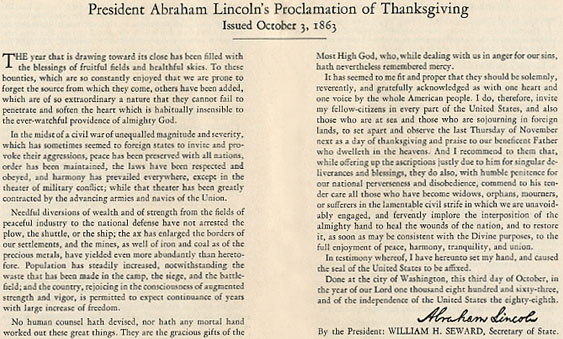
As Abraham Lincoln – the president who in 1863 fixed the observance of Thanksgiving to be the fourth Thursday in November – implored in his first inaugural address:

We are not enemies, but friends. We must not be enemies. Though passion may have strained, it must not break our bonds of affection.

After another year in which the idea of what it means to be British has become increasingly muddled and uncertain, let’s humble ourselves and dare to take a lesson from our former American colonies. Let us find inspiration in our storied history, our rich culture and also from within our own hearts. Let us find that elusive common thread of Britishness that should unite us all, transcending race and religion and politics.

I would argue that maybe some of the reason that more British people are starting to notice and observe Thanksgiving as well as the Black Friday sales we have imported from America is that deep down we subconsciously yearn for the sense of gratitude, social solidarity and civic-mindedness which Thanksgiving brings, and acutely feel the lack anything similar in our own national life.

So let’s change that.

Thanksgiving Proclamation - President Abraham Lincoln - 1863

Happy Thanksgiving

Support Semi-Partisan Politics with a one-time or recurring donation:

Agree with this article? Violently disagree? Scroll down to leave a comment.

Follow Semi-Partisan Politics on TwitterFacebook and Medium.

So You (Allegedly) Molested A Child

If ‘evil’ oil companies and banks can use Crisis PR firms to launder their sullied reputations, Hollywood celebrities need to start demanding the same 5-star service

I am sure that if it has not already happened, there will soon be a lucrative new niche field of crisis PR management opening up to handle (in exchange for extortionate sums of cash) the cases of terrified and often guilty Hollywood celebrities and power-players accused of inappropriate or illegal historic sexual activity with unwilling partners. Lord knows that whoever first enters the market stands to make an absolute fortune, because the response of those individuals currently being tried in the social media star chamber post Harvey Weinstein has been crying out for professional finesse.

One can imagine it now. The sweaty, shaking fingers slipping over the keypad as some panicked A-lister who only months ago was picking up gold statuettes and industry acclaim by the sackload now frantically dials his manager, begging him to kill a career-threatening story about past indiscretions. And who does the dutiful manager turn to? After looking in his desk and retrieving the handy “So You Raped A Child And Paid Them Hush Money / Forgot All About It” public information leaflet, they call the new service.

The polished executives who come to the A-lister’s house make a couple of things clear right off the bat. First, for the love of God, stop apologising for whatever it is you were accused of, and deny it instead. And certainly don’t concede that it might have happened, but you can’t be sure because you were dead drunk and who can remember all the fourteen-year-olds they clambered on top of at a party three decades ago. Not the way to go. That’s Step One.

A forceful denial comes first, and then you need to find something, anything else to dominate the news cycle – that’s Step Two. If you can arrange for senior campaign figures from last year’s presidential election to be indicted on charges of conspiracy against the United States, that should do the trick. Failing that, engineering some other event of geopolitical importance will take the heat off and buy you a moment’s pause to plan Step Three.

Step Three consists of the distraction. You have to understand the climate and culture in which you operate, and that is one totally dominated by the Cult of Social Justice and Identity Politics. In this world, accountability (and associated punishments for wrongdoing) are measured in inverse proportion to your position in the Hierarchy of Victimhood. At all costs, you must be able to refute the charge of being white, male and heterosexual – those three strikes will damn you immediately. Trying to pass yourself off as 8 percent Cherokee has yielded only mixed results in the past, so at the very minimum you should shoot for being gay or bisexual. If you’re looking at potential criminal charges rather than just the end of your career, it is worth considering the merits of transgenderism too. If you actually happen to legitimately fit into of these categories then so much the better, it will help with authenticity.

Once you have settled upon your distraction, integrate it tightly into your public response to the accusation, a response which – to repeat Step One – should not include an apology. The goal is to shut things down as quickly as possible by calling the accuser a liar and then winning sympathy by picking up as many identity politics bonus points as possible in your statement. Now you have successfully dealt with Day 1 of the fallout.

Day Two will require another domination of the news cycle. Assuming that there are no more well-connected politicos to indict on conspiracy charges, this is when you want to wheel out your Unimpeachable Character Witness. Use any downtime on Day 1 to identify this person, get them briefed, media trained and ready to spin a wonderful tale about how appropriate you have been at all times to all people, and how despite having been presented with at least ten gold-plated opportunities to rape a child over the past thirty years, not once did you cave to the temptation. That’s Step Four.

Now, the public may be sceptical of such stage-managed events, so the more people you can persuade to sing from the same hymn sheet the better. You want peers, pastors and anyone else to be singing four-part fugues about how awesome you are, and how you live a life of virtual celibacy outside specified age-appropriate relationships where consent forms are signed and notorised before each individual romantic encounter.

The final immediate action in terms of immediate crisis management, Step 5, is celebrity outreach. At this critical juncture, when you have been accused by a single source, you stand on the cusp of becoming toxic in celebrityworld. One more accusation and you are Hollywood kryptonite. At this point, people you once considered good friends will stop calling, and business acquaintances will suddenly be too busy to meet. Some will outright denounce you on social media.

As a savvy person, you know that at all costs you must avoid – what was that phrase? – ah yes, being cleaved from the herd and left to die in the wilderness. Hug your celebrity besties tightly. Do what you have to do to get invited on a sympathetic talk show where you can come across as shocked by the accusation, flaunt your good deeds and somehow paint yourself as the victim. This is a zero sum game, with space for exactly one brave hero and one villain.

This is the service that any go-getting, ambitious soul should be touting around Hollywood right now, as well as the London West End, Washington D.C., Westminster and a bunch of other places where large concentrations of powerful people with dodgy pasts are suddenly terrified for their futures.

And the best thing about this new market niche is that it will never dry up. Protecting terrified, middle-aged celebrities from accusations of inappropriate, abusive or downright illegal behaviour will not fall victim to outsourcing, automation or technical obsolescence. The entertainment industry will always exist, and so will those aspects of human nature which prompt some guilty people to abuse their positions of power to obtain sexual gratification from unwilling parties, and others to misremember or even falsely accuse innocent public figures of similar misdeeds.

In fact, the only way that this Celebrity Crisis PR business model would ever stop making money is if the denizens of Hollywood stopped being such moralising, hypocritical sleazebags. And there is no danger of that happening whatsoever.


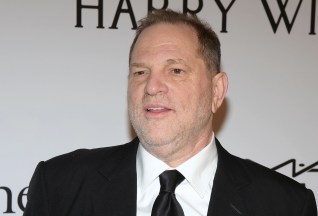
Harvey Weinstein - sexual harassment

Support Semi-Partisan Politics with a one-time or recurring donation:

Agree with this article? Violently disagree? Scroll down to leave a comment.

Follow Semi-Partisan Politics on TwitterFacebook and Medium.

Harvey Weinstein Hypocrisy And The Westminster Cesspit

Westminster Big Ben Telephone Box

British journalists have reported and commented extensively on the Harvey Weinstein scandal, yet seem curiously unwilling to lift the lid on the seediness and sexual harassment which routinely takes place within their own industry

In the aftermath of the Harvey Weinstein scandal (were you as stunned as I was?!) we have seen a range of responses from genuinely shocking and awful first-hand accounts of serious harassment and abuse to the now-obligatory collective guilt lectures delivered condescendingly to All Men.

But I am particularly interested in the response of journalists and commentators in Britain who took the time to report on a sexual harassment scandal unfolding in Hollywood while remaining curiously silent about a similar culture at work in their own industry.

I make no pretence of being a Westminster insider, but in my life on the far, far outer periphery I have attended a number of political functions, meetings, party conferences, boozy book launches and parties where very high profile journalists and moderately high profile politicians were present, and I have seen behaviour with my own eyes which would shame some of those who lent their voices to the chorus of condemnation of Harvey Weinstein and other serial alleged harassers. I have also heard disturbing personal accounts of inappropriate and unwanted advances by married men in the media, though having been relayed to me in confidence, these are not my stories to tell.

The seediness of Westminster politics is reasonably well known, but while political journalists are generally now willing to report on politicians when they come a cropper, most are understandably much less eager to lift the lid on their own sub-clique. Yet ultimately, journalism is no different from many other professions where people work, travel, eat, rest and play with the same group of colleagues in a high-pressure environment. Throw in the fact that politics and political journalism falls squarely into the “showbusiness for ugly people” category and is dominated by big beasts who grew up in a very different Fleet Street era and young people desperate to get a break, and a pulsating atmosphere of illicit romances, scandals and unwanted advances is all but guaranteed.

I have been to events where wine-sodden journalists said eyebrow-raisingly inappropriate things which made others feel uncomfortable, or in some cases made fumbling physical advances which had to be repeatedly warded off by the unfortunate recipient. Most of these incidents amounted to little more than general slovenliness and lechery, the kind of thing which reflect badly on a person but should not necessarily end a career or put somebody in court. But other times the behaviour I witnessed and heard about fell distinctly into the dodgy end of the grey zone.

And yet so far the only people from the political media world to have faced any kind of scrutiny in Britain are the writers Rupert Myers and Sam Kriss – both of whose cases were summarily tried in the fiery crucible of the Twitter and Facebook Star Chamber with no due process. As happened for so long in Hollywood pre-Weinstein, a couple of relatively minor fish in British political journalism are being made scapegoats so that the Big Fish can swim on unsated, undaunted and unchecked.

Much is being written about the bravery (or lack thereof) exhibited by certain individuals in Hollywood in their dealings with Harvey Weinstein and other powerful men accused of sexual harassment. And many of us probably feel rightful admiration for the brave few who first came forward at considerable personal risk, and shake our heads at the powerful A-listers who didn’t once think to risk anything to warn or protect others.

But I am curious about the household name journalists who behave nearly as badly at SW1 events or party conference hotel ballrooms yet go unreported and unpunished year after year. And I am particularly interested in their media peers, who know exactly what is going on and whether or not it fits a pattern of behaviour, and find all the time in the world to excoriate Harvey Weinstein while saying nothing about the atrocious behaviour that occurs right under their noses.

Tom Bradby, former ITV News political editor and current anchor of News at Ten wrote quite a stirring call-to-arms about an unpleasant “lads culture” at his old rugby club and various stag parties he later attended. Yet after all his years at the top of British political journalism he couldn’t think of any relevant anecdotes about his own peers and colleagues of sufficient concern to make it into the article? Perhaps not; Bradby may very well have purposefully avoided many of the booze-fuelled, bacchanalian evening events which make up the Westminster social calendar, and saw nothing. But I suspect that many others of equal seniority and profile to Bradby know exactly what goes on but give their own industry a Get Out Of Jail Free card.

As anyone who works in politics and answers truthfully will attest, Westminster can be a very seedy place. I understand that the ascension of Jeremy Corbyn in 2015 saw some dispossessed Labour centrists indulge in behaviour which would have been considered scandalous at King Belshazzar’s feast. It seems likely that Theresa May’s bungled campaign and the trauma of election night this summer saw some similar desperation-fuelled behavioural lapses on the Right.

The two mini scandals du jour – Labour’s Clive Lewis getting a bit verbally carried away at a Momentum event in Brighton or Jared O’Mara having posted unsavoury comments on the internet fifteen years ago as a young man  – barely scratch the surface of what goes on. Indeed, these cases are almost decoys, relatively minor transgressions being seized upon so that the accused can be made scapegoats for the graver sins of a much larger group. One almost wonders whether the enthusiasm with which the UK political blogosphere, print and television media picked up these stories was a way of over-compensating for the profound silence about what takes place within their own camp.

But this seediness and sexual harassment within British politics and journalism will not be eradicated by offering up some scrawny, barely-known writer from Vice or a slightly bigger deal from GQ Magazine as a sacrifice to the Twitter gods. It will take a big fish to land a big fish – a heavyweight figure from a major publication or broadcaster must put their credibility on the line. The world of politics and journalism, like Hollywood, is a very hard industry to crack and those struggling to gain admittance from the outside risk everything by speaking out, even as they are the ones predominantly being preyed upon by grotesque, self-satisfied insiders.

One day – perhaps quite soon, given the rapidity with which Harvey Weinstein fell from grace – one of the big beasts of UK political journalism will be revealed for what they are. Somebody who everybody in the Westminster political/media world has been paying obsequious homage to for years will receive first one allegation of improper conduct, then another, and then a steady drip-drip of accusations until the sudden resignation, admission of “errors of judgment” and flight to celebrity rehab inevitably follow.

And when that happens, we will all be sitting here wondering how it was that so many people whose sole job it is to unearth and report stories of public interest – so many respected, well remunerated household names – somehow neglected to mention what was going on in their own back yard.

And what little scrap of credibility the Westminster media retains will be gone for good.


Harvey Weinstein - Meryl Streep

Support Semi-Partisan Politics with a one-time or recurring donation:

Agree with this article? Violently disagree? Scroll down to leave a comment.

Follow Semi-Partisan Politics on TwitterFacebook and Medium.