Sargon Of Akkad On Social Justice

Popular YouTube political/cultural vlogger Sargon of Akkad is the (infinitely more popular) video equivalent of this blog in seeking to sound the alarm as universities and students’ unions fall under the spell of the Cult of Identity Politics.

Readers who do not already do so should consider following his YouTube channel.

At present, Sargon of Akkad (real name Carl Benjamin) is drumming up support for a petition to end social justice courses being taught as legitimate academic subjects at university. Those who are interested can sign it here.

In the video shown above, Benjamin makes an entertaining (and cathartic) case that the social justice / identity politics community is little more than a cult, the majority of whose complaints bear little resemblance to reality and whose philosophy is not deserving of the official imprimatur of the academy.


Safe Space Notice - 2

Agree with this article? Violently disagree? Scroll down to leave a comment.

Follow Semi-Partisan Politics on TwitterFacebook and Medium.

Responding To The Junior Doctors’ Strike

An inspiring (if unattainable) example from across the Atlantic

How to respond to a national walkout by government employees who perform a critical job for a large organisation, and who cynically advance their demands for more money under the false banner of concern for public safety?

Ronald Reagan offers us one blueprint, from back in that dim and distant time when both Britain and America were blessed with leaders who (for their various faults and blind spots) were not afraid to lead, and to take bold and decisive action when necessary.

This is the speech Reagan gave in August 1981 when PATCO, the American air traffic controllers union, called an illegal strike (federal workers being prohibited from striking under the Taft-Hartley Act) demanding, among other things, a 32-hour work week:

This morning at 7 AM the union representing those who man America’s air traffic control facilities called a strike. This was the culmination of 7 months of negotiations between the Federal Aviation Administration and the union. At one point in these negotiations agreement was reached and signed by both sides, granting a $40 million increase in salaries and benefits. This is twice what other government employees can expect. It was granted in recognition of the difficulties inherent in the work these people perform. Now, however, the union demands are 17 times what had been agreed to – $681 million. This would impose a tax burden on their fellow citizens which is unacceptable.

I would like to thank the supervisors and controllers who are on the job today, helping to get the nation’s air system operating safely. In the New York area, for example, four supervisors were scheduled to report for work, and 17 additionally volunteered. At National Airport a traffic controller told a newsperson he had resigned from the union and reported to work because, “How can I ask my kids to obey the law if I don’t?” This is a great tribute to America.

Let me make one thing plain. I respect the right of workers in the private sector to strike. Indeed, as president of my own union, I led the first strike ever called by that union. I guess I’m maybe the first one to ever hold this office who is a lifetime member of an AFL – CIO union. But we cannot compare labor-management relations in the private sector with government. Government cannot close down the assembly line. It has to provide without interruption the protective services which are government’s reason for being.

It was in recognition of this that the Congress passed a law forbidding strikes by government employees against the public safety. Let me read the solemn oath taken by each of these employees, a sworn affidavit, when they accepted their jobs: “I am not participating in any strike against the Government of the United States or any agency thereof, and I will not so participate while an employee of the Government of the United States or any agency thereof.”

It is for this reason that I must tell those who fail to report for duty this morning they are in violation of the law, and if they do not report for work within 48 hours, they have forfeited their jobs and will be terminated.

Obviously such a feat could not be repeated by the British government in its dealings with striking NHS staff – though the case for banning strikes by national public sector workers becomes more compelling by the day.

But if repeating Reagan’s actions are not possible for political and logistical reasons (firing 11,000 air traffic controllers is much easier than firing 55,000 junior doctors, not to mention the fact that the junior doctors are operating within the current law), at least we might hope that the government will act in the spirit of Reagan. And in the spirit of Reagan, the government should refuse to give any further ground to striking public sector workers who are willing to cynically jeopardise public health in a dispute which now rests primarily on the question of Saturday payand is certainly nothing to do with patient safety or the continued existence of the NHS.

This blog firmly believes that the NHS model is broken and than a system conceived in the 1940s is barely adequate to the demands of the 2010s, and will be hopelessly inadequate to the demands of the 2040s. If we are to persist with a public option, then there is no reason why healthcare should continue to be provided by a monolithic government organisation, the fifth largest employer in the entire world (with all the baggage, internal politics and resistance to change which that stunning fact implies).

There is no good reason why we cannot look closely at the healthcare systems of countries such as France, Germany, Japan or Canada and redesign our system accordingly – if only we could rediscover our sense of national ambition and shed our increasingly unwarranted pride in the NHS. We could even still call the new healthcare system “the NHS” if our cult-like attachment to the brand really runs so deep.

The time is long overdue for Britain to have that national conversation, endlessly kicked down the road by politicians terrified of upsetting nervous voters and governments which have proved constitutionally incapable of daring mighty things. But first we need to overcome this peculiar, anachronistic industrial dispute – one which belongs more comfortably in 1976 than 2016 – and end the junior doctors’ strike, by imposing the current contract offered if necessary.

And in that effort, let the spirit of Ronald Reagan guide Jeremy Hunt.


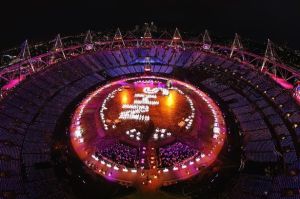
NHS Worship - London Olympic Games 1

Agree with this article? Violently disagree? Scroll down to leave a comment.

Follow Semi-Partisan Politics on TwitterFacebook and Medium.

The Immaturity And Cynicism Of The NHS Junior Doctors’ Dispute

Junior Doctors Strike - NHS - National Health Service - Vigil

The junior doctors lost the moral high ground when they decided to portray a debate about pay and conditions as a high-minded effort to “save the NHS”

James Kirkup has a great piece in the Telegraph in which he charges that the junior doctors’ dispute has reached an impasse not because of government intransigence but because many junior doctors are arguing an inherently political case from a position of naivety and political inexperience, and so will not concede the validity of any opinions other than their own.

Read the whole thing. But it is worth noting these excerpts in particular:

Some of this is about basic competence. The doctors and their leaders have done a very poor job of explaining why they are striking, offering a range of confused and changing justifications. Many doctors seem unaware of the position taken in negotiations on their behalf by their trade union (short summary: if the Government had agreed to pay more for Saturday working, the BMA would have settled and there’d be no strikes) and believe their strike is not about money.

This in itself is quite damning. All the high-minded talk about patient safety and “tired doctors making mistakes” suddenly begins to look a wee bit cynical when it turns out that the BMA would have taken the deal if only there was more money on offer. Was the extra pay all going to be spent on Pro Plus and Red Bull? Unlikely.

But this is the really interesting point:

Yet the doctors’ failure of understanding goes beyond tactics into something more fundamental, an unwillingness or perhaps just an inability to appreciate that politics is about reconciling the diverse interests and desires, that no one gets things all their own way.

Simply they don’t understand the conflict they’re in. Many, engaged in politics for the first time, cannot understand why the Government will not do exactly as they want; for them it’s unthinkable that others would not accept the doctors’ word on how to fund and structure the NHS as final. Any course of action but theirs is not just unacceptable but immoral.

As for those on the other side of this dispute, there is apparently no possibility that their motives could be honourable. Throughout this dispute I’ve not yet seen a junior doctor admit even the possibility that Jeremy Hunt, NHS Employers, David Dalton, Bruce Keogh or any of the main players on the employer side might also be acting in good faith, doing things they believe necessary and in the public interest.

Instead, Mr Hunt and his officials are routinely accused of venality and self-interest, and worse. I keep a little file of choice emails and tweets from doctors. It contains evidence of members of the profession making statements in public forums that Mr Hunt is psychopathic or suffering from various other clinical conditions. (There were also a number of homophobic slurs aimed at Mr Hunt, but that was a senior consultant, not a junior.) I can only conclude that the doctors concerned are so convinced of their own righteousness that they cannot admit that those who take a contrary view are anything but immoral.

Here we have Labour’s self-righteousness syndrome all over again, but this time the patient is not a political party but a large and vocal special interest group within the public sector. Just as was the case with those convinced that the Tories are evil vampires and that Ed Miliband was heading for victory in last year’s general election, so the junior doctors and their supporters seem convinced that the government is motivated purely out of malice, and that they are unambiguously in the right. And we all know what happened on May 7th.

Kirkup continues:

Other doctors display an almost touching lack of insight into how some aspects of their own working lives (a job for life, steep pay progression, huge pensions) are simply unobtainable dreams for most workers, even those who also got good A-levels and spent years studying at good universities.  One junior doctor (again, I won’t name him) last week reprimanded me for writing about doctors’ £1 million pension pots on the grounds that the retirement such funds deliver is “comfortable” but “not extravagant”.

Likewise the tendency to overlook (or simply not know) the fact that many of their problems (antisocial hours, weekend working, growing workloads and static or falling workforces) are common to many other professions and trades, many of whom do not enjoy the same benefits as doctors.

What the junior doctors (and those who support them) fail to understand is that nearly every public sector industrial action is fought on the grounds of public safety while really being about something else. Relatively well paid people (compared to the average wage) walking off the job in a dispute about money and working hours does not elicit as much public sympathy as casting themselves as the only people willing to take on the government on a grave matter of public safety, so simple self-interest dictates that any union (including the BMA and junior doctors) will emphasise the latter over the former.

Consider: how many striking junior doctors living in London would have tutted with frustration during the last tube strike called by the RMT, and fumed to their friends that tube drivers are incredibly well paid, should be grateful for what they have and get back to work, Night Tube be damned? The RMT’s dispute was based in large part on safety concerns, just like the junior doctors. Are the tube drivers lying while the junior doctors are telling the truth? Is there something inherently more virtuous in a doctor than a train driver?

This, too, is worrying:

Spare a thought here for the impact this outlook has on the doctors themselves.  Having become so utterly convinced of the rightness of their cause, many suffer genuine distress when their cause meets resistance or challenge.  Some, sadly, are not robust enough to encounter such pressures without experiencing genuine harm. That harm should weigh heavily on the consciences of the BMA leaders who have encouraged young and politically-inexperienced people to seek out confrontation in the harsh arena of public debate.

This rings alarm bells, because it is the same way that we now speak of Safe Space-dwelling students, grown adults who by adopting a toxic ideology have come to see themselves as perpetually vulnerable victims in constant need of protection from higher authorities. One could take this sentence – “some, sadly, are not robust enough to encounter such pressures without experiencing genuine harm” – and apply it equally to those wobbly-lipped students who are now killing academic freedom and free speech on our university campuses.

In fact, we may now be witnessing the first major conflict between the Safe Space generation (many junior doctors have only recently graduated university) and the realities of the labour market and public sector wage restraint – only everything is made doubly toxic because the dispute involves the one subject about which almost no Briton is capable of thinking rationally: the NHS.

This blog contends that the mere fact that national collective bargaining is still making headlines in 2016 rather than 1976 shows that Thatcher’s work is far from finished, and that if we were not still lumbered with a national health service we would not be facing the prospect of an all-out national walkout by healthcare professionals. After all, nothing about public healthcare mandates that it must be provided through a monolithic state-owned organisation, despite the best efforts of NHS apologists to pretend that our options are the status quo or the American system.

Maybe the doctors holding candles in an overwrought silent vigil for the NHS (see cover picture) are entirely genuine. Maybe they have convinced themselves that this dispute really is purely about patient safety and “saving the NHS”, and nothing more. But the junior doctors can no longer plausibly claim that this is about patient safety, or “saving the NHS”, because we now know that these are side issues brought cynically into the debate by the BMA and credulous activists in a well worn attempt to drum up public support.

This does not mean that each one of the Conservative government’s intended reforms are sensible. The idea of a 24-hour NHS is more slogan than policy, while statistics about weekend deaths have been cynically misrepresented – that much we can concede to the BMA. But when your pay dispute is with one of the largest organisations in the world, and by far the largest employer in Britain, then everyone who pays for that service gets to have a say, including (or even especially) a government elected partly on a manifesto to make changes to that health service, whether or not those changes happen to be smart. By taking the public coin the NHS is inherently political, and those working for it cannot complain when those outside the organisation seek to wield their own influence.

And from a purely tactical standpoint, James Kirkup is right – the junior doctors and their representatives in the BMA have bungled this dispute badly. With their overwrought, hysterical claims that a new national contract will somehow be the end of the NHS when it turned out that the final sticking point in the negotiations was over nothing more noble than Saturday pay, their credibility is squandered. And neither they nor their supporters should not escape censure for their part in what is to come.


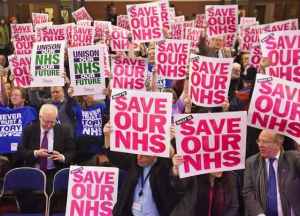
Save Our NHS

Top Image: Guardian

Agree with this article? Violently disagree? Scroll down to leave a comment.

Follow Semi-Partisan Politics on TwitterFacebook and Medium.

Now Boris Johnson Is No Platformed – For Being ‘Disrespectful’ To Barack Obama

Boris Johnson - Kings College - Disinvitation - No Platformed - EU Referendum - Barack Obama

UPDATE 26/04/2016 – See postscript

Preening, virtue-signalling student activists have now ‘No Platformed’ Boris Johnson in a prissy act of reprisal and censure for the London mayor’s response to Barack Obama’s intervention in the EU referendum debate

The way things are going, someone should establish a sweepstakes in which people can bet on which perfectly mainstream, household name celebrity or politician will be next to be “No Platformed” by censorious students aghast at the prospect of having to hear ideas contrary to their own.

And on this occasion, anyone with money on Boris Johnson would be collecting a handsome payout right now, for apparently the Conservative MP and serving Mayor of London is the latest personality to be deemed simply too dangerous and uncouth to pollute the sensitive ears of fragile, puritanical students.

This stems, of course, from the furore over Boris Johnson’s response to US president Barack Obama’s intervention in the EU referendum debate. Johnson, writing in the Sun, mentioned in passing the fact that “some said [Obama’s decision to remove a bust of Winston Churchill from the Oval Office when he became president] was a symbol of the part-Kenyan President’s ancestral dislike of the British empire”.

And so the student censors in charge of the King’s Think Tank, who can see into the hearts of all men and determine good or evil intent with unswerving accuracy, judged that Boris Johnson wrote these words as a coded racist dog-whistle, and that he should therefore be disinvited from giving a planned speech as part of their “EU Referendum Event Series“.

(Anyone who actually bothered to read the Sun article would see that not only was Boris Johnson merely stating a fact – that some people did indeed say that Obama’s Kenyan heritage was behind his decision to remove the bust of Churchill – but that he then went on to dismiss this as the likely reason. But the League of the Perpetually Outraged are never ones to let facts get in the way of a good hissy fit).

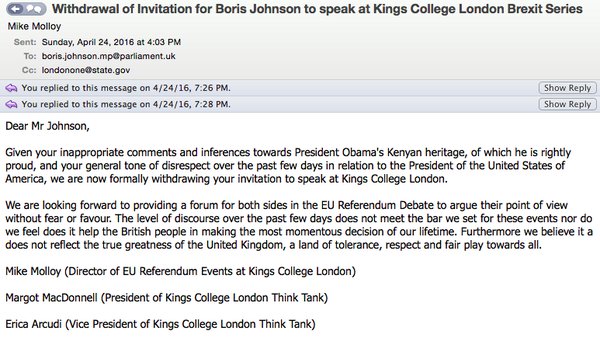
The chiding email which the King’s Think Tank leaders sent to Boris Johnson informing him of his “punishment” is a tour de force in the kind of self-importance and finger-wagging authoritarianism in which the current generation of students so masterfully specialise:

Dear Mr Johnson,

Given your inappropriate comments and inferences toward President Obama’s Kenyan heritage, of which he is rightly proud, and your general tone of disrespect over the past few days in relation to the President of the United States of America, we are now formally withdrawing your invitation to speak at Kings College London.

We are looking forward to providing a forum for both sides in the EU Referendum Debate to argue their point of view without fear or favour. The level of discourse over the past few days does not meet the bar we set for these events nor do we feel does it help the British people in making the most momentous decision of our lifetime. Furthermore we believe it does not reflect the true greatness of the United Kingdom, a land of tolerance, respect and fair play towards all.

Mike Molloy (Director of EU Referendum Events at Kings College London)

Margot MacDonnell (President of Kings College London Think Tank)

Erica Arcudi (Vice President of Kings College London Think Tank)

Behold the new generation of student radicals, fearlessly standing up in defence of the American president, the most powerful man in the world! How edgy. How counter-cultural. How brave.

This case is particularly disturbing, for this act of No Platforming is true, unapologetic censorship as punishment. At no point in their petulant email to Boris Johnson did the student leaders of the King’s College London think tank suggest that Boris Johnson’s words and conduct had caused (or were likely to cause) any actual “harm” to the debate attendees, in the way that student activists typically claim that hearing ideas with which they disagree will cause them actual mental harm.

On the contrary, Boris Johnson was No Platformed simply because the student directors of the King’s Think Tank disapproved of what he said (or rather, the sentiments which were attributed to him), and decided that he ought to be punished for his free speech transgression.

Note the hectoring, chiding, schoolmarm-ish attitude evident in the phrases “your general tone of disrespect” and “the level of discourse over the past few days does not meet the bar we set”. In other words, now speakers can be summarily disinvited from participating in an event not because of something that they say, but merely the “tone” in which they say it.

This is authoritarian behavioural policing layered on top of thought policing. This blog has absolutely no respect or affection for Boris Johnson, but this disinvitation is absurd. Johnson dared to push back forcefully against Barack Obama’s intervention in the EU referendum debate, and for that crime the King’s Think Tank apparently plan to deny event attendees the opportunity to hear the mayor of their own city and a prominent voice in the Brexit campaign speak on what they themselves admit is the “most momentous decision of our lifetime”.

And why? Simply because three self-righteous students took exception to the tone (repeat: not the content but the tone) of Boris Johnson’s comments, wilfully misinterpreted an article he wrote in the Sun, and decided that the correct course of action would be for them to “discipline” the London mayor by rescinding his invitation to speak – their equivalent of docking his pocket money.

Imagine how proud Mike Molloy, Margot MacDonnell and Erica Arcudi, leaders of King’s Think Tank, must feel now that they have high-handedly scolded and dismissed such a high profile figure as Boris Johnson. Just think of all the social justice kudos points that each of them has accrued by casting themselves as the concerned, ever-watchful Defenders of the Oppressed, bravely riding to the rescue of the President of the United States – an oppressed and marginalised man who was “harmed” by the cruel words of Boris Johnson and clearly needed their help to redress the yawning power differential unfairly favouring the mighty mayor of London.

Because that is what this is really about. This is not about trying to prevent a speaker with abhorrent or even mildly unpalatable views from airing his thoughts on King’s College campus. This is about three jumped-up, virtue-signalling student activists trying to get in the news by portraying themselves as so morally righteous that they simply had to take action to scold the Bad Man for saying mean things about Barack Obama. Right now, their phones and Facebook feeds will be filling up with approving comments from their fellow social justice cultists, giving them the additional currency and status within their movement that they so desperately crave.

So mission accomplished, King’s Think Tank. Tens or hundreds of students and members of the public who had been looking forward to hearing the London mayor and quizzing him on his views will now not have the opportunity to do so. But if a few self-aggrandising student “leaders” get to strut and fret their day in the 24-hour news cycle and burnish their identity politics credentials in front of their admiring peers, then it is all worthwhile.


Postscript: According to an updated statement from the King’s Think Tank, the email to Boris Johnson was sent without the approval of either the President or Vice President of the society. Presumably this means that the Director of EU Referendum Events, Mike Molloy, was acting alone and outside of his authority. I have requested explicit confirmation of this from Margot McDonnell, president of King’s Think Tank, and asked whether if this is indeed the case, whether Mike Molloy  is subject to any reprimand, censure or other action for overstepping his authority. I have not yet received a response to my further questions.


Safe Space Notice - 2

Agree with this article? Violently disagree? Scroll down to leave a comment.

Follow Semi-Partisan Politics on TwitterFacebook and Medium.

Tales From The Safe Space, Part 31 – Snowflake Students Are Now Being ‘Harmed’ By Their Own Activism

NUS Conference 2016 - Brighton

Coddled student demands that his entirely voluntary extra-curricular activities conform to the EU Working Time Directive

Prior to this year’s NUS Annual Conference in Brighton, now just concluded, one poor precious snowflake of a student was weighing up whether or not he would be able to attend conference for the third consecutive year, because the process of getting on a train and then sitting through three days of speeches was simply too draining.

Here is the weepy missive from Alasdair Clarke, Vice President of Education at Fife College Students’ Association, in full:

After two years of making the annual trip to Liverpool for NUS National Conference, I’ve left feeling exhausted and been unable to go back to work after it. If this is the effect on me as someone who has no access needs, I know that we’re further shutting out those who do.

But for two years I’ve also sat and listened to DPC speech after DPC speech telling me conference is inaccessible and that we “must do something about it now”, and I’m told this isn’t new. So what has been done?

Well in truth, I’m not sure anything has been. This year, it’s been decided that National Conference will be held in Brighton – I understand well the need for NUS to keep the costs of these events as low as possible whilst finding hotels and venues for a huge amount of delegates and meeting as many access needs as is humanly possible, but I absolutely refuse to believe that the only place they could find this year was Brighton. The very bottom of the United Kingdom.

This piece could be about cost, and believe me this weighs massively on my mind. We already pay thousands to be a part of NUS and the prospect of paying another few thousand pounds to take part in its democracy isn’t one that is all that appealing – especially when we’ve seen examples already this year where that democracy can be over ridden by the National President – but there is something much more important we need to start seriously talking about beyond tired old platitudes from election candidates and NUS Officers.

Brighton is a 16 hour round train trip from my home in Fife, which is relatively central in Scotland – it’s a 22 hour round trip from Aberdeen – this coupled with 3 days of conference will be absolutely draining. I’m worried that for Scottish delegates it will just be too much, and many will just not come.

Conference itself already breaks the EU Working Time Directive, with the majority of the ‘breaks’ disguised as Fringe sessions you already have to choose between eating and resting or missing out on important sessions for the majority of the conference. The working time directive also includes travelling time, this huge increase in delegates travel time will further break this law – and let’s be clear it is a law and employers can be prosecuted for allowing, or forcing, employees to work for extended periods over it. That’s why I would never ask our unions staff to attend. If we heard that our institutions were abusing staff like this we’d quite rightly have something to say and we’d be doing something about it. So where is the anger at NUS?

However, as a sabbatical I don’t just have myself to think about. The majority of our delegation is made up of students, people who give up a week of their Easter Break to come and take part in NUS. We tell them it’s really important, and we tell them how much we value their engagement with their Union and with NUS. We thank them by putting them into a situation which is dangerous to their health and then send them back to complete their final exams the week after. This isn’t fair of us, and it’s time we done something about it.

It is probably too late to change the location this year. So I hope that within the governance review we get to talk about how we do conference, and next year we see it extended or split into two sessions throughout the year. I understand there are pros and cons to each of those but let’s stop kidding ourselves that what we have just now is ideal.

NUS Conference needs to be as central in the UK as possible, and NUS needs to start putting delegate’s health over cost, and unless I see a solution to these issues proposed – I’ll be suggesting my union doesn’t attend in 2016.

Just to be clear – Alasdair Clark specifies that he is not disabled and has no “access needs” which might make travelling and attending a conference away from home particularly challenging, and yet on both prior occasions attending conference he has been “unable to go back to work after it”.

Ladies and gentleman, that makes Alastair Clark lazy. L-A-Z-Y. It is not the fault of the NUS Conference that there is a lot of work to get through in a short space of time, or that conference might sometimes be held in an inconvenient location. Those are the realities of organising large scale national events, which by definition cannot be conveniently situated for all attendees.

In my professional life I cannot count the number of times I have been required to get on a train or a plane and travel to meetings, often at short notice, often involving very early starts, very late finishes and precious little time for relaxing in between. On one two-week trip to Beijing I saw only the airport, the hotel, the taxi and the office for the entire time, with a mere 45 minutes carved out at the end for a frantic sightseeing dash before returning home and immediately continuing with the day job. And at the other end of the spectrum, I have taken the first train from London to get to meetings in Newcastle for a 9 o’clock start, arriving back home close to midnight. And my jobs have all been relatively easy compared to some others.

That is the reality of professional working life. That is the reality of working for a company where things need to get done, employees are expected to deliver, and where feeble cries of “but it makes me feel tired!” are not looked upon kindly when there is no underlying medical excuse.

Consider just how self-entitled one would have to be to angrily demand that the NUS re-work their entire conference so as to ensure that nobody has to work or travel for more than eight hours per day in compliance with the EU Working Time Directive, while still somehow getting through their agenda within three days, all because doing more than the bare minimum for a few days of Conference sounds a bit too much like hard work. Everybody would have to talk at two hundred words per minute just to stay within time, and even then Alasdair Clark would complain that the fast paced speeches were giving him a headache or somehow contravening his human rights.

If this mentality is widely shared among student activists, none of them have a hope in hell of surviving in the corporate environment. For many, this will not be a problem – they could not handle a really demanding job in a million years, nor do they aspire to one, and so will gravitate to the woollier parts of academia or activism and become Social Justice professors or bitter, moralising benefit claimants. But those who want to have their cake and eat it – to get a well paying job and still insist that employers bow and scrape to their every delicate sensibility – will find themselves justifiably cast on the unemployed scrapheap.

So in addition to its many other flaws, the NUS is now apparently an organisation comprised of delicate students who believe that attending a three-day conference as part of their entirely voluntary student political activism is a grave contravention of their human rights, and that their own union is “putting them into a situation which is dangerous to their health” simply by asking them to put in three days of moderately hard work once a year.

This is not going to do wonders for Britain’s productivity gap.


Safe Space Notice - 2

Top Image: Huffington Post

Agree with this article? Violently disagree? Scroll down to leave a comment.

Follow Semi-Partisan Politics on TwitterFacebook and Medium.