With Allies Like These…

Get Britain Out - EU Referendum - Save 40 per week

With allies like Patrick Minford and Get Britain Out, who needs the Remain campaign?

The Sun reports:

Maggie Thatcher’s economics guru stormed into the referendum battle last night, claiming Brexit would cut living costs by £40 a week.

Professor Patrick Minford accused EU chiefs of imposing over-inflated prices on everything from food to cars.

And he calculated tearing down trade barriers after we leave will boost growth and bring consumer prices down by 8p in the Pound.

Prof Minford said: “Prices are 20 per cent higher inside the EU compared with world prices.

“The system is designed to keep prices up and consumers are paying for this.

“But if we pulled out, your average Sun on Sunday reader would be 40 quid a week better off.

Well, that’s sorted then. Punch a few numbers into the Minford Model and it turns out that £40 will magically materialise in our wallets the moment we achieve Brexit. Great! That will just about cover the cost of a bottle of Veuve Cliquot to toast the restoration of our democracy.

How long until Vote Leave use this “analysis” to knock up their own version of Britain Stronger in Europe’s risible calculator, which shows how terribly destitute we will all be if we are so rash as to spurn the European Union?

How long until either of the main campaigns treats the British electorate like intelligent adults?*


*rhetorical question


European Union - United Kingdom - Britain - Flags

Agree with this article? Violently disagree? Scroll down to leave a comment.

Follow Semi-Partisan Politics on TwitterFacebook and Medium.

Tales From The Safe Space, Part 30 – Students Against The NUS

Malia Bouattia - NUS President - Disaffiliation Campaign - National Union of Students

Some encouraging signs in the growing backlash against the censorious, paternalistic National Union of Students

For once, a positive development in these Tales From The Safe Space – the first green shoots of an anti-NUS, anti-SJW grassroots backlash among students who are sick of being spoken for by the identity politics cultists currently in positions of leadership both in local university students’ union and the national organisation.

NUSceptics is a new forum for students at British universities to advance the free speech agenda and organise disaffiliation campaigns from the irretrievably corrupted National Union of Students.

This piece by student Ellie Spawton hits the nail on the head on the need to resist the growth of the new victimhood culture taking root in universities and wider society.

Money quote:

The NUS panders to this culture of victimhood, seeing it as their role to protect and defend anyone deemed a minority, or lacking in privilege. Whereas traditionally university is where young adults gain their freedom and are subject to debates and ideas, the NUS’ nannyish, moral crusader involvement in students’ everyday lives restricts and stifles not only debate and freedom of speech, but also moral independence and independent thought.

[..] The most concerning issue of the NUS is not its censorious nature, but the fact that it doesn’t trust the students it represents. It treats us like we are unable to be exposed to opinions that don’t conform to the progressive mindset without being offended and needing to retreat to a ‘safe space’. It is removing our ability to make our own decisions and our own mistakes, and depriving us of the ability to speak out and challenge viewpoints. It is condoning and feeding the emerging culture of victimhood, which in turn is creating moral dependence, fuelling conflict and preventing the development of young minds. The NUS needs to step back, stop nannying us and focus on larger issues than identity politics.

It is heartening to see such sensible, small-L liberal ideas being expressed by some students, even if they are presently drowned out by the opposing voices of social justice and identity politics.

Whether or not any of the nascent NUS disaffiliation campaigns will succeed is currently unknown – though it seems like a long-shot since any such movement would have to be comprised largely of people who are not already engaged in student politics (those already politically active clearly being overwhelmingly in favour of recent developments, as it is they who voted for the policies in the first place).

This is where university faculty and administrators need to rediscover their cojones and their commitment to academic freedom, and step in to support these brave students protesting against their own unions. Clearly universities cannot overtly support any attempt to build rival student organisations which aim to represent students while upholding the right to free speech, but at the very least they must make clear that any reprisals against these students by the NUS, local students’ unions or other vengeful individuals will not be tolerated.

As always, the hard work in rolling back the present identity politics-soaked victimhood culture must be carried out by the students themselves. But universities have an academic – and moral – duty to provide them with some valuable air cover.


Safe Space Notice - 2

Top Image: Huffington Post

Agree with this article? Violently disagree? Scroll down to leave a comment.

Follow Semi-Partisan Politics on TwitterFacebook and Medium.

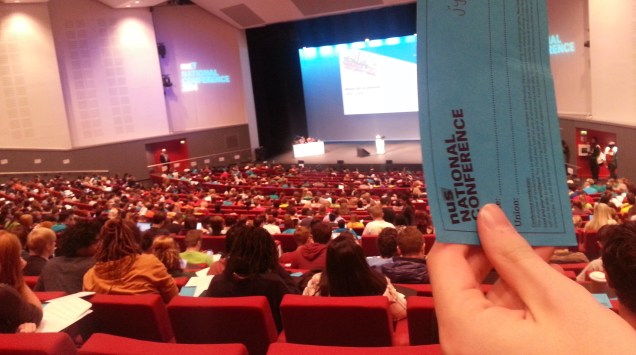
Tales From The Safe Space, Part 29 – The Surreal NUS Annual Conference

NUS annual conference

Down with the National Union of Students

We know that they are highly averse to clapping and that many of their affiliate university students’ unions have been entirely conquered by the Cult of Identity Politics, but what is life really like at the NUS annual conference?

Jack Grove has been into the lion’s den (or should that be sheep’s pen?), and reports in the Times Higher Education:

On arrival at the registration desk at the Brighton Centre, I was able to choose from a range of stickers that would indicate to delegates if I’d prefer to be addressed along the lines of “he/him/his” or perhaps “they/them/theirs”. Later in the day, delegates elected a full-time sabbatical officer to deal with trans issues – a major financial commitment for a union that can’t afford a paid post dedicated to postgraduate issues.

When Ms Bouattia was elected as president – the union’s first female black Muslim leader – her supporters were chided by the panel chair for clapping and cheering as this may cause distress to other delegates and trigger a trauma episode.

Instead, delegates were asked by a sincere delegate not to whoop or holler, or clap at all, but use “jazz hands” to show appreciation (people were asked to wiggle their fingers) as the noise created was “ableist” and had indeed caused the delegate in question to have a panic attack on previous occasions.

While Spiked’s Tom Slater reports:

The National Union of Students conference is over. But we’ll still have the memories – the jazz hands, the whingeing and the casual anti-Semitism. For this was the year when this tyranny of crybabies, this politburo of plonkers, truly outdid itself. Not only did delegates call for social-media apps to be banned (people are saying nasty things on them) and for Holocaust Memorial Day to be scrapped (apparently it’s not ‘inclusive’) — they also elected as the new NUS president Malia Bouattia, someone who thinks condemning ISIS might ‘send the wrong message’ and is wont to wax lyrical about the ‘Zionist-led media’.

This year’s shitshow has led to students around the country calling for their unions to disaffiliate from the NUS. About time. The NUS is a censorious, anti-democratic husk, propped up by right-on middle-class cliques. Though it claims to fight for students’ rights, it doesn’t have much truck with their right to speak freely, their right to conduct their sexual lives as they see fit, or even their right to party. In 2013, the NUS signed up to minimum pricing: this is a students’ union that thinks beer is too cheap.

It’s time to smash the NUS and start anew. Students need a union that truly looks out for them, that allows them to make common cause on the issues that matter. But, above all, they need a union that treats them as morally autonomous adults, that takes them seriously, that believes students can change the world rather than just be triggered by it.

I cannot emphasise enough that this is no longer a niche phenomenon. This is not a few isolated incidents, or a few overenthusiastic students on a few of the more liberal university campuses. This is not only nationwide, but also transatlantic.  And it is here to stay.

Here is a National Union of Students whose theoretical purpose is to represent the academic and pastoral interests of all students in the country, but which feels the need to lavish resources on a full-time Trans Issues officer at a time when they do not even have a paid officer to represent the different needs of postgraduate students. In other words, here is a union which has left behind any pretence of doing what a union should do, and instead devoted itself wholly to the furtherance of the identity politics agenda.

We would never witness this dereliction of duty in pursuit of secondary objectives in any other trade union, even (or especially) the most militant and prone to industrial action. The RMT union – and one has to hand it to them – seeks to grind out the best financial settlement possible for its members, and uses strikes or even just the threat of strikes to paralyse London, bring an elected Conservative mayor to his knees, and win key concessions for already well-paid tube drivers on the London Underground.

You would never see the RMT being half-hearted in its negotiations with Transport for London because its leadership was too distracted instituting a new Safe Space policy or agitating for mandatory social justice re-education courses for workers. They focus, with undeniable effectiveness, on fulfilling their primary duty to their members – namely, achieving the best possible employer settlements on wages and conditions.

And this is the key point. The National Union of Students not only no longer represents the majority of university students, it now pursues aims and objectives which are irrelevant to many of them and are even sometimes directly antagonistic toward them (particularly in the case of conservatives, small-L liberals or assorted others who simply value free speech). They no longer even claim to act for all students. They act primarily for those students bound up in the social justice movement.

It is now ten years since I graduated, and during my time at Cambridge and Warwick universities the NUS was never anything more than an annoyingly persistent leftist buzzing in my ear. Sure, it was stupid when the Warwick Students’ Union wasted time debating a motion to express their objection to George W. Bush making a state visit to Britain, but they did not actively go out of their way to interfere in my life. This is no longer the case. Now, the Warwick Students’ Union is rated Red in the annual Spiked university free speech rankings, and actively seeks to control what every student in campus is allowed to read, buy, think, hear or say.

In other words, a lot has changed in a decade. In just the last few years in particular, identity politics cultists and assorted Social Justice Warriors have made an unprecedented power play within students union, against university administrators and against any of their peers who do not subscribe to their own worldview. Those who graduated a decade or more ago and do not pay close attention to what is happening in our universities may well see this as alarmism at first glance – “surely things can’t be that ridiculous?” goes the common refrain.

But they are. And it is going to get worse. We are already at a point where holding conservative views on campus attracts outright ridicule and hostility. In a few more years, this opprobrium will spread to those who merely fail to sing from the social justice hymn sheet loudly and sincerely enough. And to date there has been almost zero fightback from the supposed adults in the room, the university faculties and administrators. Liberty-loving students have been left to face the onslaught alone.

Now, nobody can predict exactly what will be the consequence of a growing number of identity politics-infected young people graduating and joining the labour market and becoming involved in party political activism. Some will doubtless be jolted to their senses by their collision with reality, and come to look back in shame on their illiberal student ways. But many others will survive the impact, and when they regroup they will begin to look for ways to recreate their university Safe Space environment here among us. It has already begun.

So calling attention to the identity politics/social justice takeover of universities is not a fringe interest or a massive overreaction. This new focus by writers – including this blog’s own “Tales From The Safe Space” series – provides an unsettling preview of what life will be like in another decade, unless those who object to this therapeutic, victimhood culture begin to get organised and fight back.

But if you are happy for your future workplace to gradually turn into a never-ending NUS conference, then by all means continue burying your head in the sand.


Safe Space Notice - 2

Top Image: Lancaster University Students’ Union

Agree with this article? Violently disagree? Scroll down to leave a comment.

Follow Semi-Partisan Politics on TwitterFacebook and Medium.

If The Remain Campaign Succeed In Cheating Their Way To Victory, Their Joy Will Be Short Lived

EU Referendum - Divisive - Bitterness

There will be no kissing and making up on 24 June

Much like this blog, Pete North is angry at the conduct of this referendum campaign by the arrayed forces of Remain, and sees little point in hiding the fact:

We’ve had decades of their rule, decades of their orthodoxy and no means to challenge their political dominance. We’ve been watching and waiting for years. Watching as successive governments have ceded ever more power, ever more control and have insulated themselves from the wishes of the public. Well, now we’ve got our referendum. And now we see just how deeply the game is rigged.

So we’re angry to say the least. Angry at what has been done to us, done in our name, and angry that once again democracy is being trampled on to preserve the orthodoxy. And we do not take kindly to being lied to.

There’s an old saying that politics is between you, me and the swamp. Minorities on either side, playing games for the votes in the middle. But unlike classic politics, this is not a left vs right dispute. There are only those above the line and those below the line. Those who have the power and those who do not. In this estimation, the establishment holds all of the cards. It has always known a challenge to its legitimacy would one day come which is why it set out to bribe institutions in advance.

We Brexiteers on the other hand have what we have. An angry rabble with keyboards. And let’s face it, none of us are ever going on the front cover of Vogue. We’re a bunch of griping, moaning angry people who seem to hate just about everyone in politics and everything they do. We’re not helped by a pretty shoddy Leave campaign either, with some fairly odious spokesmen.

We are irredeemably spit. We all hate each other. I despise the Toryboys and I loathe Ukip. I hate all political tribalism. I’m not a joiner of clans. But there’s one thing that unites us all. All of us can articulate a better definition of democracy than any of those would would have us remain in the EU – and though we can’t seem to agree on coherent Brexit plan, we all know what democracy is, why we should have it and crucially why the EU is the absolute opposite of it.

And that’s why this referendum really settles nothing. The Remainers will play their little games, steal the referendum and carry on as before; feathering their own nests and consolidating their power. But we’re not going anywhere. We’re not giving up. And we are taking names. Us Brexiteers hold deep grudges. We are in it for the duration.

We will remember Cameron the fraud. We will remember Hague and Corbyn as turncoats. We will remember the frauds like Boris Johnson who used the cause for their own advancement. We will remember the parasites who had their fingers in the till. We will remember all those hacks and policy wonks who twisted the truth. We will not forget what was done here. And unlike 1975 – we have a full record of who said what. The internet never forgets.

And North’s blood-chilling conclusion:

In fact, we are going to be pure poison. If you thought the SNP were sore losers, you ain’t seen nothing. A remain vote will ensure domestic politics remains permanently toxic. While these part timers waft into to the Brexit debate with their tedious rhetoric about Brexiteers being little englanders and xenophobes, and venting their empty rhetoric of cooperation and internationalism, we have been here from the beginning. Will be here at the end.

You can stifle an idea, but you can’t kill one. Especially not that seemingly antiquated notion that the people should be able to refuse their government. The EU may be powerful but it is not stronger than the desire for democracy. And if it takes another generation to get what we want then that is what we will do. There is only one way this fight ends – Britain leaving the European Union. We will either do it amicably and by the book – or we will do it some other way. The general public may well go back into their political slumber, but we Brexiteers will be back – and in between, we are going to cause merry hell.

I should say that I agree with nearly everything in Pete’s piece – as always, his diagnosis of the flaws of the EU is spot-on, and his objections rooted not in shameless partisan positioning (like nearly every Remain supporter on the Left) but in a deep love and respect for democracy.

I can’t say that I look forward to the idea of being “pure poison”, or causing merry hell. But increasingly, I cannot see an alternative if, as is still likely, the Remain camp prevails on the back of a campaign based on sowing fear, uncertainty and doubt.

There are some political issues where I don’t get my way – in fact, as a libertarian / conservatarian living in Britain, it is pretty near all of them – where I am still happy to play the game according to the rules. I think personal taxes are too high, for example, as a result of decades of fiscal drag and Gordon Brown’s only partially-repealed spiteful hike. But I’m not going to take my toys and go home in protest, refusing to engage and participate in the democratic process because we don’t have a flatter tax system.

Likewise with the size of the state. This blog believes that government does far too much for far too many people – including many who are already self-sufficient and do not need government largesse, as well as many who could know self sufficiency if only they had the right short-term help and weren’t indefinitely coddled by the welfare state. But it is not the relatively unambitious and half-finished work of implementing Universal Credit which has enraged me against this supposedly conservative government.

On all manner of issues I’m happy to play for incremental progress, accept the victories as well as the losses for my side, and then move on to the next battle. But this is different. The European Union question is different.

The EU referendum is not about whether we want politics to be a little bit more left wing or a bit more right wing. It is not about tweaking tax policy, industrial policy, reforming benefits, or social issues. It is so much more fundamental than that, because whether or not Britain votes to remain in the EU says in a single gesture what kind of country we are, and what kind of country we want to be.

And the same thing applies at the personal level. I have never had a problem socialising and being friends with people from all across the political spectrum. Most of my social circle probably leans significantly to the Left, if anything, and while it leads to the occasional lively conversation there is always a full measure of respect. But – and I don’t take any great joy in writing this – I do not think I will be able to help thinking less of people who vote for Britain to remain in the EU.

Now, that doesn’t go for every Remain supporter. If I knew that someone is voting Remain because they truly believe in the European project, that they admit that political union is being brought about by stealth but that the ends justify the means, that they “feel” more European than British and want to forge a new combined European state, then I would profoundly disagree with them but I could respect that position. It is a positive (although distasteful to me) vision of Europe, and it is an honest one. I know several people who do take that position, and I am at my happiest when I am debating with them because I don’t feel like part of my soul is dying while I do it.

My problem is with those who either see supporting the European Union as some kind of necessary virtue-signalling act to be accepted in their social circle (oh, aren’t UKIP simply awful, darling?), and those who abrogate any notion of acting as an engaged and enlightened citizens with a responsibility to this country and to democracy, and so vote based solely on their wallets or other narrow personal interests. I will struggle to look upon such people in quite the same way after this referendum.

Maybe that is easy for me to say – I do not have a lot materially at stake in this referendum, financially or otherwise. My job is not dependent on EU funding, and the immediate interests of my family are not threatened by Brexit. All of these are mitigating factors – if my own salary and job security were directly or even indirectly contingent on staying in the EU, I concede that it would take a superhuman effort to overcome the instinct toward confirmation bias which would encourage me to seek out other facts and opinions supporting the Remain case.

But human beings are emotional creatures and the fact cannot be denied: I have a lot invested in this campaign, in terms of this blog and my other campaigning activities on the side. With such an early referendum and with the government doing everything short of stuffing ballot boxes with fake votes to assure a Remain vote, I remain pessimistic about our chances, though I fight to win. But if we lose, the behaviour and motivations of many of those agitating for Remain is such that I will be very angry for a very long time. And I will not be the only one.

(None of this should be taken as a Rebecca Roache-style, “unfriend all my Tory acquaintances on Facebook in a fit of moral grandstanding, virtue-signalling post-election leftist pique” piece of melodrama. But there will be a degree of real disappointment, if for no other reason than it will confirm that those who vote Remain and I clearly see the world in a profoundly, irreconcilably different way).

Britain should be ready for the wave of anger that is likely to break over our heads on 24 June. In the event of a Leave vote, expect a lot of short term hysterics from the virtue-signallers and special interests, most of which will die down once it becomes evident that Britain will be exiting to an EEA/EFTA holding position and maintaining single market access. But in the event of a Remain vote, given the underhanded way that the government has been fighting the referendum campaign, expect the SNP on steroids – a long, guerilla campaign of attrition directed against anyone and everyone who betrayed the Brexit cause.

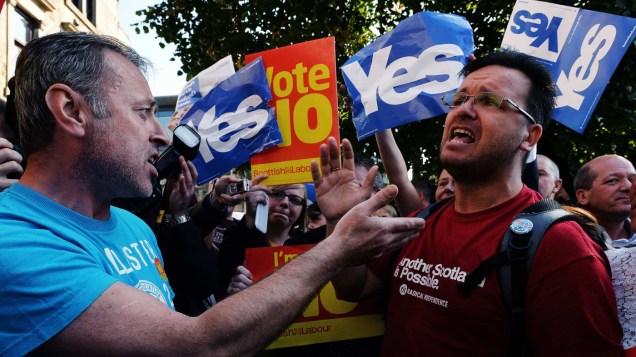
Chris Deerin painted a vivid and I believe accurate prediction of the future in a piece for CapX last year, comparing the likely fallout from the EU referendum to the aftermath of the 2014 Scottish independence referendum:

I have been bemused and fascinated by the number of English people telling me in recent weeks that “it won’t be like Scotland” – that this will be a more sedate affair, will inspire less passion, do less long-term damage. Well, perhaps. But, as we Scots say, ah hae ma doots.

What was most extraordinary about last year’s independence vote was the turnout: 84.5 per cent, the largest since the introduction of universal suffrage in the UK in 1918. Many of those voting were people who had never before even considered entering a polling station. What happened? There was certainly a long, noisy, impassioned campaign. There was global interest beyond anything we’d experienced before, but beyond this were two key factors that I believe drove this historic level of engagement.

The first was timing – the referendum came along after a decade in which every significant British institution had suffered either a scandal, a crisis of confidence or a loss of purpose, from Westminster to the media to the City to the military. The ties that bind had never been looser, respect for the status quo never lower.

Second, people were asked an existential question: who are you? This is not nothing. You will want to answer. You will want to answer on behalf of yourself and your family and your nation. Especially when you realise that the answer really matters – no safe seats to consider, no popular or unpopular incumbent MPs, no First Past The Post system ensuring only a few marginals get all the attention. Every individual counts. This is the big one, for keeps. So: in or out?

Deerin concludes:

Ultimately, we are about to ask the people of Britain an existential question: who are you? They will know that their voice counts this time, and that the consequences of the decision will be enormous and era-defining. They will think about themselves, their family and their country. They will get angry with the other side. Some very harsh words will be exchanged. Tempers will be lost and relationships fractured. And afterwards, whatever the outcome, the losers will be very sore, for a long time.

Not like Scotland? Don’t say you weren’t warned.

Like I say, I have no great desire to spend the next year walking around angry, holding nearly the entire political class in derision and many of my fellow citizens in open contempt. It does not warm my heart, in the same way that many left wing activists clearly revel in their anger and the righteousness of their cause, bleating about socialism and hating the Evil Tories.

But to my mind, there is a right way to vote in this referendum and a clearly, unambiguously wrong way to vote, and it is not hard to tell the difference between the two. The right way strikes a blow for democracy, self-determination and the normalcy of independence enjoyed by every single major country in the world outside Europe, while the wrong way would be to reward people who do not dare to advance their own positive argument for European political union, and so instead spend the bulk of their time pecking over the foibles, inconsistencies and other low-hanging fruit offered up by the hapless official Leave campaign.

In the event of defeat, then, the only question open to disappointed Brexiteers will be whether or not they use that anger and channel it toward some positive action to further the eurosceptic cause. This blog will do just that. Semi-Partisan Politics is in this for the long haul. Because as Pete North rightly says, you can stifle an idea like Brexit, but you cannot kill it.

I continue to fight this referendum campaign to win. But if we are fated to lose, I will not be going anywhere. If my generation is not to be the generation which restores democracy and self-governance to the United Kingdom then we can at least ensure that the flame of liberty is kept alive until it is time to try again – assuming that the doomed project does not implode under the weight of its own internal contradictions and the relentless pressure of global events, making the Brexit debate redundant.

And in the meantime, I and many others will make life as painfully difficult and unfulfilling as we can for all those in public life – particularly those in the Conservative Party – who come down on the wrong side of this referendum. That much I can promise.

 

European Union - United Kingdom - Britain - Flags

Top Image: CapX

Agree with this article? Violently disagree? Scroll down to leave a comment.

Follow Semi-Partisan Politics on TwitterFacebook and Medium.

Tales From The Safe Space, Part 28 – When Both Sides Use SJW Tactics

Safe Space University

If unchecked, identity politics and Social Justice Warrior tactics will lead to a stalemate on university campuses where everything is offensive, everyone is offended and both protest and counter-protest become impossible

Recently, this blog speculated as to what would happen if and when conservatives on university campuses finally get sick of being shouted down and censored on campus by social justice activists using the tactics of identity politics, and begin to adopt the same kind of arguments and tactics themselves as a kind of self-defence mechanism.

As I concluded at the time:

Nobody likes a pity party, but that is exactly what will get if conservative and liberal students face off against each other not as they should, through lively debate, but rather through constant, tear-stained appeals for the university authorities to intercede on behalf of their respective sides.

And in a sense, one cannot blame [conservative students] for behaving in this way. They have watched for months and years while identity politics-wielding left-wing students get every little thing that they demand from spineless university administrations, and shame into submission anybody who stands in their way.

It is not therefore an illogical leap when other students conclude that this is the best and most effective way of advancing one’s own agenda. If the Social Justice Warriors can mobilise support and win concessions by emphasising (and frankly, grossly exaggerating) their supposed victimhood and oppression, why should conservatives not do the same?

[..] But in the longer term, if through repeated practice young students become adept at flaunting their fragility and exalting in their helplessness, both sides will fight to a bloody draw, with nobody able to say or do anything on campus without immediately triggering a protest and counter-protest. University will truly no longer be a place for the discussion of ideas, but a sheltered place of “comfort and home” for weak-minded adult babies, an intellectual demilitarised zone protected by a field of verbal landmines laid by every competing minority group over the academic and political discourse.

And an “intellectual demilitarised zone” is exactly what we are now just beginning to see, with those people and groups who were traditionally the target of social justice warrior tactics now adopting the same language of victimhood and fragility in an attempt to deflect criticism of themselves and shame their accusers into dialling back their criticism.

The context in this case is that of UC Davis and the ongoing protests on that campus to force the resignation of their Chancellor, Linda Katehi. Much of the criticism of Katehi is actually justified in this case – she came to prominence for presiding over an infamous incident in 2011 where Occupy protesters were pepper sprayed by campus police, and subsequent efforts to scrub the internet of mentions of the event in the name of “online reputation management. Some of her failings are detailed in this local press report.

But the rights and wrongs of Katehi’s actions are irrelevant for the purposes of our analysis. What is if interest here is the fact that Katehi’s defenders among the university student population, faculty and administrators are now using the same language of beleaguered and bullied “victims” in an attempt to win public sympathy as well as respite from their accusers.

Jonathan Haidt comments on this phenomenon at The Atlantic:

At UC Davis, where student activists still hope to oust Chancellor Linda Katehi, critics of their activism are using concepts like “safe space” and “hostile climate” to attack it.

The student activists had occupied a small room outside Katehi’s office, planning to stay until their chancellor resigned or was removed from her post. By the time they left 36 days later, a petition that now bears roughly 100 signatures of UC Davis students and staff were demanding that they prematurely end their occupation, criticizing their tactics, and alleging a number of grave transgressions: The signatories accused the student activists of sexism, racism, bullying, abuse, and harassment, complaining that many who used the administration building “no longer feel safe.” The student activists say that those charges are unfair.

While regarding a different protest at Ohio State University, Conor Friedersdorf notes that this is not the only time that targets of a student protest have used the language and tactics of social justice warriors to plead vulnerability and seek to escape from criticism or protest:

Insofar as campus concepts like safe spaces, microaggressions, and claims of trauma over minor altercations spread from activist culture to campus culture, the powerful will inevitably make use of them. Where sensitivity to harm and subjective discomfort are king, and denying someone “a safe space” is verboten, folks standing in groups, confrontationally shouting out demands, will not fare well. When convenient, administrators will declare them scary and unfit for the safe space, exploiting how verboten it is to challenge anyone who says they feel afraid.

In cases like this one, it won’t matter that one of the least scary experiences in the world is walking into a university administration building at 7 a.m., well-rested and ready for work, to be greeted by a bunch of exhausted 18-year-old OSU students groggily looking up from the corner where they curled up with college hoodies as pillows. After years of reporting on occupations like this one, I’ve never heard of even one case of a college staff member of administrator coming away with even a scratch. Yet in the name of preserving “safe space,” these protesters were evicted.

This emergence of competitive grievance culture is only going to grow. Only last month, this blog remarked that competition between different identity groups all using the same anti free speech tactics is currently less marked on American university campuses compared to British institutions, but already it seems that the United States has caught up.

This is what our new victimhood culture has wrought. Expect to see this same scenario repeated again and again in the coming months, as those people who are traditionally the target of leftist campus activism – conservatives, university administrators and others – realise that they can “appropriate” the language and tactics of the SJWs to portray themselves as the real victims and get themselves off the hook.

As yet, the SJWs have no response to this tactic. As we have recently seen, many students indoctrinated into the Cult of Identity Politics are so terrified of putting a foot wrong themselves by saying or doing something “offensive” that their first reaction when confronted with any identity politics claim is to freeze like a deer in the headlights and then automatically accept it as valid.

According to this mindset, if a university administrator – heck, even a university Chancellor – claims that student protests and disagreement are making them feel unsafe, then it is the duty of the identity politics adherent to withdraw in deference to the fragility of the supposed victim. Thus any debate or protest, regardless of the participants, can now potentially be shut down simply by uttering the three words “I feel unsafe”.

As Jonathan Haidt notes, by using these illiberal tactics so freely and excessively, student activists have effectively created the weapon with which campus authorities may now attempt to silence them:

The civil-rights movement, the free-speech movement, the anti-Vietnam protests, and protesters on both sides of the gun and abortion questions have all deliberately tried to make others uncomfortable, intellectually if not physically. They’ve all shouted, insulted, provoked, and tried to deny their opponents “safe spaces.”

Today’s strain of campus progressivism has a more ambiguous relationship with traditional liberal values, finding them too viewpoint neutral and rough-and-tumble.

Still, most campus protests are left-leaning. And administrators cannot help but realize that almost all of that activism is, on some level, about confrontation—that it frequently involves a lot of shouting or chanting or marching or banging on drums. Now, any time such protests challenge the interests of the administration, or make their jobs marginally harder or their lives marginally more inconvenient, they can always pinpoint some folks who are earnestly upset or unnerved by all the ruckus.

They can always undermine the activists of the moment by finding the students experiencing “trauma” from all the conflict; the staff members who feel “unsafe” around protesters, the community member who, in the new paradigm, somehow feel “silenced.”

As best I can tell, this does not worry leftist activists yet, perhaps because they mostly operate on shorter time-horizons than other campus power brokers, or perhaps because they see themselves as marginalized and mistakenly believe these standards will never be applied to them, even though it’s already happening.

Haidt concludes his own analysis:

In the end, unreformed social justice activism may destroy itself.

One gets the slight impression that Haidt, despite his sterling work drawing attention to the growing illiberalism within universities, sees this as something at least partially regrettable.

This blog would regard the collapse of social justice activism under the weight of its own sanctimony – at least for as long as it is so closely intertwined with poisonous identity politics – as a great and unexpected triumph. But a prolonged stalemate with both sides using identity politics tactics to shame the other and parade their supposed victimhood in front of authorities and the observing public – with free speech rights being continuously eroded at both ends – still seems like the more likely outcome, at least in the medium term.

In short, our new victimhood culture is not going anywhere in a hurry. Therefore, those who oppose it must find other means of fighting back besides the counter-productive instinct to play the social justice warriors at their own game.


Safe Space Notice - 2

Agree with this article? Violently disagree? Scroll down to leave a comment.

Follow Semi-Partisan Politics on TwitterFacebook and Medium.