Tales From The Safe Space, Part 33 – SJW Students Meet Conservative Provocateurs At UMass

Monday 25th April 2016

University of Massachusetts, Amherst

This is what the Cult of Social Justice and Identity Politics hath wrought.

Context, not that it is needed.


Safe Space Notice - 2

Agree with this article? Violently disagree? Scroll down to leave a comment.

Follow Semi-Partisan Politics on TwitterFacebook and Medium.

Tales From The Safe Space, Part 32 – Student Artist Willingly Re-Educated In The Ways Of Social Justice

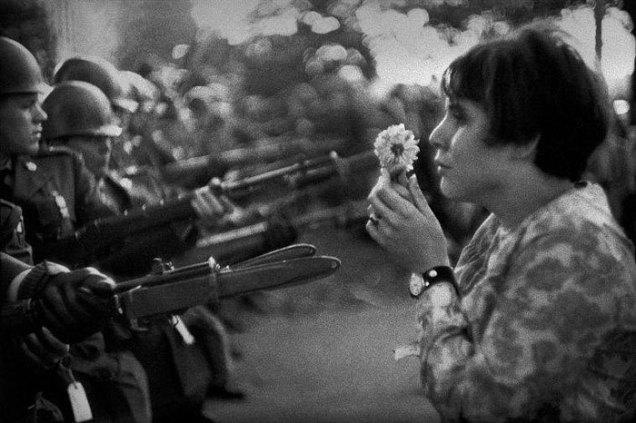
Vietnam War Protest - Hippies Flower Rifle Gun

Artistic freedom, like academic freedom, is at risk from the social justice / identity politics takeover of our universities

What is a poor social justice warrior student to do when confronted with a piece of campus artwork which causes them mental discomfort harm?

Simple! Just send a snivelling email to the entire student body complaining about how your feelings have been hurt and how you have been made to feel unsafe in your own community. And if you attend one of those academic institutions which has already completely capitulated to the identity politics/social justice coup, you need do nothing else – the offending artwork will be removed or modified at once, without so much as a hearing. And what’s more the artist will be glad to be corrected, just as Dmitri Shostakovich was so very thankful for Pravda’s denunciation of his opera “Lady Macbeth of Mtsensk”.

This time we are back in California, specifically Pitzer College, one of the liberal Claremont Colleges, and the “triggering” artwork was an homage to the famous Vietnam war protest image of a hippie placing a carnation into the barrel of a national guardsman’s rifle.

The Claremont Independent reports:

Early Monday morning, Gregory Ochiagha (PZ ’18), a Student Senator at Pitzer College, sent out an email to the student body criticizing a mural recently painted on campus. The mural, painted by Selena Spier (PZ ’19), depicts a handgun with flowers coming out of the end and was approved by the Pitzer College aesthetics committee.

“It’s truly in bad taste to have a large depiction of a gun in a dorm space—especially when students of color also reside there,” states Ochiagha. “Now let’s imagine there were countless videos of white teenagers, white teenagers that look like you, or your brother or your sister, get shot to death by police officers. Imagine scrolling down Facebook everyday and seeing a new video of the same thing, over and over again. Really put yourself in that headspace. Then ask yourself whether it’s the brightest idea to have white teenagers, who have a very real fear of getting shot, see a large gun every time they want to get food from the dinning [sic] hall.”

Ochiagha continues, “My Black Mental and Emotional Health Matters. I shouldn’t be reminded every time I leave my dorm room of how easy my life can be taken away, or how many Black lives have been taken away because of police brutality. This is emotionally triggering for very obvious reasons. And if you want to belittle or invalidate by [sic] black experience, I live in Atherton, come thru, let’s have that idiotic conversation.”

This being a Claremont college stuffed to the brim with students who live and breathe identity politics 24/7, of course where was zero pushback to Ochiaga’s demands. In fact, Selena Spier (the artist) willingly consulted with the offended party to agree changes to her creation that would keep him happy, all the while chastising herself in repentance for her privilege:

Spier plans to modify her mural. “I spoke with Gregory earlier and we agreed on a modification that preserves the integrity of the original piece while avoiding any potentially triggering content—it’s a change I was absolutely happy to make in the interest of creating a safe and inclusive environment for everyone in my community,” Spier told the Claremont Independent. “I have absolutely no right to decide whether or not my artwork is offensive to marginalized communities—nor does anyone else in a position of privilege, racial or otherwise.”

In other words, Spier offered her version of a “Soviet artist’s creative response to justified criticism“.

Re-education is not even necessary at Spitzer College. The student body is so perfectly drilled in the lore and language of social justice that everyone knows the correct protocol to follow when accused of unfairly exercising their privilege – they are to throw their hands up in surrender, accept the criticism unquestioningly, gratefully thank their accuser for sharing their pain and immediately modify their errant behaviour.

At no point, according to this new regime, is there to be any critical discussion as to whether the objection is valid or the offence warranted – as Spier herself confesses, “I have absolutely no right to decide whether or not my artwork is offensive to marginalized communities”. In other words, Spier is content for anything which she creates at any point in the future to be summarily labelled heretical by some wobbly-lipped social justice crybaby, and then either removed or altered to comply with her accuser’s demands.

Rod Dreher is equally unimpressed with accuser and artist:

I don’t know whether to pity Spier or to be revolted by her supine eagerness to satisfy and completely unreasonable request made by someone, simply because of the color of the complainer’s skin. It’s one thing for a gutless campus administration to silence free speech and expression on campus, but when the speakers and artists can be talked into silencing themselves, you know things are pretty damn hopeless. Conformists to the marrow, the lot.

But even an unwilling artist would likely have been forced against their will to bend to the demands of this social justice victimhood power play. In Social Justice Land, offending artists (together with campus conservatives) are given little practical choice but to conform or stay silent, hiding their true opinions and suppressing their creativity.

Imagine that instead of sitting down with this petty student tyrant, Spier had instead told him to go jump into a running jet engine, and that under no circumstances would she modify her piece of artwork from the original conception. If the artist had stood unrepentantly behind her own creation in this way, it is not difficult to see how this situation would have quickly escalated to a Twitter campaign, a sit-in at the dean’s office, a protest outside her own dorm room…

The Soviets used the threat of exile or execution to keep their artists in line. The Cult of Social Justice and Identity Politics borrows from the same playbook, using the threat of social ostracisation, protest and even intimidation to force willing cultists and heretics alike to bend the knee.

And so it is worth remembering that academic freedom is not the only thing at stake in this attempted social justice coup of our universities. Artistic freedom is also very much at risk from a movement which values “lived experience” over objective truth, and in which the limits of one’s free speech are determined by the position one supposedly occupies in the social justice Hierarchy of Privilege.


More “Tales from the Safe Space” here.


Safe Space Notice - 2

Agree with this article? Violently disagree? Scroll down to leave a comment.

Follow Semi-Partisan Politics on TwitterFacebook and Medium.

The Junior Doctors’ Strike Is A Tawdry Pay Dispute, Not A Principled Defence Of The NHS

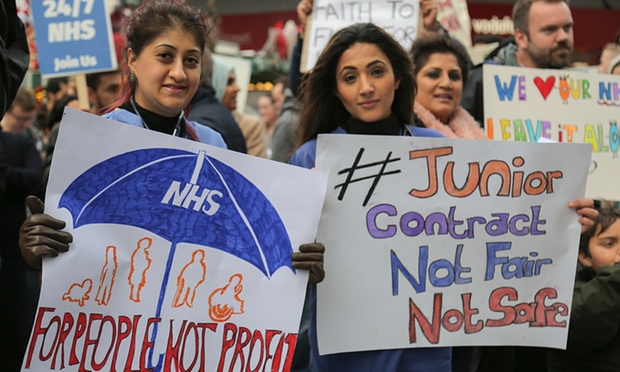
NHS Junior Doctors Contract Strike

This strike is about money, not patient safety or the future of the NHS

James Forsyth speaks sense on the naivety and arrogance behind the ongoing junior doctors’ strike:

This walk out, the first all-out strike since the NHS’s creation, isn’t over some issue of high principle. It’s about money. The main sticking point in their negotiations with the government is that Saturday shouldn’t be treated as a normal working day.

The BMA’s suggestion at the weekend that it was prepared to call off the walk out if the government didn’t impose the new contract, but instead pilot it for a while, suggests that even the doctors themselves fear they’ll lose public sympathy by going ahead with this strike.

Yes. The fact that the final sticking point in negotiations is around money reveals all of the previous lofty, high-minded concerns about public safety and “tired doctors making mistakes” to be the cynical campaign rhetoric that it is.

Forsyth hammers home the point on pay:

Under the government’s offer, those junior doctors who are on duty one Saturday in four will receive a premium pay rate of 30 per cent. This means they are, on average, getting paid more for working on Saturdays than nurses, midwives and paramedics. The proposed deal is also more generous than what firefighters and police officers get for doing their job on a Saturday. This is hardly grounds for a walkout that will inevitably put lives at risk.

Junior doctors are right that they are paid less than doctors in some other countries. But this is, in large part, because the state has heavily subsidised their education. By the time a doctor has finished their foundation training, the state has already spent a quarter of a million pounds on them.

Until doctors are prepared to pick up more of this tab themselves, they shouldn’t complain that some of those working in other health systems are paid more than them. Indeed, it would be sensible of the state to actually require medical students to commit to working in the NHS for a certain number of years before funding their training—something that it doesn’t currently do. Junior doctors should also remember that if they stay in medicine and become consultants, they will find themselves in the top two percent of earners in this country.

This blog is no fan of the current Conservative government and no great proponent of the latest NHS reforms. But for the sake of decency, this strike needs to be broken. And then we need to have a long, hard national conversation about why an advanced democracy like Britain is facing a national strike of any kind in the year 2016.

Hint: if we did not still have a monolithic nationalised health service – the fifth largest employer on the planet serving the 22nd largest country by population – we could never be in the ludicrous position of suffering a strike of all the junior doctors in the land. Doctors would not all share the same employer, patients would not all rely on the same medical service and we would all be spared this drama.

Something to mull over as the accusations and counter-accusations fly.


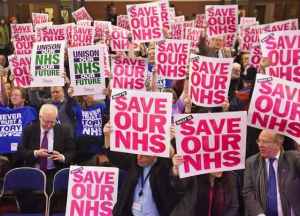
Save Our NHS

Agree with this article? Violently disagree? Scroll down to leave a comment.

Follow Semi-Partisan Politics on TwitterFacebook and Medium.

The Named Person Scheme Is Proof That The SNP Does Not Believe In Liberty

Opposing the SNP’s draconian Named Person Scheme is a smart, principled move for the Scottish Tories

By making the Scottish Conservative Party’s opposition to the totalitarian Named Person Scheme a centre-piece of their Holyrood election campaign, once again Ruth Davidson is distinguishing herself as one of the only sane and vaguely liberty-loving politicians in the whole of Scotland.

The Telegraph reports:

Ruth Davidson has said that scrapping the SNP’s plan to assign every child a state guardian has become the most urgent Holyrood election priority for Scottish voters with nine days of campaigning left and grandparents are leading the charge against it.

In an interview with the Telegraph, she said many families were unaware of the Named Person scheme when the election campaign started a month ago but it is now the issue on the doorstep that inflames the most passion and outrage – even more so than independence.

She said that grandparents are particularly furious that their sons and daughters are being subjected to “state snoopers”, when they were not, and pledged the Scottish Tories would immediately demand the scheme be brought back before parliament if they succeed in becoming the main opposition party.

They have every right to be furious. Whether any given Scottish person wants their top layer of government to reside in Holyrood or Westminster, surely anybody should agree that the bottom layer of government should not intrude deep into the family unit in the way that the Named Person Scheme does.

Nicola Sturgeon is busily trying to spin the suggestion that this is a purely voluntary scheme, which utterly fails the common sense test – why have a scheme supposedly designed to protect children from the most broken and dysfunctional families, when only well behaved (and rather too obedient) families would ever voluntarily sign up? For there to be any point at all to the legislation, it has to be universal and compulsory.

As Ruth Davidson points out in the exchange shown in the video above, the Scottish Conservatives tabled an amendment to the original bill trying to seek an opt-out for parents, but were overridden by the SNP.

Key quote:

Ruth Davidson: Can I remind the chamber that the Scottish Conservatives laid specific amendments to the bill allowing parents to opt out of the Named Person Scheme, and those amendments were voted down by her party, and shouted down by her minister who said such state guardians were to be a universal service.

Every child, from birth to eighteen, with a Named Person attached. A Named Person with access to private and sensitive information, all recorded in a database, and able to be accessed without the consent or even the knowledge of the parents in some cases.

If the Named Person Scheme is truly voluntary, why fight so hard to defeat a motion establishing a parental opt-out? The answer, of course, is that the scheme being rolled out this year is not voluntary in the slightest.

It appears that Sturgeon is playing fast and loose with the truth, portraying the fact that parents can choose not to engage with their child’s Named Person as being the same thing as not having a Named Person assigned in the first place. But of course these are two very different things. Even if a parent rightly chooses not to engage with this overbearing arm of the state, the Named Person is still there, working away in the background, able to view all manner of sensitive data and information about the child with no recourse for the parents.

This is the SNP at work in government. A hectoring, overbearing movement which seeks to centralise everything they can touch, from the state monitoring of children to the police and fire services – with deadly consequences, in the latter cases.

Heading into the Holyrood elections, Scottish voters need to understand that there is nothing pro-liberty about supporting the Scottish National Party. While Nicola Sturgeon and the SNP may hold out the carrot of independence from Westminster, the only change which Scottish people will feel in their daily lives is an emboldened, empowered independent Scottish government taking even more powers away from the individual and vesting them in the SNP’s monolithic nanny state.

The Named Person Scheme is a shot across the bows. There could well be far worse to come from the SNP.


No2NP protest

Agree with this article? Violently disagree? Scroll down to leave a comment.

Follow Semi-Partisan Politics on TwitterFacebook and Medium.

An Anti-Immigration Brexit Campaign Is Doomed To Failure

Michael Gove - EU Referendum - Vote Leave - Immigration

Ben Kelly of Conservatives for Liberty and The Sceptic Isle has an excellent new piece explaining why a Leave campaign focused on immigration is both depressingly regressive and doomed to failure.

Kelly’s warning is in response to Michael Gove’s latest contribution to the Vote Leave campaign, as reported today by ITV:

Michael Gove has warned the UK faces a migration “free for all” unless it leaves the EU, as the Leave camp moved to exploit an admission from the Government that EU free movement of labour rules make it harder to curb immigration.

The Justice Secretary insisted potential new members of the EU posed a “direct and serious threat” to public services such as the NHS, and social harmony.

He said five countries “due to join the European Union” – Albania, Macedonia, Montenegro, Serbia and Turkey – which he warned would mean Britain’s public services would not be left in a “strong position”.

Writing from the perspective of The Leave Alliance (an independent grassroots movement for Brexit supported by this blog) which advocates exiting the EU’s political union and using EFTA/EEA membership to maintain access to the single market, Kelly writes:

A recent ComRes poll that asked the question “what is the most important issue in your decision on the EU Referendum?” was illuminating. 47% said the economy was the most important factor, with immigration trailing on 24%. So the belief that it doesn’t matter that the Leave campaign loses the economic argument because they can win on immigration is bunkum.

First and foremost, people will vote according the economic risk. That is why we propose an EEA based solution; it de-risks Brexit, secures the economy and gives us a soft landing. That is stage one of the secession process, a safe platform to build on. This is the key to winning the referendum and thereby restoring democracy and self-governance in the United Kingdom. In any case, it will likely be the only offer on the table for Article 50 negotiations and is the likely government course of action.

Although the EFTA/EEA solution puts on hold changes to freedom of movement it crucially protects our Single Market participation and thereby neutralises the economic uncertainty surrounding Brexit. In the long term we can make the case for reforms to freedom of movement, but pending such reform there is plenty of scope for improving the management of our borders with a coordinated set of policies designed to address push/pull factors. We would also gain the option of activating the “emergency brake” provision in the EEA Agreement as a temporary safeguard measure against exceedingly high net migration numbers.

Many who unrealistically seek a clean break Brexit and want everything at once will see this position as sub-optimal, but the alternative – pulling out of the EU’s freedom of movement provisions – would lose us access to the Single Market.  Without continued access to the Single Market, we cannot win the referendum because we lose the economic argument.

Those who insist on ending freedom of movement and imposing strict new immigration controls on Day 1 are letting their own “perfect scenario” be the enemy of the good. The type of Brexit necessary to deliver what Vote Leave are promising inevitably means losing access to the single market, membership of which is contingent on adopting free movement of people. This creates a degree of economic uncertainty which is gleefully seized upon by the Remain campaign and makes it virtually impossible for Leave to win the referendum.

By contrast, exiting to an EFTA/EEA holding pattern allows Britain to extricate herself from political union with the EU while maintaining the stability in the economic sphere which is necessary to reassure the 47% of voters for whom this will be the deciding factor. Further changes to immigration policy can then follow according to the democratic will of the British people, subject to various economic and political constraints.

It should be pointed out, too, that the accession of the next group of EU candidate countries – Albania, Macedonia, Montenegro, Serbia and Turkey – could be more than a decade away from joining, and in Turkey’s case this may well not happen at all. This gives plenty of time for Britain to secure freedom from political union, and then flex our independent policy levers to address push and pull factors as Kelly advocates.

Kelly concludes:

Stepping back into the EEA means leaving political and judicial union safely.  From that position of security and strength a world of opportunity opens up. Over time we can take advantage of regaining control over a vast swathes of policy making and review the statute books. Gradually we can move towards a more bespoke “British model” of relations with the EU and form a coalition to push for necessary reforms.

Disastrously, this is seemingly unacceptable to a number of inflexible and uncompromising Eurosceptics who reject freedom of movement and the Single Market and are therefore actively adding to the perceived uncertainty of Brexit. Regressive Euroscepticism, which is unwilling to compromise and refuses to acknowledge that freedom of movement actually has many great positives, is a disease that will lead only to abject failure.

We need an optimistic message and a positive, liberal vision. The ability to move freely across Europe is hugely beneficial in so many ways and a great many Britons enjoy those benefits and will fear losing their rights.  EEA immigration has been good for this country in many clear and measurable ways, economically and socially, and this absolutely has to be said.

An independent Britain must be a positive, diverse and liberal country with an open economy; this is the key to our cultural and social dynamism and how we can make a great success of Brexit. Leave cannot possibly win with a regressive vision that contradicts this. An anti-immigration campaign arguing for the abolition of freedom of movement and the loss of Single Market access is guaranteed to lose, and the failure will be richly deserved.

The New Statesman’s political editor George Eaton is also devastatingly accurate with his take on Vote Leave’s pivot back to immigration:

Britain’s high immigration rate is undeniably of concern to many voters. The boast that EU withdrawal would exempt the UK from free movement (though Norway and Switzerland show it may not) is perhaps the best card the Brexiters have to play. But it may not deliver victory. The Remain campaign speaks of a “plateau” beyond which Leave cannot advance. There are millions of people whose priority is reducing immigration – just not enough for the outers to win. The issue is to them what the NHS was to Ed Miliband’s Labour – a strategic comfort blanket.

[..] The more the Brexiters play the migration card, the greater the risk that they animate their core voters while alienating others. It was for this reason that Vote Leave resolved to run an optimistic campaign, non-centred on immigration. Gove’s rhetorical escalation shows that they are struggling to abide by this vow.

In raising the salience of immigration, Leave is playing to its strengths. Until it is able to neutralise its weaknesses, that will remain a displacement activity.

Continuing to place this uncompromising immigration message front and centre in the Leave campaign is the quickest and surest way to a 45-55 defeat on June 23. The only ones not to realise this seem to be the official Leave campaign, who are more interested in covering their blushes and resetting the agenda after having their flimsy economic case taken apart last week by a gleeful Remain campaign.

Any campaign aimed at motivating core supporters at the expense of alienating swing voters (by preventing the adoption of a plan which would ease their economic concerns) is not helpful at this stage. Persisting with exactly the same unfocused, populist message which helped to secure the referendum will not also help to win it, and telling the UKIP contingent exactly what they want to hear rather than challenging them to think more strategically and longer-term could well be looked back on as the single biggest failure of the campaign.


European Union - United Kingdom - Britain - Flags

Top Image: Independent

Agree with this article? Violently disagree? Scroll down to leave a comment.

Follow Semi-Partisan Politics on TwitterFacebook and Medium.