Justin Trudeau And Elbowgate: Safe Space Hysteria In Canadian Politics

It’s not just the students. Now fully grown adults – even elected MPs – are using the victimhood-soaked language of social justice and identity politics to score political points

As legislative brawls go, it hardly ranked with the fine example set by the likes of Turkey and Ukraine. But this most Canadian of restrained altercations is noteworthy for another reason – the fact that those parliamentarians on the side of the “victim” almost immediately resorted to the language of social justice and victimhood when establishing their narrative to the press.

The Guardian gives the background:

Justin Trudeau, Canada’s prime minister, apologised in parliament on Wednesday after he was accused of “manhandling” one member of parliament and elbowing another, in conduct that sparked an uproar in Canada’s normally staid parliament.

Footage from inside the House of Commons showed Trudeau striding purposefully across the floor of the chamber and into a group of MPs, pulling Conservative Gord Brown by the arm to lead him to his seat so that parliament could begin a procedural vote.

Trudeau swore as he made his way to Brown, according to the Canadian Broadcasting Corporation, reportedly telling MPs to “get the fuck out of the way”.

As Trudeau led Brown from the group, he elbowed New Democrat MP Ruth Ellen Brosseau in the chest. Parliament descended into mayhem as MPs heckled and pounded their desks while New Democratic party leader Tom Mulcair shouted at Trudeau. “What kind of man elbows a woman? It’s pathetic! You’re pathetic!” Mulcair can be heard shouting.

A close watching of the video shows that Trudeau is clearly impatient and exasperated, and quite possibly very rude in the way that he tried to grab opposition whip Gord Brown. But the elbowing of Ruth Ellen Brosseau was clearly unintentional, if still a likely consequence of the way that Trudeau went charging in to the tightly packed group of MPs.

So was an apology from Trudeau for an accidental physical contact enough to satisfy his critics? Of course not. CBC reports:

An emotional Brosseau said later in the House that she had been “elbowed in the chest by the prime minister,” bringing Trudeau to his feet once again to “apologize unreservedly.”

Brosseau said she was so upset from the incident that she had to leave the chamber, subsequently missing the vote.

Her NDP MP colleague Niki Ashton said she was deeply troubled by Trudeau’s actions.

“I am ashamed to be a witness to the person who holds the highest position in our country do such an act. I want to say that for all of us who witnessed this, this was deeply traumatic. What I will say, if we apply a gendered lens, it is very important that young women in this space feel safe to come here and work here,” she said.

“He made us feel unsafe and we’re deeply troubled by the conduct of the prime minister of this country.”

Far more disturbing than the incident itself is the fact that Brosseau, who clearly was not seriously hurt in the incident, nonetheless felt so emotionally overwhelmed by an accidental physical contact that she was unable to perform her duties in the House and had to leave the chamber. More depressing still is the way in which her colleague, Niki Ashton, whines about the incident using the same fragile, aggrieved tones that we have come to expect from student activists fully inducted into Cult of Social Justice and Identity Politics.

Ashton claims that the event was “deeply traumatic”, not just for Brosseau who was hit, but for every single other person who witnessed the event. It is worth replaying the video at this point, to marvel at the notion that “trauma” could be inflicted on anybody from so minor an incident. And then comes the inevitable cry that the Canadian House of Commons is no longer a “safe space” for women MPs – all because of an unintentional physical contact between a man and a woman.

Seriously. The Canadian House of Commons, an unsafe space. Aside from the terrorist shooting in 2014, there are probably few spaces in the world as safe as the Canadian parliament. To claim that a highly secure building protected by armed guards and filled with generally mild-mannered politicians is “unsafe” is not only incredibly self-obsessed, it also does a disservice to people who may work dangerous jobs, live in rough neighbourhoods or grow up in broken families, all of whom have legitimate cause to fear for their safety. But no, let’s all worry that the Canadian parliament is somehow a seething hotbed of misogyny, just because the prime minister lost his temper and brushed past somebody a bit roughly.

Even the safest of spaces – like the Canadian parliament – cannot prevent unfortunate accidents, or occasional random acts of stupidity. Trudeau’s was just such an act, for which he apologised fulsomely. But we should all be concerned by the reaction to the incident, for it reveals something festering and growing in our culture.

So far, this blog has covered 37 distinct “Tales from the Safe Space“, covering incidents of student authoritarianism, attacks on free speech and excessive mental fragility from young adults who appear unable to function in the real world. A frequent response to the concerns raised by this blog and others is that we are exaggerating the problem – that it only affects universities, and that only a small subset of students at those universities subscribe to the brittle, authoritarian mindset which demands trigger warnings, safe spaces, no-platforming and campus speech codes. Well, now we see that there is no exaggeration.

The idea of grown adults as chronically weak victims or soon-to-be-victims has leaked out from the university campus like a toxic oil spill, and now infects even the parliament of a major western country. Now, Canadian MPs, elected to represent their constituents, speak of being traumatised and made to feel unsafe by witnessing a minor moment of awkward physical contact between two other people.

So can we please start taking this seriously now? At long last, can we stop deluding ourselves that this is a silly non-issue only affecting a small number of hardcore student activists, and that those involved will soon grow out of their authoritarian, victimhood-soaked ways? Because we now have definitive proof that they do not grow out of these habits. They grow into (physically) mature adults who then get themselves elected as MPs. And when their numbers reach critical mass, they will begin to enact exactly the same draconian laws and regulations for the whole country as they were accustomed to seeing on their own college campuses. All of Canada will effectively become a “safe space”, with all the attendant consequences for freedom of thought, behaviour and speech.

And that prospect is far more terrifying and traumatic than watching slow-motion footage of one person brushing past another in the Canadian parliament.


Safe Space Notice - 2

Agree with this article? Violently disagree? Scroll down to leave a comment.

Follow Semi-Partisan Politics on TwitterFacebook and Medium.

Any Artist Worth Their Salt Should Abhor The Insidious, Antidemocratic EU

Save EUYO - European Union Youth Orchestra - Propaganda

The British artistic and cultural community’s almost reflexive support for the European Union and disdain for reclaiming our democracy should be a source of great shame

Like this blog, the Telegraph’s Allison Pearson is surprised that a conclave of the nation’s most successful creative types seem to prefer the dull conformity and supranational managerialism of the European Union to the democracy and freedom which could potentially flourish outside the EU.

Pearson writes:

What they really love, then, is a platonic ideal of Europe, of solidarity between friendly nations with each other’s best interests at heart. Marvellous idea, darlings, until you look at Greece. Punished, fearful and running out of medicine, the Greek people had to be sacrificed for the greater European ideal. Orwell was right. All animals are equal, but some animals are more equal than others.

Why do all these senior cultural figures support the rotten EU status quo when they should be leading the revolt against it? Munira Munzi, who was in charge of cultural policy in London under Boris Johnson, claims that many arts people agree with Brexit, but “they are worried about their careers and what people might think of them. They assume that everyone who wants to leave the EU must be anti-immigration”.

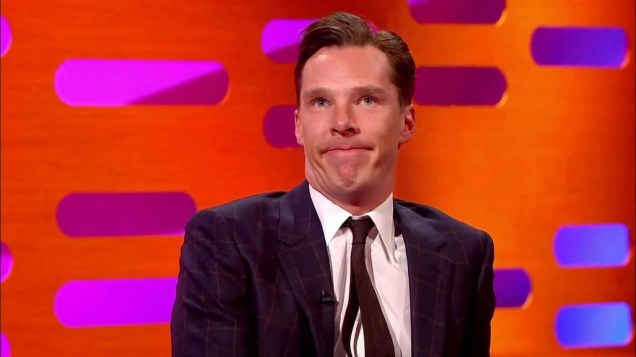
Still, not all creative types are too mushily politically correct to understand what’s at stake on June 23. Take the actor who said: “There’s so much in the 21st century that’s stymied by bureaucracy and mediocrity and committee.” His name was Benedict Cumberbatch.

The “platonic ideal of Europe” – that’s exactly it. Not the reality.

There are two factors at work here. First is the immense groupthink and social pressure within the cultural elite to hold right-on, progressive political opinions, and the potential ostracisation (or worse) which could befall particularly young artists and actors trying to make professional connections, build a network and establish their careers if they associate themselves with a movement lazily assumed to be all about xenophobia and nationalism.

Many of the key people and institutions are rabidly pro-EU beyond all reason. Classical Music magazine spent most of Friday pumping out endless “Save the EU Youth Orchestra” propaganda on Twitter, regardless of the sentiments of their readers about the coming referendum, and utterly oblivious to the fact that moments like these are precisely why the EU funds orchestras and the like in the first place – so that they have a guaranteed praise chorus ready to spring into action as soon as the hand which feeds finds itself threatened, in this case by Brexit.

(The EUYO is under threat because of a recent withdrawal of funding from Brussels, and not specifically because of Brexit).

Say you are a young orchestral musician and a supporter of democracy. Knowing that a majority of your colleagues, the trade publications and the key influencers with the ability to help your career are all passionate defenders of the EU, are you more likely to say “the hell with it!” and publicly campaign for Brexit anyway, or quietly swallow your political feelings and go with the crowd? And who could blame such a person from choosing the latter, quieter path?

The second factor leading to the infamous Britain Stronger in Europe letter is good old fashioned woolly thinking – the idea that the warm, platonic ideal of Europe in the minds of the EU’s supporters in any way actually resembles the snarling, antidemocratic beast which exists in reality.

I took this apart yesterday:

This referendum is serious business. So can Remainers please stop projecting whatever they desperately wish the EU to be onto an organisation which has never really been about friendly trade and cooperation, but is actually all about slowly and inexorably becoming a supranational government of Europe. And which is not going to abandon that long-held goal just because the British are now expressing a few doubts.

Right now, too many of our cultural leaders and elites are letting short term financial greed and/or wishful thinking about the EU’s true nature get in the way of their responsibility to think and act as engaged citizens.

Sure, if one buries one’s head in the sand and ignores the stated intentions of the EU’s founding fathers, the trajectory of integration since the 1957 and the imperative for further integration if the euro is to survive, one might successfully convince oneself that the EU is just a harmless gathering of countries who come together to trade, tell jokes, save the Earth and advance human rights. It takes near Olympian levels of denialism or apathy to maintain this self delusion, but clearly a great number of our most prominent actors, directors, producers and musicians are willing to do what it takes.

Pretending that the EU is a benign club with no pretensions or aspirations to statehood is ridiculous, and increasingly untenable. But even more unforgivable than that is being willing to overlook this reality in the grubby pursuit of grants and funding from EU bodies, or out of a desperate desire to appear forward-thinking and progressive.

And the unedifying sight of so many “household name” artists lining up to sing the praises of an explicitly political construct which falsely attempts to take credit for the cultural achievements of an entire continent is, frankly, sickening.

It has been claimed by some people that democracy is killing art. Others claim that it is liberalism which is destroying art. I disagree with both theories.

Though repression can occasionally produce its own kind of tortured beauty (see Shostakovich), generally speaking the extent to which an artist is not free and is required to make their work conform to certain external directives, requirements or purposes is the same extent to which their output falls short of greatness.

Real artists care about freedom, and cannot function without it. Unlike Benedict Cumberbatch and Sir Patrick Stewart, they don’t actively collude in suppressing freedom in order to protect the integrity of their EU begging bowl.


EUYO - European Union Youth Orchestra

European Union - United Kingdom - Britain - Flags

Support Semi-Partisan Politics with a one-time or recurring donation:

Agree with this article? Violently disagree? Scroll down to leave a comment.

Follow Semi-Partisan Politics on TwitterFacebook and Medium.

Bring It, Benedict

Benedict Cumberbatch - EU Referendum - Brexit

In their barely literate open letter praising the European Union, Benedict Cumberbatch and his cohort of EU apologist luvvies not only fail to understand what the EU is or how it works, they also shamefully pass off their own financial self interest as high-minded concern for the future of Britain

If assorted celebrities are going to sign their names to a public letter calling for the British people to vote a certain way in a referendum of existential importance, it would be decent of them to be honest about why they really want people to make that choice.

This is hardly rocket science, but apparently it was too much for the cognitively tepid minds who signed their names to a letter calling for Britons to reject Brexit for the supposed good of the arts.

The signatories are exactly the kind of people you would expect to see flaunting their right-on, progressive virtue to their fans and peers. Tracey Emin. Anish Kapoor. Vivienne Westwood. Jo Brand. Patrick Stewart. Keira Knightley. Jude Law. John Hurt. The ubiquitous Benedict Cumberbatch.

So to what exactly did they put their gilded names? Here is the full text of the letter:

The EU referendum marks the biggest democratic decision of our time, and the outcome will have lasting and far-reaching consequences for the future of this country for generations to come.

The referendum forces us to look in the mirror and ask ourselves: what kind of nation do we want to be? Are we outward-looking and open to working with others to achieve more? Or do we close ourselves off from our friends and neighbours at a time of increasing global uncertainty?

Because choosing to step out of a steadily integrating political union with an overarching supra-national government obviously means “closing ourselves off”. There are only two models of engaging with the world – the path to euro federalism or North Korea. Absolutely no other options in there at all. Sure.

From the smallest gallery to the biggest blockbuster, many of us have worked on projects that would never have happened without vital EU funding or by collaborating across borders. Britain is not just stronger in Europe, it is more imaginative and more creative, and our global creative success would be severely weakened by walking away.

And where exactly do you think that “vital EU funding” actually comes from, Benedict? Did you fall for that old chestnut about the secret magic money volcano deep beneath the European Parliament building in Strasbourg, regularly belching out €500 notes and showering them down upon grateful starving artists?

Of course there is no “EU money”. There is only British taxpayer money, the majority of which contributes toward general EU spending with only a small proportion being disbursed to various organisations in Britain, to be spent strictly as agreed by whichever organ of Brussels loftily granted it in the first place.

So is your argument actually that if Britain no longer contributed to EU cultural initiatives, the government would be inclined to use the money for other purposes? And if that is your legitimate fear, why don’t you take it up with your fellow citizens, whom you apparently believe do not value the arts highly enough? Why are you content for higher levels of taxpayer funding of the arts to take place in Britain than you think the British people themselves would allow? Doesn’t that make you the textbook definition of an enemy of democracy?

And what is all this bilge about “collaborating across borders”? Nearly all of the high profile signatories to the letter have worked on various international projects – many of them involving the United States of America, with whom of course we share no political union. Does the lack of a parliament overseeing both Britain and America mean that artists in each country can no longer collaborate on projects? Hardly.

The letter continues:

And what would ‘Out’ really mean? Leaving Europe would be a leap into the unknown for millions of people across the UK who work in the creative industries, and for the millions more at home and abroad who benefit from the growth and vibrancy of Britain’s cultural sector.

Remember when art was bold and visionary? No, neither do I. I was born in 1982, so I do not recall a time when the artistic establishment was not firmly in the orbit of government, keeping the politicos sweet in order to keep a hand in the Treasury.

But despite never having known a time when (unlike the United States of America) our greatest artistic institutions were privately funded and supported by great philanthropists, I still get the nagging feeling that any artist worth their salt – unless of the Soviet variety – should instinctively chafe at the idea of stale political union and remote continental governance, rather than rejoice in it and argue for its continuance.

Leaps into the unknown seem to me to be the whole purpose of art – to boldly go in new directions, try new things and above all seek the maximum freedom possible (the EU hardly being synonymous with freedom). And yet here assembled are the great and the good of Britain’s acting crop, telling us that the best we can now hope for is continued membership of an anachronistic 1950s model of governance dreamed up by old men scarred from the 20th century’s wars. The utter lack of vision and ambition from people supposedly paid to be bold visionaries is as shocking as it is profoundly depressing.

More:

From the Bard to Bowie, British creativity inspires and influences the rest of the world. We believe that being part of the EU bolsters Britain’s leading role on the world stage.

Let’s not become an outsider shouting from the wings.

“We believe”. Well, good for you. I believe in unicorns. But just stating a belief does not make it so. Where is the proof that being a member state of the European Union increases the demand for art, films, television programmes, sculptures, compositions, songs, albums, plays, skits, musicals or operas conceived, designed or produced in the UK? They provide no evidence because there is no evidence. If and when Britain exits the European Union and moves to an interim EFTA/EEA relationship to maintain single market access, the only thing we lose is the supra-national government. Is Cumberbatch seriously suggesting that the political institutions of the EU are his muse of fire?

It hardly needs pointing out that the two British icons cited by the signatories themselves – William Shakespeare and David Bowie – both took the world by storm before Britain joined the European Economic Community, in Shakespeare’s case by quite a few years. The beauty of art is that good or bad, high or low, it has ways of crossing political and cultural boundaries. That’s how a future North Korean defector came to watch a smuggled copy of Titanic in silent wonder, shocked and captivated by the idea of dying for a love other than love of the Dear Leader. That’s how the opening bars of Beethoven’s Fifth Symphony became a symbol of British resistance when all around us was pulverised to rubble during the Blitz. So don’t stand there and fatuously tell me that political union is required in order for art to thrive and spread, Mr. Cumberbatch. You should know that this much is a filthy lie.

Ultimately, one simply cannot take this letter seriously. And neither can one take the signatories seriously. It is certainly much harder to respect someone in public life when they knowingly use their public position to help propagate a series of lies, half-truths and obfuscations in service to an anti-democratic, embryonic government of Europe; an unrequested, unwanted and unloved supra-national government which buys the unconditional praise of scientists, university leaders, politicians and artists with your taxes and mine.

If Benedict Cumberbatch and his right-on friends want to virtue-signal their trendy, progressive opinions then good for them. Have at it. But when they seek to use their fame to influence others in the referendum debate, they should expect to be attacked for casually parachuting into the middle of the fray for the sole purpose of spreading lies, half-truths and a childishly naive view of the European Union which makes one wonder when they last watched the news (if ever).

This risible letter is nothing but a childish hymn of praise to the EU written by people convinced of their own righteousness despite being among the least educated on the topic, and who think they can trick the public by constantly conflating Europe with the power-hungry political entity which wishes to control it. In other words, the letter’s signatories are pawns, and not very bright ones at that, to allow themselves to be used in such a way. I give the whole sorry performance one star out of five, and I’m probably being too generous.

Don’t like what I’m saying? Then bring it, Benedict. I’m available to debate morning, noon or night, any time between now and the referendum. You’re an actor. I have been a lifelong supporter of the arts, and in my 20s was the London Symphony Orchestra’s youngest ever patron. You pick the time and the place, and we’ll talk a bit about the role of the arts in British and European life, and just how intertwined – or not – they are with the political construct known as the European Union.

But do your homework first – and I don’t mean learning canned lines from Britain Stronger in Europe. I mean actually trying to learn something about the subject before you start grandly soliloquising and attempting to sway other people.

Maybe the kind of unrehearsed extemporising revealed in this letter works when you try it on hordes of screaming fans at the rope line after one of your performances. But when you try and pull the same stunt in front of the British electorate you and your chums in the art world look stupid. Very stupid.

And until you either issue a retraction or double down with a proper grown-up argument, I will continue to say so.


European Union - United Kingdom - Britain - Flags

Support Semi-Partisan Politics with a one-time or recurring donation:

Agree with this article? Violently disagree? Scroll down to leave a comment.

Follow Semi-Partisan Politics on TwitterFacebook and Medium.

The Labour Party’s Rocky Road To Redemption, Part 2 – Pat Glass Edition

The Labour Party still shows no signs of having learned to stop hating half the country

Earlier this week, this blog looked at Tristram Hunt’s effort to combine feedback from various personalities within the Labour Party into a coherent narrative explaining why they lost the 2015 general election. As we saw, it hasn’t got off to the best of starts.

But quoting extensively from a failed parliamentary candidate who unabashedly declared that there is nothing good about British culture and power (as Tristram Hunt did when he quoted the losing Harlow candidate Suzy Stride) is nothing compared to the latest self-inflicted wound administered to the party by one of its own sitting MPs.

Next to enjoy her moment in the sun is Europhile Labour MP Pat Glass, who while campaigning in Derbyshire for Britain to remain in the European Union had some rather choice words to describe her encounter with a man who raised concerns about immigration.

From the BBC:

A Labour MP campaigning for the UK to remain in the EU has apologised after being recorded calling a voter a “horrible racist”.

Shadow Europe minister Pat Glass made the comments after an interview with BBC Radio Derby in Sawley, Derbyshire.

She said: “The very first person I come to is a horrible racist. I’m never coming back to wherever this is.”

[..] The man Ms Glass is believed to have been referring to said he had spoken to her about to a Polish family in the area who he believed were living on benefits, describing them as “spongers”, but denied being racist.

The North West Durham MP said: “The comments I made were inappropriate and I regret them.

“Concerns about immigration are entirely valid and it’s important that politicians engage with them.

“I apologise to the people living in Sawley for any offence I have caused.”

Let’s be honest – Pat Glass isn’t sorry that she made the remarks. She is sorry that she was caught making the remarks, which is very different. For just as surely as rich Californian donors bankrolling then-candidate Barack Obama understood exactly what he meant when he made his dog-whistle comments about backward Southerners clinging to their guns and religion, so Pat Glass’s intended audience knows exactly what she means when she recoils in mock horror after an everyday encounter with someone sceptical about immigration.

Because like the current Labour Party as a whole, Pat Glass’s audience is not the entire country. Her audience is not even everyone on the Left. And it certainly isn’t the “white working class”, with whom Labour now have such a fractious relationship. Pat Glass’s preferred audience is the same middle-class clerisy which cheered on Ed Miliband, whose sheltered home counties wishy-washy Fabianism renders them utterly capable of identifying with the hopes, fears and dreams of whole swathes of the country.

As is often the case, the initial reflex tells us everything that we need to know. And Pat Glass’s reflex on being confronted with the voter in question was not to attempt to understand their viewpoint and see the world through their eyes, but rather to high-handedly dismiss them as being beneath her dignity. Glass knows that both the EU and high net migration are both unabashed goods, and anybody who deigns to disagree with her is uneducated at best, or “racist” at worst. Why bother to hide it?

(Incidentally, Andrew Neil does a great job skewering Labour apologist Zoe Williams in the Daily Politics clip shown above, taking her to school on the difference between racism, xenophobia and bigotry).

We have seen this story play out before, and we will see it again. Mostly because it is how many Labour Party MPs and activists actually feel, and speaking the truth in an unguarded moment is a perennial occupational hazard in politics. Of course, under Jeremy Corbyn, Pat Glass can comfortably expect to receive no censure. Ed Miliband, obsessed with outward appearances, went too far the other way in the case of the Emily Thornberry St. George’s flag Twitter picture, purging Thornberry from his shadow cabinet.

But whether the Labour Party is breezily ignoring the issue or wildly overreacting out of concern for bad PR, the one thing that the party still shows no inclination for doing is actually reaching out to their scorned working class base and asking – pass the smelling salts – whether they might actually have a point? Until now, the best that Labour have managed to do in this regard is to put up a few spokespeople to say something along the lines of “of course it’s not racist to be concerned about immigration”. But this is then immediately followed by the pivot to “but here’s why they are wrong, and the EU / unlimited immigration is actually great”. In other words, the Labour Party are trying to tackle this gulf between the party leadership and the disaffected working class base as a problem of optics rather than a fundamental disagreement over policy.

Maybe the Labour Party will struggle along all the way through until the next general election without resolving the inherent tension between the multiculturalist direction set by the leadership and the more nativist attitudes held by those of their supporters who drifted away to UKIP or stayed home during the 2015 election. But unless Jeremy Corbyn or someone else steps forward with a concerted act of leadership, effectively “choosing a side” once and for all, the party will continue to be embarrassed in the polls when sneering Labour MPs accidentally reveal their true feelings about the working classes.

As this blog recently put it:

First, Labour must learn simply to tolerate the country again – to look upon the white working class and others of their former supporters not as godless infidels who spurned the One True Faith and threw their lot in with the genocidal Tories and racist Ukippers, but as decent and rational human beings who simply don’t like what the Labour Party is currently selling.

Meanwhile, Labour shadow ministers and the army of activists who knock on doors and deliver leaflets need to dial down the moral sanctimony from 100 to about 50, and accept that maybe they, rather than the electorate, made the mistake on May 7 (and the days leading up to it) last year.

At present, whether it is Pat Glass or the Labour In For Britain crowd in general, the scorn and contempt heaped by major party figures on otherwise natural supporters who fail to toe the correct line on immigration and the EU speaks volumes. The people are not stupid. They know when they are being mocked, and they will not buy the subsequent walkback and fake expressions of contrition.

So perhaps this is a split which needs to happen. Just as the Tories desperately need a cleansing fire to purge their ranks of all the wets and panting europhiles post-referendum, maybe the Labour Party needs to split into two new parties – one comprised of middle class luvvies who think they know best about what the working classes need, and another new party comprised of actual working class people who do not need sanctimonious young Corbynistas, Hampstead dwelling champagne socialists or the likes of Pat Glass to defend their interests.

Right now, this is an open question. But the antics of people like Pat Glass are making it a slightly less difficult one to answer.


Pat Glass - Labour In For Britain - EU Referendum - Immigration - Racist - Sawley Derbyshire

Bottom Image: BBC

Support Semi-Partisan Politics with a one-time or recurring donation:

Agree with this article? Violently disagree? Scroll down to leave a comment.

Follow Semi-Partisan Politics on TwitterFacebook and Medium.

Remain Supporters Are In Denial About The Nature And Purpose Of The EU

Owen Jones - EU Referendum

I’m voting Remain because Puppies For Everyone!!! The denialism and wishful thinking about the European Union’s true purpose and direction of travel exhibited by pro-EU left-wingers is off the charts

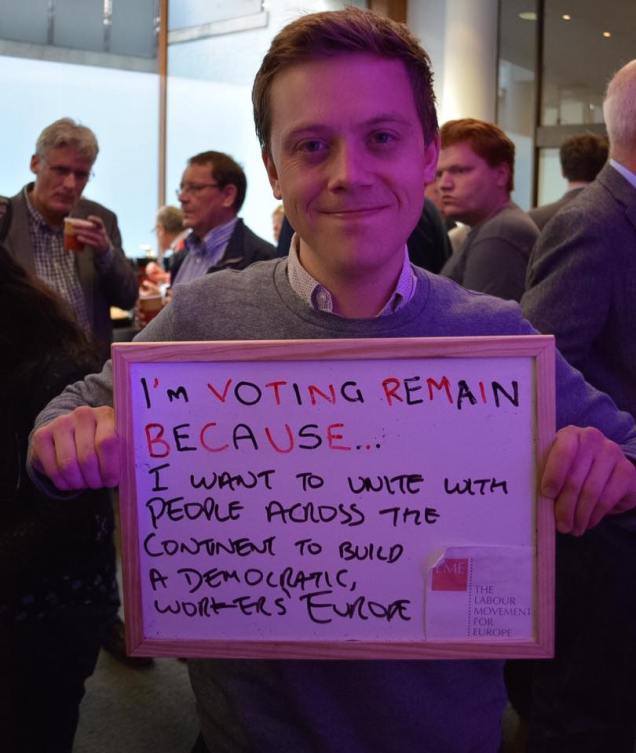
The Great Disappointment of the eurosceptic Left, Owen Jones, has popped up with a new contribution to the EU referendum debate in the form of the picture shown above, being widely shared on social media (albeit sometimes in cheekily photoshopped format with the message changed).

While this blog does not usually bother commenting on internet memes, this one is noteworthy because it simultaneously

  1. Sums up the entire basis of left-wing EU apologetics, and
  2. Reveals just how flimsy is that argument

The sign held up by Owen Jones proclaims:

“I’M VOTING REMAIN BECAUSE… I want to unite with people across the continent to build a democratic, workers Europe”

And I want to own a unicorn that shoots fruit based candy out of its ass and grants me three wishes a day, but sadly that is not on offer from the EU, just like the “workers’ paradise” lusted after by Owen Jones isn’t on the menu from Brussels either.

This referendum is serious business. So can Remainers please stop projecting whatever they desperately wish the EU to be onto an organisation which has never really been about friendly trade and cooperation, but is actually all about slowly and inexorably becoming a supranational government of Europe. And which is not going to abandon that long-held goal just because the British are now expressing a few doubts.

I’ve read the history of the EU. I strongly advise others to do the same. And if they still want to Remain, having understood the true nature of the grand projet, they should at least have the decency to admit out loud precisely what it is that they know they are committing us to.


For those interested in that history, here is a good starting point.


European Union - United Kingdom - Britain - Flags

Agree with this article? Violently disagree? Scroll down to leave a comment.

Follow Semi-Partisan Politics on TwitterFacebook and Medium.