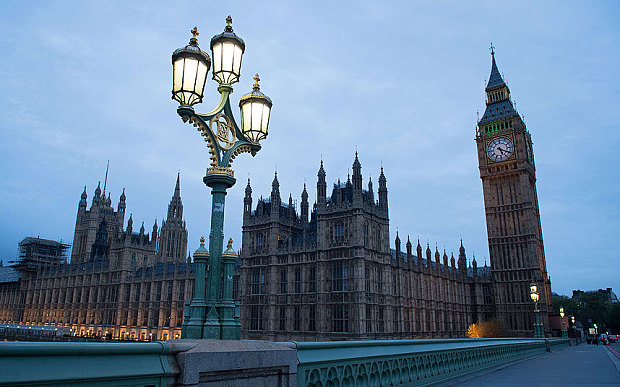
Problematising Boundary Review Is Just A Way Of Entrenching The Labour Party’s Structural Privilege

parliament-westminster

There are many obvious reasons for delaying or scrapping the upcoming constituency boundary review changes – but no good ones

See what I did with the headline there? Right-wingers can adopt the wheedling, victimhood-soaked language of the Cult of Social Justice and Identity Politics too, if we think it is going to advance our cause or smite our enemies.

Left Foot Forward editor Niamh Ní Mhaoileoin is in high dudgeon because the coming boundary review and shrinkage of the House of Commons from 650 seats to a slightly more manageable 600 MPs apparently means that too many of those who are left will be on the government payroll.

Ní Mhaoileoin writes:

The government’s plan to cut the size of parliament will increase the proportion of MPs on the government payroll, the Electoral Reform Society (ERS) has flagged.

According to new research, in a 600-seat Commons some 23 per cent of MPs would be on the government payroll, the highest proportion ever. The ERS warns that this could have ‘deeply worrying’ effects on parliamentary scrutiny and is calling for a cap on the number of payroll MPs.

‘This research shows we risk a crisis of scrutiny if the cut in MPs goes ahead without a corresponding cap on the number of payroll MPs,’ ERS chief executive Katie Ghose commented.

Having nearly a quarter of all MPs in the pocket of the PM is not a healthy situation for our democracy.

I think we can all agree that a body tasked with holding the executive to account which itself includes government ministers, parliamentary private secretaries and other hangers-on is always going to struggle to do an effective job – which is why many of us who think and care about constitutional issues all the time (as opposed to only when the system throws up a result we don’t like or disfavours our own preferred party) favour the total separation of the executive and the legislature.

Conservatives and progressives could potentially work together on reducing the size and cost of government while improving oversight by reducing the number of unnecessary junior ministers and official bag carriers, were it not for the leftist desire to have a government minister for everything under the sun, from Culture, Media and Sport to “Children, Young People and Families”. When your political philosophy expects and demands that the state be involved in every aspect of our lives, it inevitably necessitates a large cohort of ministers to do the meddling.

A cap on government payroll MPs would nonetheless be a reasonable (if typically British) compromise, but of course this is not what Ní Mhaoileoin really wants. And what Ní Mhaoileoin really wants is to maintain the current structural privilege currently enjoyed by the Labour Party. As Labour tends to perform best in urban seats, which themselves tend to be smaller and less populated than the suburban and rural constituencies where the Conservatives do well, the net effect for many years has been that it takes far fewer votes to elect a Labour MP than a Conservative MP.

Think of the gross anomaly whereby the SNP won 56 seats in Parliament at the 2015 general election with just 1.5 million votes, while UKIP won just a single seat despite winning 3.9 million votes. In the case of Labour and the Conservatives, the disparity is less pronounced – but it still exists. Boundary reform seeks to equalise constituency sizes, thus addressing the problem (though sadly not helping UKIP, who do not boast the SNP’s narrow geographic concentration of support). And this equalisation will enforce a basic fairness, the value of which makes it worth suffering through any negative side effects, particularly where these can reasonably be mitigated.

The concerns about the upcoming boundary review are well-rehearsed and rapidly becoming tedious. One might take them more seriously if those who raise the concerns showed any interest in solving or overcoming the issues that they raise rather than cynically using them as an excuse to halt something which – despite its inherent merit – is likely to be detrimental to the Labour Party’s electoral fortunes.

In short, this overwrought leftist concern about a toothless Parliament in the pocket of Theresa May is merely an attempt to problematise the issue of boundary reform, throwing a spanner in the works to prevent electoral disadvantage to Labour. Ní Mhaoileoin is doubtless in favour of reducing the size of the Commons as an abstrat theory, and if she were pressed through a hypothetical example would likely object to the current distribution of voters among seats which favours one party over another. But because the currently-favoured party in our system is Labour, and because Labour stands to lose out in relation to the Tories through this particular boundary review, Niamh feels compelled to oppose it.

But how to oppose something that is so self-evidently worthwhile and logical? The only way is to go grasping for every last flaw or possible technical hurdle in the review, inflating them out of all proportion and presenting each one as a show-stopper (or at least as justifiable grounds for interminable delay). As with the British Left’s general approach to Brexit, Ní Mhaoileoin is desperately problematising the boundary review, hoping to scupper it without ever having to reveal her true, grubby, anti-democratic reasons for doing so.

Smart politics? Maybe. The principled, moral, liberal thing to do? Absolutely not. Niamh Ní Mhaoileoin’s position is actually profoundly conservative – and not in a good way.

But apparently any behaviour, no matter how tawdry and self-serving, becomes noble and virtuous when it is performed in the service of the Labour Party.

boundary-commission-for-england

Top Image: Wikimedia Commons

Support Semi-Partisan Politics with a one-time or recurring donation:

Agree with this article? Violently disagree? Scroll down to leave a comment.

Follow Semi-Partisan Politics on TwitterFacebook and Medium.

Oh, So Now You’re A Liberal?

liberalism

The vote for Brexit and Donald Trump’s presidential election victory seems to have wrongly convinced an entire army of snarling, leftist authoritarians that they are actually the virtuous defenders of liberalism

Is anybody else getting mighty sick of the constant parade of left-wing, Big Government-supporting authoritarians suddenly rushing to cloak themselves in the veil of “liberalism” as they struggle to process what they see as successive defeats in the EU referendum and the US presidential election?

I can’t think of a word that has been more overused by pundits since everybody got together a couple of years ago and decided that the related N-word (neoliberalism) was this season’s hottest fashion statement, and started accusing everybody whose views they dislike of being an Evil Neoliberal, as though it were some devastatingly intellectual insult.

Here’s the FT, weeping into their cornflakes about the supposed death-throes of liberalism:

Mr Trump’s victory, coming after the Brexit referendum vote in Britain, looks like another grievous blow to the liberal international order. Mr Trump must decide, by his actions and words, whether he intends to contribute to the great unravelling, at incalculable cost to the west.

And the Independent:

Democracy is changing, and not for the better, but those who believe in liberal values, tolerance and protecting the environment can learn from this setback and fight back.

The Independent, of course, promotes liberal tolerance through its courteous and magnanimous treatment of those who dare to dissent from its positions on social issues, climate change and global governance.

Here’s the Spectator:

In her concession speech, Clinton said her goal had been ‘breaking down all the barriers that hold any American back from achieving their dreams‘. This is the dream of liberalism, which seeks freedom from any social or economic constraint. Elites like Clinton feel confident that they can navigate a deregulated society in which class, gender, and race are all fluid. They support deregulated markets as well, confident that free trade and open borders will serve their own interests in the near term and the whole country’s in the longer term.

Freedom from any social constraint? Only if one happens to agree with the elite.

And the Spectator again, covering itself in even more glory:

The challenge to liberalism is still seen as an argument to be won rather than an irreversible sea-change. But, if anything, the scale of the problem has been understated. The core tenets of liberalism are freedom and equality, ideas that are under siege.

Oh, and let’s not forget the prime minister herself, Theresa May, speaking at the Lord Mayor’s banquet on Monday evening:

Change is in the air. And when people demand change, it is the job of politicians to respond.

But it’s also the job of all those in positions of influence and power – politicians, business leaders and others – to understand the drivers of that demand too.

And I think that if we take a step back and look at the world around us, one of the most important drivers becomes clear – the forces of liberalism and globalisation which have held sway in Britain, America and across the Western world for years have left too many people behind.

Let’s be clear: those forces have had – and continue to have – an overwhelmingly positive impact on our world.

It really has come to something quite strange when Theresa May – a flinty eyed authoritarian who gives me pause any time I check a book out of the library, lest her government use my borrowing history as a pretext for throwing me in jail next week – seeks to wrap herself in the mantle of small-L liberalism.

But now everyone seems to be at it, suddenly claiming that they are terribly “liberal” while the people they dislike are not. Politicians and pundits who only months ago could be found calling for people to be banned from entering the country due to their political beliefs are now rending their garments at the election of a man who suggested that people should be banned because of their religious ones. And in so doing, they declare themselves to be the defenders of liberalism, while utterly oblivious to the irony of it all.

People who wanted to usher in national ID cards, strengthen the surveillance state, extend pre-charge detention, ban UKIP voters from fostering or adopting children, throw people in jail for their Facebook and Twitter posts, arrest people for singing the wrong songs at a football match, ban advertisements for being offensive, hike taxes even higher on cigarettes or alcohol or ban them altogether, levy regressive taxes on soft drinks, erect safe spaces on university campuses, slap trigger warnings on academic syllabuses, shame or punish people for the Halloween costumes that they choose to wear, get people fired from their jobs for holding or expressing the wrong opinion, strangle religious freedom and force people to violate their faiths by positively affirming the actions and lifestyle choices of others – these people are suddenly all over the airwaves, lamenting that it is actually those Evil Brexiteers and Donald Trump supporters who have supposedly brought our previously-idyllic liberal age crashing down in flames.

Well sorry, but this pious, self-aggrandising argument is complete baloney. I can’t speak for Donald Trump supporters, not being one myself, but I am very adamant that my vote for Brexit was a liberal vote for strong, globally-engaged nation state democracy. I and millions of others voted to leave the European Union because it sought to impose a degree of supranational government upon us which far outweighs the limited extent to which most Britons consider themselves European and consent to such governance. I did so because I judged that my inalienable rights to life, liberty and the pursuit of happiness are to this day best defended by a strong nation state with a reinvigorated national democracy, and not a remote supranational union with some of the superficial trappings – but none of the spirit – of democratic accountability. Voting for Brexit was perhaps the most profoundly liberal thing I have done on my thirty-three years on this good Earth.

And yet now I am supposed to sit back while every two-bit authoritarian with a newspaper column publishes tedious identikit dirges alleging that I, a staunch libertarian conservative, am supposedly at the vanguard of a dystopian new illiberal movement sweeping across the world and shrouding humanity in darkness and uncertainty? Hell no.

If liberalism is so great – and by and large, it is – then it would be nice if some of liberalism’s new fair-weather friends tried to remember the ideology’s core principles once they have finished weeping about Trump and Brexit and turned their attention back to more mundane political events. Perhaps they might care to remember the term they so glibly appropriated next time they call for something they disagree with to be banned, or for somebody who offends them to be punished by the criminal justice system. What do you think are the chances that this will happen?

After a week of this incessant, tedious refrain about the “death of liberalism” from the commentariat, I have just about had enough of my liberalism being culturally appropriated by the snarlingly authoritarian Regressive Left. It is only in the reflection of Donald Trump or Nigel Farage’s wildest rhetoric that their own paternalistic, control-freakish, coercive instincts can be even semi-plausibly pitched as being remotely liberal, and those of us with long memories and functioning brains know these pearl-clutchers for what they really are – persistent, deadly enemies to true liberalism.


Postscript: In this excellent piece, Pete North slaps down the idea that the West is somehow turning its back on liberalism, drawing a crucial distinction between genuine small-L liberalism which is as popular as ever and its decadent, identity politics and victimhood culture-infused cousin which has indeed been rejected by the electorate.

Money quote:

In a liberal society we appreciate that we all have our distinctions and limitations and we recognise that nobody should endure discrimination or punishment for those facets which cannot be changed. Gender, sexual preference, skin colour. But it goes further than that. We try to open doors for people os that people can break out of predetermined roles and destinies. That to me is social progress, where nobody is limited by class and physical attributes.

But when liberals begin to attack the very foundation of our morality and our values and seek to replace them with an ultra-permissive, anything goes morality we lose any kind of cohesion and moral authority. Moral relativism takes hold to such an extent that we can no longer defend those things we value.

What the left have done is to identify all social norms as inherently evil – which has given rise to the cult of the self which in turn has spawned the now toxic brand of feminism we see on the internet and the perverse social justice movement which processes everything through the prism of identity. It centres around a certain narcissism whereby individual rights become entitlements on the basis of one’s sense of victimhood. From this is born the right not to be offended or triggered – and with that goes the death of free speech. Opposition is inherently oppression it seems.

And this is why the culture war of the last decade goes so heavily with what is happening on a more visible level in politics. In what is now seen as a backlash against political correctness, there is something more seismic happening.

And North’s conclusion:

But then this tyranny of what is laughingly known as progressivism is on borrowed time. It always was a moral and intellectual perversion and it was always a minority view. How it came to be one of the most powerful ideas of a century is for the historians but now it seems the majority have finally lost patience and stood up to the left. In this we are not turning our backs on liberalism. We are merely putting an end to the gradual erosion of those, dare I say it, traditional values on which our modern and open society is built. I think this is what makes Theresa May, herself a church and shires Conservative, the right lady at the right time.

The sad part of this is that there will inevitably be a tiny minority who think we are going back to the old days where rampant and open homophobia is acceptable and we will no doubt see an unfortunate spike in racist incidents. But it is a typical left wing lie to say that mainstream society has suddenly become intolerant and racist. That trick might have worked for the last twenty years but the election of Trump tells you that the majority no longer care what you call them. The more offensive to the left the better.

And it is so telling that across the USA we now see the left spitting venom. We now see the true face of the “tolerant” left in all its bile. We can see that it was never about advancing a better society for all. It was about the minority wielding power over the majority – to impose a twisted morality on society without its consent – from the United Nations to the local primary school.

I repeat: genuine, small-L liberalism has not been rejected by the people, and is only under marginally more serious threat from ignorant authoritarians like Donald Trump than it has been over the past decades from highly learned progressives who sought to impose their “progressive” worldview on an uncertain population while actively criminalising dissent.

Those weeping most loudly today about the supposed death of liberalism have often themselves done as much as anyone to damage liberalism themselves through their decidedly illiberal and intolerant past behaviour.


liberalism-john-stuart-mill

liberal-definition

Support Semi-Partisan Politics with a one-time or recurring donation:

Agree with this article? Violently disagree? Scroll down to leave a comment.

Follow Semi-Partisan Politics on TwitterFacebook and Medium.

Will 2017 Be The Year That Independent Political Blogs Make A Comeback?

fighting-on-the-internet

Now more than ever, we need good political journalism and incisive commentary to make sense of the world and the challenges (and opportunities) facing us in the new Age of Brexit and Donald Trump. And increasingly, the only way one can find good analysis is by turning to independent bloggers

Veteran American television journalist / late-in-life social media champion Dan Rather has shared with his Facebook audience some thoughts on how they can best encourage and reward good journalism in the Age of Trump, following a presidential election campaign in which much of the mainstream media was deemed to have failed in its core duty to provide rigorous, civic-minded coverage and analysis.

Rather, who has provided an articulate and dignified left-wing running commentary on the 2016 presidential election via his Facebook page, writes:

There is no shortage of long, thoughtful articles that are worth a read. The problem is that our current journalism business model doesn’t seem to support the better instincts of the press as much as it should.

So if you want to know what you can do, please choose to support the press. If you find a news source you like and you think it is doing a good job, pay for the subscription. This doesn’t just help the bottom line but it is a vote of confidence in the system. Share smart, thoughtful pieces on social media and in emails to your friends. Let’s run up the clicks and views of the best of journalism. Also, I think we can not be passive with our news any longer. If you like what you see, let the publicans and journalists know through all the digital tools at your disposal. If you don’t like what you’re seeing, let them know as well. Or turn it off, refuse to follow the click bait.

The press is a vital partner in out democratic process. It is under incredible strains from a drastically changing media landscape and a potentially hostile in-coming administration. As citizens we should care deeply about this and vow to do something to help.

Many of us, for various reasons, have cause to be greatly disappointed with the mainstream media – whether we are left-wing or right-wing, British or American, supported Brexit or staying in the EU, preferred Hillary Clinton or Donald Trump.

With very few exceptions, television news has become a wasteland of quacking, know-nothing talking heads who specialise in providing visually pleasing, information-lite political gossip and who force their way onto our screens either by virtue of having had some dismal prior political career, fortunate social connections or simply the willingness to wear a bow-tie un-ironically while under the age of sixty.

And the print media is little better. While there are honourable exceptions at many publications, too many venerable titles have either dumbed down to the point where they have become utterly unreadable clickbait, or else sold their inquisitorial souls to the establishment in order to churn out tedious defences of the status quo and scurrilous hit-pieces on those who seek to disrupt it.

In many cases, a combination of scrambling to capture new revenue streams and remain financially viable combined with a fawning desire to be “liked” by the right people in Westminster and Washington D.C. has all but hollowed out the ranks of decent political journalists and de-fanged once-formidable publications.

In this, my good friend and fellow Brexiteer-in-arms Pete North has it exactly right:

In the final analysis the legacy media is dying. Our media was once a luxury liner. It is now a corred garbage scow with corrosion holes in the hull. It is dying a much deserved death and every bit of bad news for the newspapers is good news for us bloggers. I can think of plenty blogs who produce better and more informed content in an afternoon than the usual suspects manage in a week of trying. And there is good reason for that.

Outside of the bubble you have a certain distance from the fray and not in hock to the peer pressure inside it. Outside the bubble is the only place where free thinking can occur. To join them is to become them. And who would want to stunt their intellectual and personal growth in such a way?

This does of course mean that writing is now done largely as a labour of love. There is no money to be made nor recognition to be had. All that matters to me is that for every moment readers spend on advert free blogs is a moment they are not reading the Spectator or any of the other garbage. Every blog post I write is an act of vandalism on an established media whose final gasp cannot come too soon.

[..] This is the year where the word “blogspot” and “wordpress” carries prestige. The low grade tat of the legacy media shouldn’t even be acknowledged. If it didn’t exist at all we would be no worse off in our understanding of events and politics would be all the better for it. The dinosaurs have had their day and we should not mourn their passing. We should do what we can to hasten their demise.

Trust Pete to find the almost John Galt-like nobility in what we bloggers do – it certainly beats “fighting on the internet”, which is how I had previously been describing my nocturnal pastime of ranting into WordPress.

But joking aside, as Dan Rather says, “If you find a news source you like and you think it is doing a good job, pay for the subscription. This doesn’t just help the bottom line but it is a vote of confidence in the system. Share smart, thoughtful pieces on social media and in emails to your friends. Let’s run up the clicks and views of the best of journalism.”

Some of the best political commentary right now comes from independent bloggers who write entirely in their spare time as labour of love, with no hope or expectation of recognition by the failing mainstream media. Therefore, if you have a favourite blogger or bloggers and are in a position to do so, consider making a donation or regular subscription to aid their work and acknowledge their effort. Share their articles with other people who may be interested in reading. It all helps.

I am personally very grateful to all those who have kindly donated to Semi-Partisan Politics over the past year. The vote of confidence you make in me with your PayPal donations and standing orders helps to keep me writing.

But this is much bigger than me and my little old blog. One thing that struck me as I live-blogged the US presidential election results last Tuesday night was she sheer number of outlets providing live coverage. Beyond the usual television stations there were live YouTube channels, Periscope broadcasts, websites, other live-blogs, Twitter and Facebook personalities and more. Newspapers were offering video broadcasts and television broadcasters were offering written analysis. And all of this from every political perspective under the sun, from triumphant Trumpists to crying Clintonites to Bernie Sanders supporters shouting “I told you so!”. From having to rely on a handful of networks and newspapers a generation ago, one is now paralysed by having too much choice.

(Now of course this raises important questions about the bubble effect, and one certainly doesn’t want to saturate oneself with endless sources bias confirmation – but that is a separate discussion).

But of all the cacophonous voices offering independent perspectives on politics today, very few will likely still be around in the same guise to cover the 2020 presidential election in America or general election in Britain. And more than likely, some of the best will have had to hang up their keyboards because of the pesky need to pay rent and buy food, while other, inferior writers and journalists go from strength to strength.

So I’m with Dan Rather. If there are writers or publications which provide you with indispensable or enjoyable analysis or commentary, make sure you vote with your wallet (and the social media sharing buttons) to let them know. And the sum total of these efforts may be a newly flourishing independent political blogosphere which continues to put much of the mainstream media to shame.


Political Blogging 2

Support Semi-Partisan Politics with a one-time or recurring donation:

Agree with this article? Violently disagree? Scroll down to leave a comment.

Follow Semi-Partisan Politics on TwitterFacebook and Medium.

Donald Trump Victory Reaction: Clutching At Normality In The Age of Trump

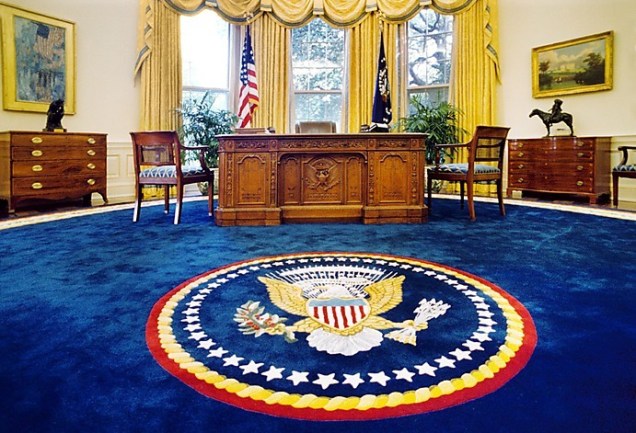
white-house-oval-office-carpet

Using positive reinforcement to steer Donald Trump in a better direction might just work, but only if we stop the blanket hysteria

It is fair to say that the New York Times – which, it always pleases me to remember, not so long ago showed such fawning deference to executive power that they forced their journalists to warp the English language, describing the same actions as “torture” when committed by swarthy foreigners but merely “enhanced interrogation” when conducted by Our Boys – has not taken well to the election of Donald Trump as 45th president of the United States.

But the preface to today’s Opinion Report from the Times, written by David Leonhardt, strikes the right tone and gives some sound advice:

If you opposed Donald Trump’s candidacy, it’s easy to be angry about almost everything he now says or does. When he does something outrageous — like appoint a promoter of racism to a top job — it confirms your fears. And when he does something reasonable — like say he wants to improve the lives of all Americans — it feels hypocritical.

Yet I would still urge people to welcome any step he takes toward democratic normalcy, including those that feel hypocritical.

Trump ran a campaign that was opposed in important respects to American democratic values — and he won. The question that now confronts us is whether our values will change or whether Trump will begin to change.

One of the main reasons that President Obama and Hillary Clinton have reacted to his victory as positively as they have is their desire to move the country back toward democratic normalcy. It’s the right instinct.

I think this is good advice. The endless catastrophisation of Donald Trump’s victory – extending well beyond those areas where we have good reason to fear a Trump presidency toward those where there are no suggestions he intends to make backward steps – is now in danger of doing real harm, not only to the reputations of some of Trump’s most hysterical critics (those who railed against Trump for not committing to accept the election result, and are themselves now refusing to accept the election result) but more importantly to Americans’ faith in their own democracy and electoral system.

During the press pool at their first White House meeting, one could sense the look on Donald Trump’s face that the realisation of what he has wrought is now finally starting to hit. The man who probably didn’t seriously believe he would be in this position, either on the day he announced his candidacy or the day before the election, is rapidly coming to terms with the vast amount of institutional and bureaucratic machinery which he must master, and which will inevitably constrain whatever plans made during the campaign he was serious about enacting.

The mere fact that President Obama spent 90 rather than 15 minutes in that initial meeting walking Donald Trump through the basics (oh to have been a fly on the wall during that American Government 101 session) and plans to hold many more such remedial governance classes with an apparently grateful Trump suggests that the president-elect is finally beginning to accept that there are many things he does not know, and many areas where his administration will need to be guided by the advice and precedent left by history.

And as a reader of this blog pointed out, Americans (and the world) have thrown themselves into a panic before about incoming Republican administrations – with similar accusations of naivety, ignorance and incompetence – only to later have to grudgingly concede that the resulting presidencies were quite good, even historic.

Now, to be clear: I have no such expectations of Donald Trump, who is a tiny fraction of the man that Ronald Reagan was, and certainly nowhere near as faithful a friend to conservatism or the cause of liberty. Real, visceral concern about Trump’s presidency is entirely warranted, especially where it can be eloquently articulated (as opposed to inchoate paranoia) and particularly where its expression closes off doors to some of the more obviously dangerous Trumpian flights of fancy. And of course public protest has an important place in expression opposition to the Trump agenda. But let’s spare the sackcloth and ashes, particularly those of us with public platforms either large or small.

If the goal (for everybody) is to survive the next four years intact and to make Donald Trump’s presidency a successful one for America in spite of the man himself, then we need to ask whether mass hysteria, Trump catastrophisation and total implacable opposition to everything the new administration tries to do is really the best approach, or whether it might be better to provide affirmation and support where Trump does something right combined with forceful dissent and opposition where he or his team stray from an acceptable path, in the hope of teaching the new president some boundaries.

It is quite clear to this blog which is the better option. Keep screaming that everything Trump now does is tantamount to fascism will be like crying “wolf!”, causing the president-elect himself to block out the just criticism along with the superficial, and his supporters to harden in their support for him. We saw just how well that approach worked during the election campaign. Let’s not now make the same mistake during the transition and on into the new administration.

Where Trump does the right thing – even if it means walking back on previous, extreme campaign positions – it wouldn’t hurt to try giving credit where credit is due, at least for a trial period. If we know anything of Donald Trump’s character, it is that while he will take any publicity, good or bad, he much prefers people to think well of him.

And while the Democratic Party and intra-GOP opposition take their time to get organised, Donald Trump’s desire to be admired and respected may turn out to be a very useful constraining factor on his behaviour on office.

Those of us with real concerns about Donald Trump’s presidency should not throw away that potentially vital lever of control in our haste to criticise absolutely everything about the incoming president.


donald-trump-presidential-election-victory-speech-2

Support Semi-Partisan Politics with a one-time or recurring donation:

Agree with this article? Violently disagree? Scroll down to leave a comment.

Follow Semi-Partisan Politics on TwitterFacebook and Medium.

After Hillary Clinton’s Defeat, The Battle For The Democratic Party’s Soul Begins

george-soros

Wealthy Liberal donors to the Democratic Party are debating whether to double down on their identity politics and victimhood culture-based strategy or to attempt meaningful outreach to the white working classes whom they so conspicuously cut adrift in 2016

And so the post-election autopsy begins, as analysts slice open the carcass of Hillary Clinton’s failed presidential campaign and methodically pick through the vital organs to determine what possible failure allowed a well-funded presidential campaign that has effectively been running for over a decade to go down in flaming defeat at the hands of Donald Trump.

Politico reports that the hilariously named Democracy Alliance (a group of mega-rich Democratic Party donors using their wealth to tilt the scales of genuine democracy every bit as much as the “evil” Koch brothers) is holding an emergency meeting at the Washington DC Mandarin Oriental hotel to thrash out the issues:

George Soros and other rich liberals who spent tens of millions of dollars trying to elect Hillary Clinton are gathering in Washington for a three-day, closed door meeting to retool the big-money left to fight back against Donald Trump.

The conference, which kicked off Sunday night at Washington’s pricey Mandarin Oriental hotel, is sponsored by the influential Democracy Alliance donor club, and will include appearances by leaders of most leading unions and liberal groups, as well as darlings of the left such as House Democratic leader Nancy Pelosi, Sen. Elizabeth Warren and Congressional Progressive Caucus co-chairman Keith Ellison, according to an agenda and other documents obtained by POLITICO.

The meeting is the first major gathering of the institutional left since Trump’s shocking victory over Hillary Clinton in last week’s presidential election, and, if the agenda is any indication, liberals plan full-on trench warfare against Trump from Day One. Some sessions deal with gearing up for 2017 and 2018 elections, while others focus on thwarting President-elect Trump’s 100-day plan, which the agenda calls “a terrifying assault on President Obama’s achievements — and our progressive vision for an equitable and just nation.”

However, there are now murmurings of discontent among some of the Democrats present, who claim that persisting with the same tired, clapped out old ideas and electoral strategies will not reverse their sliding fortunes:

Yet the meeting also comes as many liberals are reassessing their approach to politics — and the role of the Democracy Alliance, or DA, as the club is known in Democratic finance circles. The DA, its donors and beneficiary groups over the last decade have had a major hand in shaping the institutions of the left, including by orienting some of its key organizations around Clinton, and by basing their strategy around the idea that minorities and women constituted a so-called “rising American electorate” that could tip elections to Democrats.

That didn’t happen in the presidential election, where Trump won largely on the strength of his support from working-class whites. Additionally, exit polls suggested that issues like fighting climate change and the role of money in politics — which the DA’s beneficiary groups have used to try to turn out voters — didn’t resonate as much with the voters who carried Trump to victory.

“The DA itself should be called into question,” said one Democratic strategist who has been active in the group and is attending the meeting. “You can make a very good case it’s nothing more than a social club for a handful wealthy white donors and labor union officials to drink wine and read memos, as the Democratic Party burns down around them.”

This blog (and many others) have already written extensively that the cynical decision by the Democrats and the American Left in general to wage a relentless identity politics war against the Right is not only misguided, but actively polarising the country, as continued efforts to label working class white people as privileged “oppressors” will only further encourage them to form into a cohesive identity group of their own – the very one which elected Donald Trump as the next president.

Obsessing endlessly about the politics of race, gender and sexuality at a time when many Americans are either suffering economically or teetering on the brink of real economic insecurity is a privilege only available to the type of people who meet at the Mandarin Oriental to naively ask one another how anybody could possibly not have wanted Hillary Clinton to be the next president. To anybody else, the narrow interests and shrill, hectoring tone of the Democratic Party are an irrelevance at best and a source of supreme annoyance and alienation at worst.

People living in towns decimated by the loss of skilled manufacturing don’t want to be told that it is actually a good thing that their air pollution-causing factory closed down and took their job with it, or that they are borderline racists and bigots for not immediately adopting the latest social justice buzzwords spewing out of the university system. Yet the Democrats had little of value to say to the white working classes, the candidate herself clearly much more at home among the Wall Street and progressive celebrity class, spending the night before the election partying with the likes of Beyoncé rather than showing any empathy for struggling voters in the so-called rust belt.

Unfortunately, other delegates seem so wedded to the present profile of the Democratic Party that they believe that change is neither necessary nor desirable.

The Politico report continues:

“We should not learn the wrong lesson from this election,” said the operative, pointing out that Clinton is on track to win the popular vote and that Trump got fewer votes than the last GOP presidential nominee, Mitt Romney. “We need our people to vote in greater numbers. For that to happen, we need candidates who inspire them to go to the polls on Election Day.”

In other words – keep pursuing the SJW vote, even though many of these people have proven that the limit of their political activism is sharing a smug little meme on social media rather than taking the trouble to actually walk to their local polling place and participate in democracy.

This is abysmal advice, not only because it places the future hopes of the Democrats on the shoulders of people who have never once come through for the party, while many of those young people who were politically engaged are probably still smarting from the party’s frantic efforts to thwart Bernie Sanders and allow the coronation of Hillary Clinton as the eventual presidential candidate. That’s one very valid reason, but the other reason is that no party should actively seek to write off the votes of such a large constituency as the white working class. Even if the Democrats could win without the core of America, what does it say about the party that they don’t even bother with meaningful outreach?

Of course, one could level exactly the same criticism at the Republican Party, who for too long have been more than happy to cede the black and growing Hispanic vote largely to the Democrats rather than highlighting the many ways that conservative policy actually often meshes far more closely with some of their concerns (e.g. the Hispanic focus on the family). Indeed, the 2012 Growth & Opportunity Project report outlined a path toward better engagement with these communities and might have started to pay dividends in 2016 had the party not decided to tear it up and focus on complete obstructionism toward Barack Obama instead.

But while it is undeniable that the Republican Party has serious issues of its own – not only relating to minority outreach, but also a more fundamental question of how much to accommodate or push back against president-elect Trump’s authoritarian, big government instincts – it is the Democrats who snatched defeat from the jaws of victory, and who twice in two decades managed to lose a presidential election despite winning the national popular vote. The onus is on the Democrats first and foremost to work out what they stand for in 2016.

More encouraging than the billionaire talking shop underway at the Mandarin Oriental – a sign of just how disconnected the modern Democratic Party has become from its former roots – is defeated primary candidate Bernie Sanders’ efforts to wrest control of the party away from the dull, visionless centrists who have nothing to offer once you strip away the thin veneer of jealous identity politics.

In another Politico piece entitled “Bernie’s Empire Strikes Back“, we learn:

Supporters of Bernie Sanders’ failed presidential bid are seizing on Democratic disarray at the national level to launch a wave of challenges to Democratic Party leaders in the states.

The goal is to replace party officials in states where Sanders defeated Hillary Clinton during the acrimonious Democratic primary with more progressive leadership. But the challenges also represent a reckoning for state party leaders who, in many cases, tacitly supported Clinton’s bid.

“I think the Bernie people feel very strongly that they were abused, somehow neglected during the primary process and the conventions,” said Severin Beliveau, a former Maine Democratic Party chairman who supported Sanders in the primary. “In Maine, for instance, where Bernie got 70 percent of the caucus vote, they are emboldened and in effect want to try to replace [Maine Democratic Party chairman] Phil Bartlett, who supported Clinton.”

[..] The movement outside Washington to install new leadership — especially new leaders whose progressive credentials include support for Sanders’ presidential bid — mirrors the battle in the nation’s capital for the Democratic National Committee chairmanship in the wake of the devastating Clinton defeat and congressional elections where Democrats failed to win back either the House or the Senate. Sanders has endorsed Rep. Keith Ellison, leading House progressive and a prominent backer of his presidential campaign, to be the next permanent DNC chairman.

While this blog disagrees with Bernie Sanders on nearly everything, Hillary Clinton’s defeated primary opponent does at least correctly identify many of modern America’s ailments and propose more authentically (if flawed) left-wing solutions to them. And one can plausibly argue that Sanders has a greater ability to reach out to unionised or working class America than Clinton displayed (though one can only wistfully imagine how much better Joe Biden would have been in this role).

Better still, Bernie Sanders seemed to have comparatively little time for peddling in divisive identity politics. Rather than seeking to fracture America into a thousand competing victimhood groups, each one jealously guarding its own unique set of grievances against the common oppressor, Sanders has consistently more interested in the wealth divisions in society. And while playing rich and poor off against one another in quite such an overt way as the openly socialist Sanders comes with its own set of problems, on balance it is probably much less harmful to the fabric of America than seeking to divide and stoke up fear based on race, gender or sexuality.

Indeed, the fact that Bernie Sanders frequently found himself on the wrong side of Black Lives Matter and the gun control lobby only proves his resonance with the great core of working class America rather than the ultra-progressives. If only Sanders didn’t hug the S-word (socialism) quite so tightly in a country where people are (rightly, in this blog’s view) raised to be automatically suspicious of it, he might have prevailed over Clinton in the primary and taken the fight to Donald Trump on a number of very different fronts.

In short, as during the primary season, none of the options facing the Democratic Party are greatly appealing. Having taken conspicuously little interest in white working class concerns throughout the 2016 presidential election cycle, any efforts to restart outreach will be met with scepticism at first, and take time to pay dividends.

But for their own sake, the Democrats must persist. The alternative – doubling down on their toxic identity politics strategy and continuing to carve America up into competing victim groups and seeking to make them all fear the Evil Republicans – will only inspire an equal and opposite reaction among America’s largest minority group, the white working class.

In 2016, this strategy brought us president-elect Donald Trump. Do the Democrats really want to roll the dice and bet that the same inputs will deliver a better outcome in 2020?

 

donald-trump-presidential-election-victory-speech-2

Top Image: Wikimedia Commons

Support Semi-Partisan Politics with a one-time or recurring donation:

Agree with this article? Violently disagree? Scroll down to leave a comment.

Follow Semi-Partisan Politics on TwitterFacebook and Medium.