BBC Daily Politics: If Students Need Safe Spaces, They Have No Business Voting

BBC Daily Politics - Sam Hooper - Samuel Hooper - Semi Partisan Politics - semipartisansam

Today I will be a guest on the BBC’s flagship Daily Politics show, discussing the worrying and accelerating infantilisation of today’s university students and asking whether young people who need the protection of trigger warnings and safe spaces can possibly be trusted to responsibly exercise their democratic right to vote.

Last year, in response to a brilliantly provocative column by American law professor and political blogger Glenn Reynolds – in which he argued that today’s generation of coddled, micro-aggression fearing students have utterly failed to earn the right to vote – I went along for the ride, agreeing:

It is ironic that at the same time there is a push to lower the voting age in the UK – the Lords recently voted to allow sixteen and seventeen-year-olds to vote in the coming Brexit referendum – people only slightly older and now at university, who already have the vote, are busy regressing back into emotional childhood.

[..]  Given the increasing number of campus incidents of precious snowflake students demanding that the authorities curtail their liberties for their own “safety” – and the fact that increasing age is the last, best hope of gaining wisdom – the idea of raising the voting age does start to feel awfully tempting.

Response written, I then didn’t think much more of it. That is, until the other week when I was contacted by the BBC and asked whether I wanted to state the same case on their flagship political programme, the Daily Politics.

The context of the issue is known well enough, and I have blogged extensively about the worrying and absurd rise of calls to outlaw clapping and booing, tearful temper tantrums about dress codes, stifling ideas by labelling them ‘problematic’, the tedious insistence on “safe spaces” and mandatory sexual consent workshops, all of which are flourishing on British and American university campuses.

Now, do I really want to stomp around like a little authoritarian, summarily revoking the franchise from every group of people who happen to rile me up? Well, as readers of this blog already know, I would generally rather leave the screeching, sanctimonious authoritarianism to those who do it best – the student activists busy cocooning their young minds in an ideologically homogeneous bubble, and purging any dissenting viewpoints which threaten their “mental safety”.

But I couldn’t resist the opportunity to make the urgent case that if things continue on their current course – with children being raised to believe that “sticks and stones may break their bones, but words will kill them stone dead”, and growing up to become intolerant students intent on purging anybody who fails to fawn deferentially over their delicate sensibilities – then before long, none of us will possess the intellectual and social robustness required of an engaged citizenry. And none of us will make good voters.

I want to stop the rot before it gets that far. But doing so will require confronting some difficult truths. And among these truths are the fact that the world of academia (particularly in the US – but where America goes, Britain already follows) has become infected with a virus which produces legions of what can only be described as adult babies – people who are physically mature, but with the emotional and psychological resiliency of a toddler.

The extent of the rot was laid bare in Spiked’s 2016 university free speech rankings, which forensically detail the extent to which free speech is curtailed at every university campus and students union in the country.

To give just a few examples, at present there are 30 students union which have banned newspapers (no prizes for guessing which publications), 25 which have banned mainstream hit songs for being “offensive” and 20 which have banned clubs or societies. But they only take their cue from the universities themselves, nearly half of which enforce “No Platform” policies against controversial speakers and a fifth of which have already moved to import American-style “safe space” policy onto their campuses.

I’m due to debate with Conservative MP and Culture Minister Ed Vaizey, as well as Labour MP Kate Green. It will be very interesting to see whether I am able even to extract any acknowledgement that there is a problem which needs to be tackled. However, with the Conservative government leaning hard on universities to protect the fragile minds of their students by banning extremist speakers and Labour poised to benefit disproportionately from the authoritarian student vote, I’m not expecting a tremendously sympathetic hearing.

Watch this space!

Watch me debate on Wednesday’s edition of the Daily Politics, broadcast on BBC Two at 11:30 for the start of the programme (and PMQs), and at 12:20 onwards for my segment.

Alternatively, watch live or catch-up on BBC iPlayer.

Safe Space Cartoon - 1

Bottom image: Honey Badger Brigade

Support Semi-Partisan Politics and independent political writing:

Agree with this article? Violently disagree? Scroll down to leave a comment.

Follow Semi-Partisan Politics on TwitterFacebook and Medium.

This Is The NHS

Save Our NHS

British healthcare reform should be the subject of forensic journalistic analysis and urgent debate, but all we have are saccharine, uncritical devotionals to the NHS

If you were the CEO of a company whose costs were relentlessly increasing and competitors gaining ground with every passing quarter, what would you do?

Would you waste valuable time looking back wistfully on the glory days, when every product launch was an unparalleled success and new customers were queueing around the block? Or would you take a hard-headed, dispassionate look at what was necessary – redundancies, divestments, acquisitions, innovations – to reshape and refocus the firm to prosper in the new, harsher environment?

Any executive worth their salt would do the latter. Corporate graveyards are littered with the bones of executives and companies who chose to dwell on a romanticised, sentimental vision of the past rather than face the difficult future.

Sadly, when it comes to the NHS we adopt the former, toxic mindset. Rather than thinking dispassionately about how best to deliver healthcare to an advanced nation of 65 million ageing, fattening citizens, we prefer to think of the glory days of socialised healthcare while utterly neglecting the future. We prefer to smugly bask in what we consider the wisdom and compassion of the post-war generation who created the NHS rather than ask ourselves whether what worked in 1948 will still work seventy years later in 2018, let alone by its centenary in 2048.

There is more than enough blame to go around for this depressing state of affairs. The NHS-Industrial Complex, that vast and interconnected web of (sometimes but not always well-meaning) special interests is certainly at fault. So too are glib and cowardly politicians, who would rather fire up a crowd (and win re-election) by making empty promises to Save Our NHS rather than grapple with the difficult (and politically toxic) detail. And we ourselves are to blame, for continually rewarding this short-termist and opportunistic behaviour in others.

But today’s entry in the Healthcare Hall of Shame is the Guardian newspaper, whose natural left-wing political leanings have prompted one of the worst cases of journalistic NHS hagiography in recent years. This time the Guardian have outdone themselves with their new ongoing series, This Is The NHS.

Visit the This Is The NHS mini-site and you will be confronted with three main types of story:

  1. Personal “the NHS saved my life” accounts from grateful patients
  2. Sympathetic “behind-the-scenes” profiles of staff, hospitals and departments
  3. Hectoring nanny-state demands from the public health lobby

Some of these stories are very moving, dealing as they do with illness, loss or periods of great hardship and vulnerability in the lives of their subjects. But none of them come close to explaining why taxpayer-funded, government-provided healthcare is the best possible solution for Britain. Both of these maxims – taxpayer funded, government provided – may still be optimal. Maybe. But is it not worth doing any kind of comparative analysis to be sure?

And when the physical expression of our healthcare policy is one of the five largest human bureaucracies in the history of the world, is it really not worth checking that we are on the right track, that a government-run National Health Service still makes sense?

Apparently not. Emotion and stubborn attachment triumph over reason, and we are supposed to suspend our critical faculties and clap along to each positive story about the NHS without questioning what treatment (if any) in each scenario is unique to the NHS and would not have been given to an equivalent patient in, say, Canada or France.

I take this extremely personally. Like most people, I have had occasion to use various NHS services throughout my life, sometimes – such as when I came down with appendicitis – at times of physical pain and imminent danger to my wellbeing. Naturally I was very grateful for the excellent, professional service that I received.

But I deeply resent my natural feelings of gratitude – and those of countless other people, many of them featured in the Guardian’s This Is the NHS series – being taken and deliberately twisted into a cynical piece of emotionally manipulative propaganda by journalists and special interests with a strong (and shamefully undeclared) desire to maintain one very specific model of healthcare funding and provision. That is simply not right.

The Guardian would hate this analogy, but with their navel-gazing, introspective examination of the status quo when it comes to British healthcare, they are exhibiting the same lazy superiority complex shown by US conservatives when ObamaCare was being debated. Like American conservatives, the Guardian (and nearly the entire British Left) stubbornly believe that their respective systems are the envy of the world, and insist on saying so loudly and repeatedly while failing to provide any proof whatsoever to back up their assertions.

As the ObamaCare debate raged in America, countless Republican politicians and Tea Party activists could be found ranting about President Obama’s evil socialist plan to destroy the “greatest healthcare system in the world”. And today, as David Cameron’s Conservative government rearranges the deckchairs in an attempt to look purposeful when it comes to healthcare, foaming-at-the-mouth left-wing activists shriek to anyone who will listen about the Evil Tories and their dastardly plan to sell off the NHS to their rich friends while leaving the sick and elderly to die on the streets.

Of course, both claims are ridiculous hyperbole. The Affordable Care Act (ObamaCare) was a relatively timid, incremental and (thus far) underwhelming attempt to expand the existing system of private healthcare coverage to more Americans. And whatever privatisation schemes the Tories may have cooked up to date are a drop in the ocean in terms of the total volume of services delivered by the NHS, and do nothing to change the twin fundamentals of taxpayer-funded care, free at the point of use.

So given the fact that nothing remotely shocking or remarkable is currently happening in terms of British healthcare policy, why publish the This Is The NHS series in the first place? The Guardian portentously explains:

Our aspiration is to examine a broad range of issues, from the strains on A&E to standards of care for the elderly, the multi-layered issues surrounding mental health, chronic disease, the high cost of drugs and the impact of alcohol. And exciting treatments using new sciences and cutting-edge technology. We want to understand the dilemmas over prioritisation, over-prescribing and the cost of drugs. And the fiendishly complicated way the service is managed and run. We want to address the question: do we have the NHS we need? The aim is to do this through diaries, fly-on-the-wall reporting, interviews, films and explanation.

We have asked a large sample of our readers what they want from this project. The most engaging focus, ahead of anything else was … hope. “I’d like to see both sides of the story, as all we hear about is the failings or pay issues,” one reader said. “What about those patients who have been cared for amazingly, staff who are brilliant at their job and enjoy it?” Another urged that amid all the perceived problems: “The successes of the NHS need to be celebrated.”

In other words, the Guardian is seeking to satisfy the desire of its left-wing readership to hear stories confirming how wonderful the NHS is. Sure, there will be a few token negative experiences thrown in to give the appearance of objectivity (though anecdotally, I have noticed far more positive than negative stories thus far). But there will under no circumstances be any challenge to the fundamental assumption that the NHS model is Good and Virtuous, and not to be questioned under any circumstances.

Imagine if the Guardian set out to create a similar month-long deep-dive series examining the workings of the Ministry of Defence and Britain’s armed forces. The Guardian’s journalists and commentators would have a field day forensically examining and questioning every element of spending, every organisational aspect and every core function. They would see it as their journalistic duty to take a root-and-branch view of the whole organisation, to muse about the very meaning of defence and national security in the modern age, and question whether the existing deeply historical structures are equal to our current and future challenges. And they would actually be right to do so, even though they and this blog would come to very different conclusions.

But when it comes to the NHS, nothing and nobody is allowed to challenge the dusty 1940s dogmas upon which the British healthcare system is built. Everything is up for debate – so long as the answer involves pumping more money into the same, fundamentally unreformed system.

This is stubborn childishness in the extreme. An infantilised British public (particularly the metropolitan left-wing segment who comprise the Guardian’s readership) demand stories which make us feel better about Our Beloved NHS, and which reassure us that the NHS is doing lots of great things despite the endless succession of negative headlines. And the Guardian responds with a spectacularly uncritical, depressingly uncurious series of devotionals to the decaying status quo.

I’ve said it many times before, but it still bears repeating: our blind, unquestioning devotion to the NHS is quite literally killing us. And thus far, the Guardian’s “This Is the NHS” series – which could have been the catalyst for a serious discussion – is just another smug monument to our national sickness/religion.

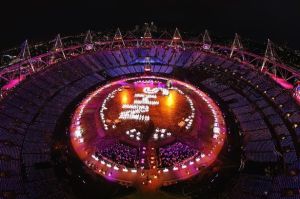
NHS Worship - London Olympic Games 1

Agree with this article? Violently disagree? Scroll down to leave a comment.

Follow Semi-Partisan Politics on TwitterFacebook and Medium.

Taking Advantage Of The EEA To Ensure A Soft Landing After Brexit

All the benefits of Brexit without the risk of a “hard landing”

Could Britain avail itself of our existing EEA membership to continue trading with EU member states as part of the single market while leaving the EUs’ explicitly political organisation and structures? In a word, yes.

Ben Kelly sets out the process by which this would work – and the many advantages of this transitional step – in an ongoing series over at Conservatives for Liberty.

And in the video above, Dr. Richard North of eureferendum.com discusses the solution in detail, in an interview for Icelandic TV.

Up-to-the-minute information and commentary here.

Download Flexcit here.

European Parliament

Agree with this article? Violently disagree? Scroll down to leave a comment.

Follow Semi-Partisan Politics on TwitterFacebook and Medium.

Is Widespread Voter Apathy Acceptable In a Country Like Britain?

Voter Apathy Party - Futurama

Britain’s relative peace and prosperity are no excuse for us to shirk our duty to be informed and engaged citizens

This blog has little time – and much contempt – for voter apathy and the politically disengaged.

Only last September, while the Labour leadership contest raged, I was complaining about low-information “swing voters”:

What if the fabled political centre doesn’t exist – or is only a small group casting a large shadow, while another unacknowledged mass of voters goes unnoticed and un-courted by the main political parties?

[..] What if rather than there being a rich goldmine of real centrist voters out there – people who pay close attention to politics and legitimately arrive at a position somewhere between Labour and the Tories – there is instead just a massive, congealed fatburg of low-information voters bobbing around, people who simply haven’t paid enough attention to come to an informed opinion about the great issues of the day?

By contrast, Janan Ganesh has an interesting and thoughtful piece in the Financial Times, basically defending non-voters and holding them up as an example of everything that is going right with our society:

All politicians understand Yes, No and Undecided. Only the winners understand Don’t Much Care. Mr Cameron communicates crisply because he knows most people only tune in for a few minutes a day. He does not lose himself in marginalia that no swing voter will ever notice. Rousing a nation through force of personality is something leaders do in films: the real art of politics is accepting apathy and bending it to your purposes.

[..] Apathy is a respectable disposition in a country where, for most people most of the time, life is tolerable-to-good. There are nations with much hotter politics, and they tend to send refugees to tedious old Britain.

This should be the most obvious thing in the world. You will have several friends who match this profile of contented languor. But among politicos, on the Labour side especially, it is a shock finding. They priggishly elide apathy with dysfunction: if voters do not care, something must be wrong with the body politic.

Ganesh concludes:

Apathetic Britons are not waiting to be redeemed. They just have lives to get on with. Not only are they apolitical; they rouse themselves to vote every five years precisely to stop hot heads and crusaders from running their country. They like Mr Cameron because he governs well enough to save them having to think about politics. He is prime minister because someone has to be.

I don’t necessarily disagree with Janan Ganesh’s view of the political landscape and voter apathy as it currently stands. But I do take strong exception to any suggestion that this is how things should be in an ideal Britain, or a prosperous Britain.

Do I have the right to expect and demand that everyone else share the same interests and obsessions as me, or that they campaign for them and partake of them as loudly and vociferously as I do? Clearly not. Everybody should be free to pursue their own happiness in any way that they like, so long as they do not infringe on the rights of anyone else.

But what happens when one bloc of people acting as a bovine herd of politically disinterested consumers allows the dominant political class to get away with just about any scheme, machination or conspiracy that they choose? Such people may have the right to stay glued to Britain’s Strictly Come Bake Off On Ice while our democracy erodes and collapses from within, but does their apathy and lack of interest not infringe on my right to live in a society where the government is properly held to account? I would argue that yes, it does.

Now, I can’t tie the politically disengaged to a chair, clamp their eyes open and force them to watch Today In Parliament on an endless loop. Nor should I be able to do so. Even if we could take the hugely illiberal step of forcing such people to pay attention to politics or even make voting mandatory, by their bovine nature many of them would make ill-informed, capricious or spiteful voting choices which would hardly enrich our democracy.

But if we can all accept that the right of the non-voters to sit on the couch and fester in their own KFC grease trumps my desire to make them sit up and pay attention to several highly pressing political questions which will have profound consequences for how Britain (and even humanity as a whole) is governed in future, can we at least stop putting these bovine people on a moral pedestal?

Where Janan Ganesh goes too far in his article is when he praises the politically disengaged as a symptom of a well functioning system where all of the major existential and ideological questions have been settled, leaving nothing to argue over besides pernickety points about the technocratic management of our public services.

For in truth, some of the biggest questions facing human civilisation have indeed not yet been settled. They have just been masked and papered over by an artificial political consensus among the major British political parties and the Westminster-dwelling establishment.

There is a political consensus that the NHS is a glorious institution, a bureaucratic idol to be worshipped and uncritically praised from dawn to dusk, as well as the best way of delivering universal healthcare to a large, developed country. But the NHS model does not exist in any other major modern democracy – there is, in reality, no intellectual consensus that it is the best solution. There is just a lazy ideological consensus of convenience among the political class, who prefer to pander for votes by singing hymns of praise to the NHS rather than talking critically about how to make British healthcare better.

There is a near-universal political consensus among the establishment that the European Union is a Good Thing. That this one particular very dated mid-century form of internationalism represents the future of European governance, and that the nation state is antiquated and passé. A vocal minority of British people begged to differ, and now – despite the kicking and screaming of the establishment – we are going to have a referendum to decide whether or not we want to remain part of the Brussels club. The Westminster elite always claimed that there was such a popular pro-EU consensus that a referendum was unnecessary, but clearly this was not so.

And so it goes, from issue to issue. What are in fact gross and damning failures of imagination or political courage from the main political parties are continually presented as some high-minded form of consensus that Britain has got all of the major questions figured out. But the rise of UKIP, the Green Party, the SNP and the coming EU referendum tell us that this is in fact not the case at all.

Therefore it is worth going back to Janan Ganesh’s assertion and asking which came first: the chicken or the egg? Are many voters really disengaged and apathetic because they are broadly satisfied with the status quo and an often-artificial consensus between the main political parties? Or is this dull, suffocating consensus actually the reason why so many people are politically disengaged in the first place?

Nothing in Ganesh’s article provides convincing proof that it is the former – that millions of people stay home on election day because they are broadly happy with the way things are. That’s not to say that such people do not make up an element – potentially a sizeable part – of disengaged voters. But even these voters are not excused.

Maybe these people really are content with the status quo and impatient to get on with their lives, more concerned with moving up the property ladder or buying the latest iDevice to show off to their friends than they are with tedious subjects like welfare reform or the EU referendum.

But such people should be criticised and urged to step up, not praised or held out as an proof that the system “works”. There is nothing noble about forgetting one’s duties as a citizen as soon as one reaches a position of economic comfort and security. Having 2.4 children, a house with a paid-off mortgage and some cash in the bank does not alleviate one’s responsibility to think about how best to secure prosperity, security and freedom for everyone else. And so long as the state has the power to regulate the things which we are allowed to drink, smoke, eat, read, hear, associate with or say, we are derelict in our duty as citizens if we blithely ignore what the government of the day is doing.

Janan Ganesh does an excellent job of summarising where we are, of describing what Britain is like at the moment. But where he and I part company is our differing view of whether the status quo is anything to be remotely pleased about.

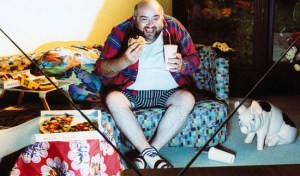
Swing Voters - Couch Potato

Agree with this article? Violently disagree? Scroll down to leave a comment.

Follow Semi-Partisan Politics on TwitterFacebook and Medium.

No, Mr. Cameron – This Is Not “Your Referendum”

As far as David Cameron is concerned, the coming EU referendum is nothing more than his personal plaything, an event to be moved about and manipulated as he pleases in order to achieve the “right” result

One throwaway line in the prime minister’s speech to the World Economic Forum in Davos yesterday captured at a stroke the sheer arrogance and duplicity behind the government’s approach to the EU referendum.

From the Independent’s summary of the speech:

David Cameron has told an audience at Davos that he would walk away from a Brussels summit in February if an agreement can not be reached on the UK’s EU Referendum.

“I want to put that to people in a referendum and campaign to keep people in the European Union. If there’s a good deal, we’ll take it. But if there’s not a good deal, I’m not going to hurry, I can hold my referendum any time until 2017,” Cameron said.

“My referendum”. Not Britain’s referendum. Not the public’s referendum. His referendum. David Cameron’s personal referendum.

Strangely, that might actually be the most honest thing that David Cameron has ever said on the subject of Europe and the coming EU referendum. Because given the fact that this cosmetic “renegotiation” has been taking place behind closed doors, with no formal demands and without any input from the British people themselves, the only fingerprints to be found on the whole rotten affair are indeed those of David Cameron and his ministers.

It is becoming increasingly clear to me (not that there was every any doubt) that this referendum will not be a fair fight – in fact, that it will be about as far away from a fair fight as it is possible to be. Just as Russia holding elections does not make that country a democracy, so the fact that the British people are being offered a Remain/Leave vote on the EU question does not mean that the outcome will be in any way legitimate.

It is possible to go through the rote motions of democracy, but do so without observing the spirit of democracy. And when that happens, neither side has cause for happiness with the outcome. If the Remain side win the referendum, their victory will be hollow, having been won on the back of a campaign built on fearmongering, outright deception and tactical manoeuvring by the government. And if (as currently seems probable) the Leave side loses the referendum, the issue will be far from settled. Many Leave campaigners, having been so blatantly cheated, will continue to rail against the European Union and do everything possible to raise awareness of its flaws and undermine the creaking structure from within. I certainly will.

The continued speculation over when exactly “David Cameron’s referendum” will take place is tedious and dispiriting. It should not be considered naive to hope for a prime minister – a leader – who sets out to do the work of the people, representing them and fighting for their priorities and interests in an honest, transparent manner. But in David Cameron we have a prime minister who gives every appearance of negotiating with the British people (or at least manipulating them) on behalf of the European Union, rather than the other way around.

All of this takes place between David Cameron’s repeated assurances to the European media that he feels “deeply European” from the “bottom of his heart” – either forgetting that in the year 2016 it is not possible to say something while abroad without it instantly filtering back home, or simply no longer caring about enraging eurosceptics by flaunting his own passionately pro-EU position.

Fine. Be that as it may. David Cameron was never a eurosceptic or a supporter of the Brexit cause, and at this point nobody expects anything else from him. But having so obviously sought to stack the deck in order to achieve his desired outcome from the referendum, the prime minister has no right to expect us to shut up and accept a future “Remain” vote when he has interfered with the process and undermined democracy at every turn.

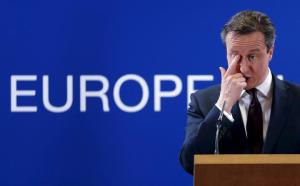
David Cameron - European Union

Agree with this article? Violently disagree? Scroll down to leave a comment.

Follow Semi-Partisan Politics on TwitterFacebook and Medium.