Just when you think the infantilisation of students and policing of normal human behaviour could not possibly get any more ridiculous, it does.
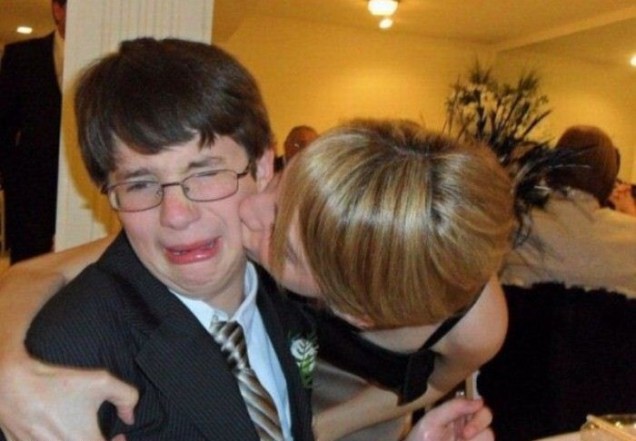
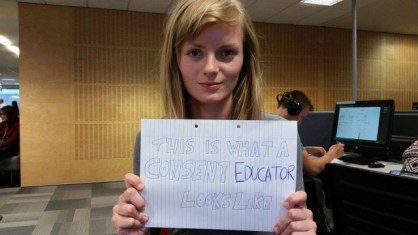
This time, the University of Southern California takes the spotlight for organising a “Consent Carnival” to dispense the usual patronising lessons to the already-converted.
Affirmative: We’re really excited to share this kiss with you and we’re letting you know!
Coherent: We’re present and able to recognize exactly what’s happening when we give this kiss to you.
Willing: We made the decision to give you this kiss ourselves, without pressure or manipulation from you or anybody else.
Ongoing: Should you come back for another kiss, check in to see if we’d still like to give you one.
Mutual: Sure, we offered you a kiss, but that doesn’t mean you have to accept it. Coming over to our table doesn’t forfeit your right to say no.
Note the particular absurdity of step four, “ongoing”. What, precisely, is the statute of limitations on an initial act of consent? If two kisses are one second apart, does the second kiss require a new act of consent? How about five seconds? Thirty seconds? One minute? Five minutes? Thirty minutes?
And for this ludicrous act of infantilising nonsense to mean anything, evidence of consent-checking needs to be written down or recorded in some way, should it become necessary to prove consent in the event of future dispute. So freshmen should probably all be given checklists to carry around with them in the event that they hook up with someone while at university.
Signatures should be mandatory – preferably witnessed and countersigned by a trusted third party. Sure, turning natural, healthy human relationships into risk-minimising contractual agreements may strip away any intimacy or spontaneity from our lives, but that’s the price we have to pay. To cleanse ourselves of our “rape culture”.
Better yet, since police forces across America are already considering equipping even more of their officers with body cameras, perhaps the US government should just order one for every citizen and make it a criminal offence to not wear it at all times. I’m sure they would get a great discount for ordering in bulk.
Surely that is the best way to deal with the endemic “rape culture” in our society and university campuses. After all, if we all receive mandatory training in how to deal with every possible scenario which may emerge in the course human relationships and surrender our privacy to constant on-body video surveillance (since good people have nothing to hide), then all of our problems will be solved.
Because without the consent classes and the checklists and the body cameras and the safe spaces, we will all revert to our primal, animalistic roots, and be a constant danger to anybody who strays too close to us.
Thank the Lord for the University of Southern California and their kissing booth, saving humanity one sanctimonious lecture at a time.
–
Agree with this article? Violently disagree? Scroll down to leave a comment.
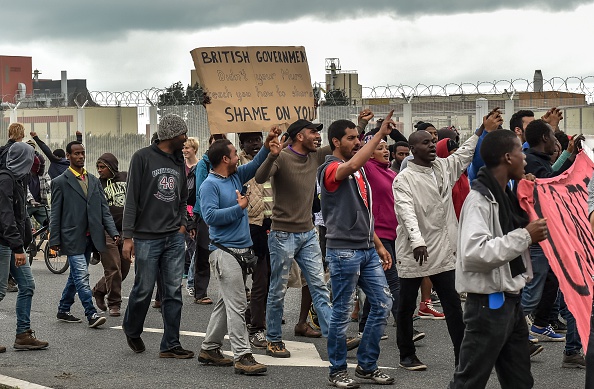
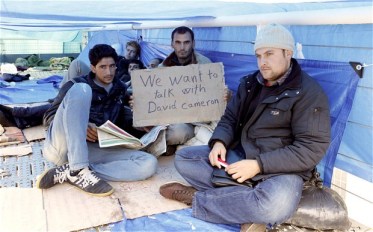
Rather than reflexively blaming the hard-hearted British people for failing to welcome more refugees from Syria, our political elites should acknowledge their part in making a more generous humanitarian response a political impossibility
Dan Hodges has a reflective and rather wistful column in yesterday’s Telegraph, in which he says that people who pride themselves on their progressive values must accept that they have lost the argument, and that Britain will not make a more meaningful contribution in terms of accepting a number of Syrian asylum seekers more in line with many of our European neighbours.
There is no longer an argument to be had about whether or not significant numbers of refugees should be admitted to the UK. The pendulum of empathy – which swung briefly following thepublication of photos of little Alan Kurdi lying motionless on that Turkish beach – has swung back. The clashes at the Hungarian-Serbian border. The Paris attacks. Cologne. They are shaping public opinion now. And it will not be reshaped.
[..] There is no longer any point in expending energy on morally comforting tokenism. The argument about whether to accept 3,000 refugee children from Europe, or whether to accept them from camps within region, is as relevant to the crisis we – or more importantly, they – are facing as debating whether to accept 3,000 refugee children from Mars. According to the latest figures from the UNHCR, there are 4,597,436 registered Syrian refugees. 39 per cent of them are under the age of 11. A further 13 per cent are between the ages of 12 and 17. To continue to use the children of Syria in a proxy argument over our willingness to “do our bit” is not an exercise in compassion but an exercise in grotesque self-indulgence.
There is also no longer any point attempting to delude ourselves the solution to the Syrian refugee crisis can be found in Europe. Yes, we have the resources to provide sanctuary. But we do not have the political will to provide sanctuary. Actually, blaming the politicians on this one is a cop out. We do not have the public will to provide sanctuary.
Hodges is right that there is simply no longer any public will to take in poor, tired, huddled masses trying to escape from civil war and the particularly murderous theocracy of ISIS. And his notion of a “pendulum of empathy” is powerful and accurate way of describing what has happened to public opinion here.
But why is this the case? Why has the pendulum swung so hard away from generosity and toward selfishness? While Dan Hodges’ piece is eminently pragmatic in its acknowledgement of failure and suggestions for a feasible way forward, it fails to ask why we are where we are – why British hearts are so hardened to the idea of welcoming many thousands more refugees.
I would make a couple of suggestions:
1. The line between refugee and economic migrant has become almost impossibly blurred in our globalised age of jet travel and smartphones. People living in benighted parts of the world know better than ever just how good we have it in prosperous countries like Britain, and it is easier than ever before (though still perilous for some) for many to travel here – and ever more tempting compared to the life of hardship and drudgery facing them at home if they stay.
But where do you possibly draw the line between economic migrant and refugee? If being in a country engaged in civil war is sufficient qualification then all 22 million Syrian citizens would be entitled to refuge in Europe, and those of other countries too. But this would be quite unfeasible. Besides the impossibility of emptying a country of its every last non-combatant whenever hostilities break out, it ignores the vital agency that at lease some of these citizens must have in fighting for their own freedoms and liberties.
So if not all citizens, how do you choose among those who have risked their lives to reach safety, often with little or no paperwork or proof that they have a particular fear of persecution or harm to distinguish them from any other.
I simply don’t see a way that any such process can be anything other than arbitrary, endlessly bureaucratic and cruel. Add to this the fact that accepting people blindly on a first-come, first-served basis is untenable and creates serious potential national security issues, and the current paralysis is quite understandable, if no less frustrating.
2. Britain has accepted hundreds of thousands of new arrivals through legal immigration routes, particularly from some of the A10 countries which joined the European Union in 2004. And we did so while any talk about the potential impact that this relatively huge wave of immigration might have on community cohesion, housing or public services was instantly dismissed by scornful elites as xenophobic tub thumping at best, or outright racism at worse.
Prior to the rise of UKIP as a legitimate, non-extreme outlet for these concerns, nobody in the establishment was talking about this issue, and the ground was ceded to the likes of the extremist BNP. There was effectively a conspiracy of silence and intimidation against those who questioned the extent of immigration into Britain, with those in power doing nothing to respond meaningfully to public concerns partly because the political class were fortunate enough to belong to the group which disproportionately benefits from immigration and sees only its positive aspects, while other less fortunate people – often those without university degrees and less economic security – were far more likely to feel the negative consequences.
You don’t have to be an opponent of immigration to abhor the undemocratic way that these transformational changes were foisted on Britain by stealth, and without a thought of engaging with the people to consult their views. Indeed, this blog greatly favours immigration, but believes that the negative consequences are real, and can only be mitigated if the process of deciding immigration policy is open, transparent and democratic. But Britain’s immigration policy is none of these things, and one of the consequences of an aloof, disengaged and elitist policy is always going to be massive popular resentment and opposition to those same policies.
Therefore, if we are looking to cast blame or understand why Britain is behaving so apparently harshly in the face of this current humanitarian disaster, should we not first look to the historic cheerleaders of unlimited immigration – the pro EU fanatics, New Labour architects, those who held national power in the 2000s and the virtue-signalling middle class clerisy who flaunted their enlightened credentials by attacking anybody who expressed doubt about what was happening?
Now people will say that it is unfair to conflate immigration and asylum, as the two are quite separate things. And they would be correct – they are separate, and it is unfair. But both economic migration and taking in asylum seekers involve adding to the population and increasing the burden on services and infrastructure which cannot greatly expand to match demand in the short to medium term. And when you sorely abuse the public’s willingness to accommodate one influx of people, they are naturally far more guarded and hostile when it comes to the next, different influx.
If Britain did not have a completely open door to all regional immigration – unheard of in any major country outside Europe – could we have managed the influx of people wanting to work and settle here in a more planned and measured way, and with a modicum of democratic consent from the people? Arguably, yes.
At least Dan Hodges and the progressive Left would now have had a much clearer grievance if Britain then still failed to admit a larger number of refugees. They would be able to accuse the government and the country of barely concealed racism, and of acting selfishly when nothing had been asked of them before, and do so with real justification.
But we do not live in that alternate reality. We live in the real world, where Dan Hodges and the europhiles got everything they wanted year after year, with Britain’s borders fully open and anyone who complained swiftly painted as a xenophobic Little Englander and banished from respectable society.
And so in 2016, unfortunately it is the desperate refugees – rather than the virtue-signalling progressive Left – who are now paying the price of this arrogant folly.
–
Agree with this article? Violently disagree? Scroll down to leave a comment.
No, you are not a cat simply because you “identify” as one. And we should all be wary of where the rise of the Politics of Identity is leading us
When future aliens discover the ruins of human civilisation and wonder what set our demise in motion, they will likely identify the period through which we are now living – the time where we finally became so arrogant that we believed we could bend objective reality to our will, physically becoming something simply because we mentally “identified” as that particular object or state of being. They will say that we sowed the seeds of our destruction when we abandoned reason and put our faith in verbal alchemy.
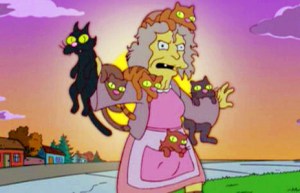
A story is going viral today (see video above) which would be hilarious if it wasn’t so terrifying. It involves Nano, a twenty year-old woman from Norway who identifies as a cat, having come to this “realisation” when she was sixteen and apparently indulged in her belief by friends, family and psychologists alike.
The young woman shows off her cat characteristics by wearing fake ears and an artificial tail. She communicates by meowing.
“I realised I was a cat when I was 16 when doctors and psychologists found out what was “the thing” with me. Under my birth there was a genetic defect,” she explains in the video.
[..] The cat woman wears a pair of pink fluffy paws with which to groom herself, and feels especially like doing so when she is in contact with water.
When asked if she was born as the wrong species, she said: “Yes, born in the wrong species.”
But terrifying it is, because stories like this are no longer so far-fetched, and Nano’s claims are not so unreasonable – at least not according to the insistent logic of modern day identity culture, which makes each one of us the little tin-pot god of our own reality, able to pick up and discard identities as core as gender or even species, in some cases on a whim.
And this is not the first such case. Just last month in Canada, a 52 year old formerly married father of seven revealed to the world that he no longer identified as a man, but rather as a six year old girl called Stefonknee.
Stefonknee (pronounced ‘Stef-on-knee’) Wolscht, 52, of Toronto, says she realized she was transgender – rather that simply a cross-dresser – at age 46, and split from her wife, Maria, after she told her husband to ‘stop being trans or leave’.
Now, Stefonknee lives with friends who she calls her ‘adoptive mommy and daddy’ as a six-year-old girl, dressing in children’s clothing and spending her time playing and coloring with her adoptive parents’ grandchildren.
Stefonknee says her ‘adoptive’ family, which consists of an older couple and their children and young grandchildren, are completely accepting of her identifying as a little girl.
She says she’s living as a six-year-old girl because it’s something she could never do when was in grade school.
‘I can’t deny I was married. I can’t deny I have children,’ she says in the video. ‘But I’ve moved forward now and I’ve gone back to being a child. I don’t want to be an adult right now.’
She’s moved forward, so that’s fine, then. Good for Stefonknee. Never mind her abandoned wife or seven young children who are doubtless hurt, confused and humiliated by what their father is doing. Stefonknee just doesn’t have time for all of that adult stuff right now, so she is going to put on a gingham dress and regress to a pre-pubescent age, until she gets tired of that and wants to try something different.
This is pure narcissism, plain and simple. He didn’t want to be an adult anymore, so he clicked his fingers and became a six year old girl instead? How are we to unpack this? Are we to accept his Wolscht’s statement that she is now female, since transgender acceptance is now (rightly, I believe) much more widely accepted and tolerated?
But if we do so – if we accept Wolscht’s statement that she is now female – do we not also then have to accept her insistence that she has also turned the clock back and become six years old again?
The ludicrous thing here is that Wolscht’s own identity is floating, as she freely admits later in the article:
She says she previously lived as an eight-year-old girl, until the couple’s granddaughter asked her to be the younger sister instead.
‘A year ago I was eight and she was seven. And she said to me: “I want you to be the little sister, so I’ll be nine.” I said: “Well, I don’t mind going to six.” So I’ve been six ever since.’
So according to this jaw-dropping reasoning, our identity is not even fixed and core to ourselves (if unmoored from reality). Now, our identity is a commodity which can be haggled over and traded. And if winning the friendship of a young girl means that a formerly 52 year old man has to downgrade from being an 8 year old to a 6 year old girl, that’s absolutely fine, apparently. Who are we to judge in any of this?
Never mind the callousness of a father of seven doing such a thing to his own children, putting them through this ordeal in pursuit of an identity which he openly admits is free-floating and liable to change again in future anyway. That’s bad enough. But how are we all – individuals, employers (the six year old girl apparently has a job driving a slow plough in winter) or government agencies – supposed to relate to somebody who decides that they “identify” as a different age and gender?
If Stefonknee is really six years old she should be in school, and the local authority should by current laws be hounding her adoptive “parents” to ensure that she is receiving a proper education. But would the identity culture cheerleaders seriously propose sending what was once a 52-year-old man to primary school with young children? Surely, under today’s logic they have to?
Stefonknee has identified as a young girl, and therefore she must be treated like one in every way. Anything less – such as homeschooling – would be discrimination against 6-year-old girls who happen to have the bodies of 52-year-old men. The kind of women who are harmed by a performance of the Vagina Monologues.
Meanwhile, Stefonknee’s employer when she drives the snow plough in winter will need to be hauled before the court and prosecuted for infringing on child labour laws. The courts would probably take a very dim view indeed of any business hiring a young girl to operate heavy machinery, and since justice must be blind, Stefonknee’s carefree decision to become a little girl should put her employer’s livelihood and liberty in grave jeopardy.
It’s easy to laugh at these scenarios, but they are going to come up more and more frequently if – as will inevitably happen when stories like this gain traction – more people are tempted to follow in the dangerous footsteps of Wolscht, or the somewhat less threatening (but no less absurd) paw prints of Nano the Norwegian cat woman.
For what is to say that Nano and Wolscht are not the “new normal”? The people being hounded and “No Platformed” for their old-fashioned views on transgender issues are guilty only of holding thoughts which were incredibly mainstream just a couple of decades ago, yet in that short space of time they have been completely overtaken by received wisdom and the new orthodoxy of intolerant tolerance. What is to say that in thirty years’ time, those who question a person’s ability to discard their entire life and “become” a cat or a young child are considered as bigoted as today’s “transphobic” holdouts?
Nobody can say that this is unlikely to happen. The world has changed so much in just a few decades, and promises to change even more in the coming years. Social attitudes have changed enormously in this time – what is to say that the warm, fuzzy embrace of unquestioning tolerance and affirmation will not expand to embrace people like Nano and Wolscht by 2050?
In 2050, maybe the future version of Eddie Redmayne will be starring in a movie, not just playing a male-to-female transsexual person (how boring that will be by then) but turning in another Oscar-winning performance for his sensitive portrayal of the pioneering early 21st century woman who identified as a cat, or the brave Canadian man who threw away his family in pursuit of his new identity as a pre-pubescent girl.
But that’s fine. Since we seem intent on burying our heads in the sand and denying that there is anything wrong with our new Politics of Identity, by that time our Prime Minister will probably identify as a Beagle, the Home Secretary will be a barn owl except on Tuesdays, and the Chancellor of the Exchequer will be a goldfish who looks suspiciously like George Osborne’s grown-up kid wearing a wetsuit, Number 11 Downing Street having been converted into a walk-in aquarium in deference to their “mental safety”.
And Nona the Norwegian cat woman will be the very least of our problems.
–
Agree with this article? Violently disagree? Scroll down to leave a comment.
Whether we meet triumph or disaster in our national endeavours, our politicians – and their words – are no longer up to the job of inspiring us to move forward
“Far better it is to dare mighty things, to win glorious triumphs, even though checkered by failure, than to take rank with those poor spirits who neither enjoy much nor suffer much, because they live in the gray twilight that knows not victory nor defeat”
Thirty years ago today, the NASA space shuttle Challenger exploded in flight shortly after takeoff, killing the crew of seven.
Responding to the tragedy, which was witnessed by millions of people on live television – including many schoolchildren, for one of the astronauts was to be the first teacher in space – US president Ronald Reagan addressed the nation. He said:
We’ve grown used to wonders in this century. It’s hard to dazzle us. But for twenty-five years the United States space program has been doing just that. We’ve grown used to the idea of space, and, perhaps we forget that we’ve only just begun. We’re still pioneers. They, the members of the Challenger crew, were pioneers.
And I want to say something to the schoolchildren of America who were watching the live coverage of the shuttle’s take-off. I know it’s hard to understand, but sometimes painful things like this happen. It’s all part of the process of exploration and discovery. It’s all part of taking a chance and expanding man’s horizons. The future doesn’t belong to the fainthearted; it belongs to the brave. The Challenger crew was pulling us into the future, and we’ll continue to follow them.
[..] There’s a coincidence today. On this day three hundred and ninety years ago, the great explorer Sir Francis Drake died aboard ship off the coast of Panama. In his lifetime the great frontiers were the oceans, and a historian later said, “He lived by the sea, died on it, and was buried in it.” Well, today, we can say of the Challenger crew: Their dedication was, like Drake’s, complete.
The crew of the space shuttle Challenger honored us by the manner in which they lived their lives. We will never forget them, nor the last time we saw them, this morning, as they prepared for their journey and waved goodbye and “slipped the surly bonds of earth” to “touch the face of God.”
Two decades earlier, and another tragedy. On April 4 1968, Martin Luther King Jr. was been shot and killed by an assassin in Memphis, Tennessee.
On hearing the news, Robert Kennedy, then junior senator from New York, addressed a crowd of people in the open air in Indianapolis, saying:
Martin Luther King dedicated his life to love and to justice between fellow human beings. He died in the cause of that effort. In this difficult day, in this difficult time for the United States, it’s perhaps well to ask what kind of a nation we are and what direction we want to move in. For those of you who are black — considering the evidence evidently is that there were white people who were responsible — you can be filled with bitterness, and with hatred, and a desire for revenge.
We can move in that direction as a country, in greater polarization — black people amongst blacks, and white amongst whites, filled with hatred toward one another. Or we can make an effort, as Martin Luther King did, to understand, and to comprehend, and replace that violence, that stain of bloodshed that has spread across our land, with an effort to understand, compassion, and love.
My favorite poem, my – my favorite poet was Aeschylus. And he once wrote:
Even in our sleep, pain which cannot forget
falls drop by drop upon the heart,
until, in our own despair,
against our will,
comes wisdom
through the awful grace of God.
What we need in the United States is not division; what we need in the United States is not hatred; what we need in the United States is not violence and lawlessness, but is love, and wisdom, and compassion toward one another, and a feeling of justice toward those who still suffer within our country, whether they be white or whether they be black.
[..] And let’s dedicate ourselves to what the Greeks wrote so many years ago: to tame the savageness of man and make gentle the life of this world. Let us dedicate ourselves to that, and say a prayer for our country and for our people.
Now think about the last great British political speech you remember.
And don’t mention Hillary Benn huffing about Britain doing “our bit” to defeat ISIS in Syria, because competent and well delivered though it was, if that now passes for a great political speech for the ages then we are all ruined.
Imagine if David Cameron responded to some future aviation or exploration disaster by talking about slipping the surly bonds of Earth and touching the face of God. Just picture it. He would be laughed out of office – or at least mercilessly pilloried in the press – for speaking in what we would now consider to be such a pompous way. At best you might tease from him a few careless, cookie-cutter lines about the families of the victims being in our “thoughtsnprayers” (or just thoughts now, more commonly). But nothing big picture. Nothing that encourages us to look beyond ourselves for one second.
That’s because in our society today, there is nothing bigger than the Self. We are the gods of our own lives – or at least we often think so. And politicians, painfully aware of this fact, talk down to us as though we were children, always seeking to catch our eye with flashy pledges of “what’s in it for us” rather than what is necessarily good for the country, or for human liberty and progress.
Vote Labour and your NHS waiting times will go down. But don’t worry, we’ll get them to pay for it through higher taxes. Vote Conservative and your taxes will go down, and if that means fewer public services for them, so be it.
Now I’m certainly not suggesting that taxes and public spending are not important issues. But when even the Conservative Party can fight the 2015 general election on an offensively paternalistic manifesto promising “a plan for every stage of your life“, can we really deny that we have become a nation of consumers rather than citizens, more interested in who will deliver the most goodies for ourselves and the people we like than who will best steer the ship of state through challenging times?
That’s what we now expect from our prime ministers today – not a world leader, but a lowly Comptroller of Public Services. No call to arms in service of a great national goal. Nothing remotely inspirational at all. Just a checklist of things promised to us in return for our vote. I’m not assigning blame for this depressing chicken-or-egg state of affairs. But this is how our politics now works, more than ever. Less asking “what you can do for your country”, and much more emphasis on “what your country can do for you”.
Even the coming EU referendum – when the British people have a vanishingly rare opportunity to reconsider the very way that we are governed, the way we face the world and deal with the challenges and opportunities of globalisation – is being treated by the main campaign groups on either side as a parsimonious matter of saving or incurring relatively trivial sums of money, with rival (and equally ludicrous) numbers being batted back and forth by the rival camps.
It’s all so tediously depressing and uninspiring. Is it any wonder then that political apathy is on the rise, and that those of us who remain engaged increasingly opt for virulently anti-establishment parties like UKIP or the SNP? Or that with the decline of moderate religion and our failure to confidently express and transmit British values through our culture, some disaffected young Muslims, rootless and yearning to feel part of something bigger, are stealing away to Syria to fight for ISIS?
I’m a political blogger, and for my sins I sit and listen to far too many political speeches by cabinet ministers, shadow ministers and other establishment types. And to begin with, I thought that I would judge a speech according to whether it felt in any way inspirational, transcendent or like a genuine attempt to rally people toward a goal beyond their own personal enrichment and the state-sanctioned smiting of the hated “other”. A speech which, regardless of its political leaning, might set the pulse racing a little with possibility.
Well, four years later and my pulse continues to flatline. I haven’t heard a genuinely good speech yet – as in one that you might actually remember six months later or recite a key passage from – at least not one hailing from the three main parties. If anybody believes that they have heard one, please send me a link or transcript and I will be forever in your debt.
Maybe I’m just romanticising the past. Maybe in thirty years’ time when Ed Miliband’s kid is running for the leadership of the Labour Party, we will all look back on Ed’s fifteenth personal relaunch speech or David Cameron’s 2015 general election stump speech and hail them as bold, visionary masterpieces. Maybe.
But I strongly suspect that in the year 2046, anybody wanting to listen to listen to a great British political speech – with the exception of those made by firebrands like Margaret Thatcher – will have to look back in time almost a century, and certainly past the haunted late years of the 2010s.
–
Agree with this article? Violently disagree? Scroll down to leave a comment.
Few politicians will dare to criticise today’s breed of authoritarian student activists – because odious and illiberal as their worldview undoubtedly is, both main political parties have something to gain from regulating our behaviour and speech
Yesterday, I went on the BBC Daily Politics to talk about the creeping tide of campus illiberalism and the tyranny of modern student activists who seek to turn their universities into fuzzy, unthreatening places where intellectual debate and reason are secondary to making people feel accepted and validated at all times.
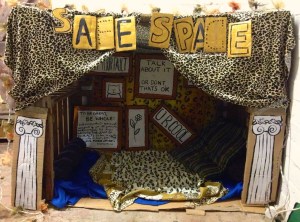
The debate was framed around the question of whether Britain should consider raising the voting age, given the fact that so many student activists recoil from free speech and the boisterous exchange of ideas, preferring to cloister themselves in ideologically homogeneous “safe spaces” while viciously lashing out at anybody who dares to hold different ideas.
I had written a blog post back in November, following up on Glenn Reynolds’ (of Instapundit) column suggesting in the wake of the Yale and Mizzou controversies that if students could not tolerate hearing contradictory ideas, they had no business voting and participating in democracy. I think a lot of the points that Reynolds made were very strong, though I also agree with what he said when he walked back his statement the next week.
I was surprised to get the call from the BBC, but I thought it was worth accepting the invitation to push the broader message – not that we should go around banning groups of people from voting just because they wind us up, but that this insidious culture of identity, grievance and therapy, incubated in our universities and ignored for too long by the media, is going to have profound consequences for our society and our democracy as these people grow up and join the electorate.
The Daily Politics’ Soapbox feature is good for what it is, but when it comes to laying out a new and complex argument full of nuance and detail, there are obvious shortcomings. You get a two-minute video (which I filmed in Oxford, with particular thanks to the Oxford Union and its president) to make a brief pitch, but that pitch can only be around 200 words, the rest of the time being given to music and establishing shots. And then there is the live segment, broadcast after Prime Minister’s Questions, where you get to debate with Jo Coburn, Andrew Neil and the panel.
The video is shown at the top of this piece, and you can judge the results for yourself. I’m reasonably pleased with how it went, but also frustrated that we could only skim the surface of what is an important and fascinating issue – one with potentially profound consequences for education, free speech and democracy.
Notably, the two MPs on the panel that day – Ed Vaizey and Kate Green – didn’t want to delve into the real issue at all, choosing to get hung up on the specifics of the voting age element. Green in particular was in denial about there being any kind of problem, saying that she didn’t think it was a “new thing” and that “there have always been controversies in our universities”.
But Green then goes on to say “I think it is part of exploring boundaries and debating ideas and issues”.
No. This is precisely the problem. By high-handedly declaring that they speak for all students and elevating their personal feelings over any question of objectivity, truth or legitimate debate, these student activists – the New Age Censors – are specifically crushing the debate of ideas and issues, not just for themselves but for everyone so unfortunate as to be studying with them.
Kate Green tries to make the new academic dystopia of safe space rooms, trigger warnings on texts and campus speech codes something that is natural and commendable, part of exploring boundaries. But it is no such thing. At the time of the Yale controversy, the student (Jerelyn Luther) who had a full-on toddler’s meltdown over a harmless email about Halloween costumes raged:
“It is NOT about creating an intellectual space, it is not! Do you understand that? It’s about creating a home here! You are NOT doing that! You are going against that!”
So universities are not to be places of learning and intellectual debate any longer. Or if they are, this mission is very much secondary to the far more important task of making students feel comfortable and validated in whatever “identity” they happen to have assumed on that particular day.
This is what we are dealing with, and this is what neither Ed Vaizey or Kate Green wanted to grapple with. Of course, both have their reasons.
I was essentially describing a group of wobbly-lipped, permanently “vulnerable” perpetual victims who are in constant need of a strong authority presence to smite their enemies and protect them from emotional harm – in other words, I just described the current Labour Party’s ideal (if not yet typical) voter. No wonder Kate Green couldn’t bring herself to engage with the substance of my argument – to do so would be to alienate the very people whom Labour has been reaching out to since the Gordon Brown era.
And what could Ed Vaizey say in support of free speech and against its rapid erosion on university campuses across the country? His leader, David Cameron, flew to Paris after the Charlie Hebdo attacks and walked arm-in-arm with some of the world’s most brutal and repressive leaders in defence of “free speech”, while people continue to languish in British prisons, locked up simply for saying, singing or tweeting something that another person found “offensive”. The present Coke Zero Conservative government doesn’t look on these petty authoritarian students as a problem – it admires their attempts to ban speech and regulate freedom of expression.
I should be clear that not all students – not even most students – are like the petty little tyrants in the headlines today. Spiked’s Tom Slater makes this point forcefully:
If there’s one thing that really gets on my nerves, it’s the idea that students today are uniquely intolerant. The explosion of campus censorship in recent years has made bashing campus politicos a kind of commentariat pastime, with fortysomething columnists wheeling the little blue-haired pillocks out each week to give them a good kicking. But while the students’ union censors deserve everything they get, all too often campus censorship has been painted as a generational phenomenon – as if undergraduates appeared from the womb with a Safe Space policy in hand.
I quite agree. And my one regret is that there was no time in my fleeting moment on the Daily Politics to explore the context in which these little campus tyrants are growing up, and what has made them the way they are. As Tom Slater, Brendan O’Neill, myself and a few others have pointed out, many of those “fortysomething” columnists and academics now criticising the student activists are themselves guilty of supporting the hate speech laws and therapy culture which have taught the New Age Censors that “sticks and stones may break their bones, but words will kill them stone dead”.
That being said, I think it was still a useful opportunity to raise an important issue and maybe raise awareness among a wider group of people, many of whom haven’t set foot on a university campus in years and would be horrified to discover the kind of illiberal dystopia that they have become in the name of “tolerance” and “inclusivity”.
This fight will not be won in the television studios of Westminster or the columns of national newspapers. It is the brave students withstanding huge social pressures and even physical intimidation to take a stand for liberty and free speech on their own university campuses who must do the real fighting, as well as those professors and administrators with sufficient backbone to stand up to the shrill demands of the Safe Space Lobby.
But the rest of us should provide what air cover we can, as this blog has consistently done – and will continue to do going forward.
–
Agree with this article? Violently disagree? Scroll down to leave a comment.






 Semi-Partisan Politics