Lionel Shriver Makes A Bold Defence of Cultural Appropriation

lionel-shriver-brisbane-writers-festival

The purpose of literature and fiction writing is not to serve the grand design of the social justice and identity politics movement – and Lionel Shriver should be commended for standing up for artistic freedom against the new age censors

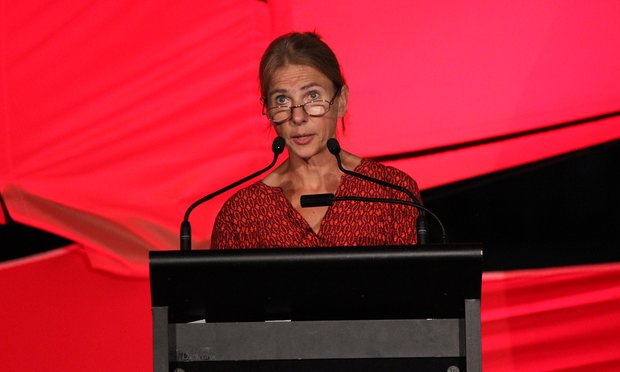
At a recent speech given at the Brisbane Writers Festival, the author Lionel Shriver makes a passionate and compelling defence of the concept of “cultural appropriation”, standing up to the rabid social justice warriors who would seek to impose a new cultural apartheid and the return of “separate but equal” division between races, cultures, genders and social groups.

From Shriver’s speech, which begins by making reference to college campus scandals over the supposed “cultural appropriation” and “harm” caused by non-Mexican students wearing sombrero hats at tequila parties or Mexican-themed restaurants:

But what does this have to do with writing fiction? The moral of the sombrero scandals is clear: you’re not supposed to try on other people’s hats. Yet that’s what we’re paid to do, isn’t it? Step into other people’s shoes, and try on their hats.

In the latest ethos, which has spun well beyond college campuses in short order, any tradition, any experience, any costume, any way of doing and saying things, that is associated with a minority or disadvantaged group is ring-fenced: look-but-don’t-touch. Those who embrace a vast range of “identities” – ethnicities, nationalities, races, sexual and gender categories, classes of economic under-privilege and disability – are now encouraged to be possessive of their experience and to regard other peoples’ attempts to participate in their lives and traditions, either actively or imaginatively, as a form of theft.

Shriver’s barnstorming speech goes on to list many great works of literature which would be greatly diminished or simply not exist at all were their authors (like many writers today) bullied and pressured to avoid writing about cultural experiences and customs other than their own.

Yet were their authors honouring the new rules against helping yourself to what doesn’t belong to you, we would not have Malcolm Lowry’s Under the Volcano. We wouldn’t have most of Graham Greene’s novels, many of which are set in what for the author were foreign countries, and which therefore have Real Foreigners in them, who speak and act like foreigners, too.

In his masterwork English Passengers, Matthew Kneale would have restrained himself from including chapters written in an Aboriginal’s voice – though these are some of the richest, most compelling passages in that novel. If Dalton Trumbo had been scared off of describing being trapped in a body with no arms, legs, or face because he was not personally disabled – because he had not been through a World War I maiming himself and therefore had no right to “appropriate” the isolation of a paraplegic – we wouldn’t have the haunting 1938 classic, Johnny Got His Gun.

We wouldn’t have Maria McCann’s erotic masterpiece, As Meat Loves Salt – in which a straight woman writes about gay men in the English Civil War. Though the book is nonfiction, it’s worth noting that we also wouldn’t have 1961’s Black Like Me, for which John Howard Griffin committed the now unpardonable sin of “blackface.” Having his skin darkened – Michael Jackson in reverse – Griffin found out what it was like to live as a black man in the segregated American South. He’d be excoriated today, yet that book made a powerful social impact at the time.

(Shriver’s speech was too much for one delicate snowflake. Australian activist Yassmin Abdel-Magied, whose sheltered mind was unable to tolerate hearing of a worldview which didn’t put her own identity on a pedestal, decided to walk out during the speech and then pen a tear-stained, self-involved piece about her feewings for the Guardian, aggrandising her supposed victimhood).

But what exactly is Lionel Shriver’s beef with the modern idea that cultural appropriation is heresy? It seems that what angers her – quite rightly – is the idea that any group, marginalised or not, can be the sole custodians of their traditions, granting or withholding license to “borrow” from their culture like a movie studio scouring YouTube for pirated videos.

According to Shriver, nobody, least of all an artist, should have to approach anyone for “permission” to write from a certain perspective, include a certain character or touch on any cultural tradition:

The author of Who Owns Culture? Appropriation and Authenticity in American Law, Susan Scafidi, a law professor at Fordham University who for the record is white, defines cultural appropriation as “taking intellectual property, traditional knowledge, cultural expressions, or artifacts from someone else’s culture without permission. This can include unauthorised use of another culture’s dance, dress, music, language, folklore, cuisine, traditional medicine, religious symbols, etc.”

What strikes me about that definition is that “without permission” bit. However are we fiction writers to seek “permission” to use a character from another race or culture, or to employ the vernacular of a group to which we don’t belong? Do we set up a stand on the corner and approach passers-by with a clipboard, getting signatures that grant limited rights to employ an Indonesian character in Chapter Twelve, the way political volunteers get a candidate on the ballot?

While Shriver justifiably bristles at the consequences of weaponised identity politics, she does not use her speech to dwell on the reasons for the rise of this hyper self-conscious, self-censoring phenomenon. Fellow author Ian McEwan, on the other hand, is more than happy to point out the root causes of the identity politics resurgence, recently commenting in an interview:

“These children have grown up in an era of peace and plenty, and nothing much to worry about, so into that space comes this sort of resurgence that the campus politics is all about you, not about income inequality, nuclear weapons, climate change, all the other things you think students might address, the fate of your fellow humans, migrants drowning at sea. All of those things that might concern the young are lost to a wish for authority to bless them [..] rather than to challenge authority.”

To which this blog responded:

Doesn’t that just perfectly sum up the Cult of Social Justice and Identity Politics? A generation of students raised at a time of great material abundance, peace and prosperity arrive at university to find most of the great injustices of the past already slain by previous generations of campaigners. Bereft of purpose but still feeling the strong student urge to embrace a cause, they crank up their sensitivity settings to perceive any slight or inequity, however small or unintentional, to be evidence of the systematic oppression of one or more classes of prescribed victim groups.

McEwan’s last sentence is particularly profound – the idea that today’s young people no longer rail against authority in the way that student activists of old did, but rather make tear-stained appeals to authority figures to intercede on their behalf. This is the victimhood culture, clearly distinct from an honour culture (which would encourage the individual to stand up to minor sleights or “microaggressions” and confront the issue themselves) or a dignity culture (which would only sanction involving authorities in case of grave injury).

Later in her speech, Shriver hits out at the fad of shoehorning various “oppressed group” minorities into television shows in the name of making up some social justice quota, and the growing demand by some critics for the same affirmative action to take place in literature:

My most recent novel The Mandibles was taken to task by one reviewer for addressing an America that is “straight and white”. It happens that this is a multigenerational family saga – about a white family. I wasn’t instinctively inclined to insert a transvestite or bisexual, with issues that might distract from my central subject matter of apocalyptic economics. Yet the implication of this criticism is that we novelists need to plug in representatives of a variety of groups in our cast of characters, as if filling out the entering class of freshmen at a university with strict diversity requirements.

You do indeed see just this brand of tokenism in television. There was a point in the latter 1990s at which suddenly every sitcom and drama in sight had to have a gay or lesbian character or couple. That was good news as a voucher of the success of the gay rights movement, but it still grew a bit tiresome: look at us, our show is so hip, one of the characters is homosexual!

We’re now going through the same fashionable exercise in relation to the transgender characters in series like Transparent and Orange is the New Black.

Fine. But I still would like to reserve the right as a novelist to use only the characters that pertain to my story.

Besides: which is it to be? We have to tend our own gardens, and only write about ourselves or people just like us because we mustn’t pilfer others’ experience, or we have to people our cast like an I’d like to teach the world to sing Coca-Cola advert?

That last question is a good one – how on earth is a fiction author or television screenplay writer possibly to satisfy the competing demands to include more characters from diverse backgrounds yet avoid the unpardonable sin of presuming to write from their vantage point?

No doubt the social justice warriors would decree that fiction writing, so long a solitary pursuit, must now always be a collaborative effort, with a team of character writers standing by to offer their perspectives on a character’s true “voice” and authenticity. Or perhaps the process could be accomplished at the end of writing, by submitting draft novels to an Office of Social Justice Censorship where beady-eyed zealots who claim to speak on behalf of their entire social group go through the manuscript with a red pen, changing the author’s words and ideas to conform to some standard set in secret, behind closed doors.

You can see where the inexorable logic of these shrill demands ultimately leads: nowhere good. We either end up in a world where brilliant authors are too terrified of potential repercussions to ever pick up a pen in the first place, or one ends up with Soviet-style official “approved” art and literature, written to precise specifications in order to best glorify the Cult of Social Justice and Identity Politics.

As Shriver puts it:

Thus in the world of identity politics, fiction writers better be careful. If we do choose to import representatives of protected groups, special rules apply. If a character happens to be black, they have to be treated with kid gloves, and never be placed in scenes that, taken out of context, might seem disrespectful. But that’s no way to write. The burden is too great, the self-examination paralysing. The natural result of that kind of criticism in the Post is that next time I don’t use any black characters, lest they do or say anything that is short of perfectly admirable and lovely.

[..] Especially for writers from traditionally privileged demographics, the message seems to be that it’s a whole lot safer just to make all your characters from that same demographic, so you can be as hard on them as you care to be, and do with them what you like. Availing yourself of a diverse cast, you are not free; you have inadvertently invited a host of regulations upon your head, as if just having joined the EU. Use different races, ethnicities, and minority gender identities, and you are being watched.

Extra marks for the snide attack on the European Union – brilliant stuff.

As this blog has explained time and again, above all else social justice is not about fairness and equality but rather about power – specifically, the acquisition of power by the beady-eyed authoritarians who wield their weaponised victimhood and competitive tolerance as cudgels, granting them the power to determine what the rest of us can and cannot do or say. Television has already on the verge of falling to this long-running cultural siege, and the clear message coming from “progressive” reviewers in the literary community is that fiction is next.

Lionel Shriver has issued a timely warning to her fellow authors – let us hope that there is sufficient time and willpower to resist the final assault when it comes.


Lionel Shriver: how not to read - Do Something magazine

Safe Space Notice - 2

Top Image: Guardian, Daniel Seed

Support Semi-Partisan Politics with a one-time or recurring donation:

Agree with this article? Violently disagree? Scroll down to leave a comment.

Follow Semi-Partisan Politics on TwitterFacebook and Medium.

Let’s Talk About Black Lives Matter UK

black-lives-matter-uk-protest-london-city-airport

Black Lives Matter UK should be ashamed of their childish behaviour and wanton ‘cultural appropriation’ of an American struggle

I had a friend at Cambridge who – like many students – loved nothing more than a good protest. The reason behind any given demonstration and the people involved in it were largely immaterial to him; what mattered was the marching along and shouting and getting to feel brave and revolutionary while enjoying the added bonus of missing lectures.

On one occasion (quite possibly because I was high at the time of asking) he convinced me to accompany him on one of these jaunts, and so one morning we set off on a coach down the M11 and piled off in central London, collected placards and went to join the fray. Honestly, I forget what the protest was actually about – it may have been something to do with poverty, but it was certainly domestically focused. So I was rather surprised when my friend decided that we should merge with a particularly unwashed group of protesters and start shouting “victory to the intifada!”

At the time, the Second Intifada was warming up quite aggressively. As a young student, while having every sympathy with the plight of ordinary Palestinians, I tended to take the side of Israel, supporting a fellow democracy while reserving the right to criticise their excesses and missteps – pretty much the same position as I hold now, in fact. And since I had no desire to stomp around London cheering for the suicide bombing of innocent Israelis, I took leave of my friend and went to sojourn on the south bank instead – but not before making the observation that nearly everyone around me at the march was white, upper middle class (though some affected other carefully crafted personas) and about as far removed from being personally vested in the Israel-Palestine conflict as it was possible to be.

Why bring this up? Because the same tiresome event is now playing out all over again with the childish, irresponsible and petulant antics of Black Lives Matter UK, whose members give dreary new meaning to the term “a rebel without a cause”.

From the Telegraph:

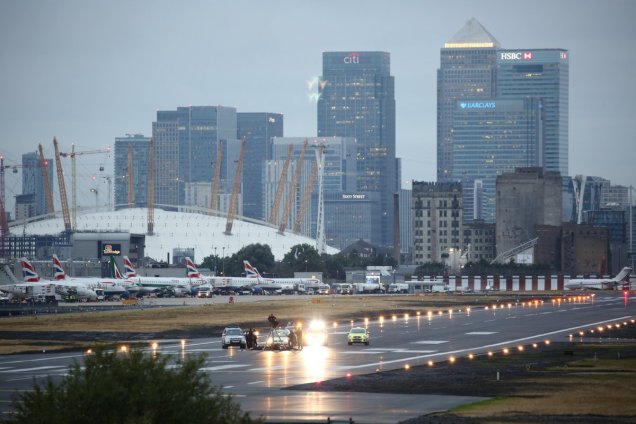
London City Airport was brought to a standstill today after a group of Black Lives Matter activists stormed the runway protesting against the UK’s ‘racist climate crisis’.

Police said nine protestors [sic] chained themselves to a tripod in the middle of a runway to ‘highlight the UK’s environmental impact on the lives of black people’.

The demonstration, which began at 5.40am and lasted around five hours, meant dozens of flights were cancelled while incoming planes were diverted to Gatwick and Southend airports.

The incident triggered safety concerns amid reports the demonstrators bypassed security by sailing a blow-up dingy [sic] across the Royal Docks.

Police arrived at the airport minutes after the demonstration began but it was several hours before any arrests were made. Scotland Yard said they had to wait for ‘specialist resources’ needed to unlock the protestors [sic].

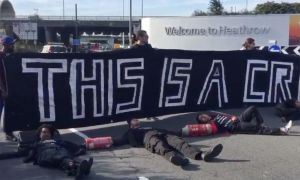
“This is a crisis” reads the banner unfurled by Black Lives Matter UK at their edgy airport disruption attempts. And so it is. But in Britain it is certainly not a crisis of black killings by the police. It is a crisis of intellect, of character and of proportionality, all of which have been thrown out of the window by a bunch of primarily millennial young adults who look at the impassioned protests currently taking place in the United States and developed a severe, gnawing case of FOMO (fear of missing out).

This most coddled and privileged generation in history (particularly the middle class types who showed up to London City airport) cannot plausibly claim that black people in Britain are being frequently and systematically killed by the police, which is the genesis of the original Black Lives Matter movement in America. Most British police are unarmed for a start, and while there has been an historic problem with institutional racism and there remain isolated concerns, the problem is simply not as severe on this side of the Atlantic.

So what is an enthusiastic young protester to do? They can’t go to the trouble of invading an airport runway for a cause which barely registers as a problem in this country (though in terms of avoiding looking ridiculous, BLM UK may well have done marginally better to frame their protest as a “sympathy strike” to highlight the “plight” of black Americans). They need to find some reason for their theatrics.

And thus we get the rather bizarre statement that airports are fair game for Black Lives Matter UK because environmental pollution apparently disproportionally affects black people to such an extent that it constitutes an act of racism. That is seriously what this protest is about.

From BLM UK’s own Twitter account:

This is competitive victimhood at its most extreme. To call the claim that environmental pollution is a deliberate act of oppression aimed at black people “a bit exaggerated” does a disservice to a whole pantheon of overstatements, contortions and implausible stretches. The argument is simply ludicrous, a complete non sequitur.

And for those of us implacably opposed to the Cult of Social Justice and Identity Politics, the emergence of Black Lives Matter UK as a risible and unjustified presence on the British political scene has also provoked the delicious accusation by other SJWs that BLM UK’s white, middle-class eco-warriors are “culturally appropriating” a movement which is primarily about the treatment of African Americans by the police in the United States.

From the Huffington Post (naturally):

Black Lives Matter demonstrators have been accused of “appropriating someone else’s struggle” for their “embarrassing” protest at London’s City Airport today that affected thousands of passengers.

However, the response to the action has been largely negative, with people criticising its relevance, disputing claims the action would only impact the wealthy, and questioning why the group did not appear to have any black members at the protest.

One person described the protesters as “hipster-looking flower-crowners”.

[..] Joanne Marie was annoyed by claims that the action would only affect the well off.

She wrote: “I earn under £30k and I live in Newham. I use City Airport several times a year to fly home to Ireland to visit my sick and elderly parents. I pay around £100 return – slightly more than it costs to fly from Stansted on Ryanair. Should I not visit my parents to placate a bunch of self-righteous white people with placards who think they represent the BME community?

And that’s one of the inherent flaws in the whole social justice / politically correct movement. Because the “social currency” within this tribe of people is intimately connected with how much one is able to play the victim card and speak from a position of being “oppressed”, competitive victimhood is rife. In order to feel good about themselves, cult members must continually assert their own vulnerability at the hands of those with more “privilege”, while showing very public solidarity and deference to those higher in the hierarchy of oppression.

Thus we have seen young social justice warriors in Britain try to take down even progressive champions like Germaine Greer and Peter Tatchell for daring to stand up for the free speech of those who question the new orthodoxy on transgender theory.

Peter Tatchell – a tireless warrior against discrimination in all its forms – found himself in the crosshairs of some jumped-up young student union activist who saw the opportunity to aggrandise herself by publicly accusing him of heresy. Why? Because Fran Cowling, LGBT+ Officer of the National Union of Students, saw the opportunity to burnish her own Tolerance Credentials by shrieking that Peter Tatchell holds such intolerable and dangerous views that she could not possibly share a stage with him. Her goal: to make her peers think “Wow! Fran Cowling is so pure and virtuous that even Peter Tatchell, with all his many accomplishments, looks like dirt next to her”.

This kind of thing happens all the time. Just as perverse incentives lead politicians to over-promise and bankers to take undue risks, in the social justice community – already a demographic teeming with many of the most insufferable people in the country – the fact that victimhood equals social status is encouraging people to exalt in their vulnerability, exaggerate it wherever possible and see everything through the distorted lens of race, gender and sexuality.

And that is how, in a sick culture full of people who are encouraged to make exaggerated claims of victimhood – together their sanctimonious “allies” – it came to pass that London City Airport was shut down this week because of the past actions of allegedly trigger-happy cops in America.

Globalisation no longer simply means that the components in your iPhone come from all over the world – going forward we can expect to be picketed, lobbied, harassed, delayed and otherwise inconvenienced thanks to disputes which originated thousands of miles away in other countries – especially if those disputes have their roots in the toxic sludge of identity politics.

Welcome to the future.


black-lives-matter-heathrow-airport

Top Image: Guardian, Daniel Leal-Olivas/AFP/Getty Images

Support Semi-Partisan Politics with a one-time or recurring donation:

Agree with this article? Violently disagree? Scroll down to leave a comment.

Follow Semi-Partisan Politics on TwitterFacebook and Medium.

Social Justice Is About Power And Control, But Not For The Benefit Of The Powerless

SJW white people dreadlocks social media

What happens when a white Social Justice Warrior encounters a mixed race person who fails to hold the “correct” opinions about cultural appropriation?

If you still need convincing that the “social justice” movement is in fact nothing to do with justice or equality and everything to do with wielding power over other people to control what they think, say and do, then let this picture be your guide.

Here we have a comment posted by a young Social Justice Warrior – an online activist who spends their time trying to police the public discourse and censor others – on the tumblr social network, in which the user Party Island (pronouns: they/them) confesses a dilemma.

You see, Party Island is very much against the phenomenon known as “cultural appropriation”, that timeless phenomenon where cultures, customs and fashions spread across different national or ethnic groups. While some Bad People might think that cultural appropriation is a good thing, responsible for everything from the pop music we hear to the fusion cuisines we eat, in fact cultural appropriation is a terrible tool of oppression in which arrogant white people claim credit for the cultural innovations of other marginalised groups, either for personal or commercial gain. Or so say the SJWs.

And Party Island was posting on the evils of white people wearing their hair in dreadlocks (a particularly contentious issue in the SJW community) when one of his mixed-race friends dared to utter the now-blasphemous assertion that people of any race or background should be able to wear their hair any way they damn well please, and that Party Island was massively overreacting.

As the complaint reads:

I’m at a loss. I posted about white people & black hair on Facebook and my old roommate, who is mixed race but white passing, is telling ME I’m overreacting and that “people should wear their hair how they want.” I don’t know how to approach this. I don’t want to talk over her because even if she’s white passing, she holds more authority over me in race related issues. I don’t know what to do.

The friend’s statement that “people should wear their hair how they want” is shocking to the ears of Party Island, who is used to playing the role of white saviour to the “oppressed” black masses by being a jumped-up, self-righteous little internet censor, persecuting anyone who fails to use the latest up-to-the-minute politically correct terminology and customs.

Now Party Island has been told to lay off, not by a fellow white person – their peer at the bottom of the inverted hierarchy of privilege – but by someone who is mixed race, and therefore occupying a more senior position in the pyramid. In Social Justice World, you see, power and legitimacy to speak on any issue derives from one’s place in the pyramid. On feminist issues, for example, being a woman (or any guy with a penis who decides to identify as a woman) gives one a certain right to speak about feminist issues, but being a black, disabled woman means you occupy an even higher position in the inverted pyramid and that your words, therefore, count for much more.

If a white person had told Party Island that they were overreacting by getting upset at other white people who “appropriate black culture” by wearing their hair in dreadlocks, Party Island could demand that they “check their privilege”, insist that they were being oppressive and send them off to educate themselves on issues of racial justice and cultural appropriation. But the friend is not white, they are mixed race. And this presents Party Island with a dilemma.

On the one hand, there is the strong instinct to “punish” the friend’s blasphemous statement that white people should be allowed to wear dreadlocks, because this is how these parasitical people gain power and influence over our discourse, culture and society in the first place – by meting out public shamings and other punishments to heretics in order to advance their own ideology. But on the other hand, Party Island knows that as a white person in the presence of a mixed race person (though “white passing”, they tell us, as mitigating evidence) their duty is to bow obsequiously and defer to whatever the mixed race person happens to say on the subject of race.

This creates an unresolvable logical error in the SJW brain of Party Island. They want to be a good foot soldier in the Social Justice Army and “re-educate” this blasphemer, but the blasphemer is of superior rank in the social justice hierarchy. It’s a bit like a zealous, well-trained infantry private discovering his captain breaking the army code of conduct. The desire to call out the crime and administer “punishment” is overwhelming, but the captain’s rank causes hesitancy and a failure of courage.

So what does Party Island do? Unable to confront their mixed race friend directly about their Evil Thoughtcrime and insufficient anger at the cultural appropriation of dreadlocks, this SJW flags his problem to the wider community in the hope that it will be seen by other properly-educated SJWs who occupy equal or greater rank in the hierarchy of victimhood, and who therefore have the power and legitimacy to correct this erroneous mixed race person. Ideally, in this warped world, a “black passing” black person who is also a transexual, disabled rape survivor will come passing by, notice the exchange and unload on Party Island’s poor mixed race friend with the full weight of their exalted position in the pyramid.

If all of this seems ludicrous and a million miles away from doing anything which might conceivably affect or help actual black people in America, you would be right. Because at its dark, festering core the Social Justice movement is not about delivering justice, equality or doing any other kind of social good. Social wrongs are merely the fuel which power the machine to perform its true purpose – controlling the language and the thinking of society in order to establish beady-eyed little zealots like Party Island as the indispensable clerisy who tell everyone else what to say and do.

Social Justice is, above everything else, about the acquisition and exercising of power. Victimhood is actively sought and eagerly weaponised by members of this Social Justice clerisy in their scramble for status amongst their peers and contemporaries. The legitimate problems and grievances of minority communities become irritating background noise, a distraction from what really matters – this finickity, juvenile, university campus parlour game in which casting oneself as the most vulnerable, oppressed but simultaneously tolerant person imaginable confers tremendous power, while the slightest slip (such as accidentally using the wrong word) can lead to immediate excommunication from the group.

That’s what is going on here.

That’s what “social justice” is really all about.


Bonita Tindle - Assault White Student for Cultural Appropriation - Identity Politics

Support Semi-Partisan Politics with a one-time or recurring donation:

Agree with this article? Violently disagree? Scroll down to leave a comment.

Follow Semi-Partisan Politics on TwitterFacebook and Medium.

Ian McEwan On Identity Politics

Ian McEwan

Only this immensely privileged generation of students can afford the luxury of being Social Justice Warriors

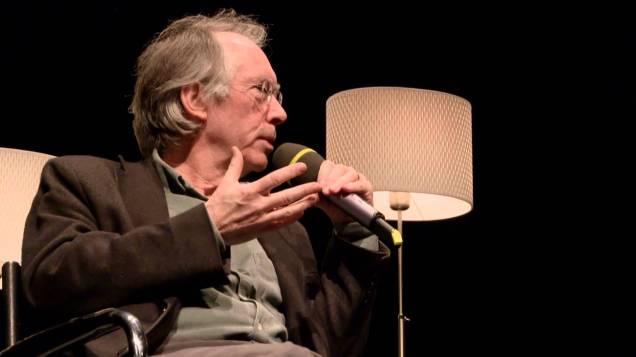
In the course of an interesting interview with the Guardian’s Decca Aitkenhead promoting his new novel “Nutshell”, author Ian McEwan digresses on the subject of identity politics.

From the feature article:

“Where I get a little critical of it is where selfhood becomes all of your politics, in a world in which we are more troubled than at any point I can remember in my adult life.”

Do identity politics look like decadent narcissism to him? “It feels like that, coming to the university aspect of it. These children have grown up in an era of peace and plenty, and nothing much to worry about, so into that space comes this sort of resurgence that the campus politics is all about you, not about income inequality, nuclear weapons, climate change, all the other things you think students might address, the fate of your fellow humans, migrants drowning at sea. All of those things that might concern the young are lost to a wish for authority to bless them,” he says, “rather than to challenge authority.”

My emphasis in bold.

Doesn’t that just perfectly sum up the Cult of Social Justice and Identity Politics? A generation of students raised at a time of great material abundance, peace and prosperity arrive at university to find most of the great injustices of the past already slain by previous generations of campaigners. Bereft of purpose but still feeling the strong student urge to embrace a cause, they crank up their sensitivity settings to perceive any slight or inequity, however small or unintentional, to be evidence of the systematic oppression of one or more classes of prescribed victim groups.

McEwan’s last sentence is particularly profound – the idea that today’s young people no longer rail against authority in the way that student activists of old did, but rather make tear-stained appeals to authority figures to intercede on their behalf. This is the victimhood culture, clearly distinct from an honour culture (which would encourage the individual to stand up to minor sleights or “microaggressions” and confront the issue themselves) or a dignity culture (which would only sanction involving authorities in case of grave injury).

In contrast with honour cultures and dignity cultures, victimhood culture encourages the individual to exaggerate their own vulnerability and the “harm” which other have inflicted in them through careless words or gestures, and to seek redress from external authority figures not as a last resort but as the first and default option.

Sadly, our generation is primed for this culture. We millennials have often been raised from birth to believe that we are unique, precious and perfect snowflakes worthy of praise and validation from dawn til dusk, that sticks and stones may break our bones but mere words can kill us stone dead, and that there is no greater goal in life than self-actualisation – living life according to our every passing whim, based on an “identity” we create for ourselves which is declared by Social Justice Warriors to be above any questioning, reproach or criticism.

In fact, I’m certain I made the very same point as Ian McEwan on this blog not long ago:

This is an attempted coup by an utterly coddled and spoiled generation of students who know almost nothing of hardship, deprivation or prejudice compared to their predecessors even just a few decades ago.

These tinpot student dictators arrive on campus at the age of eighteen to find most of the really hard battles already won for them – ironically, by genuinely brave radicals like Germaine Greer and Peter Tatchell. But these students must find some outlet for their youthful “idealism”, and so they latch on to the growing Politics of Identity, assimilating its intricacies and genuinely persuading themselves of its core message – that what matters is not the content of one’s character, but rather one’s arbitrary lived experience as a member of a defined and segregated subgroup.

And so rather than simply accepting that they have it rather good, even compared to their parents and grandparents, these student snowflakes go on the march. They find ever-smaller slights or “microaggressions” and protest them ever-more loudly and hysterically in an attempt to assert power over university administrations – many of which meekly submit without so much as putting up a fight.

Throw in the fact that their social hierarchy is based on a purist adherence to the Politics of Identity – with members gaining social currency for flaunting their own tolerant nature or identifying and persecuting anyone whose behaviour happens to violate one of the many invisible lines restricting our speech and behaviour – and you have a potent and deadly combination.

I have always been a fan of Ian McEwan‘s novels. Saturday was edgy, evocative and incredibly well researched, Solar was inventive and at times hilarious, On Chesil Beach made a four-hour flight from Cyprus to London so exquisitely awkward that I wanted to blow the emergency exit and jump out of the aircraft while The Children Act remains shamefully unread on my bookshelf, part of an ever-growing backlog.

But I also admire McEwan’s forthrightness and willingness to speak his mind rather than toe the establishment line on all social matters. McEwan recently caused a ripple of scandalised headlines when he questioned whether people should be free to choose their gender identity:

In a speech to the Royal Institution, the Booker prize-winning writer asked whether factors such as biology and social norms limited our ability to adopt a different gender.

“The self, like a consumer desirable, may be plucked from the shelves of a personal identity supermarket, a ready-to-wear little black number,” McEwan said. “For example, some men in full possession of a penis are now identifying as women and demanding entry to women-only colleges, and the right to change in women’s dressing rooms.”

In a Q&A after his speech, one woman asked McEwan, 67, to clarify what she called his offensive remarks, the Times reported. “Call me old-fashioned, but I tend to think of people with penises as men,” he said. “But I know they enter a difficult world when they become transsexuals and they tell us they are women, they become women, but it’s interesting when you hear the conflict between feminists now and people in this group.

“It’s quite a bitter conflict. Spaces are put aside, women are wanting to put spaces aside like colleges or changing rooms, and find from another side a radical discussion coming their way saying men who want to feel like it can come in there too. I think it’s really difficult. And I think there is sweeping through American [university] campuses a kind of strange sense of victimhood and a sense of purposeful identities that we can’t actually all of us agree with. Of course sex and race are different, but they also have a biological basis. It makes a difference whether you have an X or Y chromosome.”

Cue the kind of response one has come to expect when anybody dares to give voice to such thoughtcrime.

His new novel, Nutshell, is narrated from the perspective of a foetus still in the womb, and is likely to raise all kinds of hackles from staunch free right campaigners and militant free choice protesters alike.

But on the Cult of Social Justice and Identity Politics, McEwan hits the nail on the head. How different the university campus must seem to him now than it was when he was a student. One wonders whether McEwan would even be allowed to set foot on the campus of the University of East Anglia in Norwich, where he received his Masters in creative writing – the university has received a “red” rating in Spiked’s annual university free speech rankings.

Certainly McEwan, one of UEA’s most distinguished alumni, would never be welcome at the Students’ Union with its blanked restriction on “imagery or language which reinforces a gender binary”. Having expressed his own personal views on the subject of transgender issues, McEwan’s presence would clearly create an oppressive and highly unsafe space for the delicate flowers now following in his footsteps.

What’s really concerning is this: Ian McEwan is now something of a grandee in Britain’s cultural scene, yet even he was ultimately forced to apologise for airing his own personal views on transgenderism, effectively reversing his earlier statement under duress and confessing “biology is not always destiny” and that a person’s decision to change their gender must be “celebrated”.

If one of Britain’s most successful and respected authors cannot hold a contrary or agnostic position on hot-button social justice issues where conformity without exception is demanded and expected, what hope is there for new, up-and-coming artists or academics to question the new orthodoxy or admit to holding an unpopular opinion? Who will be rash enough to dynamite their own career before it has gotten off the ground  by admitting their heresy or reflecting it in their work?

And what future for the rich and vibrant British artistic and cultural scene when the Social Justice Warriors finally get their way and browbeat everybody in the land into thinking, saying and “celebrating” the same things?


Ian McEwan - Transgender comments

Bottom Image: Guardian

Support Semi-Partisan Politics with a one-time or recurring donation:

Agree with this article? Violently disagree? Scroll down to leave a comment.

Follow Semi-Partisan Politics on TwitterFacebook and Medium.

Tales From The Safe Space, Part 40 – The University Of Chicago Fights Back

University of Missouri - Mizzou Hunger Strike

Yes, some things – like academic freedom – are more important than the delicate feelings of new undergraduate students. Kudos to the University of Chicago for making their incoming freshman class aware of that hard fact up front.

In a refreshing contrast to the usual depressing tales of faculty capitulations to the whining, self-involved voices of the Cult of Social Justice and Identity Politics, the University of Chicago decided to make a bold stand for academic freedom.

From Heat Street:

The University of Chicago, one of America’s most prestigious and selective universities, is warning incoming students starting this fall not to expect safe spaces and a trigger-free existence during their four-year journey through academia.

In a letter sent to the class of 2020, university officials said one of the defining characteristics of the school was its unwavering commitment to freedom of inquiry and expression. Civility and mutual respect are vital to the campus culture, the letter states, but not at the expense of shielding students from unpopular opinions or ideas.

“Our commitment to academic freedom means that we do not support so-called “trigger warnings,” we do not cancel invited speakers because their topics might prove controversial, and we do not condone the creation of intellectual “safe spaces” where individuals can retreat from ideas and perspectives at odds with their own,” the letter states.

Expect the University of Chicago to be rewarded for their courage and integrity through greater application and enrolment numbers, as well as higher levels of achievement from the incoming undergraduate class as those delicate snowflakes too enraptured by their own vulnerability and completely unable to process dissenting opinions decide to study at other, more large-L liberal schools.

Already we have started to see a backlash against those institutions and university leaderships which are too quick to capitulate to petulant SJW demands to alter the curriculum, suppress free speech, disinvite conservative speakers and turn the campus from being a place of fearless debate to one of infantilising self-affirmation and victimhood.

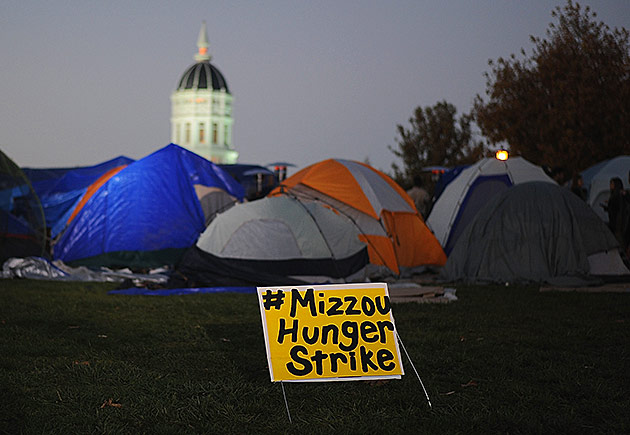
The University of Missouri, roiled by campus protests last year in which marauding Social Justice Warriors forced the resignation of the university president for failing to treat black students like helpless victims, has seen its enrolment and profitability fall off a cliff. Good. If there is any justice, enrolment at Mizzou will dwindle until there is nothing left but tumbleweeds and the shrieking activists who drove out reason from a place of learning. And closer to home, the University of Oxford’s Oriel College had to frantically appease angry alumni donors who were ready to cancel their donations to the college in protest at Oriel’s limp capitulation to the Rhodes Must Fall movement.

In this very “Tales From The Safe Space” series, we have previously highlighted other examples of academic institutions standing up to their crybully students rather than rolling over and letting them seize control – the uncompromising example set by Dr. Everett Piper, president of Oklahoma Wesleyan University, is particularly encouraging.

As Dr. Piper memorably warned his students:

If you’re more interested in playing the “hater” card than you are in confessing your own hate; if you want to arrogantly lecture, rather than humbly learn; if you don’t want to feel guilt in your soul when you are guilty of sin; if you want to be enabled rather than confronted, there are many universities across the land (in Missouri and elsewhere) that will give you exactly what you want, but Oklahoma Wesleyan isn’t one of them.

At OKWU, we teach you to be selfless rather than self-centered. We are more interested in you practicing personal forgiveness than political revenge. We want you to model interpersonal reconciliation rather than foment personal conflict. We believe the content of your character is more important than the color of your skin. We don’t believe that you have been victimized every time you feel guilty and we don’t issue “trigger warnings” before altar calls.

Oklahoma Wesleyan is not a “safe place”, but rather, a place to learn: to learn that life isn’t about you, but about others; that the bad feeling you have while listening to a sermon is called guilt; that the way to address it is to repent of everything that’s wrong with you rather than blame others for everything that’s wrong with them. This is a place where you will quickly learn that you need to grow up.

And flatly reminded them:

This is not a day care. This is a university.

A long-overdue reminder for some students.

And so the University of Chicago’s stand against the SJWs did not happen in isolation; nor was it possible without a rigorous examination of the negative trends in campus life and the various ways in which academic freedom is under attack. And that is precisely what they did – back in 2014 the university commissioned a report on the state of freedom of expression at universities nationwide and reaffirming their own commitment to the timeless value of free speech over and above any passing social fashion.

From the report (my emphasis in bold):

Because the University is committed to free and open inquiry in all matters, it guarantees all members of the University community the broadest possible latitude to speak, write, listen, challenge, and learn. Except insofar as limitations on that freedom are necessary to the functioning of the University, the University of Chicago fully respects and supports the freedom of all members of the University community “to discuss any problem that presents itself.”

Of course, the ideas of different members of the University community will often and quite naturally conflict. But it is not the proper role of the University to attempt to shield individuals from ideas and opinions they find unwelcome, disagreeable, or even deeply offensive. Although the University greatly values civility, and although all members of the University community share in the responsibility for maintaining a climate of mutual respect, concerns about civility and mutual respect can never be used as a justification for closing off discussion of ideas, however offensive or disagreeable those ideas may be to some members of our community.

[..] In a word, the University’s fundamental commitment is to the principle that debate or deliberation may not be suppressed because the ideas put forth are thought by some or even by most members of the University community to be offensive, unwise, immoral, or wrong-headed. It is for the individual members of the University community, not for the University as an institution, to make those judgments for themselves, and to act on those judgments not by seeking to suppress speech, but by openly and vigorously contesting the ideas that they oppose. Indeed, fostering the ability of members of the University community to engage in such debate and deliberation in an effective and responsible manner is an essential part of the University’s educational mission.

And it is that last part which presents such a challenge to many of today’s students – young people today are not only arriving at university unable to tolerate let alone contest ideas which they oppose, they are outraged at the very suggestion that they should learn to cope in such a way.

And not entirely through their own fault, for mine is a snowflake generation raised to believe that we are special, unique, perfect and above any reproach which might damage our self-esteem. We are taught not that sticks and stones may break our bones but words will never hurt us, but rather that sticks and stones may break our bones but words can kills us stone dead.

From early childhood education on upward we are taught that hurting someone’s feelings is just as bad – if not worse – than physically assaulting them. And all the while we are told to present our tear-stained faces to the relevant authorities the moment that somebody upsets us, so that they can receive their just punishment. We are not taught self sufficiency, resilience and the power of reason, but rather are encouraged to exalt in our weaknesses and wear our fragility like a badge of honour.

Little wonder, then, that when my generation reach university and fall under the intoxicating presence of the Cult of Social Justice and Identity Politics (student protests always appearing edgy and cool, but this incarnation representing a dangerous shift in attitude and tactics) so many of us immediately buy in to the idea that our personal worldview and beliefs are never to be questioned.

The University of Chicago alone cannot do anything about the way that people in the English-speaking Western world raise their children or educate them at a young age. They cannot challenge the toxic rise of baby-centred parenting, where parents and adults contort themselves to conform to the whims and sensitivities of their historically pampered children rather than promoting respect, deference and anti-fragility. The University of Chicago is but one academic institution facing a tidal wave of consequences from years of bad parenting, educational and child-rearing trends in society.

But what the University of Chicago can do – what they did do, admirably – is boldly restate who and what they are as an organisation, and what they stand for as an institute of higher education. They can boldly restate their commitment to the timeless values of academic freedom, and the fostering of personal and intellectual growth through robust debate and the free exchange of views. They can tell their incoming freshmen that no matter how accustomed they are to getting gold stars simply for participating, or demanding positive affirmation of even their most questionable decisions, the days of coddling will end the moment they set foot on campus.

This is what the University of Chicago did. This is what every university in America, Britain and the entire English-speaking world needs to do now if they are to avoid regressing into nothing more than adult daycare centres where the Play-Doh and puppy videos are piled high while challenging books burn in a pyre outside the library.


Safe Space Notice - 2

Top Image: Sports Illustrated, Michael B. Thomas/Getty Images

Support Semi-Partisan Politics with a one-time or recurring donation:

Agree with this article? Violently disagree? Scroll down to leave a comment.

Follow Semi-Partisan Politics on TwitterFacebook and Medium.