Yikes. Guido Fawkes has done a wonderful job of listing all of the sitting Members of Parliament who currently employ one or more family members on their parliamentary staffs at the taxpayer expense. To my mind, the only acceptable scenario for doing so would be if your family member just happens to possess vast prior experience of working on a political staff, or is a renowned expert an a particular issue or cause championed by the MP. This would reduce the number of MPs employing family members to the comfortable single digits, I’m sure. Just look at the list – as Guido says, this is a personal family enrichment scheme being perpetrated by a long and alarming list of our nation’s elected representatives, to the tune of four million pounds a year. This needs to stop. No more employing your husband or wife to be your secretary. I don’t care to hear about individual cases where the husband and wife parliamentary team are wonderful – the risk for fraud and abuse is too great. Only when we introduce strict term limits and ban the practice of MPs hiring their own family to their political staffs can we begin to eradicate the scourge of the career politician, and that even worse phenomena – the career MP who sees their public duty as a free ticket to enrich his or her family at the taxpayer expense.
Politics

What Housing is Like in Loony UN Investigator’s Home Country
Guido Fawkes takes UN investigator Raquel Rolnik to task for writing a report condemning the UK’s “bedroom tax” (not really a tax at all) on the grounds that it represents a retrogression of the human right to adequate accommodation, and then leaking her report to the media months before it is due to be published. As Guido correctly notes, the report is quite rich considering that it was written by a national of a country where more than 50 million people live in inadequate housing, and also because Rolnik somehow failed to meet with the government ministers in charge of any of the relevant departments before arriving at her totally unbiased, 100% legitimate and not at all pre-ordained conclusions.
Share this:
Why Britannia Rules

We are at that point in the eternal cycle again. Something bad is afoot in the world, the United States of America pricked up its ears and made noises about military intervention, and the world turned to look at Britain to see whether we would leap on board too. And to begin with, everything was proceeding according to the long-established formula. The Prime Minister made the usual belligerent noises, condemned the atrocities taking place (in Syria this time, in case anyone was sitting this round out) and urged the United States to take a strong stance, with the obvious implication that Britain would occupy her usual place in the co-pilot seat.
But then something unusual and unscripted happened – the Prime Minister was manoeuvred into seeking approval from Parliament. MPs, annoyed at being called back from their summer vacations, wary of government intelligence in the wake of Iraq and, as always, looking to protect their own political hides, voted against authorising UK military action. Scandal! Or actually, just democracy working as it should.
And now, all anyone can talk about is how much this foolhardy decision must have diminished us as country, about how we have deteriorated and declined as a nation, and will continue to do so, and how everything is wretched and terrible and how awfully embarrassing it must be for our political leaders to have to represent Britain abroad when Zimbabwe and Somalia are clearly so much better.
Anyone following British television or print media’s coverage of the G20 summit currently taking place in St Petersburg, or the international response to the British parliamentary vote in general, will have been treated to a parade of insecure, snivelling, sometimes self-righteous commentators solemnly telling us that the special relationship between the United States and the United Kingdom has been dealt a death blow, that Britain’s international credibility is in tatters, that we are the laughing stock of the world and that there is little left for our nation to do but limp out to a desolate spot in the north Atlantic and sink ourselves.
What nonsense.
Britain doesn’t sit at the big table because we dutifully follow the United States from one armed conflict to the next. That is not – repeat not – the reason. We sit at the big table because of the hundreds of countries in the world, our economy remains the seventh largest, and one of even fewer lynchpins of the global economy. Many of the world’s greatest inventions and finest companies originated and are based on our shores. Our capital city is the capital city of the world, an indispensable hub for global finance, commerce and culture.
We are a declared nuclear power, and possess one of five permanent, veto-wielding seats on the United Nations Security Council. Our military and intelligence gathering organisations are integrated with their sister organisations in the United States to a degree that no other nation can claim. Our armed forces (despite unwise government cutbacks) are among the most well trained, powerful and deployable in the world, and our country fields one of only three blue water navies to command the oceans.
British popular music, art, literature, film, television and all forms of culture enjoy a popularity and international cultural hegemony second only to the United States. Our people are industrious, friendly, stoic and tolerant. We invented the English language and yes, we speak it better than our transatlantic cousins.
That is why Britain matters, is respected, and is a force to be reckoned with. Not because we go along with Plan X or Plan Y to come floating out of the halls of Washington DC. Sometimes I find myself aghast at the need to remind my compatriots of these simple facts.
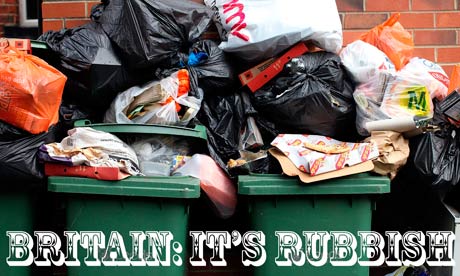
Did growing up in unionised, socialist, pre-Thatcher, pre-1979 Britain so affect and wound the collective psyche of our political leaders, journalists and commentariat class that they will disregard these manifold blessings and benefits – attributes that any country would be proud to possess – at the mere sight of a negative headline in an American newspaper or an off-the-cuff remark by a junior American administration official? For shame.
If nervous, wet politicians and journalists want to wring their hands and fret because John Kerry called France the oldest ally of the United States (a historical, verifiable fact rather than a poke in the eyes of the British), so be it. But recall that President Obama, speaking from the Rose Garden of the White House, correctly referred to the United Kingdom as America’s closest ally. Because it is demonstrably true, has been for years, and will continue to be so.
The bottom line is this: Britain can afford to sit out a round or two of military intervention now and then, and with so many other countries in the world who profess to care about human rights, we don’t always have to be the ones spilling the blood and treasure in their defence. Britain is a strong, enduring nation, and does not need to prove this fact to the world by getting actively involved in every military conflict, all the while dividing our population and depleting our treasury. America will not stop taking our calls because we sit out this particular action in Syria.
And since when did an expression of British democracy in action – our elected House of Commons voting “no” to a government motion authorising military action – become something to be ashamed of, or to apologise for? Do those people who fret that Britain’s non-participation will be the end of our global prestige really think that bombing sovereign nations at will without consulting the people is more worthy of respect than consulting the people, and holding back when the peoples’ representatives enforce their will?
I do not care to live in their mental version of Britain. Whilst I ache for a written constitution for the United Kingdom and clearly delineated separation of powers, this parliamentary debate, on the whole, was a moment to be proud of.
It concerns me that even our Prime Minister has difficulty articulating the virtues of Britain and making a robust defence when pressed by interviewers who detect political blood in the water and incorrectly perceive our standing in the world as being diminished whenever we are not in lock-step with the United States. It often seems that all David Cameron can do in response to these interview ambushes is stare at his feet and mumble about how many times a day he speaks to Barack Obama, when what he should be doing is reciting a lusty, more eloquently written version of this very article.
We are British. We are a great country. Our economy may still be in the toilet, and we may be governed at present by dilettantish non-entities in the mode of David Cameron, George Osborne and Nick Clegg, but these things shall pass. And when they do, Britain will still be a great country.
Here’s a closing thought: the world might respect Britain a lot more if we showed ourselves more respect for who we are, what we have done and what we can do as a nation.
Share this:

Kevin Rudd Defends Gay Marriage

With the Australian general election campaign drawing to a close, the website Upworthy.com highlights an exchange between sitting Prime Minister Kevin Rudd and a pastor who questioned Rudd’s change of heart on the subject of gay marriage.
The exchange took place at a recent general election Q&A session between Rudd and Australian voters, and is shown here:
The Guardian reports on the same event:
Mr Rudd was questioned about the issue by Christian pastor Matt Prater during a live Q&A session.
Mr Prater asked Mr Rudd how he could support gay marriage as a Christian. “If you call yourself a Christian, why don’t you believe the words of Jesus in the Bible?” he said.
Mr Rudd responded: “Well mate, if I was going to have that view, the Bible also says that slavery is a natural condition.”
“Because St Paul said in the New Testament, slaves be obedient to your masters. And therefore we should have all fought for the Confederacy in the US Civil War.”
It is hard to put the case – not just the civil rights case, but also the Christian case – for marriage equality much more succinctly than Rudd manages to do in the space of these few minutes. Indeed, in the Twitter feed at the bottom of the screen, one viewer can be seen retorting “KRudd just pulled a Jed Bartlet on that guy”, a reference to fictional President Josiah Bartlet from TV drama The West Wing.
Sadly, at least in terms of government policy relating to equal marriage in Australia, it appears that opposition leader Tony Abbott and his conservative coalition are poised for a decisive victory when voting takes place this weekend.
Tony Abbott will be in no hurry at all to pick up Kevin Rudd’s baton (no pun intended) with regard to this particular issue, so civil rights for gay and lesbian people in Australia is likely to be stalled for some time.
Share this:

How To Handle Syria
Okay, given that we are in a seemingly unstoppable slide toward further military action in the Middle East – against my own judgement – here’s what the United States (and partners, if they can find any) needs to do in response to the use of chemical weapons on the civilian population in Syria, almost certainly by the regime of President Bashar al-Assad.

I was hoping that I wouldn’t feel compelled to write this particular article; that some esteemed blogger, journalist, armchair general or TV talking head would do the job for me. But so far they seem to be almost uniformly, consistently wrong in their analyses and prescriptions. So from the worst case scenario in which we find ourselves, these are the actions that should be taken by the United States (and willing others), post-haste, according to Semi-Partisan Sam.
DISCLAIMER: This solution stands the best chance of achieving the goals of strongly discouraging or eliminating the use of further chemical weapons by the Syrian regime or by other states pondering the future use of WMDs. If your preferred goal is anything else – either externally aided regime change, an internationalist approach based on renewed diplomatic efforts through the United Nations, or a post-Iraq, moralising isolationism – then you are probably going to disagree with what is written below. Read it anyway, because military action is coming, and it seems that neither public opinion or the United States Constitution is going to stop it. Again – I see no positive outcome from military action, and do not support it. But since President Obama has painted himself into a box and seems to feel compelled to do something, this is how we go forward, being pragmatic.
1. Accumulate the requisite proof of wrongdoing. It sounds obvious, and it is certainly true that it will be subject to as many delaying tactics as interested parties (the UN, the Syrian regime) can muster, but it is necessary. The weapons inspectors who once promised an interim report almost immediately upon return from Syria now somehow need 2-3 more weeks to complete their analysis, though quite why this analysis is needed is beyond me. Weapons inspectors are trained to confirm the presence and/or use of chemical weapons. They are not equipped to determine responsibility for their manufacture or deployment, and any evidence of their authorisation for use would almost certainly have been hidden by the perpetrators long before they arrived on the scene.
Besides, the United Nations is no panacea of credibility, and its Security Council (particularly the Permanent 5) are, as always, paralysed by indecision due to the diametrically opposing interests of its members. But as was so often said by various MPs during the British parliamentary debate on the government motion to authorise military action, voting to do nothing is also an active choice, and in this case, the wrong one. Russia may continue to deny Syrian regime involvement in the attack, but to do so takes one on a winding and frankly ludicrous logical journey that sees the Syrian rebels fire weapons that they did not have (almost irrefutably) at their own supporters (unlikely, though a “false flag” argument could be made, positing that the rebels perpetrated the attack in order to bring western military might to bear against the regime).
The intransigence of Russia and the refusal of some to acknowledge the evidence in front of their eyes means that at some point, after the UN weapons inspectors’ report is published (useless though it will doubtless be), all reasonable means of establishing proof of culpability will have been exhausted. This then gives sufficient cover for Step 2 to proceed.
2. Launch a surgical drone strike or special forces attack to take out the top echelons of the Syrian military. Not President al-Assad or his family, not members of the government, not the defence ministry and not the general Syrian military – just the military leadership. Why this approach?
Taking Assad, his government or his family out with a Predator drone is clearly not the answer. Though final culpability for the chemical attacks rests with Assad (even if the Syrian rebels were responsible, which they were not, it is the President’s fault for allowing the manufacture of chemical weapons, preventing their destruction and allowing them to fall into enemy hands), creating a future where sovereign heads of state can be targeted willy-nilly by antagonistic countries would be setting a very unfortunate precedent indeed. I say this even though Bashar al-Assad is clearly odious, has committed some terrible crimes and is the person single most responsible for the attack. Furthermore, civilians (including civilian leaders such as al-Assad) are entitled to due legal process and a trial, and cannot just be zapped from the sky on a whim.
Attacking the sites where chemical weapons are suspected to be stored is a recipe for disaster. Such weapons are portable and can easily be moved, disguised and hidden, often in populous civilian areas. Even if they remain in barracks or in bunkers, attempting to destroy them could release their weapons-grade toxins into the atmosphere and cause unpredictable collateral damage. The weapons themselves are likely to be guarded by people who were conscripted into the Syrian Army or other defence forces, and probably have no more desire to be doing al-Assad’s bidding than the United States, Britain or others would desire to kill them. So not only would a direct attack on the chemical weapons themselves be highly dangerous and almost certain to fail to eliminate all of the stores, it would result in the deaths of potentially large numbers of conscripted Syrian soliders, further hardening attitudes towards the west.
Striking the military leadership (from the Chief of Army Staff on downwards), on the other hand, avoids these pitfalls and would achieve nearly all of the stated objectives of President Obama, Prime Minister David Cameron and others. Unlike their conscripted juniors, the top brass are career soldiers. Why should they, who do none of the fighting and live lives of relative comfort, be spared from attack when their subordinates are in the crosshairs? Furthermore, taking this action would have a massive impact on Syria’s willingness to ever deploy chemical weapons again, and would eliminate any doubt as to the resolve of the western democracies when it comes to punishing such behaviour – all while sparing as many lives as possible.
The most compelling reason for taking this course is that the military commands of every country on Earth would then think very long and hard indeed before following an order from a belligerent civilian leader to use chemical weapons or other WMDs. They would know that to do so would not result just in international opprobrium and the deaths of some lowly conscripts in a half-hearted two-day airstrike by the west, but would likely bring a swift end to their own lives. Taking such action and establishing this precedent of targeting the top brass would help to drive a wedge between despotic leaders who are tempted to use such weapons on foreign or domestic targets and the military hierarchy who would be responsible for planning and ordering such an attack.
To my mind, the US Constitution makes pretty clear that any military action requires explicit authorisation by the Congress; therefore this should be sought and obtained in advance of the action. This should not be a problem – more votes would be won from the ranks of doveish or isolationist-leaning representatives due to the small footprint of the proposed action than would be lost from the ranks of the neo-cons who want a much bolder military statement. A similar dynamic probably holds true in the United Kingdom, where it would also be necessary to win Parliamentary approval – which has almost certainly been ruled out despite its prospects for success, given the dramatic defeat of the British government’s earlier motion.
3. Sit back and wait. There is no appetite for a large-scale land war, or for Syrian regime change, among the populations of the United States, United Kingdom or almost any other military power with the ability to act. It is true that the definition of war has been disingenuously changed, stretched and corrupted over the years (consider the fact that the United States has not technically been at war since the end of the Second World War, the actions in Vietnam, Bosnia, Afghanistan, Iraq and others somehow failing to meet the criteria, enabling generations of imperial presidents to do what they wanted without having to go begging for Congressional approval), a strike such as this, though it would doubtless be considered an act of war by Syria, is certainly less so than the full scale bombing of military targets throughout the country.
And what would the Syrian reaction be? This is the great unknown. But under the Semi-Partisan gameplan it is much less of a known unknown (to quote Donald Rumsfeld) than any of the options suggested by the Obama administration, or the neo-conservative relics advocating for much larger-scale military action. A widespread bombing campaign with 200-400 tomahawk missiles launched at targets throughout Syria would have a mixed chance of degrading al-Assad’s chemical weapons capability, and could result in high levels of collateral damage. Larger-scale military action designed to definitively swing the balance of power to the rebels and bring down the Assad regime could lead to desperation and increase the chances that Syria lashes out at other regional targets (Israel being the obvious example).
If this solution fails to work (though it seems to be the most likely to succeed of any option – a strike that eliminated just half of the Syrian military leadership would be as powerful a deterrent against future WMD use as would one that implausibly killed them all), the door to all of the other options suggested by the Obama administration, the British, the French, the neoconservatives and others remain open and available for use. Given the fact that various countries have been openly mulling the use of force against Syria since news of the latest chemical attack emerged over a week ago, there is no element of surprise left to squander. It is worth taking the time to explore the mode of military action has the smallest footprint, yet which promises to be the most effective, before resorting to more drastic military measures or washing our hands of the whole situation and the suffering of the Syrian people.
Conclusion
Taking out the top level of the Syrian armed forces – or those that could be readily located and targeted (and Lord knows we’ve had lots of practice targeting people with drones over the past few years) – would actually be the most surgical option with the lightest footprint. The generals could be replaced, and Assad (odious though he is) would remain until such time as the Syrian opposition defeated him on their own and brought him to justice. But crucially, the future willingness or institutional ability of Syria or any other country to use such weapons would be dealt a severe blow.
It seems clear to me that attempting to destroy weapons of mass destruction that are protected and hidden in a country thousands of miles away is a lot harder than discouraging their use by making the retribution for their use particularly punitive and personal to the person(s) who authorise it.
Your Thoughts
Maybe you disagree with my prescription. If so, please let me know your own thoughts – use the Comments feature to let me know whether you agree, disagree, have reservations or think that I have missed some critical piece of information in my analysis. Bear in mind though that my prescription for handling Syria is based on the stated goals of effectively discouraging the further use of weapons of mass destruction by Syria and other countries, with the minimal resultant loss of life. I am not advocating military action, but I see the writing on the wall and I am proposing what I believe to be the best possible strategy given the unfortunate scenario in which we find ourselves.
Comments bearing this in mind will be particularly appreciated.

 Semi-Partisan Politics