Left Wing Hate Watch, Part Five – Jeremy Corbyn Victory Edition

Jeremy Corbyn Q&A, Luton, Britain - 28 Jul 2015

Jeremy Corbyn has largely stayed above the fray, but the anti-Tory hysteria coursing through the Labour Party from the grassroots urgently needs to be tackled

Tim Montgomerie does my work for me in this edition, writing in CapX yesterday in anticipation of a Jeremy Corbyn victory:

There’s always been a nastiness on the Left. The Guardian is currently selling T-shirts (inspired by Bevan) that describe the Tories as lower than vermin. Harry Leslie Smith – who is now a regular turn at Labour Party events – compares Rebekah Brooks of News UK to Joseph Goebbels. An effigy of Margaret Thatcher in a coffin is paraded at the Durham Miners’ Gala – with a “rest in hell” message daubed upon it. At that Gala Len McCluskey attacks Tory ministers as “thieving bastards”.

Throughout the Labour leadership campaign the Twitter accounts of too many Corbyn supporters have routinely been vile, anti-Semitic and misogynistic. There’s nastiness on the Right too, of course but the Right has rarely enjoyed the moral high ground. Because many on the Left feel they are doing the work of God (or Marx) they feel even the worst of behaviour is ultimately in service of a good cause.

This is very true. There is a nastiness among the broadly mainstream Left toward their political opponents and certain segments of society (the Evil Tories, the “bankers”) which is just not present on the Right.

That’s not to say that newspaper comments sections and Facebook discussion groups are not full of semi-literate rants against asylum seekers, benefit scroungers or Muslims – they are. But they are not picked up in rhetoric or deed by the Conservative Party in the same way that some Labour MPs and officials are willing to publicly talk about the Right.

Continue reading

The Arrogance Of Labour’s Centrists

Jeremy Corbyn - Labour Leadership Election - Victory Nears

Accustomed to getting their way for nearly 20 years, Labour’s centrist MPs are having a hard time adjusting to the fact that they may no longer call the shots or dictate policy

Jeremy Corbyn has not yet been crowned as the new leader of the Labour Party and Her Majesty’s Loyal Opposition, but already the party’s centrists and Blue Labour types are attempting to dictate the terms of their surrender.

And as the Independent points out, at present it is by no means certain that the centrists – who have known nothing but power and influence for nearly two decades – will accept the result with anything like good grace:

The real question, of course, is whether they will accept the verdict of the party’s membership. The vote may well be closer than anyone expects – with a late showing by Yvette Cooper offering the tantalising prospect of a second surprise to overtake the original shock of the Corbyn surge. But, if he wins, Mr Corbyn will have a mandate to lead his party under the rules the party introduced to increase participation.

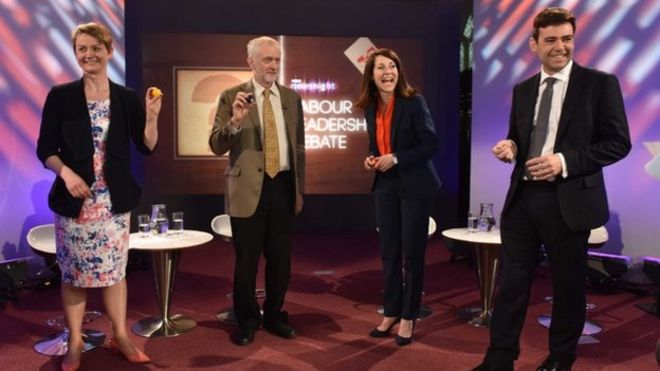
It also depends on how far figures such as Andy Burnham, Yvette Cooper and Liz Kendall go to try and reconcile their views with his. They have been more or less clear about what they would like to do, but the more that people such as they, and Chuka Umunna and Tristram Hunt boycott the Corbyn leadership, the more he will be able to ignore them. It is their duty to serve their party and their leader, and for them to push for their policies from within. To abstain, to run away, to sulk – this is not only not in Labour’s best interests, but would hardly serve to put Labour back on the road to social democracy.

In fact, there are growing indications that a number of Labour frontbenchers may choose to take their ball and go home rather than support the new leader and risk their own future careers by associating themselves with Jeremy Corbyn’s unabashed socialism.

Continue reading

Labour Leadership Contest 2015: Highlights And Lowlights

Labour Party - Labour Leadership - 2015

Voting has now closed in the Labour leadership election, with the result due to be announced on Saturday. Time to look back on a contest which has vindicated Semi-Partisan Politics’ call for a rejection of bland, consensual political centrism

As voting closes in the Labour Party’s leadership contest, it is interesting to look back on a time in the recent past when Jeremy Corbyn was an unknown backbencher – and maybe also point out that this blog was one of the first among the punditry to realise the significance of Corbyn’s candidacy and the effect it could have on our politics.

In that spirit, here is a summary of how Semi-Partisan Politics has covered the battle for Labour’s soul, from the dark days immediately after 7 May through to the Jeremy Corbyn insurgency, and everything in between.

Enjoy!

9 May: Where did it all go wrong?

Why Isn’t Labour Working?

Until the exit poll came in, it was simply inconceivable to many on the left that there could be any result other than a rainbow coalition of Britain’s left wing parties, coming together to lock the Evil Tories out of Downing Street and immediately get to work cancelling austerity and providing everyone with material abundance through the generosity of the magic money tree.

Labour lost the 2015 general election because they increasingly stand for nothing, having gradually lost touch with the party’s roots and founding principles – and because they created a two-dimensional caricature of their right wing opponents (stupid, selfish, mean-spirited and xenophobic) and campaigned against this straw man, essentially shaming Conservatives and UKIP supporters to keep quiet about their beliefs.

12 May: Please, God, not Chuka Umunna

Anyone But Chuka

Just what the Labour Party needs. Another dazed and confused London career politician stumbling shell-shocked and bewildered beyond the M25 in a belated effort to understand why so many working and middle class people – Britain’s strivers – spurned his party at the general election, totally unconvinced by a Labour manifesto and message conceived in Islington but barely embraced even in Hampstead.

Continue reading

How Dare The Labour Party Reject My Application?

Labour Party Application Rejected - 2

As the Labour leadership election draws to a close this week, today I was finally purged from the party, my application summarily rejected because apparently I do not share the “aims and values” of the Labour Party. I defy them to name which of their official “values” we do not hold in common.

I don’t know whether to be flattered or insulted by the fact that it took until today – less than a week before their leadership election result is announced – for the Labour Party to realise that perhaps I did not fit the profile of their ideal new supporter, and finally reject my application.

A quick Google of my name or perusal of this blog should have set alarm bells ringing right away, I fully expected, but it seems that I express myself so poorly on these pages that my antipathy to the Labour Party was not immediately clear to the vetting team at Labour HQ.

But despite taking weeks longer to reject my application than was the case for Telegraph columnist Toby Young or Conservative MP Tim Loughton, I at least had the consolation of receiving not one but two rejection emails, sent within minutes of each other. So when I finally registered on their radar, at least it seems that I made a strongly negative impression.

And so despite having been deluged with correspondence from all of the Labour leadership and London mayoral candidates since stumping up my £3 application fee, this is the terse, boilerplate rejection that I (twice) received from party HQ:

Continue reading

Stop Worshipping ‘Centrist’ Voters – They Are Responsible For Britain’s Woes

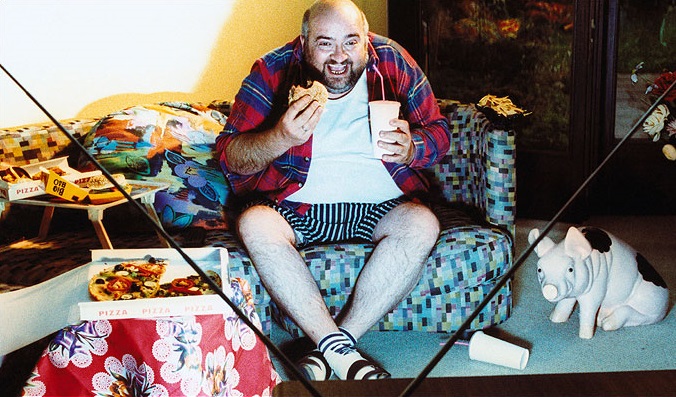
Swing Voters - Couch Potato - 2

First published at the Conservatives for Liberty blog

What exactly constitutes the political centre, anyway? Is it even a real thing? And why are we so in thrall to something so vague and ill-defined?

The political centre ground: people talk about it all the time. It is meant to represent the silent majority, that great conclave of wise and sage-like citizens who – unlike us hotheated partisan folk with our strong beliefs and awkward ideals – remain serenely above the political fray, calmly and methodically weighing competing policies against each another before arriving at their pragmatic, irreproachable voting decision on polling day.

Every British political party leader since Thatcher left office has been in hot pursuit of the political centre ground, happily throwing established party orthodoxy and revolutionary thinking alike out the window, preferring to court the good opinion of people who took a good look at Labour’s managed decline of the 1970s and the Tory individualism of the 1980s, and, Goldilocks-like, decided that they prefer something half way between the two, thank you very much.

But who are these political centrists? Do they actually exist, or are they an artificially created demographic, an amorphous and shifting blob of people whom the pollsters have not yet found a better way to categorise?

It’s a relevant question, because you can be assured that British politics for the next five years – or at least, the narrative around politics constructed by the media – will be all about the political centre, and which party is doing the better job of wooing it approaching the 2020 general election.

Continue reading