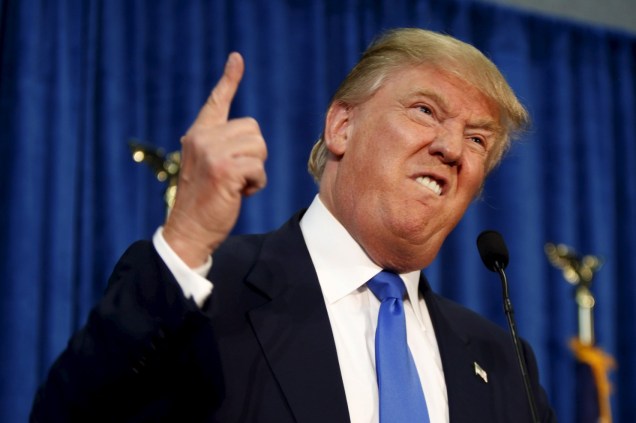
Donald Trump Victory Reaction: Laurie Penny Doesn’t Get It

laurie-penny

Donald Trump supporters got their man elected to the White House in part by following the Social Justice Warrior playbook. Leftists should beware, because anybody can play their tawdry game of division and victimhood

Left wing identity politics cultists are reacting to Donald Trump’s victory by doing what they always do – basking in tremulous victimhood – without realising that insisting on dividing the country into separate distinct victim groups is what provoked and inspired the white working class minority group to come together to elect Trump in the first place.

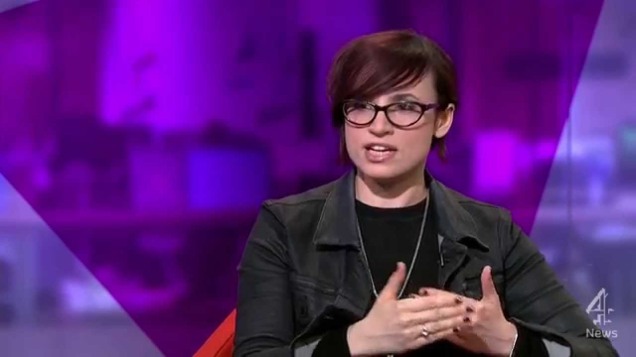
Just take a look at Laurie Penny, who can currently be found leading British SJWs to their safe space in the aftermath of Trump’s victory:

No Laurie, you wrote this – as always – for the primary purpose of self-aggrandisement and promotion. But that’s fine. Your audience is primarily a group of infantilised permanent victims who like to be told that an external authority figure is going to care for them, so you will be doing yourself no harm with the old readership.

Penny writes:

The people have spoken. That does not mean all the other people have to shut up.

No, it doesn’t. But when the whiny, petulant tone of the “other people” (together with their hair trigger sensitivity to often non-existent oppression) is what partially feeds phenomena like the election of Donald Trump then it might not be such a terrible idea to pipe down for a few days and engage in some genuine introspection. And I do mean real introspection, not just obsessing about their “pain” and exalting in their “vulnerability”.

More:

Today, all over America, black, brown and Muslim children are too frightened to go to school.

And whose fault is that? Who took Donald Trump’s careless and often offensive statements and whipped them up in the public imagination to make it seem as though he were the devil himself, that black or brown kids are somehow under imminent threat, not only when he is president but even now when he is president-elect? Who made people so frightened?

Trump didn’t do that. His supporters didn’t do that. Hysterical leftist SJWs did that, because they thought that it would motivate their base. If they have now traumatised themselves (and their children) through swallowing their own propaganda then really they have only themselves to blame.

More:

When they told liberals and journalists and policymakers and anyone with the cheek to suggest that maybe immigrants weren’t the problem that we weren’t listening to “ordinary people”, they meant we weren’t listening to white people.

Oh come on, Laurie. This is that insidious little trick that leftists always play, and which enrages and pushes away centrist and right-wing voters even more. Nobody but genuine racists (of which there are thankfully few) object to immigrants. But many people object to uncontrolled immigration. In their quest to undermine national borders and the nation state, the Left have for a long time conflated these two things, the better to shame and silence people who dare to stand up for enforcing immigration law. And until recently it has worked.

But as with all cheap, disingenuous little con tricks, eventually the luck runs out. And so it has in Britain with the Brexit vote, and seemingly in America, with the Trump vote. People with legitimate concerns about immigration (not immigrants) are not racist, and are sick to the back teeth of being told by privileged, coddled leftist agitators that they are ignorant, hate-filled xenophobes.

More:

The time for complacency is long gone. So too is the time for cowing to the hurt feelings of those who were willing to fire at the elite directly through the stomachs of their neighbours. Every effort has been made to sympathise with their distress at perceived loss of privilege that is felt, wrongly, as prejudice.

Every effort? Really? Laurie Penny has clearly blinded herself to the number of rants about the “dumb hicks” and “white trash” who supported and voted for Trump, now and before the election. And all of those SJW campus protests she supports are hardly brimming over with sympathy for the white working classes, that’s for sure.

Today, hundreds of millions of people in America and around the world have woken up afraid — for themselves, for their children, for the future of a planet where an authoritarian psychopath has his hands on the nuclear codes and the fate of a burning world waiting on his pleasure. Those people are being told that they are sore losers. That they should shut up and accept it. That their fear is somehow funny. Laughing at the pain of the most vulnerable. Squealing with glee when the bully lands a blow. That’s the world millions of notionally decent human beings voted for, and don’t tell me for a second they didn’t know what they were buying.

You know what, I’m going to come out and say it. When grown adults have been infantilised to the extent that they host “cry ins” at their university campuses or post weepy video tantrums online, then yes, it is a little bit funny.

Nobody (that I am aware of) is laughing at the legitimate fears of, say, American Muslims who are rightly alarmed at the intemperate language and unconstitutional proposals raised by candidate Donald Trump. But when privileged university students suddenly start acting as though they are being hunted down by death squads simply because an election goes against them then they do open themselves to some degree of ridicule.

More:

Fighting for tolerance, justice and dignity for women, queer people and people of colour is not frivolous and or vain. Who decided that it was?

Who decided that only those who place fear over faith in their fellow human beings are real, legitimate citizens whose voices matter? That’s not a rhetorical question. I want to know. Give me names.

Nobody. Nobody decided that. Fighting for egalitarianism is a noble thing to do. Wallowing in victimhood culture, continually emphasising one’s vulnerability over one’s strength and seeking to police the language and public discourse to actively shame anybody who questions the latest dogma, on the other hand, is every bit as authoritarian (or “fascistic”, to use Penny’s hyperbolic language) as anything that Donald Trump has ever said.

More:

I am done listening to my liberal friends contort themselves to take into account the notional opinions of the “white working class”. What does that even mean? How did we come to the craven consensus that the “white working class” is a homogenous mass of blustering bigots who must be pandered to as one might pander to a toddler having a tantrum at the edge of a cliff? A great many white people who are far from wealthy take issue with that particular patronising strain of self-scourgery on the left. A great many non-wealthy white people manage not to blame all their problems on feminazis, immigrants and their black and brown neighbours. Those people are real Americans, too.

So, no more of this nonsense. I’m done. I am done pretending that the good intentions of white patriarchy are more important than the consequences enacted on the bodies of others. Good intentions aren’t the issue here.

But of course Laurie Penny is never done. She would have no career if she were to actually stop giving her hysterical, preening, finger-wagging lectures to the rest of us, flaunting her conspicuous compassion before the world to earn social currency with with her fellow identity politics cultists.

And that’s the real rub here. The Left have practised and weaponised identity politics as a vote-winning tool (as well as a tool of censorship) for years. At some point it was inevitable that the white working class (and if Laurie Penny feels entitled to speak on behalf of “people of colour” as an homogeneous bloc then she can have no complaints about discussing the “white working class”) would start to adopt the same techniques, as a matter of political survival, in order to try to ensure the continued representation of their interests.

Laurie Penny and her fellow SJWs literally wrote the blueprint which Trump supporters followed to get their man into the White House. And still she does not see it. Still she rages at the white working class, howls at their “ignorance” and “bigotry”, seeks to invalidate them altogether (to use a beloved SJW term) and does everything in her power to make them feel under siege and justified in their decision to vote for Trump. Truly, the intellect is not very strong with this one.

More:

I know I do, although I haven’t yet. But be ready to reach out to them tomorrow, because the fight against despair continues, and alliances matter, and so does basic self-care. We need to be serious. I need to be serious, and I’m sorry about that. I’m sorry that the time for witty barbs about the President Elect, his hands, his hair and the howling ideological void of opportunistic narcissism behind his megalomaniac clown-mask is over, because inappropriate as those witty barbs are right now, they will probably be actively illegal before long.

I’m sorry, which group of people is it that tries to suppress free speech and make the giving of offence a disciplinary matter at universities and a “hate crime” in the real world? Because it’s not the majority of Trumpists, that’s for sure.

And as for “basic self care”? Yes, please do keep on showering. I know that SJWs think that Hitler has just been elected US president, but we should all strive not to let ourselves go completely.


Safe Space Notice - 2

Support Semi-Partisan Politics with a one-time or recurring donation:

Agree with this article? Violently disagree? Scroll down to leave a comment.

Follow Semi-Partisan Politics on TwitterFacebook and Medium.

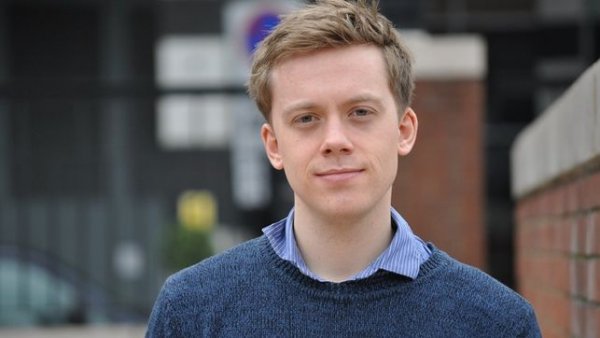
Donald Trump Victory Reaction: Owen Jones Doesn’t Get It

owen-jones-donald-trump-left-wing-populism

There can be no left-wing populist movement so long as the modern Left continues to openly despise such a large segment of the country

The leftist boy wonder Owen Jones has had a good long think about the implications of Donald Trump’s election victory, and has come to the airy conclusion that the Left needs a “new populism” of its own.

From his latest Guardian opinion piece:

Trump’s victory is one of the biggest calamities to befall the west and the effect is that every racist, woman-hater, homophobe and rightwing authoritarian feels vindicated. This rightwing populism can no longer be dismissed as a blip. Indeed, without an urgent change in strategy, the left – perhaps all progressive opinion – will be marginalised to the point of irrelevance. Our crisis is existential.

Multiple factors explain this calamity. First: racism. The legacy of slavery means racism is written into the DNA of US society. The determined efforts by African Americans to claim their civil rights has been met with a vicious backlash. The exit polls suggest that Trump won a landslide among both male and female white non-graduates: only white women with degrees produced a majority for Hillary Clinton.

Second: misogyny. Trump – who brags of sexually assaulting his victims – ran a campaign defined by hatred of women. Clinton was self-evidently an establishment candidate, but a male candidate of the establishment would have been treated differently. Some American men feel emasculated by two factors: the demise of skilled secure jobs that gave them a sense of pride and status, and the rise of women’s and LGBT movements, which some men feel undermine their rightful dominance.

But there is a factor that cannot be ignored. Centrism, the ideology of self-styled moderates, is in a state of collapse. In the 1990s, the third way project championed by Bill Clinton and Tony Blair could claim political dominance in much of the US and Europe. It has shrivelled in the face of challenges from the resurgent populist right and new movements of the left.

Yes, political centrism is dying, or at least under grave threat. And this is a good thing. It brought us nothing but dull, remote managerialism and technocracy, and enabled the elitist gravy train which so greatly enriched those with access to power while punishing those without. We should all be looking forward to dancing on centrism’s grave.

But sadly, Jones couldn’t leave it there. He continues:

Whenever the economic insecurities that fuelled Trumpism are mentioned, several objections are raised. It’s an explanation, some say, that fails to account for the large majority of working-class Americans from minority backgrounds who vote Democrat. Then there is the issue of culpability. Many insist that working-class Republican voters must take responsibility for electing a racist, misogynist candidate. True, some will be racists and misogynists beyond redemption but others have the potential to be peeled away if the lure is attractive enough.

Owen just doesn’t get it. Keep peddling in identity politics, keep making identity politics the battleground on which issues are debated and elections fought, and the white working class will organise and begin acting like a cohesive minority group themselves – because it is rapidly becoming clear to everybody that so long as the Left persists with its “divide, stoke resentment and conquer” approach, emulating their tactics is the only way for opponents to prosper and defend their own interests.

Note the sheer condescension of Jones’s arrogant claim that some Trump voters may, just may have the “potential” to be redeemed, as though voting for Trump was an endorsement of the worst allegations levelled against him rather than a self-interested choice between two candidates. The equivalent would be to claim that Democratic Party voters were endorsing secretive email practices, closeness to Wall Street, dubious charitable practices and shady financial dealings with their vote for Hillary Clinton. This is ludicrous on its face – and so it is to accuse most Trump voters of making their selection based on the worst utterances and behaviours of Donald Trump.

Owen Jones has clearly learned nothing. He has marinated and festered in toxic identity politics for so long that he knows no other way of thinking. And the new “left wing populism” he seeks to create will never come to pass because by definition it will always exclude and be violently antagonistic towards the white working class, the very people the Left needs to pull it out of terminal decline.


owen-jones-labour-party

Top Image: Miquel Garcia, Wikimedia Commons

Support Semi-Partisan Politics with a one-time or recurring donation:

Agree with this article? Violently disagree? Scroll down to leave a comment.

Follow Semi-Partisan Politics on TwitterFacebook and Medium.

Donald Trump Meets Social Justice Therapy Culture, And No One Comes Away Looking Good

donald-trump-anxiety-therapy

Now apparently Donald Trump has made it impossible for millennials to experience love. Hysterical accusations and overreactions like this from his opponents will do more than anything to sweep Trump to victory in November

Donald Trump would almost certainly make a terrible president – and yet one is half tempted to give him a shot when confronted with the hysterical reactions of America’s permanent victims, who have naturally found a way to make a debate about the future of the republic and the possibility of a Trump presidency all about them, their own anxieties and their pwecious feewings.

Michelle Goldberg has a particularly nauseating article in Slate, in which a succession of weepy Manhattan therapists drone on about the sleepless nights and anxiety attacks being suffered by their patients, and even by their fellow therapists, at the mere thought of Donald Trump sitting in the Oval Office.

Some choice quotes:

“People are scared,” says Fiachra “Figs” O’Sullivan, a psychotherapist in San Francisco who specializes in relationships. “People are distressed, and it’s affecting their level of presence in their relationships with their significant others.” Dorie Chamberlain, a 54-year-old stay-at-home mom in Los Angeles who says she talks about Trump every time she goes to therapy, says watching the election “is like living in a house where everybody screams.”

There is, of course, no way to quantify the scope of mental anguish caused by Trump’s campaign; these stories are entirely anecdotal. There are, however, a lot of anecdotes, as I discovered when I started speaking to both therapists and panicking voters. I’ve covered four elections as a journalist, but this is the first one to regularly poison my dreams; at least once a week I wake up in the middle of the night in clammy, agitated horror.

Oh good grief. Mental anguish? At this point one should already have a good idea of the thrust of the piece – journalist and subjects alike are self-regarding, quivering mounds of useless emotion.

More:

Some of the therapists told me they are talking their patients through their Trump terror while trying not to succumb to it themselves. “The therapists that I know are pretty overwhelmed by managing their personal feelings, which we have to do and we’re doing, but it’s a lot,” says psychologist Heather Silvestri. She belongs to a meditation group for therapists and says the election comes up in every session.

I have also recently been through a high-stakes election – the EU referendum on 23 June, which was far more of an existential question for Britain than even this high-stakes election is for America. By some miracle, my side won and Britain voted to leave the European Union. But if we had lost (as I fully expected to happen) I would not have claimed to have suffered severe emotional harm and retreated to my safe space. I would have dusted myself off, licked my wounds and prepared to fight another day.

A Donald Trump presidency would be bad for any number of reasons, but to carry on as though it were automatically the end of the world – as though the American system of government had no checks and balances to limit the impact of a buffoon leading the executive branch (it wouldn’t be the first time) – is an overreaction in the extreme. Be upset about the rise of Donald Trump for political reasons; don’t make it about “personal feelings”.

More:

About two weeks ago, Liz, a 45-year-old photographer in suburban Minneapolis who asked to be identified only by her first name, started noticing alarming symptoms: headaches, jitteriness, tightness in her chest, sometimes even difficulty breathing. She went to her physician, who said it sounded like she was suffering from anxiety. “I thought, huh, I don’t even have a stressful job. I don’t know what that can be,” she says. Then she went home and turned on the news, “and all the sudden the symptoms came back with a fury.” She realized that thinking about Trump was affecting her health.

Liz hasn’t agreed with past Republican candidates, she says, but she didn’t think they would “ruin my country, or cause civil war, or cause World War III.” But her fear also stems from her incredulous realization that so many of her fellow citizens inhabit a reality that barely intersects with her own. “I can no longer see where they’re coming from,” she says of Trump supporters. “I feel like I’m in The Twilight Zone.” Even if Clinton wins, she’s terrified of Trump’s followers responding with violence. “We’re getting closer and closer and closer to something that seems so insane,” she says, “The thought of him winning, or even the thought of her winning and parts of the country imploding in chaos as a result—it all just seems like a nightmare.”

The anxiety is encroaching on her relationships, Liz says. Sometimes she’ll delay putting her 9-year-old daughter to bed because she’s so caught up in the news.

I don’t contest for a moment the fact that Donald Trump is an extremely egotistical person – an “oleaginous clump of non sequiturs [who] sweat[s] his insecurities on national television”, in the immortal words of Jonah Goldberg. But this “Liz” character must really have personally wronged or provoked Trump very badly indeed if she is literally having sleepless nights and neglecting her daughter out of fear of what might happen to her if he gets the nuclear codes. This seems like a vast overreaction.

But in another sense, Liz’s case really cuts to the heart of the issue – particularly her “incredulous realisation” that so many Americans see the world so differently. This suggests a failure to empathise with other Americans prior to this point, particularly the economically struggling lower middle class who make up the backbone of Trump’s support.

We saw the same thing in Britain with the EU referendum. I am loathe to draw any parallels at all between Brexit and the rise of Donald Trump, primarily because Brexit is pure and noble and about democracy, while Trump is mostly about authoritarianism and demagoguery. But suffice it to say that the Remain side lost partly because it was comprised of and led by urban-dwelling metro-leftists who had no conception of what life is like in hard-scrabble towns or the suburbs, and who had only contempt for the people who live in such places, including people who have tended to be on the losing side of globalisation.

There was an utter failure of empathy in Britain, with the pro-EU ruling class furiously unwilling to look at things from the perspective of anybody not like them. It was this failure of empathy which blindsided the British establishment to the extent of anti-EU sentiment, and it could likewise be this failure of the American creative and upper middle class to show any solidarity with those struggling beneath them that effectively pushes people into the arms of Donald Trump.

More:

Fear of a Trump presidency is a normal human reaction, of course, not a clinical condition. A vertiginous sense of unreality is a symptom of an anxiety attack, but it is also a symptom of being a thinking person in America in the fall of 2016. People with anxiety disorders tend to imagine that catastrophe is imminent, but in this case they may not be wrong. “You can’t pathologize this anxiety,” says Andrea Gitter, a New York psychotherapist and member of the faculty at the Women’s Therapy Centre Institute. “People who are marginalized to begin with know that they are targets because of the hatred that’s been unearthed.” Gitter says the election comes up daily in her practice.

Ah yes, the marginalised people, all of whom Trump intends to ship to concentration camps within the first hundred days of his presidency. We all remember that pledge from his campaign website.

This is a familiar trick from the EU referendum campaign, too. In Britain, desperate Remainers attempted to smear eurosceptics and Leave voters by suggesting that they were solely responsible for the toxic political climate in the country. This culminated in the shameful harnessing of the murder of MP Jo Cox by cynical Remain supporters who thought they could make political capital by effectively blaming innocent Leave campaigners for the death of a young woman.

Now, Donald Trump has admittedly gone further than the British anti-EU campaign in terms of his rhetoric, appalling statements about Muslims and seeming comfort in the presence of his fringe supporters. But he has not incited “hatred”, and the people that Michelle Goldberg patronisingly refers to as being “marginalised” are grown adults with voices of their own, and are certainly free to rebut anything and everything that the Trump campaign says.

But then the article gets really surreal:

Sometimes the election’s psychic fallout takes less obvious forms. [Psychologist Heather] Silvestri, for example, has noticed a curious phenomenon among some of the millennial women in her practice: The rise of Trump has made them wonder how much they can reasonably expect from romantic relationships. Trump embodies some of the worst aspects of their ex-boyfriends, men who were “self-aggrandizing, self-important, not amenable to collaboration, cooperation, etc.,” Silvestri says. “When you break up with someone you need space, and they’re feeling like they can’t get space because their ex is sort of incarnate all over the news.”

It’s not just that Trump reminds them of their exes. It’s that Trump’s success seems to validate the men’s behavior. “They had gotten themselves to a place of, This is not what I deserve, I deserve better, I can do better,” Silvestri says. But watching dutiful, responsible Clinton struggle to best Trump, “people are really backtracking and saying, ‘I made this move to be more empowered and be who I am based on my values, but now I see my ex writ large on the national stage, and everyone’s following him,’ ” Silvestri says. They start thinking that, for a woman, maybe being beautiful really is more important than being smart, assertive, and authentic. “What happens in microcosm on a Friday night,” she says, is now playing out on the national stage. “The men have the power, and [the women] are trying to be a better version of themselves, but it doesn’t play well.”

We are through the looking glass now, folks. Apparently the mere fact of Donald Trump’s existence is so triggering to American millennial women that his candidacy (I feel stupid even writing this) conjures up painful memories of their ex-boyfriends – all of whom were (naturally) swaggering, chauvinistic misogynists utterly lacking in the virtuous qualities of “collaboration” and “cooperation”. And this is so traumatic that it is preventing these poor triggered millennial women from successfully forming future romantic relationships. Yes – Donald Trump has ruined love itself.

What can one say in the face of such preening, baseless hyperbole? This is the Cult of Social Justice and Identity Politics writ large, throwing absolutely everything it can at Donald Trump in the hope of discrediting him, and not realising that it renders Trump’s accusers every bit as ridiculous as the man himself.

Are there some people with legitimate anxiety disorders whose conditions have been exacerbated through worry about the presidential election and the possibility of a Trump victory? I have no doubt. But by definition, these are people with a specific illness, and not representative of the general population. If Michelle Goldberg had wanted to write an article about the impact of the Donald Trump candidacy on people with diagnosed anxiety conditions then she could have done so. But she didn’t – Goldberg painted with a far broader brush, including the perspective of therapists as well as therapy patients, ordinary people not in therapy and even millennial women in general.

The result is an incoherent mess of an article which proves nothing at all and makes no clear argument of any kind, other than the fact that the Bad Man Donald Trump has evidently replaced the monster under the bed in the childlike imaginations of America’s infantilised millennials and assorted other permanent victims.

The trouble with pursuing a line of attack against a presidential candidate based not on facts or policy (where there is plenty of material to damn Trump) but rather on how that candidate makes certain other people feel is that Trump and his supporters can legitimately respond by saying “so what?”

Above all, it is a lazy line of attack. It reeks of a lazy refusal to take on Donald Trump on the issues, instead seeking to void and invalidate his candidacy because he generates overwhelmingly negative emotions in certain sensitive souls.

And while there are many reasons why Trump would make a terrible president, the fact that his name keeps coming up on the therapist’s couch is not one of them.


Donald Trump Hosts Nevada Caucus Night Watch Party In Las Vegas

Top Image: Washington Post, Dominick Reuter/Reuters

Support Semi-Partisan Politics with a one-time or recurring donation:

Agree with this article? Violently disagree? Scroll down to leave a comment.

Follow Semi-Partisan Politics on TwitterFacebook and Medium.

A Crisis Of Identity: When Global Elites Forget How To Be Patriotic

global-elite

The global, liberal elite are increasingly transcending any lingering commitment to patriotism and national identity, setting them on a collision course with the small-c conservative majority

Michael Lind has an unmissable essay in the National Review this week, entitled “The Open-Borders ‘Liberaltarianism’ of the New Urban Elite“, which manages to explain so much about the rise of Donald Trump and the growing inability of political elites in America and Britain to speak to whole swathes of the country they supposedly control.

The crux of Lind’s argument seems to be that the educated, liberal (to use American parlance) inhabitants of the large cities have increasingly taken on what were always fringe libertarian ideas about open borders and the irrelevance or undesirability of the nation state, leading them to pursue policies and espouse values which alienate the more suburban and rural population.

Key quote:

To date, the public conversation on both sides of the Atlantic has been dominated almost entirely by the elite inhabitants of Densitaria, interrupted only by occasional populist revolts such as the Trump phenomenon or the Brexit vote. In a relatively short period of time, a new elite ideology has emerged that contrasts the dynamic, multicultural, libertarian city-state with the allegedly anachronistic and immoral nation-state. This ascendant worldview unites the open-borders economics and cosmopolitan, utilitarian morality of old-fashioned libertarianism with an idealization of the largest cities and their denizens.

In the 1970s and 1980s, libertarians made all of the major arguments heard from globalists since the 1990s: Favoring citizens over foreign nationals is the equivalent of racism; national borders impeding the free flow of labor and goods are both immoral and inefficient; the goal of trade and immigration policy should not be the relative security or relative wealth of particular countries, but the absolute economic well-being of all human beings.

Until the 1990s, this was an eccentric minority perspective in the U.S. and other democracies, encountered only in small-circulation libertarian journals or in the work of the occasional unworldly academic theorist of cosmopolitan ethics. But in the 2000s, as affluent whites from the professional class and their Latino, immigrant, and black allies displaced working-class whites as the base of the Democratic party, the traditional labor-liberal opposition to low-wage immigration and offshoring of industry was replaced by a new open-borders progressivism distinguishable from traditional libertarianism only by its unworkable combination of support for unrestricted immigration with a generous national welfare state.

This certainly accounts for one of the main reasons behind the Labour Party’s civil war in Britain – from the Blair era onward, Labour has been entirely captured by the open-borders progressives and increasingly turned its back on its former working class voter base. Even under the current Labour leadership election, both candidates hold open borders convictions to their core, even if only Owen Smith is stupid enough to rant about overturning the EU referendum result in public.

It also accounts for the increasing public rage (among non-progressives) about immigration in America, where the Democrats are proud and unrepentant in their support for illegal immigration while the Republicans have talked a tough talk for decades yet done nothing, precisely because the Republican political elites benefit from the current immigration status quo as much as anyone. Enter Donald Trump to an arena where nobody else is even seriously talking about the impact of mass immigration on wages and cultural cohesion, and one cannot be surprised when his crude, simplistic solutions gain political traction.

More:

The combination of open-borders “liberaltarianism” and trendy urbanist hype might lead one to wonder whether leagues of dynamic city-states should replace moribund modern nation-states. Benjamin Barber has published a book titled If Mayors Ruled the World: Dysfunctional Nations, Rising Cities. Barber is one of the founders of the Global Parliament of Mayors, which, according to his website, can help “fill the void left by nation states who [sic] are increasingly dysfunctional.” The economist Paul Romer has proposed boosting Third World development by means of semi-autonomous “charter cities,” which to his critics look remarkably like Western colonial enclaves.

Not even Barber and Romer propose actual urban independence. While cities may teach one another best practices, there is not the slightest chance that leading American cities will secede from the United States, link up with other city-states around the world, and form a new, global version of the Hanseatic League or the Delian League.

We saw the same loose talk after the EU referendum vote, with many Londoners (most of whom have no conception of what the EU really is or how it works) furious at having part of their cosmopolitan identity ripped away from them (as they see it) suggesting that London should somehow secede from the rest of the “backward” United Kingdom and become its own independent city state.

Of course this would never actually happen, but it shows just how disconnected the metropolitan elites are becoming from the country as a whole, and the sheer contempt with which they regard other regions which dared to express their patriotism and belief in self-determination by voting for Brexit. It is also misplaced arrogance of the worst sort – the lights would go out and people would begin to starve in London within days were it not for the arterial links of people and goods from the supposedly terrible and backward rural and suburban regions.

And it is this continual feeling of disrespect, I think, which does so much to drive populist insurgencies like the rise of Donald Trump, and (if I am honest) even those populist causes that I actually agree with, like Brexit. People in the industrial and commuter heartlands, as well as rural folk, are getting increasingly sick of being told that they are too backward, too intolerant, too racist, that their own priorities and concerns do not matter and that they should be led in all regards by an urban elite who don’t even seem terribly attached to the country that gives them life and liberty, and who find the slightest display of national pride or patriotism almost painfully embarrassing.

I’m fortunate. I got into a good university and managed to embark on a career which has seen me work in numerous countries across three continents. But if this had not been the case – if, like many of my peers, an international business career was either never on the cards or simply not what I wanted to do – then I would probably be quite put out by people whose interest and commitment to any one country seems transitory at best telling me what I should think about immigration, global governance and democracy.

Now living in remain-voting West Hampstead, I am surrounded by the kind of people who are aghast at the Brexit vote and who consider it a calamity brought down upon the heads by the kind of ignorant, unwashed oiks whom they would never normally speak to unless they were fixing their car or serving them a burger. I can see how it must grate with Middle England, because it grates with me.

Lind goes on to touch on this point:

What appears to be a debate among globalists and nationalists, then, is really a debate about the structure of the 21st-century nation-state. There are real dangers associated with the coalescing elite ideology of post-national globalism or, to be precise, national-elite pseudo-globalism.

One danger is groupthink resulting from the attempt by the new globalists to equate even enlightened and civic nationalism with racism. When the economist Larry Summers, nobody’s idea of a pitchfork-waving populist, tentatively called for “responsible nationalism,” he was criticized by The Economist, whose open-borders libertarianism, once eccentric, has become near-orthodoxy among the trans-Atlantic elite.

And closes with this stark warning:

The most significant threat is the possibility that the abandonment of national patriotism by many elite citizens of the nation-state for make-believe cosmopolitanism will weaken national unity, to the benefit of sub-national racism, ethnocentrism, and regionalism. The loyalties that succeed national solidarity are likely to be narrower, not broader. If history is any guide, the victims of tribalism and illiberal populism are likely to include would-be citizens of the world who despise the nation-states that make possible not only their wealth but also their security.

Absolutely. This blog has been banging on for years about the continued importance of the nation state as the final guarantor of most of our most precious rights and freedoms. But the nation state is also, in the democratic age, a relatively harmless way of allowing people to feel and express a sense of belonging and community pride without tipping over into other, much darker expressions of identity.

Those weepy europhiles mourning Britain’s imminent departure from the EU because they consider themselves “European citizens” might want to pause and think through the consequences of further undermining the nation state, which is the primary aim of their beloved project. Because enlightened, one-world government is a few centuries away yet, and whatever crops up to replace the nation state that they so eagerly undermine will likely be unpleasant, even violent.

And while it may not be purely libertarian, this blog would much rather live in a world of moderate, familiar nationalist rivalry than descend into the known horrors of ethnic or religious sectarianism. We already see the early fruits of this blinkered commitment to “multiculturalism” in self-segregated and un-policed communities here in Britain among certain immigrant populations. We don’t need to extend those delights to the entire population.

What is the solution? Michael Lind does not offer one, and this blog does not see an easy fix either. But when global elites (Davos Man and the like) and the next tier down (those with international lives and careers) have more in common with each other than with those of other socio-economic groups and communities in their own countries, it is a recipe for political alienation and the eventual fracturing of our civic life.

To avoid disaster and a true crisis of democracy, our ruling elites in the political and commercial sphere must somehow learn to be patriotic again – for if the nation state has no champions it will go on being relentlessly undermined on all fronts. But right now there is little evidence that they are remotely interested in bridging the growing chasm between their own interests and those of the people they supposedly “serve”.

This leaves the field wide open for the likes of Donald Trump and UKIP 3.0 to make inroads with voters left cold by the other options available to them. And the time may soon come when the political elites sorely regret ceding this territory.


globalism-versus-culture

Bottom Image: Stefan Molyneux, Globalism versus Culture

Support Semi-Partisan Politics with a one-time or recurring donation:

Agree with this article? Violently disagree? Scroll down to leave a comment.

Follow Semi-Partisan Politics on TwitterFacebook and Medium.

Lionel Shriver Makes A Bold Defence of Cultural Appropriation

lionel-shriver-brisbane-writers-festival

The purpose of literature and fiction writing is not to serve the grand design of the social justice and identity politics movement – and Lionel Shriver should be commended for standing up for artistic freedom against the new age censors

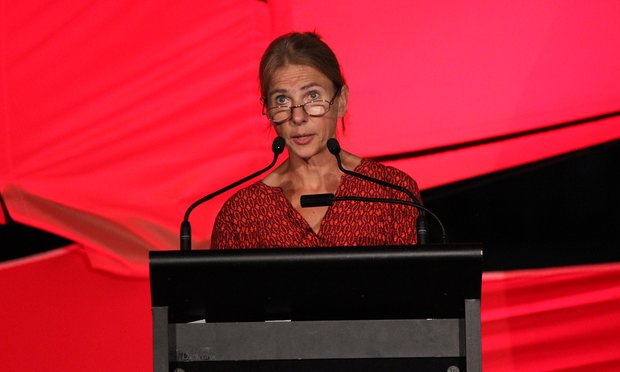
At a recent speech given at the Brisbane Writers Festival, the author Lionel Shriver makes a passionate and compelling defence of the concept of “cultural appropriation”, standing up to the rabid social justice warriors who would seek to impose a new cultural apartheid and the return of “separate but equal” division between races, cultures, genders and social groups.

From Shriver’s speech, which begins by making reference to college campus scandals over the supposed “cultural appropriation” and “harm” caused by non-Mexican students wearing sombrero hats at tequila parties or Mexican-themed restaurants:

But what does this have to do with writing fiction? The moral of the sombrero scandals is clear: you’re not supposed to try on other people’s hats. Yet that’s what we’re paid to do, isn’t it? Step into other people’s shoes, and try on their hats.

In the latest ethos, which has spun well beyond college campuses in short order, any tradition, any experience, any costume, any way of doing and saying things, that is associated with a minority or disadvantaged group is ring-fenced: look-but-don’t-touch. Those who embrace a vast range of “identities” – ethnicities, nationalities, races, sexual and gender categories, classes of economic under-privilege and disability – are now encouraged to be possessive of their experience and to regard other peoples’ attempts to participate in their lives and traditions, either actively or imaginatively, as a form of theft.

Shriver’s barnstorming speech goes on to list many great works of literature which would be greatly diminished or simply not exist at all were their authors (like many writers today) bullied and pressured to avoid writing about cultural experiences and customs other than their own.

Yet were their authors honouring the new rules against helping yourself to what doesn’t belong to you, we would not have Malcolm Lowry’s Under the Volcano. We wouldn’t have most of Graham Greene’s novels, many of which are set in what for the author were foreign countries, and which therefore have Real Foreigners in them, who speak and act like foreigners, too.

In his masterwork English Passengers, Matthew Kneale would have restrained himself from including chapters written in an Aboriginal’s voice – though these are some of the richest, most compelling passages in that novel. If Dalton Trumbo had been scared off of describing being trapped in a body with no arms, legs, or face because he was not personally disabled – because he had not been through a World War I maiming himself and therefore had no right to “appropriate” the isolation of a paraplegic – we wouldn’t have the haunting 1938 classic, Johnny Got His Gun.

We wouldn’t have Maria McCann’s erotic masterpiece, As Meat Loves Salt – in which a straight woman writes about gay men in the English Civil War. Though the book is nonfiction, it’s worth noting that we also wouldn’t have 1961’s Black Like Me, for which John Howard Griffin committed the now unpardonable sin of “blackface.” Having his skin darkened – Michael Jackson in reverse – Griffin found out what it was like to live as a black man in the segregated American South. He’d be excoriated today, yet that book made a powerful social impact at the time.

(Shriver’s speech was too much for one delicate snowflake. Australian activist Yassmin Abdel-Magied, whose sheltered mind was unable to tolerate hearing of a worldview which didn’t put her own identity on a pedestal, decided to walk out during the speech and then pen a tear-stained, self-involved piece about her feewings for the Guardian, aggrandising her supposed victimhood).

But what exactly is Lionel Shriver’s beef with the modern idea that cultural appropriation is heresy? It seems that what angers her – quite rightly – is the idea that any group, marginalised or not, can be the sole custodians of their traditions, granting or withholding license to “borrow” from their culture like a movie studio scouring YouTube for pirated videos.

According to Shriver, nobody, least of all an artist, should have to approach anyone for “permission” to write from a certain perspective, include a certain character or touch on any cultural tradition:

The author of Who Owns Culture? Appropriation and Authenticity in American Law, Susan Scafidi, a law professor at Fordham University who for the record is white, defines cultural appropriation as “taking intellectual property, traditional knowledge, cultural expressions, or artifacts from someone else’s culture without permission. This can include unauthorised use of another culture’s dance, dress, music, language, folklore, cuisine, traditional medicine, religious symbols, etc.”

What strikes me about that definition is that “without permission” bit. However are we fiction writers to seek “permission” to use a character from another race or culture, or to employ the vernacular of a group to which we don’t belong? Do we set up a stand on the corner and approach passers-by with a clipboard, getting signatures that grant limited rights to employ an Indonesian character in Chapter Twelve, the way political volunteers get a candidate on the ballot?

While Shriver justifiably bristles at the consequences of weaponised identity politics, she does not use her speech to dwell on the reasons for the rise of this hyper self-conscious, self-censoring phenomenon. Fellow author Ian McEwan, on the other hand, is more than happy to point out the root causes of the identity politics resurgence, recently commenting in an interview:

“These children have grown up in an era of peace and plenty, and nothing much to worry about, so into that space comes this sort of resurgence that the campus politics is all about you, not about income inequality, nuclear weapons, climate change, all the other things you think students might address, the fate of your fellow humans, migrants drowning at sea. All of those things that might concern the young are lost to a wish for authority to bless them [..] rather than to challenge authority.”

To which this blog responded:

Doesn’t that just perfectly sum up the Cult of Social Justice and Identity Politics? A generation of students raised at a time of great material abundance, peace and prosperity arrive at university to find most of the great injustices of the past already slain by previous generations of campaigners. Bereft of purpose but still feeling the strong student urge to embrace a cause, they crank up their sensitivity settings to perceive any slight or inequity, however small or unintentional, to be evidence of the systematic oppression of one or more classes of prescribed victim groups.

McEwan’s last sentence is particularly profound – the idea that today’s young people no longer rail against authority in the way that student activists of old did, but rather make tear-stained appeals to authority figures to intercede on their behalf. This is the victimhood culture, clearly distinct from an honour culture (which would encourage the individual to stand up to minor sleights or “microaggressions” and confront the issue themselves) or a dignity culture (which would only sanction involving authorities in case of grave injury).

Later in her speech, Shriver hits out at the fad of shoehorning various “oppressed group” minorities into television shows in the name of making up some social justice quota, and the growing demand by some critics for the same affirmative action to take place in literature:

My most recent novel The Mandibles was taken to task by one reviewer for addressing an America that is “straight and white”. It happens that this is a multigenerational family saga – about a white family. I wasn’t instinctively inclined to insert a transvestite or bisexual, with issues that might distract from my central subject matter of apocalyptic economics. Yet the implication of this criticism is that we novelists need to plug in representatives of a variety of groups in our cast of characters, as if filling out the entering class of freshmen at a university with strict diversity requirements.

You do indeed see just this brand of tokenism in television. There was a point in the latter 1990s at which suddenly every sitcom and drama in sight had to have a gay or lesbian character or couple. That was good news as a voucher of the success of the gay rights movement, but it still grew a bit tiresome: look at us, our show is so hip, one of the characters is homosexual!

We’re now going through the same fashionable exercise in relation to the transgender characters in series like Transparent and Orange is the New Black.

Fine. But I still would like to reserve the right as a novelist to use only the characters that pertain to my story.

Besides: which is it to be? We have to tend our own gardens, and only write about ourselves or people just like us because we mustn’t pilfer others’ experience, or we have to people our cast like an I’d like to teach the world to sing Coca-Cola advert?

That last question is a good one – how on earth is a fiction author or television screenplay writer possibly to satisfy the competing demands to include more characters from diverse backgrounds yet avoid the unpardonable sin of presuming to write from their vantage point?

No doubt the social justice warriors would decree that fiction writing, so long a solitary pursuit, must now always be a collaborative effort, with a team of character writers standing by to offer their perspectives on a character’s true “voice” and authenticity. Or perhaps the process could be accomplished at the end of writing, by submitting draft novels to an Office of Social Justice Censorship where beady-eyed zealots who claim to speak on behalf of their entire social group go through the manuscript with a red pen, changing the author’s words and ideas to conform to some standard set in secret, behind closed doors.

You can see where the inexorable logic of these shrill demands ultimately leads: nowhere good. We either end up in a world where brilliant authors are too terrified of potential repercussions to ever pick up a pen in the first place, or one ends up with Soviet-style official “approved” art and literature, written to precise specifications in order to best glorify the Cult of Social Justice and Identity Politics.

As Shriver puts it:

Thus in the world of identity politics, fiction writers better be careful. If we do choose to import representatives of protected groups, special rules apply. If a character happens to be black, they have to be treated with kid gloves, and never be placed in scenes that, taken out of context, might seem disrespectful. But that’s no way to write. The burden is too great, the self-examination paralysing. The natural result of that kind of criticism in the Post is that next time I don’t use any black characters, lest they do or say anything that is short of perfectly admirable and lovely.

[..] Especially for writers from traditionally privileged demographics, the message seems to be that it’s a whole lot safer just to make all your characters from that same demographic, so you can be as hard on them as you care to be, and do with them what you like. Availing yourself of a diverse cast, you are not free; you have inadvertently invited a host of regulations upon your head, as if just having joined the EU. Use different races, ethnicities, and minority gender identities, and you are being watched.

Extra marks for the snide attack on the European Union – brilliant stuff.

As this blog has explained time and again, above all else social justice is not about fairness and equality but rather about power – specifically, the acquisition of power by the beady-eyed authoritarians who wield their weaponised victimhood and competitive tolerance as cudgels, granting them the power to determine what the rest of us can and cannot do or say. Television has already on the verge of falling to this long-running cultural siege, and the clear message coming from “progressive” reviewers in the literary community is that fiction is next.

Lionel Shriver has issued a timely warning to her fellow authors – let us hope that there is sufficient time and willpower to resist the final assault when it comes.


Lionel Shriver: how not to read - Do Something magazine

Safe Space Notice - 2

Top Image: Guardian, Daniel Seed

Support Semi-Partisan Politics with a one-time or recurring donation:

Agree with this article? Violently disagree? Scroll down to leave a comment.

Follow Semi-Partisan Politics on TwitterFacebook and Medium.