By Failing To Back Brexit, Millennial Voters Are Failing Their Generation’s First Great Test Of Character

Students for Europe

Millennial voters who lazily but instinctively support Britain remaining in the European Union are letting down their country and their entire generation

Lately, this blog has been focusing on the younger, millennial generation and our unfortunate propensity to think as scared consumers rather than engaged citizens, and so overwhelmingly support Britain remaining in the European Union (even if many of us are too lazy to carry our opinions as far as the ballot box).

In taking this stance, I have encountered some pushback from readers, who have (rightly) pointed to the fact that older generations can be equally greedy and self-interested, but (wrongly) drawn a false equivalence between the two.

While not all young Remainers hold their position because of perceived material self-interest, those who completely ignore the democratic question to focus exclusively on their own material (typically career and travel) prospects – which would almost certainly be completely unaffected in the event of Brexit – are fully deserving of the criticism levelled at them by this blog and others.

The Guardian breaks down the latest polling data:

Government strategists and pollsters privately admit that the central problem for the Remain side is that its support for staying in the EU is strongest among young people, the group least likely to vote. Opinium found that in the 18-34 age group, 53% said they backed staying in, against 29% who wanted to leave. But only just over half (52%) in this age group said they were certain to actually go out and vote.

Among voters in the 55-and-over category, support for leaving was far stronger, as was their certainty to vote, offering a huge advantage to the Leave side.

Some 54% of voters aged 55 and over said they wanted to leave against 30% who wanted the UK to remain in the EU. But in stark contrast to younger voters, 81% of this group were certain to vote.

Perhaps our generation is in need of a wake-up call. This particular tirade (quoted below) is addressed to American millennials flirting with the presidential candidacy of Bernie Sanders, but parts of it apply equally to younger British voters indignant that the Leave campaign’s quest to restore democracy is interfering with their perceived career options springing from the munificent European Union.

Courtney Kirchoff writes over at Steve Crowder’s website:

Adulthood isn’t what we thought it would be. No, the economy these past several years hasn’t exactly been stellar, either. Okay? Okay.

My fellow millennials, for sure we have our challenges. Many of you were raised in broken homes. Many of you were exposed to divorce. It’s possible a lot of you didn’t live with your father or may not have known him at all. Combine home life with the rise of political correctness in school, taking its dangerous form of “self-esteem above all,” and no wonder you think life is unfair but you should have it all.

Look, I’m sorry life screwed you over in the early years. I’m sorry if you were shuffled to daycare day in and day out. I’m sorry if you don’t have memories of playing with your parents. But most of all, I’m sorry you were not instilled with the grand idea of personal responsibility. I’m sorry you were not empowered with the notion that YOU are the commander of your own life. If you take nothing else from this post, believe that no matter who you are, you can succeed. Without government.

Because guess what, my friends? You’re abject loyalty to socialism is going to tank our country. Your insistence on getting what you want and making other people pay for it, all under the guise of “fairness,” will lead to ruin. For everyone. Including you.

Switch out “socialism” and “government” and replace it with “the EU” and you have a perfect response to the EU’s millennial cheerleaders.

Yes, of course this is an age of anxiety. Just as the boomer generation seriously worried about imminent nuclear annihilation, so we worry about job security and career prospects. But we are hardly a uniquely benighted generation, though there are indeed many ways which our politics currently favours older voters – the government’s lack of a coherent housing policy being an obvious example.

But I’m sorry: growing up in economically uncertain times in an age where there is no guaranteed job for life does not absolve millennials – my generation – from thinking not only as self-interested consumers but also as engaged citizens who care about the country and democracy that they will bequeath to their own descendants.

The generation who spent their prime years fighting fascism – and who saw their contemporary Britain largely reduced to rubble and ruin in the process – could have abstained en masse from fighting the Nazi threat in order to buy a few more years of economic security and job stability through appeasement. But they were willing to go to war and risk what they had for principles which transcended material concerns.

By contrast, our generation is not called to risk or sacrifice nearly as much as our grandparents and great grandparents were to defend democracy and national self-determination – and in fact could have much to gain from British secession from the European Union, materially and otherwise. But by an overwhelming majority we are unwilling to take even that far smaller risk.

And history will long note this colossal failure of courage and character from Generation Me Me Me.

 

Hello I'm A Millennial

Agree with this article? Violently disagree? Scroll down to leave a comment.

Follow Semi-Partisan Politics on TwitterFacebook and Medium.

Opposing The EU Is A Calling Based On Evidence, Not Blind Faith

File photo of a Union Jack flag fluttering next to European Union flags ahead of a visit from Britain's Prime Minister David Cameron at the EU Commission headquarters in Brussels

Those who accuse Brexit supporters of being ideologically fixated and closed to alternative ideas are not only hypocritical – they have utterly failed to understand what makes eurosceptics tick

One of the drawbacks of being a committed eurosceptic and Brexiteer is that one tends to be painted as a swivel-eyed ideologue, someone whose opinion is not based on considered deliberation but on flawed, base gut instinct.

Thus the two most common insults hurled at eurosceptics – besides the cries of racism and xenophobia, which are sufficiently stupid that we can safely ignore them – are that we hate the European Union as an article of faith (or religion) rather than reason, and that we are closed minded and impermeable to new information (like David Cameron’s triumphant New Deal with Brussels).

Both of these accusations are unfair, although there is a grain of truth – many of us do indeed feel that our euroscepticism is a calling, or at least a cause important enough that we are willing to devote time, money and effort to its advancement.

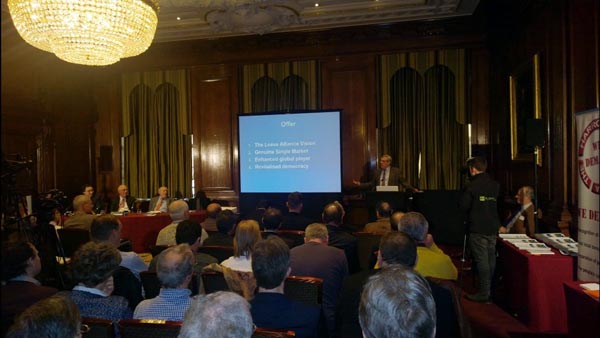
When I attended the recent launch of The Leave Alliance, for example, it was one of the few times when I have actually been surrounded by large numbers of like-minded people on the Brexit issue, and it was rather humbling to be in the company of people whose curiosity and passion have led them to become experts on the history of the EU and the workings of international trade and regulation. Where it differs from religion, though, is the fact that our understanding of and distaste for European political union is not based on gut instinct or faith, but on a close reading of primary materials – treaties, statements, declarations, meeting minutes, autobiographies, trade journals, news articles – which those who support the European project can rarely match.

(I should note that I hardly consider myself to be such an expert – but through my involvement with The Leave Alliance I now have access to much better information and have shed much of the woolly thinking which clouded my previous euroscepticism).

So yes – we take our euroscepticism seriously. And those who see this as a flaw or a point of ridicule have generally failed to understand what it is about the European Union which offends us so greatly. They rhetorically ask what concessions might prompt us to change our minds – what it would take for us to stop worrying and love Brussels – thinking that by asking the question, they are revealing our blind, unthinking animosity to the harmless idea of countries coming together to trade and cooperate with one another.

Britain in Europe

In answer to this charge, Pete North has an excellent blog post from January, in which he begins with a simple fact – the signing of a protocol by Georgia and Turkey governing the electronic exchange of customs data for goods shipping – and masterfully spins it into a damning case against the European Union, proving that a harmonisation and integration-obsessed EU is actually a barrier to the kind of global co-operation which leads to economic growth and wealth creation.

Read the whole piece – entitled “The EU is not a trade bloc – it’s a power cult“.

Here is the key extract, which I will quote at length:

At the heart of it is a paranoia that without the EU the nations of Europe will once again be at war thus have set about creating a Europe that deprives nations of their democratic will to the ends of creating a single supreme government for Europe – one which actively prevents European nations speaking on their own behalf and getting the best for themselves and Europe.

And so when the question is posed as to what it would take for us hardline leavers to change our minds, we would have to address the central issue. Supranationalism. Were the EU to abandon supranationalism, to dismantle the institutions and cultural programmes designed to engender a single European demos, culture and government, to instead become a common forum for international progress, then I could change my mind. But then I would want to see it as a more open forum where our trading partners can also participate and shape the rules rather than having the EU dictating.

There are two basic problems here. Firstly, the entity a properly reformed EU would resemble already exists. It’s called the United Nations Economic Commission for Europe, and secondly, to demand reforms of this nature – of such era defining significance, we would effectively be calling for the dismantling of le grande project forever.

And so it remains the case that we are hard line leavers in that the EU cannot be reformed, will resist any attempt, and will never serve the best interests of its members – or even Europe. The EU is purely about the preservation of the EU political body that serves to advance the supranational agenda of its long dead architects.

The EU is not about trade, it is not about cooperation and it wouldn’t recognise multilateralism in a billion years. Everything it does is with the intent of affording itself more power and more control while passing the responsibility and the consequences on to member states to deal with. It is here where nuisance turns to malevolence and such an affront to democracy, based on a foundation of intellectual sand, should be resisted.

If we examine EU for what it really is, it’s a power cult – and one that will never stop until it holds all of the power. It confiscates our wealth then acts like some kind of benevolent Father Christmas, buying off all the institutions such as academia, NGOs and local authorities who would otherwise oppose it, so that when it comes to a popular vote the establishment will never turn on its paymaster.

It is for this reason true leavers oppose the EU with every fibre of their being. It is why opposing the EU is a spiritual call and a life obsession. It is why the issue will never go away and it is why a referendum will not settle the argument – because for as long as there are those who know what the EU really is, and its modus operandi, there will always be people willing to fight it to the bitter end.

And that pretty much sums up why committed eurosceptics – at least those affiliated with The Leave Alliance – take this issue so seriously, will not change our minds based on the evidence in front of us, and will not rest regardless of the outcome of the referendum on 23 June.

It comes down to the two S’s – supranationalism and sovereignty. Both cannot exist simultaneously – any key competence is either a sovereign matter or it is decided at the supranational level. And the European Union is an avowedly supranational organisation, spurning healthy intergovernmental cooperation in favour of the creation of a new layer of government over and above the member states.

Were the European Union content to fulfil the much more narrow remit claimed by many of its apologists (i.e. facilitating trade and cooperation) then an accommodation could potentially be reached. But as Pete North rightly points out, all of the evidence – and I mean all of it, to the extent that the Remain camp do not even bother to claim otherwise – is that the EU’s ambitions are much grander. They always were – that’s why the organisation which they pretend is just about trade and cooperation has a flag, an anthem and a parliament.

If anybody is being dogmatic and impermeable to patently obvious facts, it is in fact the Remain camp, who possess a superhuman ability to ignore the federalist facts staring them in the face, and somehow pretend to themselves that events of historical record and verbatim quotes from numerous EU officials did not happen and were not said. If one is not an enthusiastic European federalist, one has to be either ignorant or in extreme denial to believe that the EU as it stands is just a trading bloc, or that there is not far more integration planned for the near future.

So who is operating on blind faith here – the Remain campaign or those fighting for Brexit? While there are plenty of loud and ignorant people on both sides, those EU apologists who naively or deceptively cry “nothing to see here!” while all the edifices of a European state are brazenly built around them should be held in particular contempt.


European Union - United Kingdom - Britain - Flags

Top Image: REUTERS/Francois Lenoir/Files

Agree with this article? Violently disagree? Scroll down to leave a comment.

Follow Semi-Partisan Politics on TwitterFacebook and Medium.

The Leave Alliance Campaign For Brexit: Citizen Democracy In Action

The Leave Alliance Launch - TLA - 2

This EU referendum is about the people, not the Westminster elite. Fortunately, there now exists a truly independent Brexit group – the only genuinely grassroots campaign fighting the referendum, and the only one with a credible plan for safely leaving the European Union

Last week – on Budget day, in fact – the Leave Alliance of individuals and groups campaigning for Britain to leave the European Union held its launch in Westminster.

Don’t worry, you’re not the only one who didn’t realise that anything had happened. The media is still having trouble wrapping their collective mind around the fact that in a referendum, the voices of politicians are no more important than those of ordinary citizens. That’s why every time Boris Johnson opens his mouth to utter his latest half-baked Brexit plan it is considered front page news, but when a group of private citizens and organisations form an independent campaign group to fight a national referendum it is deemed so un-newsworthy that it receives barely a ripple of attention.

Even when that launch takes place in the heart of Westminster, literally down the street from certain venerable news organisations (hello, Spectator), the idea of the Westminster media dispatching a journalist or two to see what was happening in their own back yard is apparently unthinkable. Every last resource simply had to be committed to this year’s Pulitzer Prize-winning coverage of George Osborne’s 2016 Budget, Omnishambles Revisited.

To be fair, The Leave Alliance – of which this blog is an enthusiastic supporterdid register a mention in Christopher Booker’s Telegraph column:

[Boris] Johnson’s empty-headed amateurishness only typifies the fatal failure of any of his allies in the “Leave” campaign to agree on a plausible, properly worked-out exit plan. One after another they come up with their own equally half-baked suggestions, which only demonstrate how none of them have done their homework. This is giving Cameron’s “Project Fear” an open goal, by failing to show how we could practically leave the EU while continuing to enjoy full access to the single market.

The only group that has done so, the Leave Alliance – launched last week with support from the Bruges Group, the Campaign for an Independent Britain and others – is too small to bid for the lead role in the campaign (although I am told on good authority that its expert and exhaustive analysis of all the options has been found very useful by civil servants).

But for a full account of the Leave Alliance launch you have to turn to the blogosphere. Lost Leonardo, writing at the Independent Britain blog, provides this summary:

The Leave Alliance (TLA) is a network of new and established political groups, bloggers and tweeters who are committed to winning the EU referendum for the “leave” side. What makes TLA unique among the declared leave groups is its support for a credible Brexit plan.

Flexcit: The Market Solution is a six-phase plan for recovering Britain’s national independence in stages, as part of a continuous process, rather than as a one-time event. That change of perspective shifts the Brexit debate firmly in the direction of pragmatic and practical politics. The exact form that our post-Brexit deal takes is less important than our vision for what we will do with our national independence. Self-governance means taking responsibility unto ourselves and, if our politicians are any indication, a long process of discovery and rediscovery lies ahead.

So as to short cut the economics- and trade-centred debate that has been allowed (some might say encouraged) to obscure the more important political question—who governs Britain?—the Flexcit plan advocates remaining in the Single Market and then working to create a genuine free trade area in Europe whilst also rebuilding the national policy-making framework and enhancing our democracy by means of The Harrogate Agenda.

This gravity of this referendum on Britain’s EU membership compels us all to think as fully engaged citizens, not merely as frightened consumers or “low information voters” easily manipulated by the cynical propaganda emanating from the major Remain and Leave campaigns. And in this campaign, it is the Remain campaign which benefits from our ignorance and the Leave campaign which is strengthened by knowledge.

When people educate themselves about the European Union, its history and its workings, they almost inevitably become more eurosceptic as the scales fall from their eyes and they realise that the EU is in fact not just a friendly club of like-minded countries who gather together to braid each other’s hair and have a good chat.

As I recently confessed:

Growing up, I was the most ardent European Union supporter and federalist imaginable. I firmly believed that the age of the nation state was over, that patriotism was silly and gauche, and that our only hope of a prosperous future lay in dissolving ourselves into a greater European collective. Adopting the euro, creating an EU army – you name it, I believed in it.

[..] Only when my appreciation for democracy and self-determination (and small-c conservatism) caught up with my authoritarian Utopianism did I realise that the accumulated wisdom of the British people might exceed my own, and that there may be good reasons to be sceptical of the European Union. And only when I came to realise the extent to which the EU is a creation of a small group of European intellectuals and political elites who thought that they knew best – and that the only way to bring about their creation was through stealth and subterfuge, never declaring the ultimate federal destination of travel – did I come to see how profoundly wrong it is.

[..] There is indeed an army of swivel-eyed ideologues in this EU referendum debate. And though they would hate to admit it, it is those on the Remain side who are most likely to be impermeable to facts, and who are least likely to have ever held a different view on the EU and been on an intellectual journey to arrive at their present position.

And as a rule of thumb, it is generally wisest to listen to those who can show evidence of having thought deeply about an issue and been persuaded by the steady accumulation of evidence to revise their thinking, rather than those who were born with their deeply-engrained love of the European Union pre-programmed in their brains.

One of the reasons I am proud of my association with The Leave Alliance is the fact that it is full of other people who, like me, have been on an intellectual journey. Sure, some of us saw through the EU from the beginning, but others – myself included – were won over to the side of Brexit by the steady accumulation of incontrovertible evidence.

We count Britain’s foremost authority on the European Union among our number, as well as several independent writers who possess more patiently acquired knowledge about the global regulatory environment than most of the Westminster media combined.

And if nothing else, the fact that the Westminster media failed to cover something as significant as the Leave Alliance launch – despite the fact that it was happening right in their midst – should be enough to convince anyone of the importance of doing one’s own research on Brexit, and not relying on any one single source or campaign when making this most important of decisions.


European Union - United Kingdom - Britain - Flags

Agree with this article? Violently disagree? Scroll down to leave a comment.

Follow Semi-Partisan Politics on TwitterFacebook and Medium.

Nothing Positive To Say About The EU? Just Bash The Leave Campaign

Owen Jones, unable to think of one positive thing to say in support of the European Union, focuses his attention on mocking the Leave campaigns

Owen Jones can’t make a full throated defence of the European Union and Britain’s place in it, because in his heart of hearts he knows the EU to be a bad, terminally unreformable institution in which we should play no further part. Of that I am absolutely convinced, no matter how deep in his subconscious Jones may have buried his natural euroscepticism.

But to avoid alienating his virtue-signalling left-wing readership who instinctively support the EU (either out of simplistic internationalism or the cynical knowledge that being in the EU imposes stricter employment and social laws on the UK than British voters would likely tolerate themselves), Jones has walked back nearly all his earlier principled criticism of Brussels, and now bleats the usual fantastical nonsense about staying in the EU to transform it into some kind of socialist utopia.

Thus, unable to make a passionate argument in favour of the European Union, Jones must content himself with making snide observations about the Leave campaigns (who regretfully seem to provide him with near endless material). He cannot make an honest intellectual or moral case for Remain, so he deflects by snarking at those who want to reclaim British democracy by leaving.

And so we get stuff like this, in which Jones wastes an entire YouTube video smugly pointing out that pro-Brexit Conservatives are moaning about the Remain campaign waging “Project Fear” when many of them adopted similar arguments against Scottish independence during the 2014 referendum, and against Labour and the SNP in the general election last year. Because, according to this bizarre logic, two wrongs (the Evil Tories doing it before, and the Remain camp doing it now) cancel each other out.

Jones scoffs:

Project Fear. That is how Chris Grayling, who is a Tory cabinet minister who supports Brexit – Britain leaving the European Union – that’s how he is describing the campaign led by the government to stay within the European Union. As soon as I heard him describe the campaign to stay in in those terms, all I could think was “you cheeky git!” It reminds me of the Yiddish expression, chutzpah.

[..] Then there’s Michael Fallon, the Defence Secretary, who in the weeks before the general election said “Ed Miliband stabbed his own brother in the back to become Labour leader. Now he is willing to stab the United Kingdom in the back to become prime minister”. Again, you had co-ordinated attacks by big businesses warning of economic calamity were Labour to enter Number 10. Project Fear on speed, quite frankly. The whole campaign was waged on the basis of fear.

Now, the people complicit with that included, obviously, the likes of Chris Grayling and his colleagues in the Conservative cabinet, and the Conservative backbenches who now support Brexit and who are angry at those tactics, as they see it, being employed against them.

We can expect to see a lot more of this finger-wagging nonsense over the next few months from those who are determined to keep Britain inside the European Union.

Some of them refuse to make positive arguments for the European Union because they actually rather dislike it, but hold Britain in such low regard that they believe that despite being many times the size of independent countries like Australia and New Zealand, Britain is uniquely incapable of functioning independently outside of a regional political union.

Others shy away from talking up the European Union because they genuinely love the institution, want us to integrate even more deeply and therefore worry that they might get too carried away praising Brussels and so harm their own side.

Others still dislike the European Union and know full well that Britain could prosper outside this anachronistic mid-century supra-national political union, but persuade themselves to support Remain for fear of the social stigma that comes with declaring oneself a eurosceptic in certain circles.

But in no case will they be honest with the British people, because they have all come to the conclusion that telling what they see as difficult truths – in their case, that the European Union is a good thing for a, b and c reasons, and Britain should continue to participate because of x, y and z – will not win the referendum, but that Fear, Uncertainty and Doubt (FUD) will do the job quite nicely.

Owen Jones rightly bristles at the way that the “No” campaign wielded this tactic in the Scottish independence campaign, which would make you think that he opposes it being used by any group and in any context. But apparently not so. Because Conservative Leave supporters “brought it on themselves” by utilising FUD tactics in the past, the Remain camp should not be criticised for doing so now.

It is a shame to see Owen Jones – at his best an intelligent and articulate voice on the Left – frittering away his time on the EU referendum campaign by pointing out the foibles and tactical hypocrisies of the Leave campaign. But what other choice does he have? Despite knowing full well that the EU is unreformable, Jones has committed to supporting Britain’s continued membership.

I think that this is a betrayal of the democratic accountability and local control that Jones spends much of his time promoting. And I suspect that he does, too. Which is why we can all expect to see lots more “gotcha” videos on YouTube criticising individual members of the Leave campaign, but not a damn thing praising the European Union or explaining how this magical socialist “reform” of the EU is to be achieved.

After all, nothing distracts from a guilty conscience like pointing out the flaws, failings and inconsistencies of other people.


European Union - United Kingdom - Britain - Flags

Agree with this article? Violently disagree? Scroll down to leave a comment.

Follow Semi-Partisan Politics on TwitterFacebook and Medium.

John Bolton’s Alternative American Position On Brexit

John Bolton - Brexit

Former United States UN ambassador John Bolton provides a refreshingly different – and much more authentically American – position on Brexit to that of the sitting president

In marked contrast to President Obama – who treats his country’s closest ally with utter contempt by urging the British people to accept a continued loss of sovereignty and self-governance which America would never tolerate for herself – there are a number of other, more respectful American public figures who treat British democracy with the respect it deserves.

Some of these individuals not only recognise that the EU referendum is a sovereign decision for the British people alone to make without unwelcome hectoring from the Oval Office, but also appreciate that Brexit is the far better outcome for Britain, America and the world.

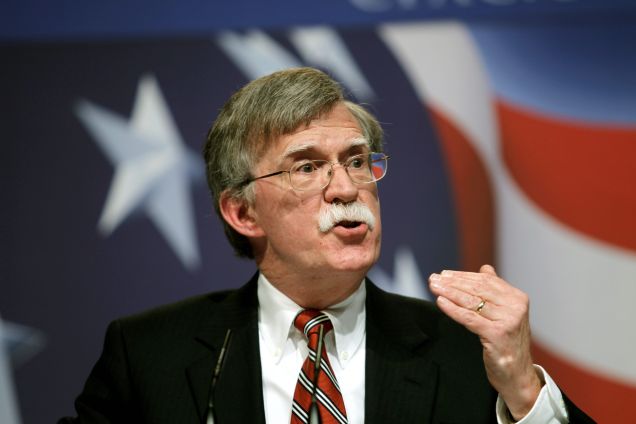
One such person is former US ambassador to the United Nations, John Bolton, who writes in the Telegraph:

President Barack Obama embodies the conventional wisdom, unabashedly supporting continued construction of a European superstate. Obama’s fascination with Brussels, however, reflects his own statist inclinations. His lack of international leadership perfectly mirrors the EU’s timid, ineffective defence of its own interests and values. Of course Obama loves the EU.

Arguing that today’s EU is collectively stronger than a continent of free nation-states misreads history, distorting it through a quasi-theological lens. The EU is less than the sum of its parts. Its politico-military “unity” is purest symbolism. Flags and anthems not only do not embody unity, but instead mask a poisonous, paralysing disarray.

Nor is unity reflected in incessant affirmations of Europe’s economic size, as if it were truly integrated. Indeed, if Europe had single-mindedly pursued a single market, abjuring political abstractions, it could have achieved more economic integration and broader political consensus together, rather than getting wrapped around the axle of “ever closer union”. And just as symbolic gestures do not ensure unity, reversing those symbolic gestures does not forestall Britain’s ongoing descent from representative government into Europe’s bureaucratic oligarchy. David Cameron’s proposed changes to London’s relationship with Brussels in no way addresses, let alone cures, the systemic failures inherent in EU decision-making structures.

Brilliant, stirring stuff. This blog does not often  share common cause with prominent neoconservatives in the model of John Bolton, but in this case he is absolutely correct. The point about Europe being less than the sum of its parts is particularly astute and counters the lazy (and never supported) trope that the EU amplifies our economic, military and diplomatic output, when in fact the European Union does no such thing.

The EU is far from a single, integrated economy – as John Bolton goes on to argue, the single-minded obsession with forging a political union has in many ways actually detracted from the creation of a true single market, such as could ever exist in a continent with such diverse cultures and no common language. Therefore, if we vote for Brexit, Britain will not be leaving some dynamic and prosperous unified economy – we will be leaving a political bloc dominated by an ill-fated currency union which imposes utter economic misery on the south and imposes financial obligations in the form of necessary transfer payments with the northern countries are unwilling to meet.

Bolton is also absolutely correct when he turns his analysis to the military and diplomatic angle:

America is partially at fault for the EU mirage because Nato, largely a US creation, has been so successful. For decades, sheltering under Washington’s military umbrella, Europe, including Britain, has recklessly shrivelled defence budgets and increased social-welfare expenditures. The results are not pretty. The EU has not only retreated from the world stage, it is becoming incompetent in ensuring security within its own “borders”. Europe’s loss of defence capabilities, as well as will and resolve, are deeply inimical to defending the West against today’s increasing global threats.

[..] If advocates of Britain remaining in the EU haven’t noticed, America’s international commitments are under attack from several populist directions in our ongoing presidential campaign. Some, especially among Democrats, simply do not value national security, preferring to focus on domestic issues, hoping – God forbid – to make America look more like social-democratic Europe. Others, especially among Republicans, think America’s allies have got a free ride, don’t appreciate US efforts, and should be made to fend for themselves. If Britain votes to stay In, this view may prevail across Washington. So be careful what you wish for.

These criticisms are entirely justified. Though Britain does best of the European powers in terms of maintaining any form of credible military, our armed forces have been pared back relentlessly while money is funnelled in an unearned peace dividend toward vote-winning social programmes.

And appallingly, many of the worst cutbacks have taken place under the current supposedly conservative administration of David Cameron, whose government’s disastrous stewardship of defence matters has left Britain with no maritime patrol capability and (far more crucially), no aircraft capability until the two (or possibly just one) new carriers currently being built come into service.

America has traditionally regarded Britain as her most stalwart ally because we have maintained moderate expeditionary capabilities together with the political will to use them where necessary. The political will has clearly ebbed away, as evidenced by the recent debacle with Parliament’s response to the Syrian crisis, and the expeditionary capabilities are gravely imperilled too. The Pentagon has always operated on the assumption that Britain could be relied upon to field an entire division operating independently of American forces in any joint action, but this is now being re-evaluated.

Part of the EU’s problem is that it has pretensions of significance on the world stage which are simply not matched by its willingness to divert money from generous social programmes to pay for them. Our defence is literally being guaranteed by the American working poor, who go without the kind of welfare perks (like working tax credits) and government-provided universal healthcare that we take for granted, in order to fund the American military machine.

Then there is also the issue of duplication. As well as spending far less on defence spending in real terms, the stubborn refusal of EU member states to give up the last vestige of sovereignty by abolishing national armies and contributing to joint European armed services means that there is massive duplication of HQ and some core infrastructure, while not nearly enough of everything else. There are probably enough European generals and admirals to fully man a Nimitz-class aircraft carrier, and yet Europe does not possess even one comparable ship (to America’s ten).

In all of these ways, the European Union fails to pull its weight, let alone punch above its own weight, and actively contributes to making Europe far less than the sum of its parts.

As Bolton rightly notes, flags and anthems do not embody unity. And in the European Union’s case, these ostentatious pretensions of statehood only mark the desperation of certain political elites to escape the irritant of accountability to their own electorates and instead dissolve themselves into the unaccountable anonymity of Brussels supranational governance. Or – to see the project in the kindest possible light – they reflect a desperate effort to create a single European demos through sheer force of will, the geopolitical equivalent of “if you build it, they will come”.

But no European demos came, and none is coming. The entire European Union is built on an imaginary foundation and cannot hope to succeed, let alone win the respect and devotion of an informed citizenry.

Ambassador John Bolton gets it. Tragically, Barack Obama does not.


European Union - United Kingdom - Britain - Flags

Agree with this article? Violently disagree? Scroll down to leave a comment.

Follow Semi-Partisan Politics on TwitterFacebook and Medium.