Brexit Catastrophisation Watch, Part 2

Suffer and roar

The other day, while in an uncharacteristically high-minded mood, I wrote:

During the EU referendum, I genuinely wanted the Leave campaign to win more than I wanted to defeat the Remain campaign. Despite immense provocation from the political establishment and many on the Remain side, I was generally motivated more by a desire to secure a better and more democratic future for my country than to make Remainers sad or to wipe the smug smile off George Osborne’s face.

Well, today I take it all back.

Ordinarily I would feel bad about sharing what is basically an hour’s worthy of weepy young ignoramuses whose mourning for their lost “European identity” is matched only by their ignorance about what the European Union actually is and how it works – but many high-profile Remainers have been so insufferably tedious and ungracious in defeat that any reserves of goodwill I possessed on 24 June have long since been exhausted.

One can only take hearing one’s perfectly legitimate and non-extreme political views (i.e. believing that Britain should be like every country in the world outside the EU and not outsource swathes of our governance to an unaccountable supranational government) described as the first step toward the return of fascism before feeling tempted to hit back, hard.

So enjoy: sixty glorious minutes of morons who who think that painting the EU flag on their faces and singing hymns of praise to Brussels makes them Virtuous People and Enlightened Citizens, weeping bitter tears because the Evil Old People and their nasty racist views have set in motion our foolish secession from the greatest and most noble organisation in human history, the European Union.

Money quotes:

1.30 – pinch-faced, morally righteous young woman on the verge of tears

“I feel like we are watching the stirrings of fascism in Europe again, and I genuinely never thought it would by my country that did that”

Yep, vote for freedom from supranational political union one day and we’ll all be polishing our jackboots the next.

And:

2.17 – a hipster girl wearing an outfit seemingly made entirely of feathers:

“London is like a little bubble, and the outside world, especially like regional places, is quite right wing. And it’s really really scary for our generation?”

And yes, her statement does end with a question mark.

And:

2.26 – the pinch-faced, morally righteous young woman, again

“The majority of these people are over 75 – they don’t have a future in this country.”

Children, respect your elders.

And finally:

23.18 – MP / industrial vacuum cleaner salesman Keith Vaz, crying to the BBC

“This is a crushing, crushing decision. It’s a terrible day for Britain, and a terrible day for Europe with, you know, immense consequences [..] Frankly, in a thousand years I would never have believed that the British people would have voted in this way, and they have done so and I think they have voted emotionally rather than looking at the facts, and it’ll be catastrophic for our country, for the rest of Europe and indeed the world.”

Ah, the arrogant Remainer head vs heart explanation again. Sorry to let you down, Jim.

To be fair, though, I myself was a rabid euro-federalist from the beginning of my student days until my early twenties. Had the EU referendum happened back in the early 2000s, I could easily have been one of those people having a weepy nervous breakdown into any passing TV camera.

Hopefully, like me, some of these petulant voices will come to recant their pro-European views as they grow in age and wisdom – and as the realisation slowly dawns that Brexit, however badly managed by politicians, has not ushered in the apocalypse.


People hold banners during a demonstration against Britain's decision to leave the European Union, in central London

Bottom Image: Huffington Post, REUTERS/Neil Hall

Support Semi-Partisan Politics with a one-time or recurring donation:

Agree with this article? Violently disagree? Scroll down to leave a comment.

Follow Semi-Partisan Politics on TwitterFacebook and Medium.

Brexit Catastrophisation Watch, Part 1

Since there seems to be no imminent end to the petulant, childish rage of disappointed Remain supporters at the prospect of being forcibly ripped away from their beloved European Union, we may as well start cataloguing some of the most hyperbolic and far-fetched tales of woe and prophesies of doom.

The inaugural submission comes, naturally, from the Guardian:

Social services for older and disabled people face crisis because post-Brexit migration restrictions could cause a massive shortage of care workers, leading care organisations have said.

The 1.4-million-strong UK care sector’s reliance on European migrant workers means it is vital they are given the right to remain in any future migration arrangements, the charities Independent Age and the International Longevity Centre UK (ILC-UK) said.

Currently about 84,000 care workers – equivalent to one in 20 of England’s growing care workforce – are from European Economic Area countries. About 90% do not have British citizenship and their future immigration status remains uncertain.

The charities said failure to tackle workforce shortages would mean thousands of older people would lose out on support, meaning they could be left housebound, struggle to recover properly from a stroke or fall, or fail to get assistance in getting up and dressed in the morning.

Translation: overturn the EU referendum result, or granny gets it.

(Note too the hyperbolic doomsday assumption of “a scenario which closed off all migration”, something which no serious person expects to happen).

The counterargument to this mini-tantrum, of course, is that cheap, young foreign labour from the EU and elsewhere has helped to ensure that care workers in Britain are paid an absolute pittance – often hovering around minimum wage – for performing a physically and mentally taxing job requiring skill, tact, empathy, good humour and great emotional intelligence in order to look after our loved ones in their final years.

The surly Guardianista charities moaning about the potential impact of Brexit on their sector clearly have no qualms or concerns that a worker can often make more money flipping burgers at a fast food restaurant than caring for our elderly and infirm senior citizens. This is just fine, apparently. But the mere possibility that free movement of labour restrictions might force employers to pay less desultory sums of money to frontline staff sends these “charities” into paroxysms of terror and rage. Whose side are they on? Not that of the patients or the care workers, that’s for sure.

Want to stop the endless drip-drip of care home abuse scandals? Try getting outraged that care is a borderline minimum wage occupation in this country, understand that people who might just as easily be flipping burgers for a living won’t always display the same dedication as Florence Nightingale – and be inordinately grateful for those care workers who do possess these criminally undervalued qualities. And in the meantime, forgive me for questioning the calibration of these charities’ moral compasses.

But why should we be surprised by their intervention? Everything about modern leftism and pro-Europeanism revolves around signalling virtue and ostentatiously displaying the “right” progressive beliefs to the right people.

And right now, it is far more important to be seen opposing those awful racist Brexiteers than it is to question the moral sustainability of an industry which hits its profit margin targets by providing our oldest and most vulnerable citizens with a Tesco Value standard of care.


nursing-care-home-abuse

Support Semi-Partisan Politics with a one-time or recurring donation:

Agree with this article? Violently disagree? Scroll down to leave a comment.

Follow Semi-Partisan Politics on TwitterFacebook and Medium.

Even Remainers Who Accept The EU Referendum Result Are In Denial As To Why People Voted For Brexit

rachel-reeves-brexit-eu-referendum

The EU referendum was not a question of “head vs heart”. When Remainers pretend that they occupied the intellectual high ground, they only delay their necessary and inevitable reckoning with the will of the British people

Remainers simply cannot help themselves. They cannot stop being arrogant and condescending toward Brexit voters, even when making otherwise admirable attempts to extend the olive branch and accept the nation’s verdict on leaving the EU.

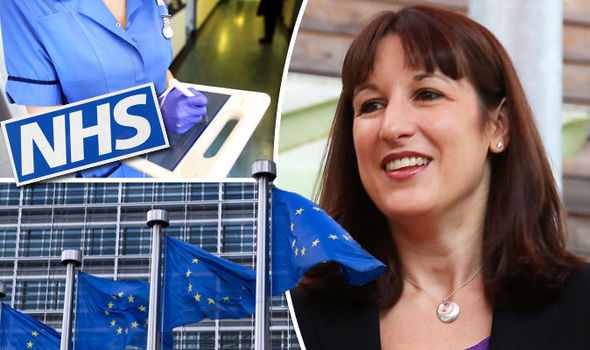
Here’s Rachel Reeves MP, writing in the New Statesman:

Two days before the referendum, I visited the largest private sector employer in my constituency. I had spoken to many of the workers during the general election campaign a year earlier.

Although the chief executive works with a community centre to recruit local young people, like many businesses they also hire many Eastern European workers. It was a tough audience, as many blamed the EU for the squeeze on living standards and most felt immigration was out of control.

The people I met believed leaving the EU would mean less pressure on services and more money for them, because the downward pressure on wages would ease with fewer EU migrants.

[..] I knew in my heart at lunchtime on the day of that visit that we’d lost the referendum. My head had told me – the economist – that we would win because the consequences of leaving were a risk voters wouldn’t take. But, by Friday morning, we knew the Leave campaign’s emotional message was stronger than the rational arguments of the Remain campaign.

My emphasis in bold.

And there it is again – the infuriating “head vs heart” conceit, beloved by Remainers, that they unquestionably held the intellectual high ground when it came to arguing for Britain’s continued membership of the EU, and that the only reason for their defeat was that the base emotions and fears of Brexiteers somehow clouded their rational judgment and (to quote Lincoln, since Reeves tries and fails to do the same) shut out the “better angels of our nature”.

According to this cognitive dissonance-soothing rationalisation of defeat, Remainers were unquestionably right to warn of economic armageddon, and the economy was the sole worthwhile measure on which an existential question about national identity and democracy should be determined.

If this is the fruit of the Left’s attempt to understand Brexiteers (and we know it is, because the bottom of the article states that “This blog is based on a chapter Rachel Reeves MP wrote for the Fabian Society edited collection Facing the Unknown: Building a progressive response to Brexit“) then they have done an unspeakably lousy job.

The immediate post-referendum polling clearly showed that the strongest driver of the Leave vote was widespread concern about sovereignty and democracy:

The biggest issue, according to Lord Ashcroft’s post-referendum poll, was the overwhelming desire to preserve what remained of British sovereignty.

In “How the United Kingdom voted on Thursday … and why,” a survey of 12,369 voters in the United Kingdom conducted the day of the referendum, Lord Ashcroft found the No. 1 issue propelling people to vote “leave” was their belief that the U.K. should remain a self-governing entity not responsible to some supranational body writing rules and regulations about the economy and other matters.

Not hankering for a return to the 1950s.

Not an acute discomfort with dark-skinned people or eastern Europeans.

Not “Daily Mail lies” about curved bananas.

The people of Britain voted to leave the European Union because a majority of us quite rightly refused to accept the false claim that close and fruitful trade and cooperation with our European neighbours is somehow only possible by subsuming ourselves into the relentlessly integrating EU superstate. They were smart enough to realise that an organisation with a parliament, flag, anthem and ambitions for a combined military force has its sights set on something much grander than “friendship and cooperation”, and quite rightly wanted no further part of this doomed experiment in euro-federalism.

What’s more, the Brexit-voting people of this country were enlightened and dedicated citizens enough to see through the hysterical scaremongering propaganda of the Leave campaign, and accept that even if there were some short-term economic costs associated with Brexit, the Remain campaign clearly value our country and democracy too cheaply if they would remain part of a European political union through fear of a potential recession.

Were there oddballs, cranks and racists among the Leave campaign? Yes, of course we had our fair share. But the Remain campaign had Eddie Izzard, so let’s not tar an entire side based on its worst cheerleaders.

Look, I get it – daring to consider that one might have campaigned hard on the wrong side of history must be immensely difficult. The emotional investment of Remainers in their worldview, rhetoric and “identity” as super-progressive, tolerant and all-round awesome people is very strong and hard to see past. But if anyone should have the capacity to move beyond their own intellectual comfort zones it should be our elected MPs, people like Rachel Reeves. Sadly, there is little evidence that many are doing so. Nor will there be, probably, until a couple of decades’ time at which point warnings of economic cataclysm will have been taken over by events.

It is good that Rachel Reeves and some others at various points on the left-wing spectrum, Jeremy Corbyn included, recognise that the EU referendum result must be honoured and are reconciling themselves to the will of the people. But it is one thing to accept the country’s verdict while still sanctimoniously proclaiming that the people were manipulated and hoodwinked, and quite another to reach deep inside for some humility and admit that the people may actually have been right all along.

Nobody expects the Labour Party and other Remainers to make the transition overnight. But well-meaning articles like this from Rachel Reeves suggest that the majority have not even begun the urgently-needed process of reconciliation to the national will. And that is a real concern, for their own tenuous future political careers if nothing else.


European Union - United Kingdom - Britain - Flags

Top Image: Express

Support Semi-Partisan Politics with a one-time or recurring donation:

Agree with this article? Violently disagree? Scroll down to leave a comment.

Follow Semi-Partisan Politics on TwitterFacebook and Medium.

No Amount Of ‘Education’ Will Make Sceptical Europeans Love The EU

What to do when the continent’s biggest military power and second-largest economy decides to leave your crumbling, tarnished and perennially unwanted supranational political union? Finally consider meaningful reforms? Engage in a sincere listening exercise? Devolve power back to nation states and local communities? Do anything, anything at all, to signal that the European Union might be something that works for the people rather than something which is done to them?

Of course not. When faced with incontrovertible evidence that citizens are starting to rebel en masse against the idea of shared sovereignty, dissolving borders and supranational government, clearly the correct thing to do is to declare that European citizens simply don’t understand the wonderful gift bequeathed to them, and then pledge to funnel more money towards their re-education.

From the Guardian:

The European commission will spend tens of millions more euros promoting the ideal of the EU citizen, in defiance of British ministers, under plans drawn up by officials in Brussels in the wake of the Brexit vote.

Officials for the European parliament claim there is now a clear need for a significant increase in spending on the Europe for Citizens (EFC) programme, which aims to foster the notion of an EU citizenry. The programme had its budget cut from €215m (£185m) to €185.5m (£159m) after a request from Britain in 2013.

“Considering the current political climate, in which an increasing number of citizens question the foundations of the EU, decisive action is indispensable,” an assessment of the programme by officials in the European parliament reports.

“It is for this reason that the reduction in funding for the EFC programme is a serious handicap to successful implementation: to reiterate, the budget for the current EFC programme is €185.5m (down from €215m under the previous programme), which amounts to merely 0.0171% of the EU multiannual financial framework.”

The aim of EFC is said to be that of developing “a better understanding” of the EU across all its member states, to fund remembrance events for key moments in European history and combat scepticism about the EU project.

The assessment document says that funding “which promotes and enables citizens to engage in European matters is of vital importance, especially in times when Euroscepticism is on the rise”.

This only emphasises the degree to which the European Union is an answer to a question which was never even asked. If the various peoples of Europe had gradually come to realise over the course of the 20th century that they shared such a common heritage of laws, language, culture and strategic interests that they wanted to institute a shared common government then the EU or something like it would have developed organically.

But of course no such thing happened – the idea of supranational political union was artificially imposed on European people largely by stealth and in secret over the course of many decades. And while many members of the European political elite get misty-eyed over the EU, the majority of its citizens tolerate rather than welcome this extra layer of government. The flag and the anthem are utterly meaningless to most of the EU’s 510 million citizens – the spine does not stiffen nor the heart quicken at the sight of the twelve stars or the strains of “Ode to Joy”. And unlike the American founding fathers, the secretive “founders” of the EU are unknown, unloved and languish in richly-deserved obscurity.

The hard truth for the euro-federalists is that no amount of money spent on “education” will make people fall in love with the European Union. Love of family, community and country is something which must well up from within; it cannot be successfully imposed by external agents. And likewise, if people do not feel instinctively European over and above their distinct national identities, a true European demos cannot be created – despite the best efforts of the European Union’s architects to defy both human nature and democracy.

Double the peak budget and spend another €215m on idealising the European Union and creating uncritical, misleading propaganda and it will still make no difference, save lining the pockets of opportunistic “cultural” and “artistic” parasites who will happily take taxpayer money to plaster the EU logo over their concerts, plays and workshops.

In other words, it is the perfect EU project. Just don’t expect it to make the slightest bit of difference to anything at all.


eu-europe-for-citizens-programme

Support Semi-Partisan Politics with a one-time or recurring donation:

Agree with this article? Violently disagree? Scroll down to leave a comment.

Follow Semi-Partisan Politics on TwitterFacebook and Medium.

Blast From The Past: Jonah Goldberg Lashes Out At Political Centrists

A refreshing tirade against political centrism

Most regular readers will know that this blog has time for just about anyone on the political spectrum, save the out-and-proud centrists, those virtue-signalling, sanctimonious oiks who think that by eschewing strong opinions and continually fudging every issue they are somehow morally superior to us hot-headed partisan folk.

That’s why this blog has been a consistent supporter of Jeremy Corbyn’s leadership of the Labour Party. While I would never vote for him myself – and what’s with this trend of demanding that even the leaders of parties we would never vote for still agree with us on key issues? – far better that the Labour Party has at its head someone who stands for vaguely socialist principles than another rootless centrist in the mould of Tony Blair or David Cameron.

That’s one of many reasons why this blog campaigned tirelessly for Brexit and a vote to leave the European Union. Bland, woolly, resigned pro-Europeanism – the centrist belief that Britain is hopeless, the nation state is outdated and that security and prosperity can only come by surrendering sovereignty to an unaccountable supranational body – was the watchword among every single one of Britain’s main political parties, save UKIP. Brexit slapped that smug consensus off the face of Britain’s politicians, and their pampered cheeks will be smarting for years to come as a result.

All of this is an unnecessarily long way of labouring the point – again – that I really, really, don’t like centrists. I may have written about this already, once or twice before:

Bring up the subject of taxation, to pick a random example, and you’ll get a group of people who strongly feel that taxes should be cut in order to stimulate the economy and allow taxpayers to keep more of what they earn, and you’ll get another group of people who think that it’s morally obscene that some people are enjoying themselves, so we should make the tax code more punitively progressive to help bring about social ‘equality’. But you’ll also get a third group of rather bovine people who look up from Britain’s Strictly Come Bake-Off On Ice, wipe the pizza grease from their mouths and just say “what?”

At present, we tend to think of this last group of people as “centrists” or “swing voters”, simply because they do not quote direct from either the Labour or Conservative Party manifesto when asked to offer a political opinion. But are they really centrists? There’s a world of difference between someone who carefully studies the competing policies of different parties to arrive at a considered position half way between two extremes, and someone who mutters something about politicians being “all the same” before their eyes glaze back over.

[..] And can we also please disenthrall ourselves of the unsupported and misleading notion that these “centrist” voters will immediately startle like shy fauns if they encounter a strong political opinion once in awhile, when most of them probably could not run for the bus in the morning, let alone into the arms of another political party?

Which seems as good a time as any to revisit this Jonah Goldberg video taken from an interview with Glenn Reynolds, in which Goldberg is promoting his (then) new book, “The Tyranny of Cliches”.

Here is Goldberg on how centrists are overrated:

We all see the centre as this incredibly privileged and wonderful place, right? The mainstream media constantly talks about the centre as if it’s just the greatest place in the world, and centrists are somehow wiser and more noble than the rest of us — “Shh! David Gergen’s about to talk!” And it’s all nonsense.

First of all, the whole idea of the centre as being this privileged place is actually one of these enlightenment myths. There’s this whole slew of argumentation about how Galileo and Copernicus “dethroned mankind” by getting rid of geocentrism, that the theory of heliocentrism, that we revolve around the sun rather than the Earth being the centre of the world [sic] was an elevation or promotion for mankind, and in our arrogance we couldn’t handle it and the Catholic church beat up on it. And it’s not a real left-right thing, except in the regard that it explains how we understand the whole geographic political landscape.

The reason why the Catholic church and pretty much everybody else opposed geocentrism was one, they weren’t sure the science was right because it was a novel theory at the time, but two, because they considered it a promotion. In medieval understanding, in ancient Greek understanding, Jewish medieval understanding and Catholic, Thomas Aquinas understanding, the centre of the world, the centre of the universe is literally the asshole of the universe. The centre of the universe is considered the lowest and most disgusting and turgid place in the whole cosmos. In Dante’s Inferno, the lowest pit of hell is the centre of the universe. Maimonides talks about this, Aquinas talks about this and it is this myth of the modern mind that somehow geocentrism, getting rid of geocentrism somehow elevated mankind. It completely misunderstands where the medieval mind was, and we carry it forward to today.

There are a lot of huge arguments we have with the Left, or are between the Left and the Right. The Left says we have to build this bridge over a canyon, it’s a stimulus thing, it’s infrastructure, we need this bridge. The Right says are you frigging crazy? We can’t afford it, we don’t need the bridge, it’s a bridge to nowhere, it makes no sense, blah blah blah. That’s an honest argument – one side says let’s build the bridge, the other side says let’s not build the bridge. The friggin’ pinky-extending centrists parachute in and says no no, let there be peace among you. We’ll compromise – we’ll build half a bridge that goes halfway across the canyon.

It is these difference splitters who drive me absolutely batty, and we treat them as if they hold this privileged place when we don’t even understand that the centre is a geographic metaphor, it’s not an actual place in politics. All the serious ideas in politics have always come from where they were considered to be the extreme at one point or another.

Brexit and the reclaiming of our nation state democracy from the failing euro-federalist experiment in Brussels was considered a niche and even extremist idea for most of the past 40 years. And look at us now – with the only remaining resistance consisting of Owen Smith’s pitiful, petulant bleating and a few pathetic europhiles with the EU flag painted on their faces, Brexit is happening.

All the serious ideas in politics have once been described as extreme and unmentionable, says Jonah Goldberg. Darn straight.

And nobody has ever built a monument to a centrist.


Political centrism

Support Semi-Partisan Politics with a one-time or recurring donation:

Agree with this article? Violently disagree? Scroll down to leave a comment.

Follow Semi-Partisan Politics on TwitterFacebook and Medium.