The EU Referendum, From The Perspective Of A Eurosceptic Christian

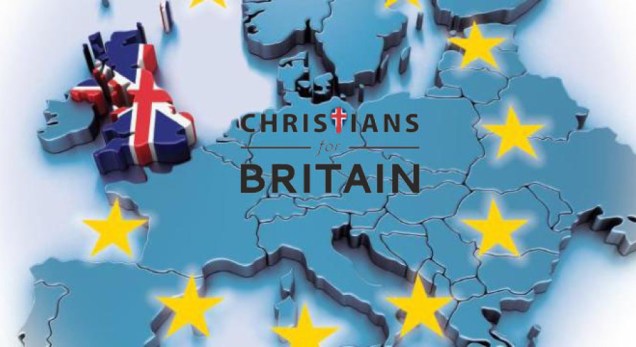
Christians for Britain

This EU referendum campaign has been both depressing and insulting for many eurosceptic Christians

Adrian Hilton of the Archbishop Cranmer blog aptly sums up weariness of participating in this EU referendum debate as a eurosceptic Christian:

“I believe in Europe..” is the beginning of every question and the end of every answer when issues relating the European Union are discussed – as if an artificial political construct of 28 states were derivative of or synonymous with ancient notions of Christendom or the contemporary family of European nations of around 50 states. Are the 22 independent European states which are not in the EU any less European for not being so? Are they really all xenophobic, insular and self-regarding?

I have participated in a total of 21 EU Referendum church debates. Some have been a delight, and some quite dire. I’ve spent six hours travelling to speak to an audience of 14 (no expenses offered), and 15 minutes travelling to speak to an audience of several hundred (generous expenses freely given). I drove 200 miles to find myself lauded as a prophet (always dangerous), and 50 miles to be told by the minister that they weren’t expecting me and didn’t need me (I shook the dust off my feet). I saw all the email correspondence relating to that booking, but really couldn’t be bothered to address the incompetence and discourtesy. I wouldn’t expect to be offered expenses in such circumstances, but a glass of water would have been nice. I have formed opinions on the most and least hospitable denominations. The Baptists win hands down. It wouldn’t be very Christian to shame the worst.

Over the past few months, Remain Christians have told me that I’m “peddling myths”; indulging in “crass populism”; “lying” which (I was graciously reminded) “isn’t Christian”; and that my desire for controlled immigration is “really about blacks and Muslims”. In each case, these slurs have come from Christian academics – professors and doctors – one of whom (with his knighthood) was very fond of reminding the audience: “I’m an academic, so I look at the facts” (the inference being… oh, never mind). Most Remain Christians have been kind and attentive to a robust exchange of views, but rather too many talk about Leavers as though we are one step removed from pederasty.

I was fortunate – the priest at my local church exhorted us only to think prayerfully about the question and vote according to our consciences. Eurosceptic Anglicans have had to suffer their first and second in command (Justin Welby and John Sentamu) declaring eagerly for Remain as a “personal decision” while somehow making it crystal clear that you are a Bad, Insular Person of you disagree.

Hilton continues:

The world is changing, and quoting Dicey doesn’t quite cut it. Each incremental piece of legislation or regulation from Brussels does not remotely challenge the sovereignty of the UK parliament because i) that parliament is not sovereign; and ii) those who constitute that parliament have consented to every piece of EU legislation and regulation. What is challenged in some shape or form is the sovereignty of the people. When we cannot vote to change agriculture policy, fishing policy, financial regulation, remove VAT, change welfare (etc., etc.), it doesn’t quite cut it to shout ‘Club rules’. When a British citizen can be arrested here and extradited to languish in a Greek prison for months – no corpus juris; no trial by jury; not even a hearing conducted in his own language – it is the ancient rights and liberties of the freeborn Englishman that are denied. What does that have to do with an economic community?

I have listened to and considered carefully what every Remain Christian has told me over the past few months: principally that we must remain to reform the EU; we must somehow make it better, more responsive and more democratic. But I have not heard any Remain Christian set out how we may achieve that.

You will not hear concrete proposals for reforming the European Union from anybody, Christian or otherwise. “Of course the EU needs reform!” is perhaps the most overused phrase of this entire referendum campaign, impatiently spat out by many a Remainer finding themselves on the ropes while defending the indefensible EU. But there is never a follow-up sentence explaining how the fundamental, deliberate anti-democratic nature and structure of the EU might be feasibly changed, against the wishes of those who like it just as it is.

And as for post-referendum reconciliation:

I have been exasperated by bishops and other clergy who have suggested that my personal motives and political objectives are xenophobic, racist, self-regarding and, in the final analysis, un-Christian. Such judgments wound, but they are not so deep – as they may be in the Conservative Party – that it becomes impossible to conceive of unity being restored. ‘So we, being many, are one body in Christ, and every one members one of another…’ But there are undoubtedly some churches I wouldn’t want to visit again, and doubtless others which would never want to see me again. My, how these Christians love one another…

But love we must, and be reconciled before the sovereignty of the Cross, where partisan posturing pales into utter inconsequence.

Hilton is a better man than I. Personally, I really don’t take kindly to being called uneducated and borderline xenophobic, or labelled as some kind of economically left-behind loser who is afraid of the modern world – all of which the bishops have done. I particularly don’t like it because of all the bishops who have declared for Remain, I can comfortably say that I know more about the European Union than any of them.

And that’s not a boast – if anything, I am aware of how much I have yet to learn, particularly about the global regulatory environment and the emerging global single market which is making the EU obsolete. But at least I have the curiosity and humility to learn more. The pro-Remain bishops, marinating in their smugness and certainty, think that their tired old tropes about “cooperation” and “working together” are the Alpha and the Omega of the debate.

So when we talk about post-referendum reconciliation, I think we need to make clear a distinction between social reconciliation and political reconciliation. Unlike a number of my pro-EU acquaintances, I have never been moved to end a friendship or block/mute people on social media because they hold differing political opinions to me. I have had this done to me, and it is quite wounding when it happens. But at all times I have been happy to courteously debate (or not) with the people I know. It is the duty of those who think otherwise to extend the olive branch, in the unlikely event that they wish to do so.

And as for political reconciliation – no. We have passed a point of no return. The prime minister of this country – a man who calls himself a conservative – as lied, threatened, deceived and bullied the British people in order to coerce a Remain vote. There is no forgiving that, politically. David Cameron must go, and his name should be mud, politically speaking. This blog will not rest until that happens. Likewise with many other conservative politicians who built their careers and reputations on what turned out to be the most superficial and cosmetic forms of euroscepticism. Even now, Michael Fallon is going around telling people that he is a eurosceptic, even as he campaigns for a Remain vote. There can be no tolerating such people in our politics either.

Some new friends and allies have been made along the journey too, particularly those few principled left-wingers who advocate Brexit on democratic grounds rather than fearing “Tory Brexit” because it might lead to a democratically elected British government implementing policies with which they disagree. Others on the Left – particularly Jeremy Corbyn and commentators like Owen Jones – have clearly betrayed their most deeply held principles in order to support Remain, and are deserving only of contempt.

On June 24th, regardless of the referendum outcome, most of us will continue to display common human decency toward one another. It would be a terrible shame if that changed. But there should and will be political consequences for what has transpired over the course of this EU referendum. If, as seems likely, Remain’s project fear wins the day, then they will have committed us to remain in the European Union based on a castle of lies, ignorance and naivety. And there will be a price to pay for that behaviour.

 

European Union - United Kingdom - Britain - Flags

Agree with this article? Violently disagree? Scroll down to leave a comment.

Follow Semi-Partisan Politics on TwitterFacebook and Medium.

American Conservatives For Brexit, Part 4

UK EU flags

Brexit is very much in the American spirit of independence, and in no way harmful to long term US interests

In an excellent piece for Colorado Christian University’s Centennial Institute, James C. Bennett argues convincingly that the US national interest is no longer best served by pursuing the post-war policy of playing midwife to a terminally flawed United States of Europe.

Bennett begins by exposing the sheer implausibility of a stable, functional, democratic European state – the clear and unabashed goal of most EU leaders – ever emerging at all:

To begin with, the idea of a united Europe that would be genuinely federal, which is to say anything other than an empire of one culture over the others, is highly unlikely if not chimerical. To the extent Europe today works, it is an empire of Germans, with the French as their lieutenants, over the rest. The Germans try to be polite about it, unless money is at stake, but the reality is a bit too visible for comfort these days. The British who believe in the idea of their place in a federal Europe, tend to work as lieutenants to the Germans on economic matters, and allies of the French on security matters, except where it comes to cooperation with the US, where they have only minor allies from Eastern Europe, who do not count for much in Brussels.

As many critics of the EU have noted, democracy requires a demos — a distinct national community, which shares the language, institutions, memories, and experiences that make possible a meaningful discussion about the decisions that must be made through political means. There is no such European people, rather, a series of national communities who each have their own discussions. European institutions are therefore particularly prone to decision-making by consensus of elites, many of whom are distant and insulated from the opinions of the people they supposedly represent. However, it is also the case that decisions are often simply not made, and inertia rules, while problems are merely kicked down the road year after year. The Single Currency provides examples of all of these phenomena — it took a long time to come to the decision to launch it; it was only ever wanted by a few elites; popular opinion was almost universally against it; it worked better for some nations than for others, but poorly for most; and there is no momentum either for changing institutions to make it work better, on the one hand, or abandoning it on the other.

This point about the perennially absent European demos is absolutely key. Even if one were to wave a magic wand and instantly make all of the European Union institutions directly elected, properly empower the European Parliament and take other measures to correct what is understatedly termed the EU’s “democratic deficit”, it would not give those institutions any greater legitimacy.

If Britain were suddenly annexed by India and British citizens given a vote in Indian elections this would not be “democracy”, but rather the smashing together of one demos against another. British citizens would not feel part of the Indian state, would have no emotional connection to it and no great political interest in it. And so it is now that Britain is effectively annexed by the European Union. Even building a perfectly modelled federal government for Europe would not erase the stubborn fact that most British people do not “feel” European first and foremost, and therefore cannot participate meaningfully in its political life.

Bennett goes on to criticise the EU as a weak partner to the United States:

Furthermore, the EU is not turning out to be a useful ally for the US, nor is Britain able to influence very much in directions the US desires. To the extent it has ambitions in the security area, these typically create a rival and inferior capability to what already exists through NATO. To the extent it has ambitions in the foreign policy area, it is so hard to establish a consensus among European powers that its policies are usually much weaker than what Britain typically adopts by itself. The European federalists are now agitating for France and Britain to give over their UN Security Council seats to the EU, which will again substitute the weak and uncertain voice of the EU for the more assertive voice of the UK.

While the EU’s leaders clearly have dreams of wielding great influence on the world stage, they are constantly stymied in their ambitions by the fact that they are called on to reflect the squabbling and divergent interests of 28 separate member states. Floridians and Californians are happy to be jointly represented by the State Department because they owe their primary allegiance and affinity to the United States of America. By contrast, Brits and Swedes are not greatly thrilled to be jointly represented on the international stage by Italian former Young Communist Federica Mogherini. On paper, Mogherini speaks for all of Europe. In reality, she speaks only for an EU elite numbering in the thousands, not millions.

Bennett, like this blog and others of The Leave Alliance, believes that an interim EFTA/EEA (or Norway Option) Brexit path is the most likely outcome in the event of a Leave vote, minimising the economic and political risks by guaranteeing Britain’s continued access to the single market:

The international financial community would probably default to the second most desirable option from their point of view, which would be to press for British membership in the European Economic Area and the European Free Trade Association, the so-called “Norway Model.” Although in theory there are a number of potentially viable options for post-Brexit relations between the UK and the remnant EU, the EEA-EFTA model would be the most accessible, best understood, and least disruptive option, and therefore the one the financial interests would prefer. The major European leaders would then come under very strong pressure to announce their support for such an outcome. Once made, along with guarantees to expatriates and other interests, this would restablilize markets and probably become the signal for a sustained rally.

This recognition of economic and political reality immediately puts James Bennett well ahead of serious American journalistic outlets including CNN, USA Today and the New York Times, all of which defaulted to the most apocalyptic and unlikely of Brexit scenarios in their effort to make the idea of Britain leaving the EU seem like a reckless risk with no potential upside.

However, Bennett’s assessment on the impact of Brexit on American interests is better still (my emphasis in bold):

From a short-term perspective, Brexit would have relatively little effect on American interests. Article 50 of the European Union’s current constitutional document, the Lisbon Treaty, provides for member-states to withdraw by giving a two-year notice of intent to withdraw, and mandates the EU to negotiate in good faith for free-trade measures during that time period. During that time period all rights and obligations of membership continue as normal, so US companies operating in Britain would continue to function as normal. The EEA-EFTA option would also permit such companies to operate as normal after EU membership was terminated. Most other US-UK cooperation, such as military and intelligence cooperation, is conducted under bilateral or multilateral agreements having nothing to do with the EU, and would continue to function as normal.

The biggest short-term effect will be on the American foreign policy establishment, in seeing the fundamental assumptions of their world view challenged. Some will cling to the past, and hope that the UK, humbled by life outside of the EU, will repent and ask to rejoin. This is highly unlikely, as it is more likely that the EU, now shorn of the most powerful and stubborn opponent of a United States of Europe, will proceed to greater centralization, although it is also possible that it will shed a few other recalcitrant members, perhaps including Denmark and/or Sweden. The Franco-German core, and the principal Eastern and Southern European dependent states will likely remain. However, this reduced remnant EU will still not become the capable and willing partner the US State Department has always craved. Rather, it will be a medium-large power with problems, somewhat like Japan but with a less capable military.

Exactly so. The only threat posed by Brexit concerns the outdated thinking of certain fossils and arthritic thinkers within the State Department, many of whom seem to be operating based on mental software which has not been updated since the height of the Cold War, when large regional blocs were both the norm and the key to the West’s victory against the Soviet Union. The world has moved on.

And in this age of globalisation, when regulatory harmonisation and convergence are key precursors to unlocking further economic growth, what matters most – though you may not hear many others speaking of it – is ensuring that ordinary people, through their national governments, have the ability to influence these standards and decisions when they are made, and on rare occasions to exempt themselves from them as a last resort. This applies as much to America as to Britain. But from the British perspective, the EU is an active impediment to this process, diluting our influence before we even get to the regional and world bodies which are the source of much new regulation.

And away from the trade sphere, it is self-evident that Britain will remain the only truly indispensable ally of the United States for the foreseeable future. Our shared history and overlapping cultures, together with the fact that Britain wields a military and diplomatic clout far in excess of any other European nation (though recent generations of meek political leaders have often failed to properly leverage this advantage) mean that the idea of Washington pivoting away from London and towards Berlin is pure fantasy. Simply put, you don’t ditch the partner which offers a blue water navy, a nuclear deterrent and a permanent seat on the UN Security Council, no matter how much certain wobbly-lipped EU apologists may suggest that Brexit would somehow damage the special relationship.

Ultimately, a realisation must eventually dawn on the American political elite and foreign policy establishment that the dream of a United States of Europe incorporating the United Kingdom – a term conjured by Churchill but never intended to include Britain – is untenable. A federal Europe may yet emerge from the “core” EU nations, but as James Bennett points out, this will be a distinctly medium-sized power beset with many intractable problems of its own and unlikely to be a great proactive partner to the United States, at least in military matters.

Thus a re-evaluation is necessary. Today, Britain is seeking to assert her independence from a terminally flawed and profoundly, deliberately antidemocratic supranational government of Europe. Americans once knew something about seeking independence from empire and asserting the right of a people to govern themselves, captured in the cry “no taxation without representation”.

America also knows something about turning up a bit late to important, existential fights. And so even at this late hour, it would be gratifying if more American leaders paid heed to James C. Bennett, sought to rediscover that spirit of independence, democracy and national destiny which has been increasingly absent of late, and lent their vocal support to the Brexit cause.


Winston Churchill - United States of Europe

European Union - United Kingdom - Britain - Flags

Top Image: WalesOnline

Agree with this article? Violently disagree? Scroll down to leave a comment.

Follow Semi-Partisan Politics on TwitterFacebook and Medium.

Quote Of The Day

Angry Mob Fun Run

Standing athwart the European Union, yelling “Stop!”

This, from William F. Buckley Jr.‘s 1955 founding mission statement inaugurating the American conservative journal National Review, seems particularly apt at this point in British political history:

Radical conservatives in this country have an interesting time of it, for when they are not being suppressed or mutilated by the Liberals, they are being ignored or humiliated by a great many of those of the well-fed Right, whose ignorance and amorality have never been exaggerated for the same reason that one cannot exaggerate infinity.

This certainly holds true for small-c conservative Brexiteers, who have been not only ignored and humiliated but also scorned and threatened by the current Conservative prime minister, he and his chancellor both staunch members of the “well-fed Right”.

But perhaps this later quote from the same article might give hope to Brexiteers regardless of what happens on referendum day, and even if our efforts come up short:

That, a thousand Liberals who read this sentiment will say with relief, is clearly not enough! It isn’t enough. But it is at this point that we steal the march. For we offer, besides ourselves, a position that has not grown old under the weight of a gigantic, parasitic bureaucracy, a position untempered by the doctoral dissertations of a generation of Ph.D’s in social architecture, unattenuated by a thousand vulgar promises to a thousand different pressure groups, uncorroded by a cynical contempt for human freedom. And that, ladies and gentlemen, leaves us just about the hottest thing in town.

Having right on one’s side is no small thing, and we Brexiteers have it. The human desire for freedom and self-determination is not a fad or a passing fashion. It does not grow old, and despite the European Union’s continual attempts to snuff it out, it will only grow stronger the more the EU infringes on our right to exercise meaningful control over our lives and communities, and hold our leaders to proper account.

Brexit will happen one day, whether that process begins with a Leave vote in the referendum this Thursday, in some future referendum or by the unilateral decision of a future British government faced with no other choice. Brexit will happen, even if only when the entire rotten apparatus of the EU’s supranational government disintegrates and comes crashing down around us. This anachronistic attempt to build a post-democratic society of consumers rather than citizens will fail.

As Pete North so eloquently puts it:

But Brexit is not a word that will die quietly because it is an idea, behind which there is passion and a body of knowledge which cannot be silenced. And so for as long as there is no mandate for the EU and people willing to do whatever it takes to get us out, we will be here time and again.

We are told that Brexit is the province of fearful old men, but as I look at my co-conspirators I see thriving minds of all ages, each with their own motives, all of whom have different ideas – but agree on one thing. The EU is not a democracy and there is no resolution until we leave.

Among them are technicians, physicians, lawyers, writers, engineers, scientists, teachers and labourers. In this there is no racism, no seething nationalism and no nostalgic delusions. Just a recognition that the EU remains a thorn in our side and a brake parachute on progress.

And what I can tell you about these people is that they are all kind, warm, dedicated people. It has been humbling to see how many sacrifices they have made to give all that they can to this campaign. A far cry from the devious, scheming liars whom we are pitted against.

And that is why I know we will leave the EU one way or another. That decency will prevail. Maybe not on Thursday, but probably in my lifetime. In the coming months and years, having had this bitter debate, we will all come to know the EU as the castle of lies it has always been.

No matter the result, the democratic case for Brexit (advocated by The Leave Alliance, this blog and our many generous readers and supporters) will not be vanquished. And while it may be stretching truth to describe us as “the hottest thing in town”, it is certain, absolutely certain, that our day will come.


European Union - United Kingdom - Britain - Flags

Agree with this article? Violently disagree? Scroll down to leave a comment.

Follow Semi-Partisan Politics on TwitterFacebook and Medium.


Every American Should Support Brexit

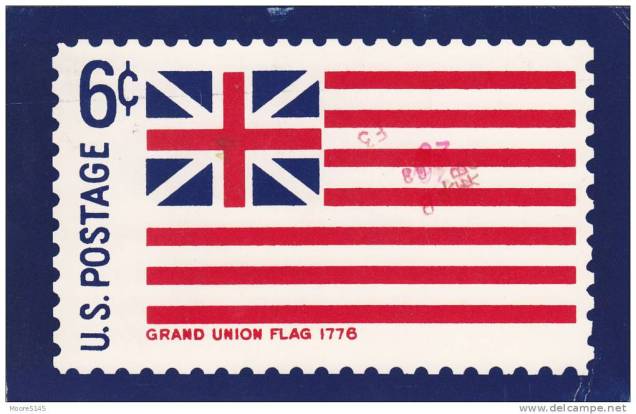
Grand Union Flag

Finally, the democratic case  for Brexit is explained to Americans

With many leading American voices so illogically hostile to Brexit, it is great that one of our own – Ben Kelly of The Sceptic Isle and the Leave Alliancehas seen his concise democratic argument for Brexit published in the New York Times.

Kelly patiently lays out the case for Brexit to an audience which has regrettably proved more likely to skip the democratic question entirely and wrongly view leaving the EU as an illogical, regressive act:

There are worrying levels of resentment in British society. People have little faith in their ability to bring about change through who they vote for and this breeds apathy and represents a grave threat to participatory democracy. And, no, not all of that can be blamed on the E.U., but we have now lost too many policy making powers and essential democratic safeguards. The E.U. maintain exclusive control of our trade policy, fishing and agricultural regulations, and is rapidly gaining power over British policies for foreign affairs, energy, environment, transport and telecommunications.

The E.U. is a supranational government with an executive body in the unelected European Commission, a legislature in the European Parliament and the Council of the E.U., and a powerful judiciary in the European Court of Justice. The “invisible hand” of its power operates through the husks of British political institutions: Our Ministers, MPs and councillors are constrained and must work within imposed parameters that are not conducive to new ideas and innovation. The E.U. hinders effective governance and disempowers and disconnects elected officials from the people who elected them.

When power is so far removed from the people, anger and disillusionment are inevitable. And democracies die when there is little connection between the electorate and those who rule them. Now, there is a pressing need to shift the balance of power back to the people and restore democratic accountability. It is the only hope for rebuilding faith in politics and quelling our current state of discontentment.

Restoring self-governance could inspire British society with a renewed sense of identity, vigor and pride. It means the construction of a new nation and a reversal of the degradation of our political culture. None of this can happen automatically and Brexit is not a silver bullet. But it unlocks the potential for change, and Britain should rise to the occasion.

It should not be necessary to explain these things to Americans, particularly those in the establishment most likely to want Britain to stay in the EU. These people, possessed of a solid understanding of their own nation’s history, should be our natural allies in wanting to free Britain from an increasingly powerful, antidemocratic and unrepresentative supranational government.

The rebellious American colonists because known for the phrase “no taxation without representation”. The EU has not yet – quite – reached the point of directly taxing its citizens, though the day may not be far off. But the phrase “no regulation without representation” applies very well to the Brexit cause. In an age of globalisation, when regulatory harmonisation is important to promote further economic growth, it is more important than ever that the people have an input into the process of making global regulations – particularly when that process has the power to wipe out entire industries at the stroke of a pen.

An independent nation state can wield its “right of reservation” as a last resort, exempting itself from new regulation which it deems particularly harmful to the national interest. A member state of the EU, like Britain, has no such power. The EU has exclusive competency on matters relating to trade, and we must swallow whatever the European Commission agrees on our behalf.

Those roles and institutions within the EU which are directly elected are nothing more than democratic fig leaves. The European Parliament is a toothless rubber-stamping institution which cannot propose new legislation or strike down old. And those who claim that the Council of Ministers or European Council allow national interests to be exerted forget that governing elites from the 28 member states often have far more in common with each other than they do with the ordinary people they represent, and will always face the tendency to do what is best for themselves and the European Union which they serve rather than what is best for the people who put them in office.

In every single way, the European Union as it currently stands should be offensive to the American national psyche. That it is widely popular among American opinion-formers reflects a failure on the part of Brexiteers to do a better job co-opting an important international ally. But more than that it represents a failure of the American elites, who having lost faith and confidence in their own country expect that we should do the same with ours.


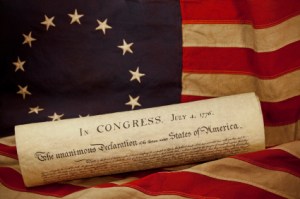
USA Declaration of Independence Lying on Grungy Betsy Ross Flag

European Union - United Kingdom - Britain - Flags

Top Image: delcampe.net

Agree with this article? Violently disagree? Scroll down to leave a comment.

Follow Semi-Partisan Politics on TwitterFacebook and Medium.

American Conservatives For Brexit, Part 3

Jim DeMint - Brexit - European Union - EU Referendum

A bold warning against supranationalism

This blog has rarely found common cause with former Senator for South Carolina Jim DeMint, but his OpEd in CapX (written with Nile Gardiner) is a welcome expression of solidarity with the Brexit cause.

From the OpEd:

The contrast could not have been starker – between a message of genuine optimism on the Brexit side, and the language of gloom and doom emanating from the Remain camp. It was frankly sad to witness an intensely negative campaign by those who suggest that Britain will not benefit from being a free and independent nation.

It is unthinkable that Americans would ever subject themselves to the kind of suffocating supranationalism that exists within the EU, with nation states surrendering large amounts of their sovereignty to unelected bureaucrats in a distant capital, with their courts overruled by foreign judges. It is all the more disturbing therefore that the leader of the free world, the president of the United States, has chosen to warn our British friends against leaving the EU.

This very much echoes the sentiments of this blog – the United States branches of government would not for one second tolerate the kind of subjugation to a supranational entity and curtailments on sovereignty that are required of EU member states – therefore, Barack Obama’s intervention in the EU referendum debate was very much a case of “do as I say, not as I do”.

Moving on to security, they point out:

Ignore the childish scaremongering coming from the White House. If the British people decide to leave the EU, their national security will be enhanced, not least because Britain can retake full control of its own borders. And the NATO alliance would actually be strengthened, rather than weakened, if Britain left the EU. The European Commission’s drive to create a European Union Army would draw vital resources away from NATO, and lead to duplication of key military assets in Europe. It is NATO, not the EU, that has secured peace in Europe in the post-World War Two era.

Before concluding:

A British exit from the EU would be good for Britain, Europe, and the United States. A United Kingdom that is not shackled to a declining EU that is mired in a culture of big government, soaring public debt and welfare dependency, would be a better partner for the US. A resurgent, self-confident Britain that looks outward to the world instead of inward, that is free to shape its own destiny, decide its own laws, craft its own foreign and security policies, and negotiate its own trade deals, can only strengthen the Anglo-American Special Relationship. A Great Britain that has absolute control of its own borders will also be a stronger partner in the fight against ISIS and Islamist terrorism.

Our former Heritage Patron, Margaret Thatcher, loved the United States and cherished the bonds that tie our two great nations together. She condemned the European Project, the idea of a European superstate, as “perhaps the greatest folly of the modern era.” The Iron Lady was absolutely right about the dangers of ever-closer union and rampant supranationalism in Europe, and how it threatened both Britain and the transatlantic alliance. We owe a huge debt of gratitude to Lady Thatcher’s leadership on the world stage. Her warnings against a federal Europe have come true. Today, Great Britain has an opportunity to be a free country once again. If the British people seize the day and break free of the EU, this should be a cause for celebration and rejoicing on both sides of the Atlantic.

Jim DeMint and Nile Gardiner are quite right to warn about “rampant supranationalism”. A point which has rarely been made in the EU referendum debate is the fact that no other countries in the world have rushed to replicate the EU model. One might point to the African Union and its Pan-African Parliament, but the two institutions are hardly comparable – the second objective of the African Union is “to defend the sovereignty, territorial integrity and independence of its Member States”, a goal to which the EU most certainly does not subscribe, in theory or in practice.

Look elsewhere in the developed world, to Asia, Australia and the Americas, and there is no desire whatsoever to form a political union based on the supranational form of government, in which a new pan-national entity takes on more and more of the traditional roles of the nation state. This should tell us something – and yet the EU persists with the steady, stealthy implementation of its mid 20th century blueprint even as globalisation and the emerging global regulatory system makes it increasingly irrelevant, a clumsy middleman rather than an effective defence.

And at a time when too many voices from the United States – the one country which should truly understand the desire for independent self government – have been fearfully urging Britain to stay in the EU, it is good to hear some bold conservative voices supporting Brexit.


European Union - United Kingdom - Britain - Flags

Top Image: Washington Post

Agree with this article? Violently disagree? Scroll down to leave a comment.

Follow Semi-Partisan Politics on TwitterFacebook and Medium.